

24V 48V Solar Battery Supply for Voltage-Ladder Programs
Source both 24V and 48V solar battery configurations from one factory — same BMS architecture, same QC standard, same export documentation. Build a voltage ladder catalog or spec both tiers for a single project without managing two supplier relationships.
24V 48V Solar Battery Supply for Voltage-Ladder Programs
When you carry both 24V and 48V solar batteries, you're covering the two voltage tiers that account for the majority of residential-to-light-commercial storage demand. The question isn't whether you need both — it's whether you can source them without doubling your supplier management overhead.
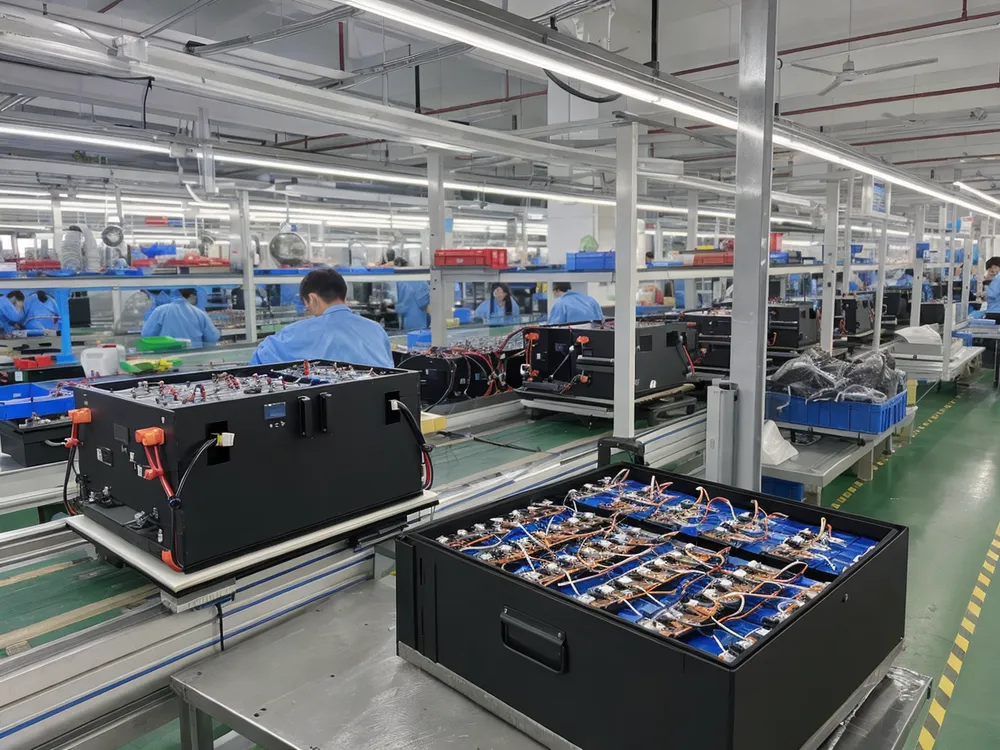
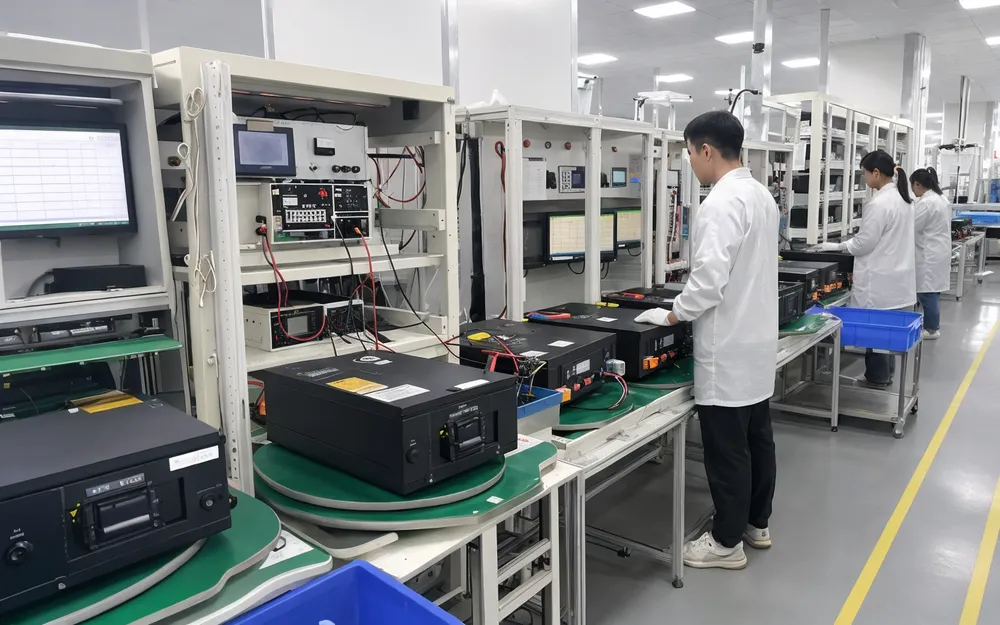
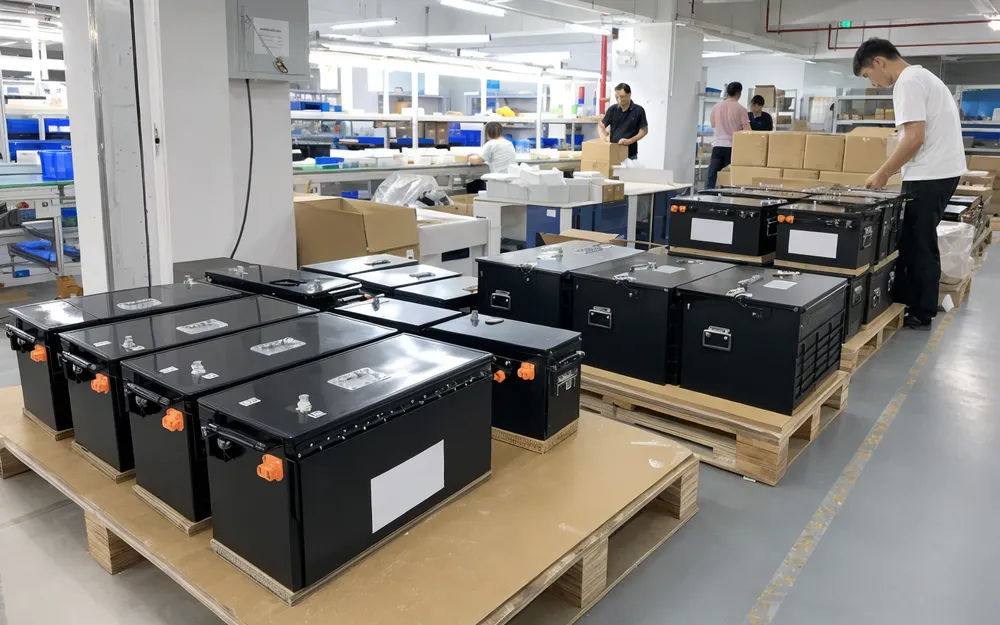
We manufacture 24V 48V solar battery configurations — LiFePO4 25.6V and 51.2V packs, plus lead-acid 24V and 48V banks — on the same production floor in Zhongshan, Guangdong. Six production lines, 9,900 m² of factory space, 150 employees, and 13 years of solar battery manufacturing since 2012. As a 24V 48V solar battery manufacturer, we run both voltage classes through identical QC sequences: automated cell sorting, in-house BMS integration, full charge/discharge testing, and temperature cycling. Your 24V and 48V SKUs arrive with the same documentation format, the same packing standard, and the same batch traceability system.
What "Dual Voltage" Means Here
"Dual voltage" here means supply capability — we produce both 24V and 48V configurations to your specification. It does not mean a single battery that switches between voltages. Each configuration is a distinct pack design with its own cell arrangement, BMS programming, and charge profile. If your project requires a specific switchable design, that's an engineering conversation we handle during RFQ.
Ready to Quote?
Send your voltage, capacity, chemistry, inverter model, quantity, and destination market — we'll return a model recommendation with MOQ and lead time for each voltage tier.
Choose 24V, 48V, or Both Before You Set MOQ
This is the decision that shapes your entire catalog structure, so it's worth getting right before you commit volume. We've shipped both tiers across Europe, Africa, Southeast Asia, South America, and the Middle East since 2012, and the commercial logic breaks down cleanly.
24V Configuration
25.6V LiFePO4 / 24V Lead-AcidFits systems in the 1–5 kW inverter range. Lower component cost, simpler installation, and a retail price point that works in price-sensitive markets. The current draw is manageable with standard cable cross-sections and BMS ratings up to about 200A continuous.
Best Commercial Fit
- Solar home kits
- Weak-grid backup systems
- DC-powered agricultural equipment
- Budget to mid-range 24V inverters
48V Configuration
51.2V LiFePO4 / 48V Lead-AcidFits systems above 5 kW — residential hybrid inverters, light commercial installations, rack-mounted storage, and telecom infrastructure. Higher voltage means lower current at the same power, so cable cost drops on larger systems and inverter efficiency improves.
Best Commercial Fit
- Residential hybrid 5–15 kW
- Light commercial installations
- Rack-mount storage systems
- Telecom infrastructure
Both Tiers Together: The Voltage Ladder
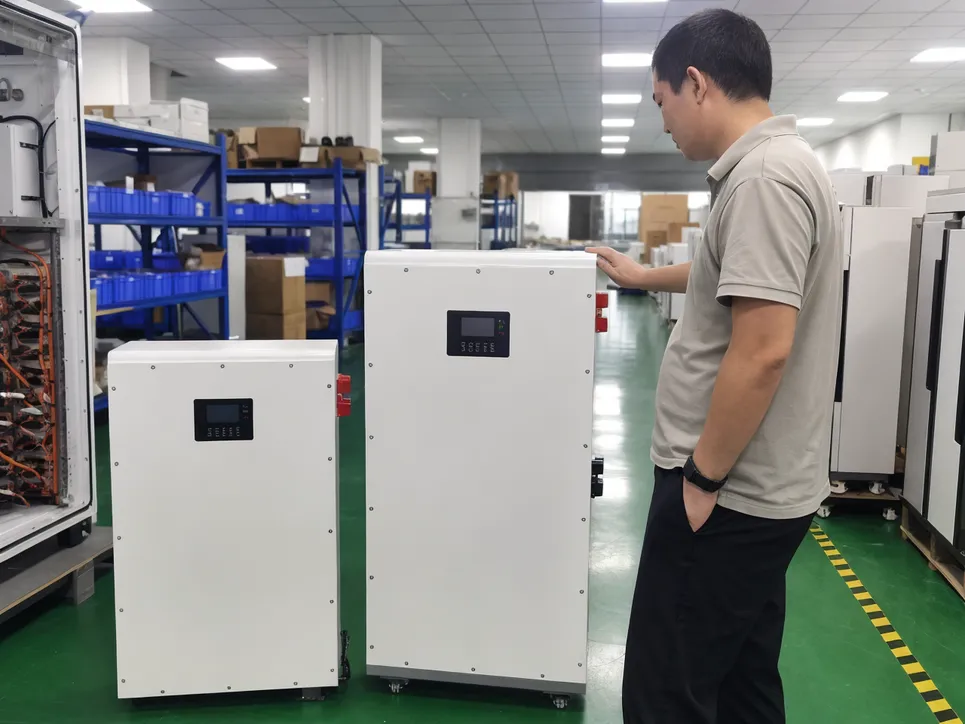
Both tiers together give you a voltage ladder: 24V as the entry/mid-range product and 48V as the premium or commercial product. Distributors who stock both capture a wider market without sending buyers to a competitor for the tier they don't carry. Sourcing both from one dual voltage solar battery supplier means your BMS firmware style, documentation format, packing standards, and account management stay unified.
| Factor | 24V Configuration | 48V Configuration |
|---|---|---|
| Best commercial fit | Solar home kits 1–5 kW, weak-grid backup, DC pumps, telecom | Residential hybrid 5–15 kW, light commercial, rack-mount, infrastructure |
| Inverter ecosystem | Budget to mid-range 24V inverters, widely available | Mid-range to premium 48V hybrid inverters |
| Current at 3 kW load | ~117A (requires heavier cables, higher BMS rating) | ~58A (standard cables, lower BMS stress) |
| Buyer risk if misapplied | Undersized for loads above 5 kW; current stress on cables and BMS | Overkill cost for small residential; fewer budget inverter options |
| Quote inputs needed | Chemistry, Ah, inverter model, charge profile, destination | Chemistry, kWh target, inverter brand/model, rack or standalone, destination |
| Commercial value | Volume anchor SKU, price-competitive, fast reorder | Higher margin per unit, premium positioning, project-scale orders |
48V trade-off: 48V inverters and charge controllers cost more, which pushes your retail price point up. This tier works when your buyer's end customer values capacity and performance over upfront cost.
Procurement Specs for 24V 48V Solar Battery Quotes
The table below covers typical specification parameters for both voltage tiers. These are planning values for your RFQ — actual specifications lock during quotation based on your chemistry, capacity, BMS requirements, and enclosure selection.
| Parameter | 24V LiFePO4 (25.6V) | 48V LiFePO4 (51.2V) | Notes |
|---|---|---|---|
| Cell configuration | 8S (8 cells series) | 16S (16 cells series) | Parallel strings added for higher Ah |
| Nominal voltage | 25.6V | 51.2V | — |
| Capacity range | 50Ah – 200Ah+ | 50Ah – 280Ah+ | Custom Ah available via OEM |
| Energy range | 1.28 – 5.12+ kWh | 2.56 – 14.3+ kWh | Usable at 90–95% DoD |
| Max continuous discharge | 50A – 200A | 50A – 200A | BMS-dependent; confirm with inverter peak |
| Charge voltage (CC/CV) | 29.2V | 58.4V | Standard LiFePO4 profile |
| Discharge cut-off | 20.0V | 40.0V | BMS-programmed; adjustable |
| BMS protections | OVP, UVP, OCP, SCP, OTP, cell balancing | OVP, UVP, OCP, SCP, OTP, cell balancing | In-house BMS design |
| Communication options | RS485, CAN, Bluetooth | RS485, CAN, Bluetooth | Protocol matched to inverter brand |
| Enclosure options | Metal case, ABS plastic, IP65 | Metal case, ABS, 19" rack-mount, IP65 | Custom form factor available |
| Terminals | M8 bolt, Anderson, custom | M8 bolt, Anderson, busbar, custom | Confirm with system wiring |
| Operating temp (discharge) | -20°C to 55°C | -20°C to 55°C | — |
| Operating temp (charge) | 0°C to 45°C | 0°C to 45°C | Low-temp cutoff programmable |
| Cycle life (planning) | 3,000 – 6,000 at 80% DoD | 3,000 – 6,000 at 80% DoD | Cell grade dependent |
| Certifications | CE, IEC 62133, UN38.3, MSDS | CE, IEC 62133, UN38.3, MSDS | View certification details |
Note: Actual dimensions, weight, BMS current limits, parallel/series rules, and detailed datasheets are confirmed during RFQ based on your inverter model, installation environment, and order quantity. Send your 24V 48V battery specification for exact values.
Lead-Acid 24V & 48V Bank Configurations
For lead-acid (gel/AGM) 24V and 48V bank configurations, we supply standard deep-cycle batteries that can be series-connected to reach the target voltage. These are configurable supply paths rather than integrated BMS packs — contact us with your bank architecture and we'll confirm model availability.
Deeper Technical Coverage
- LiFePO4 Solar Battery — chemistry-level specifications
- 48V LiFePO4 Solar Battery — voltage-specific technical detail
Cell Matching, BMS Settings, and Charger Fit Reduce Field Returns
The most expensive battery in your catalog is the one that generates a warranty claim. After 13 years of shipping 24V and 48V packs across five export regions, we've mapped the failure modes that actually drive field returns — and almost none of them are cell failures. They're system integration failures.
Charge Profile Mismatch — Top Cause of Returns
Field failure #1
A 51.2V LiFePO4 pack connected to an inverter still set to "lead-acid 48V" mode charges at 56.4V instead of 58.4V. The pack never reaches full capacity, the BMS never triggers balancing, and within months the cells drift apart. The buyer's customer sees declining runtime and files a warranty claim.
Our prevention: We confirm your inverter or charger model during RFQ and program BMS charge parameters to match. If your system uses a Growatt, Deye, Victron, or any other specific inverter brand, tell us — we'll verify protocol compatibility and charge curve alignment before production starts.
Cell Sorting Precision
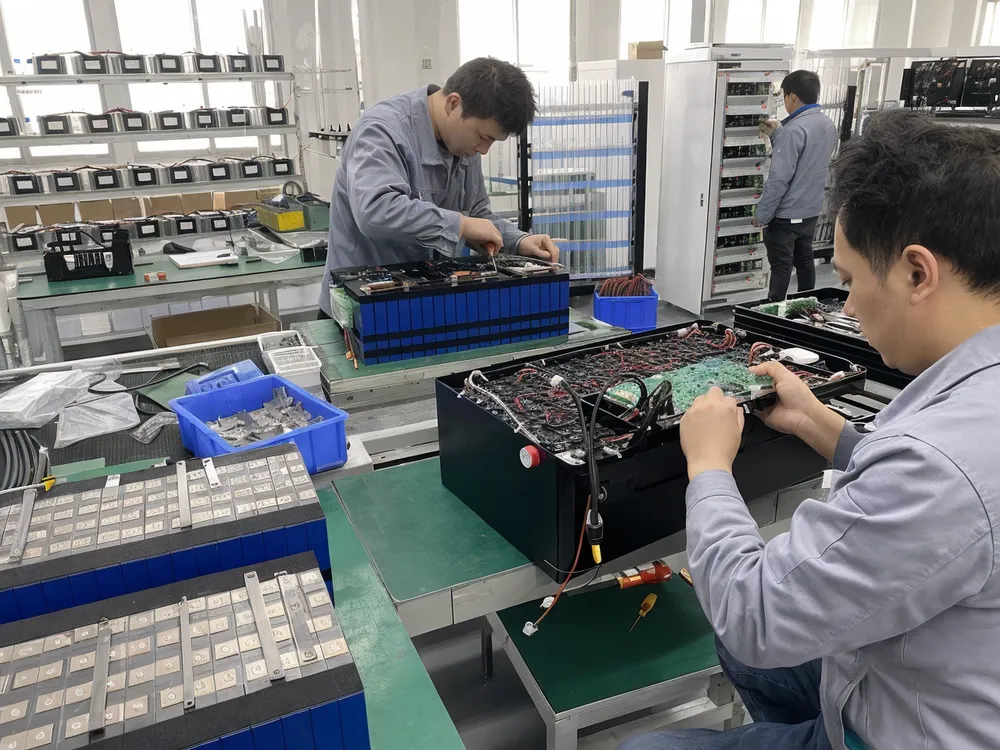
Cell sorting precision determines whether your 500-unit batch performs uniformly or develops scattered failures at month 8. We sort every cell through automated equipment that groups by actual measured voltage (within 20mV) and internal resistance (within 5mΩ).
On a 16S 48V pack, that's 16 cells that need to age together — if one cell is weaker, it hits the BMS under-voltage cutoff first and the entire pack shuts down prematurely.
Tight sorting at the front end means predictable degradation curves across your entire shipment, which means your warranty cost stays calculable rather than random.
BMS Protection Thresholds
BMS protection thresholds need to match deployment conditions, not just cell chemistry. A 24V pack going into a rooftop cabinet in Lagos needs a higher temperature cutoff than one installed in a German basement. A 48V pack feeding a 10 kW inverter needs a higher over-current threshold than one paired with a 5 kW unit.
We design and manufacture BMS boards in-house — protection parameters are programmed per-project, not pulled from a generic module datasheet. This is the difference between a BMS that protects your cells and one that either nuisance-trips (annoying end users) or fails to protect (destroying cells).
The in-house BMS capability is also why we can offer communication protocol matching — RS485, CAN, or Bluetooth — to specific inverter monitoring platforms. Generic third-party BMS boards rarely support this without firmware modification.
QC Sequence for Both Voltage Tiers
Every batch carries traceable data. If a field issue surfaces, we trace it to the cell lot and BMS firmware version within hours.
For buyers building complete battery-and-charger packages, our 24V Solar Battery Charger page covers charger pairing, MPPT controller matching, and kit assembly options.
Market Segments Where 24V and 48V SKUs Sell Together
The commercial case for carrying both voltage tiers isn't theoretical — these are the segments where existing buyers reorder both 24V and 48V configurations on a regular cycle.
Distributor Voltage Ladder Programs
You stock 24V as your entry-to-mid product (solar home kits, small backup systems, DC-powered equipment) and 48V as your premium/commercial product (residential hybrid storage, rack-mounted systems, higher-power installations).
Your sales team offers an upgrade path within your own catalog instead of losing the customer to a competitor who carries the higher tier.
Sourcing advantage: One quality standard, one set of compliance documents, and one logistics coordination point when both voltage tiers come from a single 24V 48V solar battery wholesale supplier.
Off-Grid and Weak-Grid Dealers with Upgrade Paths
Your initial sale is a 24V kit for a household or small business. When that customer's load grows — they add a refrigerator, a workshop tool, or a second building — they need more capacity or a voltage upgrade.
If you carry 48V, you capture the upgrade sale. If you don't, they go elsewhere.
Key markets: This pattern is heavily observed in African and Southeast Asian markets where electrification is incremental.
Telecom and Light Infrastructure Contractors
Project specifications vary by site. A rural cell tower might spec 24V DC bus (legacy equipment), while a newer urban site specs 48V.
Contractors who bid on mixed-site programs need a supplier who can deliver both voltage classes with consistent quality and documentation.
Bid competitiveness: Your bid improves when you can guarantee supply for both specs from one source.
Agricultural and Small Commercial System Integrators
Pump controllers, cold storage, greenhouse automation, and workshop power. Some installations fit 24V (single pump, lighting, monitoring), others need 48V (multiple loads, higher-power inverter, expansion headroom).
Your project pipeline includes both — sourcing both from one factory simplifies your bill of materials and reduces the risk of voltage-mismatched deliveries.
Regional Distributors Entering New Market Tiers
If you've been selling 24V into residential and want to expand into light commercial (schools, clinics, small offices), 48V is the natural next product.
We help you spec the 48V configuration that complements your existing 24V line — same enclosure family, same documentation style, same BMS communication platform — so your downstream customers see a coherent product range.
Ready to build your voltage-ladder catalog?
Send your volume split and target segments — we'll recommend a SKU mix that covers your market without over-stocking.
OEM/ODM Scope for 24V 48V Solar Battery Programs
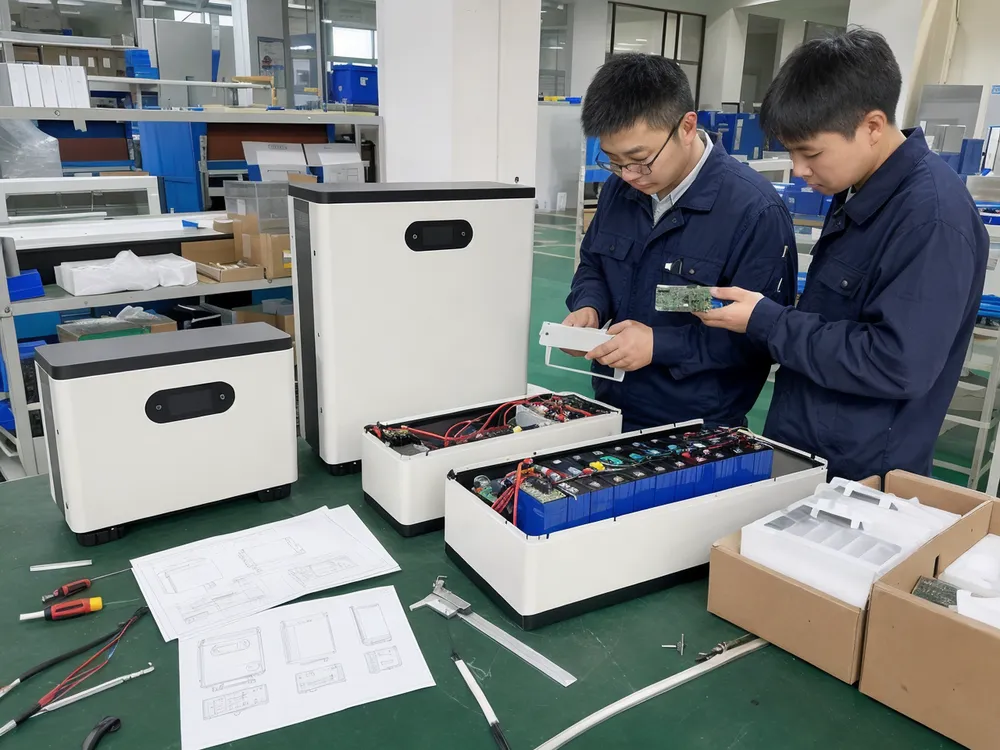
When you source both voltage tiers as OEM/ODM, the engineering efficiency compounds. Your 24V and 48V products can share enclosure tooling, BMS hardware platforms, documentation templates, and packing formats — reducing your per-SKU development cost compared to sourcing each tier from a different factory.
Your private-label catalog gains a coherent 24V-to-48V product family from one OEM/ODM solar battery engineering partner. Fewer supplier handoffs, consistent quality across tiers, and better charger/inverter compatibility control because one BMS team manages both voltage classes.
What's Configurable Across Both Voltage Tiers
Voltage & Capacity
Any practical cell arrangement — 8S for 25.6V, 16S for 51.2V, with parallel strings scaled to your Ah target. Non-standard configurations (e.g., 25.6V 150Ah or 51.2V 280Ah) are production-validated before first shipment.
BMS Current & Protection
Continuous discharge rating matched to your inverter's peak demand. Over-voltage, under-voltage, over-current, short-circuit, and temperature thresholds programmed per-model.
Communication Protocol
RS485, CAN bus, or Bluetooth — matched to your inverter brand's monitoring platform. Modbus RTU, custom register maps, or proprietary protocols supported with sufficient technical documentation from the inverter manufacturer.
Enclosure & Form Factor
Shared enclosure family across 24V and 48V (same external dimensions, different internal cell arrangement) or distinct designs per tier. Metal, ABS, IP65, wall-mount, floor-stand, or 19" rack-insert.
Terminals & Connectors
M8 bolt, Anderson, MC4-style, busbar, or custom connector to match your system wiring standard.
Branding
Logo, color, model number, serial number format, carton design, user manual, warranty card, and QC sticker — applied to both voltage tiers under your brand identity.
Carton & Pallet Labeling
Destination-market language, barcode format, handling marks, and UN dangerous goods labels per your import requirements.
MOQ Structure
Standard Configurations + Branding
100 units per model. Branding-only changes are simpler and faster than custom pack layouts or new BMS firmware.
Custom Cell Arrangements or BMS Firmware
Higher volume required — we quote the exact threshold during RFQ so you can plan your initial order against landed cost targets.
Market Testing Strategy
Start with a standard model under your label and move to full custom once volume justifies it.
The Commercial Value
- Coherent 24V-to-48V product family from one engineering partner
- Fewer supplier handoffs across voltage tiers
- Consistent quality across 24V and 48V configurations
- Better charger/inverter compatibility — one BMS team manages both voltage classes
Start Your OEM/ODM Specification
Tell us your monthly volume per tier, target retail segment, branding scope, inverter models, and documentation needs. We'll return feasibility, MOQ per model, development timeline, and a sample plan.
Export Documents, Packing, and Landed-Cost Planning
Lithium batteries are classified dangerous goods for transport. Missing or incorrect documentation doesn't just delay your shipment — it can result in port rejection, re-routing charges, or warehouse refusal at destination. We treat compliance documentation as part of production, not as paperwork you chase after the container is sealed.
Documents Provided With Every Shipment
For OEM/ODM models, we generate model-specific UN38.3 and MSDS during the development phase so documentation ships with your first production order.
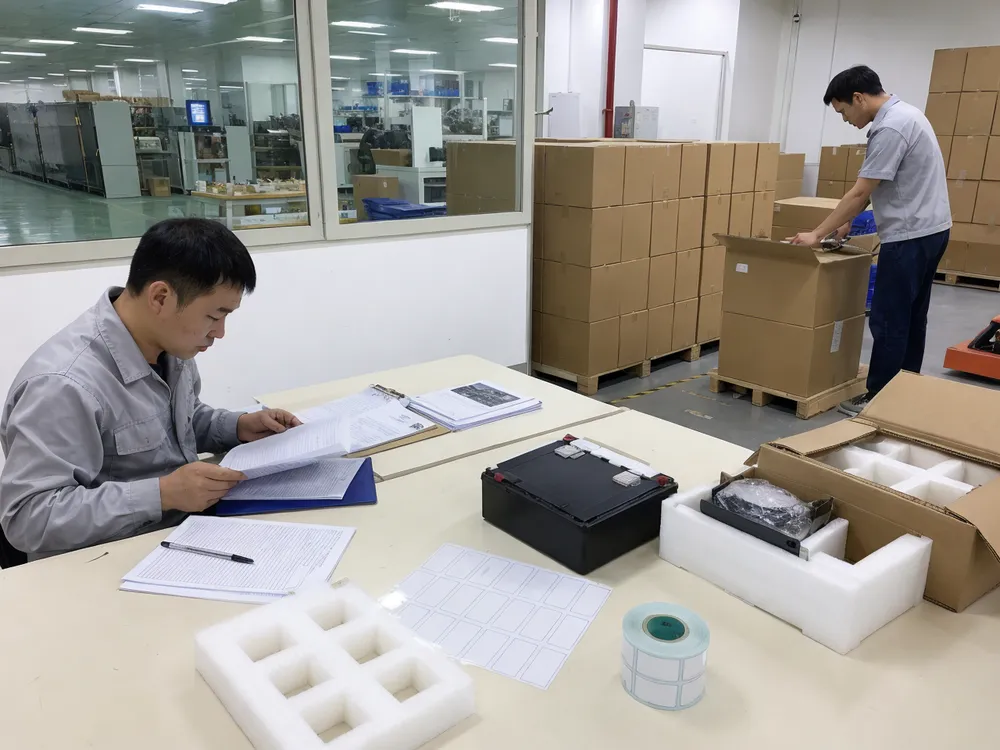
OEM/ODM note: Model-specific UN38.3 and MSDS are generated during the development phase, so documentation ships with your first production order — no delays waiting for paperwork after production completes.
Battery Packing Standards
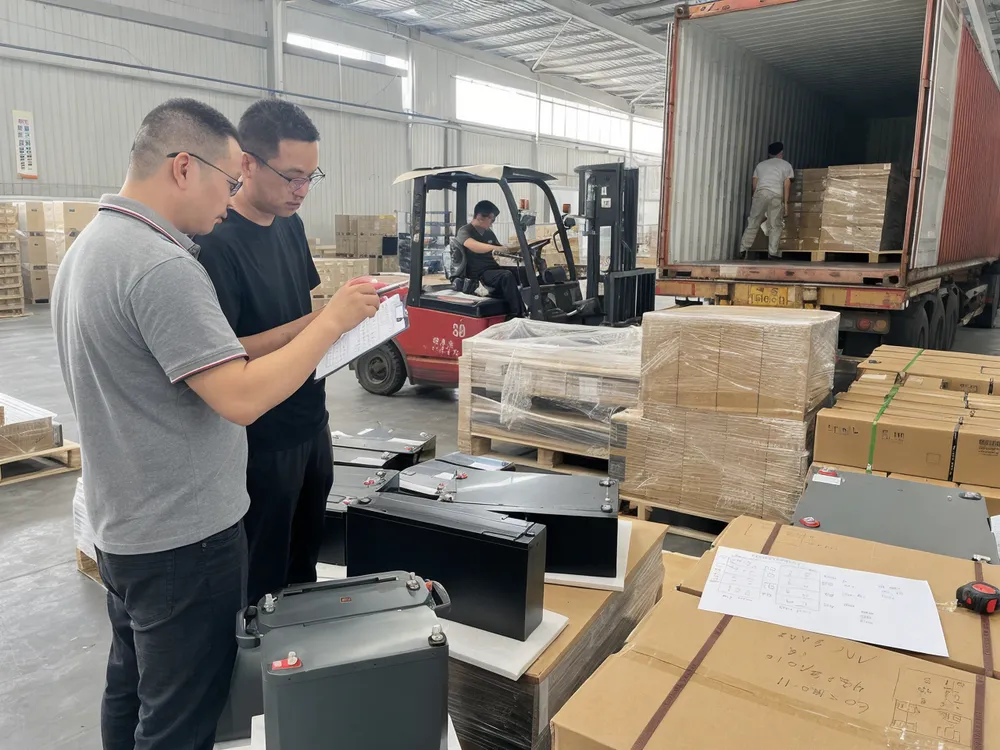
We test carton drop performance at 1.2m to simulate handling during port transfer. After one early shipment where a buyer's freight forwarder stacked pallets three-high without our knowledge, we switched to reinforced corner protectors as standard — the cost is negligible compared to a damage claim.
Why We Don't Publish Fixed Container Quantities
A 24V 100Ah LiFePO4 in an ABS case weighs and measures differently than a 48V 200Ah in a metal rack-mount enclosure. Mixed-voltage shipments (24V and 48V in the same container) require careful weight distribution and loading sequence planning.
Once your order spec is confirmed, we provide:
- Gross weight per carton
- Carton dimensions
- CBM per unit
- Recommended pallet layout
- Container loading plan for 20GP or 40HQ
This lets you calculate freight cost per unit and compare FOB vs. CIF options accurately.
Export Markets
Europe, Southeast Asia, Africa, South America, and the Middle East. Each region has labeling preferences, documentation formats, and packing expectations we've refined through repeat shipments.
Related Voltage Pages if Your System Spec Is Still Moving
If you landed on this page but your voltage decision isn't final — or your project requires a different configuration than what's covered here — these pages carry deeper detail on specific tiers:
The parent category for all 24V sourcing. Covers the full 24V specification range, chemistry comparison (LiFePO4 vs. gel vs. AGM), market segment analysis, and OEM/ODM scope for 24V-only programs. Start here if you're committed to 24V and want the complete sourcing picture.
Category PageFor buyers building complete 24V kits that include chargers, MPPT controllers, or inverter-charger combos. Covers charge profile matching, charger compatibility, and single-SKU kit assembly. If you're bundling battery + charger under one model number, this page has the pairing logic.
Product PageThe category page for 48V-only programs. Covers commercial storage, rack-mounted systems, and higher-power residential hybrid installations. If your program is exclusively 48V and you don't need the 24V tier, start there.
Category PageProduct-level detail on 51.2V lithium packs specifically. Deeper technical coverage of 16S cell configurations, rack-mount form factors, and commercial-grade BMS features. For buyers who've already decided on 48V lithium and need specification-level information.
Product PageEach page fits a different procurement decision. If you're still comparing, send us your project parameters and we'll recommend the right voltage tier based on your inverter, load profile, and target market.
FAQ for 24V 48V Solar Battery Sourcing
Common technical and commercial questions from distributors evaluating dual-voltage LiFePO4 programs.
What is the difference between a 24V and 48V solar battery system?
The core difference is DC bus voltage, which determines inverter compatibility, current draw, and cable sizing. A 24V system (25.6V LiFePO4) pairs with 24V inverters in the 1–5 kW range and draws higher current at a given power output. A 48V system (51.2V LiFePO4) pairs with 48V inverters typically 5–15 kW and draws half the current at the same power, reducing cable cost and BMS stress.
- 25.6V nominal (8S LiFePO4)
- 1–5 kW inverter range
- Price-sensitive residential & small off-grid
- 51.2V nominal (16S LiFePO4)
- 5–15 kW inverter range
- Premium residential & light commercial
For your catalog, 24V targets price-sensitive residential and small off-grid markets; 48V targets premium residential and light commercial. The cell chemistry is identical — the difference is series count (8S vs. 16S) and BMS programming.
Is a 24V 48V solar battery one switchable battery or two voltage configurations?
Two separate configurations. When we say "24V 48V solar battery," we mean our factory supplies both 25.6V and 51.2V pack designs — not a single battery that switches between voltages. Each configuration has its own cell arrangement, BMS firmware, charge profile, and enclosure design.
If you need a specific switchable architecture (some exist for niche applications), describe the requirement in your RFQ and our engineering team will assess feasibility.
For standard wholesale and distribution programs, you order 24V models and 48V models as separate SKUs.
When should a distributor stock both 24V and 48V solar batteries?
When your market spans multiple system sizes or you want an upgrade path within your own catalog. Stock 24V if your buyers install 1–5 kW systems (solar home kits, small backup, DC equipment). Add 48V when your buyers also serve 5–15 kW installations (residential hybrid, light commercial, rack-mounted storage).
The voltage ladder lets your sales team upsell within your brand instead of losing the customer to a competitor. Sourcing both from one dual voltage solar battery supplier also simplifies your logistics — one container can carry both tiers with unified documentation.
What charger settings are needed for 25.6V and 51.2V LiFePO4 batteries?
Charge voltage 29.2V, CC/CV profile. Set charger or inverter to "LiFePO4" or "lithium" mode.
Charge voltage 58.4V, same CC/CV profile and lithium mode selection.
Never use lead-acid or gel charge settings
These under-charge lithium packs and cause progressive capacity loss over cycling.
Our BMS is programmed to match specific inverter charge curves. Include your inverter model in your RFQ and we'll confirm compatibility or flag settings that need adjustment.
For complete charger pairing guidance, see our 24V Solar Battery Charger page.
What BMS features matter most for 24V and 48V solar battery packs?
Five features separate a reliable BMS from a liability:
Active or passive balancing that keeps all cells within 50mV during cycling, preventing premature capacity loss.
Matched to your inverter's peak draw — set too low and you get nuisance shutdowns; too high and you risk cell damage.
Calibrated to deployment climate — tropical installations need different thresholds than temperate ones.
Compatible with your inverter's monitoring system — RS485, CAN, or Bluetooth with correct register mapping.
Response time under 500μs to prevent thermal events.
We design BMS in-house, so all five parameters are programmed per-project rather than defaulting to generic values.
What documents are needed to import lithium solar batteries?
Minimum required: UN38.3 test summary (transport classification for lithium batteries), MSDS (material safety data sheet for customs and warehouse handling), commercial invoice with correct HS code and battery specifications.
For European import: add CE declaration of conformity and IEC 62133 test report. Some markets require additional local certification (e.g., BIS for India, SASO for Saudi Arabia) — we support applications with test samples and technical data packages.
All standard models ship with current certification documents. OEM/ODM models receive model-specific reports during development so documentation is ready for your first production shipment.
What is the MOQ for EVANBattery standard and OEM/ODM models?
100 units per model for standard 24V or 48V configurations with branding changes (logo, label, carton, manual). This applies to existing cell arrangements with no engineering modifications.
For custom capacity, BMS firmware, communication protocol, or enclosure changes, MOQ scales with complexity:
Minor BMS parameter adjustment
100–200 units
Fully custom cell configuration
Higher volume (new validation testing required)
We quote exact MOQ during the RFQ process so you can calculate landed cost per unit before committing.
Typical path: Most buyers start with a standard model under their brand at 100 units, validate with their market, then move to full custom on the second or third order.
Send Voltage, Capacity, and Inverter Data for a Factory Quote
You've seen the specification range, the QC process, and the OEM scope. Now send us the details and we'll respond with a technical recommendation, model match, MOQ confirmation, and quotation for each voltage tier.
Your RFQ Checklist
- Voltage class: 24V, 48V, or both
- Capacity target: Ah or kWh per unit
- Chemistry: LiFePO4, gel, AGM, or undecided
- Inverter or charger model: brand and model number
- Required discharge current: continuous and peak
- Communication protocol: RS485, CAN, Bluetooth, or none
- Enclosure preference: metal, ABS, rack-mount, wall-mount, IP rating
- Branding scope: label only, full OEM, or standard EVANBattery brand
- Order quantity: initial order + estimated annual volume
- Destination country and port
- Required compliance documents
What We'll Return
Model recommendation per voltage tier
BMS/charger compatibility confirmation
MOQ and unit pricing
Lead time
Packing specification with carton dimensions and gross weight
Container loading estimate
Documentation status
Phone / WhatsApp
+86 13560690838Factory
No. 38, Tongxing 1st Road, Jiafuwei Industrial Zone, Caosan Village, Guzhen Town, Zhongshan City, Guangdong Province, China