

Portable Solar Battery Kit From a Battery-First Manufacturer
Battery pack, integrated BMS, solar charging interface, output ports, accessories, and export documents — produced under one roof so your kit SKU ships complete and reorders stay consistent.
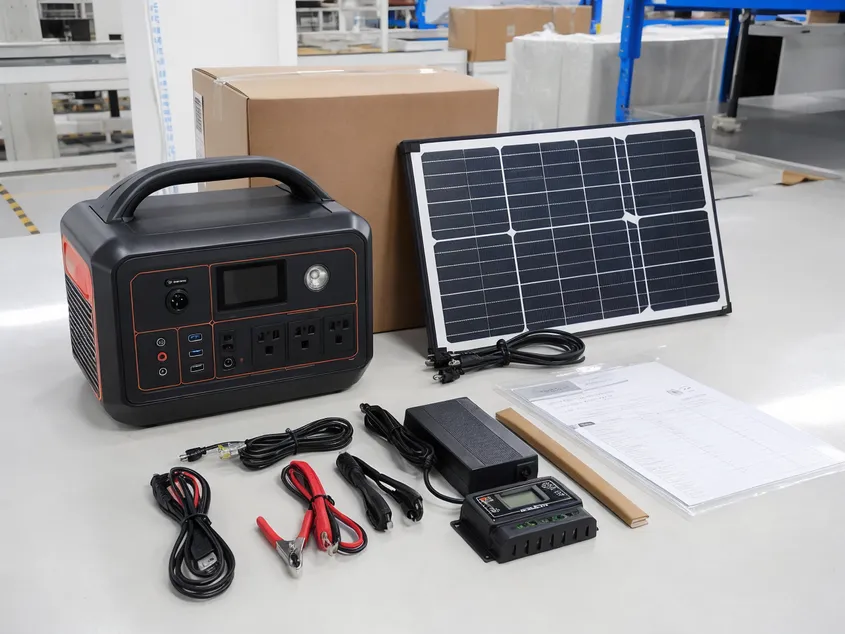
Portable Solar Battery Kit for Resale-Ready Small Solar Programs
A portable solar battery kit is a battery-centered package — battery pack, BMS, solar charging interface, output ports, cables, and accessories — bundled into one carton for resale, project supply, or private-label distribution. The commercial value is not the portability itself; it's a repeatable kit SKU you can quote, brand, stock, ship, and reorder without managing separate component sourcing.
EVANBattery manufactures the core of every kit: the battery pack and BMS system. We've been building solar batteries since 2012 from our 9,900m² factory in Zhongshan, Guangdong — 6 production lines, 150 employees, 18+ battery engineers, and 2,000,000 units of annual capacity. We don't make panels, inverters, or racking. We make the battery packs that sit at the center of your portable solar kit program, and we control the quality variables that determine whether your kits hold up across a 12-month warranty window or generate support tickets.
If you're sourcing a portable solar battery kit for wholesale, DIY solar retail, off-grid starter programs, or branded solar bundles, send us your target capacity, output requirements, accessory scope, branding needs, and destination market. We'll recommend a standard model or map an OEM/ODM path.
Request a Portable Solar Battery Kit Quote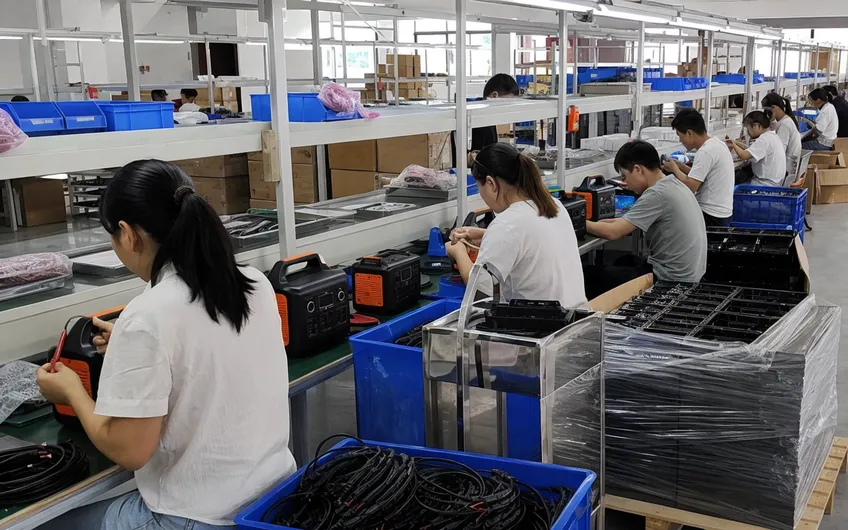
Who Sources These Kits?
- Wholesale distributors building solar starter SKUs
- DIY solar retail channels needing bundled products
- Off-grid program suppliers for rural electrification
- Private-label brands launching branded solar bundles
Kit Scope Buyers Can Quote Without Guesswork
The first question every buyer asks about a portable solar battery kit: what's included, and who manufactures what? Unclear kit scope creates quoting errors, warehouse receiving disputes, and customer support confusion downstream. Here's how we define it.
| Kit Component | EVANBattery Scope | Notes |
|---|---|---|
| Battery pack (LiFePO4 cells) | Manufactured in-house | Cell sorting, pack assembly, capacity verification — all on our lines |
| Integrated BMS | Designed and produced in-house | Protection parameters matched to cell chemistry and capacity |
| Solar charging interface | Configured in-house | DC input connector, voltage/current matching to panel spec |
| DC/USB output ports | Configured in-house | Port mix set during OEM configuration |
| AC inverter output (if included) | Integrated during assembly | Pure sine wave, wattage model-dependent |
| Casing and display | Assembled in-house | ABS+PC housing, LED/LCD indicator, branding area |
| Cables and adapters | Bundled per kit spec | Solar panel cable, charging adapter, output cables |
| Solar panel (if bundled) | Sourced to spec | Panel wattage, connector, and supplier confirmed per project — not manufactured by EVANBattery |
| User manual and inserts | Produced per your branding | Language, layout, and content customizable |
| Carton and packaging | Produced per your spec | Retail box, inner foam, outer shipping carton, labels |
| Export documents | Provided per model | UN38.3, MSDS, CE, IEC 62133 — model-specific |
We manufacture the battery pack and BMS — that's our core. Solar panels, external controllers, and certain accessories are sourced to your specification and bundled during kit assembly. This distinction matters because it defines warranty responsibility: battery performance is on us; panel output is on the panel supplier's spec sheet. We'll confirm the full scope before quotation so your landed cost calculation has no gaps.
Common Quoting Issue
A common issue we see: buyers quote a "kit" without confirming whether the panel is included in the unit price. Clarify this upfront — it changes your landed cost by 15–30% depending on panel wattage.
Need to confirm what your kit includes before quoting? Send your component requirements and we'll return a scope confirmation with pricing breakdown.
Send Component RequirementsWarranty Responsibility Split
Battery Pack + BMS Performance
EVANBattery warranty — manufactured and tested in-house
Solar Panel Output
Panel supplier's spec sheet — sourced to your specification
Charging Interface + Output Ports
Configured and validated in-house during assembly
Export Compliance Documents
UN38.3, MSDS, CE, IEC 62133 — provided per model
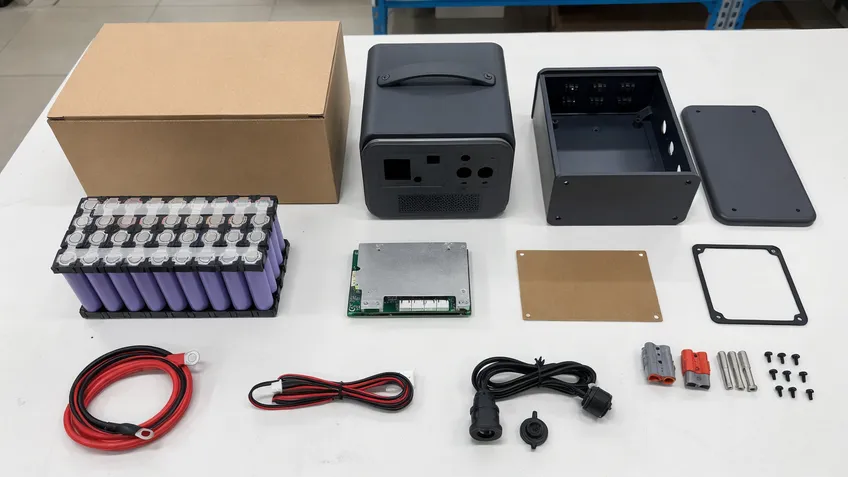
Specification Matrix for Small Portable Solar Battery Kits
The table below covers typical specifications across our portable solar battery kit range. Exact values depend on the model and any OEM/ODM configuration — treat this as your comparison-sheet starting point, not a locked data sheet.
| Parameter | Typical Range / Standard | Notes |
|---|---|---|
| Battery chemistry | LiFePO4 | Primary chemistry for cycle life and safety; ternary lithium available for weight-sensitive models |
| Nominal voltage | 12.8V (4S) | Standard for small portable solar battery kits; 25.6V available for higher-output models |
| Capacity class | 50Ah – 200Ah (640Wh – 2,560Wh) | Most kit programs target 100Ah–150Ah for balance of capacity, weight, and retail price |
| Usable energy | 90%+ DoD (LiFePO4) | BMS low-voltage cutoff preserves cycle life |
| Solar charging input | 12V–25V DC, 60W–200W panel compatibility | MPPT or PWM controller compatibility confirmed per model |
| AC charging | 100V–240V universal adapter, 3–6 hour full charge | Adapter included or optional depending on kit scope |
| USB output | USB-A 5V/2.4A, USB-C PD 18W–100W | Port count and PD wattage set during configuration |
| DC output | 12V cigarette lighter, 5521 barrel jack | Anderson connector available on higher-capacity models |
| AC inverter output | Pure sine wave, 100W–1,000W (model-dependent) | Not all kit models include AC output — confirm during quote |
| BMS protections | Over-charge, over-discharge, over-current, short-circuit, temperature | Thresholds programmed per cell configuration |
| Cycle life | 2,000–3,500+ cycles to 80% DoD | LiFePO4 standard; actual cycle count depends on discharge depth and temperature |
| Casing material | ABS+PC fire-rated plastic | Drop-tested, UV-resistant for outdoor use |
| Display | LED battery level indicator or LCD (model-dependent) | LCD shows input/output wattage, battery percentage, fault codes |
| Operating temperature | -20°C to 55°C (discharge), 0°C to 45°C (charge) | BMS enforces temperature cutoff outside range |
| Weight | Model-dependent (typically 5–20kg for kit battery unit) | Confirm per model — affects shipping cost tier |
| Accessories (typical) | Solar panel cable, AC adapter, DC output cable, user manual | Full accessory list confirmed per kit configuration |
| Certifications available | CE, IEC 62133, UN38.3, MSDS, ISO 9001:2015 | Document availability confirmed per model and capacity |
Specifications shown are typical values for this product category. Actual specifications vary by model and configuration. Contact us for detailed product data sheets matching your requirements.
100Ah/12.8V Sweet Spot for DIY Solar Retail
A small solar battery kit at the 100Ah/12.8V level hits the sweet spot for most DIY solar retail and off-grid starter programs — enough capacity to run LED lighting, phone charging, a small fan, and basic electronics for 8–12 hours, while keeping the unit weight under 15kg and the retail price accessible.
If your channel needs higher output for appliances, you're likely looking at the Portable Solar Battery Power Station instead.
Request a Model Data Sheet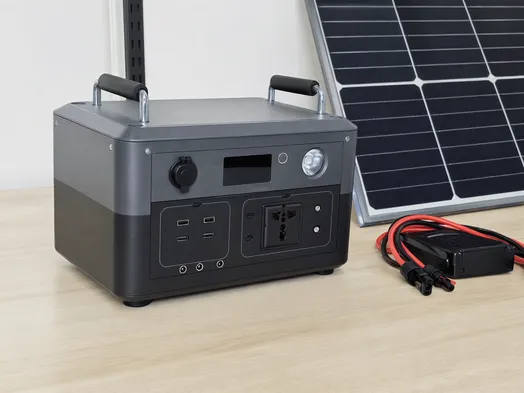
DIY Kit Channels Where Configuration Decides Margin
A portable solar battery kit sells into specific market segments — each with different configuration priorities, order patterns, and margin structures. The kit that works for a DIY solar retailer won't match what an emergency backup distributor needs. Here's how configuration choices map to commercial outcomes in each channel.
DIY Solar Retail
Buyers in this segment stock kits for end users who want a simple, self-contained solar power package. The priority is low support burden: clear manuals, intuitive port layout, stable packaging that survives retail shelf handling, and a capacity-to-price ratio that moves units.
Baseline Configuration
- 100Ah LiFePO4 battery
- 100W solar panel
- USB/DC output ports
- Printed quick-start guide
Your margin comes from branding and bundling — not from the battery spec itself. Keep the configuration simple, keep the manual clear, and your return rate stays low.
Rural & Off-Grid Starter Programs
NGOs, government programs, and regional distributors buy kits for communities without grid access. Rugged packing matters — these kits travel on unpaved roads. BMS protection depth matters — end users don't monitor charge levels. Capacity-to-budget matching matters — program budgets are fixed per household.
Typical Program Spec
- 50Ah–100Ah capacity
- Matched panel + basic DC output
- Covers lighting & phone charging
- 500–5,000 units per program cycle
Orders are typically 500–5,000 units per program cycle, with reorders tied to funding rounds.
Emergency Backup Distributors
Your customers buy on output reliability and safety documentation. They need kits that can run a medical device, a communication radio, or a small refrigerator during outages.
Non-Negotiable Requirements
- AC inverter output
- Higher capacity (150Ah+)
- CE / IEC 62133 documentation
The margin is in the safety story — your downstream buyers pay more for documented, certified backup power than for generic portable batteries.
Installer Demo & Training Kits
Solar installers and training centers need consistent, reorderable kits for demonstration and education. Configuration must stay identical across batches — if the port layout or capacity changes between orders, training materials become obsolete.
Order Pattern
- 20–100 units per order
- High reorder frequency
- Configuration locked in system
We lock your configuration in our system so reorders match exactly.
Private-Label Small Solar Bundles
You're building a brand, not just stocking a product. Carton artwork, logo placement, barcode/SKU labels, manual language, and accessory presentation all matter. The battery inside is the same — but the packaging, documentation, and unboxing experience define your brand positioning.
We handle branding from casing color through retail box design. Your margin comes from brand equity, so invest in the packaging scope during OEM configuration.
Branding Scope Includes
- Casing color customization
- Logo placement & carton artwork
- Barcode/SKU labels
- Manual language localization
- Retail box design
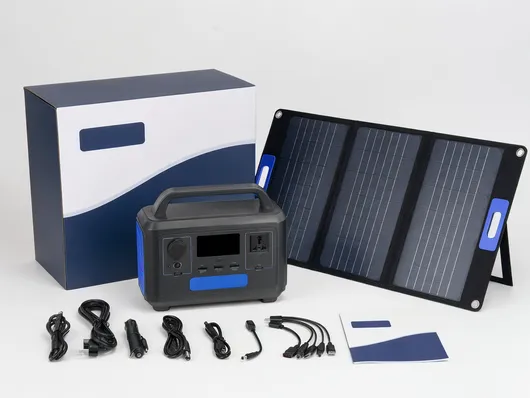
Margin insight: The highest-margin kit programs we supply are private-label — buyers who invest in branding and packaging consistently achieve 30–50% higher retail prices than buyers selling generic-branded units with identical specs.
Capacity, Output, and Solar Input Choices Before OEM Approval
Before you send an RFQ, you need to decide three things: how much capacity, what output ports, and what solar input compatibility. These choices lock your retail price tier, shipping cost, carton size, and warranty exposure. Here's the decision framework.
Capacity Tiers and Their Commercial Logic
Budget & Lightweight
Lowest unit cost, lightest weight, smallest carton. Fits DIY solar retail and budget off-grid programs.
Retail price positioning under $200 in most markets
Limited runtime beyond lighting and phone charging
Low warranty exposure because expectations are low
Volume Sweet Spot
Enough capacity for extended lighting, fans, small appliances, and device charging. This is where most of our repeat kit orders land.
Retail price positioning $250–$500 depending on output configuration and branding
Shipping cost per unit manageable in 20GP containers
Most repeat kit orders from established programs
Power Station Territory
Heavier, larger carton, higher unit cost, but significantly higher retail price and margin per unit. Suits emergency backup and commercial field-service channels.
If your kit needs AC inverter output above 500W, you're likely in this tier
Consider whether the Portable Solar Battery Power Station product path is a better fit for your channel
Output Port Selection
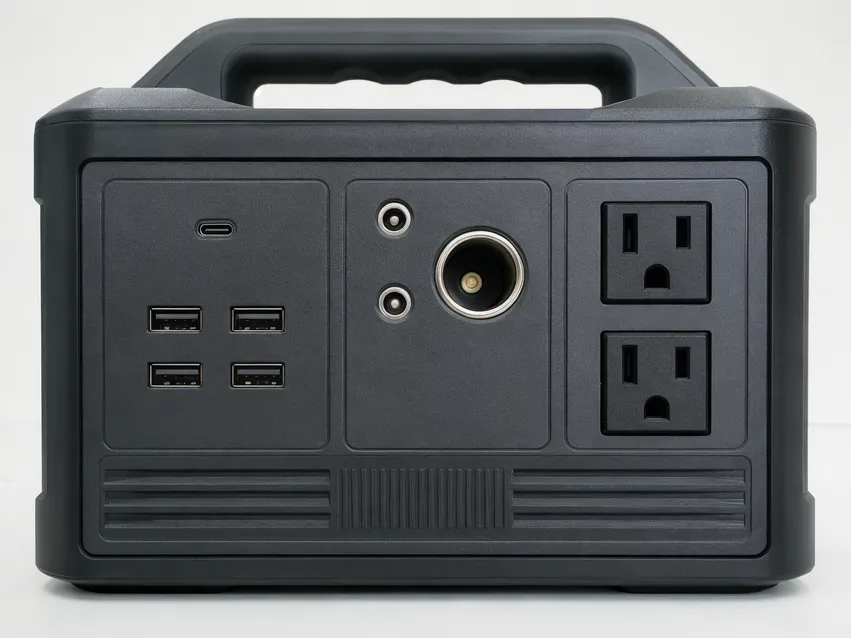
USB-A and USB-C PD are baseline for any kit sold after 2024 — omitting USB-C PD limits your retail appeal. DC 12V output (cigarette lighter or 5521) adds compatibility with automotive accessories and portable fridges. AC inverter output adds cost and weight but opens the kit to appliance-level use cases.
Every port you add increases BMS complexity slightly and adds to your bill of materials — but also increases perceived value and retail price ceiling.
| Port Type | Use Case | Impact |
|---|---|---|
| USB-A | Phone/tablet charging | Baseline — expected |
| USB-C PD | Laptops, fast-charge devices | Required post-2024 |
| DC 12V | Automotive accessories, portable fridges | Adds channel versatility |
| AC Inverter | Appliances, medical devices | Higher cost/weight, higher price ceiling |
Solar Input Compatibility
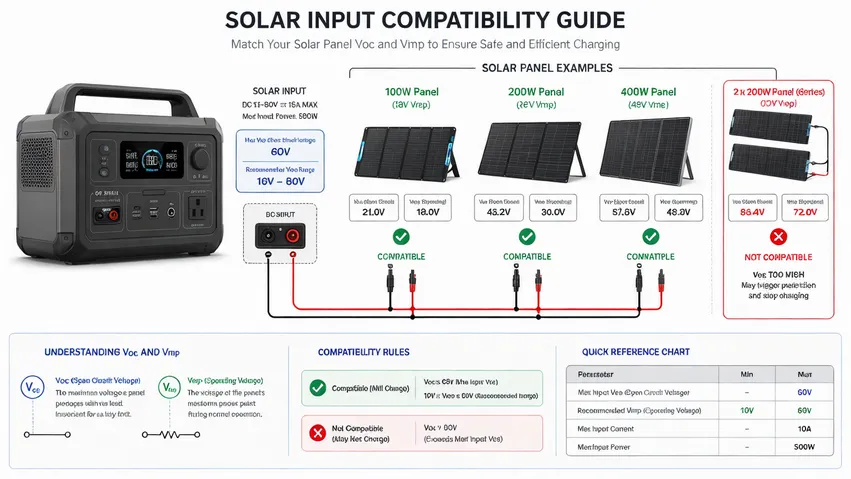
Your kit's solar input must match the panel you bundle or recommend. Mismatched voltage between panel and charge controller is the single most common field complaint in small solar battery kit programs.
Confirm before ordering:
-
1
Panel open-circuit voltage (Voc)
-
2
Maximum power voltage (Vmp)
-
3
Connector type (MC4, DC barrel, Anderson)
We configure the charging interface to match your specified panel — if you change panel suppliers later, confirm voltage compatibility before reordering.
Common Procurement Mistake
We've seen buyers switch panel suppliers mid-program to save $3/unit, then get a wave of "not charging" complaints because the new panel's Voc exceeded the controller's input range. Always confirm voltage match when changing any component.
Ready to lock your configuration?
Send your capacity and output requirements — we'll recommend the configuration that fits your channel and price positioning.
OEM/ODM Kit Options and MOQ Boundaries
Customization on a portable solar battery kit is not decoration — it's commercial control. Every choice you make during OEM configuration affects your landed cost, support burden, brand positioning, and reorder simplicity.
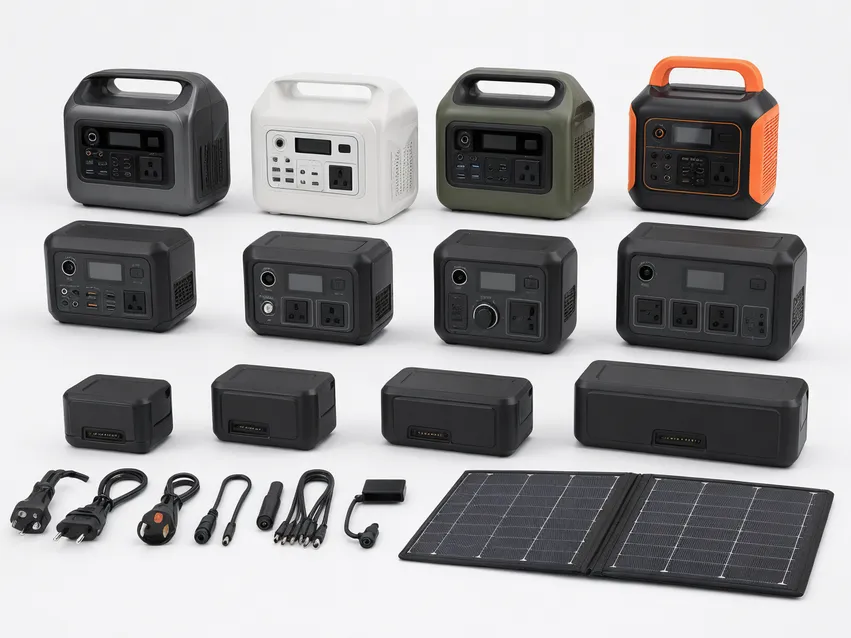
What You Can Customize
Branding
MOQ: 100–500 units
Logo, casing color, carton artwork, manual language, barcode/SKU labels. Standard models from 100 units; branded packaging from 200–500 units.
Configuration
MOQ: 300–500 units
Output port mix, solar input connector, plug/socket standard, accessory bundle, display language. MOQ depends on component sourcing.
Electrical (ODM)
MOQ: 500–1,000+ units
Capacity, voltage platform, BMS firmware, inverter wattage, new enclosure. Engineering validation required before mass production.
What Requires Validation Time
Any change that affects electrical performance — new cell count, different BMS protection thresholds, higher inverter output — requires validation testing before mass production. This adds 2–4 weeks to your first-order timeline but does not repeat on reorders unless you change the specification again.
We run charge/discharge cycling, protection trigger verification, and temperature testing on the new configuration before approving production.
Charge/Discharge Cycling
Protection Trigger Verification
Temperature Testing
What to Send Us for OEM Review
Market & Volume
- Target market and sales channel
- Estimated first-order quantity
- Projected annual volume
Technical Spec
- Preferred capacity and voltage
- Required output ports
- Solar input panel spec
- Plug/socket standard
Branding & Logistics
- Logo files, color references
- Manual language(s)
- Required certifications
- Packaging needs & delivery destination
What We Return
Scope Confirmation
MOQ per Tier
Unit Pricing
Lead Time
Sample Timeline
Standard models ship samples within 7–10 days; OEM configurations require 15–25 days for sample preparation.
As a portable solar battery kit manufacturer with 13 years of OEM/ODM history, we've built kits for distributors across Europe, Southeast Asia, Africa, and South America. The process is routine — send your spec and we'll map the path.
Cell Sorting, BMS Validation, and Batch Testing Behind Each Kit
The battery pack inside your portable solar battery kit determines whether your customers get consistent performance across a 2-year warranty window or start reporting capacity fade after six months. Here's what happens on our production floor before a kit battery ships.
Automated Cell Sorting and Matching
Every incoming LiFePO4 cell batch is tested for actual capacity, voltage, and internal resistance. Cells are grouped within 20mV voltage variance and 5mΩ resistance variance per pack.
This matching prevents thermal imbalance during cycling — the root cause of premature capacity fade in portable battery packs.
Field lesson (2019): We tightened our matching tolerance after tracking field returns from a distributor in Southeast Asia; the failures were always traceable to cell mismatch, not BMS defects.
BMS Integration and Protection Programming
Our BMS boards are designed and produced in-house — not sourced as generic third-party modules. For each kit model, we program:
- Over-charge voltage
- Over-discharge cutoff
- Maximum continuous discharge current
- Short-circuit response time
- Temperature protection thresholds
A 100Ah kit with 20A continuous discharge gets different parameters than a 200Ah kit with 40A continuous. Generic BMS modules approximate these values; ours are calibrated to the actual cells in your pack.
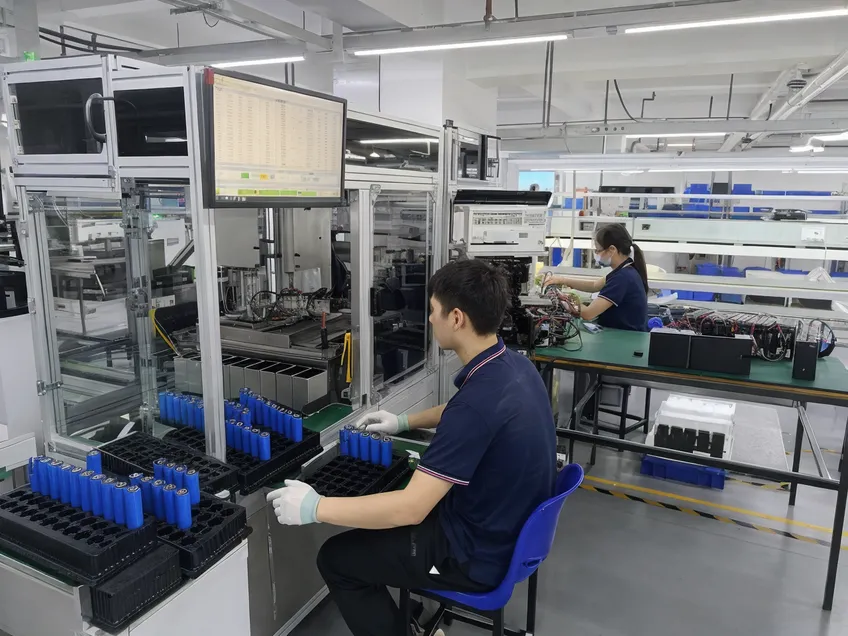
Full Lifecycle Testing on Every Production Batch
We run these on every batch, not just during initial type approval. If a batch drifts outside tolerance, production stops until root cause is identified.
18+ Engineers Supporting Battery and BMS Development
Our R&D team splits across pack design, BMS hardware/firmware, and application engineering. Most have 8–15 years in the Guangdong battery manufacturing cluster. When you need a custom BMS configuration or a non-standard cell arrangement, these are the people who validate it before production approval.
The commercial result for you: predictable field warranty exposure, identical performance across reorder batches, and an after-sales team that isn't troubleshooting capacity drift.
18+
Engineers
8–15
Years Experience
20mV
Voltage Tolerance
5mΩ
Resistance Tolerance
Export Documents, Carton Control, and Kit Packing for Lithium Batteries
Lithium batteries are classified dangerous goods for air and sea transport. A portable solar battery kit with missing or incorrect documentation gets held at port — and port delays cost more than the paperwork ever would. Here's what we provide and how we pack.
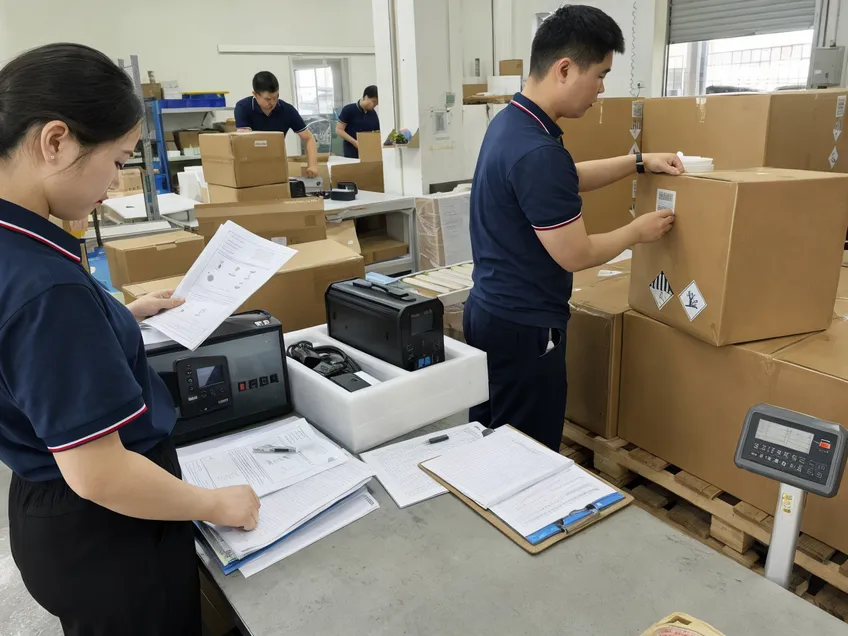
Documentation Per Model
Document scope depends on your exact model, capacity, shipping route, and destination market. Some markets require additional local certification — we support the application process with test samples and technical data packages. Confirm your documentation requirements during quotation so nothing is missing at shipment.
| Document | Purpose | Availability |
|---|---|---|
| UN38.3 Test Summary | Transport safety classification for lithium cells and packs | Available for all standard models; generated for OEM configurations after validation |
| MSDS / SDS | Material safety data for customs and warehouse handling | Available per model and chemistry |
| CE Declaration of Conformity | European market import clearance | Available for CE-certified models |
| IEC 62133 Test Report | Battery safety standard compliance | Available for tested models |
| ISO 9001:2015 Certificate | Manufacturing quality management system | Factory-level certificate, applicable to all products |
Kit Packing Control
Each portable solar battery kit ships with:
- Battery unit in foam-lined inner carton with terminal insulation
- Accessories separated and secured (cables, adapters, manual)
- Outer carton rated for stacking, with UN3481 lithium battery handling labels
- Batch traceability label per carton (production date, model, serial range)
- Palletization with stretch wrap and corner protection for container loading
- Dangerous goods shipping declaration prepared per IATA (air) or IMDG (sea)
Private-Label Programs
For private-label programs, we add your barcode/SKU labels, branded retail box inside the shipping carton, and custom insert cards. Carton artwork and label placement are confirmed during OEM sample approval.
Destination-Specific Packing
We ship portable solar battery kits regularly to Europe, Southeast Asia, Africa, South America, and the Middle East. Packing reinforcement varies by destination — African inland routes get heavier carton grades than European warehouse-direct shipments.
The goal is zero transit damage claims and clean warehouse receiving on your end.
Choosing Between a Kit, Power Station, Charger, or Camping Battery
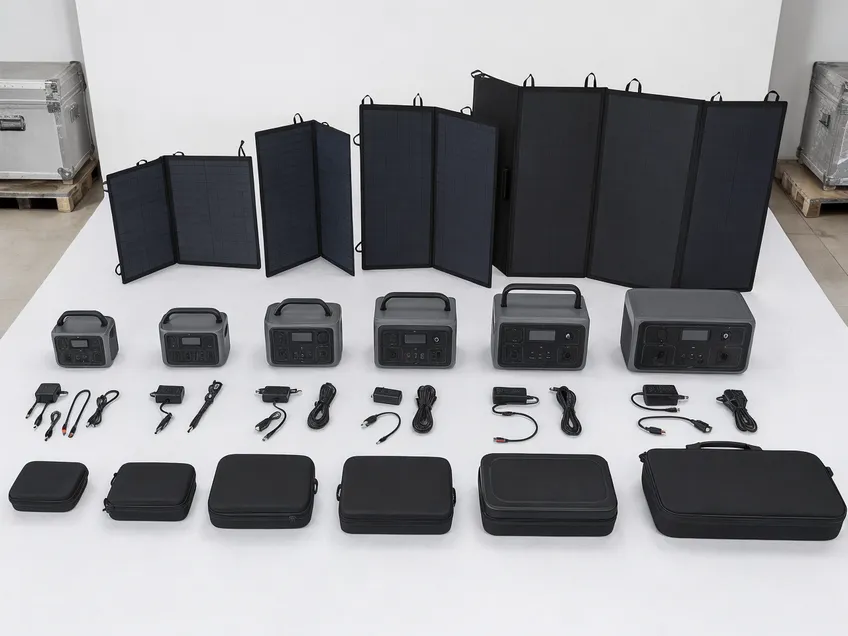
EVANBattery's portable solar battery family includes four product paths. If you're not sure whether a kit is the right fit for your channel, use this comparison to navigate.
| Decision Factor | Portable Solar Battery Kit | Power Station | Charger | Camping Battery |
|---|---|---|---|---|
| Best Channel Fit | DIY solar retail, starter kit programs, private-label bundles | Emergency backup, mobile work, high-output retail | USB/DC accessory channels, power bank programs | Outdoor/recreation retail, camping gear distribution |
| Capacity Range | 640Wh – 2,560Wh | 500Wh – 2,000Wh+ | 100Wh – 500Wh | 200Wh – 1,000Wh |
| Key Differentiator | Bundled system (battery + panel + accessories in one carton) | Built-in AC inverter, multiple high-power outputs | Compact, lightweight, low unit cost | Weather-resistant, integrated lighting, outdoor-rated |
| AC Output | Model-dependent (not all kits include) | Standard (pure sine wave) | Typically not included | Model-dependent |
| Solar Panel | Bundled or recommended per kit spec | Sold separately or bundled | Small panel or sold separately | Sold separately or bundled |
| Packaging Focus | Retail-ready complete set | Feature-rich standalone unit | Minimal, compact box | Rugged, outdoor-branded |
| Typical Order Pattern | 500–5,000 units per program | 200–2,000 units per order | 1,000–10,000 units (lower ticket) | 300–3,000 units per season |
Complete Solar Packages
Customer opens one box and has everything they need — the kit is your path.
Current PageStandalone High-Output Power
AC inverter as the primary feature for emergency backup and mobile work channels.
Power Station →Compact USB/DC Charging
Low-ticket power bank programs with compact form factor and minimal packaging.
Charger →Outdoor Recreation
Weather resistance and camping-specific features for outdoor retail and gear distribution.
Camping Battery →Not sure which path fits? Send your channel details and target market — we'll recommend the product path and model that matches your commercial goals.
Send Channel Details for RecommendationFAQ: Portable Solar Battery Kit Procurement
Answers to the questions procurement teams ask most often when scoping kit orders — component lists, custom configurations, and practical capacity guidance.
What does a portable solar battery kit usually include for wholesale orders?
A standard portable solar battery kit includes:
- LiFePO4 battery pack with integrated BMS
- Solar charging interface (DC input matched to panel spec)
- USB and DC output ports
- Charging cables
- Solar panel connection cable
- AC adapter (if included in scope)
- User manual, and retail or shipping carton
Solar panels may be bundled or sold separately depending on your kit configuration. AC inverter output is model-dependent — not all kit models include it. Confirm the full component list during quotation to ensure your landed cost calculation is accurate.
Can EVANBattery manufacture a DIY portable solar battery kit with custom voltage and capacity?
Yes. Standard kits use 12.8V (4S LiFePO4) configurations in 50Ah–200Ah capacity. If your program needs a different voltage platform (25.6V for 24V systems) or a non-standard capacity, our engineering team configures the cell arrangement, BMS parameters, and enclosure to match.
ODM Scope (Custom V/Ah)
MOQ typically 500–1,000 units depending on cell procurement and BMS validation requirements.
Standard Configurations
Start at 100 units MOQ for existing 12.8V platform kits.
What capacity range is practical for a small portable solar battery kit?
For most DIY solar retail and off-grid starter programs, 50Ah–150Ah at 12.8V (640Wh–1,920Wh) covers the practical range.
Below 50Ah: Runtime is too limited for meaningful solar applications — you're competing with power banks.
Above 150Ah at 12.8V: Weight and carton size push into power station territory where AC inverter output becomes expected.
100Ah class is our highest-volume kit configuration: enough capacity for lighting, fans, phone charging, and small electronics over 8–12 hours, while keeping unit weight under 15 kg.
Does EVANBattery manufacture the solar panel included in the kit?
No. EVANBattery manufactures the battery pack and BMS system — that's our core competency. Solar panels included in kit bundles are sourced to your specification from qualified panel suppliers.
We confirm panel voltage, wattage, connector type, and physical dimensions during kit configuration to ensure charging compatibility. Warranty responsibility for panel output sits with the panel specification, not with our battery warranty.
If you have an existing panel supplier, we'll match our charging interface to their output spec.
What BMS protections should a portable solar battery kit include?
At minimum:
- Over-charge protection — prevents cell voltage exceeding safe limit
- Over-discharge cutoff — prevents deep discharge damage
- Over-current limiting — prevents wire heating and cell stress
- Short-circuit shutdown — immediate disconnect on fault
- Temperature monitoring — high and low temperature cutoff
For kits sold into markets with CE or IEC 62133 requirements, these protections are mandatory for certification. Our BMS boards are programmed with thresholds matched to the specific cell chemistry and capacity in each kit model — not generic approximations.
What documents are needed to ship lithium portable solar battery kits?
UN38.3 test summary and MSDS are mandatory for all lithium battery shipments by air or sea.
CE declaration and IEC 62133 report are required for European import and increasingly expected by marketplace platforms globally.
Your freight forwarder needs a dangerous goods declaration (DGD) per shipment — we prepare this per IATA or IMDG requirements.
Document availability depends on the exact model and capacity; OEM configurations require testing before documents can be issued. Confirm your documentation requirements during quotation so everything is ready at shipment.
What information should I send to get an accurate portable solar battery kit quote?
Send:
The more specific your brief, the faster we return a model recommendation or OEM/ODM scope with pricing.
RFQ Checklist for a Kit Quote Your Team Can Compare
Send us the following and we'll respond with a technical recommendation, model match or OEM/ODM scope, and pricing within 48 hours.
Target Market
Country or region where you'll sell or deploy the kit
Sales Channel
DIY retail, online marketplace, distribution, project supply, or private-label
Estimated Quantity
First order and projected annual volume
Battery Capacity
Ah or Wh range (e.g., 100Ah / 1,280Wh)
Voltage
12.8V standard or other requirement
Output Ports
USB-A, USB-C PD wattage, DC 12V, AC inverter (Y/N and wattage)
Solar Input
Panel wattage and voltage you plan to bundle, connector type
Accessories
Cables, adapters, carry bag, or other items to include in kit
Branding
Logo files, casing color (RAL/Pantone), carton artwork, manual language
Required Certifications
CE, IEC 62133, UN38.3, or market-specific
Packaging
Retail box, plain shipping carton, or custom
Delivery Destination
Port or warehouse address for freight calculation
Target Price Tier
Helps us recommend the right capacity/feature balance
We'll recommend a standard model if one fits your brief, or outline the OEM/ODM path with MOQ, timeline, sample cost, and engineering scope. No minimum for initial consultation.
Explore More