

Solar Battery Capacity Range for Wholesale & Project Orders
Solar battery capacity options from a manufacturer running both LiFePO4 and lead-acid lines since 2012.
100Ah entry SKUs through kWh-scale commercial storage — produced on 6 dedicated lines with in-house BMS design and batch-level lifecycle testing.
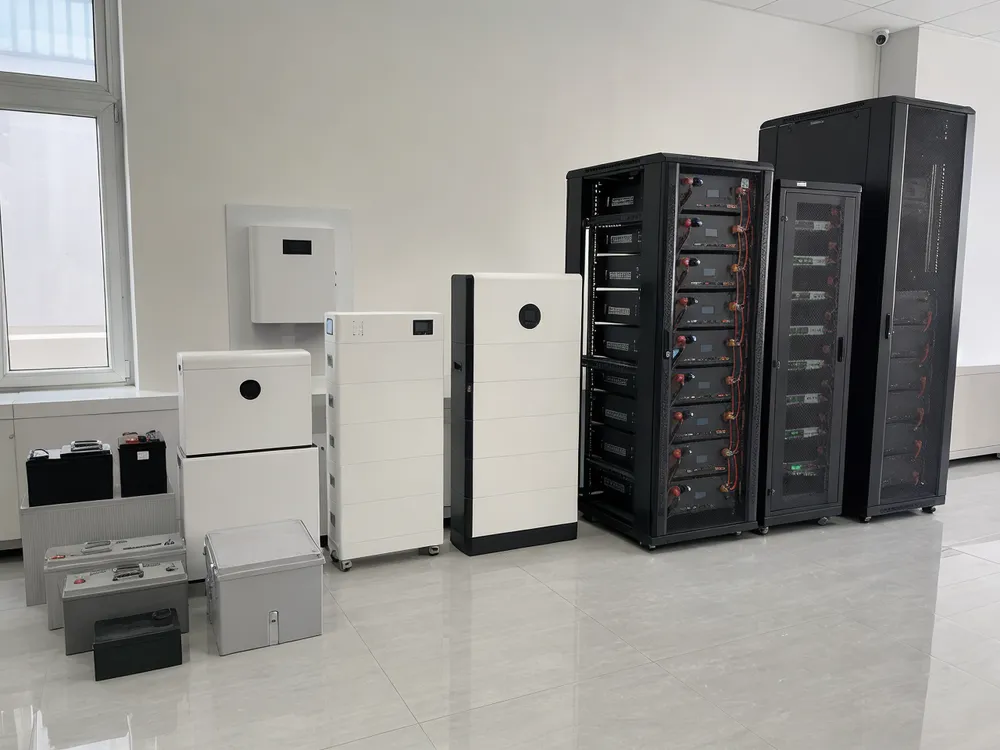
This page organizes our solar battery capacity range so you can compare Ah and kWh options, confirm which tier fits your order program, and move to a quote. We manufacture solar energy storage batteries — LiFePO4 and lead-acid (gel, AGM) — across 12V, 24V, and 48V voltage families, from 50Ah residential units up to rack-mounted commercial systems measured in kWh.
Capacity choice drives everything downstream in your business: SKU planning, landed cost per watt-hour, inverter compatibility, and the warranty exposure you carry with your customers. We built this page around those decisions, not around product glamour shots. If you already know your target capacity, click through to the product page. If you're comparing tiers or building a new SKU mix, the selection guide and specs below will get you oriented.
Learn more about EVANBattery's manufacturing backgroundCapacity Lineup: 100Ah, 200Ah, and kWh Solar Battery Options
We produce three capacity tiers under this category. Each serves a different order profile and market segment. The comparison below gives you the quick overview — click through for full specifications and quoting on each product page.
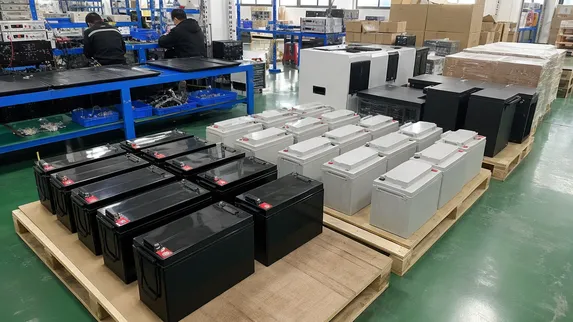
100Ah Solar Battery
12V / 24V — LiFePO4 or Gel
Standard wholesale SKU for solar kits, backup units, and starter distribution programs. Lowest-risk entry point for new market testing.
Order Fit: Standard wholesale, solar kit bundling, backup power starter programs
View 100Ah Specs & Quote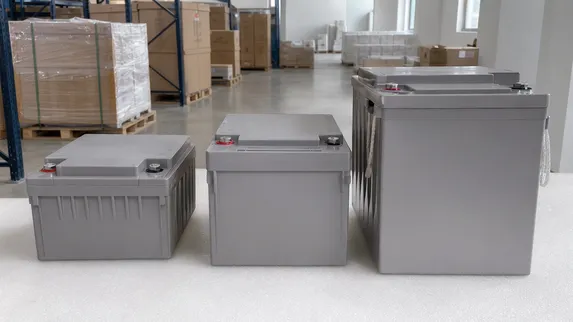
200Ah Solar Battery
12V / 24V / 48V — LiFePO4 or Gel
Higher-capacity inverter bundles, rural electrification projects, deeper-cycle dealer programs. Covers the mid-range storage demand.
Order Fit: Inverter bundles, rural electrification, deeper-cycle dealer programs
View 200Ah Specs & Quote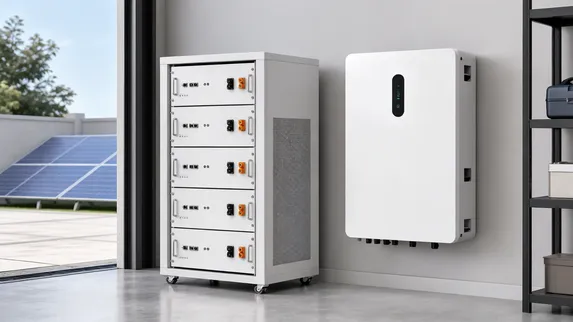
10kW / kWh Solar Battery
48V / 51.2V LiFePO4 — Rack or Wall-Mount
Residential storage installers, commercial backup, hybrid inverter channel partners. Higher unit value, larger margin per sale.
Order Fit: Residential storage, commercial backup, hybrid inverter partners
View 10kW Specs & QuoteStandard Tooling — No Development Lead Time
As a 100Ah solar battery manufacturer and 200Ah solar battery supplier, we hold standard tooling for the most common configurations in each tier. Your first order on a standard model can ship without development lead time — 100-unit MOQ, production starts once deposit clears.
Mixed-Capacity Container Shipping
For buyers building a mixed-capacity container — say 200 units of 12V 100Ah plus 100 units of 48V 200Ah — we run both on separate lines simultaneously, so your shipment goes out complete rather than in split deliveries.
Solar Battery Capacity Selection: Ah, Voltage, and kWh for Your SKU Mix
Choosing the right solar battery capacity for your catalog isn't a single-variable decision. It's a matrix of your target market, the inverter systems your customers use, the backup duration they expect, and the reorder economics that make the SKU profitable for you.
12V / 24V Ah Batteries (100Ah–200Ah)
These serve markets where the end system is built around a standalone MPPT controller and inverter — solar home systems, small off-grid installations, portable and backup applications.
- Buyers typically purchase individual batteries or small parallel banks
- Lower unit price, simpler logistics (lighter cartons, standard palletization)
- Reorder cycle tends to be frequent
If you're entering a new market or testing demand, 12V 100Ah LiFePO4 is the lowest-risk starting SKU we see across our distributor base.
48V / 51.2V kWh Systems (5kWh–15kWh+)
These serve markets where the end system is a hybrid or off-grid inverter with integrated battery management — residential storage, commercial backup, microgrid projects.
- Buyers are typically installers or system integrators purchasing in project quantities
- Higher unit value, larger margin per sale
- Higher technical support expectation from end buyers
As a kWh solar battery supplier, we configure these systems with communication protocols (RS485, CAN, Bluetooth) matched to specific inverter brands, so your after-sales compatibility issues stay near zero.
The Conversion Check: Always Compare in kWh
Wh = V × Ah. When you're comparing across voltage families, always convert to kWh so your cost-per-stored-energy comparison is apples-to-apples.
12V × 200Ah
2,400Wh
= 2.4 kWh
51.2V × 100Ah
5,120Wh
= 5.12 kWh
Common ordering mistake: We've seen buyers order 200Ah batteries expecting 10kWh of storage, then realize they specified 12V — that's 2.4kWh. Confirm voltage and capacity together before quoting to your customer.
Usable Capacity Is What Matters
A high Ah number on a datasheet means nothing if the BMS limits continuous discharge current below what the inverter demands, or if depth of discharge is restricted to 50% on a lead-acid chemistry. Usable capacity is what your customer actually gets — and what determines whether they call you with a complaint six months later.
Category-Level Specifications to Confirm Before Quoting
Before you request pricing, here are the specification dimensions we need to align on. This table covers the category-wide ranges — exact values depend on the specific model and configuration you select.
| Parameter | Range / Options |
|---|---|
| Chemistry | LiFePO4 (lithium iron phosphate), Gel (VRLA), AGM |
| Voltage families | 12V, 24V, 48V (51.2V for LiFePO4 16S) |
| Capacity range | 50Ah – 300Ah (individual cells); 5kWh – 15kWh+ (system level) |
| Cycle life (LiFePO4) | 3,000–6,000 cycles at 80% DOD, depending on cell grade |
| Cycle life (Gel/AGM) | 500–1,200 cycles at 50% DOD |
| BMS protections | Over-charge, over-discharge, over-current, short-circuit, temperature |
| Communication options | RS485, CAN bus, Bluetooth (LiFePO4 systems) |
| Operating temperature | Charge: 0°C to 55°C; Discharge: -20°C to 60°C (LiFePO4) |
| Certifications | ISO 9001:2015, CE, IEC 62133, UN38.3, MSDS |
| Testing protocol | Capacity verification, charge/discharge cycling, 55°C soak, -20°C discharge, vibration, drop |
LiFePO4 Solar Batteries
View our lithium solar battery category for LiFePO4 options across all voltage and capacity tiers.
Gel & AGM Solar Batteries
See gel and AGM configurations for cost-sensitive markets and backup applications.
LiFePO4 vs Gel: The Cost-of-Ownership Trade-Off
If you're comparing LiFePO4 vs gel for the same capacity tier, the key trade-off is upfront cost vs total cost of ownership. Gel is cheaper per unit but cycles 3–5× fewer times. For markets with reliable solar charging and daily cycling, LiFePO4 pays back within 18 months for most of our distributors.
Cell Matching and BMS Current Control Behind Real Usable Capacity
The number printed on a battery label is nominal capacity. What your customer actually draws from the pack — and how consistently that holds across a 500-unit batch and 3 years of field use — depends on what happens during manufacturing. This is where solar battery capacity becomes a manufacturing quality question, not just a specification.
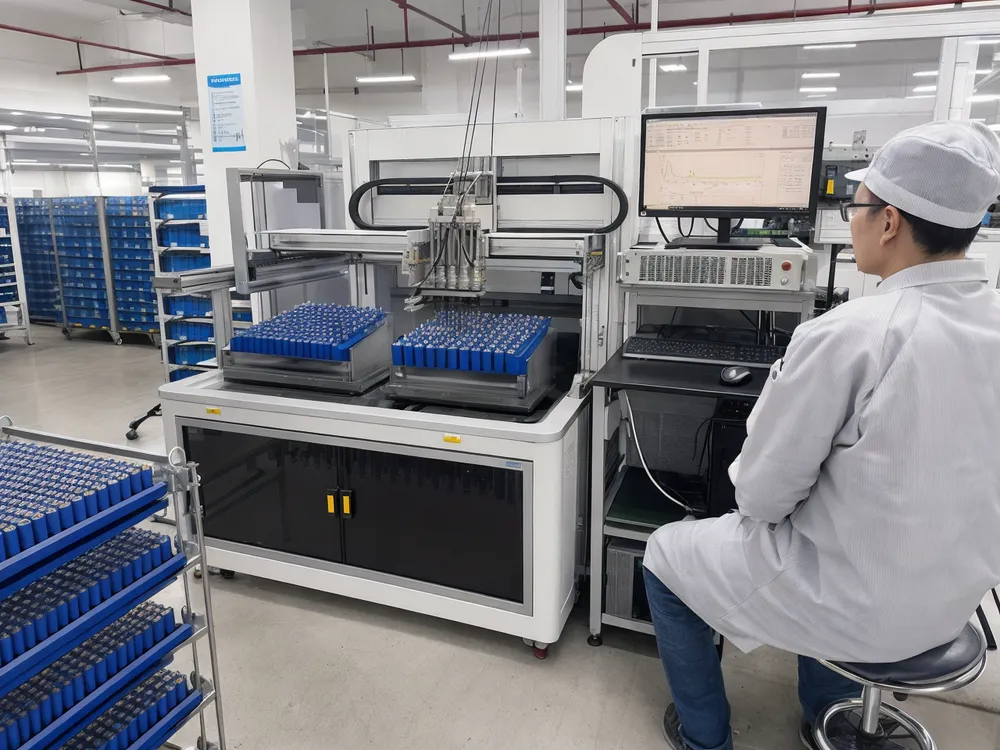
Automated Cell Sorting
We run automated cell sorting on every incoming batch. Cells are measured for actual capacity, internal resistance, and open-circuit voltage, then grouped into matched sets.
Acceptance Window
- Voltage deviation: within 20mV across all cells in a single pack
- Resistance spread: within 5mΩ across all cells in a single pack
- Out-of-spec cells: returned to supplier — not downgraded into "B-grade" product
We learned early that mixing cell grades within a pack creates thermal imbalance during cycling, which accelerates capacity fade on the weakest cell and drags the whole pack down within 6–12 months.
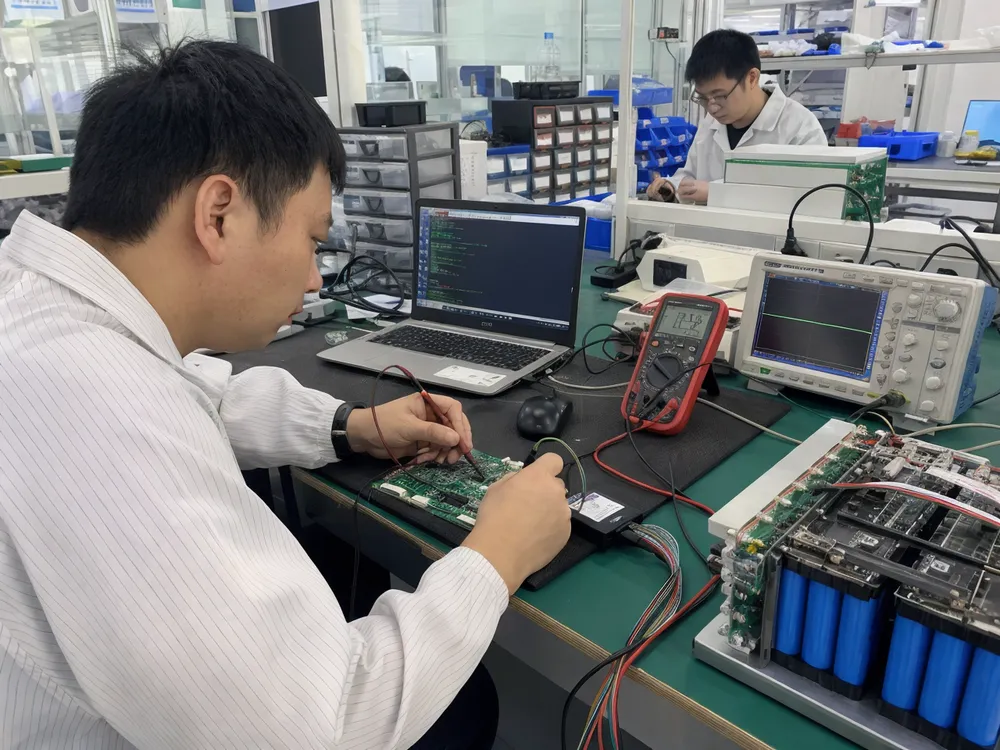
In-House BMS Design
We design and produce BMS boards in-house — 18 engineers working on hardware, firmware, and application matching. The continuous discharge current rating of the BMS must match or exceed what the connected inverter will demand at peak load.
Common Failure Mode
If a 48V 100Ah pack has a BMS rated at 50A continuous but the inverter pulls 80A during morning startup surge, the BMS trips and your customer's system shuts down. This is the single most common complaint we hear from buyers switching away from their previous supplier — BMS current mismatch causing nuisance trips.
We program protection parameters to the specific cell chemistry and application profile, not from a generic template.
Production Batch Testing — Every Batch, Not Just Type Approval
Every production batch goes through full lifecycle testing. We test on every batch, not just during initial type approval. Your field warranty exposure stays predictable because we catch drift before it ships.
Capacity verification at rated current
Charge/discharge cycling
High-temperature soak at 55°C
Low-temperature discharge at -20°C
Safety testing
Predictable warranty exposure
Market Segments by Capacity Tier
Each capacity tier maps to specific commercial segments where your buyers operate. Here's how we see the market breaking down across our export regions — and where the reorder volume concentrates.
100Ah
Entry-Level Distribution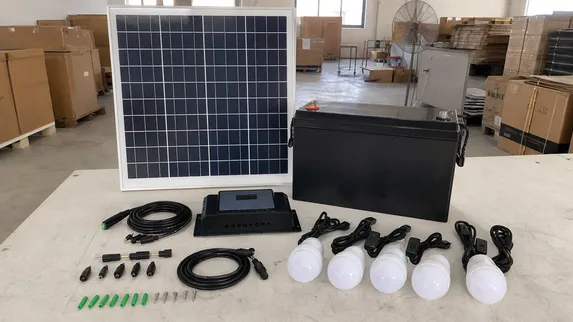
Solar Kit Programs & Backup Power
Solar home system kits for off-grid markets (Africa, Southeast Asia) remain the highest-volume segment for 100Ah batteries. Distributors bundle a 12V 100Ah battery with a panel, controller, and LED lights — a complete kit at an accessible price point.
Backup power units for small shops and residential use in load-shedding markets are the second driver. If you're building a product line from scratch, this is the capacity tier with the fastest inventory turn and the broadest customer base.
200Ah
Inverter Bundles & Projects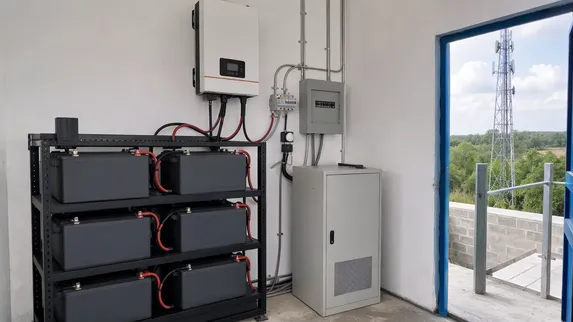
Rural Electrification & Telecom Backup
The 200Ah solar battery supplier market centers on inverter-battery packages for rural electrification, telecom tower backup, and mid-size off-grid installations. Contractors order in project quantities (50–500 units per site), and the 200Ah capacity matches the 24-hour autonomy requirement for most 1–3kW inverter systems.
Dealers serving the replacement market for aging lead-acid banks also concentrate here — a 12V 200Ah LiFePO4 directly replaces two 12V 200Ah gel batteries in series-parallel configurations while lasting 4x longer.
kWh Systems
Residential & Commercial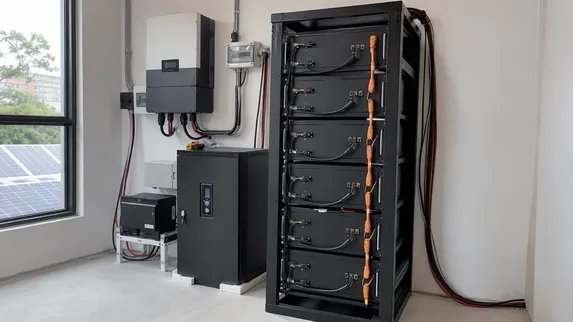
Hybrid Inverter Integration
The kWh solar battery supplier segment serves installers and system integrators working with hybrid inverters — Deye, Growatt, Victron, Goodwe, and similar platforms. These buyers need rack-mounted or wall-mounted 48V/51.2V packs with CAN or RS485 communication, pre-configured for specific inverter compatibility.
Order sizes are smaller per transaction but higher in unit value, and the after-sales relationship is longer. If your business model includes installation support or system design, this tier offers the strongest margin per customer.
OEM/ODM Capacity Configurations for Inverter and Market Requirements
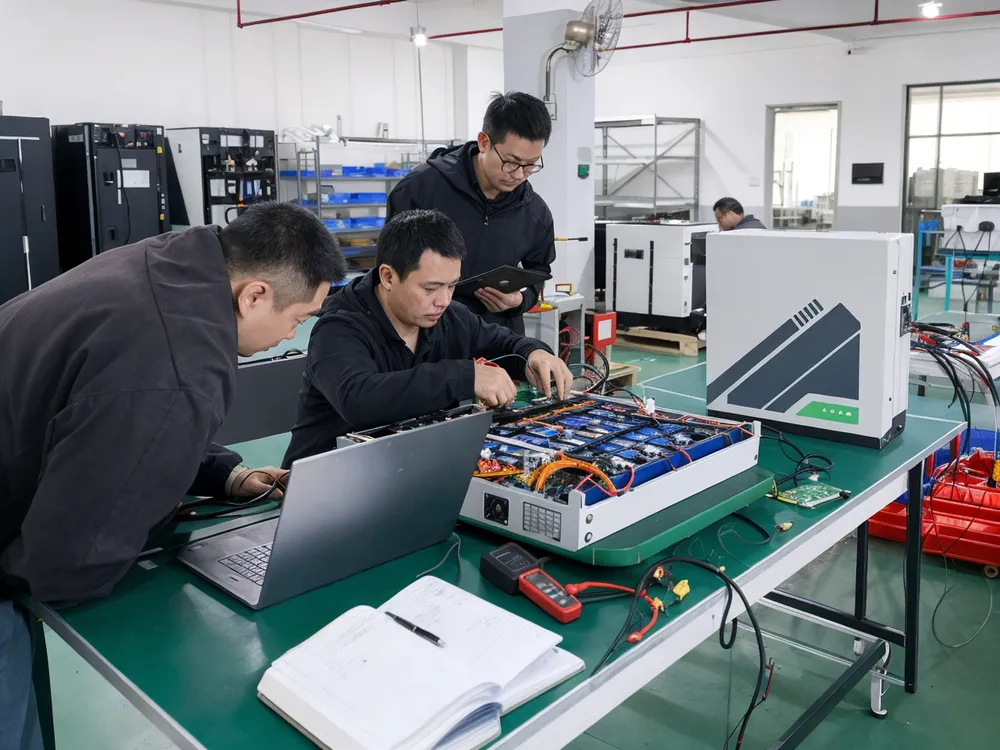
Standard models cover the most common capacity and voltage combinations. But if your market needs something specific — a 25.6V 150Ah pack for a particular inverter, a 51.2V 280Ah rack unit for a commercial project, or a custom enclosure with your branding — our engineering team handles the development.
What We Configure on OEM/ODM Orders
Voltage & Capacity
Any series/parallel cell arrangement within our chemistry range
BMS Parameters
Protection thresholds, continuous/peak current ratings, communication protocol (RS485, CAN, Bluetooth), compatibility with specific inverter brands
Enclosure
Wall-mount, rack-mount, floor-standing, IP rating adjustments
Branding
Label design, color, packaging with your logo and documentation
Firmware
Charge/discharge curves, low-temperature cutoff adjustments, SOC calibration
Production & MOQ
- Standard models start at 100 units MOQ
- Custom configurations need an engineering validation cycle — typically one sample round before mass production approval
- No tooling fees on orders above agreed volume thresholds — your per-unit landed cost stays clean
How Most OEM Partners Start
Most of our OEM partners start with one capacity tier — usually 12V 100Ah or 48V 100Ah — validate it with their customers over 2–3 months, then expand to additional SKUs. We keep your validated BMS firmware and pack configuration on file, so reorders are production-ready without re-engineering.
Export Documents, Battery Packing, and Landed-Cost Planning
Batteries are classified dangerous goods for international shipping. Your import process requires specific documentation, and your freight cost is directly affected by capacity — higher Ah means heavier units, stronger cartons, and different pallet configurations.
Documentation We Provide With Every Shipment
UN38.3 test summary (required for lithium battery air and sea transport)
MSDS / SDS (material safety data sheet)
CE declaration of conformity
IEC 62133 test report
Shipping declaration with proper UN number classification
ISO 9001:2015 quality management certificate
Capacity vs. Weight Reference
Capacity and Freight Planning
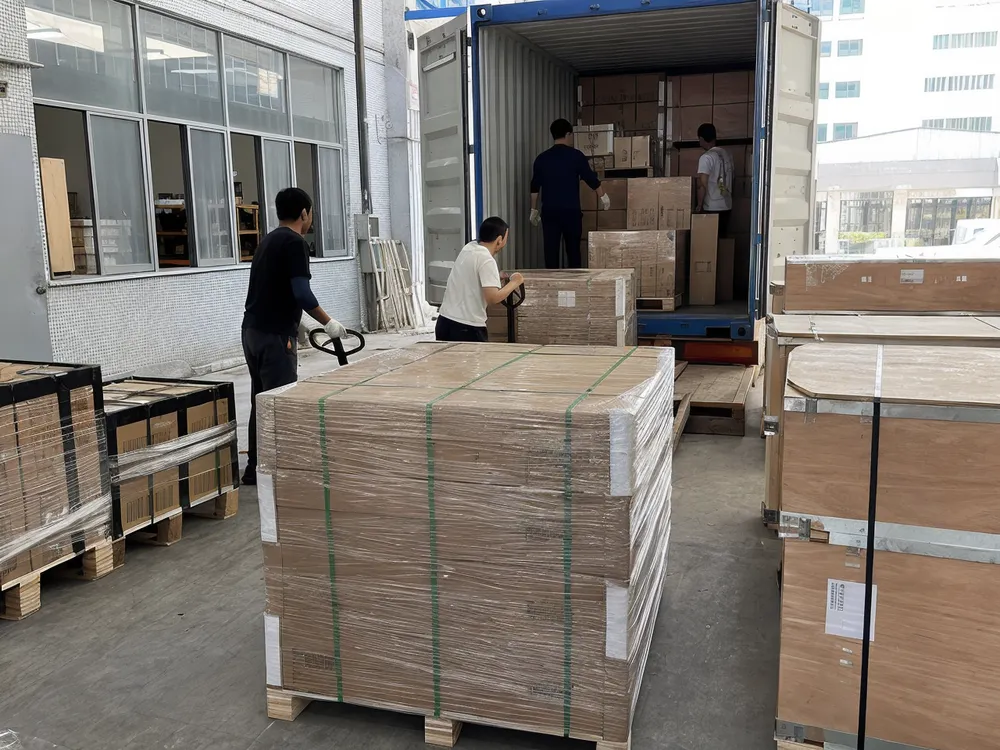
These weight differences change your carton reinforcement requirements, pallet stacking limits, and container utilization. We design packaging to maximize safe loading density — reinforced double-wall cartons, foam-cornered inner boxes, and palletization patterns optimized for 20GP and 40HQ containers.
We don't publish fixed container loading quantities on this page because the number depends on your exact model, packaging choice, and whether you're mixing SKUs. But we calculate loading plans for every order during the quoting stage, so you can confirm your per-unit freight cost before committing.
Capacity RFQ Checklist: What to Send for Faster Quoting
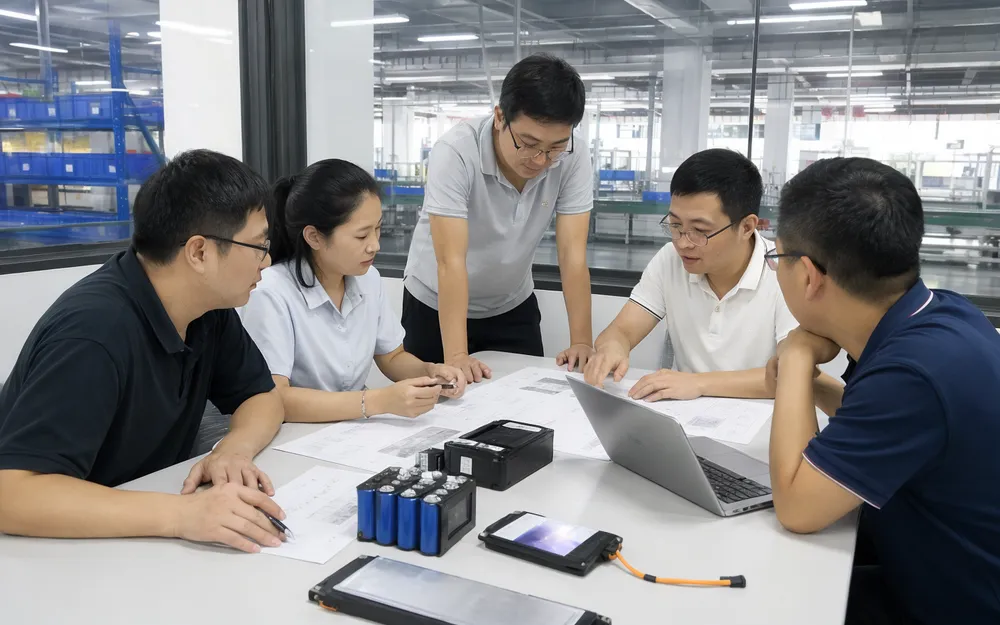
The more complete your initial inquiry, the faster we return an accurate quote. Here's what our sales engineering team needs to spec your order:
Send These Details for a 48-Hour Response
Voltage
12V, 24V, 48V, or 51.2V
Capacity
Ah rating or total kWh requirement
Chemistry
LiFePO4, gel, or AGM (or tell us your application and we'll recommend)
BMS Requirements
Continuous discharge current, communication protocol, inverter brand compatibility
Quantity
Initial order + estimated annual volume
Branding
Standard EVANBattery label, neutral/white-label, or full OEM branding
Certifications Needed
CE, IEC, UL, or market-specific requirements
Destination Port
For freight calculation and documentation preparation
Send these details and we'll respond with a technical recommendation, unit pricing, and a preliminary loading plan within 48 hours.
FAQ: Solar Battery Capacity Procurement Questions
Answers to the capacity, documentation, and quoting questions we hear most from new distribution partners and system integrators.
What solar battery capacity should I stock first for a new distribution program?
Start with 12V 100Ah LiFePO4 if your market has established solar kit demand — it's the most universal SKU across off-grid and backup applications, turns inventory fastest, and carries the lowest per-unit risk. Once you've validated demand and built reorder patterns, expand to 200Ah for inverter bundles or 48V systems for the installer channel. We see most new distributors reach their second SKU within 3-4 months.
How do I compare Ah and kWh when buying solar batteries?
Multiply voltage by amp-hours to get watt-hours: a 12V 200Ah battery stores 2,400Wh (2.4kWh), while a 51.2V 100Ah battery stores 5,120Wh (5.12kWh). When comparing across voltage families, always convert to kWh for an accurate cost-per-stored-energy comparison. Also factor in depth of discharge — LiFePO4 delivers 90-95% usable capacity, while gel/AGM is typically limited to 50% DOD for acceptable cycle life.
Is a 100Ah or 200Ah solar battery better for inverter battery kits?
It depends on the inverter size and autonomy requirement. For 500W-1kW inverter kits with 6-12 hours backup, 100Ah solar batteries at 12V or 24V are the standard pairing. For 1.5-3kW inverters with 12-24 hour autonomy, 200Ah solar batteries are the better fit — they reduce the number of parallel batteries needed, which simplifies wiring and lowers your customer's installation cost.
What makes advertised solar battery capacity different from usable capacity?
Three factors: depth of discharge (DOD), BMS current limits, and cell matching quality.
- A 200Ah gel battery at 50% DOD delivers 100Ah usable.
- A 200Ah LiFePO4 at 90% DOD delivers 180Ah usable.
- If the BMS trips before the inverter reaches rated load, effective capacity drops further.
- If cells within the pack are poorly matched, the weakest cell hits cutoff voltage first, reducing the entire pack's deliverable energy.
We sort cells within 20mV and 5mΩ to prevent this.
Which documents are needed to import lithium solar batteries?
At minimum: UN38.3 test summary, MSDS/SDS, and a proper shipping declaration with the correct UN number (UN3481 for lithium ion batteries packed with equipment, UN3480 for standalone). For EU markets, add CE declaration and IEC 62133 report.
Some countries require additional local registration — we support the application process with test samples and technical data packages.
Can EVANBattery customize voltage, capacity, and BMS settings?
Yes. Our 18-engineer R&D team handles custom cell configurations, BMS parameter programming, communication protocol matching, enclosure design, and branding. Standard models ship at 100-unit MOQ. Custom configurations go through one sample validation round before mass production. We keep your validated specs on file for streamlined reorders. See our OEM/ODM program details.
What information should I send for a capacity-based quote?
Voltage, capacity (Ah or kWh), chemistry preference, BMS current and protocol requirements, quantity, branding needs, certification requirements, and destination port. The more complete your first message, the faster we return accurate pricing.
Use our RFQ form or email evan@evanbattery.com directly.