

10kW Solar Battery Supply
48V/51.2V LiFePO4 battery storage configured for 10kW solar and hybrid inverter systems.
Source the right kWh capacity — 5kWh, 10kWh, or 15kWh — with matched BMS, verified compliance documents, and 100-unit MOQ for market testing.
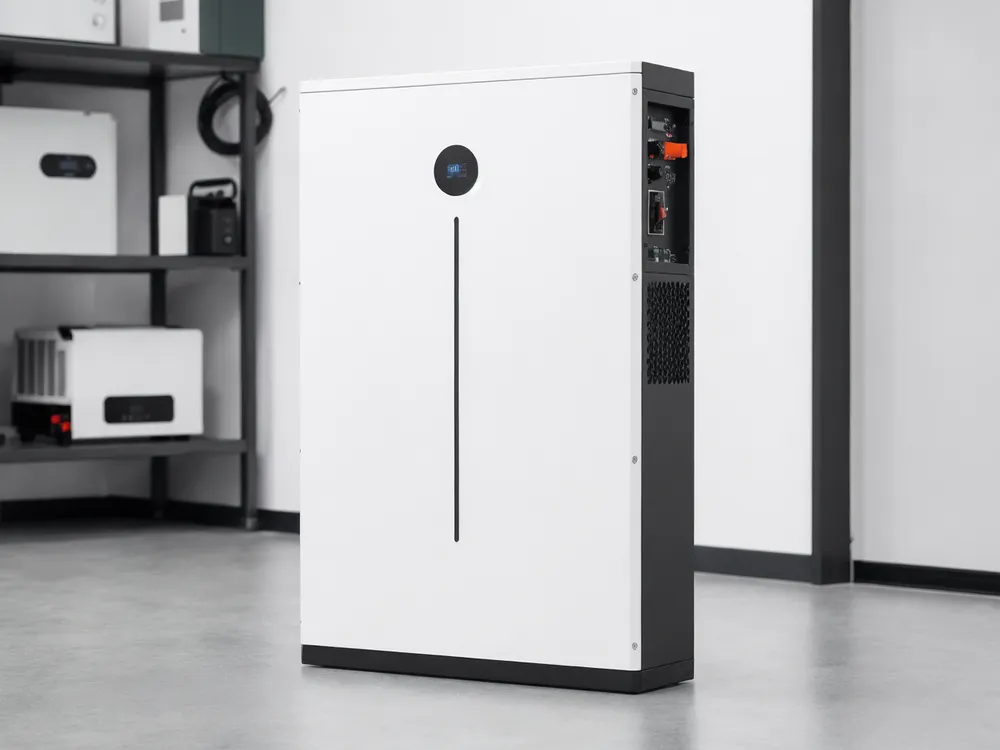
10kW Solar Battery Sourcing Starts With kW, kWh, and Inverter Matching
When you search for a 10kW solar battery, you're typically sourcing battery storage to pair with a 10kW solar or hybrid inverter. The "10kW" refers to the inverter's power output — the battery side is measured in kWh (energy capacity) and determines how long that 10kW system can deliver power during discharge.
We manufacture 48V and 51.2V LiFePO4 battery packs designed specifically for 10kW-class inverter systems. The most common configurations we ship are 10kWh (51.2V 200Ah) and 15kWh (51.2V 300Ah), though we also produce 5kWh modules for buyers building modular or entry-level packages.
As a kWh solar battery supplier since 2012, we handle the part that trips up most RFQs: translating your inverter power requirement into the correct battery energy, voltage, BMS communication, and expansion path. Our 6 production lines and in-house BMS engineering team mean we configure and produce — not just resell — the 10kW 48V solar battery packs your projects need.
If you already know your inverter model and target kWh, you're ready to quote. If you're still deciding between capacity tiers, the sections below will help you narrow it down.
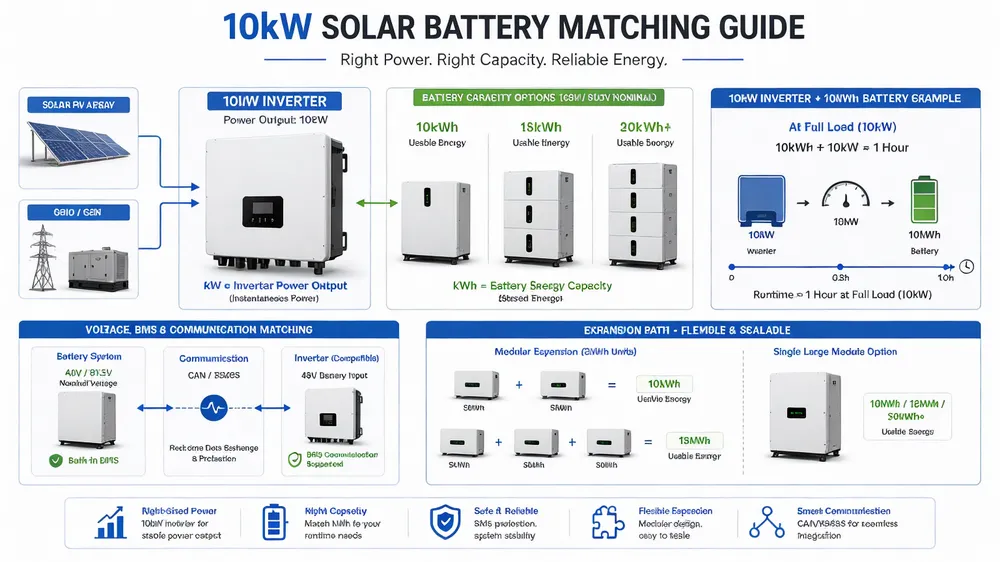
kW = Inverter Power Output
The 10kW figure describes your inverter's maximum continuous power delivery — not the battery's stored energy.
kWh = Battery Energy Capacity
Determines how long the system can deliver power. A 10kWh battery at 10kW discharge lasts ~1 hour at full load.
Voltage & BMS Matching
48V/51.2V nominal voltage with BMS communication protocol matched to your specific inverter brand and model.
Expansion Path
Modular 5kWh units parallel to 10kWh or 15kWh, or single high-capacity modules — configured to your program needs.
Capacity Configurations for 5kWh, 10kWh, and 15kWh Storage Programs
Your 10kW inverter system can pair with different battery capacities depending on the market segment you're targeting. Here's how we see buyers structure their programs:
5kWh Configuration
Entry Residential51.2V 100Ah Module
A 51.2V 100Ah module gives you a 5kW solar battery entry point. Distributors use this as a low-cost starter SKU for markets where homeowners are adopting solar storage gradually.
It's also the building block for modular systems — two units parallel to 10kWh, three to 15kWh. Lower per-unit cost means your dealers can offer an upgrade path without requiring a large upfront commitment from their customers.
- Low-cost starter SKU
- Modular building block
- Upgrade path for dealers
10kWh Configuration
Standard Match51.2V 200Ah Pack
A 51.2V 200Ah pack is the most-quoted configuration for 10kW hybrid inverter bundles. It covers 4–6 hours of typical residential backup at moderate loads, which is the sweet spot for installer packages in Europe, Southeast Asia, and South America.
One module, one BMS, one set of cables — your installation teams spend less time on site, and your after-sales exposure stays contained to a single unit.
- 4–6 hours residential backup
- Single module simplicity
- Reduced after-sales exposure
15kWh Configuration
Extended Backup51.2V 300Ah Module (or 3× 5kWh)
A 51.2V 300Ah module (or three paralleled 5kWh units) targets buyers who sell premium backup packages or serve commercial sites needing longer runtime.
The 15kWh solar battery tier commands higher margins because it solves a real problem — full overnight backup or partial commercial load coverage — rather than just checking a box. (We've seen this tier grow fastest among our European distributor accounts over the past two years.)
- Full overnight backup
- Higher margin tier
- Commercial load coverage
Modular vs. Single-Module Strategy
Single larger modules reduce installation complexity and BMS coordination. Paralleled smaller modules give your customers expansion flexibility. We produce both approaches — the right choice depends on whether your market values simplicity or upgradability.
Most distributors carry both tiers to cover the full Solar Battery by Capacity range.
Single Module
- Fewer connections
- One BMS to manage
- Faster install time
- Simpler after-sales
Modular Parallel
- Customer upgrade path
- Lower entry cost
- Flexible capacity
- Partial replacement
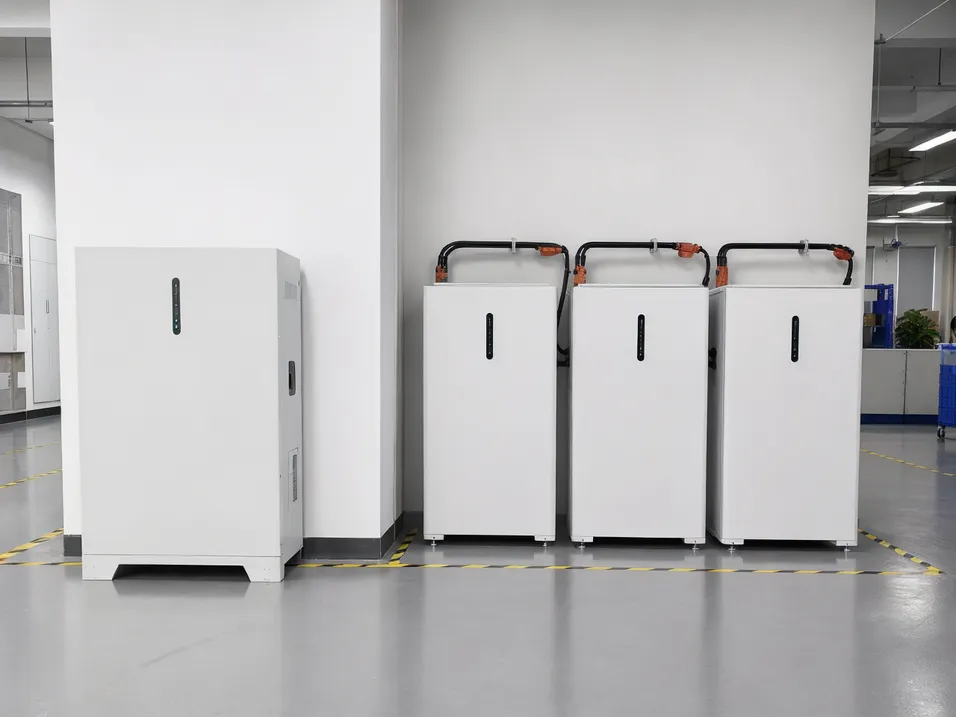
Not sure which capacity tier fits your program?
Tell us your inverter model and target market — we'll recommend the right kWh configuration.
Typical 10kW 48V Solar Battery Specifications for RFQ Comparison
The table below covers planning-level specifications for 48V/51.2V LiFePO4 battery storage used with 10kW inverter systems. Use these values for supplier comparison sheets and tender documents — confirm exact data sheet parameters during your RFQ.
| Parameter | 5kWh Module | 10kWh Module | 15kWh Module |
|---|---|---|---|
| Nominal Voltage | 51.2V (16S) | 51.2V (16S) | 51.2V (16S) |
| Cell Chemistry | LiFePO4 | LiFePO4 | LiFePO4 |
| Nominal Capacity | 100Ah | 200Ah | 300Ah |
| Nominal Energy | 5.12kWh | 10.24kWh | 15.36kWh |
| Usable Energy (typical) | 4.6–4.8kWh | 9.2–9.7kWh | 13.8–14.5kWh |
| Max Continuous Discharge | 50A–100A (model-dependent) | 100A–150A (model-dependent) | 100A–200A (model-dependent) |
| BMS Communication | RS485 / CAN / Bluetooth (configurable) | RS485 / CAN / Bluetooth (configurable) | RS485 / CAN / Bluetooth (configurable) |
| Parallel Support | Up to 15 units (typical) | Up to 15 units (typical) | Up to 8 units (typical) |
| Cycle Life | 6,000+ cycles at 80% DOD (typical) | 6,000+ cycles at 80% DOD (typical) | 6,000+ cycles at 80% DOD (typical) |
| Operating Temperature | -20°C to 55°C (discharge) / 0°C to 45°C (charge) | -20°C to 55°C (discharge) / 0°C to 45°C (charge) | -20°C to 55°C (discharge) / 0°C to 45°C (charge) |
| Enclosure Format | Wall-mount / Floor-standing / Rack-mount | Wall-mount / Floor-standing / Rack-mount / Stackable | Rack-mount / Stackable / Floor-standing |
| Protection Functions | OVP, UVP, OCP, SCP, OTP, cell balancing | OVP, UVP, OCP, SCP, OTP, cell balancing | OVP, UVP, OCP, SCP, OTP, cell balancing |
| Terminals | M8 copper / Anderson connector (model-dependent) | M8 copper / Anderson connector (model-dependent) | M8 copper / Anderson connector (model-dependent) |
Specifications shown are typical planning values for this product class. Actual parameters vary by model and configuration. Contact us for detailed product data sheets with confirmed values for your specific RFQ.
Key Differentiators to Watch Across Suppliers
These specs give you enough to build a comparison sheet against other kWh solar battery suppliers. The key differentiators to watch across suppliers: usable energy percentage, actual BMS communication protocol support (not just listed but tested with your inverter brand), and parallel unit limits under real load conditions.
BMS and Inverter Compatibility That Prevents Site Rework
The most expensive mistake in 10kW solar battery storage deployment isn't a bad cell — it's a BMS that doesn't communicate properly with the inverter. When the battery and inverter can't exchange SOC, charge voltage limits, or fault codes, you get installer callbacks, system shutdowns, and warranty claims that eat your margin.
What Must Be Confirmed Before Production
Before we produce your 10kW 48V solar battery order, we need five parameters locked:
Inverter brand and model
Communication protocols differ between Deye, Growatt, Victron, Goodwe, SMA, and others. A "CAN-compatible" battery that hasn't been tested against your specific inverter model is a gamble.
Charge voltage and current limits
The inverter's charge profile must match the BMS acceptance window. Mismatch here causes premature charge cutoff or BMS protection trips.
Communication protocol
CAN bus, RS485, or proprietary. We program the BMS to speak the inverter's exact protocol version, not a generic approximation.
Parallel battery quantity
If your system design uses multiple batteries in parallel, the BMS must coordinate SOC balancing across units. This affects firmware configuration.
Monitoring requirements
Bluetooth for local commissioning, Wi-Fi for cloud monitoring, or dry-contact for relay-based systems.
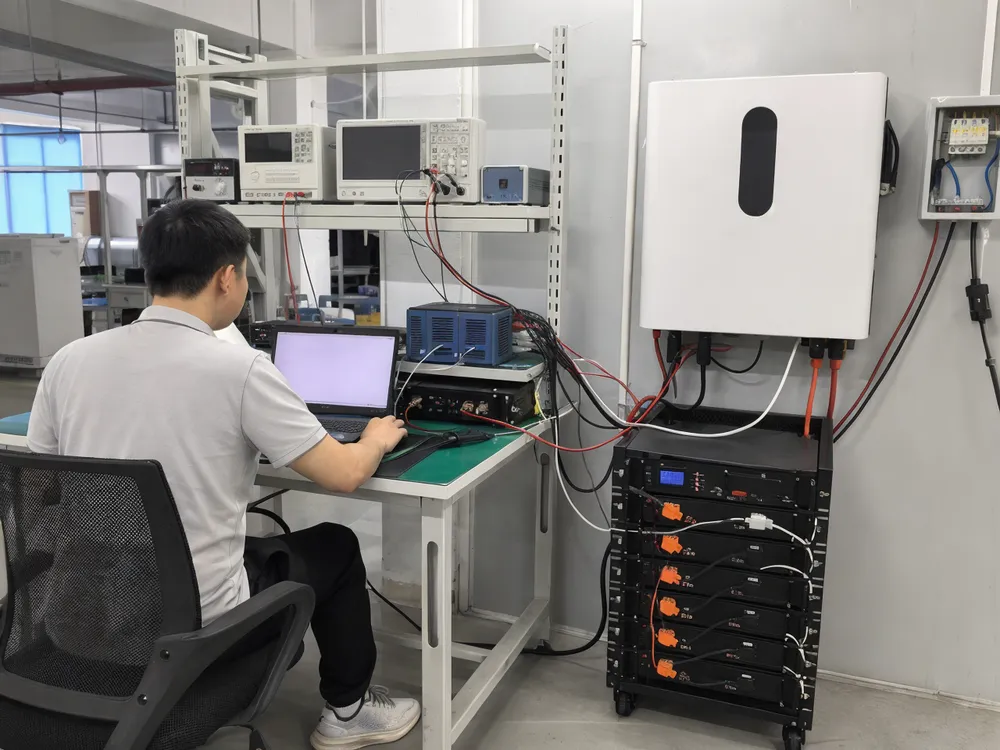
BMS Protection Architecture
Our in-house BMS design covers:
We program protection thresholds to match the specific cell grade in your pack — not generic defaults from a third-party BMS datasheet.
Field Failure Risk: Generic BMS Thresholds
We've seen buyers lose entire container orders to field failures because their previous supplier used a generic BMS with protection thresholds set 0.1V too high for the actual cells. That 0.1V gap compounds across 16 series cells and causes thermal runaway risk after 200–300 cycles.
Compatibility Verification Before Mass Production
For buyers building 10kW solar battery backup systems with specific 48V LiFePO4 Solar Battery configurations, we provide a compatibility verification step before mass production — send us your inverter model and we'll confirm protocol alignment.
Manufacturing Controls for High-Energy 48V Battery Pack Consistency
A 10kWh pack at 51.2V contains 16 series-connected LiFePO4 cells. A 15kWh pack uses higher-capacity cells in the same 16S arrangement. At these energy densities, cell matching quality determines whether your 500-unit batch performs uniformly in the field or drifts apart within the first year.
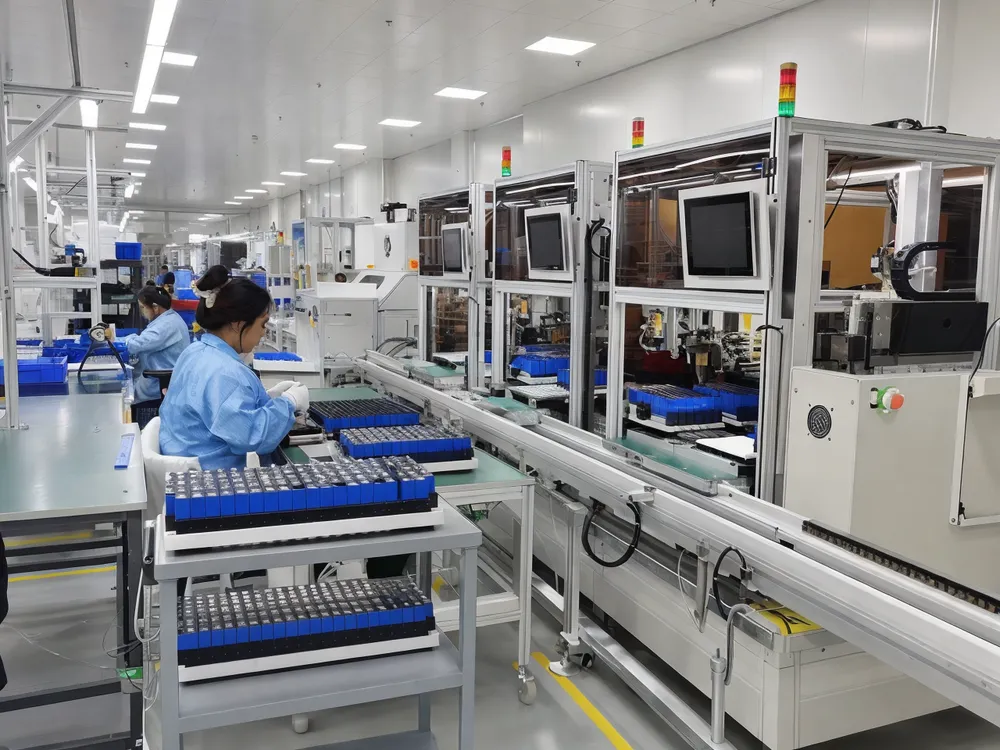
Cell Sorting and Matching
We grade incoming cells by measured capacity (not nameplate) and internal resistance, then sort into groups with ≤20mV voltage spread and ≤5mΩ resistance spread. This is automated — manual matching at the volumes we run (2,000,000 units/year across 6 lines) would introduce human inconsistency.
The sorting data is logged per batch, so if a field issue surfaces six months later, we can trace it back to the specific cell group and supplier lot.
Pack Assembly and BMS Integration
Cell-to-busbar connections use laser welding or bolted compression (depending on the enclosure format), followed by insulation resistance testing before BMS connection.
The BMS is programmed with parameters specific to the cell grade in that batch — not a one-size-fits-all firmware image.
After integration, every pack goes through a full charge/discharge cycle to verify actual delivered capacity against the BMS SOC reading.
Aging and Environmental Testing
Packs rest for 72 hours minimum after initial cycling. We measure voltage drift during this aging period — any pack showing >10mV drift across the string gets pulled for investigation.
Production batches also undergo high-temperature soak (55°C) and low-temperature discharge (-20°C) testing on a sampling basis to verify the BMS temperature protection triggers correctly.
The 9,900m² facility and 150 employees give us the floor space and staffing to run these controls without creating bottlenecks. Your repeat orders ship on the same schedule whether it's a 200-unit run or a 2,000-unit program. Learn more about our manufacturing capabilities →
Discuss Batch Testing RequirementsCommercial Segments Where 10kW Solar Battery Storage Sells
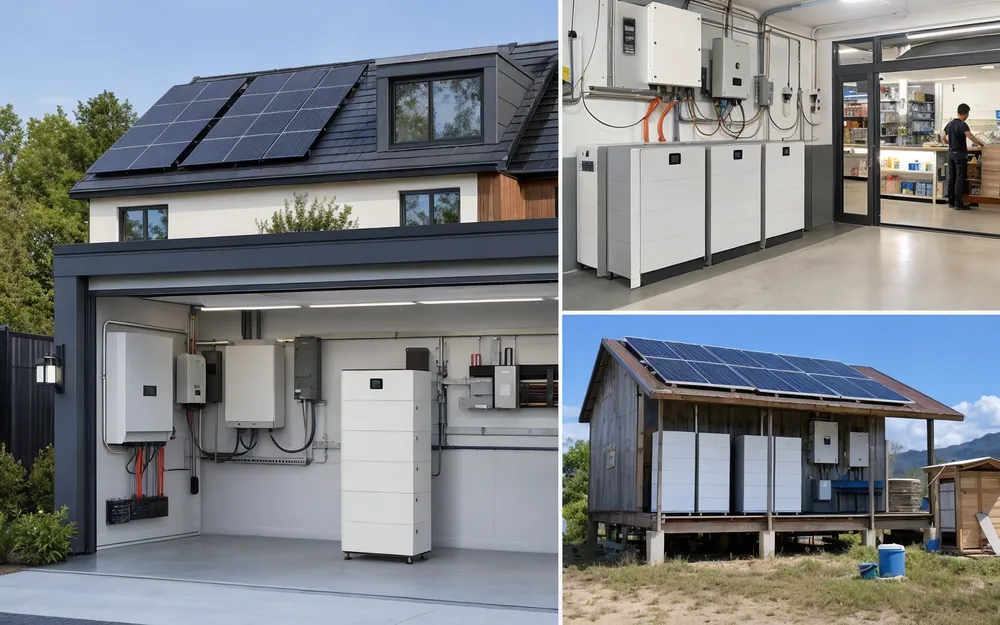
Your 10kW solar battery inventory serves multiple market segments. Here's where we see consistent reorder patterns from our distributor and contractor accounts:
Residential Solar Installers
The 10kWh battery paired with a 10kW hybrid inverter is the standard residential package in markets with net metering phase-outs or time-of-use tariffs. Installers buy in batches of 20-100 units per quarter, bundled with their inverter supply.
Your margin comes from the complete system sale, not the battery alone — so consistent quality and zero callbacks matter more than shaving a few dollars per unit.
Small Commercial Backup
Shops, clinics, small offices, and telecom equipment rooms where 4-8 hours of backup prevents measurable revenue loss. These projects typically spec 10kWh or 15kWh solar battery backup systems.
The buyer is usually a contractor quoting against a downtime cost — your battery needs to be specifiable (exact kWh, exact runtime at stated load) so it can go directly into a project proposal.
Off-Grid Project Contractors
Rural electrification, island microgrids, agricultural operations, and remote villas. These projects often start at 10kWh and expand to 30-45kWh through parallel modules. The 5kW solar battery module works well here because contractors can scale the system to match the client's budget in phases.
Off-grid projects in Africa and Southeast Asia account for roughly 30% of our 48V LiFePO4 shipments.
Distributors Building a Capacity Ladder
If you carry 100Ah Solar Battery and 200Ah Solar Battery SKUs, the 10kWh tier fills the gap between entry-level units and large commercial storage.
A 5kWh / 10kWh / 15kWh product ladder gives your sales team clear upsell paths and lets you segment pricing by application value rather than competing purely on cost-per-kWh.
EPC and System Integrators
Repeat project buyers who standardize on a single battery specification across multiple installations. Consistency matters here — same BMS firmware, same terminal layout, same mounting dimensions across every delivery, so your field teams don't need retraining and your spare parts inventory stays simple.
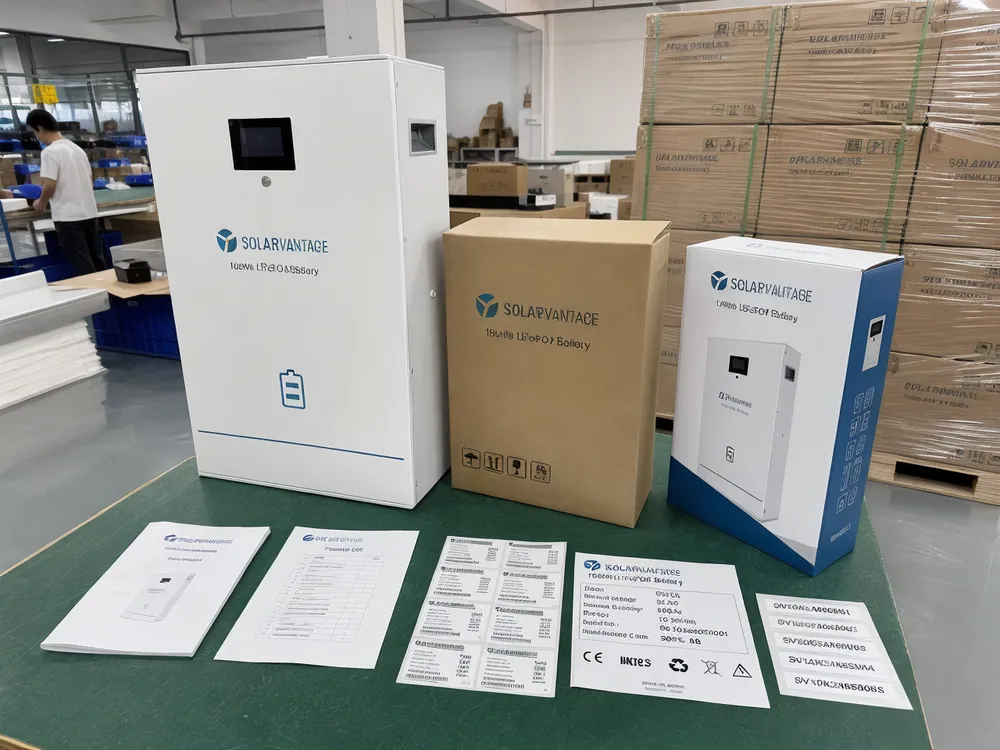
OEM/ODM Options for Capacity, Enclosure, Protocol, and Branding
We produce 10kW solar battery storage under your brand or to your custom specification. Here's what's configurable and where the boundaries are:
Electrical Configuration
-
Capacity: 100Ah, 200Ah, 280Ah, 300Ah cells — or custom arrangements for non-standard kWh targets
-
Voltage: 48V (15S) or 51.2V (16S) standard; other series configurations available for specific inverter requirements
-
BMS current rating: 50A, 100A, 150A, 200A — matched to your inverter's charge/discharge capability
-
Communication protocol: CAN, RS485, Bluetooth, Wi-Fi, or dry-contact — programmed for specific inverter brand compatibility
Enclosure and Mounting
-
Format: Wall-mount, floor-standing, rack-mount (19" standard or custom width), stackable modular
-
Material: Cold-rolled steel with powder coat, or aluminum for weight-sensitive applications
-
Display: LCD screen, LED indicators, or no display (for rack systems with external monitoring)
-
Terminals: M8 bolt, Anderson connector, or custom connector to match your cable harness
-
Color: Standard white/black/grey, or custom RAL color on orders above 200 units
Branding and Packaging
-
Labels: Your logo, model number, serial number format, and regulatory marks
-
Manual: Your brand, your language, your contact details
-
Carton: Neutral, your branded packaging, or retail-ready box design
-
Pallet configuration: Optimized for your container loading plan
MOQ and Development Logic
Standard models
(existing enclosure, standard BMS firmware)
Label and color changes
on existing models
Custom BMS firmware
for new inverter protocol
Fully custom enclosure tooling
(tooling quoted separately)
Our 18+ engineer R&D team handles the development in-house, from schematic through production validation. No third-party BMS supplier in the loop means faster iteration and direct accountability.
Compliance, Packaging, and Export Readiness for Lithium Battery Orders
Lithium batteries are classified dangerous goods for international transport. Missing or incorrect documentation means port holds, customs rejections, and delivery delays that cost you more than the paperwork would have.
Certifications and Documentation We Maintain
| Certification | Coverage | Your Benefit |
|---|---|---|
| ISO 9001:2015 | Manufacturing management system | Batch consistency and traceability for repeat orders |
| CE | European market product safety | Import clearance for EU distribution |
| IEC 62133 | Battery safety testing standard | Required for many market registrations |
| UN38.3 | Transport safety classification | Mandatory for air and sea freight of lithium batteries |
| MSDS | Material safety data sheet | Required by freight forwarders and customs authorities |
We maintain current documentation for every standard model. For OEM/ODM configurations, we generate matching documentation as part of the development process — your custom product ships with the same compliance package as our catalog models.
Export Packaging and Logistics
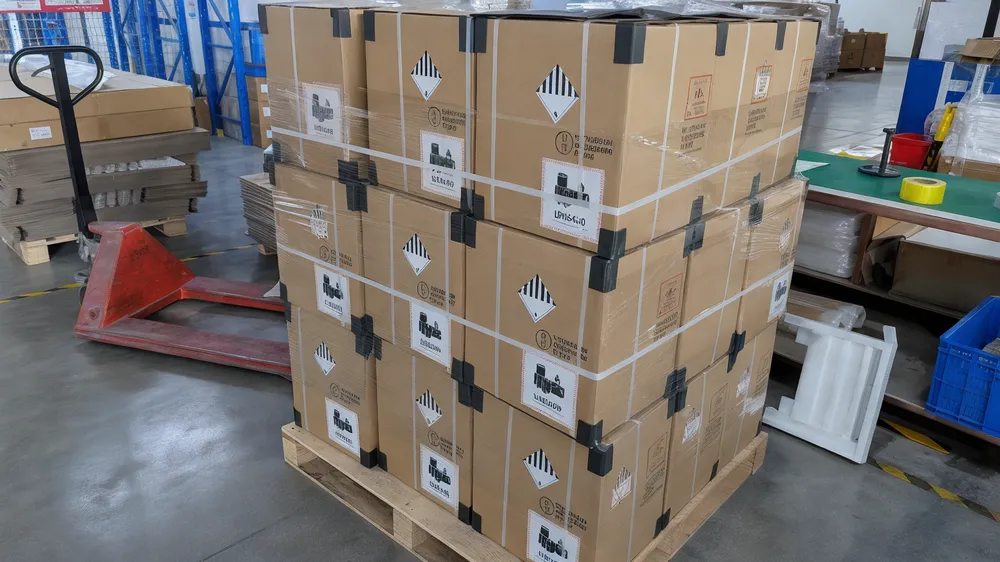
Lithium battery shipments require proper dangerous-goods declarations, UN-rated packaging for certain transport modes, and consistent labeling that matches your shipping documents.
We handle:
Our regular export markets — Europe, Southeast Asia, Africa, South America, and the Middle East — each have specific documentation expectations, and we know which details each region's customs authorities check first.
Entering a new market?
If you're not sure which documents your customs broker will request, send us the destination country — we'll confirm the required package based on our existing shipment history to that region.
Choosing Between 10kW, 100Ah, 200Ah, 48V, and Backup Battery Pages
If you landed on this page but your sourcing need is slightly different, here's how our product pages map to different buying decisions.
Unit-Level Battery SKU for Solar Kits
12V/24V/48V 100Ah modules for starter inventory and small systems.
100Ah Solar BatteryLarger Amp-Hour Single-Battery Capacity
12V/24V/48V 200Ah options for higher-capacity single-unit sourcing.
200Ah Solar Battery48V System Voltage and LiFePO4 Chemistry
Voltage and chemistry decision page for 48V system buyers.
48V LiFePO4 Solar BatteryBackup Application Rather Than Capacity
Application-focused page for backup power system sourcing.
Solar Battery BackupCabinet or Server-Rack Deployment
Rack-format battery storage for commercial and telecom installations.
Rack Mounted Solar BatteryFull Capacity Range Overview
Category page covering all capacity tiers we manufacture.
Solar Battery by CapacityThis 10kW solar battery page is specifically for buyers matching battery storage to a 10kW inverter system — where the decision is about kWh capacity, BMS protocol, and system-level configuration rather than individual cell specifications.
Ask EVANBattery to Build a Capacity MixFAQ for 10kW Solar Battery Buyers
Common technical and sourcing questions from distributors, installers, and system integrators specifying 10kW battery storage.
Is a 10kW solar battery the same as a 10kWh solar battery?
No. 10kW refers to power output (how much the inverter can deliver at once), while 10kWh refers to energy storage (how much the battery holds). A 10kW inverter system might pair with a 10kWh battery for about one hour of full-power discharge, or a 15kWh battery for longer runtime. When you send an RFQ, specify both: the inverter power rating and the battery energy capacity you need.
What 48V battery capacity is usually paired with a 10kW inverter?
Most 10kW hybrid inverter installations use 10kWh to 15kWh of battery storage. A 51.2V 200Ah pack (10.24kWh nominal) is the most common single-module match. For extended backup or higher self-consumption targets, buyers spec 15kWh (51.2V 300Ah) or parallel two 5kWh modules with expansion planned. The right capacity depends on your target backup duration and the load profile of the end installation.
When should I quote a 15kWh solar battery instead of 10kWh?
Quote 15kWh when your end customer needs overnight backup (8+ hours at partial load), when the site has no grid connection and must cover evening-to-morning consumption entirely from storage, or when you're selling a premium package where longer runtime justifies a higher system price. The 15kWh tier also makes sense for small commercial sites where 4 hours of backup at higher loads requires more stored energy than 10kWh provides.
Can multiple 48V solar batteries be paralleled for 10kW solar battery backup?
Yes. Our BMS supports parallel operation of up to 8–15 units depending on the model, with automatic SOC balancing across batteries. Paralleling works well for modular expansion — start a customer at 5kWh or 10kWh and add modules later.
The key requirement: all paralleled units must use the same BMS firmware version and cell configuration. We recommend specifying your maximum parallel count during the initial RFQ so we can configure the BMS communication accordingly.
What BMS communication should I specify for hybrid inverter compatibility?
It depends on your inverter brand. Most Deye, Growatt, and Goodwe inverters use CAN bus communication. Victron systems typically use CAN with a specific protocol variant. SMA uses CAN or proprietary depending on the model. RS485 is common for monitoring-only connections or older inverter platforms.
Tell us the inverter brand and model number — we'll confirm which protocol version our BMS needs to run and whether we've already validated that pairing. (We maintain a tested compatibility list that covers the most common inverter brands in each export region.)
What documents are needed to import 10kW lithium solar batteries?
At minimum: UN38.3 test summary, MSDS, and a dangerous goods declaration from the shipper. For European markets, add CE declaration of conformity and IEC 62133 test report.
Some countries require additional local certification or registration — Australia (IEC 62619 for commercial), South Africa (NRCS letter of authority), and certain Middle Eastern markets have specific requirements. We provide all standard documentation with shipment and can support additional certification applications with test samples and technical data.
What is the MOQ for EVANBattery 10kW solar battery orders?
100 units for standard models with existing enclosure and BMS configuration. OEM branding (your logo, labels, manual) is available at the same 100-unit minimum.
Custom BMS firmware for a specific inverter protocol starts at 200 units.
Fully custom enclosure design requires 500+ units with separate tooling discussion.
We keep the entry MOQ low deliberately — test the product with your customers before scaling to container volumes.
Send a 10kW Solar Battery RFQ With the Right System Details
The fastest path to an accurate quote: send us the system details upfront so we can recommend the right configuration on the first response.
We respond with a technical recommendation and pricing within 48 hours. If you're comparing multiple configurations, we'll quote each tier so you can evaluate landed cost across your product ladder.
Your RFQ Checklist
- Inverter brand and model (or target inverter power if not yet selected)
- Target battery energy (kWh per unit)
- System voltage (48V or 51.2V)
- Required backup duration at estimated load
- Mounting format (wall-mount, rack, stackable, floor-standing)
- BMS communication protocol (CAN, RS485, Bluetooth, or "need recommendation")
- Quantity (initial order + estimated annual volume)
- Branding needs (neutral, your label, full OEM)
- Destination country
- Required compliance documents