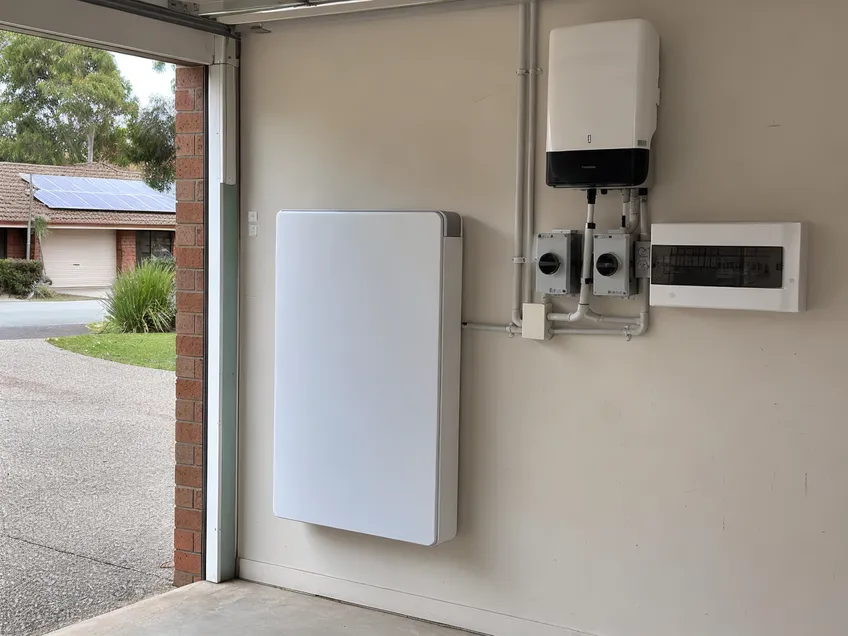
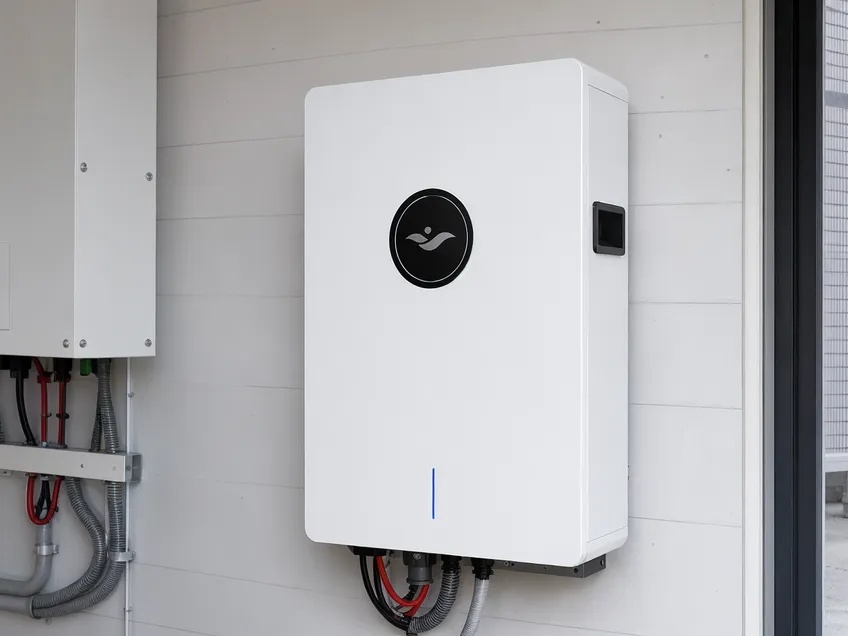
48V/51.2V LiFePO4 packs designed for slim wall installation, hybrid inverter pairing, and branded residential storage programs.
In-house BMS design matched to your inverter ecosystem. Slim enclosure under 180mm depth. MOQ 100 units for standard models, full OEM/ODM for private-label programs.
Not every residential storage project needs a wall mounted solar battery. Floor-standing units make sense when capacity exceeds 15 kWh or when the installation site has dedicated utility room floor space. Off-grid deep-cycle systems prioritize raw kWh and cycle tolerance over form factor. Hybrid system buyers sometimes care more about inverter communication than enclosure shape.
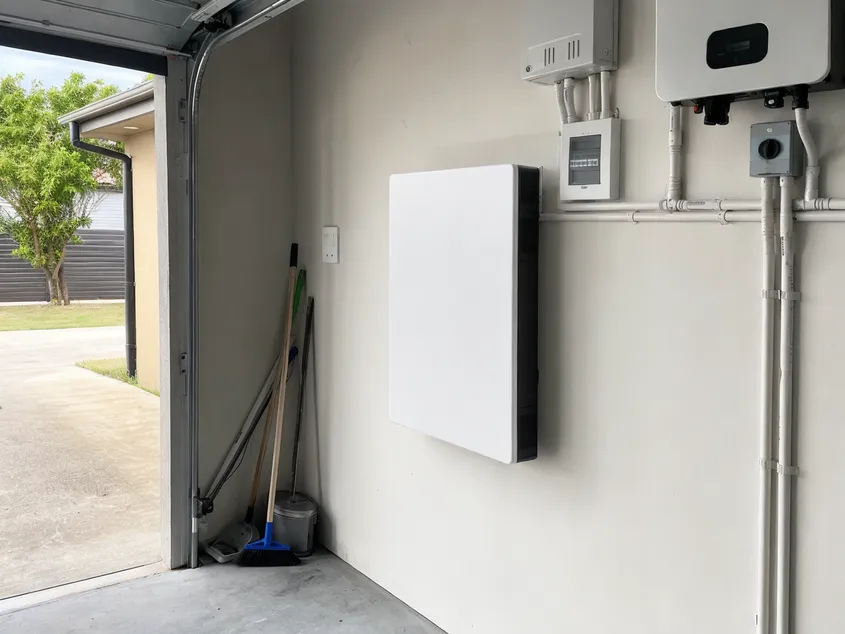
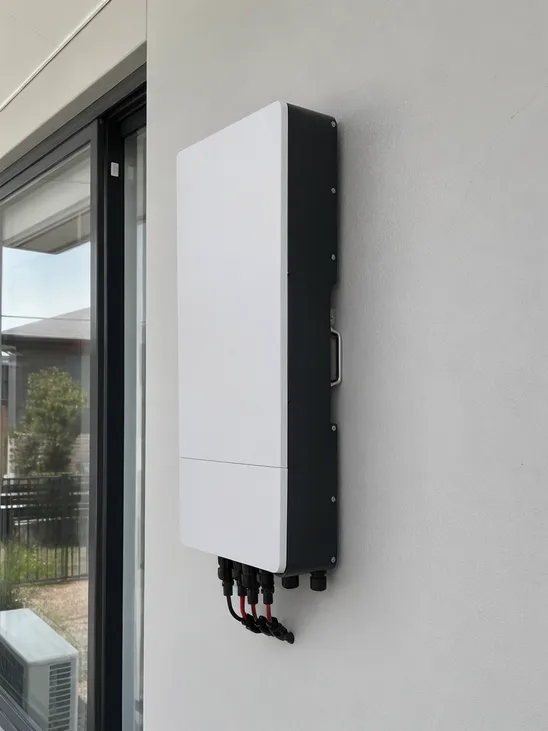
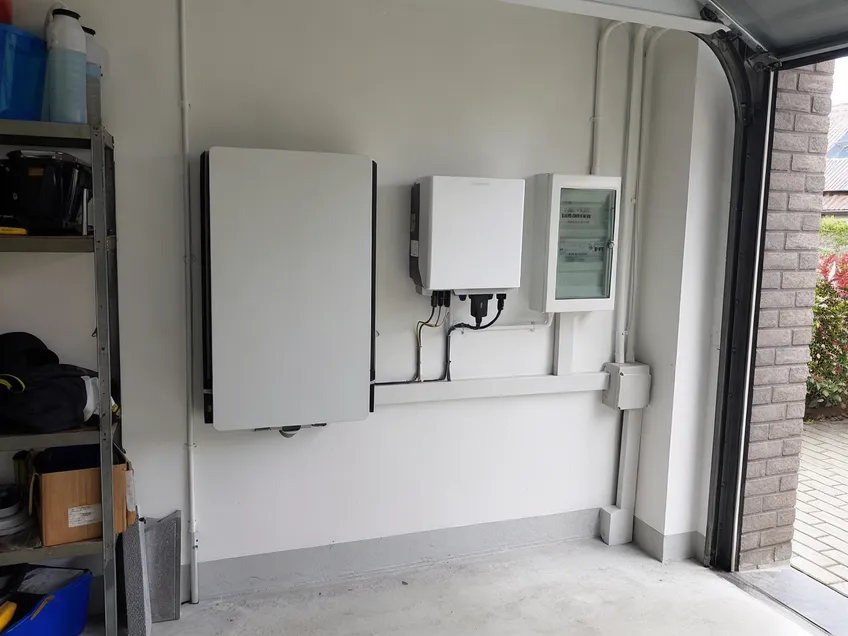
But when your target market is European self-consumption, Australian rooftop retrofit, or any residential segment where garage walls and utility closets are the installation surface — the wall mount solar battery is the SKU that sells. Installers prefer it because the bracket goes up in minutes, the cable entry aligns with standard conduit runs, and the homeowner sees a clean panel instead of a box on the floor.
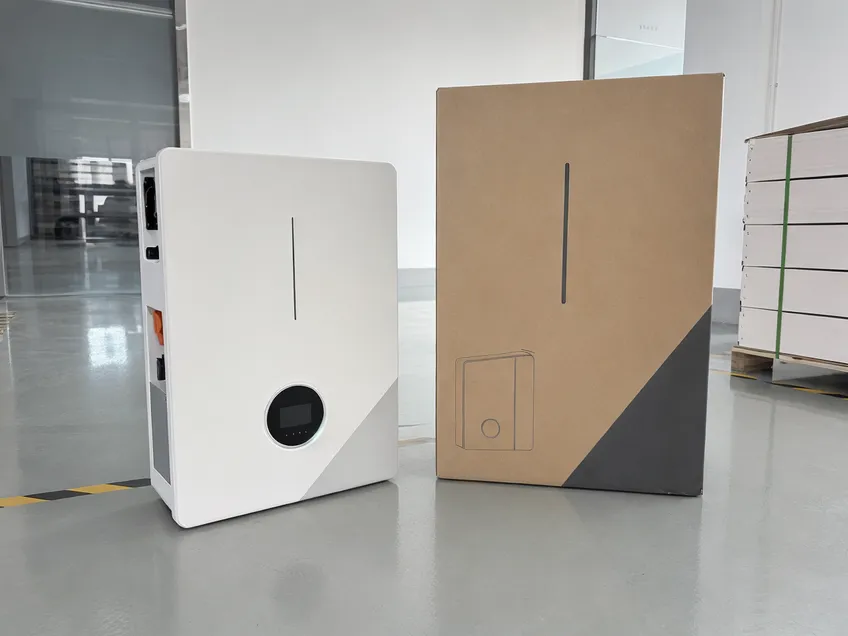
For your business, this translates to a tighter product story: residential wall mount battery storage that photographs well in installer portfolios, fits the physical constraints your customers actually face, and differentiates from the generic floor-standing boxes that every other importer carries. The slim profile isn't cosmetic — it's a market positioning tool.
If you need the full residential storage range including backup-first, off-grid, hybrid, and bundled kit routes — view our complete home solar battery storage lineup.
Here's what you need for your comparison sheet. These are typical values for our wall-mounted residential storage range — exact dimensions, weight, and datasheet details depend on the specific model and capacity you select.
| Parameter | Typical Specification |
|---|---|
| Cell Chemistry | LiFePO4 (lithium iron phosphate) |
| Nominal Voltage | 51.2V (16S configuration) |
| Capacity Range | 100Ah – 150Ah |
| Usable Energy | 5.12 kWh – 7.68 kWh per unit |
| Recommended DoD | 80% – 90% |
| Cycle Life | 4,000 – 6,000 cycles at 80% DoD |
| BMS Protections | Over-charge, over-discharge, over-current, short-circuit, over-temperature, under-temperature, cell balancing |
| Communication Protocol | CAN bus, RS485 (Bluetooth optional) |
| Enclosure Depth | Under 180mm (typical 150–170mm) |
| IP Rating | IP20 (indoor) to IP65 (sheltered outdoor) — model dependent |
| Operating Temperature | -20°C to 55°C (discharge), 0°C to 45°C (charge) |
| Expansion | Parallel connection for multi-unit installations (up to 15 units typical) |
| Certifications | CE IEC 62133 UN38.3 MSDS |
| Standard MOQ | 100 units |
| Specifications shown are typical for this product route. Actual values vary by selected model and configuration. | |
We deliberately keep the enclosure depth under 180mm because once you pass that threshold, the unit starts to look like a floor-standing battery hung on a wall rather than a purpose-built wall mount. The visual difference matters when your installers photograph finished jobs for their own marketing.
Request the exact datasheet, packing data, and quotation for your target capacity.
Request QuotationThe wall-mounted format is this product's defining feature, which means mounting logistics become a procurement concern, not just an installer concern. If you quote a project without confirming wall structure, clearance, and cable routing, you'll absorb the cost of site callbacks and accessory reorders.
A fully loaded 51.2V 100Ah wall mount solar battery weighs approximately 45–55 kg depending on enclosure material. That requires a load-bearing surface — concrete, solid brick, or structural timber framing with proper anchor points. Plasterboard or hollow partition walls won't hold.
We include a steel mounting bracket and fastener kit sized for masonry and timber, but your installer needs to confirm the wall structure before committing to a location.
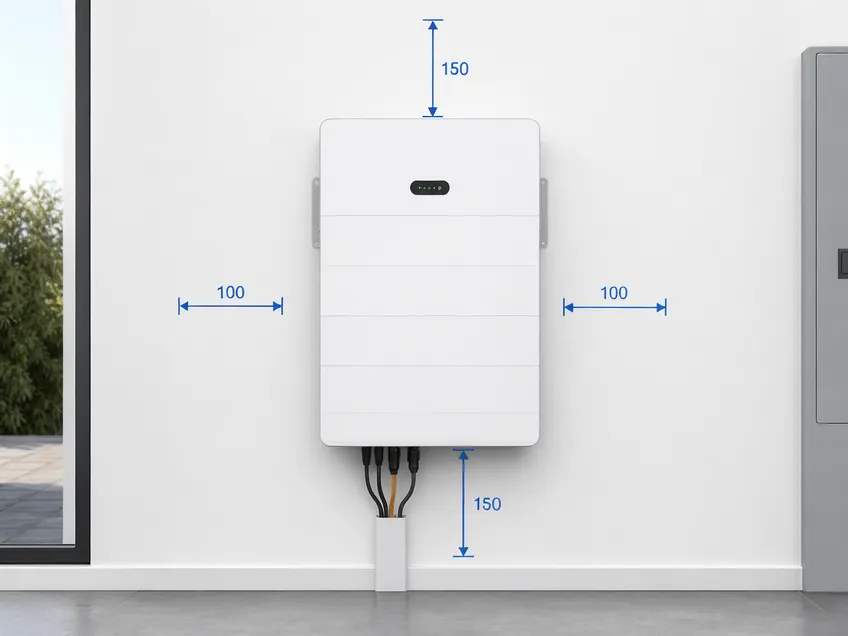
We recommend 150mm minimum clearance above and below the unit for ventilation and cable access, plus 100mm on each side for service access to terminals. These clearances should appear in your installer documentation — they prevent heat buildup in enclosed spaces and allow future maintenance without removing the unit from the wall.
Our standard enclosure offers bottom cable entry, which suits most installations where the inverter sits below or beside the battery. For installations where the inverter is above (common in some European garage layouts), we can configure top-entry or side-entry cable knockouts.
Tell us your typical inverter placement during the RFQ stage so we match the enclosure configuration to your market's installation habits.
Not every wall mount solar battery model carries IP65. If your market requires outdoor wall installation — carports, covered patios, external utility walls — confirm the IP rating requirement during specification.
We produce both IP20 indoor-rated and IP65 sheltered-outdoor-rated enclosures, but the sealing, cable gland, and ventilation design differ between them.
Need a configuration recommendation?
Send your installation scenario — wall type, inverter position, indoor/outdoor, target capacity.
Different markets buy wall-mounted batteries for different reasons. Understanding which segment you serve determines the configuration, certification, and MOQ structure that makes commercial sense.
The 5–10 kWh residential wall mount battery storage segment in Germany, Netherlands, Italy, and the UK is driven by feed-in tariff reductions and time-of-use optimization. Homeowners want to store daytime solar for evening use. Installers want a clean wall-mounted unit that pairs with Fronius, SMA, Goodwe, or Huawei hybrid inverters.
CE and IEC 62133 documentation is non-negotiable for market registration.
Reorder Pattern
Once an installer standardizes on a battery model, they pull 20–50 units per quarter predictably.
Australia's existing rooftop PV base creates a retrofit storage market. Homes already have panels but no battery. Wall-mounted units fit garages and laundry rooms where floor space is committed.
Typical Order Pattern
A distributor stocks 100–200 units and supplies a network of 10–30 installers.
Your margin protection comes from BMS-inverter matching (Australian market is heavily Fronius and Sungrow) and branded front-panel presentation.
Installers increasingly want their own brand on the battery. A wall mount solar battery with a clean front panel, your customer's logo, and consistent enclosure design across batches becomes a marketing asset — it appears in every installation photo, every customer referral.
We produce:
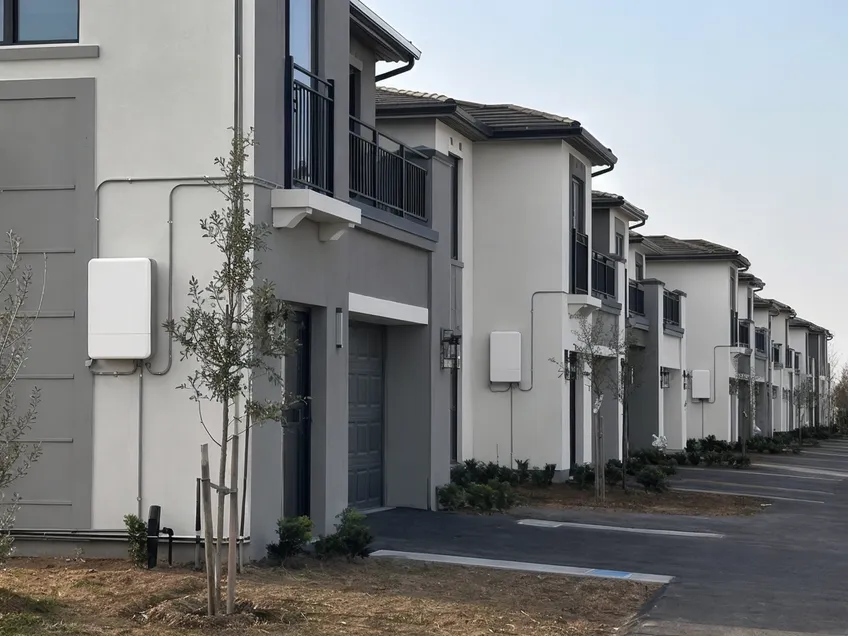
Housing developers installing solar-plus-storage across 20–100 homes per project need identical units, identical brackets, identical documentation in every house. Wall-mounted format simplifies this — the installer repeats the same mounting procedure, same cable run, same commissioning sequence.
Your Value in This Segment
Batch consistency and documentation completeness, not price alone.
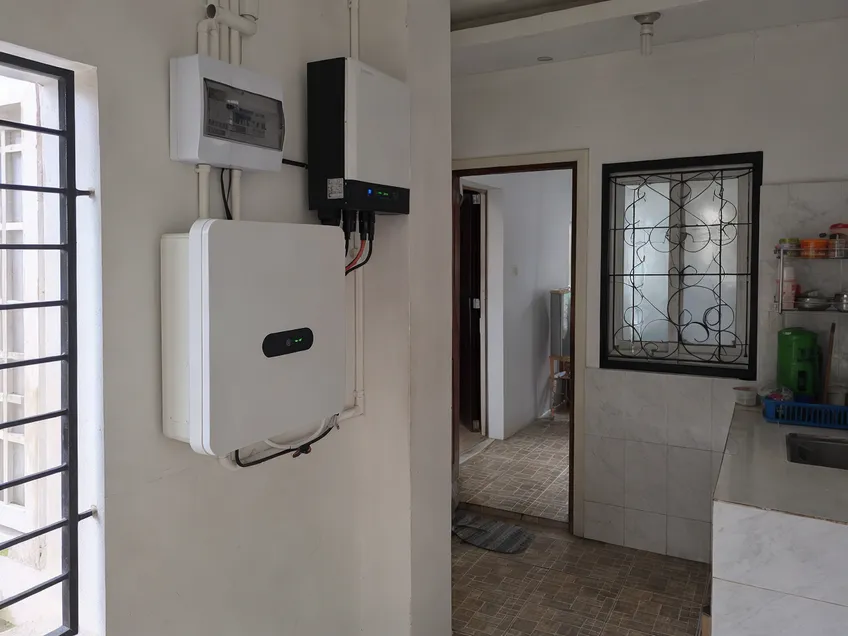
In parts of Southeast Asia, the Middle East, and South America, grid reliability is poor but homes have wall space. A compact 5 kWh wall-mounted battery provides 3–5 hours of essential load backup without occupying floor area.
Volume Potential
This segment is price-sensitive but volume-rich — distributors move 500–1,000 units per quarter once the product is established.
Which market segment are you targeting?
Tell us your segment — we'll recommend the configuration and MOQ that fits.
A wall mounted solar battery that can't communicate with the inverter is a warranty liability, not a product. In residential hybrid systems, the BMS must report state of charge, cell voltages, temperature, and protection status to the inverter in real time. If the protocol doesn't match, you get nuisance shutdowns, incorrect SOC displays, and charging failures — all of which generate after-sales calls that eat your margin.
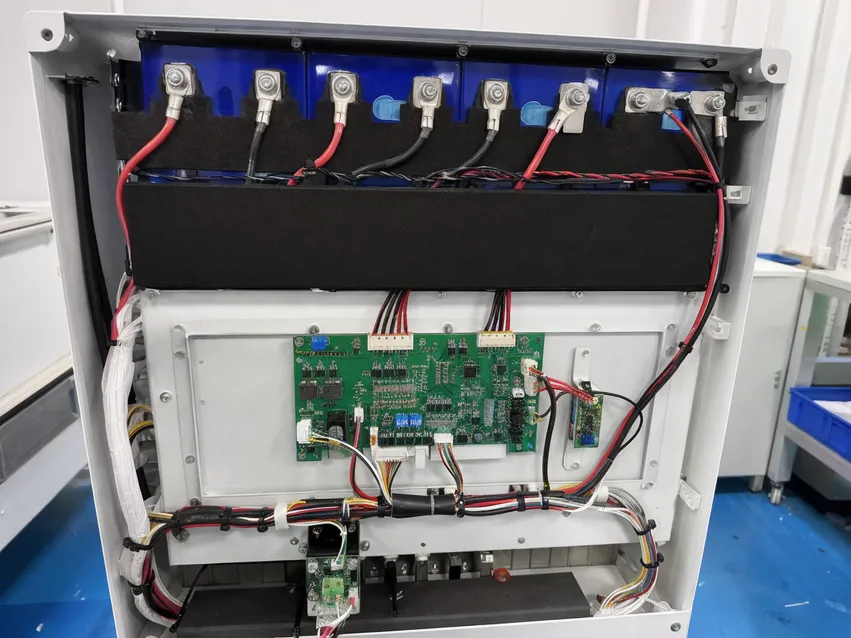
We design and manufacture BMS boards in-house. Our 18-engineer R&D team programs communication parameters — CAN bus data frames, baud rates, register maps, RS485 Modbus addressing — to match specific inverter brands. When you tell us your target inverter, we configure and test the pairing in our lab before production.
For markets where multiple inverter brands coexist, we can program switchable protocol profiles into the BMS firmware — your installer selects the correct profile during commissioning via DIP switch or Bluetooth app. This reduces your SKU count: one battery model covers three or four inverter brands instead of requiring separate SKUs for each.
Field Complaint Warning
We've seen buyers lose entire container margins on BMS mismatch issues. A generic third-party BMS module approximates protocol parameters from a template — that approximation is where 80% of residential field complaints originate. In-house BMS eliminates this.
Send your inverter brand and model — we'll confirm BMS compatibility or configure a match.
Custom data frames and baud rates matched to inverter specifications
Register maps and addressing configured per inverter brand protocol
SOC, cell voltages, temperature, and protection status reported continuously
Installer selects inverter profile on-site — one SKU, multiple brands
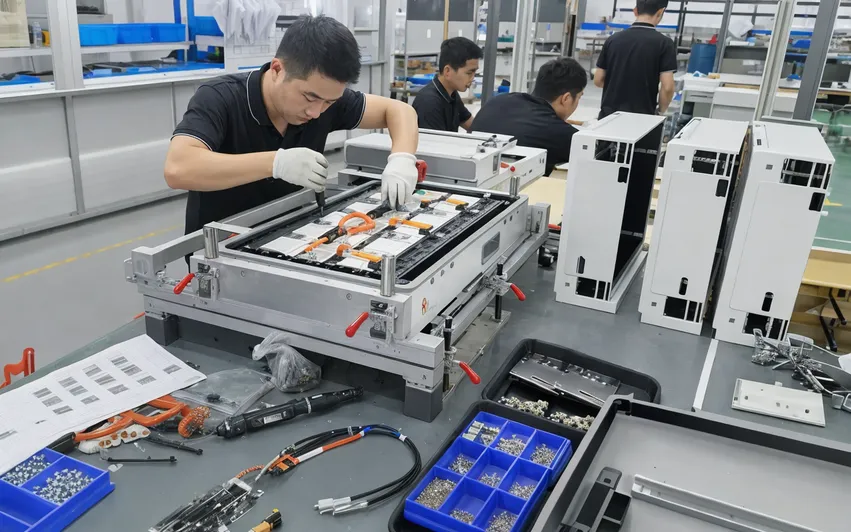
Wall-mounted packs have tighter tolerances than floor-standing units because the slim enclosure leaves less room for assembly variation. A 1mm misalignment in cell stacking shows up as enclosure bulge or lid-seal failure. Here's how we control this on the production floor:
Incoming cells are measured individually — actual capacity and internal resistance, not supplier label values. We group within 20mV voltage and 5mΩ resistance for wall-mount packs.
Tight matching prevents thermal hotspots in the slim enclosure where airflow is limited.
Wall-mount cell stacks are assembled in precision jigs that maintain consistent cell spacing and busbar alignment. We switched from manual stacking to jigged assembly on this product line in 2021 after seeing 2–3% enclosure-fit rejection rates on manual builds.
Each BMS board is programmed with the specific protection parameters for the cell grade and capacity in that batch, then verified through a full protection-trigger test sequence before marriage to the cell pack.
After pack insertion, we check lid closure force, gasket compression (for IP65 models), terminal alignment, and front-panel surface condition.
Wall-mount batteries are visible products — scratches, dents, or misaligned labels that would be acceptable on a floor-standing unit hidden in a cabinet are rejection criteria here.
Every carton includes the mounting bracket, fastener kit, terminal covers, and installation guide. Missing accessories generate support calls that cost more than the parts themselves.
For wall-mount specifically, we dedicate line capacity to maintain the tighter assembly tolerances this format requires. Learn more about our manufacturing capability →
Verify build quality before committing to volume
If you're building a residential storage brand, the wall mounted solar battery is the most visible product in your lineup — it's photographed, displayed in showrooms, and seen by homeowners daily. That visibility makes branding and customization more commercially important here than on any other battery format.
Standard MOQ, Minimal Lead Time Impact
Higher MOQ, Development Cycle Required
Volume Commitment, Tooling Discussion
100 units
Standard models MOQ
Branded label programs on existing models
300–500 units
Full OEM configurations
Custom BMS and capacity — engineering validation
Scope-Based
Higher-threshold tooling
Exact threshold confirmed when you describe the scope
We maintain current documentation for all standard wall mount solar battery models:
| Document | Purpose |
|---|---|
| UN38.3 Test Summary | Lithium battery transport classification — required by shipping lines and airlines |
| MSDS | Hazardous material handling for customs and warehouse operators |
| CE Declaration of Conformity | EU market access |
| IEC 62133 Test Report | Battery safety standard for market registration |
| ISO 9001:2015 Certificate | Manufacturing quality management verification |
For OEM/ODM configurations, we generate new UN38.3 and MSDS documentation as part of the development cycle. If your market requires additional certification (UL, TÜV, BIS, INMETRO), our engineering team supports the application with test samples and technical data packages — view our certification details.
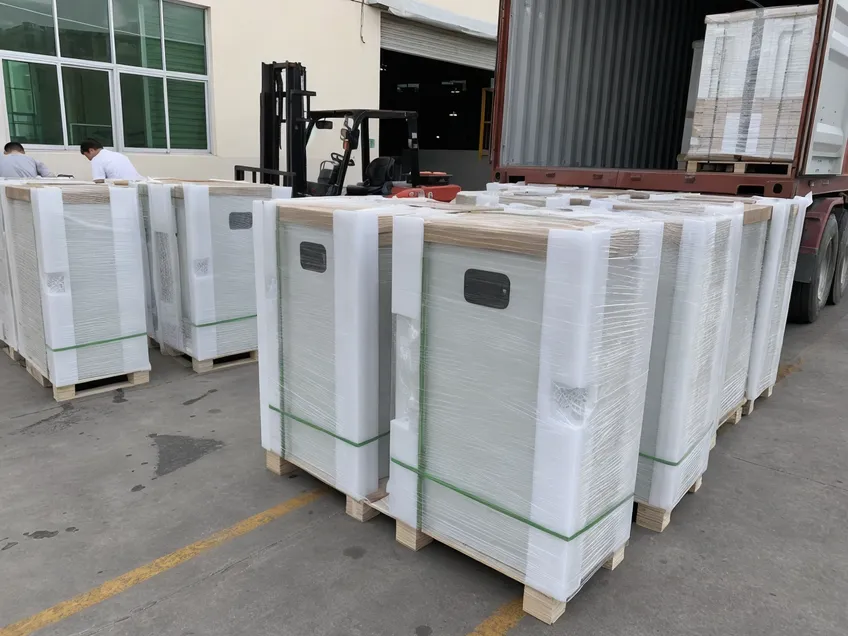
Wall-mounted batteries ship as heavy, dense, fragile-surface cargo. Our standard export packaging:
Container Loading Note
We don't publish fixed container quantities because your model mix changes the answer — a 5.12 kWh unit loads differently from a 7.68 kWh unit, and bracket kits add volume. Request a quotation for exact pallet plans and loading diagrams for your selected model.
If you're evaluating multiple residential storage routes, here's how they differ at the sourcing level:
Choose When
Installation footprint and visible residential presentation matter as much as kWh capacity
Primary Differentiator
Slim enclosure, wall bracket, branded front panel, space-constrained market fit
Choose When
Backup duration and outage coverage are the main selling point to end customers
Primary Differentiator
Floor-standing, higher capacity (10–20 kWh), fast grid-switchover BMS
Choose When
Daily deep-cycle operation for homes without reliable grid access
Primary Differentiator
Deep-cycle rated, wide temperature tolerance, 12V/24V/48V modular
Choose When
Grid-tied energy management and inverter communication are the primary decision drivers
Primary Differentiator
CAN/RS485 protocol matching, time-of-use optimization, bidirectional BMS
Choose When
Buyers need a bundled solar-plus-storage kit as a single sourcing program
Primary Differentiator
Battery + BMS + harness as a kit SKU, documentation bundle
These routes overlap — a wall mounted solar battery can also serve backup and hybrid functions. The distinction is which feature drives your customer's purchase decision and how you position the SKU in your catalog.
Most residential wall mount battery storage falls in the 5–10 kWh range per unit. Our standard wall-mount models use 51.2V LiFePO4 in 100Ah (5.12 kWh) and 150Ah (7.68 kWh) configurations.
For homes needing more capacity, units connect in parallel — three 5.12 kWh units give you 15.36 kWh on a single wall. The right capacity depends on your market's average daily consumption and self-consumption ratio.
Market guidance:
Load-bearing surfaces only — concrete, solid brick, or structural timber framing with appropriate anchors. A 100Ah wall-mount unit weighs approximately 45–55 kg fully assembled.
Plasterboard, hollow block, or thin partition walls cannot support this load safely. We include a steel mounting bracket and masonry/timber fastener kit with every unit, but the installer must verify wall structure before drilling.
Lightweight construction markets:
If your market has a high proportion of lightweight construction (timber-frame homes in Australia, for example), confirm this during specification — we can recommend wider bracket spans that distribute load across more anchor points.
Yes, provided the BMS communication protocol matches your inverter's requirements. We configure CAN bus or RS485 parameters to match specific inverter brands — Deye, Growatt, Goodwe, Victron, SMA, Sungrow, Huawei, and others.
Send us the inverter brand and model number during RFQ, and we'll confirm compatibility or program a match.
Mixed-brand markets:
For markets with mixed inverter brands, we offer switchable protocol profiles (DIP switch or Bluetooth selection) so one battery SKU covers multiple inverter ecosystems.
Compatible inverter brands include:
Neither is universally better — they serve different installation contexts.
Wall-mounted wins when:
Floor-standing wins when:
For your catalog, carrying both formats lets you cover more project types without losing deals to competitors who offer the alternative.
IP20 — Indoor installations
Utility rooms, garages with controlled environments. Sufficient for the majority of residential projects.
IP65 — Sheltered outdoor locations
Carports, covered patios, external walls under eaves. Requires sealed cable glands, gasket compression, and modified ventilation path.
We produce both ratings, but the enclosure design differs. Don't over-specify: IP65 adds cost and weight.
Practical guidance: If 90% of your installations are indoor, stock IP20 and offer IP65 as a project-specific option.
Minimum required for any market:
For EU market access:
Additional markets may require:
We provide UN38.3, MSDS, CE, and IEC 62133 for all standard models. View our certification documents.
Standard catalog models
100 units
Test the SKU in your market without container-level risk.
OEM/ODM configurations
100–500 units
Depends on customization scope. Branded labels on existing models work at 100 units.
Custom capacity, BMS protocol, or enclosure modifications typically require 300–500 units to justify engineering validation. We confirm the exact threshold when you describe your requirements — no hidden volume surprises after development begins.
Ready to move from questions to a quote?
Send your capacity, inverter model, wall type, target market, and quantity for a specific recommendation and quote.
Request a QuoteSend us these details and we'll respond with a model recommendation, BMS compatibility confirmation, MOQ, packaging estimate, and quotation.
We'll come back with a technical recommendation, exact datasheet, sample availability, and landed-cost inputs so you can evaluate the wall mounted solar battery against your project requirements in one RFQ cycle.
© 2026 EVANBattery. All rights reserved.