

Solar Battery Backup Packs for Distributor & Project Orders
LiFePO4 and lead-acid packs configured for outage protection, hybrid solar, and off-grid deployment.
We manufacture backup-ready battery packs in 12V, 24V, 48V, and 51.2V configurations with in-house BMS, so your quote request turns into a shippable SKU without third-party engineering delays.
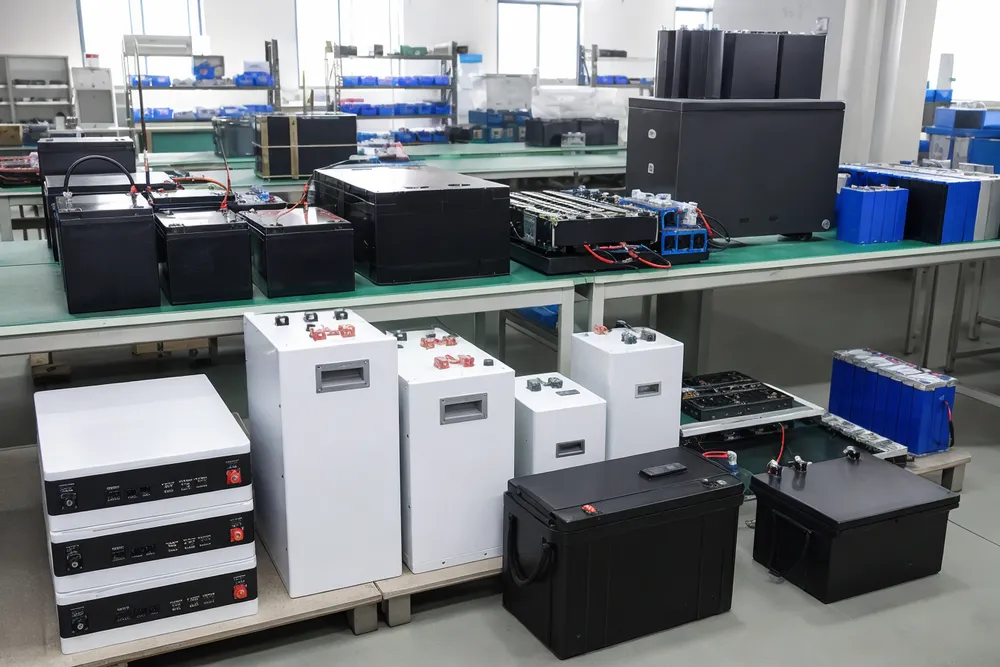
EVANBattery is a solar battery backup manufacturer based in Zhongshan, Guangdong — 9,900 m² of production floor, 6 lines, 150 people, and 13+ years doing nothing but solar energy storage batteries. We produce lithium (LiFePO4) and lead-acid (gel, AGM) backup packs for distributors, project contractors, and OEM partners who need a repeatable supply source rather than a one-off purchase.
If you're sourcing solar battery backup units for a distribution program, installer network, or project pipeline, this page covers the configurations we produce, how we control quality at batch level, which market segments drive repeat orders, and what you need to send us for a production-ready quote.
Backup Battery Configurations Buyers Can Put Into a Quote Sheet
The table below covers our standard solar battery backup configurations. These are production-ready platforms — you pick the voltage, capacity, and chemistry that matches your inverter ecosystem and market, and we quote against your quantity and destination.
| Parameter | LiFePO4 (Lithium) | Gel / AGM (Lead-Acid) |
|---|---|---|
| Chemistry | LiFePO4 (lithium iron phosphate) | Gel electrolyte / AGM VRLA |
| Nominal Voltage | 12.8V, 25.6V, 48V, 51.2V | 12V, 24V (series-configurable) |
| Capacity Range | 50Ah – 300Ah per unit | 50Ah – 250Ah per unit |
| Typical Energy | 0.64 kWh – 15.36 kWh | 0.6 kWh – 6 kWh |
| BMS Protection | Over-charge, over-discharge, over-current, short-circuit, temperature | N/A (charge controller managed) |
| Communication Options | RS485, CAN bus, Bluetooth (model-dependent) | N/A |
| Cycle Life (typical) | 3,000–6,000 cycles at 80% DOD | 500–800 cycles at 50% DOD |
| Operating Temperature | -20°C to 55°C (discharge); 0°C to 45°C (charge) | -15°C to 50°C |
| Enclosure Options | Metal cabinet, wall-mount, rack-mount (19"), floor-standing | ABS case, metal cabinet |
| Certifications | CE IEC 62133 UN38.3 MSDS | CE UN38.3 MSDS |
| Customization | Voltage, capacity, BMS parameters, communication protocol, enclosure, branding | Capacity, terminal type, branding |
Residential Solar Battery Backup
For residential solar battery backup programs, the 51.2V LiFePO4 platform in 100Ah–200Ah is the highest-volume configuration we ship — it matches the 48V hybrid inverter ecosystem that dominates European and Southeast Asian residential markets.
Off-Grid & Weak-Grid Channels
For lithium battery solar backup in off-grid or weak-grid channels, 12.8V and 25.6V packs remain strong because they pair with lower-cost PWM and MPPT charge controllers.
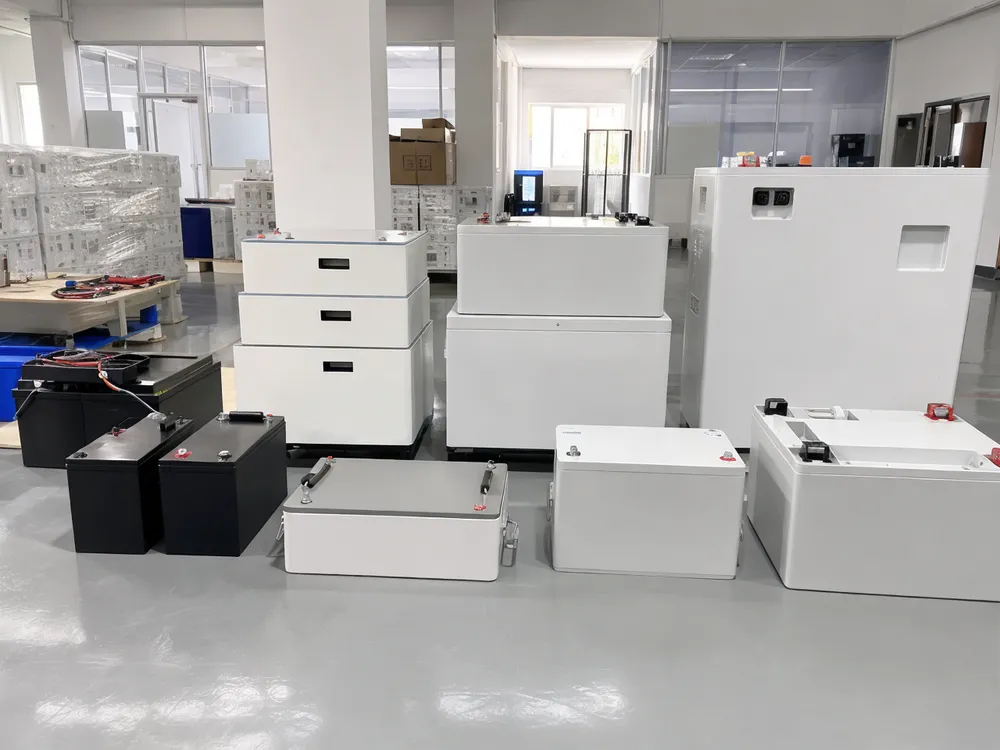
Cell Matching and BMS Control Behind Stable Reorders
When you reorder 500 or 2,000 units of the same SKU six months later, the packs need to perform identically to the first batch. That consistency comes from two things we control tightly: cell sorting and BMS programming.
Automated Cell Sorting
Every incoming cell batch goes through automated sorting — measured for actual voltage, internal resistance, and capacity, then grouped within 20mV and 5mΩ tolerance windows. We don't rely on the cell supplier's printed labels.
We've seen batches from the same supplier arrive with 40mV spread between cells labeled identically — that kind of variance kills pack longevity if it reaches assembly unchecked.
After sorting, cells are matched into series/parallel groups and assembled into packs.
In-House BMS Design & Programming
Our BMS boards are designed and manufactured in-house, not sourced as generic modules. This matters for your reorder consistency because we program protection thresholds to match the actual cell characteristics of each production batch:
- Over-charge cutoff voltage
- Over-discharge cutoff voltage
- Balancing trigger voltage
- Temperature limits
A solar battery backup manufacturer using off-the-shelf BMS modules can't adjust these parameters batch-to-batch; we can, and we do.
Batch-Level Quality Verification
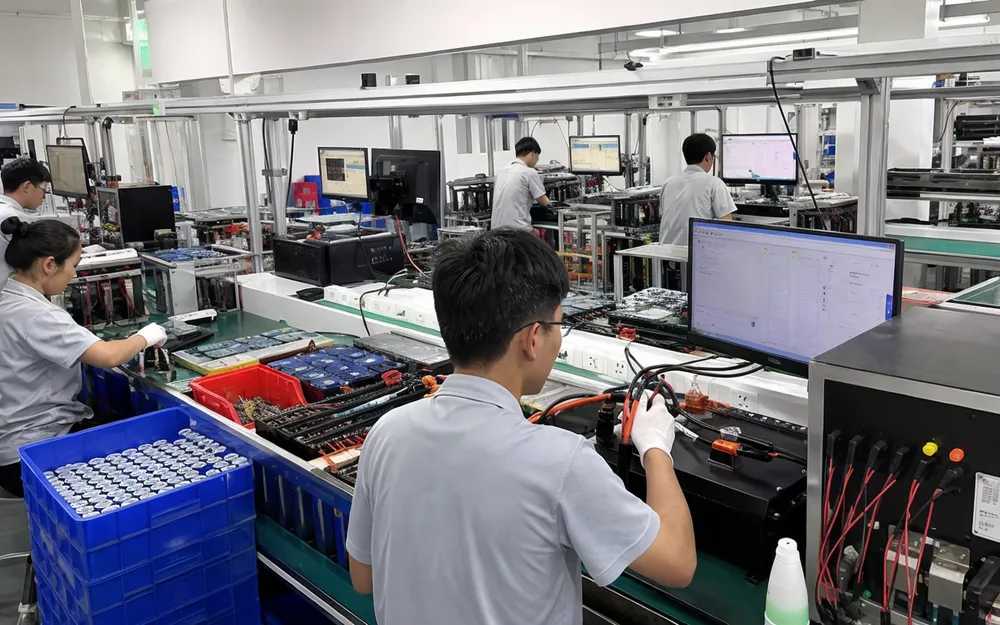
Every finished pack goes through charge/discharge cycling, capacity verification, and high/low temperature testing before it reaches the packing area. We run these checks on production batches, not just during initial type approval.
The Result for Your Business
- Predictable field performance
- Predictable warranty exposure
- Customers who reorder from you instead of switching suppliers
OEM Packaging, Labeling, and Brand-Ready Delivery
Your customers see your brand, not ours. We handle the full packaging scope so packs arrive warehouse-ready under your identity — no relabeling, no repackaging at destination.
Custom Enclosure & Color
Metal or ABS enclosures in your specified color (RAL or Pantone match). We handle tooling for custom shapes when volumes justify it, or adapt standard housings with your branding for faster lead times.
Label & Silk-Screen Printing
Your logo, model number, serial number, regulatory marks, and safety warnings — printed or labeled per your artwork files. We support sequential serial numbering and QR codes linked to your warranty system.
Retail & Pallet Packaging
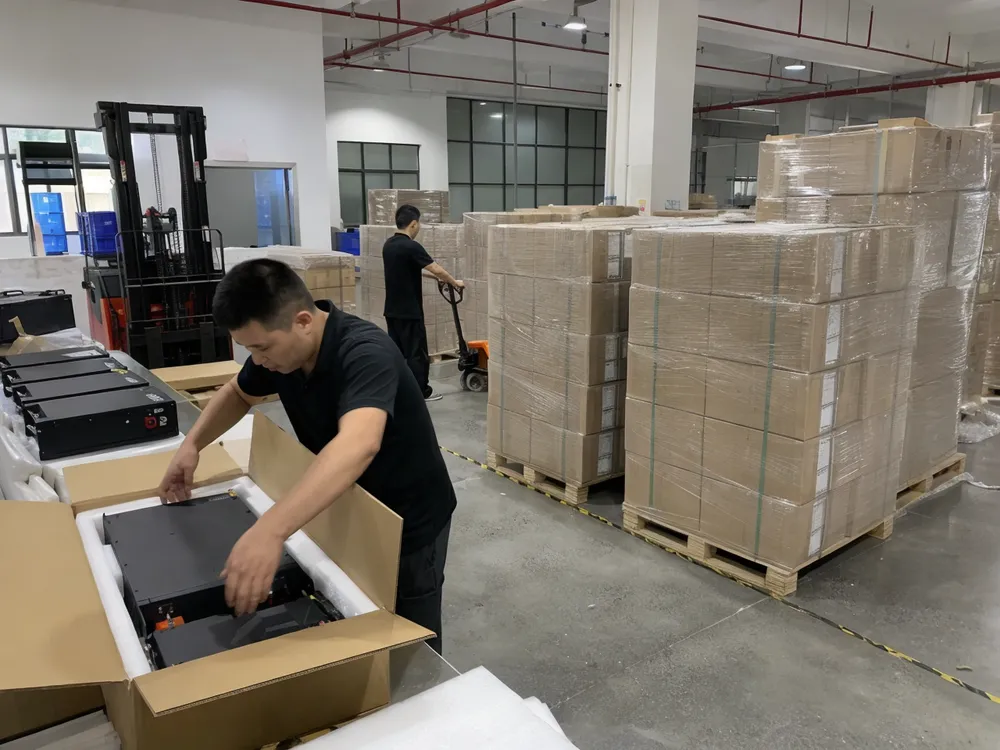
Individual color boxes with your branding for retail channels, or plain brown cartons for B2B distribution. Palletized with corner protectors and stretch wrap for container shipping. UN38.3-compliant outer markings included.
Accessories & Kitting
We can include mounting brackets, cable harnesses, fuse holders, communication cables, and printed quick-start guides inside each box — so your customer opens a complete kit, not just a bare battery.
Technical Documentation
Datasheets, installation manuals, and wiring diagrams provided in editable format so you can rebrand them. We also supply test reports, MSDS, and certification documents for your import compliance filings.
Direct-to-Warehouse Shipping
We ship DDP or DAP to your warehouse, Amazon FBA prep center, or distributor — with your commercial invoice and packing list. No EVANBattery branding appears on any external-facing document or package.
White-Label Process Timeline
From artwork approval to first branded shipment, the typical timeline looks like this:
Artwork & Spec Confirmation
2–3 business days
Sample with Your Branding
7–10 days (includes enclosure + label production)
Bulk Production
15–25 days depending on quantity
QC, Packing & Shipment
3–5 days
Certification and Compliance Support for Market Entry
Selling solar battery backup systems means meeting regulatory requirements that vary by destination market. We maintain baseline certifications and support you through market-specific compliance — so you don't get stuck at customs or fail a distributor audit.
Standard Certifications We Maintain
IEC 62619 / IEC 62133
Safety requirements for secondary lithium cells and batteries in industrial and portable applications
UN38.3
Transport testing for lithium batteries — required for air, sea, and ground shipment globally
CE Marking (LVD + EMC)
Conformity for European Economic Area market access
MSDS / SDS
Material Safety Data Sheets for shipping documentation and hazmat compliance
Market-Specific Compliance We Support
UL 1973 / UL 9540A
North American energy storage safety — we provide test samples and engineering support for UL lab testing
EU Battery Regulation 2023/1542
Carbon footprint declaration, due diligence, and digital battery passport readiness
BIS (India) / SASO (Saudi Arabia)
Regional type-approval support including in-country testing coordination
Custom Protocol Integration
CAN/RS485 communication matching your inverter brand's protocol (Victron, Deye, Growatt, SMA, etc.)
Certification costs and timelines vary by market. We'll outline what's needed, what we cover as part of the project, and what requires separate investment during the quotation stage — no surprises after production starts.
MOQ, Lead Time, and Ordering Process
We work with distributors placing initial trial orders and brands running continuous monthly production. Here's what to expect at each stage.
Trial Order
MOQ
50–100 units
Lead Time
15–20 days
Customization
Standard specs with your label and basic packaging
Best For
Market testing, sample evaluation, initial distributor stocking
Standard Order
MOQ
200–500 units
Lead Time
20–30 days
Customization
Full OEM: enclosure color, BMS parameters, communication protocol, branded packaging
Best For
Regular quarterly orders, distributor programs, project-based procurement
Volume Order
MOQ
1,000+ units
Lead Time
25–40 days
Customization
Everything in Standard plus custom enclosure tooling, dedicated cell procurement, blanket order pricing
Best For
Monthly rolling production, large project tenders, exclusive distribution agreements
How the Process Works
RFQ Submission
You send specs, quantity, and target market
Quotation & DFM
We quote pricing and flag any design-for-manufacturing considerations
Sample Approval
Branded sample shipped for your testing and sign-off
Production & QC
Bulk manufacturing with in-line and end-of-line testing
Shipment & Support
Delivery to your warehouse with full documentation
Backup Markets Where This Product Becomes a Repeat SKU
Solar battery backup sells into several distinct market segments, each with its own order pattern and margin structure. We've shipped into all of them — here's what drives repeat business in each.
Residential Outage-Backup Programs
Fastest-Growing Segment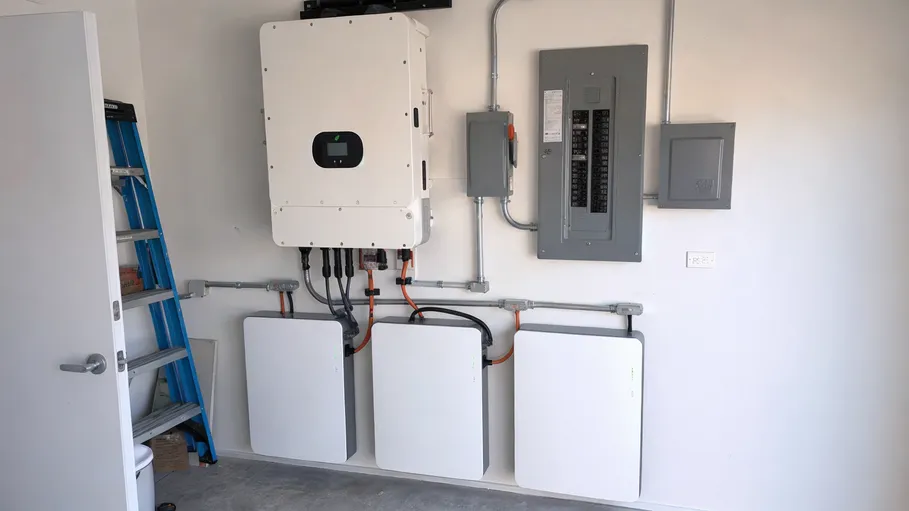
Grid-tied homeowners adding backup capacity represent the fastest-growing segment for our European and South American distributors. The typical configuration is a 51.2V 100Ah or 200Ah LiFePO4 pack paired with a hybrid inverter. Installers buy through your distribution channel, deploy 1-3 units per home, and come back monthly for the next project.
Margin range: 25-40% depending on whether you bundle with inverter hardware or sell the battery standalone.
What makes this segment sticky: once an installer validates a battery-inverter combination and trains their crew on it, they don't switch suppliers casually. Your first 50-unit order seeds a relationship that compounds.
Installer Retrofit Kits
Retrofit Opportunity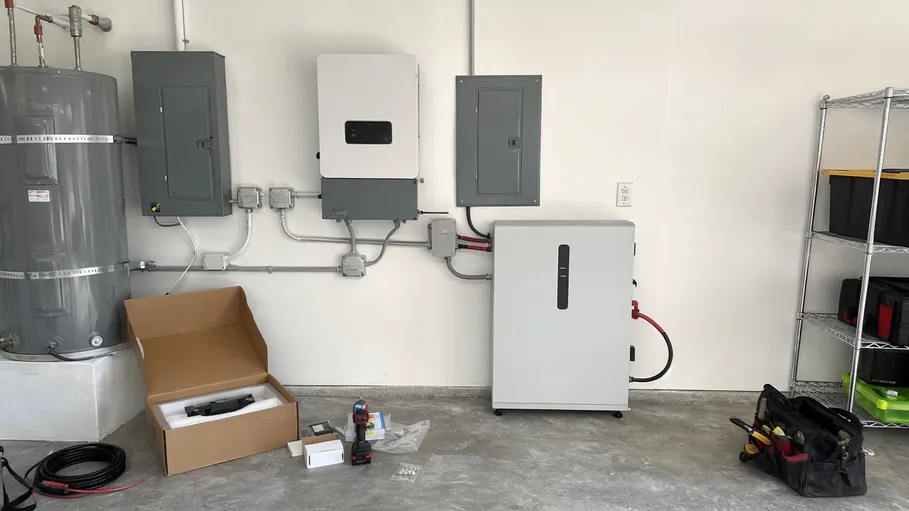
Existing solar PV systems without storage represent a retrofit opportunity in every market where grid reliability is declining or time-of-use tariffs are spreading. Installers need a home solar battery backup unit that drops into an existing system — correct DC voltage, compatible communication protocol, and physical dimensions that fit beside an existing inverter.
We configure packs specifically for retrofit compatibility with major hybrid inverter brands.
Weak-Grid and Off-Grid Retail Channels
High Volume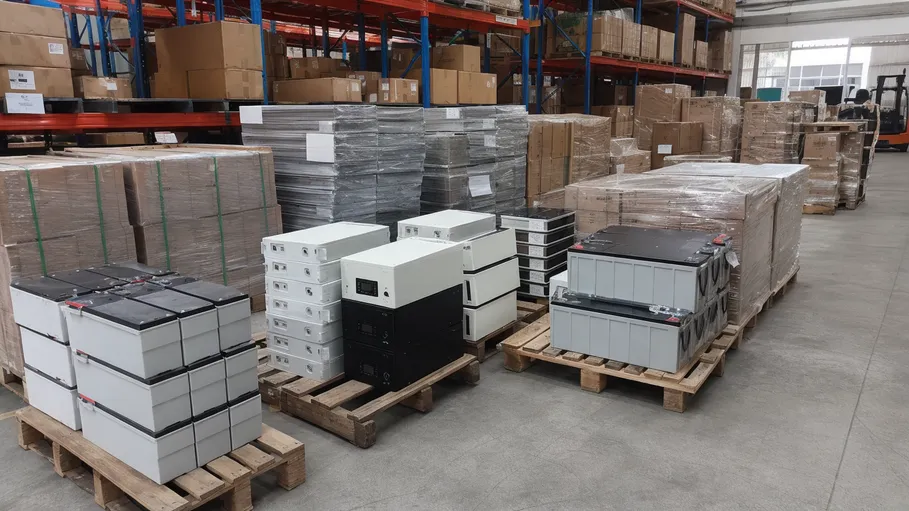
In Africa, Southeast Asia, and parts of South America, residential solar battery backup is not a luxury add-on — it's the primary power source. 12V and 24V configurations (both LiFePO4 and gel) sell through retail shops, solar kits distributors, and NGO procurement programs.
Order Volume
200–1,000 units/shipment
Price Sensitivity
Sharper than residential
Gel Market Share
Significant (lower cost)
This segment built our factory in the early years — we understand the landed-cost math for a 20GP container of 12V gel batteries heading to Lagos or Nairobi.
Telecom and Security Backup
Project-Based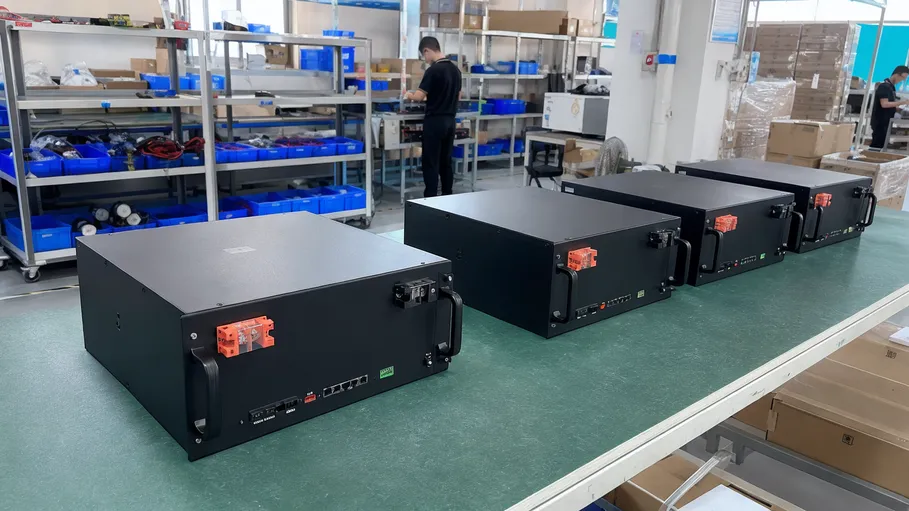
Cell towers, CCTV networks, and alarm systems need reliable backup power with predictable cycle life. 48V LiFePO4 packs with RS485 or CAN communication for remote monitoring are the standard configuration.
Order pattern: 50–200 units per site rollout, with maintenance/replacement cycles creating reorder demand every 3-5 years.
Small Commercial Solar Projects
Predictable Quarterly DemandShops, clinics, schools, and small offices with 5-15 kWh backup requirements. These projects typically specify 48V or 51.2V lithium battery solar backup in rack-mount or floor-standing enclosures.
Contractors buy through distributors or direct — either way, the project pipeline creates predictable quarterly demand once you establish the supply relationship.
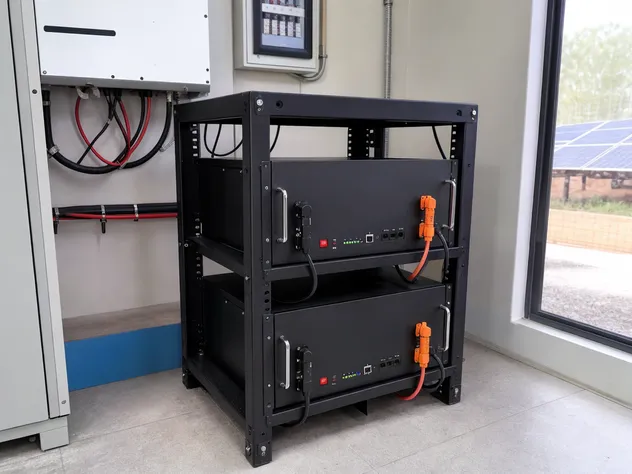
Inverter Compatibility Checks Before Production
Backup batteries fail commercially when they don't communicate properly with the inverter. We've seen containers of perfectly good packs sit in warehouses because the BMS communication protocol didn't match the inverter's expected handshake. Before we quote production, we need to confirm the following against your inverter ecosystem:
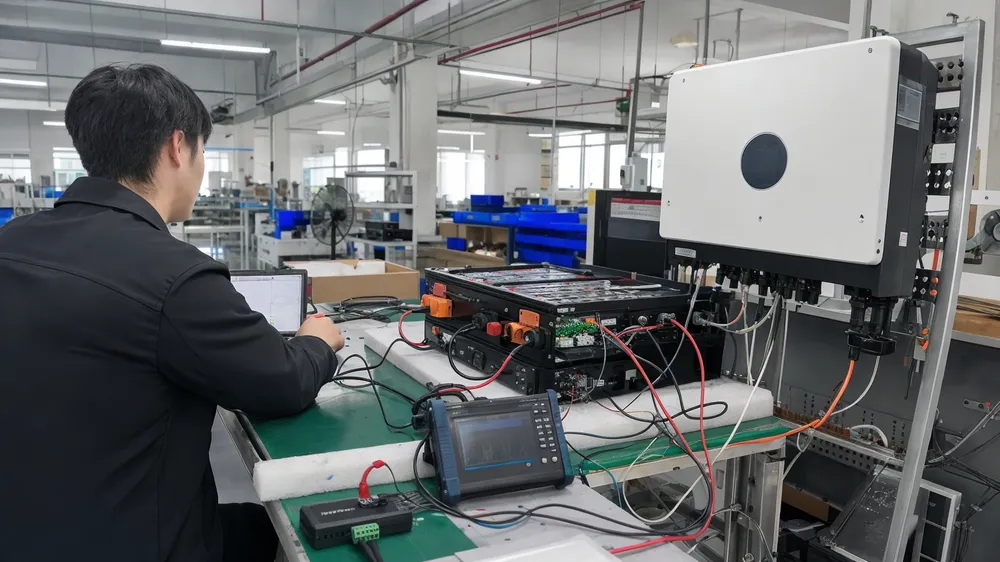
The residential solar battery backup market is converging on CAN bus communication for lithium packs, but RS485 remains common in commercial and telecom applications.
Tell us your mix and we'll configure accordingly.
Pre-Validated Inverter Brands
We already have validated communication profiles in our BMS firmware library for:
Less common brands: Our engineering team runs a protocol matching cycle before production commitment. This takes 5-7 working days with a sample inverter or protocol documentation from the manufacturer.
What to Send Us for Compatibility Verification
Provide these details with your RFQ to avoid production delays:
-
1
Inverter brand and model
Or the 3-4 brands your installers use most
-
2
DC bus voltage range
Nominal and acceptable window
-
3
Communication protocol requirement
CAN, RS485, dry contact, or none
-
4
Maximum charge current and maximum discharge current
-
5
Backup load profile
Peak watts and typical sustained watts
-
6
Autonomy target
Hours of backup at expected load
-
7
Parallel expansion plans
Will end users add a second battery later?
-
8
Installation environment
Indoor, outdoor, garage, tropical climate
We cross-reference this against our BMS firmware library to ensure protocol handshake before production commitment.
10kW Backup Projects Need Clear kW and kWh Matching
We receive "10kW solar battery backup" inquiries weekly, and the term means different things to different buyers. Before quoting, we clarify which "10kW" you need:
10kW Inverter Power
Your hybrid inverter handles 10kW of continuous output. The battery needs to deliver sufficient discharge current at the correct voltage to sustain that load. A 51.2V 200Ah LiFePO4 pack delivers approximately 10.24 kWh of stored energy and can typically sustain 100A continuous discharge (roughly 5kW per unit) — so a 10kW inverter system needs two units in parallel, or a single higher-capacity configuration.
10kWh Storage Capacity
You need 10 kilowatt-hours of usable energy storage. At 51.2V nominal, that's approximately 200Ah. A single 51.2V 200Ah pack covers this. At 48V with lead-acid, you'd need roughly 250Ah at 50% DOD to deliver 10kWh usable — significantly more physical volume and weight.
"10kW" as a Rough Project Size Descriptor
Some buyers use "10kW" to describe the overall solar array size and assume the battery should match. The actual battery sizing depends on backup duration, load profile, and whether the system is hybrid (grid-tied with backup) or fully off-grid.
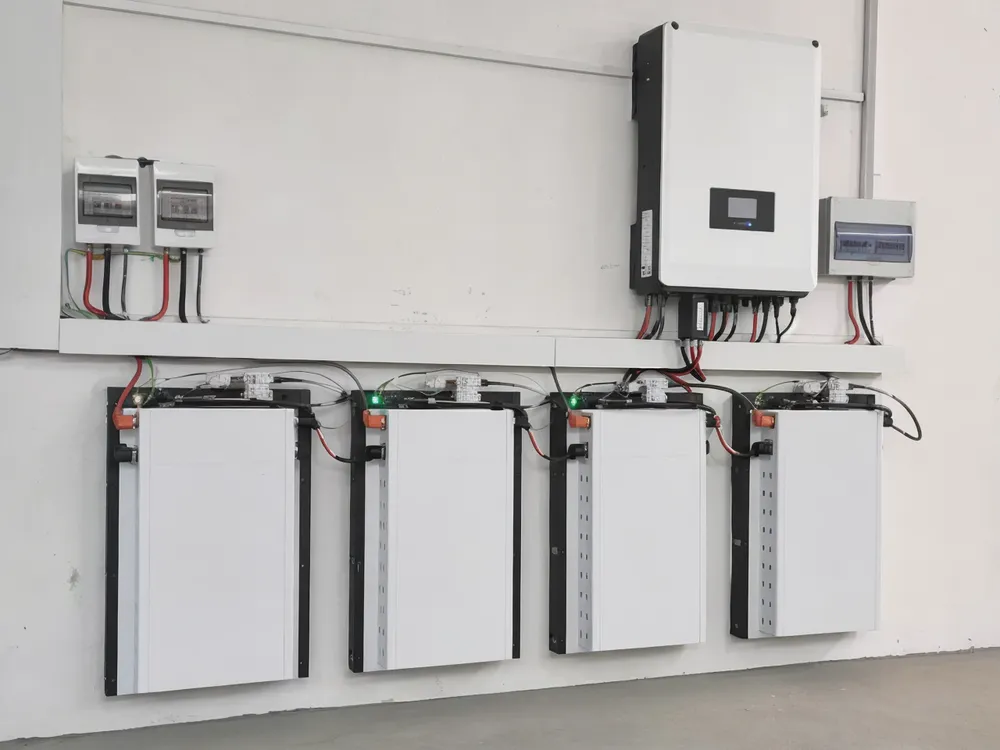
How We Handle 10kW Inquiries
We don't guess which interpretation you mean. Send us the inverter model, target backup hours, and load profile — we'll spec the exact lithium battery solar backup configuration and quote it with full BMS and communication details.
For 10kW-class residential and light commercial projects, 48V/51.2V LiFePO4 is the dominant chemistry because of cycle life, energy density, and compatibility with the hybrid inverter ecosystem. These are higher-ticket orders with better margin per unit than entry-level 12V products — worth prioritizing in your catalog if your market is moving toward grid-tied storage.
OEM/ODM Backup Battery Options, MOQ, and Limits
We run OEM and ODM programs for buyers who need more than a standard catalog product. Here's what's configurable and where the boundaries are:
Electrical Configuration
Custom voltage (any series arrangement from 12.8V to 51.2V), custom capacity (cell parallel count), and custom BMS protection thresholds. If your market needs a 25.6V 200Ah pack that doesn't exist in our standard range, we configure it from validated cell platforms.
BMS and Communication
RS485, CAN bus, Bluetooth, or dry-contact relay output. Custom communication protocols for specific inverter brands. Low-voltage disconnect points, charge current limits, and temperature protection windows — all programmable per your specification.
Enclosure and Form Factor
Wall-mount, floor-standing, rack-mount (19" standard or custom depth), IP65 outdoor-rated, or open-frame for cabinet integration. Custom dimensions within our tooling range; fully custom enclosure tooling is available above 1,000-unit orders.
Branding
Your logo, color scheme (powder coat or silk-screen), product labels, serial number format, user manual, warranty card, and retail packaging design. We produce under your brand with no EVANBattery markings unless you want them.
Documentation Packages
CE declaration under your company name, market-specific compliance documentation, custom test reports with your branding.
Engineering Review Required
New cell chemistries we haven't validated, pack voltages above 51.2V, custom BMS hardware (not just firmware), and integration with inverter brands we haven't previously tested against.
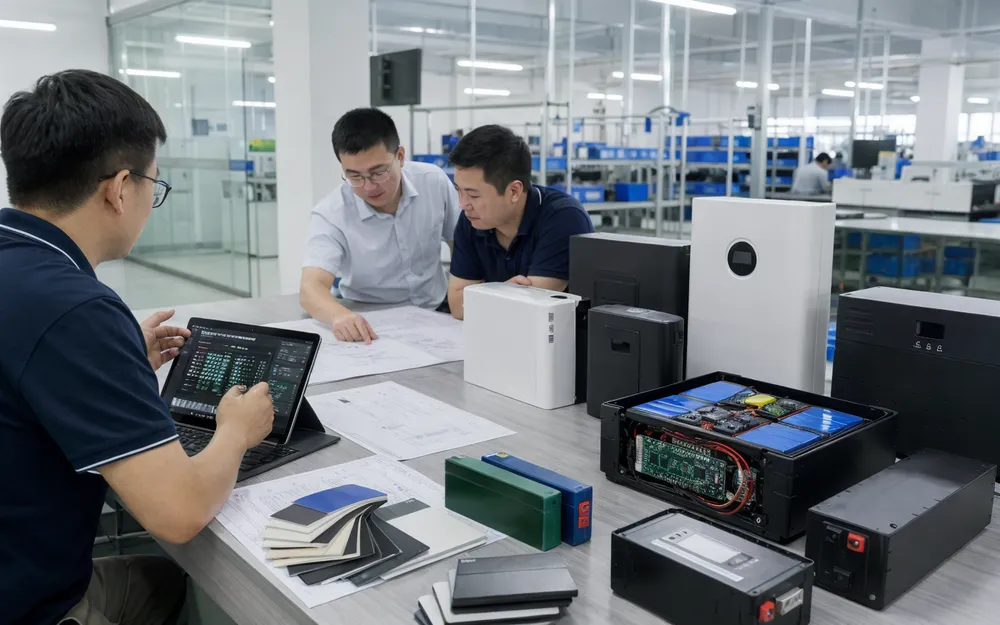
MOQ Structure
Standard Models
Off-the-shelf configurations, no customization
Label / Color Customization
Your branding on existing model enclosures
Custom BMS Firmware / Protocol
Modified communication or protection parameters
Fully Custom Enclosure
New tooling for unique form factor requirements
These thresholds reflect engineering validation cost — below them, the per-unit development amortization doesn't make commercial sense for either of us.
Export Documents and Packing That Keep Battery Orders Moving
Batteries are dangerous goods under IATA and IMDG codes. Your freight forwarder, customs broker, and destination port authority all need specific documentation — missing a single document can hold your container for weeks.
What ships with every EVANBattery order:
Section 38.3 transport test certification — T1 through T8
Material Safety Data Sheet, GHS-compliant format
For EU-destined shipments
Battery safety standard certification
Battery type, quantity, Wh rating, and lithium content per unit
Class 9, UN3481 for lithium ion packed with equipment, or UN3480 for standalone
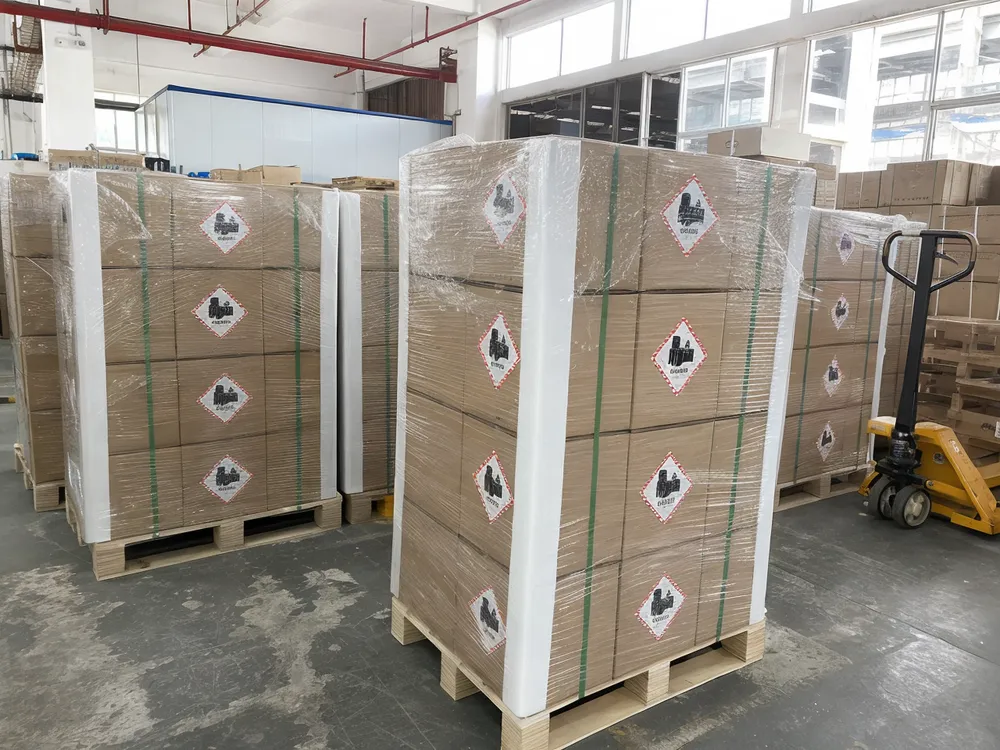
Packing for Transit Survival
Each battery unit is individually boxed in reinforced corrugated carton with foam inserts. Cartons are palletized on fumigation-treated wooden pallets, stretch-wrapped, and corner-protected.
For lithium packs, we apply UN3480/3481 diamond labels and handling marks per IATA/IMDG requirements.
Field-Driven Improvement
We switched to double-wall cartons for all lithium shipments in 2021 after seeing compression damage on units stacked four-high in containers bound for East Africa — the extra $0.30 per carton eliminated damage claims entirely.
Container Loading
A standard 20GP container holds approximately 800–1,200 backup battery units depending on configuration and weight.
We provide loading plans showing pallet arrangement, weight distribution, and securing recommendations.
Mixed-SKU Sequencing
For mixed-SKU containers, we sequence pallets by unloading priority if you specify your warehouse receiving workflow. This reduces handling time at destination and prevents re-sorting.
ISO 9001:2015 Traceability
Every unit carries a serial number linked to cell batch, BMS firmware version, test date, and production line. Full traceability from raw cell to delivered carton.
Choose the Right Solar Battery Storage Product Before You Quote
Solar battery backup is one of several product categories under our storage range. If your project needs a different form factor or scale, here's where each product fits:
Solar Battery Backup
This Page
Best for: Outage protection, hybrid solar, off-grid residential/commercial
Config: 12V–51.2V, 50–300Ah, wall/floor/rack mount
Use case: Distributor backup programs, installer retrofit kits, project deployment
Rack Mounted Solar Battery
48V Cabinet Systems
Best for: 48V cabinet systems, commercial installations, data centers
Config: 48V/51.2V, 100–280Ah, 19" rack format
Use case: Commercial project contractors, system integrators
Solar Battery Bank
Scalable Arrays
Best for: Multi-battery array design, scalable storage
Config: 12V/24V/48V parallel/series banks
Use case: Off-grid system builders, large residential, telecom
Container Solar Battery Storage
Industrial Scale
Best for: Industrial-scale storage, utility projects, microgrids
Config: 100kWh–1MWh+ containerized systems
Use case: EPC contractors, utility developers, industrial facilities
Not sure which category fits your order?
Send us the project parameters — inverter type, total storage capacity needed, installation environment, and quantity — and we'll route you to the correct configuration.
View the Full Solar Battery Storage RangeSolar Battery Backup FAQ for Procurement Checks
Quick-reference answers to the questions procurement teams ask most often when evaluating solar battery backup suppliers.
What information is needed to quote a solar battery backup order?
What information is needed to quote a solar battery backup order?
Send us: target voltage (12V, 24V, 48V, or 51.2V), capacity per unit, chemistry preference (LiFePO4 or gel/AGM), inverter brand and model, communication protocol requirement, quantity, branding needs, and destination country. The more complete your initial specification, the faster we return a production-ready quote with accurate landed-cost inputs. If you're unsure on chemistry or capacity, describe the end application and we'll recommend.
Is LiFePO4 or gel better for backup battery distribution?
Is LiFePO4 or gel better for backup battery distribution?
It depends on your market's price sensitivity and performance expectations.
LiFePO4
- 3,000–6,000 cycles at 80% DOD
- ~60% lighter than equivalent gel capacity
- Supports deeper discharge
- Higher margin per unit
- 2–3× more per kWh upfront
Gel / AGM
- Lower upfront cost per kWh
- Tolerates irregular charging better
- No BMS required — simpler for limited-support markets
- Higher volume per shipment
- Heavier, fewer cycles
Most of our distributors carry both: lithium for premium residential solar battery backup programs and gel for price-sensitive off-grid channels. Your margin per unit is typically higher on lithium; your volume per shipment is typically higher on gel.
How should a 10kW solar battery backup be specified?
How should a 10kW solar battery backup be specified?
Clarify whether "10kW" refers to inverter output power, battery storage capacity (kWh), or solar array size.
- •For a 10kW inverter: You need battery discharge current capacity to sustain 10kW continuous — at 51.2V, that's roughly 200A, requiring parallel units or a high-current BMS configuration.
- •For 10kWh storage: A single 51.2V 200Ah LiFePO4 pack covers it.
Send us the inverter model and backup duration target — we'll calculate the exact configuration.
Can EVANBattery match batteries to hybrid inverter communication?
Can EVANBattery match batteries to hybrid inverter communication?
Yes. We maintain validated CAN bus and RS485 communication profiles for Deye, Growatt, Victron, Goodwe, SolaX, Sungrow, and several other brands.
For inverters not in our existing library, we develop the communication match during a 5–7 day engineering cycle using protocol documentation or a sample inverter.
Our BMS firmware is written in-house, so protocol adjustments don't require third-party involvement or long lead times.
What documents are needed for importing solar backup batteries?
What documents are needed for importing solar backup batteries?
At minimum: UN38.3 test summary, MSDS/SDS, and a DG shipping declaration (Class 9).
For EU markets, add: CE Declaration of Conformity and IEC 62133 test report.
Market-specific certifications:
- •South Africa — NRCS/LoA
- •Australia — IEC 62619 for commercial
- •Brazil — INMETRO
We provide all standard documentation with every shipment and can support additional certification applications with test samples and technical data packages.
What is the MOQ for standard solar battery backup models?
What is the MOQ for standard solar battery backup models?
Standard catalog models
100 units
No customization
Label & color changes
200 units
Existing platforms
Custom BMS / protocol
300 units
Firmware modifications
Custom enclosure tooling
1,000 units
New mold development
We set these thresholds based on engineering validation cost per unit — below them, the amortization makes the per-unit price uncompetitive.
For market testing, start with 100 standard units and move to custom configurations once you've validated demand.
Get a Production Quote for Your Backup Battery Program
You've read the configurations, market segments, and compliance details. If this product fits your supply chain, here's what to send us for a quote:
Voltage and capacity: 12.8V / 25.6V / 48V / 51.2V — and Ah per unit
Chemistry: LiFePO4 or gel/AGM
Inverter model: Brand and model number for communication matching
Quantity: Initial order and estimated annual volume
Branding: Your brand, EVANBattery brand, or unbranded
Destination market: Country and port for freight and compliance planning
We respond with a technical recommendation, unit pricing at your stated volume, lead time, and a documentation checklist for your import process — typically within 48 hours.
Contact Us Directly
Explore More Solar Battery Storage