

48V LiFePO4 Solar Battery Modules for Wholesale Storage Programs
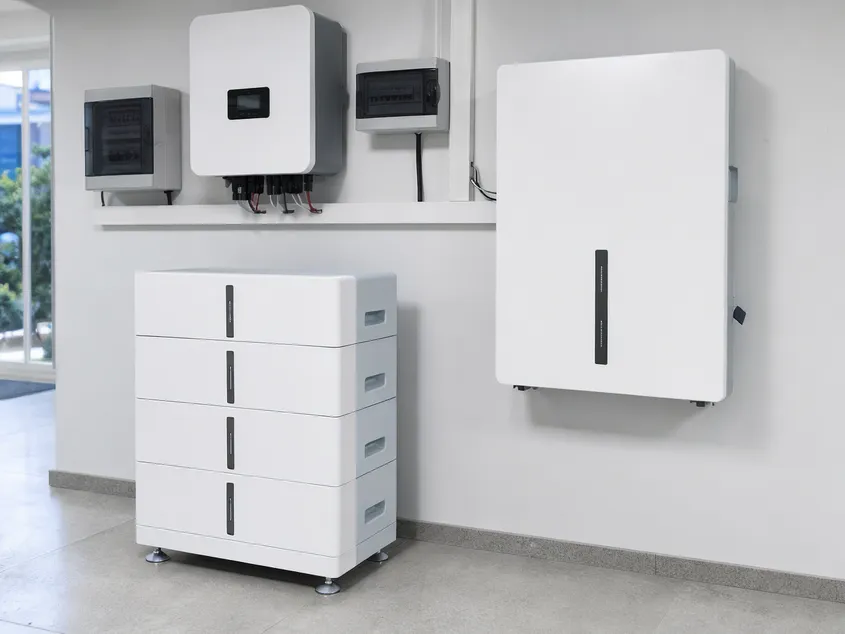
Standard 51.2V LiFePO4 modules — the repeatable SKU for residential and light commercial storage programs. Wall-mount and stackable formats, 100Ah to 200Ah, with in-house BMS configured to your inverter protocol before production starts.
48V LiFePO4 Solar Battery Modules for Wholesale Storage Programs
This is our standard 48V LiFePO4 solar battery module — 16 cells in series, 51.2V nominal, available in 100Ah (5.12 kWh) and 200Ah (10.24 kWh) configurations. It's the core SKU that distributors, inverter bundle sellers, and residential storage installers build their catalogs around.
48V vs 51.2V — Same Product
The "48V" and "51.2V" labels refer to the same product. Legacy 48V comes from lead-acid convention; 51.2V is the actual LiFePO4 nominal (16 × 3.2V). Your inverter needs to accept the LiFePO4 charge profile — we confirm compatibility and configure BMS communication protocol before production, not after your installer reports a problem on site.
We've manufactured this module type since 2016, when European distributors started shifting residential programs from lead-acid to lithium. The design has been through multiple iterations based on field feedback — BMS protection thresholds, connector placement, enclosure ventilation, parallel communication stability. What ships today reflects thousands of units already operating across Europe, Southeast Asia, Africa, and South America.
Request a quote for this 48V LiFePO4 solar battery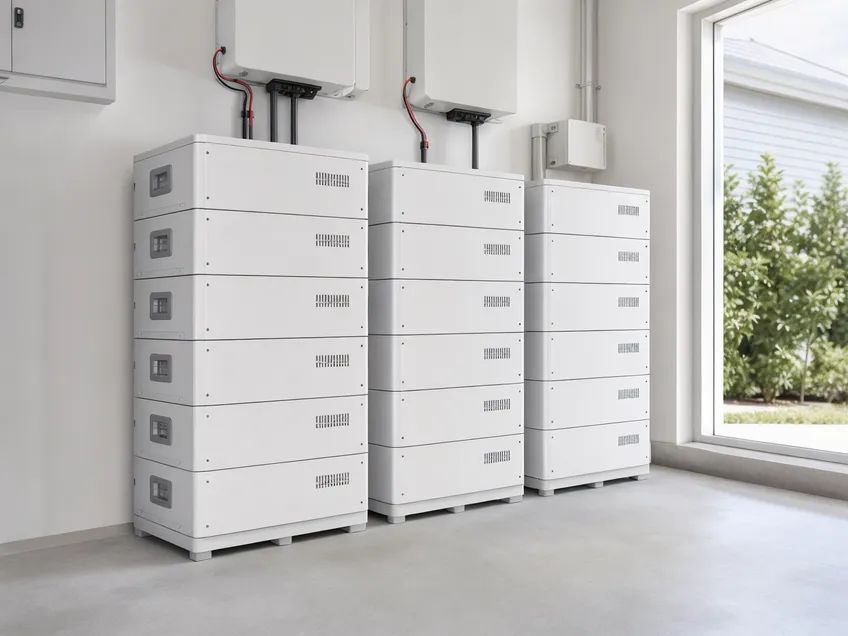
16S
Cells in Series
51.2V
Nominal Voltage
6,000+
Cycle Life
15
Max Parallel Units
Quote-Sheet Specifications for 51.2V Solar Battery Modules
You're building a comparison sheet. Here are the planning values for our standard 51.2V solar battery modules — use these to confirm fit before requesting a formal quotation with exact dimensions and weights for your specific configuration.
| Parameter | 51.2V 100Ah Module | 51.2V 200Ah Module |
|---|---|---|
| Nominal Voltage | 51.2V | 51.2V |
| Rated Capacity | 100Ah | 200Ah |
| Usable Energy | 5.12 kWh (typical) | 10.24 kWh (typical) |
| Cell Configuration | 16S1P LiFePO4 | 16S2P LiFePO4 |
| Cycle Life | 4,000–6,000 cycles at 80% DOD | 4,000–6,000 cycles at 80% DOD |
| Charge Voltage | 57.6V (typical) | 57.6V (typical) |
| Discharge Cut-off | 44.8V (typical) | 44.8V (typical) |
| Max Continuous Charge | 50A (0.5C) | 100A (0.5C) |
| Max Continuous Discharge | 50A (0.5C), 100A peak | 100A (0.5C), 200A peak |
| Communication Protocol | RS485 / CAN (configured per inverter) | RS485 / CAN (configured per inverter) |
| BMS Protections | OVP, UVP, OCP, SCP, OTP, cell balancing | OVP, UVP, OCP, SCP, OTP, cell balancing |
| Operating Temp (Discharge) | -20°C to 55°C | -20°C to 55°C |
| Operating Temp (Charge) | 0°C to 45°C | 0°C to 45°C |
| Enclosure Format | Wall-mount / stackable | Wall-mount / stackable |
| Parallel Expansion | Up to 15 units (BMS-dependent) | Up to 15 units (BMS-dependent) |
| Certifications | CE, IEC 62133, UN38.3, MSDS | CE, IEC 62133, UN38.3, MSDS |
| Typical Weight | 40–50 kg | 75–90 kg |
Specifications shown are typical planning values for standard configurations. Exact dimensions, weight, connector type, and parallel limits are confirmed on your EVANBattery quotation sheet. Custom capacity (150Ah, 280Ah) and non-standard BMS configurations available — state requirements during inquiry.
100Ah Module
5.12 kWh · Single-Home Backup
The 100Ah unit fits single-home backup programs. Compact wall-mount format for standard residential installations where daily consumption stays under 15 kWh and the system scales through parallel expansion.
200Ah Module
10.24 kWh · High-Consumption / Light Commercial
The 200Ah unit serves higher-consumption households or small commercial sites. Carrying both gives you a two-SKU catalog that answers most customer questions without overloading your warehouse.
Quotation includes confirmed dimensions, weight, connector type, and parallel limits for your configuration.
Build a 48V Solar Battery Bank Without Inverter Surprises
The most expensive mistake in 48V storage programs isn't a bad cell — it's a communication mismatch between your battery modules and the inverter. We hear it regularly from buyers switching suppliers: "The battery won't talk to the inverter." That's a BMS protocol problem, and it's entirely preventable if you confirm the details before production.
What You Need to Plan Before Ordering a 48V Solar Battery Bank
Module Count and Total kWh
A 10 kWh residential bank needs two 51.2V 100Ah modules in parallel (or one 200Ah module). A 20 kWh system needs four 100Ah modules or two 200Ah modules. Scale from there based on your project's daily consumption and backup duration targets.
Parallel Communication
When modules run in parallel, one BMS acts as master and communicates with the inverter while slave units report through the master. This requires consistent firmware across all modules in the string — mixing firmware versions or BMS generations causes nuisance shutdowns. We ship parallel-ready batches with matched firmware and tested master/slave handshake before packing.
Inverter Protocol Matching
We configure the correct protocol into the BMS before assembly — tell us your inverter brand and model during quotation.
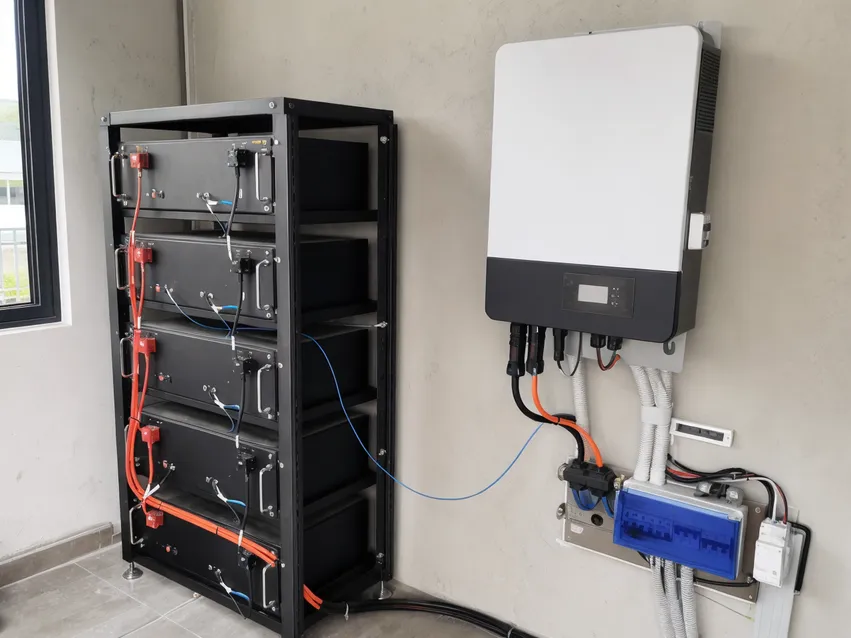
Inverter Protocol Reference
| Inverter Brand | Protocol |
|---|---|
| Deye | CAN bus |
| Growatt | CAN bus |
| Victron | CAN + RS485 |
| SoFar | CAN (specific baud rate) |
| Goodwe | CAN (specific data frame) |
A note from experience: about 30% of the "defective battery" complaints we've investigated from buyers who previously sourced elsewhere turned out to be protocol mismatches, not hardware failures. The battery was fine — the BMS just wasn't speaking the inverter's language.
What to Send Us Before We Quote Your 48V Solar Battery Bank
We'll respond with a confirmed configuration, parallel wiring guidance, and BMS settings documentation.
Standard SKUs That Protect Distributor Margin
You don't need ten SKUs to cover your market. Most of our 48v solar battery supplier partners run two module capacities and cover 80% of their downstream inquiries. Here's how the standard 48V LiFePO4 solar battery modules map to commercial segments you can sell into profitably:
Storage Dealers & Inverter Bundle Sellers
The 51.2V 100Ah module (5.12 kWh) is your bread-and-butter residential SKU. Pair it with a 5 kW hybrid inverter, add your branding to the front panel, and you have a bundle that covers single-home backup in markets with 4–8 kWh daily consumption.
Typical order: 200–500 units per run, reordering quarterly (European and South American distributors).
Your margin lives in the bundle price, not the battery alone — so consistent module cost and reliable reorder supply matter more than chasing the cheapest cell.
Installers & Contractors
Small shops, farms, offices, and backup projects use 2–4 modules in parallel (10–20 kWh). The 51.2V 200Ah module reduces your module count per site and simplifies wiring.
Key requirement: Batch consistency — every module in a parallel string must match, or you'll get callbacks.
These projects come through contractors who need batch consistency. We sort and match at the cell level specifically for this reason.
Lead-Acid Replacement Programs
If your customers are upgrading existing 48V lead-acid banks to LiFePO4, the critical check is inverter charge profile compatibility. Many older inverters need a firmware update or charge parameter adjustment to accept the 51.2V charge curve.
We provide: Compatibility checklist and BMS configuration notes for common inverter models.
Your installation team can handle the swap without engineering support calls back to you.
SKU Economics: Three SKUs, Broad Coverage
A 100Ah and 200Ah combination, both in wall-mount format, lets you quote residential and light commercial projects from the same inventory. Add a stackable variant of the 200Ah if your market has floor-standing demand.
51.2V 100Ah Wall-Mount — residential bundles, single-home backup
51.2V 200Ah Wall-Mount — light commercial, parallel strings
51.2V 200Ah Stackable — floor-standing demand, larger installs
Three SKUs, manageable warehouse commitment. Start with 100 units of your primary SKU to test market response before scaling.
Contact Us With Your Target Market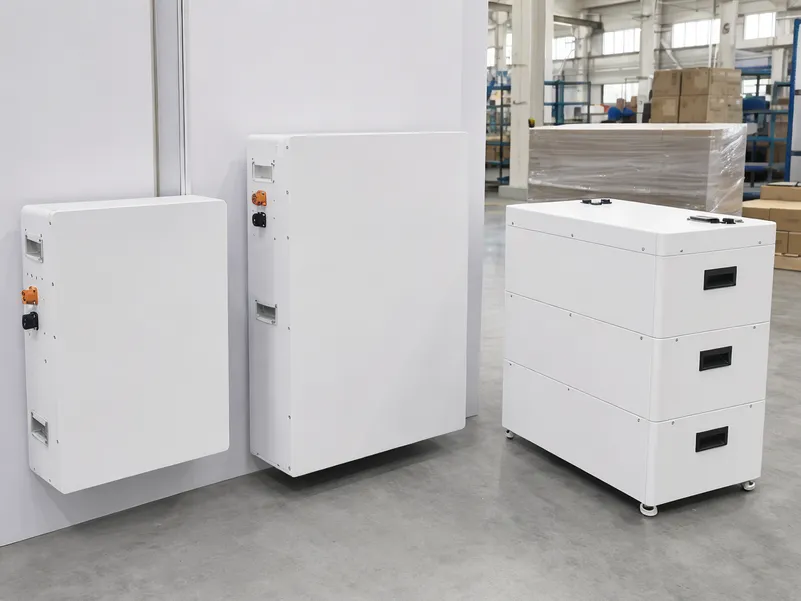
OEM/ODM Scope for Private-Label 48V LiFePO4 Programs
We're a 48V LiFePO4 solar battery manufacturer with in-house BMS design, pack engineering, and enclosure production. That means your private-label program doesn't depend on three separate vendors coordinating — one factory handles the electrical, mechanical, and cosmetic customization under one roof.
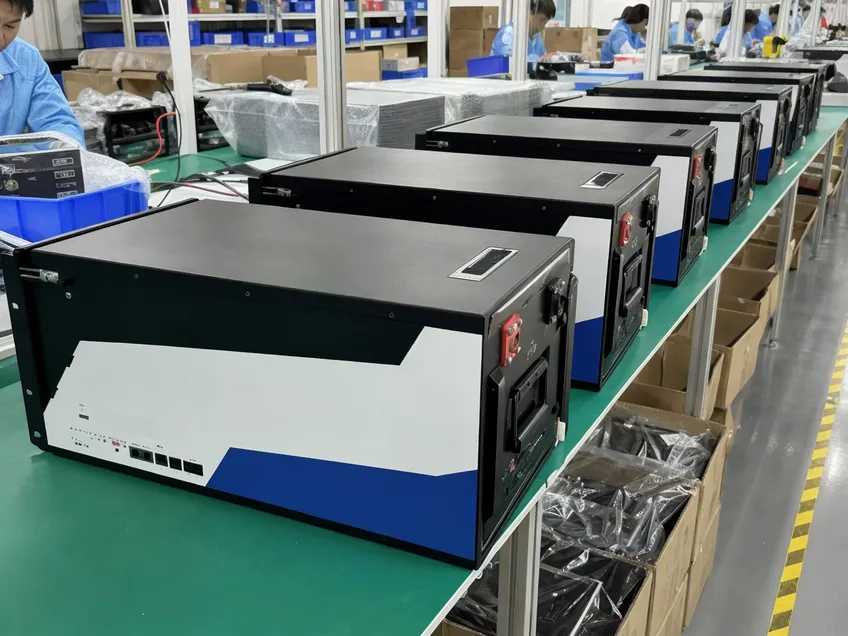
Easy Customization
Standard MOQ · Minimal Lead Time Impact- Logo printing on front panel (silk screen or UV print)
- Panel color matching (RAL or Pantone reference)
- Custom label layouts — voltage, capacity, safety warnings, your brand's serial number format
- Carton markings and retail-ready packaging with your branding
- Documentation with your company name and contact details
These changes run on our standard 100-unit MOQ. We keep the tooling and print plates on file for your reorders.
Engineering Customization
Higher MOQ · Validation Cycle Required- Capacity variants: 150Ah, 280Ah, or non-standard Ah ratings using different cell configurations
- BMS protocol adjustment: specific CAN/RS485 data frames, Bluetooth module addition, app integration for your monitoring platform
- Charge/discharge parameter tuning: different current limits, protection thresholds, or balancing trigger points for specific duty cycles
- Connector type change: Anderson, MC4, terminal block, or proprietary connector to match your inverter harness
- Enclosure dimension modification within existing tooling range
Engineering customization typically requires 200–500 unit MOQ depending on complexity. We provide validation samples before bulk production and document all parameter changes in your dedicated BMS specification sheet.
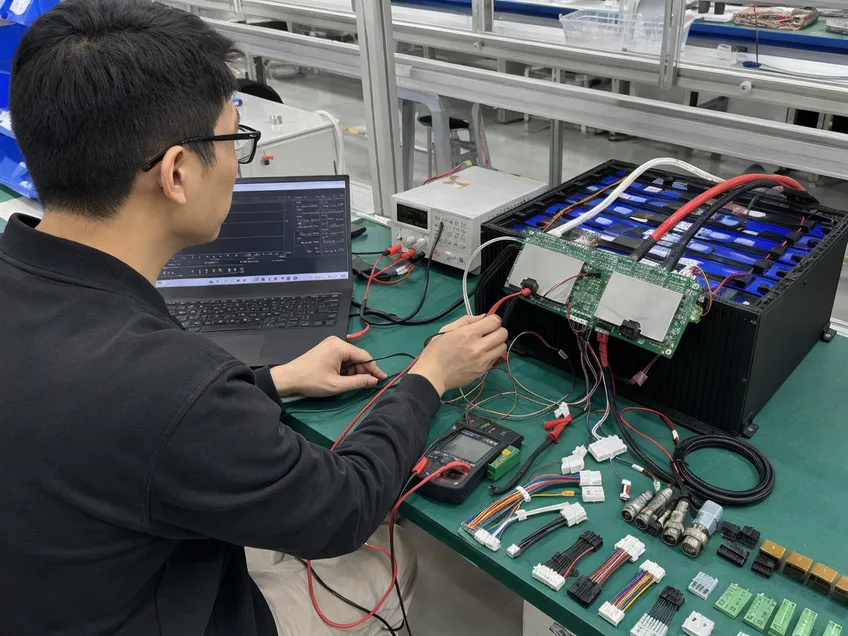
Higher-Threshold Customization
Volume Commitment · New ToolingNew Enclosure Tooling
Different form factor, mounting system, or IP rating upgrade
Brand-Name Certification
CE, IEC 62133 testing with your company as applicant
Custom BMS Firmware
Proprietary communication protocol or encryption
New tooling and brand-name certification involve upfront investment and longer development cycles. We'll quote the tooling cost, amortization schedule, and minimum volume commitment separately so you can calculate whether the differentiation justifies the investment.
Most of our private-label partners start with easy customization on their first order, then move into engineering customization by the third or fourth reorder once they've confirmed market demand. There's no pressure to commit to full OEM on day one.
16S Cell Matching and BMS Settings for Lower Warranty Exposure
A 48V LiFePO4 solar battery pack is 16 cells in series. One weak cell — lower capacity, higher internal resistance, or slightly different self-discharge rate — limits the entire pack. Over 500+ cycles, that mismatch compounds into visible capacity loss, early BMS shutdowns, and warranty claims that eat your margin.
We've been building 16S packs since 2016. The QC process we run today exists because of the field failures we tracked in the first two years — and every step addresses a specific failure mode we've seen in returned units (mostly from batches we produced before automating the sorting line).
Automated Cell Sorting
Every incoming cell batch goes through individual capacity testing and internal resistance measurement. Cells are grouped within ≤20mV open-circuit voltage and ≤5mΩ internal resistance before entering pack assembly.
Cells outside our acceptance window go back to the supplier — we don't downgrade them into a "budget" product line. (We tried that approach in 2017. The warranty cost on those packs wiped out the margin within 18 months.)
BMS Parameter Calibration
Our in-house BMS team — part of the 18+ R&D engineers on staff — programs protection thresholds specific to each pack configuration. A residential backup module cycling once daily gets different over-current limits and cell-balancing trigger points than a commercial module cycling twice daily.
Generic third-party BMS boards use universal parameters that protect against catastrophic failure but don't optimize for the actual duty cycle, which leads to premature capacity reporting errors and unnecessary shutdowns that your customers interpret as defects.
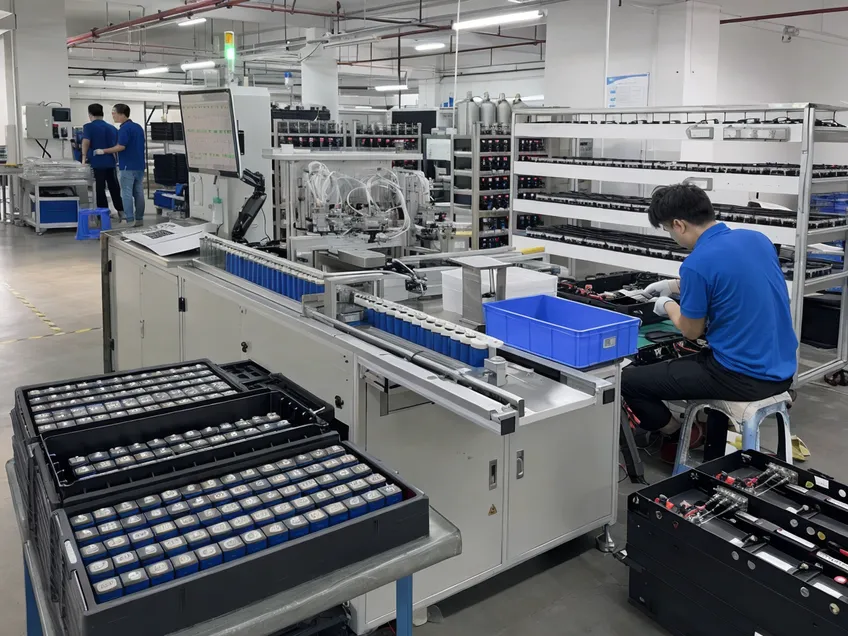
Aging and Batch Testing
After assembly, packs go through a 24–72 hour aging period (depending on capacity), followed by full charge/discharge cycling to verify actual deliverable capacity matches the rated specification. We pull samples from each production batch for extended cycle testing — 500 cycles accelerated — to catch any cell-level degradation trends before they reach your warehouse.
What This Means Commercially
Predictable warranty exposure. You can forecast your after-sales cost per unit shipped based on our historical field return data, rather than discovering six months later that 5–8% of a batch needs replacement.
Certification, DG Paperwork, and Packaging for Import-Ready Lithium Orders
Lithium batteries are dangerous goods for international shipping. If your freight forwarder doesn't have the correct documentation before booking, your container sits at port — and port storage fees on a 20GP of batteries add up faster than you'd expect.
Documents We Maintain for Every Standard 51.2V Solar Battery Model
| Document | Purpose | When You Need It |
|---|---|---|
| UN38.3 Test Summary | Transport classification — required for all lithium battery shipments | Before freight booking |
| MSDS / SDS | Material safety data — required by shipping lines and customs | Before freight booking |
| CE Certificate | European market access | Market registration, customs clearance (EU) |
| IEC 62133 Test Report | Battery safety standard compliance | Market registration, buyer due diligence |
| ISO 9001:2015 | Manufacturing quality management system | Supplier qualification audits |
| Shipping Declaration | Correct UN number, packing group, proper shipping name | Freight booking |
We maintain current documentation for all standard models. OEM configurations get their own test reports as part of the development cycle — budget 4–6 weeks for new UN38.3 testing if your custom configuration differs significantly from a standard model.
Packaging Engineered for Heavy Lithium Modules
A 51.2V 100Ah module weighs 40–50 kg. A 200Ah module runs 75–90 kg. These are heavy, dense products that need reinforced packaging — not just for drop protection, but for pallet stability during container transit and port handling.
We use double-wall corrugated cartons with high-density foam inserts, palletized on fumigation-free plywood pallets, stretch-wrapped and corner-protected. Each carton carries battery handling labels, UN number marking, and gross weight per IATA/IMDG requirements.
Why double-wall? We switched from single-wall cartons in 2018 after tracking corner damage on multi-transshipment routes to Africa — the carton upgrade cost is negligible against a single damage claim.
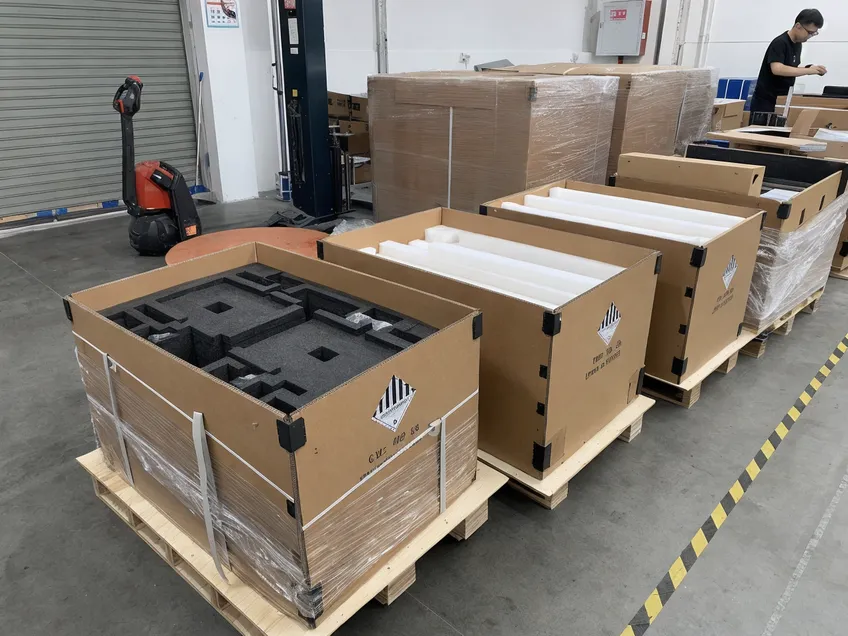
Destination-Market Documentation
Europe
CE and IEC reports ready before goods arrive — your customs broker will request them.
Africa
Reinforced palletization for overland transport after port discharge.
Middle East
UN38.3 summaries in specific formats required by customs.
South America
UN38.3 summaries in specific formats required by customs.
We've shipped to all of these markets for over a decade and maintain format templates for each. Tell us your destination port during quotation and we'll confirm the complete documentation package.
Additional market certifications (TÜV, specific national standards) are available upon request — we coordinate with accredited test labs and provide engineering samples and technical data packages for the application process.
Choose This Module or a Sibling 48V Product Route
Not every 48V buyer needs the same product. If this standard module doesn't match your project scale or deployment format, here's how the three 48V product routes compare:
| Dimension | 48V LiFePO4 Solar Battery (this page) |
Commercial Solar Battery Storage | Utility Scale Solar Battery Storage |
|---|---|---|---|
| Format | Wall-mount / stackable modules | Rack-mounted / cabinet systems | Container / cabinet / custom engineering |
| Typical Buyer | Distributors, inverter bundle sellers, residential installers | C&I contractors, telecom operators, system integrators | EPC firms, microgrid developers, infrastructure buyers |
| Capacity per Unit | 5.12–10.24 kWh per module | 10–50+ kWh per rack/cabinet | Project-specific (100 kWh–MWh) |
| Order Pattern | 100–5,000 units, repeat quarterly | 50–500 units per project | Project-based, longer engineering cycle |
| Engineering Complexity | Low — standard modules, BMS protocol matching | Medium — parallel strings, monitoring integration | High — system design, site engineering |
| Best For | Catalog programs, residential bundles, light commercial | Shops, farms, telecom, small industrial backup | Solar farms, microgrids, infrastructure storage |
Rack-Mounted 48V Storage
For commercial and industrial sites — parallel strings, monitoring integration, 10–50+ kWh per rack/cabinet.
Commercial Solar Battery StorageProject-Engineered Utility Storage
For solar farms, microgrids, and infrastructure — container/cabinet format, system design, site engineering.
Utility Scale Solar Battery StorageStill comparing product routes? Return to our 48V solar battery category overview for the full picture, or send us your requirements and we'll recommend the right direction based on your market and project scale.
FAQ for 48V LiFePO4 Solar Battery Sourcing
Technical and commercial questions we hear most from distributors, installers, and system integrators evaluating 48V LiFePO4 modules for wholesale programs.
What is the difference between a 48V LiFePO4 solar battery and a 51.2V solar battery?
They're the same product. "48V" is legacy terminology from lead-acid systems (four 12V batteries in series). A LiFePO4 pack uses 16 cells at 3.2V nominal, giving 51.2V actual nominal voltage. The charge voltage is 57.6V (vs. 56.4V for lead-acid 48V). The distinction matters for inverter configuration — your inverter must accept the LiFePO4 charge curve. We configure BMS parameters to match your specific inverter model before production.
How many 51.2V modules do I need for a 10 kWh, 20 kWh, or 30 kWh battery bank?
At 51.2V 100Ah (5.12 kWh per module): 2 modules for ~10 kWh, 4 modules for ~20 kWh, 6 modules for ~30 kWh.
At 51.2V 200Ah (10.24 kWh per module): 1 module for ~10 kWh, 2 modules for ~20 kWh, 3 modules for ~30 kWh.
Parallel modules share the same BMS firmware version and communicate through master/slave protocol. We ship parallel-matched batches with tested communication handshake.
What inverter communication protocol should a 48V LiFePO4 battery support?
RS485 or CAN bus — the choice depends on your inverter brand. Deye, Growatt, and SoFar typically use CAN. Victron supports both. Goodwe requires CAN with specific data frame formatting.
The protocol must be confirmed before production — retrofitting BMS firmware after assembly adds cost and delays your shipment. Send us your inverter brand and model during quotation and we'll confirm the correct BMS variant.
Can a 48V LiFePO4 module replace a lead-acid 48V solar battery bank?
Yes, with one critical check: the inverter's charge profile. Lead-acid 48V systems charge to ~56.4V; LiFePO4 51.2V systems charge to 57.6V with a different absorption/float behavior. Many modern hybrid inverters have a "lithium" setting that handles this automatically. Older inverters may need a firmware update or manual charge parameter adjustment.
We provide a compatibility checklist for common inverter models and configure BMS charge acceptance parameters to minimize commissioning issues.
What documents are needed to import 48V lithium solar batteries?
Minimum: UN38.3 test summary, MSDS/SDS sheet, and shipping declaration with correct UN number classification.
For European market access, add CE certificate and IEC 62133 test report. Some markets require additional local certification — we support the application process with test samples and technical data.
We maintain current documentation for all standard models. View our certification overview or request specific documents during quotation.
What is the MOQ for private-label 48V LiFePO4 solar battery orders?
Standard models with logo/color/label customization: 100 units.
Engineering customization (non-standard capacity, BMS protocol changes, connector modifications): typically 200–500 units depending on complexity.
New enclosure tooling or brand-name certification: volume commitment discussed case by case.
We state the exact MOQ threshold upfront during quotation so you can calculate landed cost before committing. Send your specification for a wholesale quote.
Send Your Battery Specs for a Factory Quote
You've seen the module specifications, customization scope, and production capability. The next step is specific — send us your configuration requirements and we'll respond with a model recommendation, BMS protocol confirmation, MOQ, packaging estimate, and pricing.
Include in your inquiry:
- Target capacity: 51.2V 100Ah, 200Ah, or custom Ah rating
- Inverter brand and model (for BMS protocol configuration)
- Enclosure preference: wall-mount, stackable, or other format
- Branding needs: logo, color, labels — or standard EVANBattery branding
- Quantity and estimated reorder frequency
- Destination port or country
- Certification requirements beyond standard CE/IEC/UN38.3
We respond with a technical proposal, confirmed specifications, and quote within 48 hours.
Contact us directly
Still comparing product directions?