

Rack Mounted Solar Battery for Scalable 48V Storage
48V and 51.2V LiFePO4 modules in standard 19-inch rack format with in-house BMS, scalable from a single 5kWh module to full cabinet deployments. Designed for distributors, contractors, and OEM partners who need repeatable SKUs, not one-off prototypes.
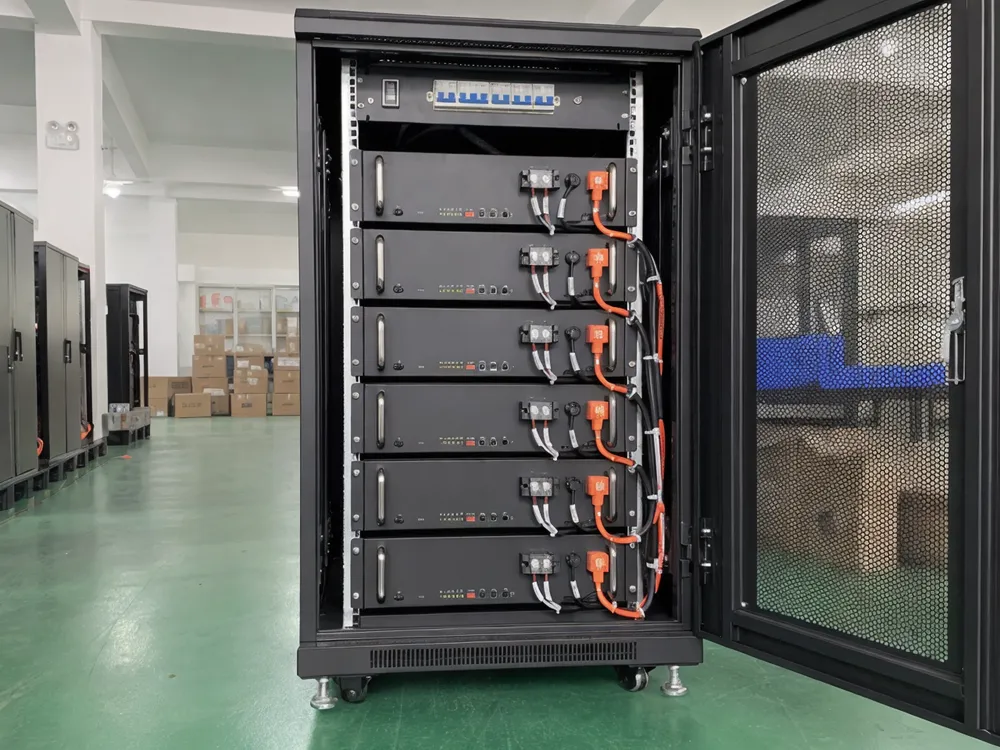
Rack Format That Turns Solar Storage Into a Repeatable SKU
If you distribute or install solar storage, you already know the problem with non-standard battery enclosures: every project becomes a custom integration job. Different mounting points, different cable routing, different cabinet dimensions. Your installer training resets with every new product, and your inventory becomes a warehouse of one-offs.
A rack mounted solar battery solves this at the format level. Standard 19-inch width, 3U or 4U height, front-access terminals, and uniform communication ports mean every module drops into the same cabinet frame regardless of capacity class. Your installers learn one mounting procedure. Your warehouse stocks one form factor. Your sales team quotes from a single spec sheet with capacity as the only variable.
For distributors building rack solar battery storage inventory, this format consolidation translates directly to fewer SKUs, faster turns, and lower training overhead. You carry 100Ah and 200Ah modules in the same rack footprint — your customer picks capacity, not a completely different product architecture.
We've shipped rack-format modules to European distributors running 200–500 unit reorder programs precisely because the format stays constant across capacity upgrades. When your customer expands from 10kWh to 30kWh, they buy more of the same module — not a different system.
Get a Quote for Rack Mounted Solar Battery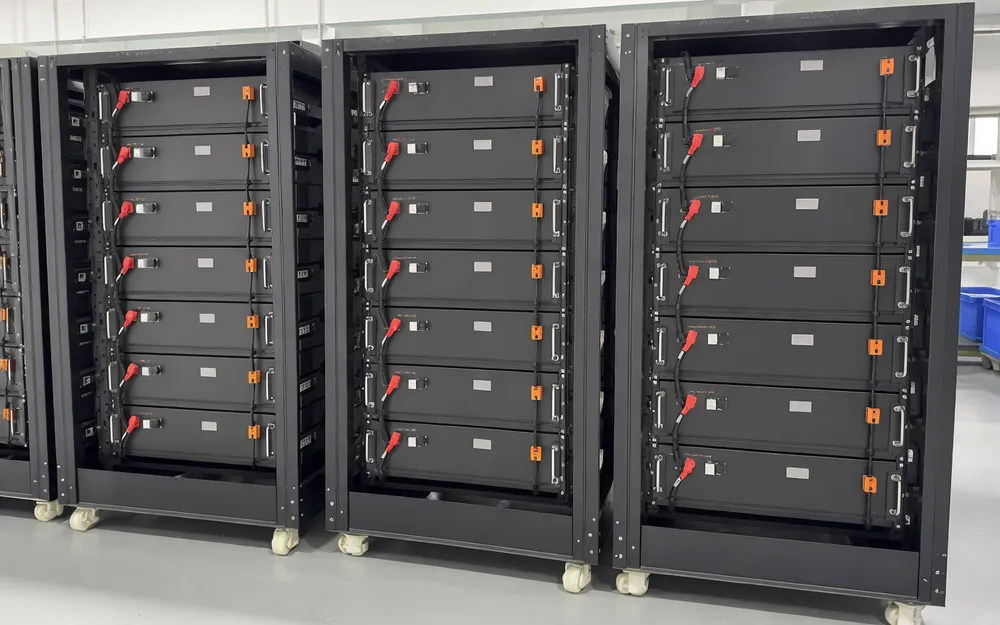
Fewer SKUs
Same rack footprint for 100Ah and 200Ah — capacity is the only variable
One Training Procedure
Installers learn one mounting workflow for all capacity classes
Linear Expansion
10kWh to 30kWh means more of the same module, not a different system
Repeatable Reorders
200–500 unit programs with constant format across capacity upgrades
48V and 51.2V Rack Battery Specifications Buyers Can Compare
The distinction between 48V nominal and 51.2V nominal matters for your inverter matching and system design. A 48v rack mount solar battery using LiFePO4 chemistry operates at 51.2V nominal (16 cells in series × 3.2V), while legacy lead-acid-compatible systems expect true 48V nominal. We produce both configurations — confirm your inverter's battery voltage window before ordering.
Voltage Configuration Note
51.2V nominal = 16S LiFePO4 (16 cells × 3.2V). True 48V nominal is for lead-acid-compatible inverter windows. Confirm your inverter's accepted battery voltage range before specifying.
Typical Specification Range for Rack Mounted LiFePO4 Battery Modules
| Parameter | Typical Values |
|---|---|
| Chemistry | LiFePO4 (lithium iron phosphate) |
| Nominal Voltage | 48V / 51.2V (16S configuration) |
| Capacity Classes | 50Ah, 100Ah, 200Ah, 280Ah |
| Energy Range | 2.56kWh – 14.3kWh per module |
| Rack Format | Standard 19-inch, 3U or 4U height |
| Depth | 400–580mm (confirm against your cabinet) |
| Weight | 35–65kg depending on capacity |
| Communication | RS485, CAN bus (protocol configurable) |
| Parallel Expansion | Up to 15 units (BMS-dependent) |
| Cycle Life | ≥6,000 cycles at 80% DOD to 80% retained capacity |
| Operating Temperature | Charge: 0°C to 55°C · Discharge: -20°C to 60°C |
| Protection Functions | Over-charge, over-discharge, over-current, short-circuit, over-temperature, cell balancing |
| Certifications | CE, IEC 62133, UN38.3, MSDS |
| IP Rating | IP20 (indoor rack cabinet installation) |
Specifications shown are industry-standard values for 51.2V rack battery modules. Actual specifications confirmed by product datasheet upon inquiry.
280Ah Cell Class — Fastest-Moving Configuration Since 2024
If you're building a new catalog, it's worth evaluating the 280Ah cell class against the 200Ah for kWh-per-U density. The 280Ah configuration delivers more energy per rack unit, which matters for cabinet-constrained deployments.
Cell Matching and BMS Control Behind Each Rack Mounted LiFePO4 Battery
The performance gap between a good rack battery and a problematic one almost always traces back to two things: how tightly the cells were matched at assembly, and how accurately the BMS tracks actual cell behavior versus generic parameters.
Incoming Cell Inspection
Every cell batch arriving at our facility goes through voltage, internal resistance, and capacity verification before entering the sorting system. Cells outside our acceptance window — typically ±10mV open-circuit voltage and ±3mΩ internal resistance from batch median — get returned to the supplier. We don't downgrade rejects into lower-tier products.
Automated Cell Sorting
Our sorting line groups cells by measured capacity and internal resistance into matching bins. For a 16S rack module, all 16 cells come from the same bin — within 20mV and 5mΩ of each other. This tight matching is what prevents the weakest-cell-limits-the-pack problem that causes premature capacity fade and uneven heating during cycling.
Over a 6,000-cycle lifespan, matched cells maintain pack-level consistency that loosely grouped cells lose within the first 500 cycles.
BMS Integration
We design and manufacture BMS boards in-house rather than buying generic third-party modules. Each rack mounted LiFePO4 battery gets BMS parameters programmed to match the actual measured characteristics of its cell group — not a generic template. Protection thresholds, balancing trigger points, and communication protocol responses are configured per production batch.
For RS485 and CAN communication, we can match your specific inverter brand's protocol requirements during production rather than requiring field configuration.
Aging and Batch Testing
After assembly, every module goes through a 72-hour aging period followed by full charge/discharge cycling, capacity verification, and communication function testing. We catch drift and infant mortality before packing, not after your installer has mounted the unit in a cabinet.
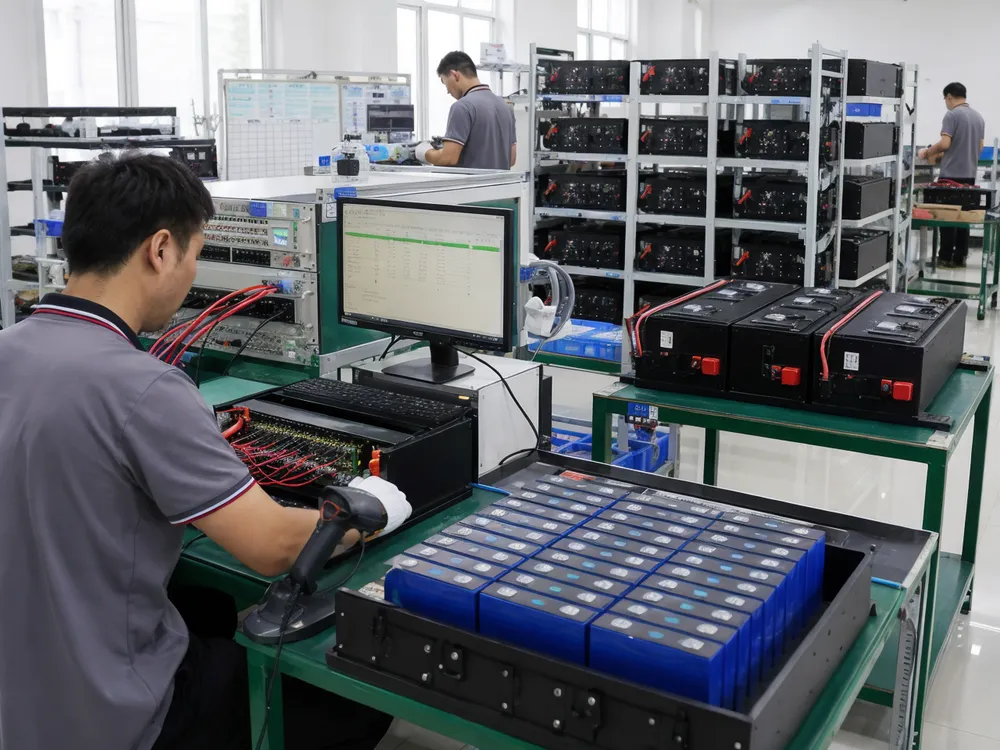
Batch-to-Batch Consistency
This process is why our repeat buyers report consistent field performance across multi-year reorder programs — batch 50 performs like batch 1 because the manufacturing controls don't drift with personnel changes or production pressure.
Cell Matching Tolerances
Market Segments Where Rack Solar Battery Storage Protects Margin
Residential Storage Installer Programs
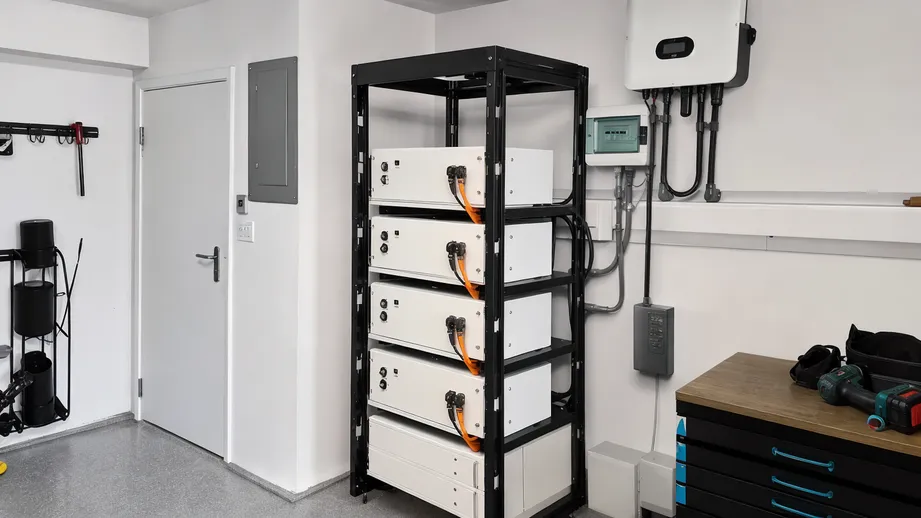
Installers running 20–50 residential solar storage jobs per quarter need a battery module they can spec once and repeat. A rack mounted solar battery in a pre-configured cabinet (typically 3–5 modules for 15–25kWh) becomes a standard offering: same wiring, same commissioning procedure, same customer handover documentation.
Your per-job installation time drops because your crew isn't adapting to a different product each week.
Typical starting volume: 100–200 modules per quarter, scaling with your installation pipeline.
Small Commercial Backup and Peak-Shaving
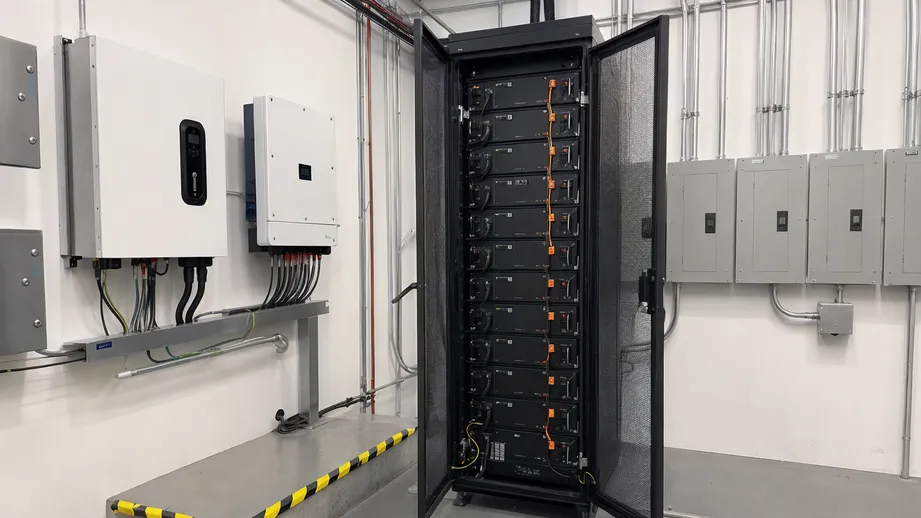
Office buildings, retail locations, and light industrial facilities running 30–100kWh storage systems are a growing segment in markets with time-of-use tariffs or unreliable grid supply. Rack-format batteries in standard server cabinets fit into existing electrical rooms without structural modification.
You quote the same cabinet configuration across multiple sites, and your maintenance contracts cover identical hardware. We've seen contractors in Southeast Asia build their entire commercial storage business around a single 51.2V 200Ah module — they just vary the cabinet count per site.
Telecom Tower and Off-Grid Cabinet Systems
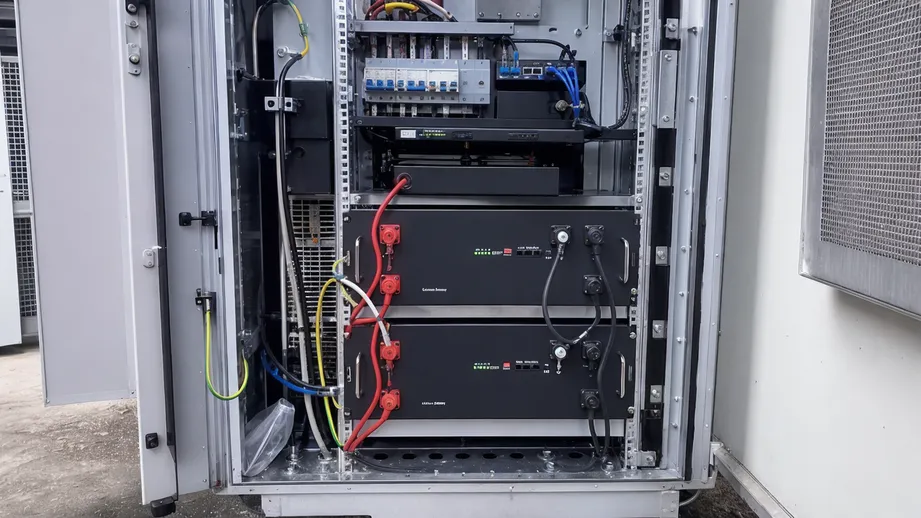
Telecom operators and tower companies replacing lead-acid banks with lithium need rack-format modules that fit existing 19-inch telecom cabinets. The 48V rack mount solar battery configuration matches standard telecom DC bus voltage.
Cycle life of 6,000+ cycles at daily cycling means a 15-year replacement interval versus 3–4 years for lead-acid — your total cost of ownership argument sells itself.
This segment orders in project batches of 500–2,000 modules tied to tower rollout schedules.
Microgrid and Rural Electrification Contractors
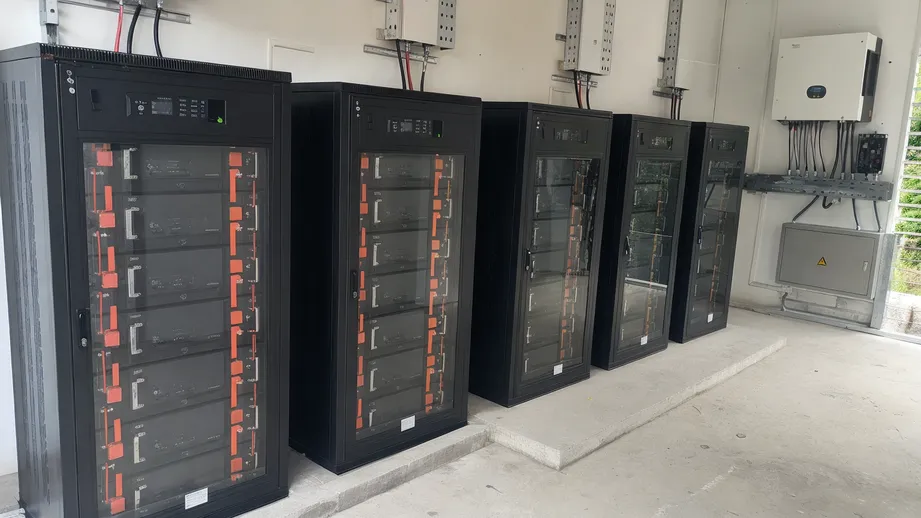
Government-funded and NGO-funded rural electrification projects specify rack-mounted lithium storage for community microgrids because the format allows standardized maintenance across dozens of sites. You bid the project with a single battery specification, deploy identical cabinets across all sites, and train one maintenance team for the entire network.
Order volumes follow project award cycles — typically 200–1,000 modules per phase.
If your primary need is outage-focused residential backup rather than rack-format commercial storage, Solar Battery Backup may be a better fit for that segment.
Get a Quote for Your SegmentInverter, Cabinet, and Parallel Expansion Checks Before You Quote
Before you send an RFQ for rack batteries, confirm these technical parameters — they determine which module configuration we quote and whether your system integration works on the first attempt.
Inverter Compatibility
Your inverter brand and model dictate the communication protocol and voltage window. A 48v rack mount solar battery using CAN bus needs to speak the same protocol dialect as your inverter's battery port.
We maintain protocol compatibility profiles for major brands:
Send us your inverter model — we'll confirm whether our standard firmware covers it or whether a protocol adjustment is needed.
Cabinet and Rack Dimensions
Standard 19-inch rack width is universal, but depth varies. Our modules range from 400–580mm depth depending on capacity class.
Confirm your cabinet's usable internal depth (accounting for rear cable routing space) before specifying:
600mm-deep server cabinet — typically accommodates our modules with room for cable management
Shallow 450mm telecom cabinet — may require our compact-depth variant
Parallel Expansion Planning
Each 51.2v rack battery module can parallel with up to 15 units (BMS communication dependent), giving you a maximum cabinet capacity of roughly 70–215kWh depending on module capacity.
Parallel count also depends on your inverter's maximum battery input current and the DC breaker/busbar rating in your cabinet. We recommend confirming:
- 1 Maximum parallel battery count supported by your inverter
- 2 DC busbar continuous current rating
- 3 Cable cross-section between modules and busbar (typically 35–95mm² depending on system current)
- 4 Cabinet ventilation capacity for thermal management at full parallel count
Grounding and Protection
Rack battery systems require proper DC isolation, cabinet grounding, and overcurrent protection per module.
If you're deploying in markets with specific electrical codes, confirm the applicable standard — it affects breaker selection and grounding topology:
OEM/ODM Boundaries for Rack Battery Programs
We handle both standard catalog orders and custom configurations. Here's what's adjustable and what requires engineering validation — so you can scope your program accurately before quoting.
Customization Scope for Rack Mounted LiFePO4 Battery
| Customization Area | Standard (No Engineering Change) | Custom (Engineering Validation Required) |
|---|---|---|
| Capacity class | 50Ah, 100Ah, 200Ah, 280Ah | Non-standard Ah (e.g., 150Ah, 320Ah) |
| Voltage | 48V / 51.2V (16S) | Non-standard series count (e.g., 14S, 15S) |
| BMS communication protocol | RS485, CAN (common inverter profiles) | Custom protocol or proprietary EMS integration |
| Faceplate / front panel | Standard EVANBattery design | Custom branding, LED layout, LCD display |
| Enclosure color | Standard black or grey | Custom RAL color (MOQ applies) |
| Labels and markings | EVANBattery standard | Your brand, your compliance marks, your language |
| User manual and packaging | Standard English | Custom language, custom box design |
| Cabinet bundle | Individual modules | Pre-assembled cabinet with busbar, breakers, wiring |
| Certification | CE, IEC 62133, UN38.3 (existing) | Additional market certifications (UL, TÜV, BIS) |
MOQ Guidance
(label, manual, packaging swap)
(custom capacity, BMS, enclosure)
We learned early that quoting a single MOQ for all customization levels creates confusion — a label swap and a new cell configuration are fundamentally different engineering efforts, and the MOQ should reflect that. We'll confirm the exact threshold after reviewing your specification.
For full OEM/ODM program details beyond rack batteries — including wall-mount, powerwall, and container-scale configurations — see our dedicated engineering page.
Compliance Documents and Export Packaging for Lithium Rack Batteries
Every rack mounted solar battery ships with a complete documentation package covering transport classification, safety testing, and quality management — ready for customs clearance and market entry.
Certifications and Documentation
Every rack mounted solar battery in our standard catalog ships with the following documentation package:
UN38.3 Test Summary
Required for lithium battery sea and air freight classification
MSDS (Material Safety Data Sheet)
Required by freight forwarders and customs
CE Declaration of Conformity
Covering EU Low Voltage Directive and EMC requirements
IEC 62133 Test Report
Lithium battery safety standard covering electrical, mechanical, and environmental testing
ISO 9001:2015 Certificate
Manufacturing quality management system
Additional market certifications: If your target market requires UL 1973 (North America), TÜV (Germany), BIS (India), or INMETRO (Brazil), our engineering team provides test samples and technical documentation to support the application process. Timeline depends on the certifying body — we've been through enough of these cycles to give you a realistic estimate upfront.
Export Packaging for Rack Solar Battery Storage
Lithium batteries are Class 9 dangerous goods for shipping. Our standard export packaging addresses both regulatory compliance and physical protection:
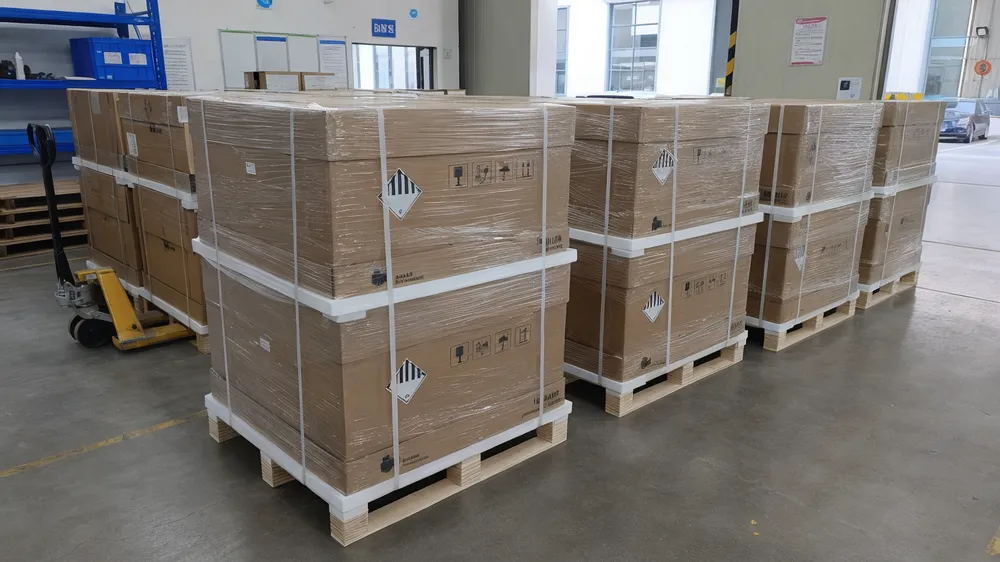
Individual Module Packaging
Foam-lined carton with anti-static inner wrap, DG labels, and handling marks
Pallet Configuration
Modules oriented per carrier requirements, strapped and stretch-wrapped
Container Loading
Palletized for forklift handling, with dunnage between pallet layers to prevent shifting
Shipping Documentation
DG declaration, packing list with UN numbers, and carrier-specific lithium battery handling forms
Container Capacity Reference
Weight per module (35–65kg) means a 20GP container holds approximately 200–400 modules depending on capacity class and pallet configuration. We provide loading plans with your quote so you can calculate landed cost accurately.
Choosing Between Rack Battery, Battery Bank, Backup, and Container Storage
If you're evaluating which solar storage format fits your business, here's how the four sibling products under our solar battery storage category compare:
| Dimension | Rack Mounted Solar Battery | Solar Battery Backup | Solar Battery Bank | Container Solar Battery Storage |
|---|---|---|---|---|
| Primary format | 19-inch rack modules in cabinets | Wall-mount or floor-standing units | Flexible voltage/capacity groupings (12V, 24V, 48V) | Pre-integrated container systems |
| Typical capacity | 5–215kWh per cabinet | 5–20kWh per unit | 1–50kWh per bank | 100kWh – 5MWh+ |
| Best for | Commercial, telecom, distributor inventory programs | Residential outage protection | Broad residential and small commercial | Industrial, utility, large commercial |
| Scalability | Add modules to cabinet (up to 15 parallel) | Limited expansion | Series/parallel combinations | Container-level expansion |
| Installation | Standard rack cabinet, indoor | Wall or floor mount, indoor | Varies by configuration | Outdoor pad-mounted |
| Your buyer profile | Contractors, telecom operators, commercial integrators | Residential installers, homeowners | General distributors, off-grid dealers | EPC firms, utility developers |
Rack Mounted Solar Battery
- Format
- 19-inch rack modules in cabinets
- Capacity
- 5–215kWh per cabinet
- Best for
- Commercial, telecom, distributors
- Scalability
- Up to 15 parallel modules
- Installation
- Standard rack cabinet, indoor
- Buyer profile
- Contractors, telecom, integrators
Solar Battery Backup
- Format
- Wall-mount or floor-standing units
- Capacity
- 5–20kWh per unit
- Best for
- Residential outage protection
- Scalability
- Limited expansion
- Installation
- Wall or floor mount, indoor
- Buyer profile
- Residential installers, homeowners
Solar Battery Bank
- Format
- Flexible voltage/capacity groupings (12V, 24V, 48V)
- Capacity
- 1–50kWh per bank
- Best for
- Broad residential and small commercial
- Scalability
- Series/parallel combinations
- Installation
- Varies by configuration
- Buyer profile
- General distributors, off-grid dealers
Container Solar Battery Storage
- Format
- Pre-integrated container systems
- Capacity
- 100kWh – 5MWh+
- Best for
- Industrial, utility, large commercial
- Scalability
- Container-level expansion
- Installation
- Outdoor pad-mounted
- Buyer profile
- EPC firms, utility developers
Residential Outage Backup?
Wall-mount and floor-standing configurations better suited to residential outage protection projects.
Solar Battery BackupFlexible Voltage Groupings?
Need diverse inventory across 12V, 24V, and 48V for broad residential and small commercial markets.
Solar Battery BankOver 100kWh Outdoor?
Projects exceeding 100kWh that require outdoor containerized deployment for industrial or utility scale.
Container Solar Battery StorageProcurement FAQ for Rack Mounted Solar Battery Orders
Technical and commercial answers for procurement teams evaluating rack-format LiFePO4 modules.
What is the actual difference between 48V and 51.2V rack batteries?
What is the actual difference between 48V and 51.2V rack batteries?
A 51.2V rack battery uses 16 LiFePO4 cells in series (16 × 3.2V = 51.2V nominal). The "48V" label is a legacy reference from lead-acid systems. Most modern hybrid inverters with a "48V battery" input actually expect 51.2V nominal from lithium batteries — their voltage window typically spans 44V–58V.
If you're replacing lead-acid in an older system with a true 48V expectation (4 × 12V batteries), confirm the inverter's actual voltage acceptance range. We produce both true-48V and 51.2V configurations.
What rack cabinet depth do I need for these modules?
What rack cabinet depth do I need for these modules?
Our standard modules require 400–580mm usable internal depth depending on capacity class. A standard 600mm server rack works for most configurations. For shallow telecom cabinets (450mm depth), we offer a compact variant.
Always confirm usable depth after accounting for rear cable routing — you need 50-80mm clearance behind the module for power cables and communication wiring.
How does inverter communication work with rack mounted LiFePO4 battery modules?
How does inverter communication work with rack mounted LiFePO4 battery modules?
Each module communicates via RS485 or CAN bus to your inverter or EMS. The BMS transmits cell voltage, SOC, temperature, and alarm status. We pre-configure the communication protocol to match your inverter brand during production.
If you're using a less common inverter or a custom EMS platform, send us the communication protocol documentation — our BMS engineers can typically adapt within the standard development cycle.
How many 48V rack mount solar battery modules can I parallel?
How many 48V rack mount solar battery modules can I parallel?
Up to 15 modules in parallel with our standard BMS, giving a maximum of approximately 215kWh per cabinet string (using 280Ah modules). The practical limit is often your inverter's maximum battery input current or your DC busbar rating, not the BMS itself.
We recommend confirming your inverter's maximum parallel battery specification before finalizing module count.
What import documents come with a rack battery order?
What import documents come with a rack battery order?
Every shipment includes:
- UN38.3 test summary
- MSDS
- CE declaration of conformity
- IEC 62133 test report
- Commercial invoice
- Packing list
- DG shipping declaration
If your country requires additional documentation (certificate of origin, Form E, fumigation certificate for wood pallets), confirm during quoting and we'll include it in the shipment package.
What is the MOQ for standard rack mounted solar battery models?
What is the MOQ for standard rack mounted solar battery models?
100 units for standard catalog models (existing capacity, existing BMS firmware, EVANBattery branding).
200 units for OEM-branded orders on existing models.
500+ units for full custom ODM programs — new capacity, new BMS protocol, custom enclosure — depending on engineering scope.
We confirm exact MOQ after reviewing your specification.
We respond within 48 hours
Quote Checklist for Rack Battery Samples, Cabinets, and OEM Programs
Send us the following details and we'll return a technical recommendation with pricing within 48 hours.
Voltage
48V or 51.2V (or specify your inverter model and we'll confirm)
Capacity
Target Ah or kWh per module
Rack Format
Standard 19-inch, or specify cabinet model if pre-selected
Inverter Brand and Model
For communication protocol matching
Communication Protocol
CAN, RS485, or specify
Quantity
Sample, trial batch, or program volume
Branding
EVANBattery standard, your brand (OEM), or custom design (ODM)
Target Market
For certification and documentation planning
Destination Port
For freight and packaging planning
Most new buyers start with a 2–5 unit sample order to validate fit with their inverter and cabinet setup before committing to program volumes. We support sample orders on all standard models.
Explore More Solar Battery Storage
Solar Battery Backup
Backup-focused solar battery systems for residential and commercial continuity.
ProductSolar Battery Bank
Modular battery bank configurations for scalable solar energy storage.
ProductContainer Solar Battery Storage
Containerized solar storage for utility-scale and commercial deployments.