

Utility Scale Solar Battery Storage for Engineered Project Supply
Project-configured LiFePO4 battery storage — cabinet and container systems engineered for solar farms, microgrids, and infrastructure-scale deployments.
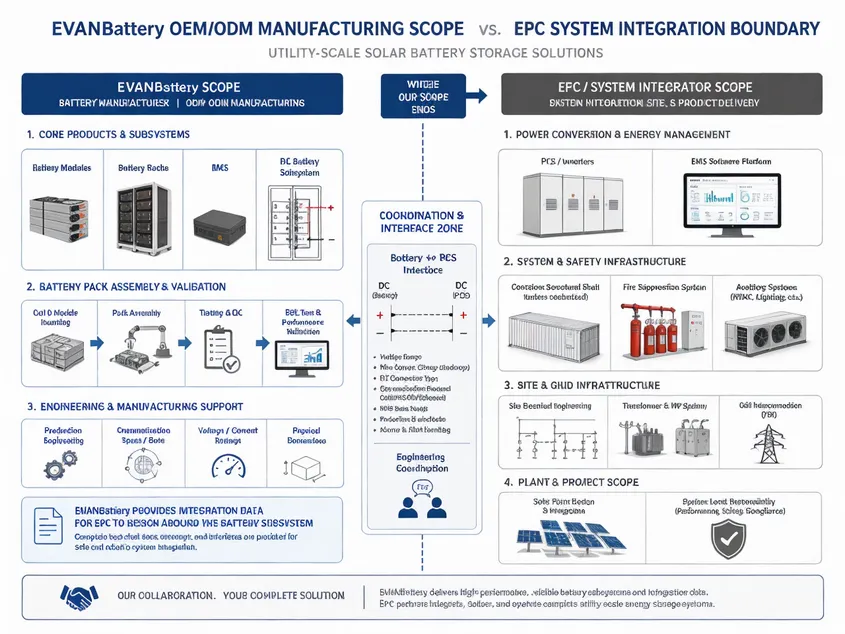
We manufacture the battery packs, design the BMS architecture, produce FAT documentation, and coordinate logistics for your utility storage project. You handle the PCS, EMS, and site engineering — we deliver the cells, protection, and paperwork.
Utility Scale Solar Battery Storage for Engineered Project Supply
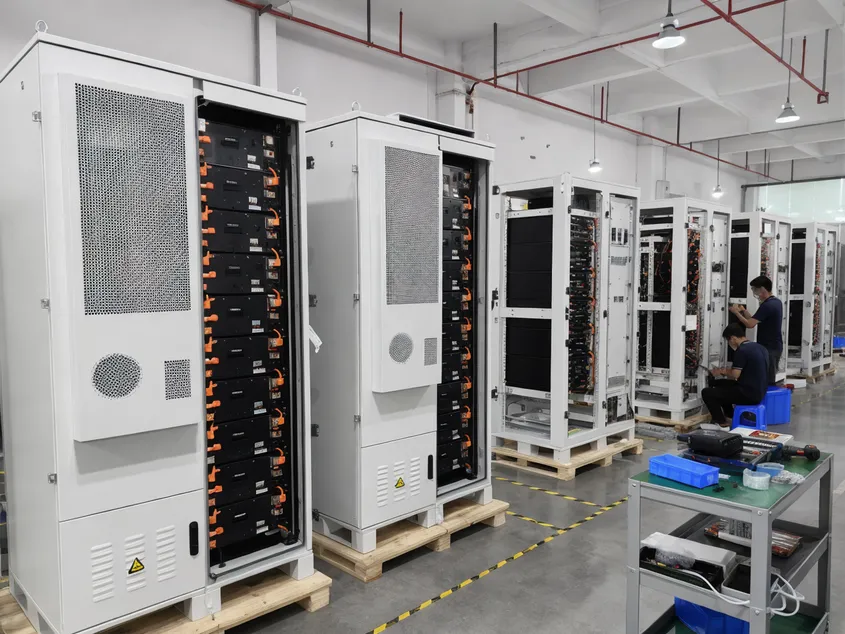
This page covers EVANBattery's utility scale solar battery storage supply — project-configured LiFePO4 battery systems for solar farms, remote microgrids, public infrastructure backup, and industrial-scale energy storage. We are a utility scale solar battery storage manufacturer, not a turnkey EPC contractor. Our scope is the battery: cells, packs, BMS, cabinets or container assemblies, testing, documentation, and export logistics.
We've manufactured solar energy storage batteries since 2012 at our 9,900 m² facility in Zhongshan, Guangdong — 6 production lines, 150 employees, 18+ R&D engineers focused on LiFePO4 pack design and BMS firmware. The same automated cell sorting and batch-level lifecycle testing that ships our standard 48V modules also underpins utility-scale configurations. The difference is engineering coordination: utility projects require capacity planning, BMS communication mapping, enclosure format decisions, and documentation packages that standard module orders don't.
If you're evaluating whether EVANBattery can supply the battery portion of a utility storage project, this page gives you the technical architecture, manufacturing process, customization scope, compliance documentation, logistics planning, and inquiry inputs you need to decide.
Send Project Data for an Engineering QuoteOur Scope
- LiFePO4 cells & pack assembly
- BMS design & firmware
- Cabinet / container enclosures
- FAT reports & testing
- Compliance documentation
- Export logistics coordination
Your Scope
- PCS / inverter selection
- EMS integration
- Site engineering & civil works
- Grid connection & permitting
- On-site commissioning
Project Data EVANBattery Needs Before Quoting a Utility Storage System
We don't quote utility-scale storage from a price list. Every project has different capacity targets, site conditions, PCS requirements, and documentation needs. Sending us the right inputs upfront means your quote comes back with accurate BMS configuration, correct enclosure format, realistic lead time, and complete logistics planning — not a generic number that requires three rounds of revision.
Here's what we need from you before engineering starts:
| Input Category | What to Provide | Why It Matters |
|---|---|---|
| System capacity | Target kWh or MWh, number of charge/discharge cycles per day, autonomy hours | Determines module count, string configuration, and BMS tier architecture |
| Charge/discharge rate | C-rate requirement or peak power (kW) | Affects cell selection, thermal design, and BMS current protection settings |
| PCS / inverter | Brand, model, communication protocol (CAN/RS485), DC voltage window | Prevents BMS-PCS communication mismatch — the most common commissioning failure on utility projects |
| EMS requirements | Protocol (Modbus TCP, SNMP, proprietary), data points needed | Determines master BMS data mapping and communication hardware |
| Site conditions | Ambient temperature range, altitude, indoor/outdoor, humidity | Drives cooling approach (forced air, liquid, passive) and enclosure IP rating |
| Destination country | Import market, port of entry | Determines documentation package, labeling language, and dangerous goods classification |
| Project timeline | Expected delivery date, commissioning schedule | Affects production scheduling and whether standard or expedited lead time applies |
| Documentation needs | Tender documents, FAT report, specific test standards | Scopes the QC and documentation package before production starts |
Provide: Target kWh or MWh, number of charge/discharge cycles per day, autonomy hours
Why: Determines module count, string configuration, and BMS tier architecture
Provide: C-rate requirement or peak power (kW)
Why: Affects cell selection, thermal design, and BMS current protection settings
Provide: Brand, model, communication protocol (CAN/RS485), DC voltage window
Why: Prevents BMS-PCS communication mismatch — the most common commissioning failure on utility projects
Provide: Protocol (Modbus TCP, SNMP, proprietary), data points needed
Why: Determines master BMS data mapping and communication hardware
Provide: Ambient temperature range, altitude, indoor/outdoor, humidity
Why: Drives cooling approach (forced air, liquid, passive) and enclosure IP rating
Provide: Import market, port of entry
Why: Determines documentation package, labeling language, and dangerous goods classification
Provide: Expected delivery date, commissioning schedule
Why: Affects production scheduling and whether standard or expedited lead time applies
Provide: Tender documents, FAT report, specific test standards
Why: Scopes the QC and documentation package before production starts
We've seen projects delayed by months because the battery supplier quoted without confirming PCS protocol — the packs arrived, the BMS couldn't handshake with the inverter, and the entire commissioning schedule slipped. Getting these inputs right at quotation prevents that.
Don't send a generic "what's your price per kWh" email.
Send your project data — capacity, PCS model, site conditions, timeline — and we'll respond with an engineering proposal, not a placeholder number.
From 51.2V Modules to Cabinet or Container Battery Blocks
Utility scale solar battery storage builds on the same 51.2V LiFePO4 module platform we use for residential and commercial products — but the architecture scales through aggregation, not through larger individual cells. Understanding the building blocks helps you evaluate whether our manufacturing scope covers your project's technical requirements.
Architecture Overview
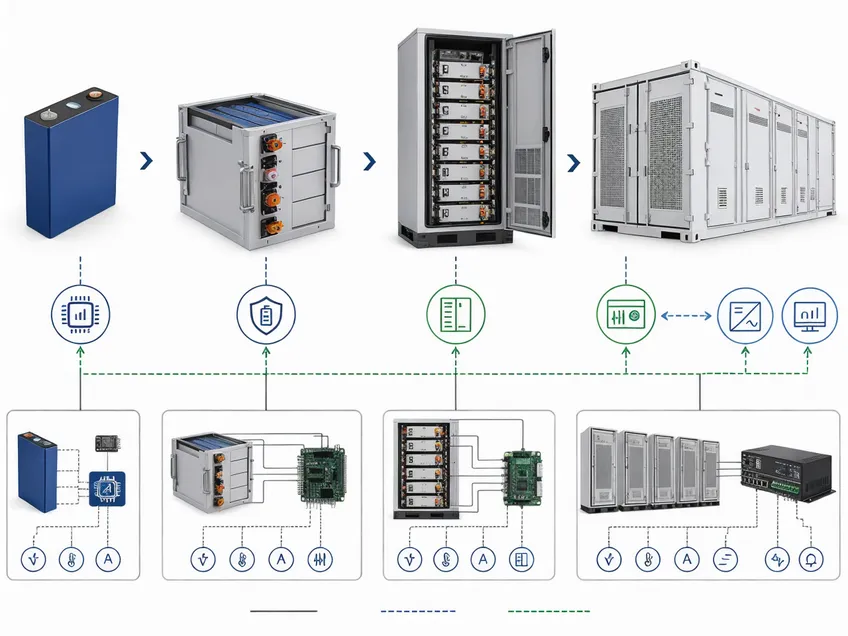
The hierarchy: LiFePO4 prismatic cells → 16S module (51.2V nominal) → parallel module strings within a rack or cabinet → multiple cabinets or a containerized enclosure. Each layer adds its own BMS tier — cell-level monitoring, module-level protection, and system-level master BMS that communicates with your PCS/EMS.
We manufacture from cell sorting through cabinet assembly. Container integration (structural, HVAC, fire suppression) is coordinated project by project — we supply the battery racks and master BMS; the container shell and auxiliary systems are confirmed during engineering based on your site requirements and local codes.
Planning-Level Specification Table
| Parameter | Typical Range / Configuration |
|---|---|
| Cell chemistry | LiFePO4 (lithium iron phosphate), prismatic format |
| Module nominal voltage | 51.2V (16S configuration) |
| Module capacity range | 100Ah – 280Ah per module (confirmed during quotation) |
| System capacity | 500 kWh to multi-MWh (aggregated from module/cabinet count) |
| BMS architecture | Cell-level monitoring + module-level protection + system master BMS |
| Communication protocols | RS485, CAN bus; Modbus TCP available at master level |
| Protection functions | Over-charge, over-discharge, over-current, short-circuit, temperature (high/low), cell balancing, insulation monitoring |
| Cooling approach | Forced air (standard), liquid cooling (project-specific evaluation) |
| Enclosure options | Indoor cabinet, outdoor cabinet (IP55), container-integrated rack |
| Operating temperature | -20°C to 55°C discharge; 0°C to 45°C charge (standard cells) |
| Cycle life (planning basis) | 4,000–6,000 cycles at 80% DOD, cell-grade dependent |
| Certifications | ISO 9001:2015, CE, IEC 62133, UN38.3, MSDS |
Exact dimensions, weight per cabinet, parallel string limits, and connector specifications are confirmed after your capacity target and PCS model are established. We don't publish fixed system specs because every utility project configures differently — publishing a single datasheet would either understate or overstate what your specific project receives.
BMS Coordination and Cell Matching Reduce Commissioning Risk
This is where utility-scale projects succeed or fail at the battery level — and where our manufacturing process directly protects your project timeline and warranty exposure. At residential scale, a BMS mismatch causes one homeowner to call their installer. At utility scale, a BMS mismatch delays commissioning by weeks and triggers contractual penalties.
Cell Sorting and Pack-Level Matching
Every cell entering our utility-scale production goes through the same automated sorting we run on standard modules: voltage deviation within 20mV, internal resistance spread within 5mΩ across each pack. But utility projects add a second layer — we match across packs within the same cabinet and across cabinets within the same system string.
If cabinet A and cabinet B in a parallel string have different average cell capacities, the master BMS will see uneven current distribution, and your system efficiency drops from day one.
We sort at incoming inspection, test again after formation cycling, and verify a third time during the aging period before final assembly. Cells that drift during aging get pulled — they passed initial sorting but showed instability under load.
Third-stage catch rate: This third check catches roughly 2–3% of cells that would have passed a two-stage process. On a 500 kWh system, that's the difference between clean commissioning and a callback three months later.
BMS Hierarchy and PCS Communication
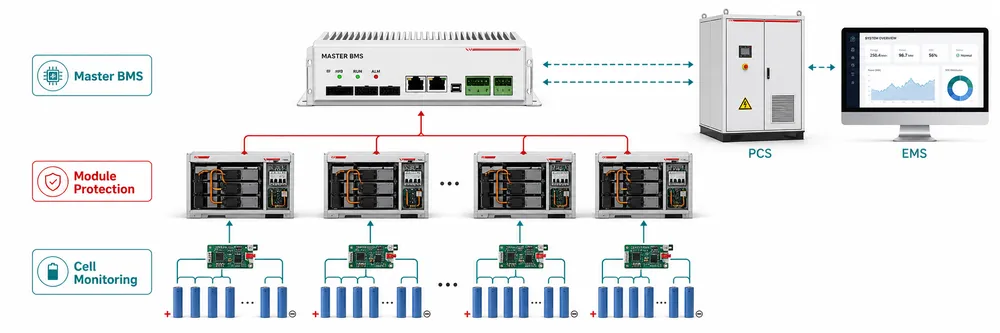
Utility-scale BMS isn't a single board — it's a hierarchy. Cell-level monitoring feeds module-level protection, which reports to a system master BMS that communicates with your PCS and EMS. We design and produce all three tiers in-house, so the data mapping between layers is native, not patched together from different vendors' protocols.
The master BMS communicates with your PCS via CAN or RS485, and with your EMS via Modbus TCP or the protocol your platform requires. We configure the data frame — SOC, SOH, voltage, current, temperature, alarm flags — to match your PCS manufacturer's expected format before production starts.
Most common commissioning failure eliminated: The battery is physically installed, but the PCS can't read the BMS data correctly, and the system won't charge. Pre-configured data frame mapping removes this risk.
What This Means for Your Project Economics
Uniform Degradation
Consistent cell matching across a multi-cabinet system means uniform degradation over the project lifetime — you can forecast capacity at year 5 and year 10 without accounting for weak-link cabinet failures.
Faster Commissioning
Correct BMS-PCS communication mapping means your commissioning team connects, verifies, and signs off without protocol debugging on site. Both translate directly into lower warranty reserves and faster project acceptance.
Solar Battery Storage Farm and Microgrid Segments You Can Quote
Utility scale solar battery storage serves several distinct market segments, each with its own order logic, documentation burden, and margin structure. If you're an EPC firm, project developer, or regional distributor evaluating which segments to pursue with EVANBattery as your battery supply partner, here's how the commercial landscape breaks down:
Solar Farm Curtailment and Ramp Smoothing
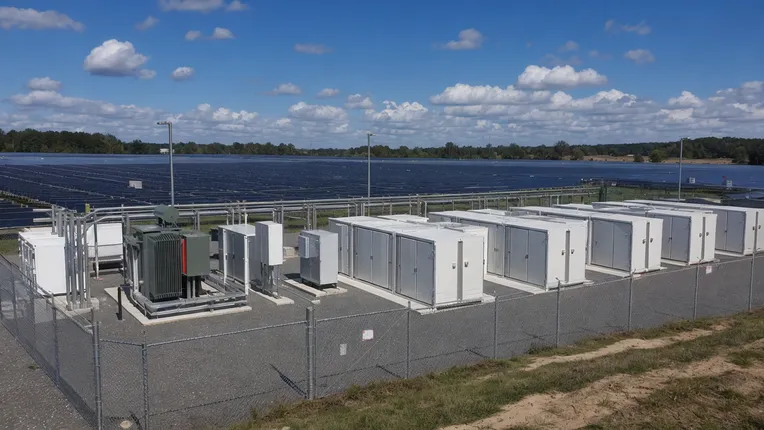
Grid-connected solar farms with storage mandates or curtailment penalties need battery systems that absorb excess generation and smooth ramp rates. These projects typically specify capacity in MWh, require grid-code-compliant documentation, and order in single large batches with long engineering lead times.
Your margin comes from the engineering coordination premium — the battery hardware is a component cost, but the integration value you add justifies your markup.
What we supply:
Battery cabinets, master BMS with grid-side communication readiness, and FAT documentation your client's grid operator requires.
Remote Microgrids and Island Power
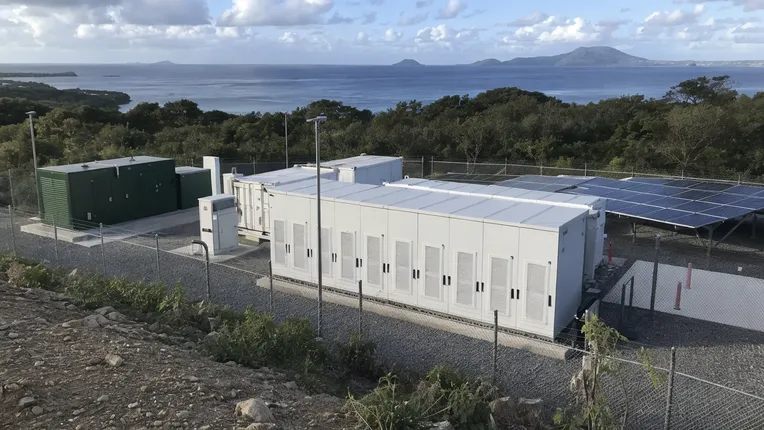
Off-grid communities, mining operations, and island utilities need storage that pairs with diesel-solar hybrid generation. Orders are smaller per site (typically 200 kWh – 2 MWh) but repeat across multiple deployments within a program.
The commercial advantage: once you commission the first site successfully, the same battery configuration rolls out to subsequent sites with minimal re-engineering.
What we configure:
BMS configured for the specific inverter/genset controller used across your program, so site-to-site consistency is built into the production spec.
Industrial Park and Critical Infrastructure Backup
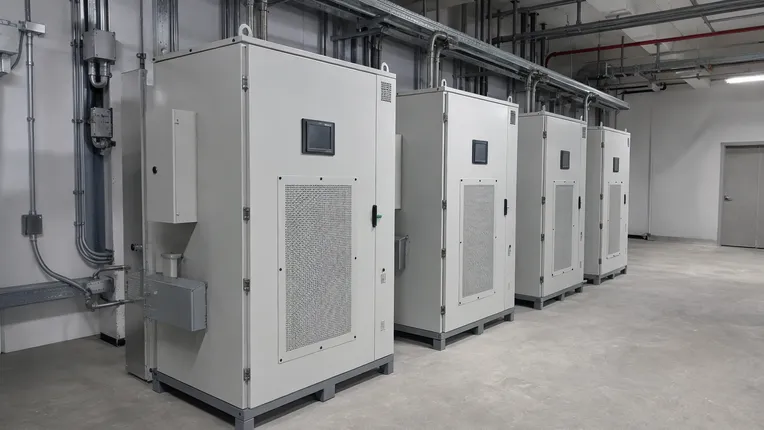
Factories, data centers, hospitals, and water treatment facilities with solar-plus-storage for peak shaving or backup. These buyers often procure through local contractors or system integrators — your role is supplying the battery subsystem with documentation that satisfies the facility's procurement audit.
Typical configuration:
Cabinet-format systems with indoor IP ratings, RS485 monitoring, and maintenance access panels. Repeat orders follow facility expansion schedules.
Telecom and Utility Infrastructure
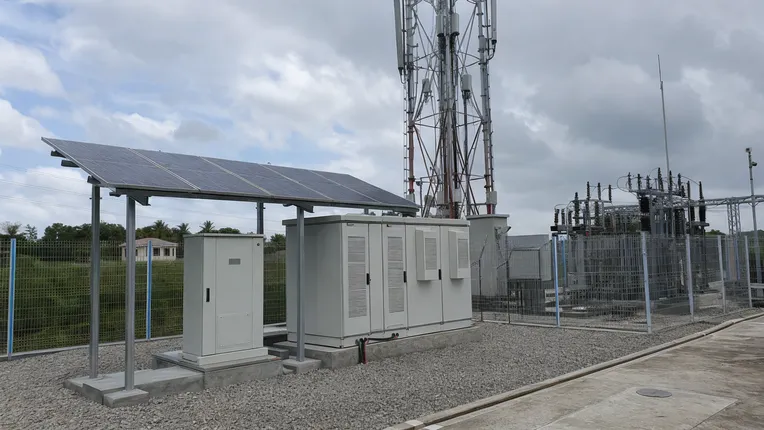
Telecom tower backup and utility substation storage — smaller per-site capacity (50–500 kWh) but high site count and strict documentation requirements. Telecom operators run centralized procurement with approved vendor lists.
Getting your battery product qualified once opens ongoing supply across hundreds of sites.
Qualification support:
Test reports, BMS specification sheets, and communication protocol documentation needed for vendor qualification submissions.
Public Infrastructure Energy Resilience
Government-funded projects — schools, emergency shelters, municipal buildings — with solar storage for grid resilience. Tender-driven procurement with specific documentation requirements (often including local content or certification mandates).
Lead times are long but volumes are predictable once you're on the approved supplier list.
Tender documentation support:
Technical datasheets, test summaries, and compliance certificates formatted for public procurement submissions.
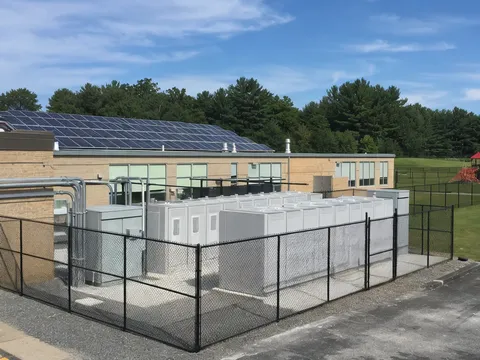
Include the application type, target capacity, and destination market so we can scope the right configuration and documentation package.
OEM/ODM Scope and Project Boundaries Before Production
As a utility solar battery supplier, we handle deep customization on the battery subsystem — but we're transparent about where our scope ends and yours begins. Clarity here prevents scope confusion during project execution.
What We Customize
Capacity Blocks
Module capacity (100Ah–280Ah), number of modules per cabinet, number of cabinets per system. Your project's kWh target determines the configuration; we optimize for your container loading or site footprint constraints.
Cabinet and Enclosure Layout
Indoor cabinets, outdoor-rated enclosures (IP55), rack depth and height to match your site access, cable routing for your PCS connection topology. Color, labeling language, and warning signage per your market requirements.
BMS Firmware and Communication
Master BMS data mapping configured to your PCS brand's protocol specification. Alarm thresholds, SOC calculation method, and reporting intervals adjusted to match your EMS platform. We've configured for Sungrow, Goodwe, SMA, and several regional PCS manufacturers — tell us your model and we'll confirm compatibility or flag any limitations.
Documentation Packages
Datasheets, wiring diagrams, BMS communication specifications, test reports, FAT summaries, packing lists, and dangerous goods declarations — all formatted and translated per your project's language and regulatory requirements.
Project-Specific Testing
Beyond standard production QC, we can run extended cycling, high-temperature endurance, or specific safety tests required by your project's acceptance criteria. Test reports are issued per batch with traceability to cell lot numbers.
Where Our Scope Ends
We do not supply PCS/inverters, EMS software platforms, container structural shells (unless specifically contracted), fire suppression systems, or site electrical engineering.
We provide integration data — BMS communication specs, DC voltage ranges, maximum current ratings, physical dimensions — so your EPC or system integrator can design around our battery subsystem.
We also don't present ourselves as the grid interconnection approval party or the solar farm designer. We're the battery manufacturer. Our engineering team coordinates with your project team on the battery-PCS interface, but the system-level responsibility sits with your EPC.
MOQ and Lead Time Logic
Utility-scale MOQ is project-specific, not the same as our standard 100-unit module minimum. A single-site 500 kWh project is a valid order.
Lead time breakdown:
- • Cell procurement: 4–6 weeks for standard grades
- • BMS configuration: 1–2 weeks
- • Production and testing: 3–4 weeks
- • Documentation preparation: included
Total typical lead time: 8–12 weeks from confirmed specification to ex-works.
Compliance, Tender Documents, and Export Paperwork for Utility Orders
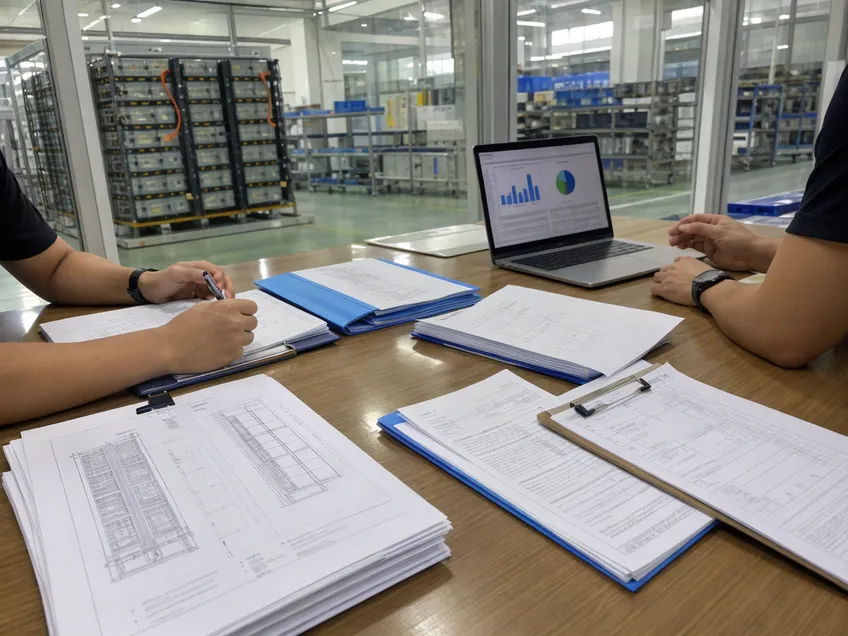
Utility-scale battery procurement runs on documentation as much as hardware. Your tender submission needs technical datasheets. Your customs broker needs dangerous goods paperwork. Your project acceptance needs FAT reports. Missing a single document can delay a shipment or disqualify a bid.
Certifications We Hold
| Certification | Scope | Relevance to Your Project |
|---|---|---|
| ISO 9001:2015 | Manufacturing quality management system | Demonstrates process control and traceability — often required in tender pre-qualification |
| CE | European market product safety | Required for EU import clearance and project deployment in CE-marking jurisdictions |
| IEC 62133 | Battery safety (lithium cells and packs) | Standard safety certification referenced in most utility storage tender specifications |
| UN38.3 | Lithium battery transport classification | Mandatory for international shipping — without this, your freight forwarder won't book the container |
| MSDS | Material safety data sheet | Required by customs authorities and site safety documentation |
Additional certifications — UL 9540, IEC 62619, specific national standards — are available upon request and confirmed during project evaluation. We coordinate with accredited test laboratories and provide engineering samples for certification testing when your project requires standards beyond our current portfolio.
Documentation Package for Utility Projects
Beyond certifications, each utility-scale order ships with (or can include upon request):
We've had projects where the buyer's tender required the FAT report to include specific test sequences not in our standard protocol. We accommodate this — just include your FAT requirements in the project specification and we'll build them into the production QC plan before manufacturing starts.
For your market registration or vendor qualification process, we provide supporting technical data packages. See our battery certification documents or manufacturer profile for background. Request project-specific documentation details.
Packaging, Container Loading, and Site Delivery Planning
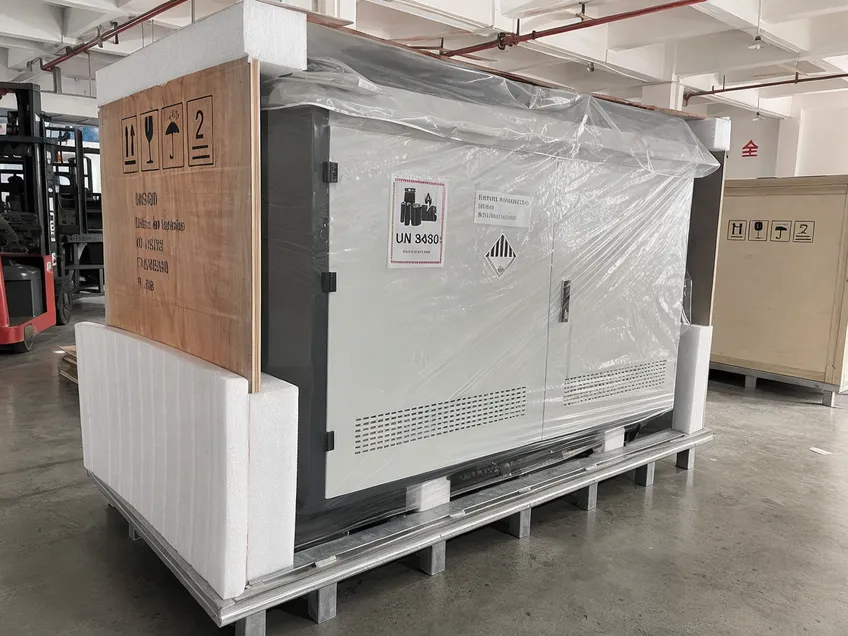
Large scale solar battery storage shipments are heavy, classified as dangerous goods, and often destined for sites with limited handling equipment. Getting the logistics wrong costs you schedule time and money — a rejected shipment or damaged cabinet at port sets your commissioning back by the full reorder lead time.
Packaging Approach
Battery cabinets ship on reinforced steel pallets with foam-lined crating. Individual modules within cabinets are secured against vibration and shock during ocean transit. Each package carries battery handling labels, UN number markings, gross weight declarations, and orientation indicators per IMDG code requirements.
For loose module shipments (when you're assembling cabinets on site), modules ship in reinforced double-wall cartons with molded foam inserts, palletized and stretch-wrapped. We calculate pallet configurations after the model mix is confirmed — a 100Ah module and a 280Ah module have different footprints and weight distributions.
Container Loading and Freight Planning
Utility-scale battery shipments are almost always weight-limited before they're volume-limited. A 20GP container maxes out on payload weight well before the floor space fills up with battery cabinets. This means your freight cost per kWh improves significantly in 40HQ shipments where you can spread the fixed container cost across more capacity.
CBM Calculations
Provided per pallet after order specification confirmed
Gross Weight per Pallet
With stacking limitations documented
Sequenced Loading
Multi-container projects matched to site delivery schedule
For multi-container projects, we sequence production and loading to match your site delivery schedule — first container carries the cabinets for the first installation phase, not a random mix.
Destination and Last-Mile Considerations
European Ports
CE marking and IEC documentation must be ready before goods arrive — we include these in the shipping document package.
African & Inland Destinations
Reinforced palletization and overland transport packaging to survive rough road conditions after port discharge.
Middle East
Specific UN38.3 summary formats required by some customs authorities — we maintain region-specific document templates.
Tell us your destination port and site access conditions
Crane available? Forklift capacity? Indoor staging area? We'll factor these into the packaging specification.
Choose the Right 48V Product Route Before Engineering Starts
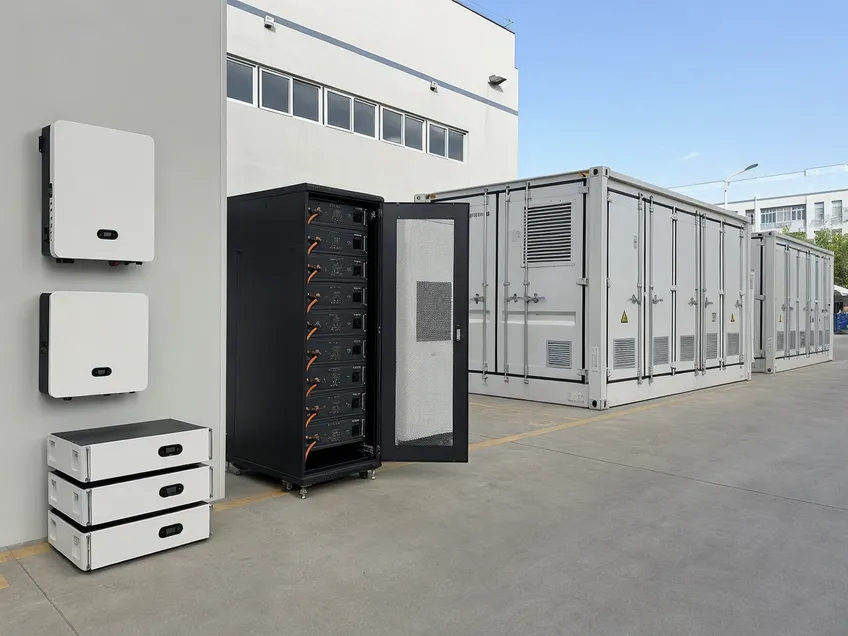
EVANBattery manufactures three product directions under the 48V/51.2V platform. If you're not certain whether your project falls into utility-scale territory or could be served by a simpler product route, this comparison helps you self-select before engineering coordination begins.
48V LiFePO4 Solar Battery
5–15 kWh per module · Distributors & residential installers
Wall-mount or stackable modules with single-tier BMS and basic inverter protocol (CAN/RS485). Minimal engineering coordination — standard product selection from catalog. Repeat orders of 100+ units driven by stock availability.
Commercial Solar Battery Storage
20–500 kWh per installation · System integrators & C&I contractors
Rack-mount or single cabinet format with module BMS plus optional rack controller. RS485/CAN with monitoring. Moderate engineering coordination for capacity and protocol confirmation. Project-based orders of 50–500 units.
Utility Scale Solar Battery Storage
500 kWh to multi-MWh · EPC firms, microgrid developers, infrastructure buyers
Multi-cabinet or container format with multi-tier BMS hierarchy including master BMS. Full protocol mapping to PCS/EMS. Extensive project-specific design phase. Single project or program-based orders with lead times driven by engineering, cell procurement, production, and documentation.
| Dimension | 48V LiFePO4 Solar Battery | Commercial Solar Battery Storage | Utility Scale Solar Battery Storage |
|---|---|---|---|
| Typical system capacity | 5–15 kWh per module | 20–500 kWh per installation | 500 kWh to multi-MWh |
| Format | Wall-mount or stackable module | Rack-mount or single cabinet | Multi-cabinet or container |
| BMS complexity | Single-tier module BMS | Module BMS + optional rack controller | Multi-tier hierarchy with master BMS |
| PCS communication | Basic inverter protocol (CAN/RS485) | RS485/CAN with monitoring | Full protocol mapping to PCS/EMS |
| Engineering coordination | Minimal — standard product selection | Moderate — capacity and protocol confirmation | Extensive — project-specific design phase |
| Typical buyer | Distributors, residential installers | System integrators, C&I contractors | EPC firms, microgrid developers, infrastructure buyers |
| Order pattern | Repeat catalog orders (100+ units) | Project-based (50–500 units) | Single project or program-based |
| Lead time driver | Stock availability or production queue | BMS configuration + production | Engineering + cell procurement + production + documentation |
| Documentation | Standard datasheets + UN38.3/MSDS | Datasheets + communication specs | Full project documentation package including FAT |
Not sure which route fits your project?
If your project is under 500 kWh and uses standard rack-mounted modules, commercial solar battery storage may be the faster route.
If you're building a residential distribution program, start with standard 48V LiFePO4 modules.
For the full 48V platform overview, see our 48V solar battery category.
Utility Scale Solar Battery Storage FAQ
Direct answers to the engineering and procurement questions we receive most often from EPC firms, developers, and system integrators scoping utility-scale deployments.
What capacity range usually moves a project from commercial storage to utility-scale storage?
The practical threshold is around 500 kWh. Below that, standard rack-mounted commercial modules with a single-tier BMS handle the job without extensive engineering coordination. Above 500 kWh, you're typically dealing with multi-cabinet or container configurations, tiered BMS architecture, dedicated PCS communication mapping, and project-specific documentation — all of which require an engineering phase before production.
The line isn't absolute — a 300 kWh project with complex EMS integration requirements might need utility-scale treatment, while a straightforward 800 kWh installation using a standard cabinet repeated four times might not. We assess based on your project's actual engineering complexity, not just the kWh number.
What information is needed to quote a solar battery storage farm project?
At minimum:
- Target system capacity (kWh or MWh)
- Daily cycle count
- PCS/inverter brand and model
- EMS protocol requirements
- Site ambient temperature range
- Destination country
- Project timeline
Without the PCS model, we can't confirm BMS communication compatibility. Without site temperature data, we can't specify the cooling approach. Without the timeline, we can't confirm whether standard or expedited production scheduling applies.
Send these inputs with your first inquiry and you'll receive an engineering proposal rather than a placeholder estimate.
Can 48V / 51.2V LiFePO4 modules be used in large scale solar battery storage?
Yes — and this is how most utility-scale LiFePO4 systems are built. Individual 51.2V modules (16S LiFePO4, typically 100–280Ah) are aggregated in parallel strings within cabinets, and multiple cabinets form the system. The 51.2V platform is the building block, not the limitation.
System voltage at the DC bus depends on your PCS input range — some PCS units accept a single 51.2V string, others require higher-voltage series configurations.
We confirm the module-to-system architecture during the engineering phase based on your PCS specifications.
What documents are needed to import utility-scale lithium battery storage?
Mandatory for international shipping:
- UN38.3 test summary
- MSDS/SDS
- Dangerous goods shipping declaration with correct UN number classification
- Packing list with gross weights
For market access:
- CE and IEC 62133 reports (EU)
- Any country-specific certifications your import authority requires
For project acceptance:
- FAT report
- BMS specification
- Wiring diagrams and test summaries
We prepare the full documentation package as part of the project scope — tell us your destination market and tender requirements during quotation and we'll confirm what's included. View our certification overview.
Cabinet vs container battery storage: which format fits a solar farm or microgrid?
Cabinets
- Indoor installations
- Smaller utility sites (500 kWh – 2 MWh)
- Projects requiring modular expansion over time
- More flexible but require a prepared indoor space
Containers
- Larger single-phase deployments (2 MWh+)
- Outdoor sites without building infrastructure
- Projects where pre-assembled shipping reduces on-site labor
- Higher upfront engineering cost but lower site installation complexity
We manufacture the battery racks and BMS for both formats — the enclosure decision depends on your site conditions and project economics.
How does BMS communication affect commissioning on utility-scale storage projects?
Directly and significantly. If the master BMS data frame doesn't match what your PCS expects — wrong byte order, missing SOC field, incorrect alarm flag mapping — the system won't charge or discharge even though the hardware is physically connected.
Key Risk
This is the single most common commissioning delay on utility storage projects.
We configure BMS communication to your PCS manufacturer's protocol specification before production, test the data exchange in our lab, and provide communication verification documentation.
Your commissioning team should still verify on site, but the protocol debugging phase is eliminated.
Send Your Utility Storage Project Data for an Engineering Quote
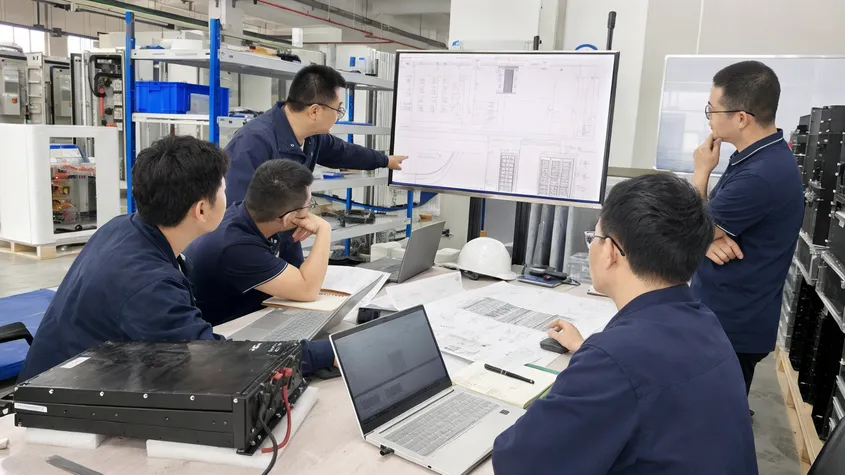
You've reviewed our manufacturing scope, technical architecture, customization boundaries, and documentation capability. If utility scale solar battery storage from EVANBattery fits your project requirements, the next step is specific: send us your project data and we'll return an engineering proposal with configuration, timeline, documentation scope, and pricing.
What to Include in Your Inquiry
-
Target system capacity (kWh or MWh)
-
PCS / inverter brand and model
-
EMS protocol and data point requirements
-
Site conditions (temperature range, indoor/outdoor, altitude)
-
Application type (solar farm, microgrid, infrastructure backup, telecom)
-
Project timeline (delivery date, commissioning schedule)
-
Destination port and country
-
Documentation requirements (tender docs, FAT, specific test standards)
-
Expected annual volume or program scope (single project vs. multi-site)
Contact EVANBattery Engineering Team
We respond with a technical proposal — not a generic price sheet — within 48 hours of receiving complete project data.
If you're still evaluating product routes, contact us with your project outline and we'll recommend whether utility-scale, commercial, or standard module supply is the right starting point.