

12V Gel Solar Battery for Distributor & Project Supply
Sealed 12V gel solar batteries in 100Ah, 150Ah, and 200Ah — built for repeat wholesale programs and off-grid project tenders.
We manufacture the 12V gel VRLA line that distributors across Africa, Southeast Asia, and the Middle East reorder quarter after quarter. Consistent capacity, export-ready documentation, and MOQ starting at 100 units.
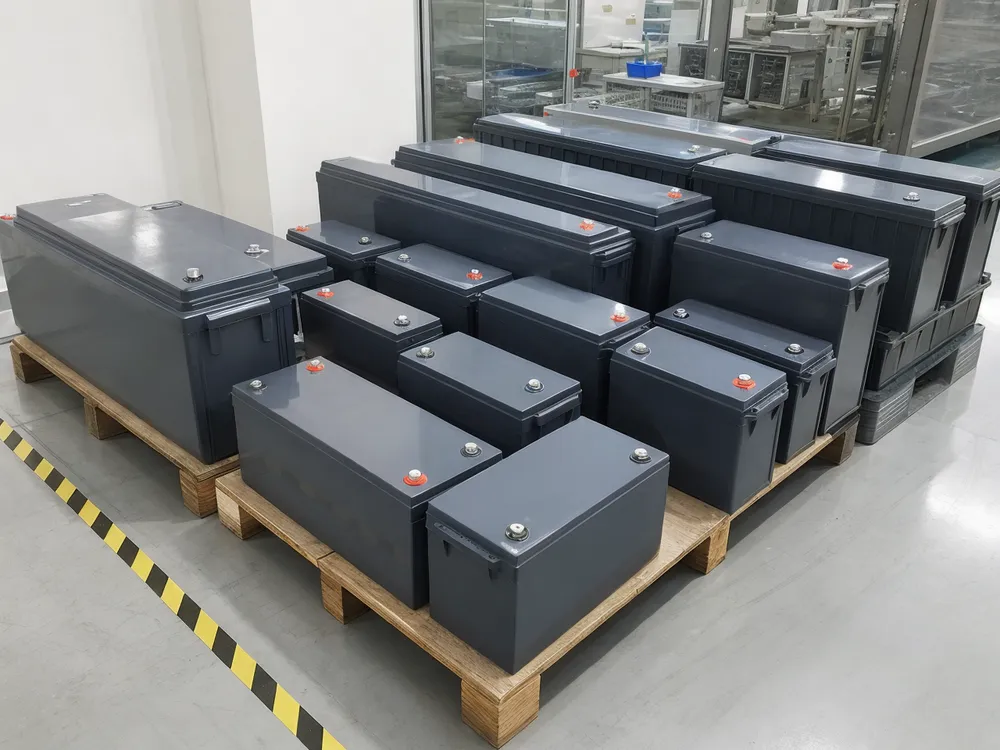
Factory-Direct 12V Gel Solar Batteries for Volume Programs
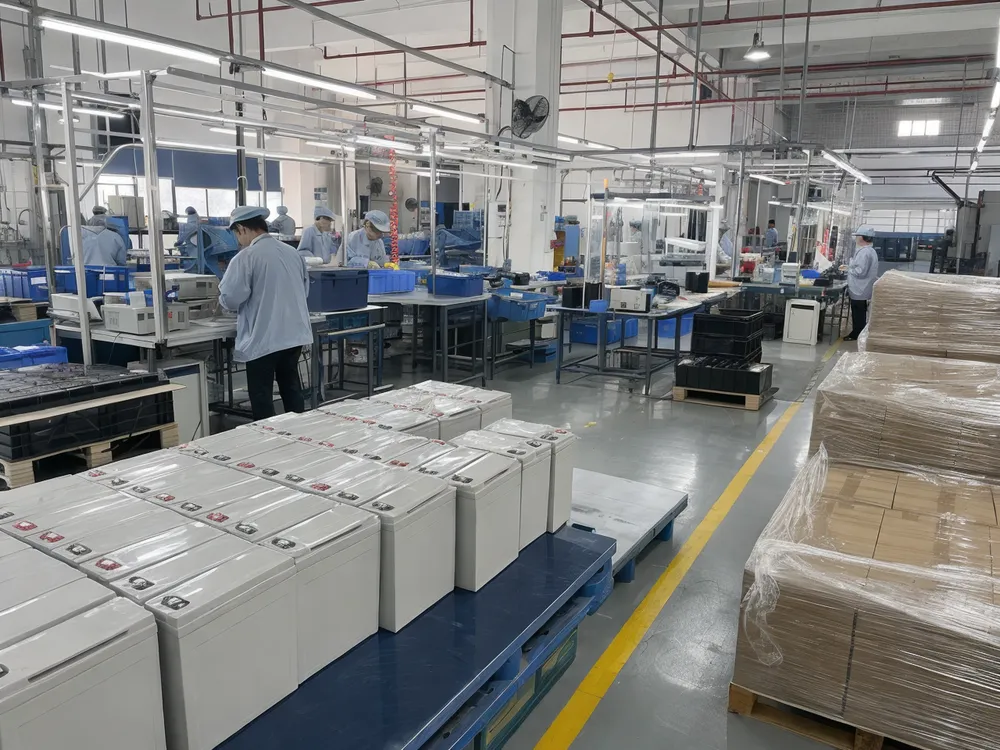
EVANBattery is a 12V gel solar battery manufacturer based in Zhongshan, Guangdong — 9,900m² of factory floor, 150 employees, and 6 dedicated production lines running both lithium and lead-acid solar batteries. Our gel line covers the 12V sealed VRLA range that solar kit assemblers, replacement battery distributors, and off-grid project contractors need in volume: 100Ah, 150Ah, and 200Ah configurations with consistent batch quality and full export paperwork.
We've been producing gel solar batteries since 2012, starting with small runs for the African off-grid market and scaling to container-volume programs across five regions. The 12V gel range remains one of our steadiest product lines because the demand pattern is predictable — solar home systems, street lighting maintenance, rural backup — and the reorder cycle is short.
Capacities Available
Also in Gel Solar Battery Range
Capacity Mix That Fits Your SKU Plan Without Rework
Choosing between 100Ah, 150Ah, and 200Ah is not a technical puzzle — it's a commercial decision about which market segments you're serving and how many SKUs you want to carry.
12V 100Ah
Typical Project Fit
Entry-level solar home systems, small lighting kits, security backup
Distributor Value
Lowest unit cost, fastest turnover, broadest retail demand
When to Quote It
High-volume replacement markets, price-sensitive tenders
12V 150Ah
Typical Project Fit
Mid-range solar home kits, rural clinic backup, multi-light systems
Distributor Value
Balanced margin between entry and premium, fewer SKUs needed
When to Quote It
Markets where 100Ah is undersized but 200Ah is overkill
12V 200Ah
Typical Project Fit
Larger off-grid loads, telecom backup, multi-day autonomy systems
Distributor Value
Higher per-unit margin, fewer competitors at this capacity
When to Quote It
Project tenders specifying 2+ days autonomy, commercial backup
Most of our distributors carry two of the three — typically 100Ah and 200Ah — and cover 80% of their downstream demand. Adding 150Ah makes sense when your market has a strong mid-tier solar kit segment.
We've seen this pattern especially in East Africa and parts of Southeast Asia where 150Ah hits the sweet spot for a 4-light, phone-charging, TV-running household system.
Single-Source Advantage
The advantage of sourcing all three capacities from one manufacturer: your reorder process stays simple, your documentation package is consistent, and your container can mix capacities without coordinating multiple suppliers.
Send us your target market, capacity mix, and monthly forecast — we'll build a quote around your actual program, not a generic price list.
Procurement Specifications for Your Comparison Sheet
The table below gives you industry-typical values for our 12V gel solar battery range. Use these for initial RFQ comparison — then request the exact data sheet for final tender submission.
| Parameter | 12V 100Ah Gel | 12V 150Ah Gel | 12V 200Ah Gel |
|---|---|---|---|
| Nominal voltage | 12V | 12V | 12V |
| Rated capacity (C10, 25°C) | 100Ah | 150Ah | 200Ah |
| Construction | Sealed gel VRLA, maintenance-free | Sealed gel VRLA, maintenance-free | Sealed gel VRLA, maintenance-free |
| Cycle life (50% DOD) | 600–800 cycles typical | 600–800 cycles typical | 600–800 cycles typical |
| Self-discharge | ≤3% per month at 25°C | ≤3% per month at 25°C | ≤3% per month at 25°C |
| Float charge voltage | 13.5–13.8V | 13.5–13.8V | 13.5–13.8V |
| Boost/equalization voltage | 14.0–14.4V | 14.0–14.4V | 14.0–14.4V |
| Operating temperature | -20°C to +55°C | -20°C to +55°C | -20°C to +55°C |
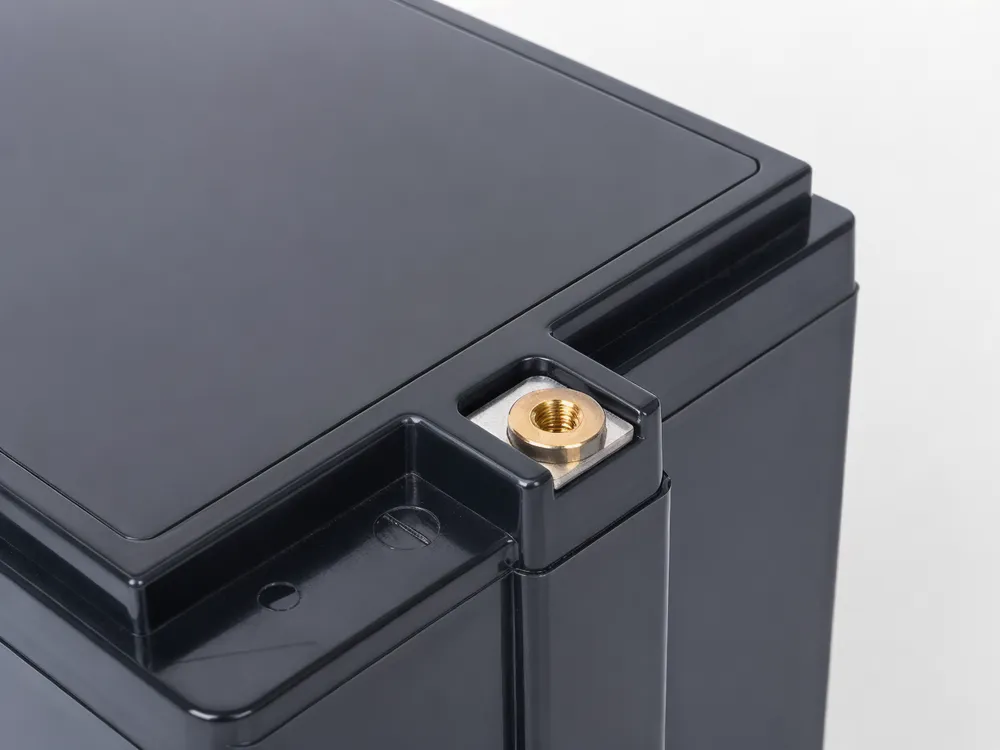
| Terminal options | F12 (M8), copper insert, custom | F12 (M8), copper insert, custom | F12 (M8), copper insert, custom |
| Case material | ABS (standard), flame-retardant ABS available | ABS (standard), flame-retardant ABS available | ABS (standard), flame-retardant ABS available |
Important Note
Exact dimensions, weight, terminal layout, and capacity curves vary by production configuration. Request the EVANBattery data sheet with dimensional drawings before submitting tender documents.
Charge Controller Compatibility
The 12V 100Ah gel solar battery and 12V 150Ah gel solar battery share the same terminal interface and charge profile, so your charge controller documentation works across both SKUs without revision.
Production Controls That Protect Your Warranty Margin
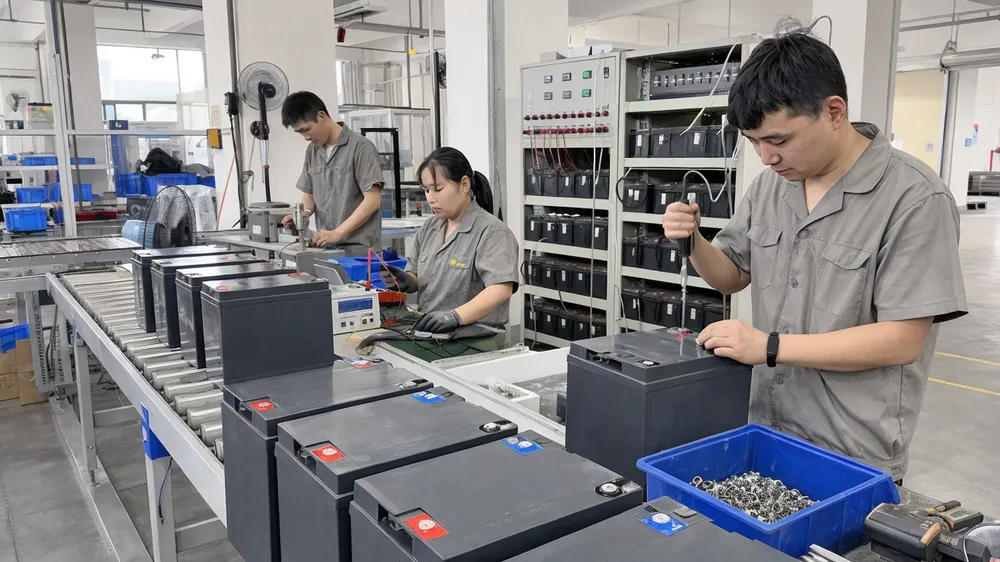
Gel batteries look simple from the outside — a sealed box with two terminals. But the difference between a batch that holds rated capacity for 3 years in a hot climate and one that starts losing capacity at month 8 comes down to what happens during manufacturing. Here's what we control on our gel line:
Plate Preparation and Formation
We cast and cure positive plates in-house rather than buying pre-formed plates from third parties. Formation — the initial charge that converts lead oxide to active material — runs on controlled current profiles for 48+ hours.
Rushing formation saves time but leaves unconverted material inside the plate, which shows up as premature capacity loss in the field.
We learned early on that African off-grid buyers notice capacity fade faster than anyone because their systems cycle daily to 50% DOD — there's no grid to mask a weak battery.
Gel Electrolyte Filling
The electrolyte is fumed silica mixed with sulfuric acid to form a thixotropic gel. Consistency matters — if the gel density varies across the cell, you get uneven ion transport and localized sulfation.
We mix and fill under vacuum to eliminate air pockets, then seal immediately. The vacuum fill step adds time to the line, but it's the difference between consistent internal resistance across a 500-unit batch and random variation that creates warranty headaches.
Capacity Verification and Aging
Every battery goes through a full C10 discharge test after formation and a 7-day aging period. Post-aging, we re-test voltage and internal resistance.
Units outside our acceptance band get pulled — they don't get downgraded to a "B-grade" line. Your shipment contains only batteries that passed the same threshold.
Terminal Inspection and Torque Testing
Loose terminals cause field failures that look like battery defects but are actually assembly defects. We torque-test every terminal connection and inspect the seal interface before packing.
6
Production Lines
150
Employees
13+
Years Gel Production
100%
C10 Tested
These controls are routine, not aspirational. The result for you: predictable warranty exposure and fewer field returns eating into your margin.
Market Segments Where 12V Gel Still Wins Orders
Lithium gets the headlines, but 12V gel solar batteries still dominate several commercial segments — and for good reasons that matter to your margin, not just to the end user.
Off-Grid Solar Home Kits
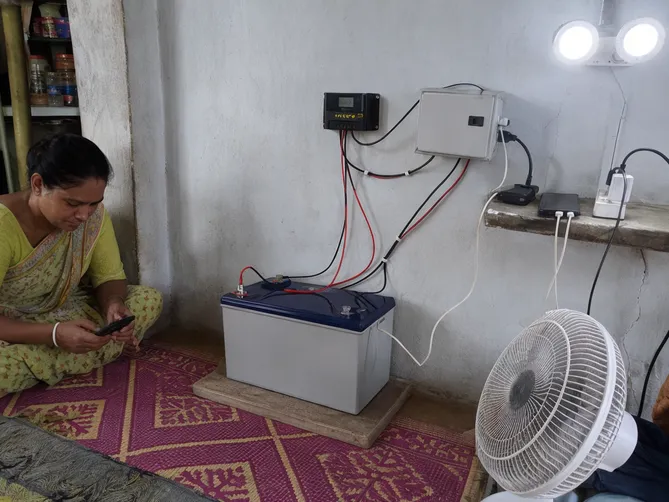
The entry-level solar home system market — 3-5 lights, phone charging, small DC fan — runs almost entirely on 12V gel batteries in Africa and parts of South Asia.
The 100Ah gel solar battery is the standard heart of these kits. Your buyers know gel, their technicians know gel, and the replacement cycle (every 3-4 years) creates a built-in reorder stream.
Switching this segment to lithium doubles the kit price and breaks the affordability threshold that drives volume.
Solar Street Lighting Maintenance Programs
Municipal and commercial street lighting projects install gel batteries by the hundreds. The replacement cycle is predictable — 3-5 years depending on DOD and climate — and maintenance contractors order in batches.
A 100Ah or 150Ah gel solar battery fits most pole-mounted controller boxes without modification. This is a repeat-order segment with low technical support burden.
Rural Retail and Small Commercial Backup
Shops, clinics, and small offices in areas with unreliable grid use 12V gel batteries paired with basic solar panels and PWM controllers.
The 200Ah gel solar battery handles overnight loads for a small shop (lighting, phone charging station, small fridge). Distributors serving these markets move steady monthly volume because the installed base keeps growing and batteries keep aging.
Telecom and Security Backup
Small telecom repeaters, CCTV systems, and alarm panels use 12V gel batteries as backup power. These are typically 100Ah units in weatherproof enclosures.
The buyer here is often a systems integrator who needs consistent supply and documentation for their installation contracts.
Replacement Battery Channels
Every gel battery installed today becomes a replacement sale in 3-5 years. Distributors who establish supply now build a captive reorder base.
The 12V gel format is standardized enough that your replacement battery fits the same enclosure and wiring as the original — no redesign, no technician retraining.
The Honest Comparison With Lithium
Gel Wins On
- Upfront cost
- Familiar infrastructure
- Replacement demand (captive reorder base)
Lithium Wins On
- Cycle life
- Weight
For the segments above, the economics still favor gel — and that's where your volume lives.
Charging and System Compatibility Checks Before You Order
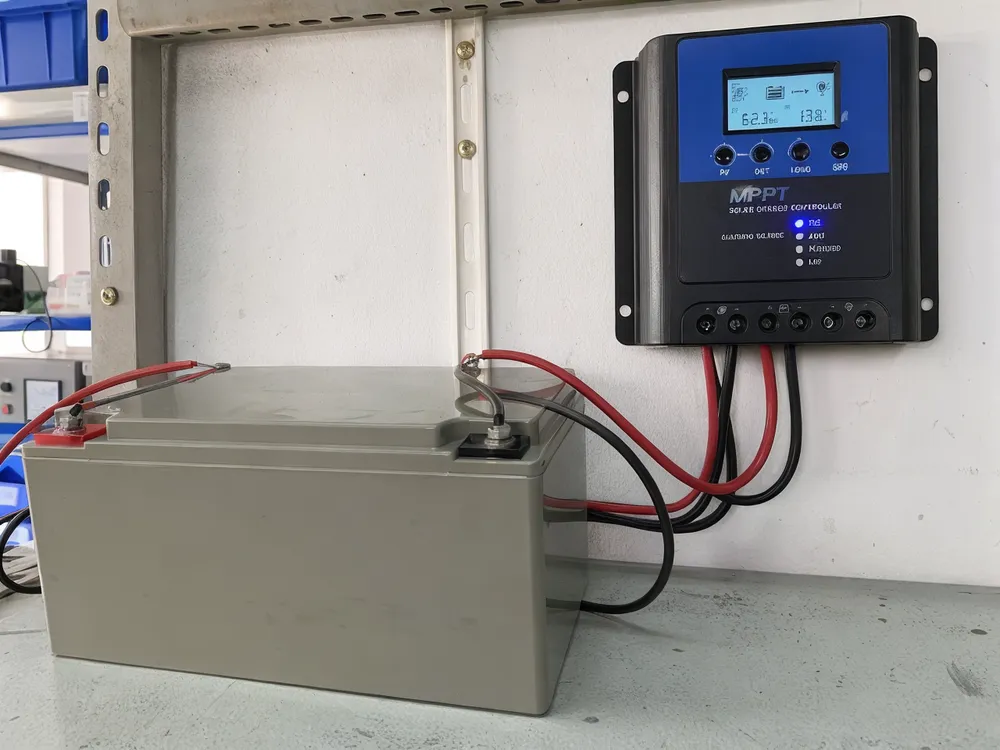
Gel batteries are less forgiving of incorrect charge settings than flooded lead-acid. Getting this right before shipment prevents the most common field failure mode: overcharge damage from controllers set to flooded or AGM profiles.
Float and Boost Voltage
Gel requires lower charge voltage than AGM or flooded batteries. Typical float is 13.5–13.8V; boost is 14.0–14.4V for a 12V unit. If your end users are running PWM or MPPT controllers with selectable battery type, confirm the controller has a dedicated "gel" setting — not just "sealed," which sometimes defaults to AGM voltage.
Series and Parallel Bank Design
Two 12V gel batteries in series give you 24V; four give you 48V. Parallel strings increase capacity. The rule for gel: match batteries from the same production batch when building banks. Mixed batches with different internal resistance will cause uneven charging and accelerated degradation in the weaker unit.
We can batch-match your order if you tell us the bank configuration at quoting stage.
Depth of Discharge Planning
Gel batteries deliver best cycle life at 50% DOD. Designing the system for 50% DOD rather than 80% roughly doubles the cycle count — which means your end user replaces at year 4–5 instead of year 2.
This affects capacity sizing: a system needing 1kWh daily should use a 200Ah gel battery (2.4kWh nominal, 50% usable = 1.2kWh), not a 100Ah unit cycled to 80%.
What We Need Before Quoting
- Inverter or charge controller model
- System voltage (12V / 24V / 48V)
- Average daily load in Wh
- Ambient temperature range
- Required autonomy days
We'll confirm compatibility and recommend the right capacity so your end users don't burn through batteries in 18 months.
OEM Labeling, Packaging, and MOQ for Your Distribution Program
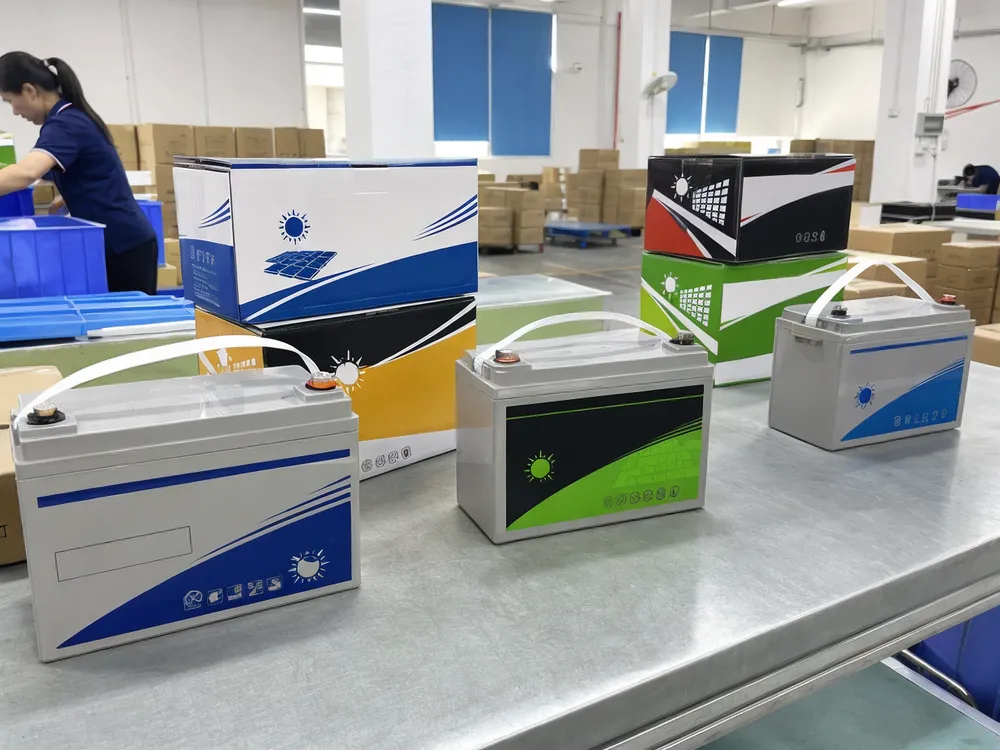
MOQ for standard 12V gel solar battery models is 100 units. This applies to our existing case molds and standard capacities (100Ah, 150Ah, 200Ah). Below is what you can customize at this volume and what requires higher commitment:
| Customization | Available at 100-Unit MOQ | Requires Higher Volume |
|---|---|---|
| Private label (your brand on battery) | Yes — silk-screen or adhesive label | — |
| Custom carton design | Yes — your artwork on standard carton size | — |
| Terminal type selection | Yes — F12, copper insert, or bolt terminal | Custom terminal design |
| Documentation pack (your brand on warranty card, manual) | Yes | — |
| Pallet labeling and marking | Yes | — |
| Case color change | — | 500+ units (requires color-matched ABS batch) |
| Custom capacity (non-standard Ah) | — | 1,000+ units (requires plate and formation validation) |
| Custom case dimensions | — | 2,000+ units (requires new mold tooling) |
First Order Recommendation
For your first order, we recommend starting with standard cases and capacities under your own label. This gets product into your market within one production cycle. Once you've validated demand, we can discuss custom configurations for subsequent orders.
Channel-Specific Packaging
The 12V gel solar battery manufacturer relationship works best when we understand your channel. Are you selling through:
- Retail shops — shelf-ready packaging, barcode placement, multilingual labels
- Project contractors — bulk pallet packing, technical spec sheets, batch certificates
- E-commerce platform — individual carton with product photography, insert cards, unboxing experience
Tell us yours and we'll configure the package accordingly.
Export Compliance and Documentation for Battery Imports
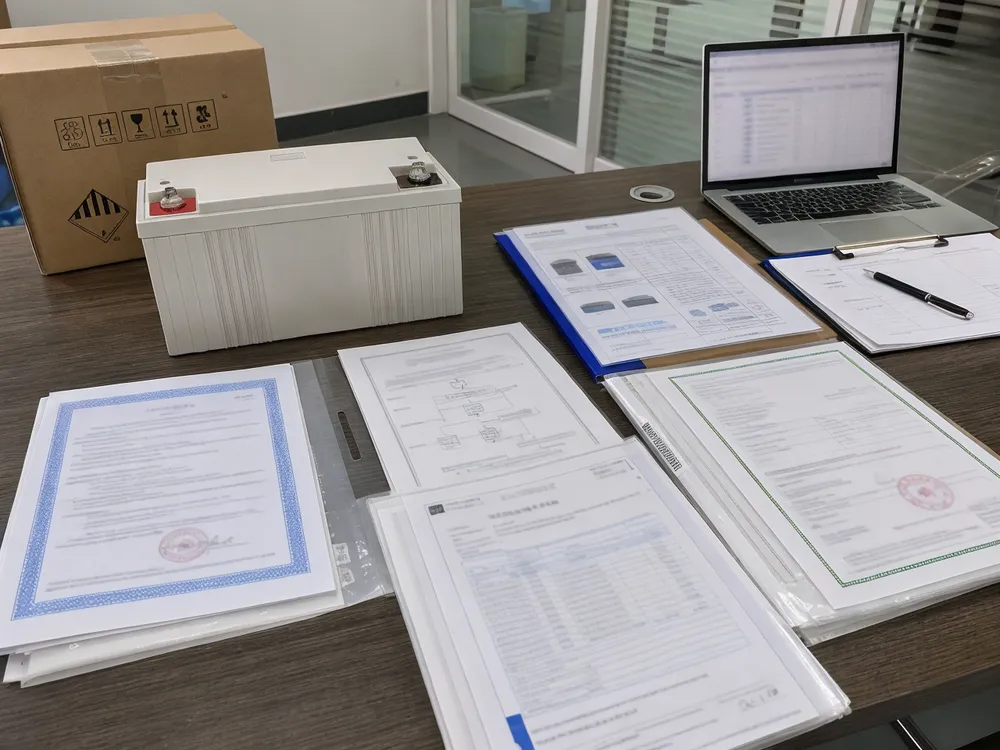
Lead-acid gel batteries are classified as dangerous goods for sea freight (UN3028, Class 8 when wet-charged, though sealed VRLA often ships under exemption with proper documentation). Your customs clearance depends on having the right paperwork ready before the container arrives.
Documents We Provide With Every Shipment
MSDS (Material Safety Data Sheet)
Required by freight forwarders and customs in virtually every market.
UN38.3 Test Summary
Transport safety certification — confirms the battery passed altitude simulation, thermal cycling, vibration, shock, short circuit, and impact testing.
CE Certificate
For European market access.
IEC 62133 Test Report
Product safety standard covering cell and battery safety under normal and foreseeable misuse conditions.
ISO 9001:2015 Certificate
Manufacturing quality management system verification.
Commercial Invoice, Packing List, Bill of Lading
Standard trade documents configured to your import requirements.
Market-Specific Certifications
For specific markets, you may need additional local certifications. We can provide test samples and technical data packages to support your local certification applications — we've been through this process with buyers in all five of our export regions.
The timeline varies by country, but having a manufacturer who knows what the test lab will ask for saves you weeks of back-and-forth.
Note: Product-specific certificate copies and test report details should be confirmed during your RFQ — we'll include the exact documentation package in your quotation.
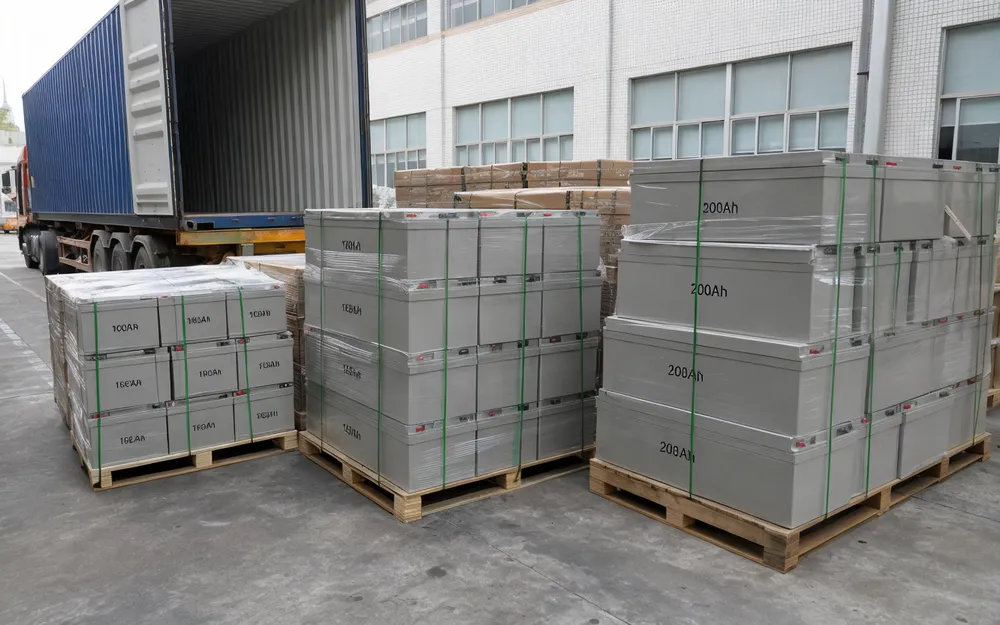
Container Loading and Packing for Heavy Lead-Acid Shipments
Gel batteries are heavy. A 12V 200Ah unit weighs roughly 55–65kg depending on plate thickness and case design. This means your container loading plan, pallet specification, and inland transport route all affect landed cost and damage risk.
Carton and Packing Approach
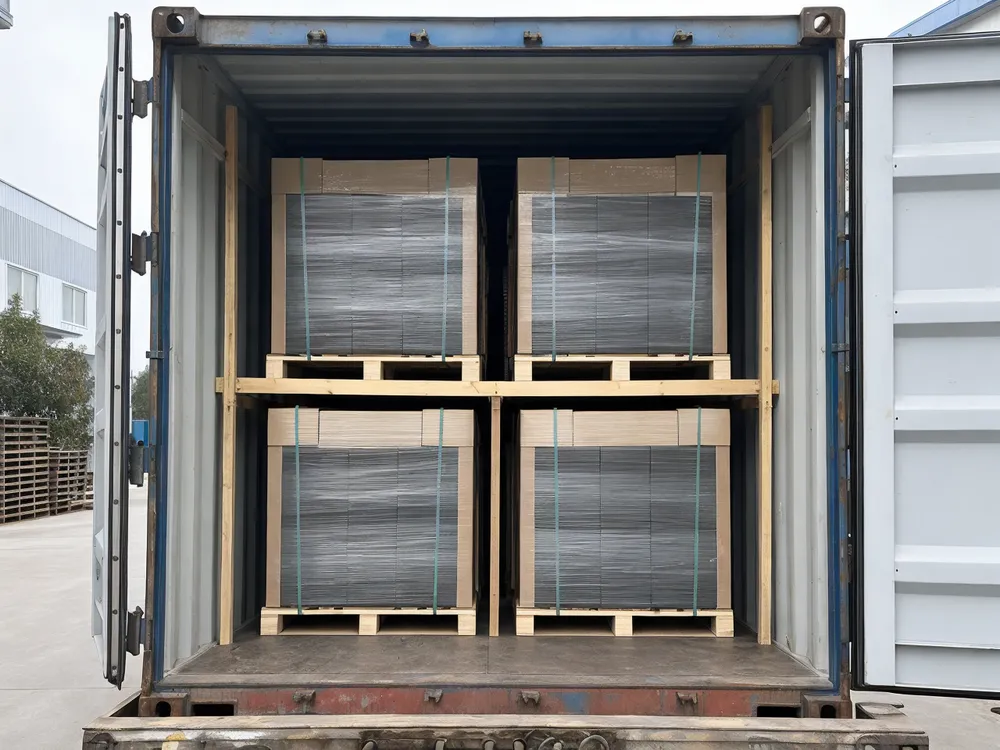
Each battery ships in an individual corrugated carton with foam corner protection and terminal caps. Cartons are reinforced at the base — standard single-wall corrugated fails under the stacking weight of a full pallet of 200Ah batteries. We use double-wall or honeycomb-reinforced cartons for the heavier models.
Palletization
Standard wooden pallets, fumigation-treated for export (ISPM-15 compliant). Loading pattern depends on battery dimensions and container type. A 20GP container typically handles 18–22 pallets depending on capacity mix and pallet height restrictions.
Weight Distribution
Lead-acid batteries hit the container weight limit before the volume limit. A 20GP container maxes out around 24–26 metric tons payload.
We calculate the optimal loading plan for your specific capacity mix and provide a loading diagram with your quotation.
Rough Logistics Protection
For shipments destined for inland Africa or rural Southeast Asia where roads are unpaved and handling is manual, we add extra internal bracing and moisture-barrier wrapping.
"We started doing this after seeing damage claims from buyers in Nigeria and Tanzania — the batteries survived the ocean voyage perfectly but arrived with cracked cases from overland trucking. The extra $0.30–0.50 per unit in packing material eliminated the problem."
Need Packing Dimensions and Container Loading Estimate?
Tell us your capacity mix and destination — we'll provide a detailed loading diagram and landed weight calculation.
Request Loading EstimateWhen to Choose 12V Gel, Deep-Cycle Gel, or AGM
If you're evaluating across the gel solar battery category, here's how the three product lines differ and which buyer need each one serves.
| Decision Factor | 12V Gel Solar Battery | Deep Cycle Gel Solar Battery | AGM Solar Battery |
|---|---|---|---|
| Best for | Standard 12V solar kit supply, replacement programs, price-sensitive tenders | Cycle-heavy applications specifying tubular or deep-cycle plate design | Buyers with existing AGM infrastructure or VRLA backup replacement demand |
| Typical buyer | Solar kit assemblers, off-grid distributors, street lighting contractors | Project contractors with cycle-life specifications in tender documents | UPS/telecom distributors, buyers replacing existing AGM installations |
| Capacity focus | 100Ah, 150Ah, 200Ah in standard cases | Varies — emphasis on cycle rating over capacity alone | 12V range, often 7Ah–200Ah for diverse backup applications |
| Key spec emphasis | Sealed maintenance-free, cost-per-Wh, reorder simplicity | Cycle life at stated DOD, plate construction type | High discharge rate, low self-discharge, float life |
Tender specifies deep-cycle performance with a minimum cycle count?
That page covers tubular plate construction and cycle-life guarantees for project specifications.
Deep Cycle Gel Solar BatteryMarket needs AGM-format replacements or VRLA backup batteries?
Covers the AGM/VRLA range for buyers in the backup power and replacement channel.
AGM Solar BatteryNeed the full gel solar battery category overview?
View all gel solar battery options across the complete product range.
View All Gel Solar BatteriesFAQ for 12V Gel Solar Battery Buyers
Technical and commercial answers for distributors, kit assemblers, and project contractors evaluating 12V gel batteries.
What is the practical difference between a 12V 100Ah, 150Ah, and 200Ah gel solar battery for solar kit sizing?
The capacity determines daily energy budget:
Enough for a basic 3–5 light solar home system with phone charging.
Supports a small DC fan or TV in addition to lighting.
Covers overnight loads for a small shop or clinic.
Choose based on your end user's daily consumption and the autonomy days your kit promises — not on the assumption that bigger is always better. Oversizing adds cost without proportional value in price-sensitive markets.
Can 12V gel solar batteries be connected in series for 24V or 48V systems?
Yes. Two 12V gel batteries in series produce 24V; four produce 48V.
The critical requirement: all batteries in a series string must be from the same production batch, same capacity, and ideally the same internal resistance range. Mismatched batteries in series will cause the weakest cell to be overcharged while the strongest is undercharged — accelerating degradation across the entire bank.
Ordering tip: If you're building 24V or 48V systems, specify the bank configuration when ordering so we can batch-match your units.
What charging voltage should be confirmed before using gel batteries with a solar controller?
Gel batteries require lower charge voltage than flooded or AGM types. For a 12V gel unit:
Warning: Exceeding 14.4V causes gel dry-out — the electrolyte loses water irreversibly, internal resistance rises, and capacity drops permanently.
Confirm your charge controller has a dedicated "gel" battery type setting. Controllers that only offer "sealed" without distinguishing gel from AGM often default to AGM voltage (14.6–14.8V), which will damage gel batteries within months.
Gel vs AGM solar battery: which performs better in hot off-grid climates?
Gel handles sustained high temperatures better than AGM. The gelled electrolyte has lower evaporation rate and better thermal stability above 35°C.
In tropical and equatorial markets where ambient temperatures regularly exceed 40°C inside battery enclosures, gel batteries typically deliver 20–30% longer service life than equivalent AGM units.
Higher discharge rate and lower cost
Better thermal stability, fewer warranty claims in hot climates
For solar cycling applications in hot climates, gel is the safer specification for reducing warranty claims.
What documents are typically needed to import 12V gel solar batteries?
At minimum: MSDS, UN38.3 test summary, commercial invoice, packing list, and bill of lading.
- European markets: Add CE certificate.
- Regulated African markets (Nigeria, Kenya, Tanzania): SONCAP, PVOC, or equivalent pre-shipment inspection certificates — these are applied for in-country but require manufacturer test data.
We provide MSDS, UN38.3, CE, and IEC 62133 documentation as standard. Country-specific certification support is available — tell us your destination during RFQ and we'll confirm what's needed.
What is EVANBattery's MOQ for standard 12V gel solar battery models?
100 units for standard models (100Ah, 150Ah, or 200Ah in existing case molds). This includes private labeling — your brand on the battery and carton. Mixed-capacity orders are fine as long as total quantity meets 100 units.
| Customization Level | MOQ |
|---|---|
| Standard models with private label | 100 units |
| Custom case colors | 500 units |
| Non-standard capacities or custom case dimensions | 1,000–2,000+ units |
Most buyers start with a 100-unit trial of one or two capacities, validate with their market, then scale to container volume on the second order.
RFQ Checklist for Your 12V Gel Solar Battery Quote
To quote accurately and avoid back-and-forth, include the following in your inquiry:
Capacity
100Ah, 150Ah, 200Ah, or mixed
Quantity
Per capacity, per order or per month
Target Market
Country or region where batteries will be sold/installed
System Voltage
12V standalone, 24V series, or 48V bank
Charge Controller / Inverter Model
For compatibility confirmation
Branding
Your label, or EVANBattery standard
Packaging Requirements
Standard carton, custom carton, pallet specs
Destination Port
For freight and loading calculation
Required Documents
CE, MSDS, UN38.3, local certifications
Timeline
When you need the first shipment
Contact EVANBattery Directly
Factory
No. 38, Tongxing 1st Road, Jiafuwei Industrial Zone, Caosan Village, Guzhen Town, Zhongshan City, Guangdong Province, China