

Sealed AGM Solar Battery — Lower Landed Cost, Maintenance-Free
A VRLA lead-acid solar battery built for channels where lithium pricing doesn't pencil out and your buyers expect drop-in replacements.
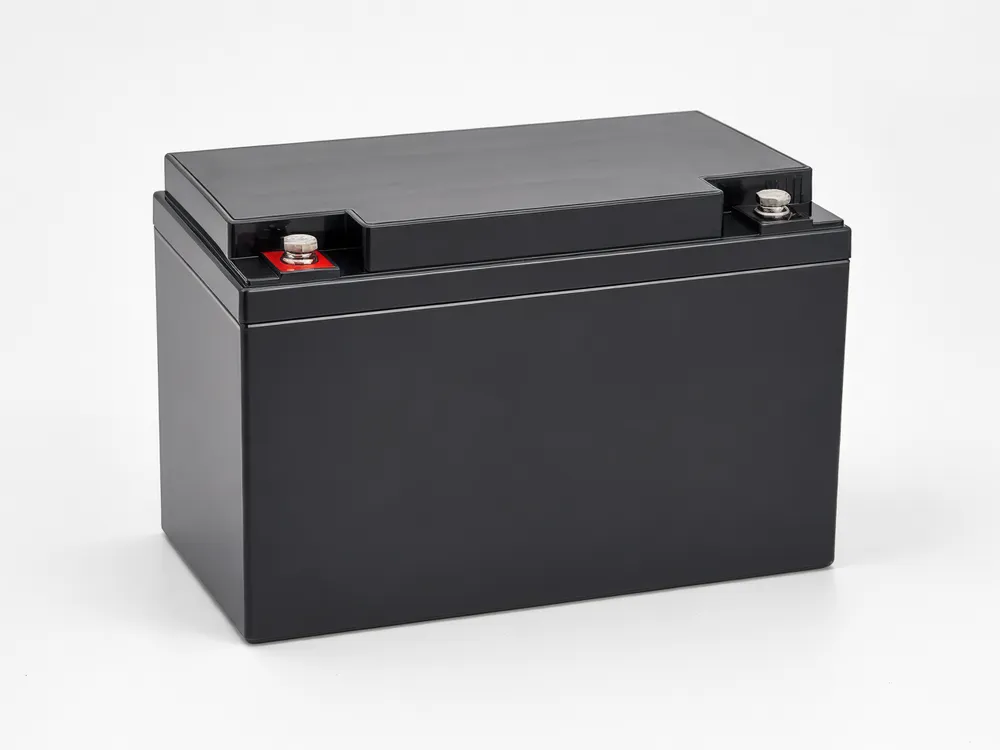
AGM Solar Battery for Cost-Controlled Solar Channels
EVANBattery produces sealed AGM solar batteries for distributors, project contractors, and OEM partners who need a cost-effective lead acid solar battery that ships without hazmat complications and drops into existing solar controller ecosystems.
AGM — Absorbent Glass Mat — uses fiberglass separators to immobilize the electrolyte, so the battery is non-spillable, valve-regulated, and requires zero maintenance after installation. For your channel, that translates to simpler warehousing, fewer field service calls, and a product your downstream customers already know how to replace.
We've manufactured lead-acid solar batteries since 2012, starting with gel and AGM lines for African off-grid programs before expanding into lithium. The lead-acid side of our factory still runs dedicated production — separate from lithium assembly — because the plate casting, electrolyte handling, and formation charging processes need their own environment. That separation is what keeps your AGM batches consistent.
Positioned For
Channels where upfront unit cost drives the buying decision: solar street lighting tenders, rural electrification kits, backup power replacements, and telecom site maintenance programs.
Dedicated Lead-Acid Line
Plate casting, electrolyte handling, and formation charging run on a separate production floor from lithium assembly — purpose-built for batch consistency in VRLA products.
Need Deeper Cycling?
If your market needs deeper cycling or higher usable capacity, view the full gel and AGM solar battery range for alternatives.
Lower Landed Cost
Unit economics that pencil out where lithium can't compete on upfront price.
Maintenance-Free
Sealed VRLA design — no topping up, no acid checks, no field service overhead.
No Hazmat Shipping
Non-spillable classification simplifies warehousing and international logistics.
Drop-In Replacement
Standard form factors your downstream buyers already know how to install and replace.
Order-Ready AGM Solar Battery Specifications
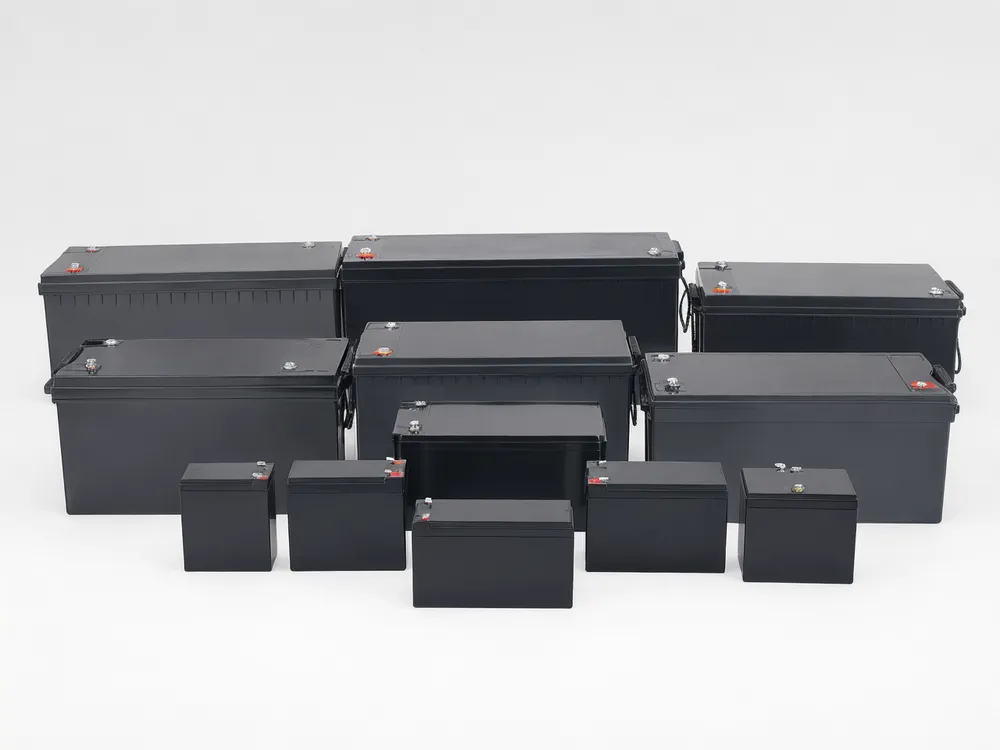
The table below covers typical parameters across our standard AGM solar battery range. We produce 12V and 24V configurations in capacities from 7Ah (small solar lighting) through 200Ah (off-grid storage banks).
Final specifications depend on the exact model — request a datasheet for your target voltage and capacity.
| Parameter | Typical Value |
|---|---|
| Battery type | Sealed AGM VRLA (Absorbent Glass Mat) |
| Nominal voltage | 12V (standard), 24V (series configuration available) |
| Capacity range | 7Ah – 200Ah (model-dependent) |
| Design life | 5–8 years at 25°C float service (model-dependent) |
| Cycle life (50% DoD) | 400–600 cycles typical |
| Cycle life (30% DoD) | 800–1200 cycles typical |
| Charge voltage (25°C) | 14.4–14.7V per 12V unit (cyclic) |
| Float voltage (25°C) | 13.5–13.8V per 12V unit |
| Operating temperature | -15°C to +50°C (discharge); 0°C to +40°C (charge) |
| Self-discharge rate | ≤3% per month at 25°C |
| Terminal type | F1, F2, M6 bolt, M8 bolt (model-dependent) |
| Case material | ABS (standard), flame-retardant ABS available |
| Separator | Absorbent glass mat, high-porosity |
| Electrolyte | Sulfuric acid, fully absorbed in AGM separator |
| Sealing | Valve-regulated, non-spillable in any orientation |
Values represent the standard range across all models. Request a model-specific datasheet for exact parameters.
Procurement Notes for Your Spec Sheet
Charge Controller Compatibility
AGM batteries pair directly with standard PWM and MPPT solar charge controllers — no special charging profile required beyond confirming the controller's "sealed/AGM" setting.
Series & Parallel Configuration
Series connection (2×12V for 24V systems) works without balancing electronics, unlike lithium. Parallel strings up to 4 units are standard practice for capacity expansion.
Depth of Discharge Guidance
Depth of discharge affects cycle life significantly. For solar cycling applications, we recommend specifying 50% DoD to your end customers — this balances usable capacity against replacement frequency.
Replacing Gel with AGM?
If you're replacing an existing gel battery program with AGM, confirm the charge voltage settings. AGM accepts slightly higher charge voltage than gel, which means faster recharge from solar — a selling point for your off-grid customers.
Commercial Segments Where AGM Still Sells Well
AGM isn't the newest chemistry on the market, but it occupies specific commercial segments where the buying logic still favors sealed lead-acid over lithium or gel. If you supply into any of these channels, AGM solar batteries represent predictable reorder volume with low warranty exposure.
Solar Street Lighting Programs
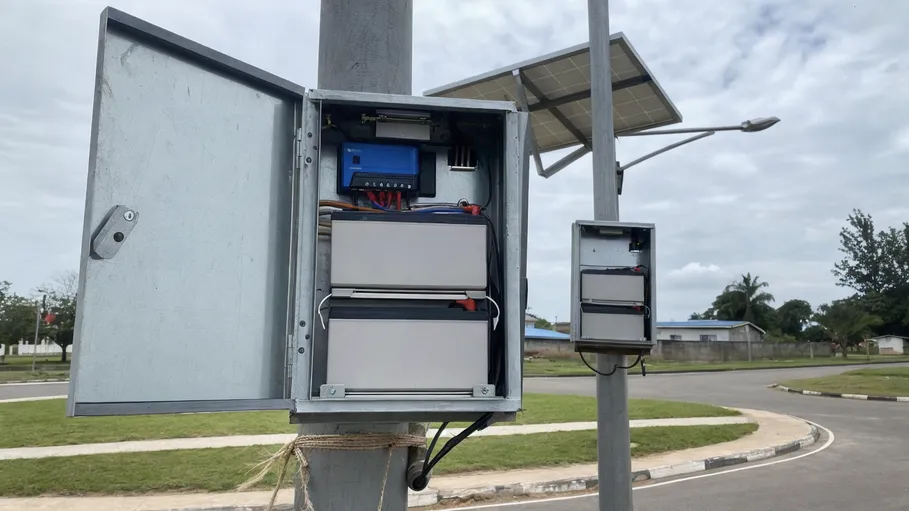
Municipal and project-based solar street lighting runs on recurring tender cycles — typically 500 to 5,000 units per phase. These tenders are cost-sensitive, and the battery is a consumable replacement item with a 3–5 year cycle.
AGM fits because:
- The sealed design eliminates maintenance in pole-mounted enclosures
- Upfront cost per unit keeps your bid competitive
- Replacement demand creates repeat orders
We ship 12V 20Ah through 12V 65Ah AGM units into street lighting programs across Africa and Southeast Asia.
Street lighting is one of our steadiest lead-acid segments — the reorder pattern is almost calendar-predictable once you're on a municipal supplier list.
Small Off-Grid Solar Kits
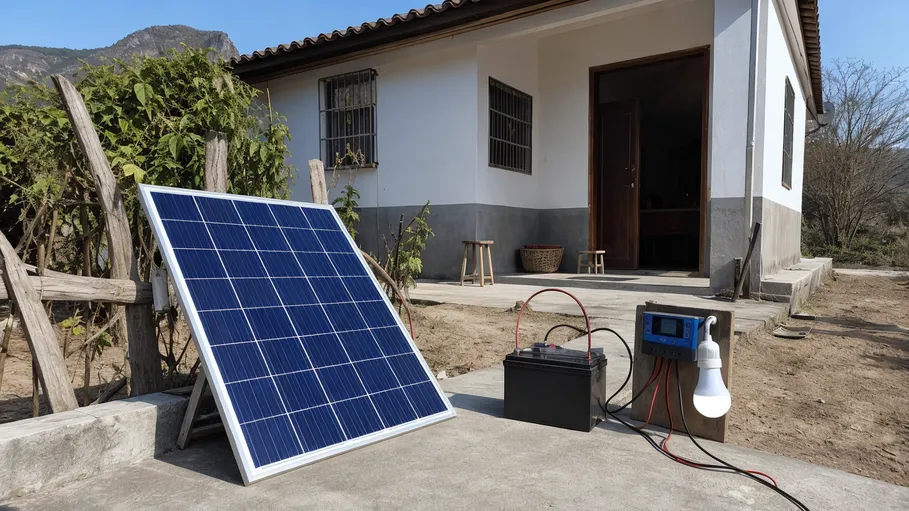
Rural electrification and solar home system distributors need a battery that ships affordably, installs without training, and matches the price point of a starter kit. AGM at 12V 50Ah–100Ah is the standard pairing for 100W–300W panel kits.
Your margin comes from bundling:
Panel, controller, battery, and wiring sold as a complete SKU. AGM's sealed construction means no acid handling instructions, no topping-up reminders, and no liability concerns for untrained end users.
Backup Power and Solar UPS Applications
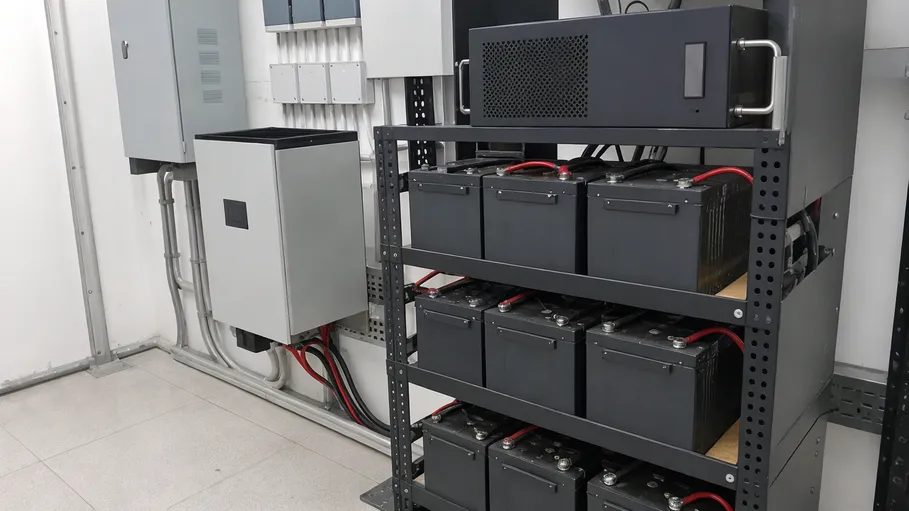
Standby duty is where AGM's float characteristics matter most. Low self-discharge and stable float voltage behavior mean the battery holds charge for weeks between grid outages without degradation.
If you supply solar-hybrid backup systems for small commercial sites — shops, clinics, telecom shelters — AGM gives you a lower-cost battery tier to offer alongside lithium options. The replacement cycle (every 3–5 years in standby service) creates built-in reorder demand.
Telecom, Monitoring, and Security Sites
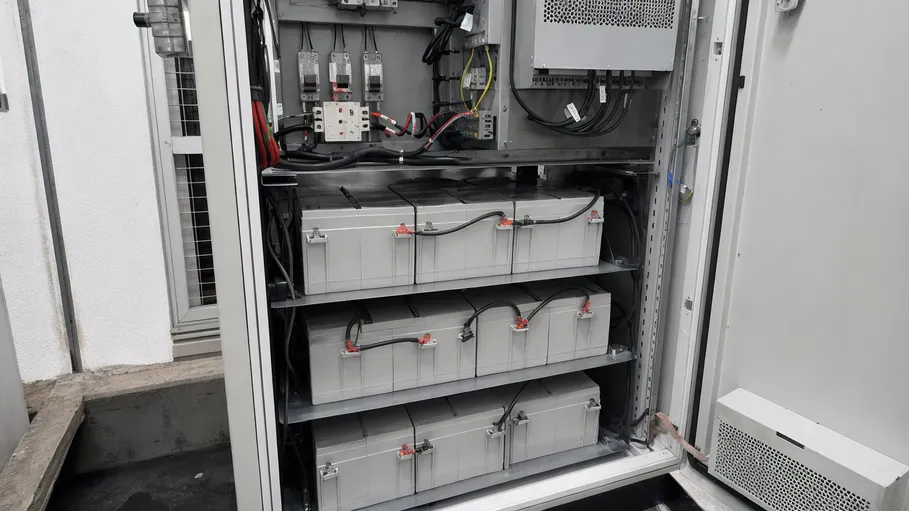
Telecom tower operators and security system integrators maintain thousands of battery sites with established lead-acid maintenance workflows. Switching an entire fleet to lithium requires new monitoring hardware, different charge profiles, and retraining.
AGM as a lead acid solar battery drops into existing infrastructure without system changes, so your sales cycle is shorter and your customer's switching cost is zero.
Send us your target market, application load, and autonomy hours — we'll recommend the right AGM model and quantity break.
Get AGM RecommendationAGM vs Gel vs LiFePO4 — Buying Boundaries for Your Channel
Choosing between AGM, gel, and lithium isn't a quality ranking — it's a channel fit decision. Each chemistry occupies a different price-performance position, and your margin depends on matching the right battery to the right buyer segment.
| Factor | AGM | Deep-Cycle Gel | LiFePO4 |
|---|---|---|---|
| Upfront unit cost | Lowest | Mid | Highest |
| Cycle life (50% DoD) | 400–600 | 700–1000 | 3000–5000+ |
| Usable capacity (practical DoD) | 50% | 60–70% | 80–90% |
| Float/standby performance | Excellent | Good | Good |
| Temperature tolerance (hot climates) | Moderate | Better | Best |
| Weight per kWh | Heaviest | Heavy | Lightest |
| Controller compatibility | Universal (any sealed setting) | Requires gel-specific setting | Requires lithium profile |
| Replacement market familiarity | Highest | High | Growing |
| Typical buyer segment | Cost-driven tenders, backup, replacement | Off-grid cycling, hot-climate projects | Premium residential, commercial storage |
When AGM Is Your Best Stock Decision
Your buyers prioritize lowest landed cost, need sealed maintenance-free handling, operate in standby/backup or moderate-cycle solar applications, or sell into markets where lead-acid replacement demand already exists.
AGM is also the simplest SKU to introduce — no special controller requirements, no BMS communication complexity, universal familiarity.
When Gel Makes More Sense
Your buyers sell into deeper-cycling off-grid applications or hot-climate markets where AGM's cycle life falls short. Gel tolerates higher ambient temperatures and delivers more usable cycles at 60–70% DoD.
See our deep cycle gel solar battery for deeper discharge programs or 12V gel solar battery for 100Ah and 150Ah catalog SKUs.
When Lithium Wins the Deal
Your buyers can sell the higher upfront cost on total-cost-of-ownership math — 5× the cycle life, 80–90% usable capacity, and half the weight. Commercial storage, premium residential, and weight-sensitive mobile applications justify the price gap.
We produce all three chemistries under one roof, so if your catalog spans multiple segments, you consolidate supply chain complexity into a single factory relationship.
View the full gel and AGM solar battery rangeLead-Acid Production Checks That Protect Batch Consistency
We've been manufacturing AGM and gel batteries for 13+ years. The process looks simple from the outside — plates, separators, electrolyte, case, seal — but the difference between a battery that holds spec across 1,000 units and one that drifts shows up in the production controls.
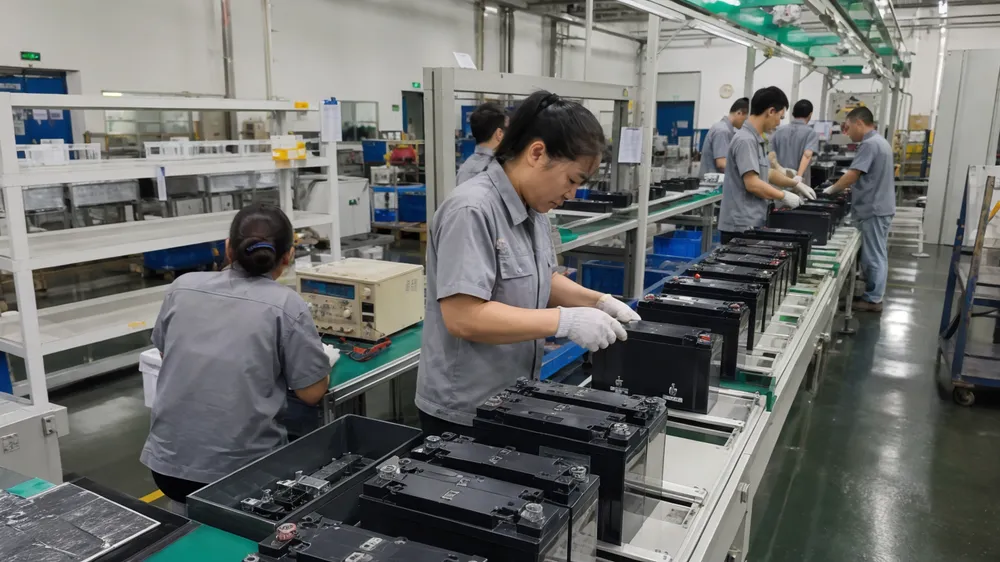
Incoming Plate and Material Inspection
Lead alloy composition, plate thickness, and active material paste density are checked against specification before plates enter the assembly area. We source from qualified suppliers with established tolerance records — switching plate suppliers mid-production is something we avoid because even small alloy variations affect formation charging behavior and long-term capacity retention.
Plate Group Assembly and Alignment
Plates and AGM separators are stacked under controlled compression. The separator must maintain consistent contact pressure against the plates — too loose and you get uneven electrolyte distribution; too tight and the separator compresses beyond its absorption capacity. We use fixed-pressure jigs calibrated per model to keep this within tolerance across every unit in a batch.
Electrolyte Filling and Absorption
AGM batteries rely on the separator absorbing a precise volume of acid. Overfill creates free electrolyte (which defeats the sealed design); underfill leaves dry spots that reduce capacity. We meter fill volume per cell and allow a controlled absorption period before sealing.
This step is where cheap AGM production cuts corners — rushing the absorption period is invisible at final test but shows up as premature capacity loss in the field.
Formation Charging and Aging
After sealing, each battery goes through a formation charge cycle that converts the active material into its working state. We then age batteries for a minimum period before final testing — this stabilizes the electrochemistry and reveals any units with internal defects that passed visual inspection.
Final Voltage and Internal Resistance Screening
Every unit is measured for open-circuit voltage and internal resistance before packing. Units outside the acceptance band are rejected, not downgraded. This screening is what ensures your 500-unit shipment arrives with consistent starting performance — no outliers that fail early and generate warranty claims.
Want to see our full factory layout and certifications?
Our manufacturing profile covers team structure, equipment, and QC documentation.
OEM/ODM Options, MOQ, and What Should Stay Standard
AGM solar batteries are mature products with well-established form factors, so customization focuses on branding, configuration selection, and packaging — not reinventing the cell chemistry.
| Customization Area | What's Available |
|---|---|
| Voltage | 12V standard; 6V available for specific applications |
| Capacity | 7Ah through 200Ah across standard tooling |
| Brand Label | Your logo, model number, specs, barcodes |
| Case Color | Black (standard), grey, blue, custom RAL on request |
| Terminal Type | F1, F2, M6 bolt, M8 bolt |
| Carton and Pallet | Custom carton print, pallet configuration, shipping marks |
| User Manual / Insert | Custom language, your brand, your contact details |
| Cable / Connector | Pre-attached cables with specific connectors |
Standard MOQ: 100 Units
For existing models with label customization. This lets you test a SKU in your market without container-level commitment.
What Should Stay Standard
Cell chemistry, plate alloy, separator material, and internal construction are fixed per model — these are validated through our formation and testing process and cannot be modified per order without a full re-qualification cycle. If you need a fundamentally different internal spec, that's an ODM development project with its own timeline and validation.
OEM Value for Your Business
Distributor labeling lets you build brand equity on a proven product. SKU consolidation across voltages and capacities from one factory simplifies your procurement. And if you're testing market entry in a new region, 100 units with your label is a low-risk way to validate demand before scaling.
Ready to discuss OEM/ODM solar battery programs?
Send us your target voltage, capacity, quantity, label requirements, and destination market. We'll confirm feasibility and pricing within 48 hours.
Export Documents, Battery Packaging, and Reorder Logistics
Lead-acid batteries are regulated for transport but not classified as dangerous goods for sea freight in the same category as lithium — which simplifies your import logistics. Still, proper documentation and packaging prevent delays.
Documentation We Provide Per Shipment
-
UN38.3 test summary — required by carriers for battery shipments
-
MSDS / SDS — material safety data sheet for customs and warehouse compliance
-
CE declaration of conformity — for European market entry
-
IEC 62133 test report — available for applicable models; confirm by SKU
-
Commercial invoice, packing list, and bill of lading — with correct HS codes
Not every model carries every certification — we'll confirm which documents apply to your specific SKU selection before order confirmation. No overclaiming.
Packaging for Export Survival
AGM batteries are heavy relative to their size. Our standard export packaging uses reinforced corrugated cartons with internal dividers, shrink-wrapped onto fumigation-free pallets.
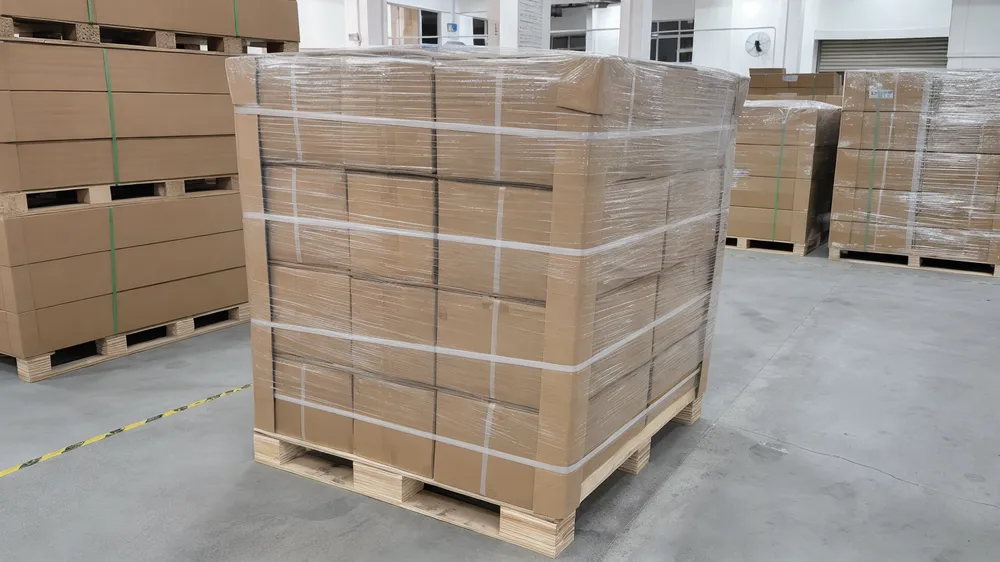
Stacking Strength
Carton burst strength rated for stacking 4–5 layers in a container without compression damage.
Rough-Route Upgrade
For African and South American inland routes where handling is rougher, we add corner protectors and double-wall cartons — a small cost addition that prevents damage claims.
Reorder Consistency
Once your first order ships, we lock your model label, carton marks, pallet configuration, and batch documentation format.
Reorders match the first shipment exactly — your warehouse team receives the same product in the same packaging every time.
Batch traceability codes link each carton to production date and QC records, so if a field issue surfaces, we can trace it to the specific production run.
For solar battery certification documents or battery shipping and delivery support, reach out with your destination country and we'll confirm the document package required for your customs process.
AGM Solar Battery FAQ for Procurement Decisions
Technical and commercial answers for wholesale buyers evaluating AGM battery programs.
What is the difference between AGM and gel solar batteries for wholesale programs?
AGM uses fiberglass mat separators under compression; gel uses silica-mixed electrolyte in a thixotropic state. Practically, AGM offers lower internal resistance (better for high-current discharge and standby float), lower unit cost, and faster recharge acceptance. Gel offers better deep-cycle tolerance and performs more consistently in sustained high-temperature environments.
Stocking Guidance:
Stock AGM for backup, street lighting, and cost-driven replacement channels. Stock gel for off-grid cycling and tropical markets where deeper discharge is the norm.
Is an AGM solar battery suitable for deep-cycle off-grid use?
AGM handles moderate cycling — 400 to 600 cycles at 50% depth of discharge is typical. For daily solar cycling at 50% DoD, that translates to roughly 1.5–2 years of service life.
If your end customers cycle daily and expect 3+ years from a battery, gel or lithium is the better recommendation.
AGM's sweet spot: standby-dominant applications with occasional cycling, or cost-sensitive markets where replacement frequency is accepted as part of the operating model.
What charge settings should buyers confirm for AGM solar batteries?
Cyclic Charge
14.4–14.7V
per 12V unit at 25°C
Float Voltage
13.5–13.8V
per 12V unit
Temp Compensation
-3mV/°C
per cell (~-18mV/°C per 12V)
Confirm that your customer's solar charge controller has a "sealed" or "AGM" battery type setting — most PWM and MPPT controllers manufactured in the last decade include this.
Warning: Incorrect charge voltage (particularly gel settings applied to AGM) results in chronic undercharge and premature sulfation.
How does temperature affect AGM VRLA battery life?
Every 10°C above 25°C roughly halves the design life of a lead-acid battery. At 35°C continuous ambient, a battery rated for 8-year design life at 25°C will deliver approximately 4 years.
For Tropical Markets:
- Specify slightly oversized capacity to reduce DoD per cycle
- Ensure ventilation in battery enclosures
We can recommend temperature-appropriate models based on your installation environment — send us the expected ambient range.
Can AGM batteries be connected in series or parallel for solar systems?
Yes. Series connection (e.g., 2×12V = 24V) is standard and requires no additional electronics — just matched batteries from the same production batch. Parallel connection (up to 4 strings) increases capacity while maintaining voltage.
Key Requirement:
All batteries in a bank must be the same model, same capacity, same age, and ideally from the same production batch. We can ship matched sets with sequential serial numbers for your bank installations.
Important: Mixing old and new batteries in parallel is the single most common cause of premature failure in lead-acid solar banks — worth communicating to your end customers.
What is the MOQ for EVANBattery AGM solar battery orders?
Standard Models
100 units
with label customization, any single voltage/capacity combination
Custom Case Colors
500 units
minimum for custom case color production
If you need multiple SKUs (e.g., 12V 50Ah + 12V 100Ah + 12V 150Ah), each SKU carries its own 100-unit minimum, but they ship in the same container.
Sample orders: 2–5 units are available for product evaluation before committing to production quantities.
Quote Path for AGM Solar Battery Programs
You've read the specs, checked the application fit, and confirmed AGM is the right chemistry for your channel. Here's what we need to build your quote:
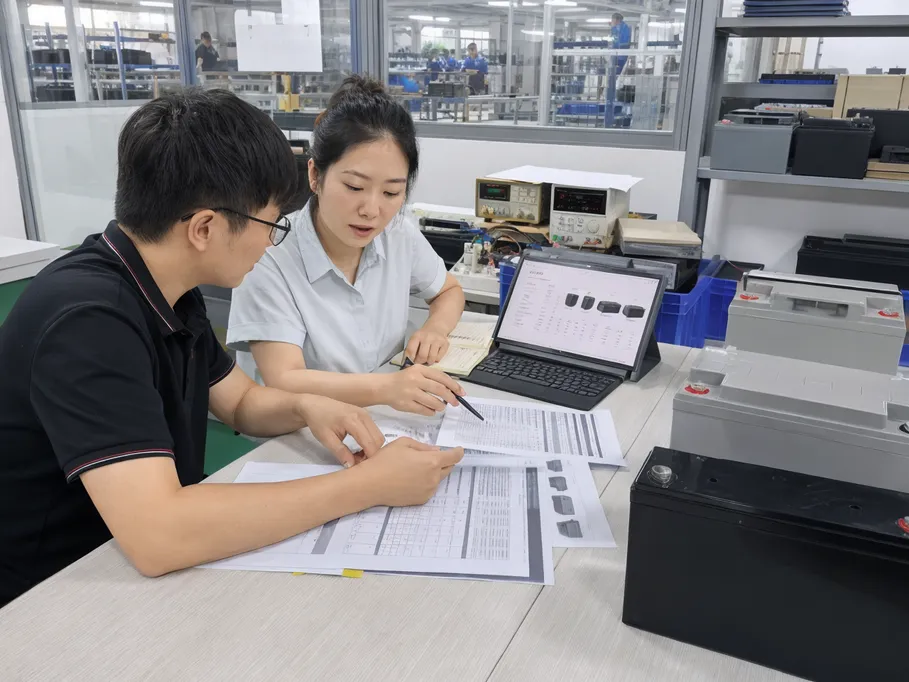
Send these details to evan@evanbattery.com or submit an RFQ. We respond with a technical recommendation and FOB pricing within 48 hours.
If you're evaluating multiple chemistries (AGM + gel + lithium), send the full list — we'll quote all options from one factory so you can compare landed costs side by side.
Explore Related Products
Other sealed lead-acid solar batteries from EVANBattery