

LiFePO4 Solar Battery Wholesale Supply
LiFePO4 solar battery packs in 12V, 24V, and 48V configurations — manufactured, tested, and export-ready from our own production lines.
Automated cell sorting, in-house BMS design, and full lifecycle testing on every batch. Your repeat orders ship consistent.
Dedicated LiFePO4 Solar Battery Manufacturer
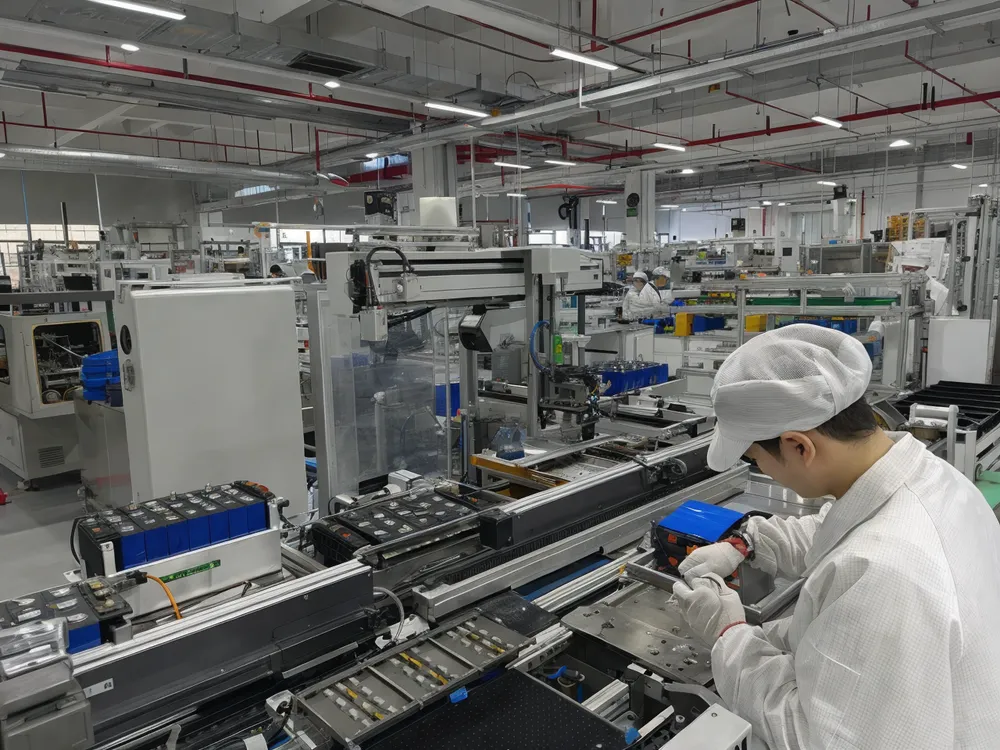
EVANBattery is a LiFePO4 solar battery manufacturer based in Zhongshan, Guangdong. We produce lithium iron phosphate battery packs — 12.8V, 25.6V, and 51.2V — for distributors, solar project contractors, and OEM partners who need repeatable wholesale supply rather than one-off consumer units.
Our 9,900 m² facility runs 6 dedicated lines with 150 employees, producing up to 2,000,000 battery units annually.
We've been building solar batteries since 2012. The first few years were lead-acid for African off-grid markets. When lithium demand grew, we invested in automated cell sorting equipment, built a BMS engineering team, and expanded into LiFePO4 pack production. Today, lithium packs account for the majority of our output — and the process maturity from 13+ years of solar-only manufacturing shows up in batch consistency and fewer field returns for our buyers.
Automated Cell Sorting
Every cell graded by internal resistance and capacity before pack assembly — consistent performance across batches.
In-House BMS Design
Our own BMS engineering team designs protection circuits matched to each pack configuration — not generic off-the-shelf boards.
Full Lifecycle Testing
Every batch undergoes charge/discharge cycling, thermal stress, and safety validation before shipment clearance.
Repeat Order Consistency
13+ years of solar-only manufacturing process maturity means fewer field returns and predictable quality across your reorders.
12.8V · 25.6V · 51.2V LiFePO4 Packs
Manufactured for distributors, solar project contractors, and OEM partners who need repeatable wholesale supply.
12.8V Series
Residential off-grid, small solar home systems, telecom backup. Drop-in replacement for lead-acid installations.
25.6V Series
Mid-scale residential, commercial solar storage, and hybrid inverter systems requiring higher voltage bus.
51.2V Series
Commercial and industrial solar projects, high-capacity rack-mount systems, and utility-scale modular storage.
Match 12V, 24V, and 48V Packs to the Market You Sell Into
Choosing the right voltage tier determines your inverter compatibility, your support burden, and whether inventory moves or sits. Here's how our three standard voltage platforms map to commercial applications:
| Nominal Voltage | Actual Pack Voltage | Typical Capacity Range | Primary Commercial Use |
|---|---|---|---|
| 12V (12.8V) | 12.8V (4S) | 50Ah – 200Ah | Lead-acid replacement programs, small solar home kits, portable power, marine |
| 24V (25.6V) | 25.6V (8S) | 50Ah – 200Ah | Mid-size off-grid systems, 24V inverter programs, telecom backup |
| 48V (51.2V) | 51.2V (16S) | 100Ah – 300Ah | Residential hybrid inverter systems, commercial rack-mount storage, microgrid |
12V LiFePO4 Solar Battery
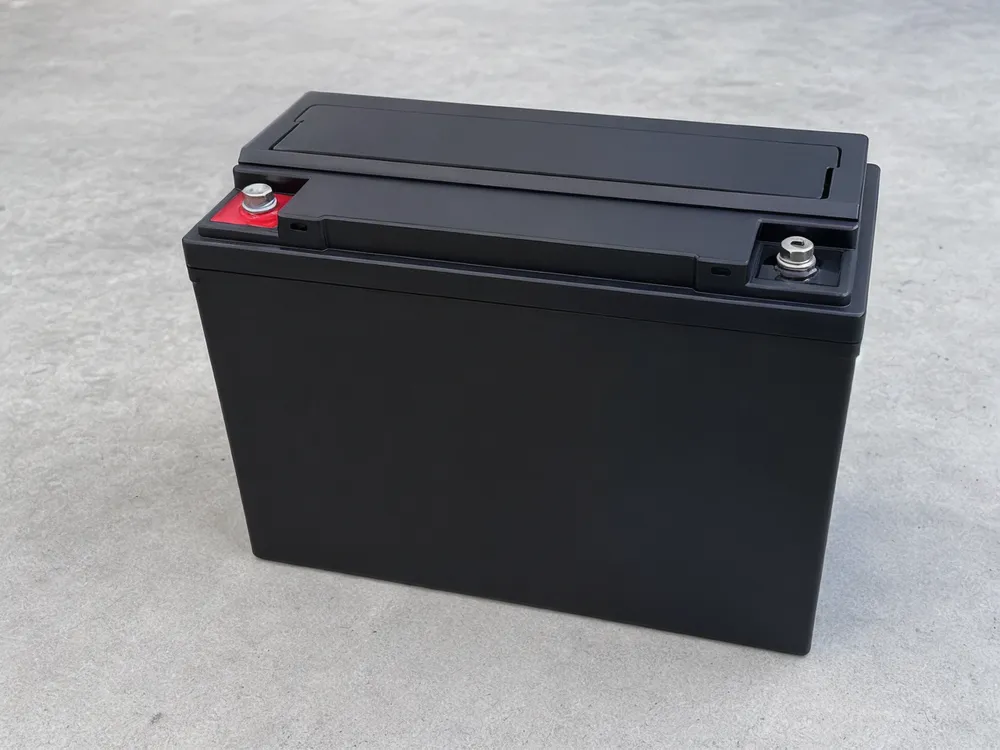
The 12V LiFePO4 solar battery is the volume mover for distributors serving the lead-acid replacement market. Your customers already have 12V inverters and charge controllers — a drop-in 12.8V LiFePO4 pack gives them 3–5× the cycle life without rewiring. We build these with the same terminal layout and dimensions as standard lead-acid batteries where possible, so your downstream buyers don't need new cables or brackets.
This is the single most common request we get from African and Southeast Asian distributors — they want lithium performance in a lead-acid form factor.
A 12V lithium ion solar battery program works well when you're selling into price-sensitive markets that are upgrading gradually. The per-unit cost is higher than gel or AGM, but the total cost of ownership argument sells itself once your customers see the cycle-life difference.
24V LiFePO4 Solar Battery
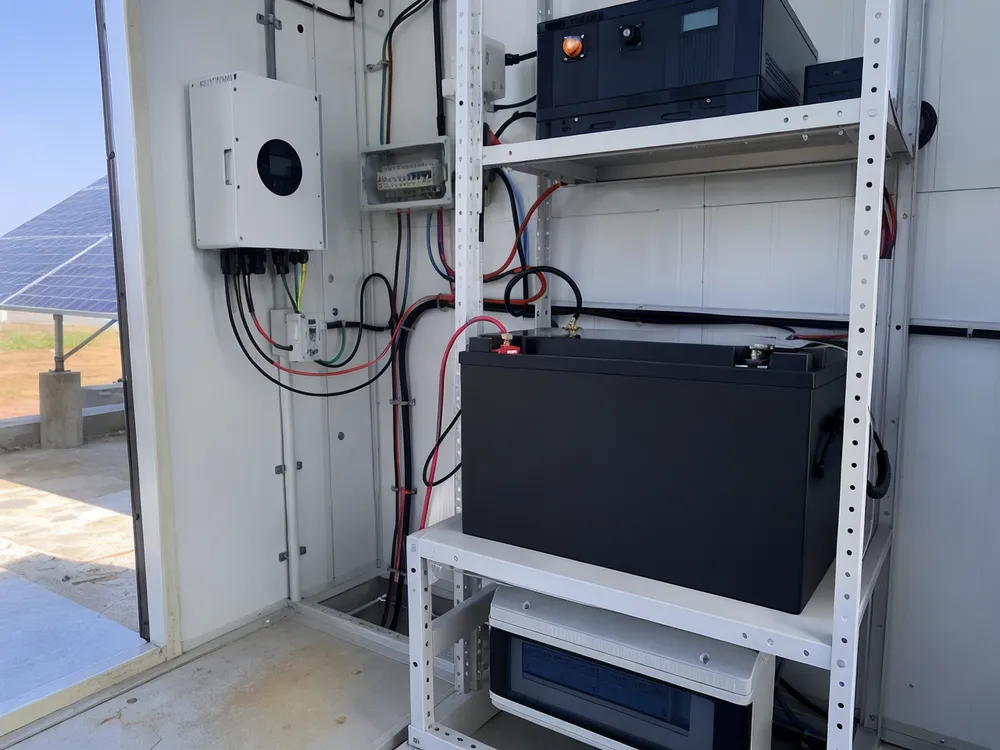
The 24V LiFePO4 solar battery sits in the middle ground — enough voltage for efficient inverter operation on systems up to 3–5kW, without the higher cell count and BMS complexity of 48V. Off-grid solar home systems in rural markets, small commercial installations, and telecom sites are the primary segments. If your buyers run 24V PWM or MPPT controllers, this is the pack that matches without conversion losses.
48V LiFePO4 Solar Battery
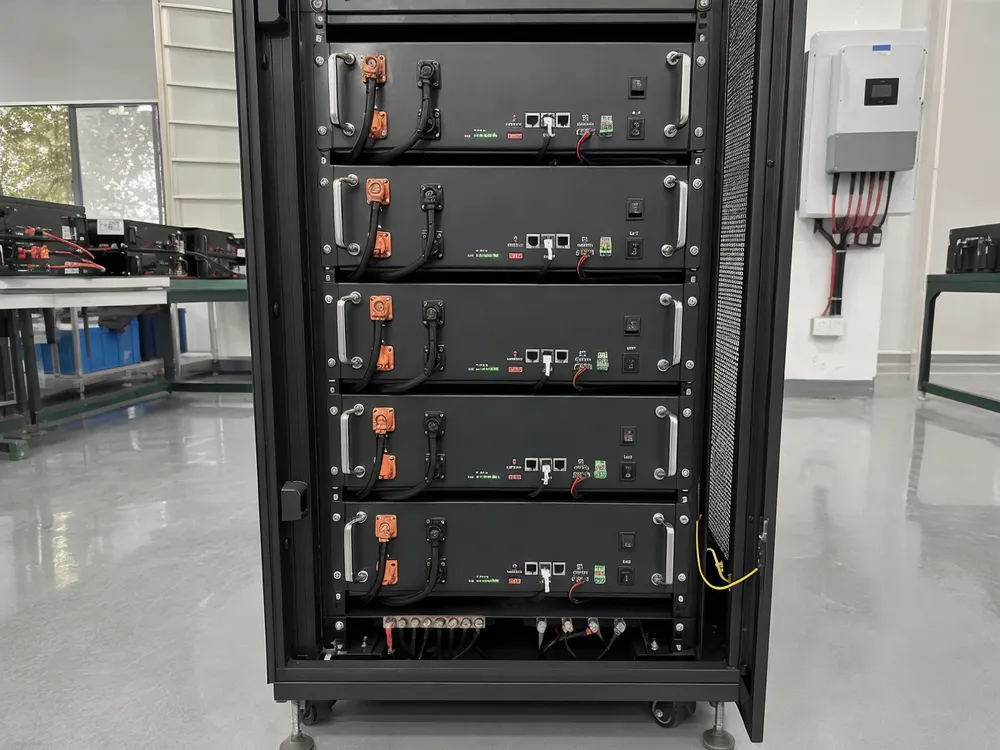
The 48V LiFePO4 solar battery is where residential and commercial storage converge. Most modern hybrid inverters — Deye, Growatt, Victron, Goodwe, SolaX — run on 48V/51.2V battery input. If you supply installers or run project tenders, this is the configuration that matches the equipment they're already specifying.
We produce both floor-standing and rack-mount enclosures at 51.2V, with communication protocols (RS485, CAN bus) matched to specific inverter brands.
The right voltage choice eliminates dead inventory and support calls.
Send us your target inverter model, system voltage, capacity requirement, and quantity — we'll confirm compatibility and quote accordingly.
Specification Matrix for Procurement Comparison
The table below covers the standard specification range across our lifepo4 solar battery product line. Exact values depend on the specific model and configuration — contact us with your requirements for a detailed product data sheet.
| Parameter | 12.8V Series | 25.6V Series | 51.2V Series |
|---|---|---|---|
| Nominal Voltage | 12.8V | 25.6V | 51.2V |
| Cell Configuration | 4S | 8S | 16S |
| Cell Chemistry | LiFePO4 (lithium iron phosphate) | LiFePO4 | LiFePO4 |
| Typical Capacity | 50Ah, 100Ah, 150Ah, 200Ah | 50Ah, 100Ah, 150Ah, 200Ah | 100Ah, 200Ah, 280Ah |
| Usable Energy (typical) | 0.64 – 2.56 kWh | 1.28 – 5.12 kWh | 5.12 – 14.3 kWh |
| Cycle Life (80% DOD) | ≥3,000 cycles (standard) / ≥6,000 cycles (Grade A) | ≥3,000 / ≥6,000 cycles | ≥3,000 / ≥6,000 cycles |
| Max Continuous Discharge | 50A – 200A (model-dependent) | 50A – 100A | 50A – 100A |
| BMS Protection | Over-charge, over-discharge, over-current, short-circuit, temperature | Same | Same |
| Communication Options | None (basic) / Bluetooth / RS485 | Bluetooth / RS485 | RS485 / CAN bus / Bluetooth |
| Operating Temperature | Charge: 0°C to 55°C / Discharge: -20°C to 60°C | Same | Same |
| Enclosure Options | Metal case, plastic case, wall-mount, floor-standing | Metal case, wall-mount | Rack-mount (19"), floor-standing, wall-mount |
| Certifications | CE, IEC 62133, UN38.3, MSDS | CE, IEC 62133, UN38.3, MSDS | CE, IEC 62133, UN38.3, MSDS |
Specifications shown are standard values across our current production models. Actual specifications vary by SKU. Contact us for detailed product data sheets matching your voltage, capacity, and inverter requirements.
This data is structured so you can drop it directly into a procurement comparison sheet or project proposal. If you need a specific combination not listed — say a 25.6V 280Ah for a particular off-grid inverter — we configure custom packs through our OEM program.
Send your target specs: voltage, Ah or kWh, inverter brand, communication protocol, and destination country. We'll respond with a model recommendation and lifepo4 solar battery wholesale pricing within 48 hours.
Request a Detailed Quote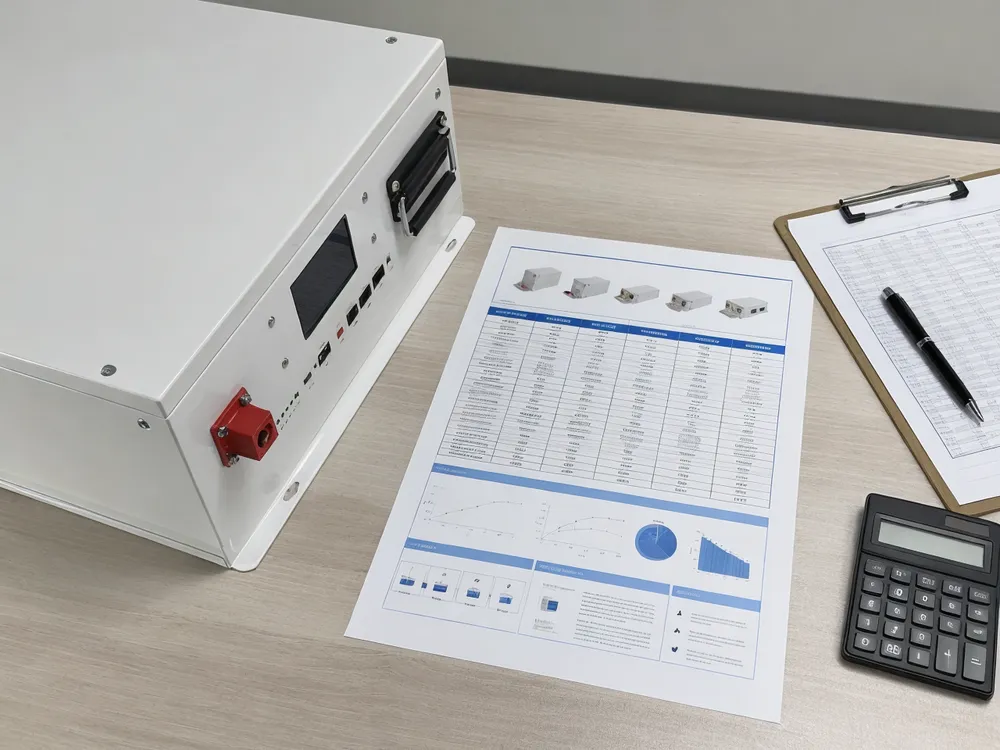
Cell Matching and BMS Control That Protect Your Repeat Orders
The difference between a battery that performs consistently across a 500-unit batch and one that drifts apart after six months in the field comes down to two things: how tightly cells are matched before assembly, and how precisely the BMS manages them afterward. This is where our process as a lifepo4 solar battery manufacturer directly affects your warranty exposure.
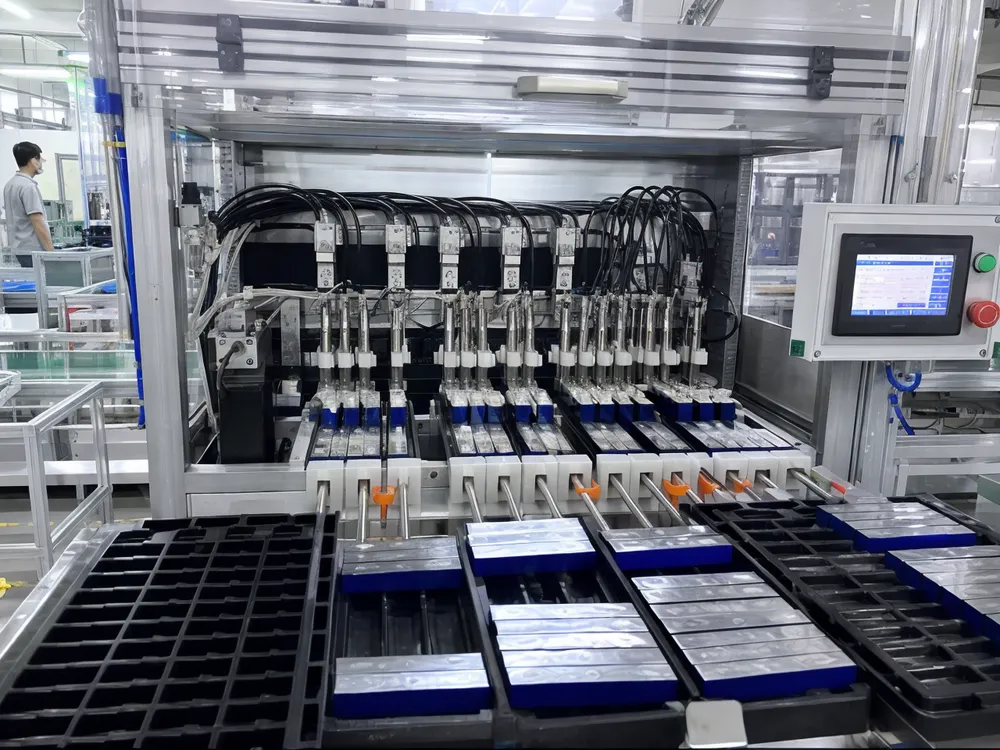
Automated Cell Sorting
Every cell entering our production line goes through automated sorting by three parameters: open-circuit voltage, internal resistance, and actual measured capacity. We group cells within 20mV voltage variance and 5mΩ resistance variance per pack. This isn't the supplier's label data — it's our own measurement on calibrated equipment after incoming inspection.
Why this matters commercially: tight cell matching means every cell in a pack charges and discharges at nearly the same rate. Loose matching causes the weakest cell to hit protection limits first, reducing usable capacity and triggering early BMS shutdowns. Over hundreds of cycles, mismatched packs degrade unevenly — and that's when your warranty claims start.
We've tracked this correlation across thousands of packs shipped since 2016. The tighter the sort window, the lower the field return rate. Our current reject rate at incoming inspection runs 3-5% depending on the cell supplier's batch — those cells go back, not into a lower-tier product.
In-House BMS Design and Programming
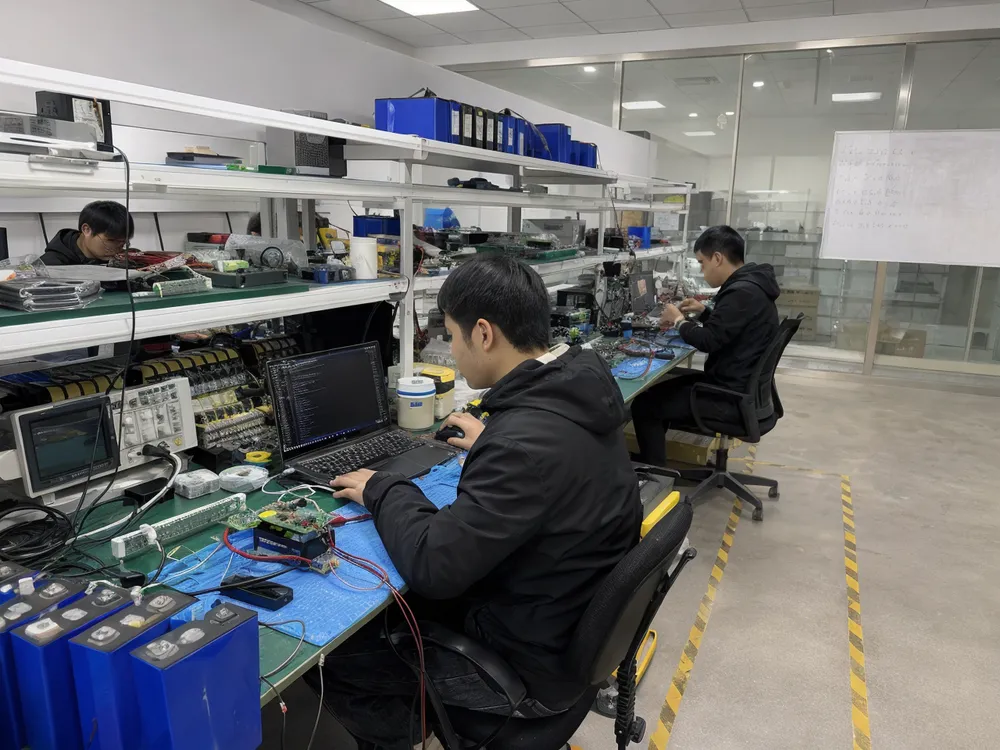
We design and manufacture BMS boards internally rather than buying generic third-party modules. Our 18+ engineers handle hardware layout, firmware development, and protection parameter tuning for each specific cell configuration. A 12.8V 100Ah pack with Grade A cells gets different charge voltage limits, balance current thresholds, and temperature cutoffs than a 51.2V 200Ah rack unit — because the thermal behavior and cell stress profiles are different.
For buyers integrating with specific hybrid inverters, we program communication protocols (RS485, CAN bus) to match the inverter's battery management interface. Deye, Growatt, Victron, and Goodwe each expect slightly different data frames and polling intervals. We maintain protocol libraries for the major brands and can adapt to new inverter models within a development cycle.
Full Lifecycle Testing on Every Production Batch
Every batch goes through capacity verification, charge/discharge cycling, high-temperature soak at 55°C, low-temperature discharge at -20°C, and safety testing (vibration, drop, nail penetration on sample basis). This happens before shipment, not just during initial type approval.
The test data travels with the batch — if you need test reports for your own QC records or customer documentation, we provide them.
Learn More About Our Manufacturing ProcessMarket Segments Where LiFePO4 Solar Batteries Hold Margin
Every application below represents a commercial segment where your lifepo4 solar battery wholesale program can build recurring revenue. We've shipped into all of these markets and can advise on which configurations move fastest in each.
Distributors Building a Lithium Solar Battery Catalog
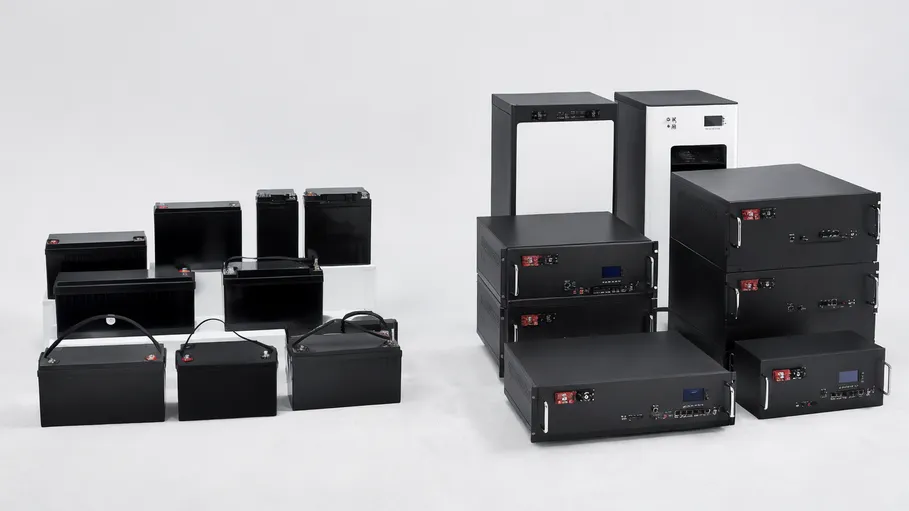
If you currently carry lead-acid solar batteries and want to add lithium SKUs, a 12v lifepo4 solar battery and a 48v lifepo4 solar battery cover the two highest-demand tiers. The 12V captures upgrade buyers who already own 12V systems. The 48V captures new installations going directly to lithium with modern hybrid inverters.
Most of our distributor partners start with 3–5 SKUs across these two voltages, then expand into 24V and higher-capacity models based on what their market pulls.
Margin advantage: The margin structure on LiFePO4 is stronger than lead-acid because the product carries a technology premium your customers accept — they're buying cycle life and weight savings, not commodity amp-hours. Your per-unit margin is higher even at competitive retail pricing.
Installers and Contractors Supplying Residential Storage Projects
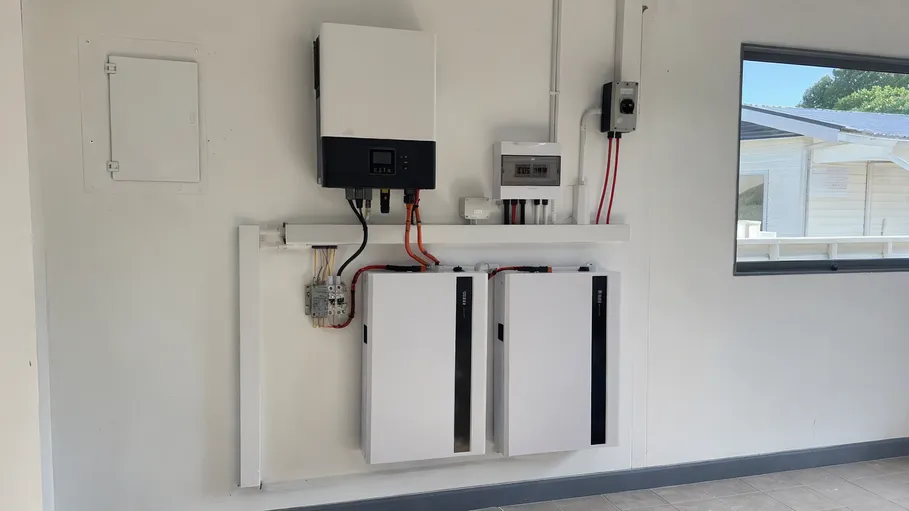
Residential solar-plus-storage projects typically spec 48V/51.2V LiFePO4 packs paired with hybrid inverters. If you supply installers, your value proposition is confirmed inverter compatibility, available stock, and documentation that passes inspection.
We pre-configure BMS communication for the inverter brands your installers use, so the battery integrates without firmware troubleshooting on site.
Off-Grid Solar Projects in Emerging Markets
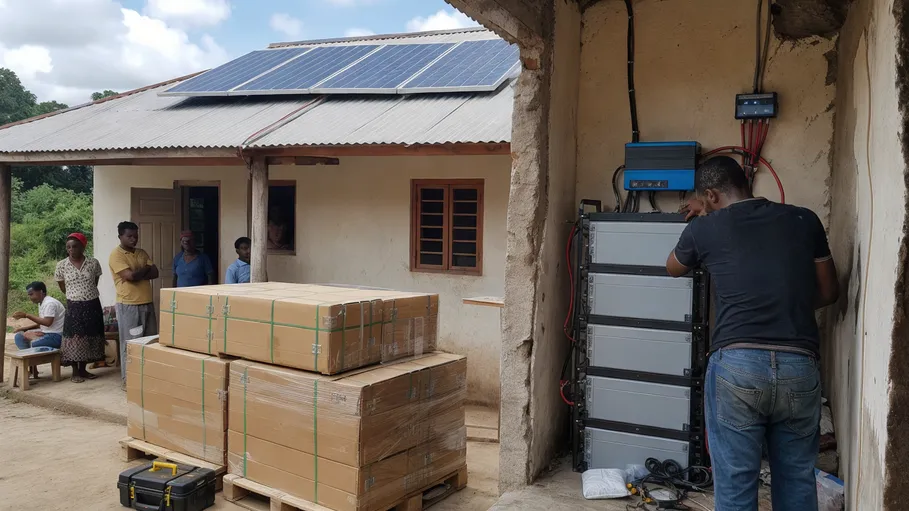
Africa, Southeast Asia, and rural South America remain strong growth segments for off-grid solar. The typical order pattern: 12V or 24V LiFePO4 packs for solar home systems, bundled with charge controllers.
Volume runs from 200-unit pilot deployments to 5,000+ unit NGO or government tenders. We reinforce packaging for overland logistics and provide all dangerous goods documentation for port clearance.
The African off-grid market is where we started in 2012 — we understand the logistics chain and the durability requirements for inland distribution.
Telecom, Microgrid, and Commercial Backup
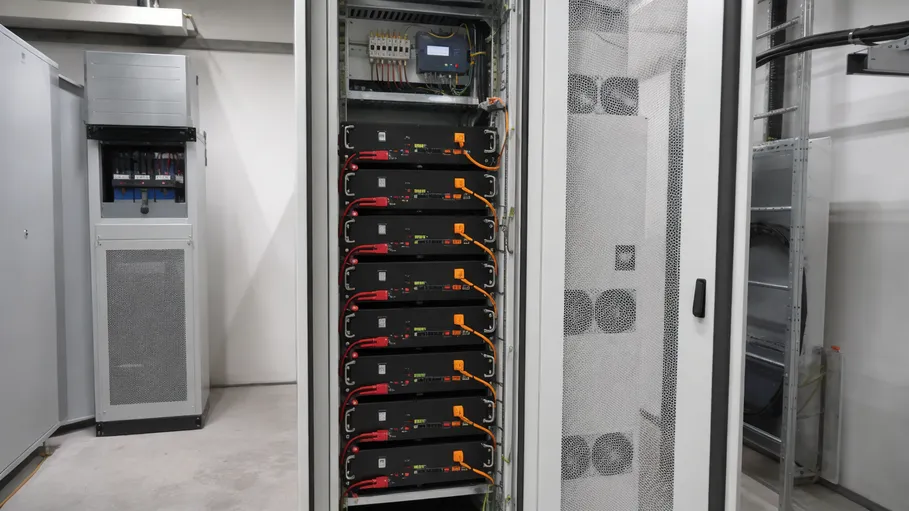
Telecom tower backup and community microgrids need deep-cycle batteries that tolerate daily cycling at high ambient temperatures. 48V LiFePO4 rack-mount configurations with RS485 monitoring fit standard telecom cabinet infrastructure.
The reorder cycle is predictable — towers need battery replacement on a 5–8 year schedule, and once you're qualified as a supplier, the repeat business is stable.
OEM/ODM Options With Clear MOQ Boundaries
Standard models in our catalog start at 100 units MOQ — deliberately low so you can test a SKU with your customers before committing to container volumes. For lifepo4 solar battery wholesale orders on standard configurations, lead time runs 15–25 days depending on current line loading.
What You Can Customize
| Customization Dimension | Standard (100-unit MOQ) | Custom (MOQ varies) |
|---|---|---|
| Voltage | 12.8V, 25.6V, 51.2V | Any series/parallel configuration your application requires |
| Capacity | Standard Ah options per voltage tier | Custom Ah based on cell selection |
| Enclosure | Existing metal/plastic case designs | Custom dimensions, material, color (tooling may apply above 500 units) |
| Branding | EVANBattery label or neutral | Your logo, label design, color scheme, packaging artwork |
| BMS Parameters | Standard protection thresholds | Custom charge/discharge limits, balance current, temperature cutoffs |
| Communication Protocol | RS485, CAN, Bluetooth (standard options) | Custom protocol matching for specific inverter brands |
| Certification Scope | CE, IEC 62133, UN38.3 (existing reports) | Additional market certifications (UL, BIS, INMETRO) — we support the application process |
| Packaging | Standard carton with foam insert | Custom retail box, pallet configuration, FBA-ready labeling |
What Requires Engineering Validation
A label swap on an existing model is straightforward at 100 units. A new cell configuration — say a 25.6V 280Ah with a non-standard enclosure and custom CAN protocol for a specific inverter — requires our engineering team to validate the design, program the BMS, and run qualification testing.
We'll tell you the MOQ threshold and timeline upfront so you can plan landed cost accurately.
Typical Custom Development Cycle
20–30 days for engineering samples, then production lead time on confirmed orders.
18 Engineers — Full Scope In-House
- Cell arrangement design
- BMS hardware and firmware
- Thermal simulation
- Enclosure mechanical design
- Protocol integration
You don't need to source BMS separately or coordinate between multiple suppliers.
Ready to Scope Your Custom Configuration?
Send us your target voltage, capacity, branding requirements, inverter compatibility needs, and estimated annual volume. We'll respond with a feasibility assessment, MOQ, and timeline.
Compliance, Packing, and Export Documents Before the Container Moves
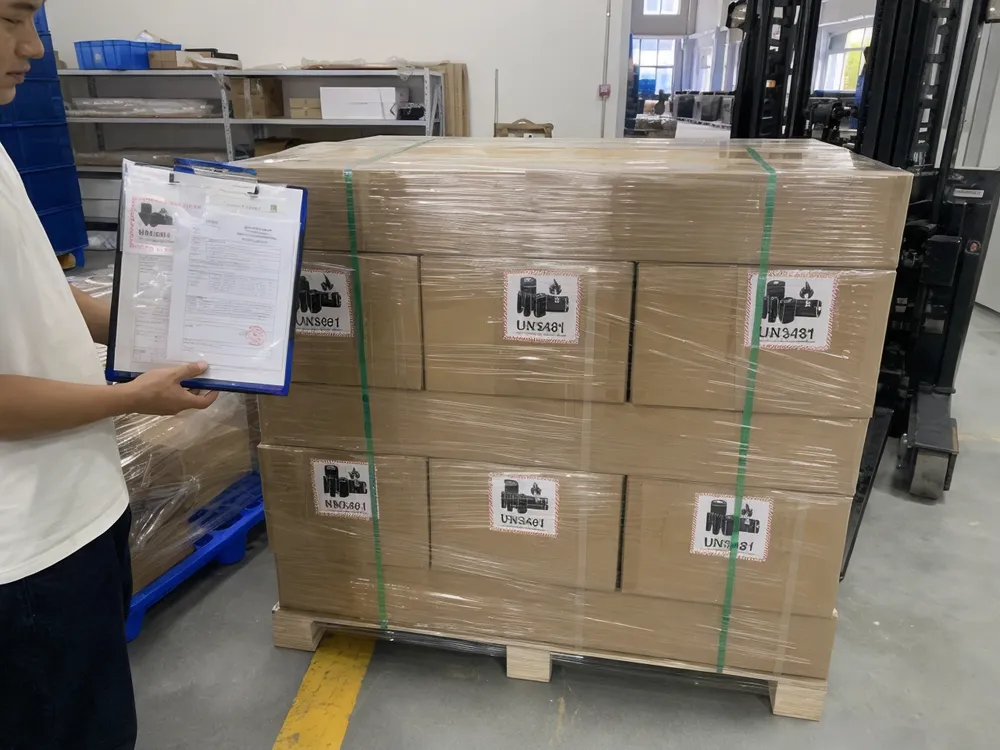
Lithium batteries are classified as dangerous goods for international transport. Missing or incorrect documentation means port delays, rejected shipments, or fines. We handle this routinely — every lifepo4 solar battery order ships with the paperwork your freight forwarder and customs broker need.
Certifications and Test Reports Available
| Certification / Document | Purpose |
|---|---|
| ISO 9001:2015 Manufacturing management system | Batch-to-batch consistency, traceability, corrective action |
| CE Product safety (EU market) | Required for EU import and distribution |
| IEC 62133 Secondary lithium cell and battery safety | Product safety standard for portable and stationary batteries |
| UN38.3 Transport safety testing | Required for air and sea freight of lithium batteries |
| MSDS (SDS) Material safety data | Required by freight carriers and customs authorities |
Additional certifications: For markets requiring UL (North America), BIS (India), INMETRO (Brazil), or others — our engineering team provides test samples, technical documentation, and coordinates with accredited test laboratories. We've been through this cycle for multiple regions and know which labs are efficient for each certification type.
Packaging and Palletization
Standard Packing
Individual battery in foam-lined carton, batteries palletized with corner protectors and stretch wrap. For wholesale orders, we optimize carton dimensions to maximize container loading efficiency — maximum units per 20GP or 40HQ without exceeding weight limits for lithium shipments.
Labeling & Documentation
All outer cartons marked with UN3481 lithium battery labels, handling instructions, and your reference numbers. Packing lists, commercial invoices, and dangerous goods declarations prepared to match your destination country's import requirements.
Special Requirements
Blind shipping, neutral packaging, or FBA-ready labeling for e-commerce distribution — all accommodated within the standard packing process. Tell us your destination country and required certification files.
Why DG format matters: Getting the dangerous goods declaration format right the first time saves 3–5 days at port. Different carriers have slightly different form requirements — we keep templates for the major shipping lines so your shipment clears without rework.
Choose the Right EVANBattery Lithium Storage Page
This page covers LiFePO4 solar battery packs by voltage, capacity, and OEM configuration — the right starting point if you're selecting lifepo4 solar battery SKUs for wholesale or project supply.
If your inquiry is more specific or broader, these pages may serve you better:
Lithium Solar Battery Series
Our full lithium solar battery category overview, covering both LiFePO4 packs and integrated storage systems. Start here if you're evaluating our complete lithium product range.
Solar Battery Energy Storage Solutions
For buyers looking at complete energy storage systems rather than standalone battery packs. Covers system-level integration, inverter pairing, and multi-battery configurations.
48V LiFePO4 Solar Battery
If you've already decided on 48V/51.2V and want deeper detail on rack-mount configurations, commercial storage applications, and 48V-specific BMS options.
You're in the right place when you need to compare across voltage tiers (12V vs 24V vs 48V), understand our cell matching and BMS process, or scope an OEM/ODM program for LiFePO4 packs. If you're ready to move forward, the RFQ checklist below gives us everything we need to quote accurately.
Procurement FAQ for LiFePO4 Solar Battery Orders
Direct answers to the voltage, compatibility, and system-matching questions procurement teams ask before placing orders.
What voltage should I choose for a LiFePO4 solar battery program?
Match the voltage to your end market's installed inverter base. If your customers run 12V PWM controllers and small off-grid kits, stock 12.8V packs. If they're installing modern hybrid inverters (Deye, Growatt, Victron, Goodwe), those systems expect 48V/51.2V input — stock accordingly.
24V sits in the middle for legacy off-grid systems running 24V MPPT controllers.
The wrong voltage choice creates dead inventory and support overhead.
Send us your target market and inverter ecosystem — we'll recommend the voltage mix that matches actual demand patterns.
Is a 12V LiFePO4 solar battery a direct replacement for a 12V lead-acid solar battery?
Electrically, yes — a 12.8V LiFePO4 pack works with most 12V solar charge controllers and inverters designed for lead-acid. The charge voltage profile is slightly different (14.6V absorption vs 14.4V for AGM), so the charge controller needs a lithium setting or adjustable voltage parameters.
We design our 12V LiFePO4 solar battery packs with compatible terminal layouts and similar dimensions to standard lead-acid cases where possible. The BMS handles the protection that lead-acid chemistry provides inherently (over-discharge, over-charge), so the system operates safely even with basic controllers.
One caveat: some very old PWM controllers without low-voltage disconnect may not pair well — check the controller's LVD setting against our BMS cutoff voltage.
What BMS functions should a solar LiFePO4 battery include?
At minimum: over-charge protection, over-discharge protection, over-current protection, short-circuit protection, and high/low temperature cutoff. For 48V systems paired with hybrid inverters, add communication capability (RS485 or CAN bus) so the inverter can read SOC, cell voltages, and temperature data.
Balance function is essential — active or passive balancing keeps cells equalized over thousands of cycles. We include all of these as standard on our packs.
The specific protection thresholds (cutoff voltages, current limits, temperature windows) are programmed per model based on the cell grade and target application.
What certifications are needed for importing LiFePO4 solar batteries?
UN38.3 and MSDS are mandatory for international transport — without them, your shipment won't clear the carrier's dangerous goods desk. CE is required for EU market distribution. IEC 62133 covers product safety testing.
Beyond these baseline documents, specific markets may require additional certification:
We maintain current UN38.3, MSDS, CE, and IEC 62133 documentation for all standard models. For additional market certifications, our engineering team supports the application process with test samples and technical data packages.
What is the MOQ for wholesale LiFePO4 solar battery orders?
100 units for standard models — any voltage and capacity combination in our existing catalog. This lets you test a SKU with your customers before scaling to container volumes.
For OEM/ODM orders with custom branding, modified BMS parameters, or new enclosure designs, MOQ depends on the scope of customization:
| Customization Scope | Typical MOQ |
|---|---|
| Simple label change | 100 units |
| Fully custom cell configuration with new tooling | 300–500 units |
We quote the exact MOQ with every custom inquiry so you can calculate landed cost before committing.
Can EVANBattery customize voltage, capacity, and communication protocols?
Yes. Our in-house engineering team handles custom voltage configurations (any series/parallel arrangement), capacity selection based on available cell options, and BMS communication protocol programming.
If you need a 25.6V 150Ah pack with CAN bus communication matched to a specific Victron or Deye inverter model, we configure and validate that as a standard OEM service.
Custom development typically takes 20–30 days for engineering samples. The key constraint is cell availability — we work with qualified cell suppliers and can source specific cell formats (prismatic, cylindrical) based on your capacity and form factor requirements.
RFQ Checklist for a Faster Manufacturer Quote
Send us the following details and we'll respond with a technical recommendation, model selection, and lifepo4 solar battery wholesale pricing within 48 hours.
12.8V / 25.6V / 51.2V / custom
Target Ah or kWh per unit
For BMS communication matching (if applicable)
RS485 / CAN bus / Bluetooth / none
Rack-mount / wall-mount / floor-standing / portable case
Initial order + estimated annual volume
Your logo and label, or neutral/EVANBattery brand
CE, UL, BIS, INMETRO, or others
For logistics planning and documentation
When you need delivery
Contact Us Directly
We'll review your requirements, confirm feasibility, and send back a detailed quotation with model specifications, MOQ, lead time, and available certification documents. No generic catalog — you get a recommendation matched to your market and volume.