

Portable Solar Battery From Factory
Portable solar battery products from a dedicated solar battery manufacturer — built for wholesale, project supply, and private-label programs.
Four product paths covering compact chargers through high-output portable power stations, all produced under one roof with in-house BMS design and automated cell matching.
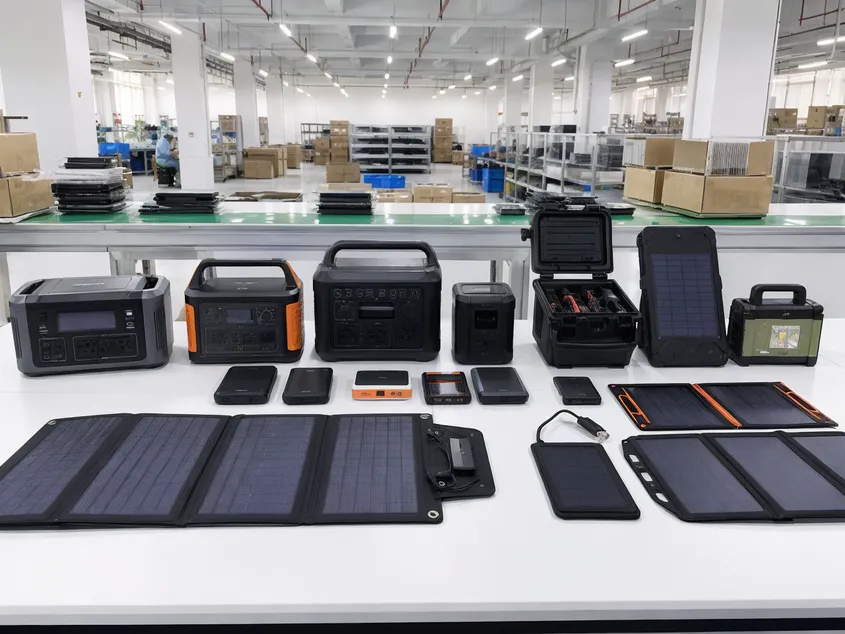
Portable Solar Battery for Wholesale and Project Supply
We manufacture portable solar batteries — LiFePO4-based portable power units designed for solar charging, DC/AC output, and field-ready deployment. This is not a consumer gadget page. It's a category hub for buyers building portable solar product lines, stocking outdoor retail channels, supplying emergency backup programs, or launching private-label portable power brands.
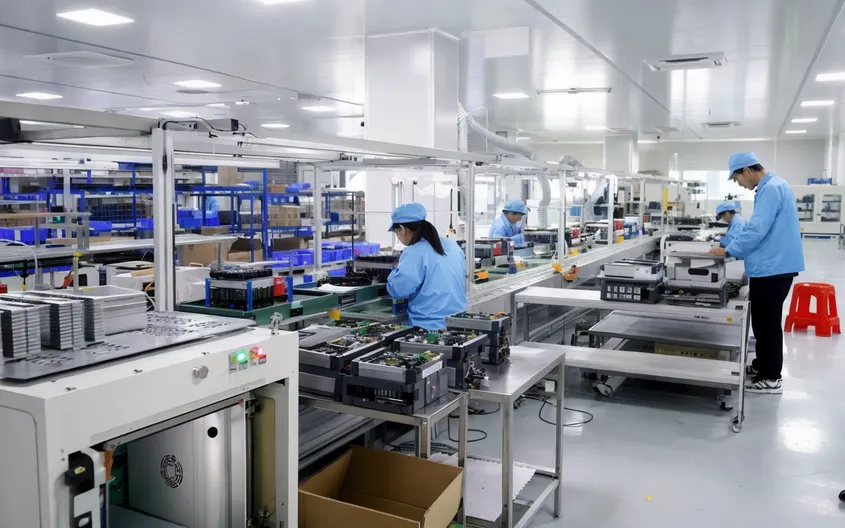
EVANBattery has produced solar batteries since 2012 from our 9,900m² factory in Zhongshan, Guangdong. Six production lines, 150 employees, 18+ battery engineers, and 2,000,000 units of annual capacity. The portable category runs on the same automated cell sorting, in-house BMS integration, and full lifecycle testing that supports our fixed storage lines — scaled down to portable form factors and output configurations.
Your portable solar battery program starts here: tell us the capacity class, output port mix, solar input spec, target market, and order volume. We'll recommend a standard model or map an OEM/ODM path.
Four Portable Solar SKUs and Their Commercial Fit
We organize the portable solar battery family into four product paths. Each one targets a different wholesale channel and buyer intent. Pick the path that matches your market, then drill into the product page for model-level specifications.
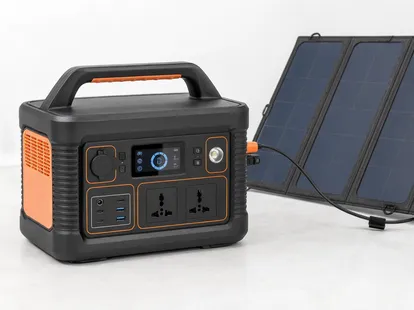
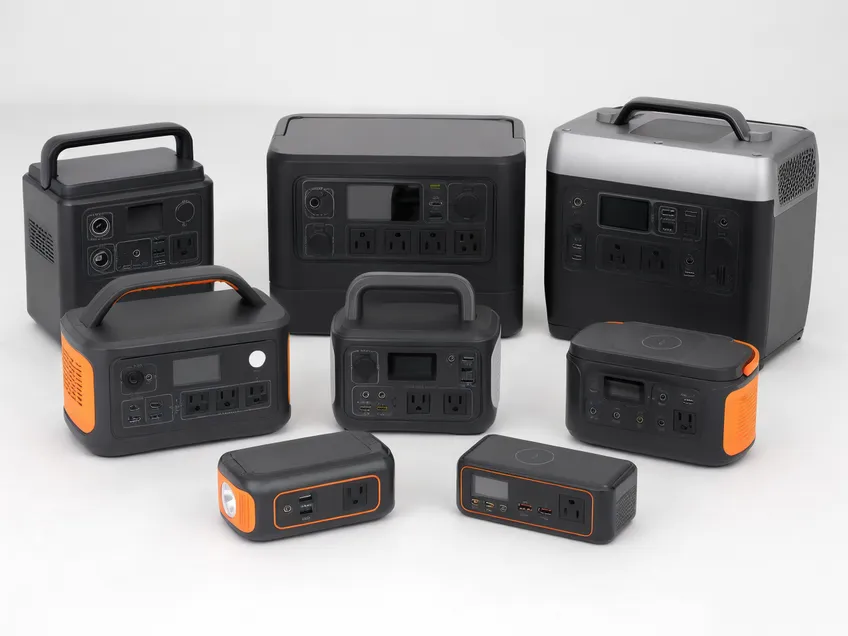
Portable Solar Battery Power Station
Commercial Fit: Emergency backup distributors, outdoor retail, mobile work channels
Configuration: Higher-capacity LiFePO4 packs, AC inverter output, multiple DC ports, MPPT solar input, LCD display
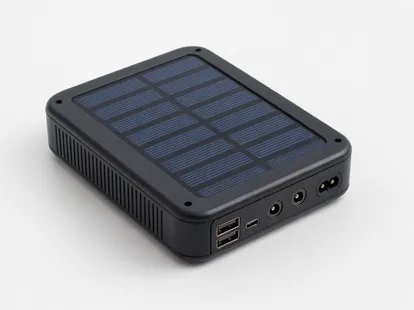
Portable Solar Battery Charger
Commercial Fit: USB/DC accessory channels, lower-ticket wholesale, power bank programs
Configuration: Compact form, USB-A/USB-C/DC output, solar panel input, lightweight casing
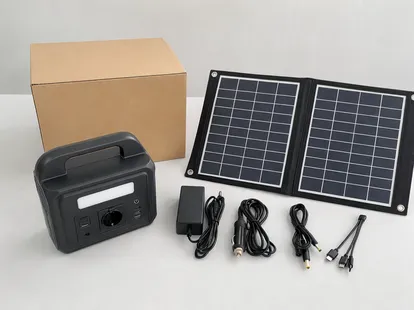
Portable Solar Battery Kit
Commercial Fit: DIY solar channels, starter kit programs, private-label solar sets
Configuration: Battery + panel + cables bundled, retail-ready packaging, entry-level capacity
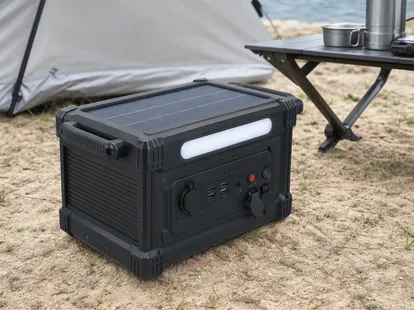
Portable Solar Battery for Camping
Commercial Fit: Outdoor/recreation retail, camping gear distributors, rugged product lines
Configuration: Weather-resistant housing, integrated lighting, portable handles, outdoor-rated connectors
Each product page carries full specifications, BMS details, and OEM options. This category page gives you the product-line overview and procurement framework — so you can identify which SKU path fits your channel before requesting model-level data.
We designed these four paths based on how our existing distributors actually segment their portable solar sales — not from a marketing brainstorm. The boundaries are commercial, not technical.
Spec Ranges Buyers Need Before Requesting a Quote
Before you send an RFQ, you need to know what parameter space we cover. The table below shows category-level ranges across our portable solar battery family. Exact values depend on the specific model and any OEM/ODM configuration.
We publish exact data sheets per model on each product page. If you already know your target capacity and output requirements, request a model data sheet and quote. If you need help narrowing the spec, send us your channel and market details and we'll recommend.
| Parameter | Category Range | Why It Matters to Your Quote |
|---|---|---|
| Battery Chemistry | LiFePO4 (primary), ternary lithium (select models) | LiFePO4 gives you longer cycle life and lower warranty exposure; ternary offers higher energy density for weight-sensitive SKUs |
| Usable Capacity | 100Wh – 2,000Wh+ | Determines your retail price tier and target application — compact chargers sit at the low end, power stations at the high end |
| Solar Input | 12V–30V DC, 60W–200W max panel compatibility | Must match the solar panels you bundle or recommend; mismatched input voltage is a common field complaint |
| AC Output | Pure sine wave inverter, 100W–2,000W (model-dependent) | Defines which appliances your end users can run — and which market segment you can sell into |
| DC Output | 12V cigarette lighter, 5521 barrel jack, Anderson connector | Compatibility with your buyers' existing accessories and devices |
| USB Output | USB-A (5V/2.4A), USB-C (PD 18W–100W), QC 3.0 | Port mix affects retail appeal and price positioning |
| BMS Protections | Over-charge, over-discharge, over-current, short-circuit, temperature | Non-negotiable for safety certification and warranty control |
| Cycle Life | 2,000–3,500+ cycles to 80% DoD (LiFePO4) | Directly affects your warranty terms and reorder frequency |
| Operating Temperature | -20°C to 55°C (discharge), 0°C to 45°C (charge) | Determines which climate zones and seasons your product can serve |
| Casing | ABS+PC fire-rated plastic, aluminum alloy (select models) | Affects drop resistance, weight, and perceived retail value |
| Display | LCD/LED battery level, output wattage, input status | Reduces after-sales support calls from your downstream customers |
| Certifications Available | CE, IEC 62133, UN38.3, MSDS, ISO 9001:2015 | Required for import clearance, marketplace listing, and project tender compliance |
Know your target capacity and output requirements?
Request a model-specific data sheet with exact specs, pricing tiers, and lead times.
Choosing the Right Portable Solar Battery by Channel and Load Profile
The most expensive mistake in portable solar battery wholesale is stocking the wrong SKU for your channel. A 2,000Wh power station doesn't move through a camping accessories shelf, and a 200Wh charger won't satisfy an emergency backup distributor's customers. Here's how we guide buyers toward the right product path.
Outdoor and Camping Retail
200Wh – 600WhYour customers buy on portability, ruggedness, and bundled accessories. Prioritize compact capacity (200Wh–600Wh), integrated LED lighting, weather-resistant casing, and retail-ready packaging with clear feature callouts.
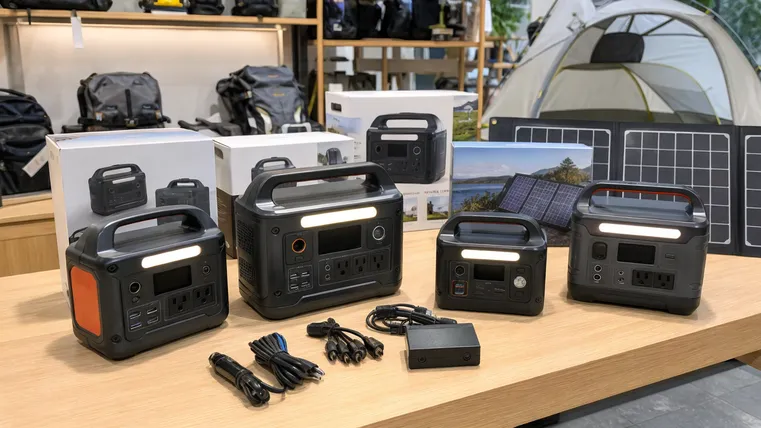
The Portable Solar Battery for Camping line is built for this channel — lightweight, visually distinct on a shelf, and priced for impulse-adjacent purchasing.
Emergency Backup Distribution
600Wh – 2,000Wh+Your customers need reliable AC output, higher capacity (600Wh–2,000Wh+), and documentation that supports warranty claims. Prioritize pure sine wave inverter quality, BMS protection depth, and available CE/IEC 62133 reports.
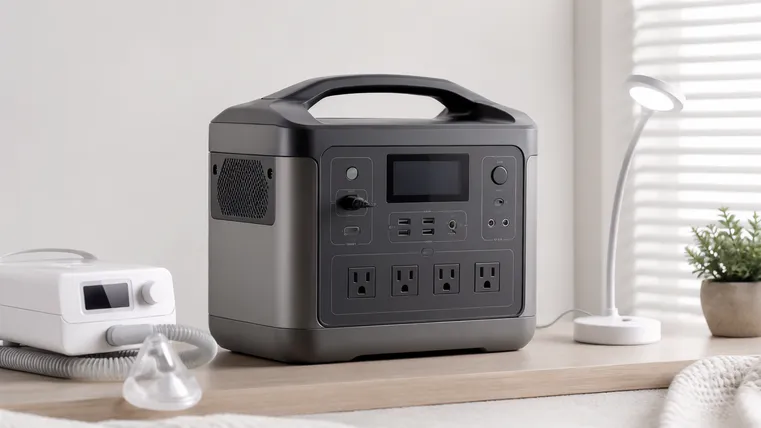
The Portable Solar Battery Power Station covers this segment — it's the SKU your buyers will deploy for home backup, medical device charging, and small commercial continuity.
Small Solar Kit Programs
Complete SystemYour customers want a complete package: battery, panel, cables, and sometimes a controller — all in one carton. Prioritize solar input compatibility, accessory completeness, and kit packaging that reduces your warehouse handling.
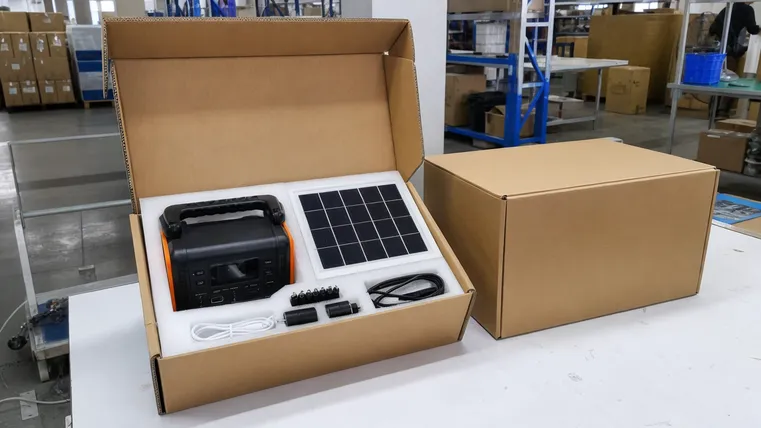
The Portable Solar Battery Kit is designed for this channel — bundled, tested as a system, and packaged for retail or project distribution.
Field-Service and Mobile Work
DC-FocusedYour customers need dependable DC output for tools, instruments, or communication equipment. Prioritize stable discharge curves, fast recharge via solar or AC, and a form factor that fits in a vehicle or equipment case.
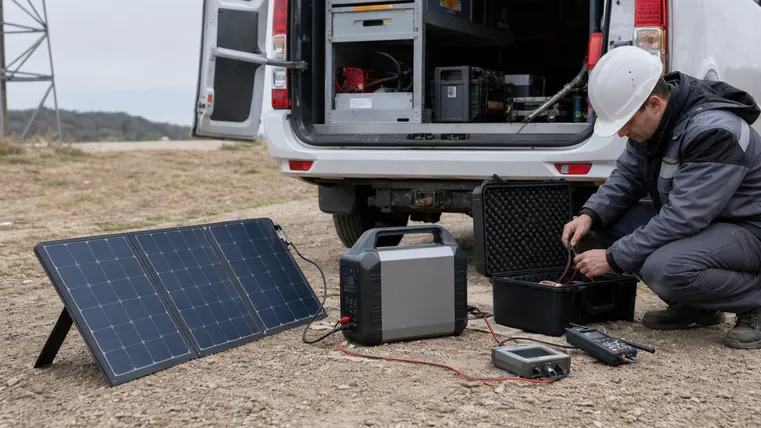
Multiple product paths can serve this — power stations for higher loads, chargers for lighter DC needs.
Private-Label Wholesale Programs
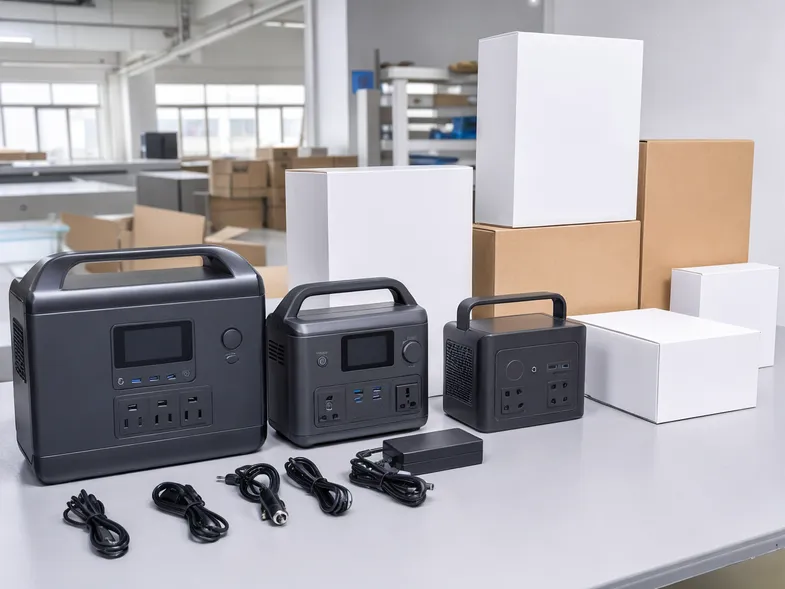
You need a stable SKU mix, consistent quality across reorders, flexible branding, and documentation that matches your brand identity. Any of the four product paths can be private-labeled.
The key variables are MOQ, packaging customization depth, and certification timeline.
- Flexible branding on any SKU path
- Consistent quality across reorders
- Documentation matched to your brand identity
- MOQ-based packaging customization
Cell Matching, BMS Integration, and Why Your Reorders Stay Consistent
This is where a portable solar battery manufacturer earns — or loses — your repeat business. The cells inside a portable battery pack determine whether your product holds rated capacity after 12 months in the field or drifts into warranty territory.
Automated Cell Sorting
We run automated cell sorting on every incoming batch. Cells are grouped by measured capacity and internal resistance — within 20mV voltage variance and 5mΩ resistance variance per pack group.
This isn't a spec we invented for marketing; it's the tolerance window that prevents thermal imbalance during cycling and keeps capacity fade predictable across a 500-unit production run.
We tightened this window in 2019 after tracking field returns from a Southeast Asian distributor — the root cause was always cell mismatch, not BMS failure.
In-House BMS Design
Our BMS boards are designed and produced in-house. For portable solar batteries, the BMS handles:
- Over-charge protection
- Over-discharge cutoff
- Over-current limiting
- Short-circuit shutdown
- Temperature monitoring
We program protection thresholds to match the specific cell chemistry and capacity configuration in each model — a 300Wh compact charger gets different current limits than a 1,500Wh power station. Generic third-party BMS modules use approximated parameters; ours are calibrated to the actual cells in your pack.
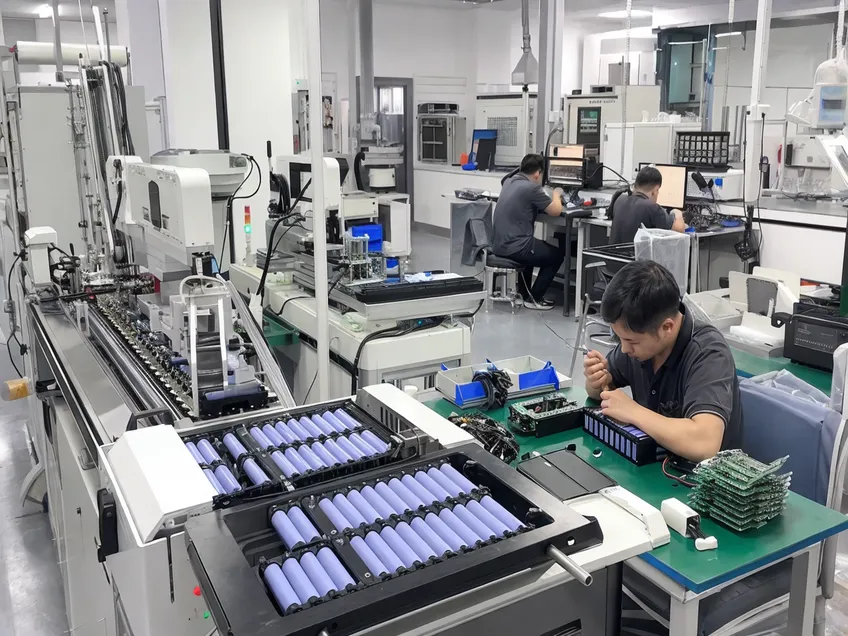
Production Testing — Every Batch
Charge/Discharge Cycling
Capacity Verification
High-Temp Soak (55°C)
Low-Temp Discharge (-20°C)
Sample-Basis Safety Testing (Vibration, Drop)
We run these on every production batch, not just during initial type approval.
18
R&D Engineers
8–15 yrs
Average Experience
3 Teams
Pack Design · BMS Firmware · Application Engineering
The Commercial Result
- Your field warranty exposure stays predictable
- Your reorder batches perform identically to your first shipment
- Your after-sales team isn't troubleshooting capacity drift six months after delivery
OEM/ODM Configuration for Portable Solar Battery Programs
We handle OEM and ODM portable solar battery development from specification through production validation. The scope covers cosmetic branding through full electrical redesign — and the MOQ depends on how deep the change goes.
Cosmetic & Packaging OEM
Lowest MOQ Threshold- Logo printing or silk-screening on casing
- Custom casing color (from RAL/Pantone reference)
- Branded retail packaging, carton artwork, and insert cards
- User manual in your language(s)
- Barcode, SKU label, and compliance mark placement
Configuration OEM
Moderate MOQ- Output port mix adjustment (add/remove USB-C PD, change DC connector type, add wireless charging pad)
- Solar input connector change (MC4, DC barrel, Anderson)
- Plug/socket regional standard (US/EU/UK/AU)
- Accessory bundle customization (cables, adapters, carry cases, panel connectors)
- Display interface language or unit preferences
Electrical ODM
Higher MOQ · Engineering Validation Required- Custom capacity configuration (cell count, pack arrangement)
- Voltage platform change
- BMS firmware modification (protection thresholds, communication protocol)
- Inverter output power adjustment
- New enclosure tooling
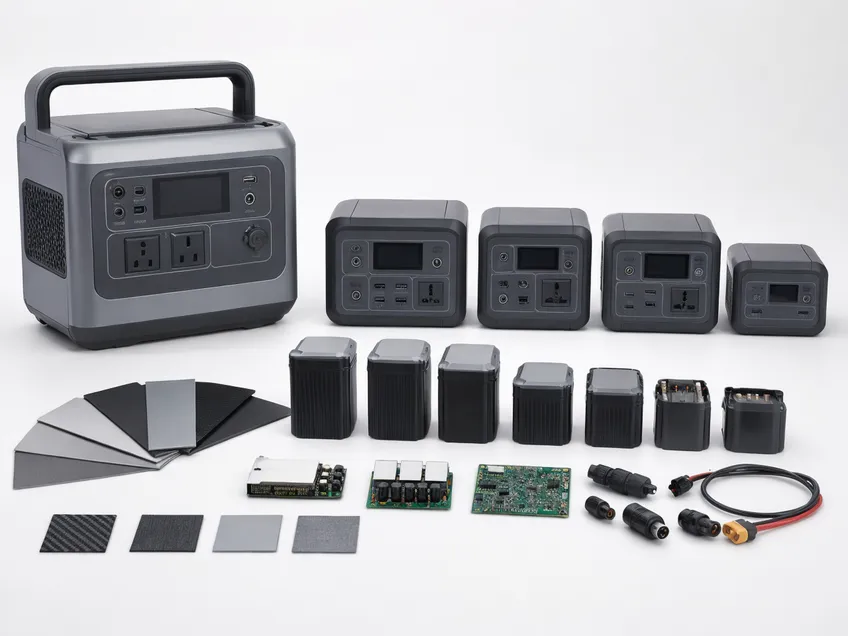
MOQ Reference
*Requires enough volume to justify cell procurement and BMS validation — we'll give you the exact threshold after reviewing your specification.
Common Question
"Can I change the output ports without changing the BMS?"
Usually yes, if the total maximum draw stays within the existing BMS current rating. If you're adding a high-power USB-C PD port that pushes total output above the current limit, the BMS firmware needs adjustment — and that moves you into the ODM tier.
Ready to Configure Your Portable Solar Battery Program?
Tell us your target retail price, destination market, order quantity, required certifications, and packaging needs.
Export Documents, Battery Packing, and Shipment Preparation
Lithium batteries are classified dangerous goods for transport. Missing or incorrect documentation means port delays, rejected shipments, or fines. We maintain current compliance documents for every standard model and prepare shipment-specific paperwork for each order.
Documentation We Provide Per Model
UN38.3 Test Summary
Transport safety classification — mandatory for all lithium battery shipments by air or sea.
MSDS / SDS
Material safety data sheet covering chemical composition, handling, and emergency procedures.
CE Declaration of Conformity
Required for European market entry — confirms compliance with applicable EU directives.
IEC 62133 Test Report
Battery safety standard covering electrical, mechanical, and environmental testing.
ISO 9001:2015 Certificate
Quality management system certification covering our manufacturing processes.
Documentation scope depends on your model, battery capacity, shipping route, and destination market requirements. Some markets require additional local certification — our engineering team supports the application process with test samples and technical data packages.
Packing and Shipment Control
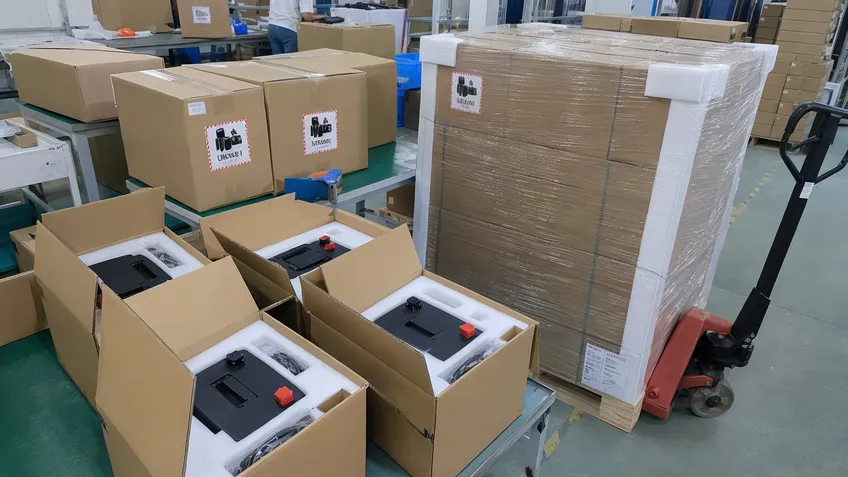
Individual Unit Protection
Foam-lined inner carton, battery terminal insulation, accessory separation — each unit isolated against transit shock.
Outer Carton
Corrugated board rated for stacking, with UN3481 lithium battery handling labels applied per regulatory placement requirements.
Palletization
Stretch-wrapped, corner-protected, with batch traceability labels per pallet for warehouse receiving and inventory control.
Shipping Declaration
Dangerous goods declaration prepared per IATA (air) or IMDG (sea) requirements depending on your shipping mode.
Destination-Adjusted Packing for Global Routes
We ship portable solar batteries regularly to Europe, Southeast Asia, Africa, South America, and the Middle East. Each region has different documentation expectations and inland handling conditions — we adjust packing reinforcement and label placement based on destination.
Europe
Southeast Asia
Africa
South America
Middle East
African inland routes, for example, need heavier carton reinforcement than European warehouse-to-warehouse shipments. We adjust based on your specific logistics chain.
The Commercial Value
Fewer customs holds, fewer transit damage claims, and cleaner warehouse receiving on your end. Proper documentation and packing isn't overhead — it's margin protection across your supply chain.
FAQ: Portable Solar Battery Procurement
What is the difference between a portable solar battery and a portable solar battery power station?
A portable solar battery is the category — any battery-based portable power product designed for solar charging. A portable solar battery power station is a specific product type within that category: higher capacity (typically 500Wh–2,000Wh+), built-in AC inverter, multiple output ports, and an LCD management display. If your channel needs AC output for appliances, you want the power station. If your channel sells compact DC/USB charging, a portable solar battery charger is the better fit.
What capacity range should I quote for a portable solar battery product line?
It depends on your channel. Camping and outdoor retail moves best at 200Wh–600Wh — portable enough to carry, enough capacity for phones, lights, and small devices. Emergency backup and home use starts at 500Wh and scales to 2,000Wh+ for appliance-level loads.
If you're building a product line rather than a single SKU, we typically recommend covering two tiers: a compact entry model and a higher-capacity flagship. This gives your sales team price flexibility without fragmenting inventory.
Is LiFePO4 the right chemistry for portable solar batteries?
For most wholesale portable solar battery programs, yes. LiFePO4 delivers 2,000–3,500+ cycles to 80% depth of discharge, operates safely across a wide temperature range, and carries lower thermal runaway risk than ternary lithium. The trade-off is energy density — LiFePO4 packs are slightly heavier per Wh.
For weight-critical applications where cycle life is less important (event giveaways, low-cost promotional units), ternary lithium can reduce unit weight. We produce both; the choice depends on your warranty commitment and price positioning.
What output ports should a wholesale portable solar battery include?
At minimum: USB-A (5V/2.4A) and USB-C with PD support. Beyond that, it depends on your market. European and North American buyers expect USB-C PD 60W+ for laptop charging. If you're selling into emergency backup, add a 12V DC output (cigarette lighter or 5521 barrel) and an AC outlet. For camping channels, an integrated LED light and 12V DC for portable fridges add retail value.
We can adjust the port mix during OEM configuration — send your target market and use case for a recommendation.
What documents are needed for shipping lithium portable solar batteries?
UN38.3 test summary and MSDS are mandatory for all lithium battery shipments by air or sea. CE and IEC 62133 are required for European import clearance and increasingly expected by marketplace platforms globally.
Your freight forwarder will need a dangerous goods declaration (DGD) for each shipment — we prepare this per IATA or IMDG requirements depending on your shipping mode. If your destination market requires additional local certification (e.g., BIS for India, KC for Korea), our engineering team can support the application with test samples.
Can EVANBattery customize logo, packaging, output ports, and solar input connectors?
Yes — all four are standard OEM scope. Logo and packaging start at the lowest MOQ tier (typically 200–500 units). Output port changes and solar input connector swaps are configuration-level OEM, with MOQ depending on whether the change affects BMS current ratings.
Full electrical redesign (new capacity, new voltage platform) is ODM scope with higher MOQ. We'll map the exact tier and MOQ after reviewing your specification.
What information should I send to get an accurate portable solar battery quote?
Send us: target market (country/region), sales channel (retail, distribution, project), estimated order quantity, preferred capacity class (Wh range), required output ports, solar input spec (panel wattage and voltage), plug/socket standard, branding requirements, packaging needs, required certifications, and delivery destination.
The more specific you are, the faster we can recommend a standard model or scope an OEM/ODM path. Request a portable solar battery quote.
Your Portable Solar Battery RFQ Checklist
Send us the following details and we'll respond with a technical recommendation, model match or OEM/ODM scope, and pricing within 48 hours.
Target Market
Country or region where you'll sell or deploy
Sales Channel
Retail, online marketplace, distribution, project supply, or private-label
Estimated Quantity
First order and projected annual volume
Capacity Class
Wh range (e.g., 200Wh–500Wh, or 1,000Wh+)
Output Requirements
AC wattage, DC ports, USB types and power delivery specs
Solar Input
Panel wattage and voltage you plan to pair or bundle
Plug/Socket Standard
US, EU, UK, AU, or universal
Branding
Logo, color, packaging, manual language
Required Certifications
CE, IEC 62133, UN38.3, or market-specific
Delivery Destination
Port or warehouse address for freight calculation
We'll recommend a standard model if one fits, or outline the OEM/ODM path with MOQ, timeline, and engineering scope. No minimum for initial consultation — send what you have and we'll work from there.