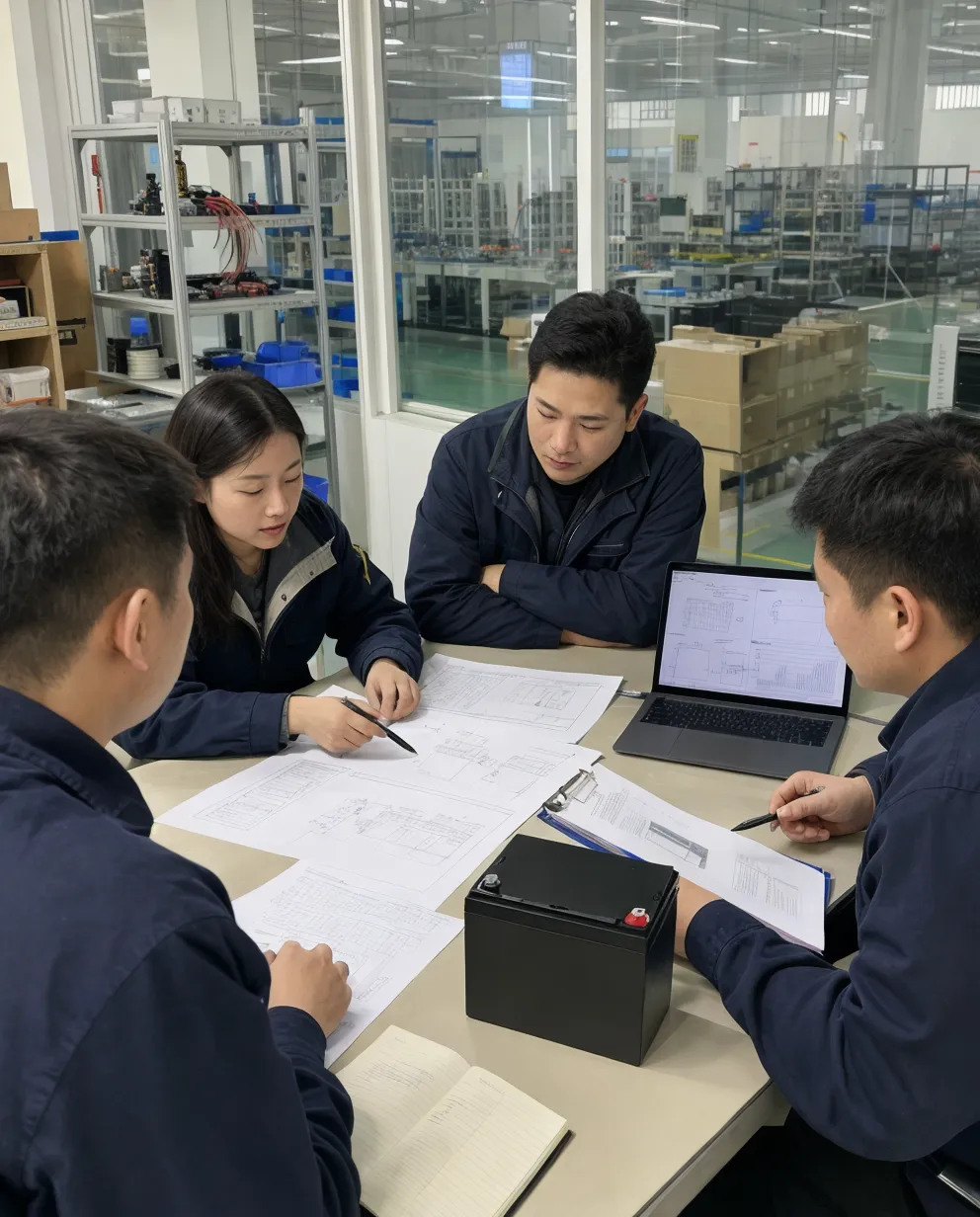
12V Solar Battery Manufacturer for Wholesale and Project Supply
12V solar battery production for distributors, project contractors, and OEM/ODM partners — lithium and lead-acid under one roof.
Full 12V product family from deep-cycle packs to chargers and backup configurations, manufactured in-house with automated cell sorting and BMS integration.
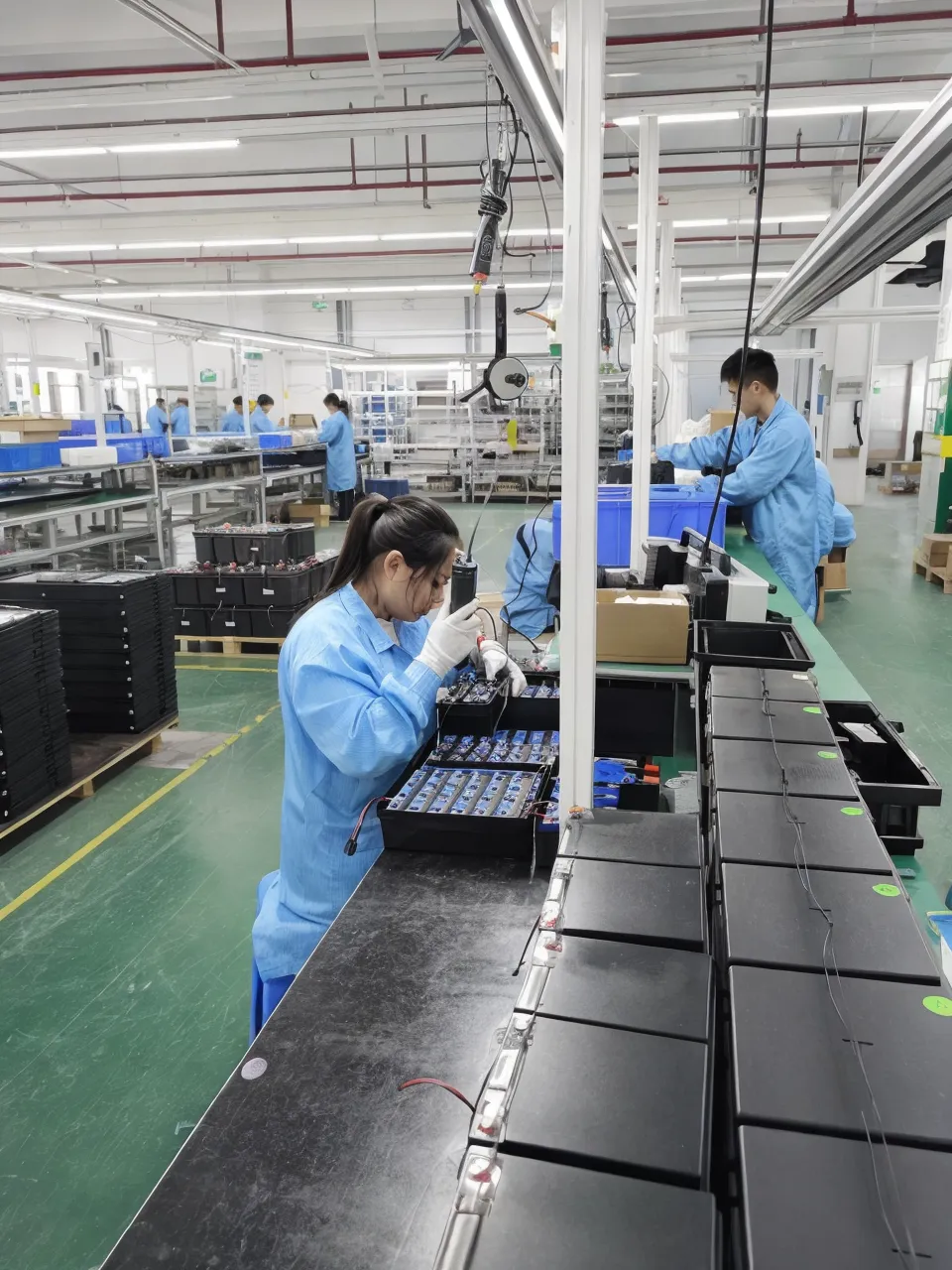
EVANBattery is a 12V solar battery manufacturer based in Zhongshan, Guangdong — 9,900 square meters of production floor dedicated to solar energy storage since 2012. We produce LiFePO4, gel, and AGM batteries in 12V configurations for wholesale programs, off-grid project deployments, and private-label distribution.
Our 6 production lines and 2,000,000-unit annual capacity mean your 12V orders don't queue. Standard models ship from 100 units MOQ, so you can test a SKU with your market before committing to container volumes. Whether you need a 12V 100Ah LiFePO4 for European residential backup or a 12V 200Ah gel for African solar home kits, the production infrastructure and export documentation are already in place.
Learn more about our factory profile or contact EVANBattery to start a conversation about your 12V supply requirements.
12V Product Line Buyers Can Build a Small-System Catalog Around
The 12V platform remains the workhorse voltage for small solar systems — off-grid kits, RV/marine, telecom backup, portable power, and residential entry-level storage. As a 12V solar battery supplier, we produce the three core product types that let you offer complete small-system packages rather than selling loose batteries into a fragmented market.
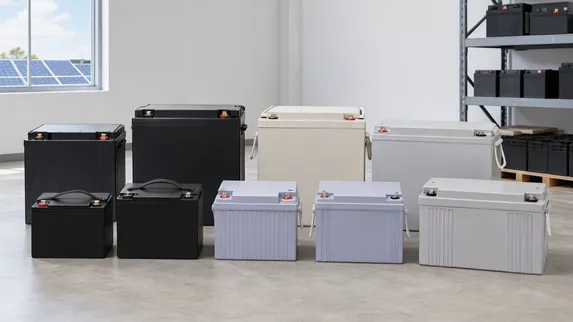
12V Deep Cycle Solar Battery
Your primary battery SKU for any application that cycles daily: off-grid solar home systems, rural electrification kits, RV house banks, and marine auxiliary power. Available in LiFePO4 and gel/AGM chemistries, capacity range from 50Ah to 200Ah.
This is the volume product — most of our 12V solar battery wholesale buyers start here because it covers the widest range of downstream markets.
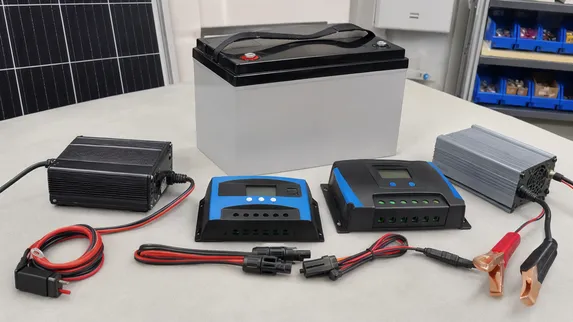
12V Solar Battery Charger
The accessory page for buyers building complete small-system packages. Chargers and charge controllers matched to 12V battery chemistries, so your customers receive a compatible system rather than sourcing components separately.
Bundling chargers with battery packs increases your average order value and reduces after-sales compatibility complaints.
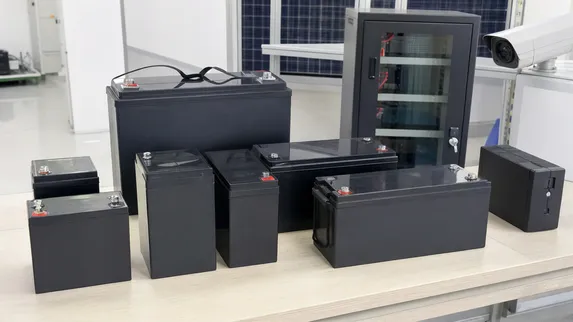
12V Solar Battery Backup
Backup-focused 12V configurations for UPS-style applications, low-power continuity systems, CCTV/security backup, and small commercial standby power. These units are optimized for float charge and occasional deep discharge rather than daily cycling.
Different BMS parameters, different cell selection criteria — purpose-built for standby duty.
| Product | Primary Market Segments | Buying Pattern |
|---|---|---|
| 12V Deep Cycle Solar Battery | Off-grid kits, RV/marine, rural solar | High-volume repeat orders, seasonal peaks |
| 12V Solar Battery Charger | System integrators, kit builders | Bundled with battery orders, accessory margin |
| 12V Solar Battery Backup | Security, telecom, small commercial | Project-based orders, specification-driven |
The commercial logic: stocking all three product types lets you sell into multiple 12V segments from a single supplier relationship, consolidating your procurement and simplifying reorders.
(We see this pattern with our Southeast Asian distributors — they started with deep-cycle only, then added backup and charger SKUs once their installer network asked for complete kits.)
Chemistry and Capacity Choices That Protect Warranty Margin
Choosing the wrong chemistry for your market creates warranty exposure. Choosing the right one protects your margin for years. Here's how we think about the 12V solar battery selection at category level — and how we help you match chemistry to market reality.
LiFePO4 (Lithium Iron Phosphate)
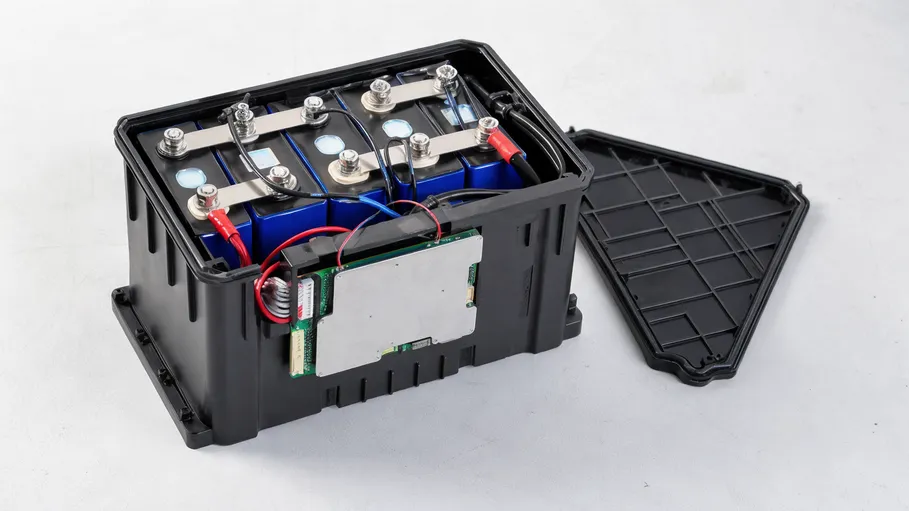
LiFePO4 is the premium 12V option: 2,000–5,000 cycle life at 80% DOD, roughly one-third the weight of equivalent lead-acid, and flat discharge curves that keep connected equipment running at stable voltage. The BMS handles over-charge, over-discharge, over-current, short-circuit, and temperature protection automatically.
When it makes commercial sense for you:
Markets where buyers accept higher upfront cost in exchange for lower total cost of ownership. European residential storage, Australian off-grid, and premium RV/marine channels are the strongest segments.
Warranty advantage
Your warranty claim rate drops significantly because LiFePO4 doesn't sulfate, doesn't need equalization charging, and doesn't lose capacity from partial state-of-charge cycling. We've tracked field return data across our European distributor accounts — LiFePO4 warranty claims run below 0.3% over 3 years, compared to 2–4% for gel in the same applications.
For a deeper look at our lithium production: LiFePO4 Solar Battery
Gel and AGM (Lead-Acid)
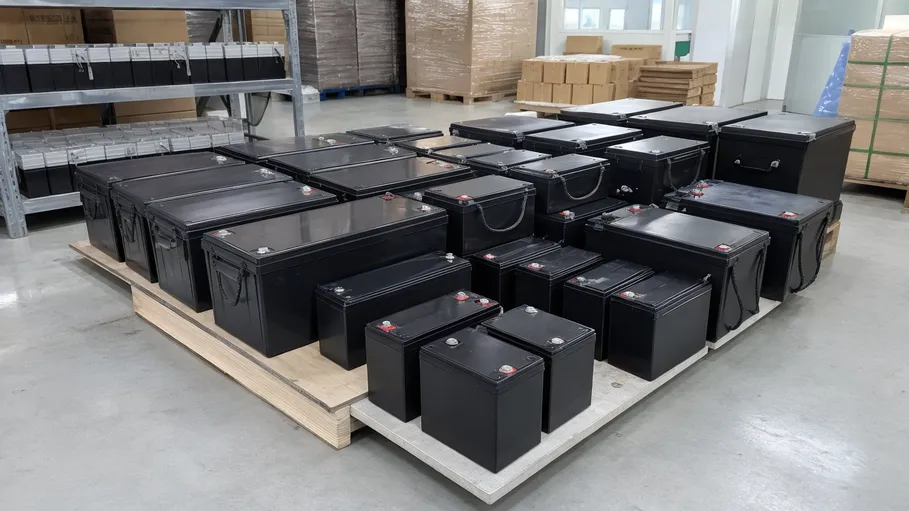
Gel and AGM still make strong commercial sense in price-sensitive markets where lead-acid service knowledge is mature and replacement cycles are accepted. African solar home systems, South American rural electrification, and budget RV/marine segments move high volumes of 12V gel batteries because the upfront cost is 40–50% lower than LiFePO4.
When it makes commercial sense for you:
Markets where your buyers compare on shelf price, where local technicians understand lead-acid maintenance, and where 3–5 year replacement cycles are normal business.
Gel vs. AGM
Gel offers better deep-cycle tolerance than AGM for solar applications; AGM works better for standby/float applications where discharge is infrequent.
For gel-specific options: 12V Gel Solar Battery
Capacity Planning
Common 12V capacity tiers and their market fit:
50–65Ah
Portable solar kits, small lighting systems, entry-level solar home systems
100Ah
Covers most residential off-grid, RV, and small backup applications. This is typically your highest-volume SKU.
150–200Ah
Larger off-grid homes, multi-day autonomy requirements, commercial backup where 12V is still the system voltage
When to Stay at 12V vs. Move to 24V or 48V
12V remains the right platform when system loads stay below 2,000W and wiring runs are short. Above that threshold, current draw gets impractical — a 3,000W load at 12V pulls 250A, requiring expensive cabling and creating heat management issues.
If your buyers are building systems above 2kW, point them toward higher-voltage configurations instead.
Category-Level Specifications for Fast RFQ Screening
When you're screening a 12V solar battery manufacturer for your program, you need to confirm spec coverage quickly. This table gives you the category-wide parameters across our 12V range — enough to determine fit before requesting detailed quotations.
| Parameter | LiFePO4 (12.8V) | Gel / AGM (12V) |
|---|---|---|
| Nominal Voltage | 12.8V (4S LiFePO4) | 12V (6-cell lead-acid) |
| Capacity Range | 50Ah – 200Ah | 50Ah – 250Ah |
| Cycle Life (80% DOD) | 2,000 – 5,000 cycles | 400 – 800 cycles (gel), 300 – 500 (AGM) |
| Charge Voltage | 14.2V – 14.6V | 14.1V – 14.4V (gel), 14.4V – 14.7V (AGM) |
| Discharge Cut-off | 10.0V (BMS-controlled) | 10.5V – 10.8V |
| Operating Temperature | -20°C to 60°C (discharge), 0°C to 45°C (charge) | -20°C to 50°C |
| BMS Protection | Over-charge, over-discharge, over-current, short-circuit, temperature | N/A (external charge controller manages) |
| Cell Sorting | Automated: ≤20mV voltage, ≤5mΩ IR matching | Plate matching by batch |
| Casing Options | ABS plastic, metal enclosure, custom housing | ABS sealed case, standard terminal configurations |
| Terminal Options | M8 bolt, Anderson connector, custom terminal | F12 (M8), F15 (M6), custom |
| Weight Range | 6kg – 25kg | 14kg – 65kg |
| Certifications | ISO 9001:2015, CE, IEC 62133, UN38.3, MSDS | ISO 9001:2015, CE, IEC 62133, UN38.3, MSDS |
| MOQ | 100 units (standard), custom MOQ for OEM | 100 units (standard) |
How to use this table
If your target specs fall within these ranges, we can supply. If you need parameters outside these ranges — unusual capacity, non-standard terminal, specific inverter compatibility — send your specifications via RFQ and our engineering team will confirm feasibility and pricing.
Final specifications depend on the intersection of chemistry, capacity, charge controller/inverter compatibility, and your destination market's certification requirements. We confirm exact specs during quotation so your catalog data is accurate from the first order.
Reorder Consistency
For 12V solar battery wholesale programs, consistent specs across reorders matter more than initial specs. Our automated cell sorting and batch-level testing ensure your second, fifth, and twentieth order performs identically to your first — your downstream customers get predictable product, and your warranty exposure stays flat.
View full certification documentation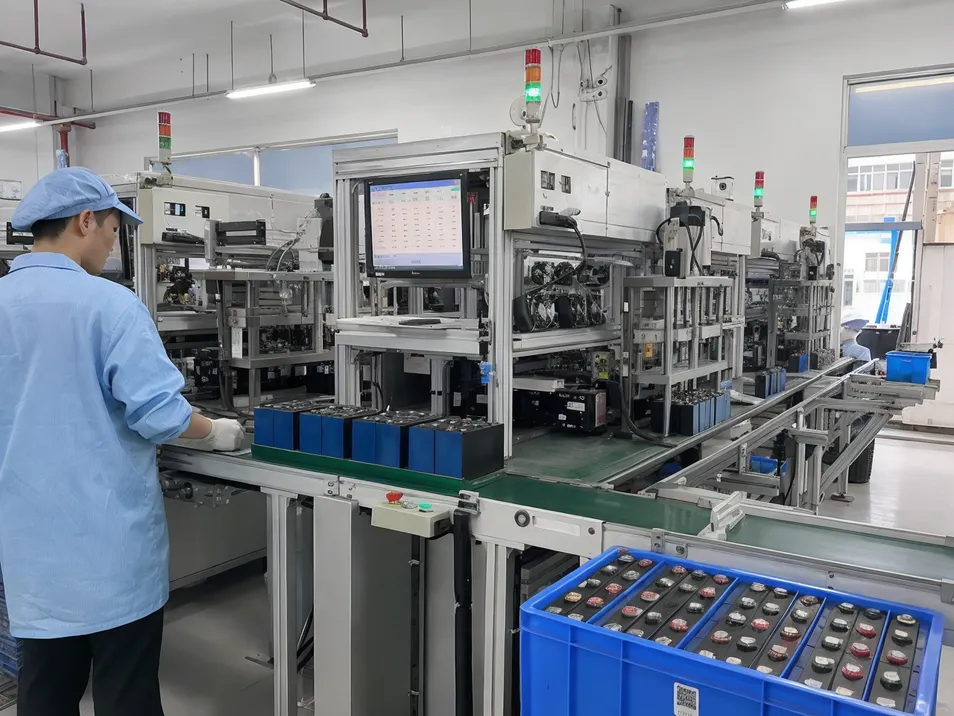
Manufacturing Controls That Reduce 12V Battery Field Failures
Most 12V solar battery field failures trace back to three manufacturing shortcuts: poor cell matching, generic BMS parameters, and skipped environmental testing. We've built our production process specifically to eliminate these failure modes — because your warranty claims are our reorder risk.
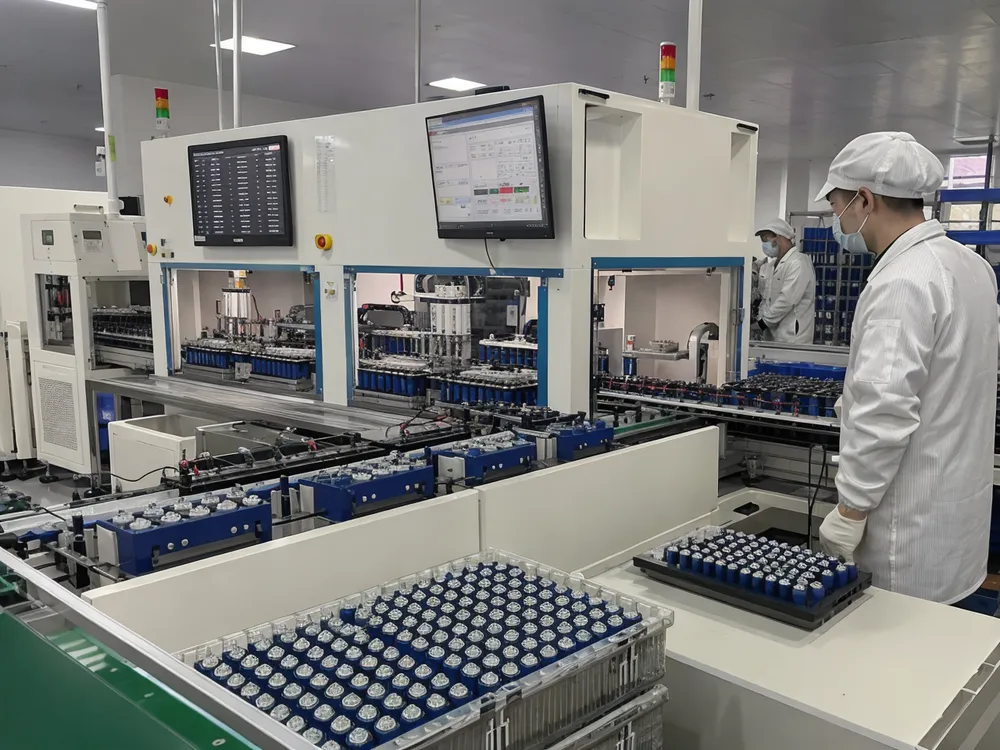
Cell Sorting and Matching
Every incoming cell batch — whether prismatic LiFePO4 or lead-acid plates — goes through individual measurement before it enters production. For lithium packs, we sort by actual measured voltage (≤20mV spread), internal resistance (≤5mΩ spread), and capacity (≤2% deviation within a pack). Cells that don't meet matching criteria get excluded from pack assembly entirely.
Why this matters commercially
A 12V LiFePO4 pack with poorly matched cells develops capacity imbalance within 200–300 cycles. The weakest cell hits BMS cut-off first, reducing usable capacity by 15–25%. Your customer sees a "100Ah" battery delivering 75Ah after one year and files a warranty claim. Tight cell matching at production prevents this degradation pattern across your entire batch.
Production note: We invested in automated sorting equipment in 2018 specifically because manual matching couldn't hold consistency above 500 units per day — the human error rate was creating 3–4% field returns on large orders.
Cell Matching Tolerances (Per Pack)
| Parameter | Maximum Spread | Impact If Exceeded |
|---|---|---|
| Voltage | ≤20mV | Uneven charge distribution, early BMS cutoff |
| Internal Resistance | ≤5mΩ | Thermal hotspots, accelerated degradation |
| Capacity | ≤2% deviation | 15–25% usable capacity loss within 200–300 cycles |
BMS Protection Verification
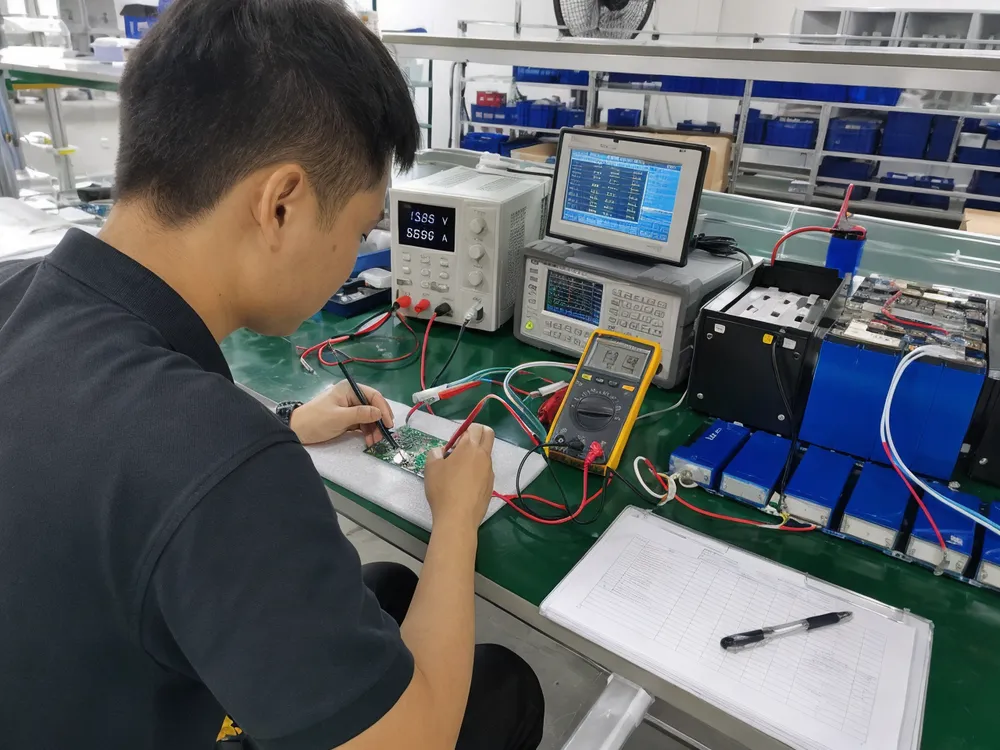
Every BMS board is tested independently before integration: over-charge trigger, over-discharge trigger, over-current response, short-circuit shutdown, and temperature protection thresholds. We program parameters specific to the cell chemistry and application profile — a 12V 100Ah deep-cycle unit for daily solar cycling gets different thresholds than a 12V 50Ah backup unit on float charge.
After BMS-to-pack marriage, the complete assembly goes through a second round of protection verification to confirm the BMS communicates correctly with the actual cells, not just a test bench.
Independent BMS tests before integration:
- Over-charge trigger verification
- Over-discharge trigger verification
- Over-current response
- Short-circuit shutdown
- Temperature protection thresholds
Environmental and Lifecycle Testing
Every production batch undergoes: capacity verification at rated current, charge/discharge cycling (minimum 3 full cycles), high-temperature soak at 55°C, and low-temperature discharge at -20°C. Safety testing — vibration, drop, and nail penetration — runs on sample basis per batch.
Capacity Verification
At rated current
Charge/Discharge Cycling
Minimum 3 full cycles
High-Temp Soak
55°C sustained
Low-Temp Discharge
-20°C verified
Tropical Market Advisory
For buyers shipping into tropical markets (Southeast Asia, Africa, Middle East), the high-temperature testing is particularly relevant. We've seen competitors skip this step and ship batteries that swell or vent after six months in ambient temperatures above 40°C. Our 55°C soak test catches thermal management issues before they become your field problem.
Separate production zones: We maintain separate lithium and lead-acid production zones because the QC checkpoints, ventilation requirements, and handling procedures differ fundamentally. Cross-contamination between electrolyte types is a real risk at factories that run both on shared lines.
OEM/ODM 12V Battery Options Without Turning Every Order Into a New Project
We handle OEM/ODM at two levels: cosmetic customization that ships at standard MOQ, and engineering customization that requires validation but doesn't need to become a six-month development project.
Cosmetic & Branding
Standard MOQ: 100 units
- Label design and printing (your brand, your specs, your regulatory marks)
- Casing color (standard colors from existing molds, custom color at higher MOQ)
- Carton branding and packaging design
- User manual with your brand identity
- Terminal style selection from existing options
Engineering Customization
MOQ varies by scope
- Capacity configuration: non-standard Ah ratings using existing cell formats
- BMS parameter adjustment: charge/discharge curves, protection thresholds, communication protocols (RS485, CAN, Bluetooth)
- Enclosure modification: mounting brackets, IP rating upgrades, connector placement
- Voltage variants within the 12V platform (e.g., 12.8V LiFePO4 with specific cell count)
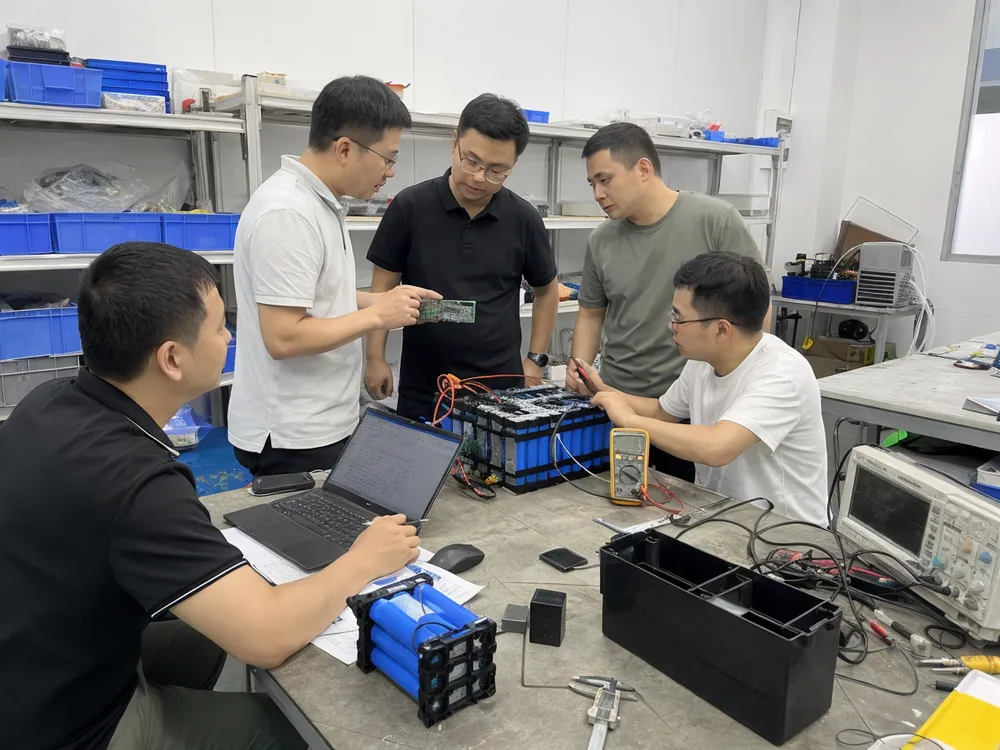
Our 18-engineer R&D team handles the development cycle from specification review through prototype validation. For most 12V configurations, we're working within proven cell formats and existing BMS architectures — so your custom product inherits the reliability data from thousands of units already in the field.
18
R&D Engineers
100
Unit MOQ (Cosmetic)
What You Need to Send for a Quotation
Provide these details and we'll respond with a technical proposal, MOQ confirmation, and pricing structure:
Chemistry & Capacity
Target chemistry, Ah rating
Physical Constraints
Size limits, mounting needs
BMS & Comms
RS485, CAN, Bluetooth, etc.
Market & Volume
Target certifications, annual qty
Market Segments Where 12V Solar Batteries Still Sell in Volume
The 12V platform isn't going away. While commercial and utility storage has moved to 48V, the 12V solar battery remains the dominant voltage for small-system markets worldwide. Here's where your 12V solar battery wholesale program finds volume.
Off-Grid Solar Home Systems
Largest Single Segment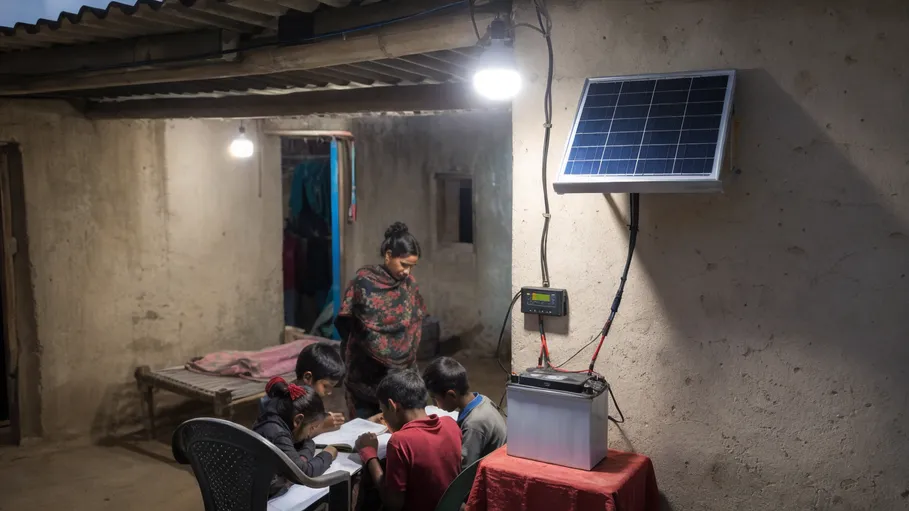
Solar home kits (panel + charge controller + battery + LED lighting) deploy in millions of units across Africa, South Asia, and rural Latin America. Repeat demand is built into the product lifecycle — lead-acid replacements every 3-5 years, lithium upgrades as household income grows.
Your 12V deep-cycle battery is the consumable component in an installed base that keeps expanding.
Rural Electrification Projects
Project Volumes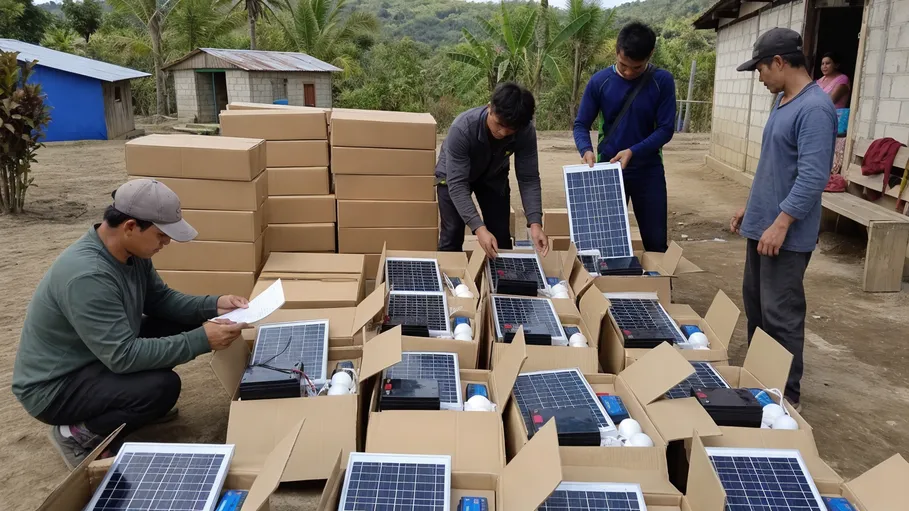
Government and NGO-funded programs that deploy standardized 12V solar kits to unelectrified communities. Orders come in project volumes (500–5,000 units), specifications are locked to program requirements, and delivery timelines are fixed.
If you can meet the spec and the documentation requirements, these programs reorder annually.
RV and Marine Distribution
Seasonal Wholesale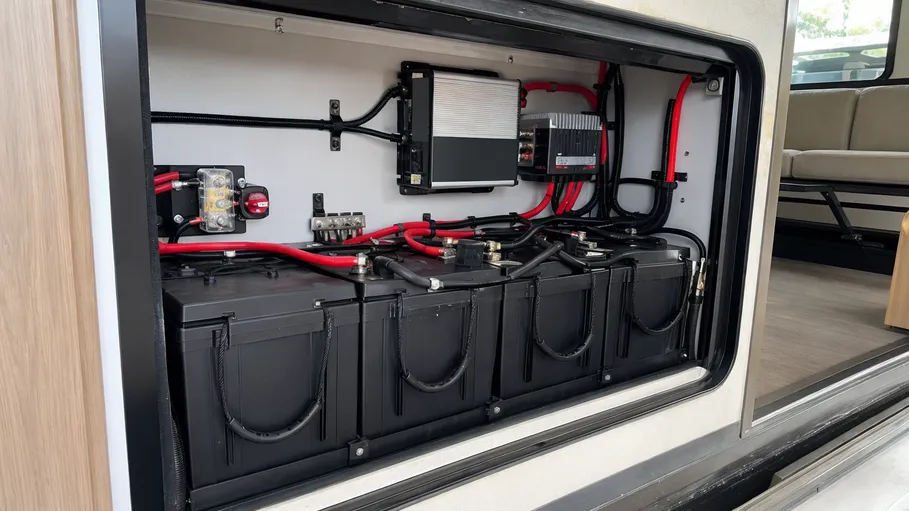
12V house banks for recreational vehicles and boats — a mature market with established distribution channels in Europe, Australia, and North America. LiFePO4 is taking share from AGM in this segment because weight savings matter and buyers accept the premium.
Seasonal ordering patterns (spring ramp-up), but consistent year-over-year growth.
Telecom and CCTV Backup
Specification-Driven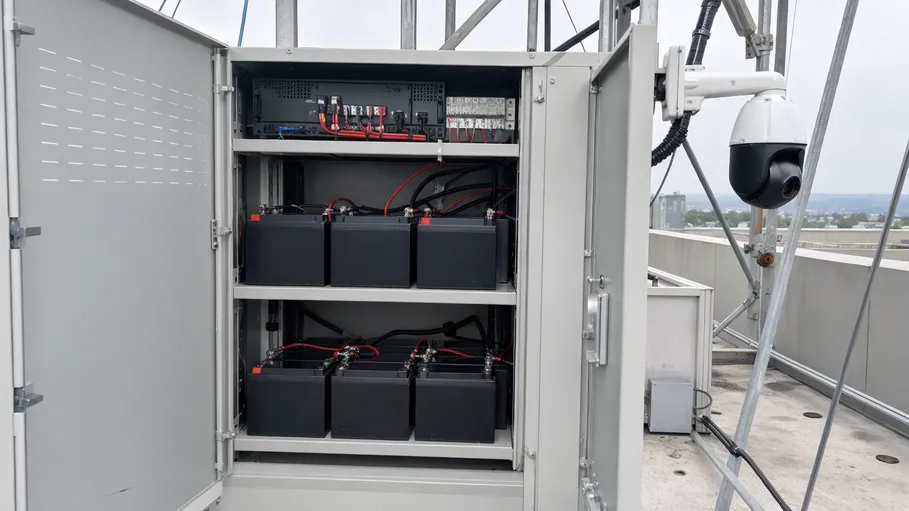
Cell towers, security cameras, and remote monitoring stations need 12V backup batteries that float-charge and deliver when grid power drops. Specification-driven purchasing — telecom operators specify exact capacity, cycle life, and temperature range.
Lower volume per order but high reorder frequency and strict quality requirements.
Portable Solar Kits and Lighting
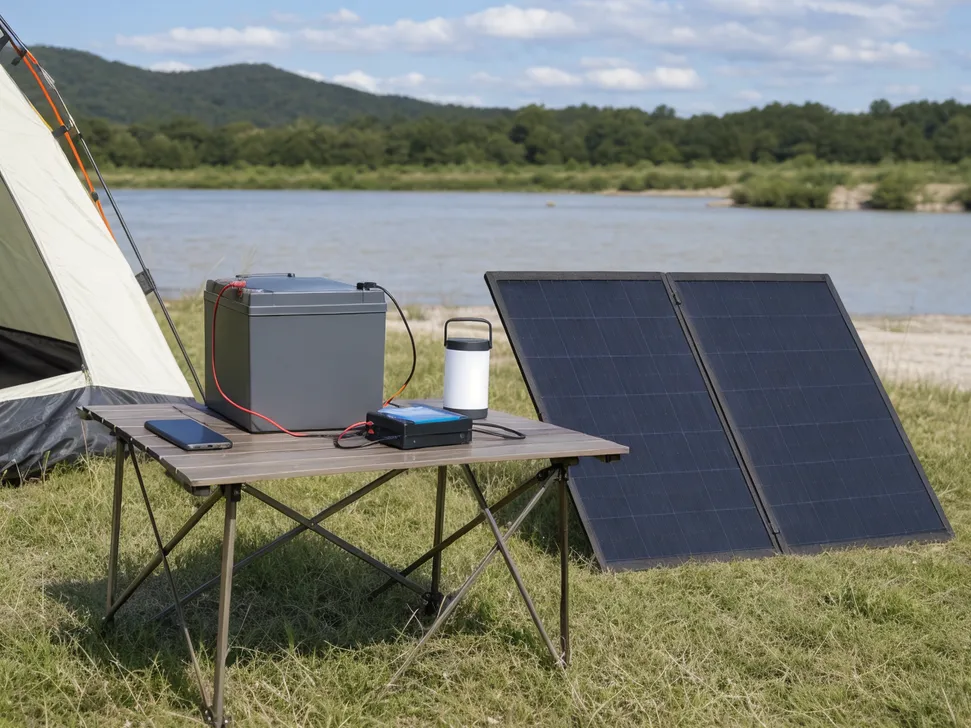
Growing E-CommerceSmaller 12V batteries (50–65Ah) for portable solar generators, camping kits, and solar lighting systems. Growing fast in outdoor recreation and emergency preparedness markets.
Higher margin per unit, lower weight, and strong e-commerce channel potential for your distribution business.
| Market Segment | Recommended Chemistry | Primary Buying Concern | Order Pattern |
|---|---|---|---|
| Off-grid solar home | Gel (budget) / LiFePO4 (premium) | Price per cycle, replacement frequency | Repeat wholesale |
| Rural electrification | Gel or LiFePO4 per program spec | Compliance documentation, delivery timeline | Project volumes |
| RV/marine | LiFePO4 | Weight, cycle life, BMS features | Seasonal wholesale |
| Telecom/CCTV backup | LiFePO4 | Float life, temperature range, reliability | Specification-driven repeat |
| Portable solar kits | LiFePO4 | Weight, compact size, charge speed | Growing e-commerce channel |
For higher-power commercial and industrial applications, the 12V platform isn't the right fit. Direct those requirements to 48V Solar Battery or Off Grid Solar Battery System configurations. For portable product options, see our Portable Solar Battery range.
Export Compliance, Packing, and Reorder Planning
Batteries are regulated goods. Your import process, freight booking, and customs clearance all depend on documentation and packing that meet international transport regulations. As a 12V solar battery supplier shipping to Europe, Southeast Asia, Africa, South America, and the Middle East, we handle this routinely.
Documentation You Receive With Every Shipment
Missing any of these documents means port delays, rejected shipments, or additional inspection fees. We prepare the complete documentation package as part of your order process, not as an afterthought.
UN38.3 Test Summary
Required for lithium battery transport by sea and air. We maintain current reports for every standard model.
MSDS (Material Safety Data Sheet)
Required by freight forwarders and customs authorities for both lithium and lead-acid.
CE Declaration of Conformity
For European market entry.
IEC 62133 Test Report
Battery safety standard — required by many importers and market regulators.
ISO 9001:2015 Certificate
Manufacturing quality management system verification.
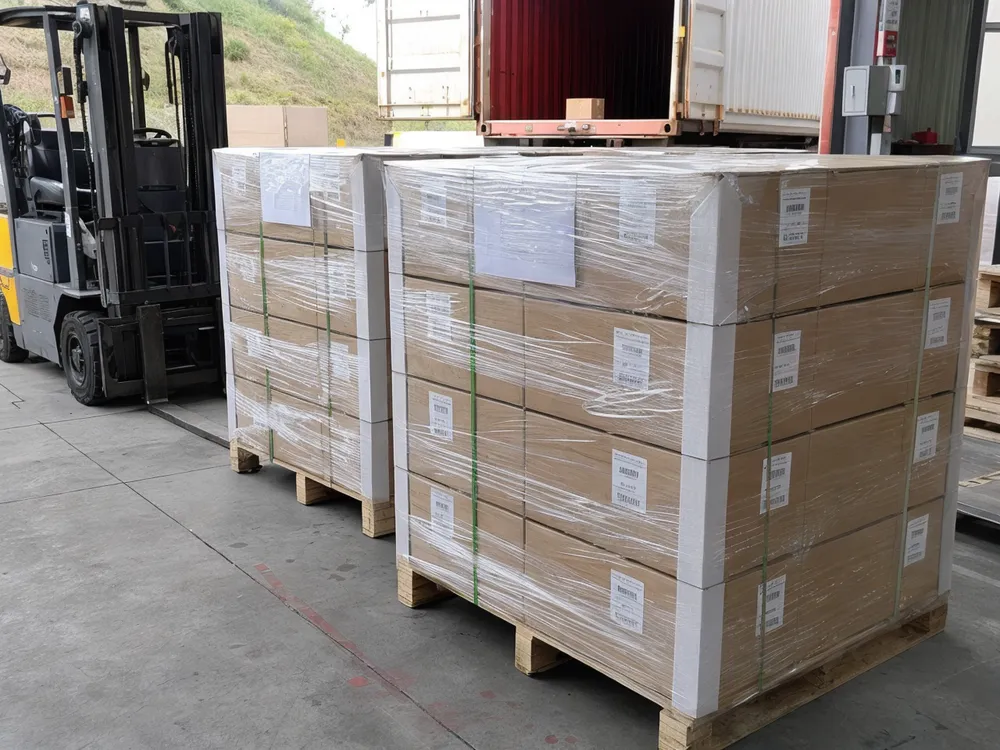
Packing and Palletizing
12V batteries are heavy and vulnerable to terminal damage during transit. Our standard packing protocol:
- Individual battery in foam-lined inner carton with terminal protection caps
- Short-circuit prevention: terminal insulation and separation within packaging
- Outer carton reinforced for stacking (double-wall corrugated, rated for the unit weight)
- Palletized with stretch wrap and corner protectors for container loading
- SKU-level packing list with weight, dimensions, and quantity per pallet
Africa & Inland Destinations
For African and inland-destination orders, we add extra carton reinforcement because the last-mile logistics are rougher than port-to-warehouse delivery. This is a small cost addition that prevents significant damage claims — we learned this from early shipments to East Africa where standard export packing wasn't surviving the overland leg.
Container Loading
Exact loading quantities depend on chemistry, Ah rating, and packaging configuration. We calculate and confirm loading per SKU during quotation — you'll know exactly how many units fit in a 20GP or 40HQ before you commit to order volume.
Lead-acid batteries are significantly heavier than lithium at equivalent capacity, so container weight limits often determine loading quantity before volume does.
Reorder Planning
Once your first order ships and sells through, reorders are straightforward. We hold your BOM, BMS parameters, label files, and packing specifications on file.
Lead time on repeat orders is shorter than first orders because there's no engineering review cycle — just production scheduling and QC execution.
FAQ for 12V Solar Battery Procurement
Direct answers to the chemistry, capacity, and configuration questions that come up during distributor sourcing decisions.
Is LiFePO4 or gel better for a 12V solar battery wholesale program?
It depends on your target market's price sensitivity and replacement cycle expectations. LiFePO4 costs 2–3× more upfront but delivers 4–6× the cycle life, so your total cost per cycle is lower and warranty claims drop below 0.5%. Gel costs less per unit, moves faster in price-sensitive markets (Africa, rural South Asia), and your buyers are accustomed to 3–5 year replacement cycles — which means built-in repeat demand.
- 4–6× cycle life vs gel
- Warranty claims < 0.5%
- Lower total cost per cycle
- Lower per-unit cost
- Faster sell-through in price-sensitive regions
- Built-in 3–5 year repeat demand
Most distributors carry both: LiFePO4 for premium channels and gel for volume markets. We produce both under one roof, so your procurement stays consolidated.
What capacity range should a distributor stock first for 12V solar batteries?
Start with 100Ah. It covers the widest range of applications — residential off-grid, RV house banks, small backup systems — and represents the highest-volume SKU in most markets.
Once 100Ah is established, add 200Ah for customers with higher autonomy requirements and 50Ah for portable/lighting applications. This three-tier approach gives you market coverage without excessive inventory risk:
Portable & lighting
Residential, RV, backup
High autonomy systems
For specific capacity recommendations based on your market, send us your target region and application mix.
Can 12V solar batteries be connected in series or parallel?
Yes, with important constraints.
Two 12V batteries = 24V
- Requires matched batteries from the same production batch — same chemistry, same capacity, same age
- For LiFePO4, each battery's BMS must support series operation (configured during production)
Two 12V batteries = doubled Ah at 12V
- Simpler than series but still requires capacity-matched units
- We supply pre-matched sets — specify in your RFQ so we group cells accordingly
For systems above 24V, it's more reliable to use purpose-built 24V or 48V packs rather than series-connecting 12V units.
What BMS protections matter most for 12V LiFePO4 solar batteries?
Five protections are non-negotiable: over-charge (prevents thermal runaway), over-discharge (prevents cell damage below safe voltage), over-current (prevents wiring fires), short-circuit (immediate shutdown), and high-temperature cut-off (prevents thermal events in hot climates).
Beyond these basics, low-temperature charge protection is critical for any market with winter conditions — charging LiFePO4 below 0°C causes lithium plating on the anode, permanently reducing capacity. We include low-temperature charge lockout on all our 12V LiFePO4 packs by default.
Cell balancing (passive or active) is the sixth essential function — it prevents capacity drift between cells over hundreds of cycles. Our BMS boards include all six functions as standard, programmed to match the specific cell chemistry in each pack.
Over-Charge
Over-Discharge
Over-Current
Short-Circuit
High-Temp Cut-off
Low-Temp Lockout
What certifications are needed to import 12V solar batteries?
Minimum requirements for most markets:
- UN38.3 — lithium battery transport safety, required by shipping lines and airlines
- MSDS — material safety data, required by customs and freight forwarders
- Declaration of Conformity — baseline compliance document
For European import: add CE marking and IEC 62133 (battery safety standard). Some markets require additional local certifications — South Africa (NRCS), India (BIS), Brazil (INMETRO).
EVANBattery Standard Certifications Held:
If your destination market requires additional certification, our engineering team supports the application process with test samples and technical documentation. Check our certification page for current documents.
What is EVANBattery's MOQ for standard 12V solar battery orders?
100 units for standard models — any chemistry, any capacity within our standard range. This applies to catalog configurations with standard labeling.
OEM Orders
100 units
Your brand label on our standard product
ODM (Minor Mods)
200–500 units
Custom capacity, BMS parameters, or enclosure
Fully Custom
500+ units
Depends on engineering scope
We set MOQ low deliberately so you can test a SKU in your market before scaling to container volumes. Request a quotation with your target specs and quantity — we'll confirm exact MOQ and pricing for your configuration.