

Commercial Solar Battery Storage for Repeat C&I Projects
48V / 51.2V LiFePO4 rack and cabinet battery systems — built for commercial solar projects that reorder. Multi-module configurations with in-house BMS, RS485/CAN communication, and batch-level cell matching for parallel string consistency across your entire installation.
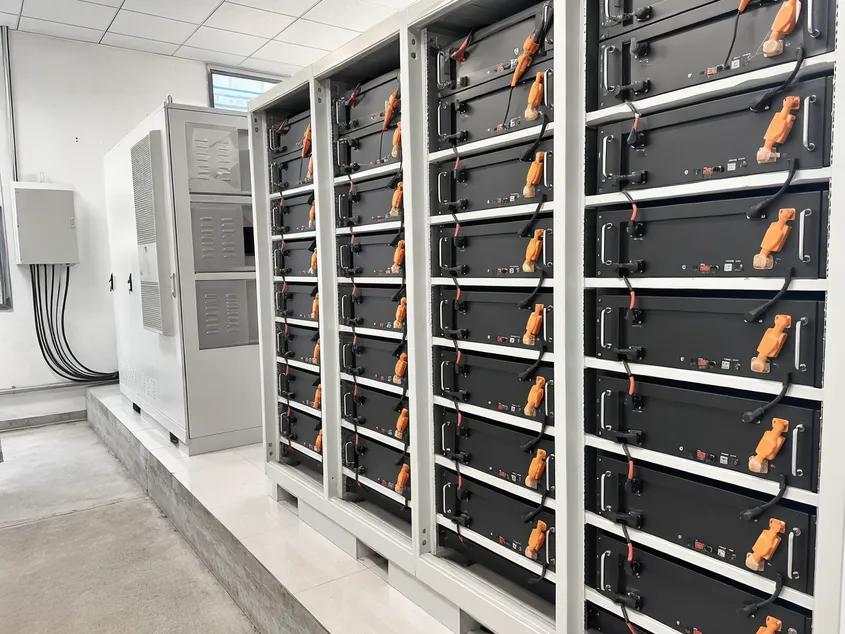
Commercial Solar Battery Storage for Repeat C&I Projects
We manufacture commercial solar battery storage — rack-mounted modules and cabinet-based systems in 48V / 51.2V LiFePO4 — for project contractors, distributors, system integrators, and OEM partners who need repeatable supply for C&I installations. Not single residential modules. Not utility-scale container engineering. The middle ground: 20–500 kWh project capacity, service-friendly enclosures, parallel expansion, and BMS communication that actually talks to your inverter on commissioning day.
This is what we do at our 9,900 m² facility in Zhongshan, Guangdong — battery packs and BMS systems for solar energy storage. No panels, no inverters, no racking. We've been shipping commercial storage configurations since 2016, when our first rack-mounted 48V LiFePO4 orders went to telecom backup projects in West Africa. The product direction has grown into our highest-margin category because commercial buyers reorder — once a contractor proves a configuration on one site, the next ten sites use the same spec.
If your business supplies commercial solar projects and you need a commercial solar battery supplier who can deliver consistent multi-module batches with matched cells and pre-configured BMS, send your project specification — kWh target, inverter model, quantity, and destination market.
In-House BMS
RS485/CAN communication pre-configured per inverter model
Batch Cell Matching
Parallel string consistency across multi-module installations
Repeat Supply
Same spec, same cells, same BMS — project after project
9,900 m²
Manufacturing Facility
Since 2016
Commercial Storage Shipments
48V / 51.2V
LiFePO4 Standard
20–500 kWh
Project Capacity Range
Commercial Project Fit Before You Choose a Battery Format
Not every commercial project needs the same battery format. Before you request a quote, it helps to know which segment you're supplying — because the format, BMS configuration, and documentation package differ by application.
Retail & Small Commercial Buildings
Backup Duration Focus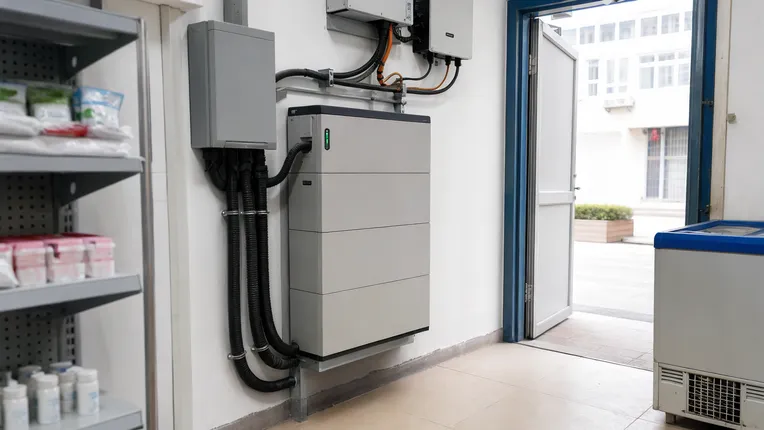
Backup duration is the primary spec. Your end customer wants 4–8 hours of critical load coverage. Compact cabinet systems with 2–4 modules in parallel, wall or floor-mounted, with basic RS485 monitoring.
Orders tend to be 20–50 units per project batch, repeating quarterly as your installer network grows. Predictable module replacement after 8–10 years creates a built-in aftermarket.
Small Factories & Workshops
Industrial Duty Cycles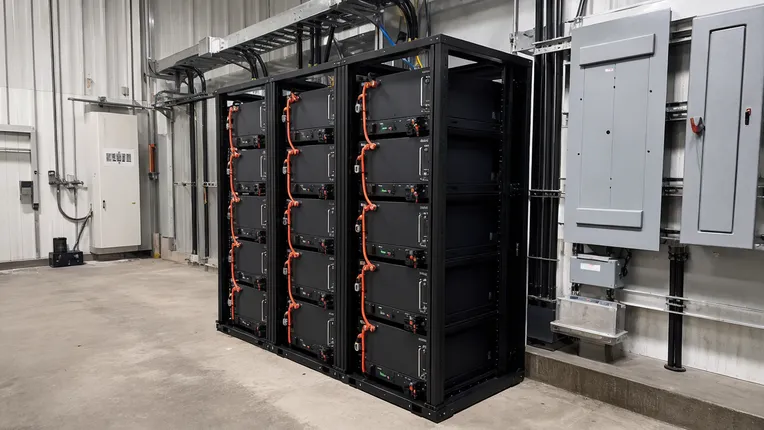
Higher instantaneous loads mean you need modules rated for 0.5C–1C continuous discharge. Parallel expansion to 6–10 modules per string is common. BMS over-current protection thresholds must be set for industrial duty cycles, not residential trickle loads — generic settings cause nuisance shutdowns during motor startup surges.
We configure protection parameters per application during production, not as a field adjustment.
Farms & Cold-Chain Facilities
Daily Cycling / Remote Sites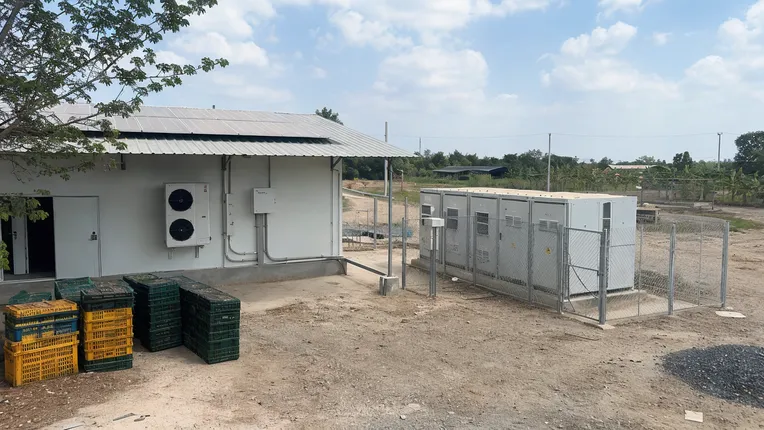
Solar-plus-storage with daily cycling. Rough logistics to site — reinforced packaging matters here more than urban projects. Service access is limited, so you need modules that run maintenance-free between annual inspections.
Industrial solar battery storage for agricultural sites has grown steadily for us across Southeast Asia and Africa.
Telecom Towers & Remote Infrastructure
48V DC Legacy Standard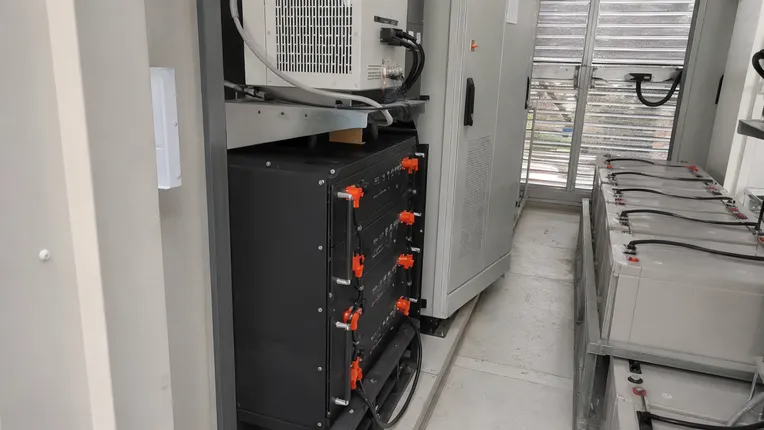
48V is the legacy standard for telecom DC power. Your procurement team needs drop-in LiFePO4 replacements for aging lead-acid banks without site rewiring. Stable BMS protection across -10°C to 55°C ambient, export packaging rated for inland transport, and documentation that satisfies telecom audit requirements.
Clinics, Schools & Public Facilities
Compliance-Driven ProcurementCompliance documentation drives the purchase decision. You need IEC 62133 and CE reports before tender submission, not after delivery. Predictable maintenance scheduling and module-level serviceability reduce your after-sales cost per site.
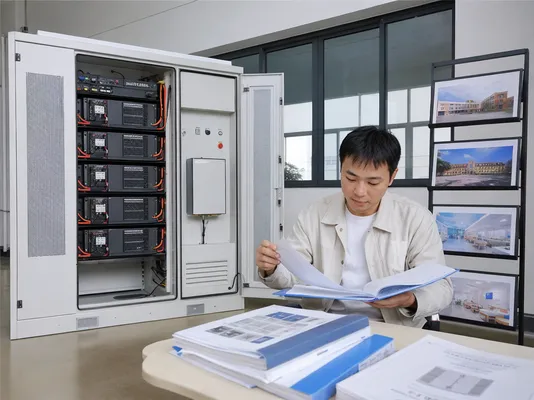
Each segment represents a repeatable order pattern for your business. Tell us which markets you supply and we'll recommend the format, capacity, and BMS configuration that fits.
If your project scale exceeds cabinet/rack capacity — solar farms, microgrids, infrastructure — see our utility-scale solar battery storage direction.
Rack and Cabinet Configurations You Can Quote Against
Commercial solar battery storage from EVANBattery ships in two primary formats: rack-mounted modules for scalable, serviceable installations, and cabinet-based systems for site-ready project delivery. Both use 48V / 51.2V LiFePO4 cells with in-house BMS.
Rack-Mounted Modules
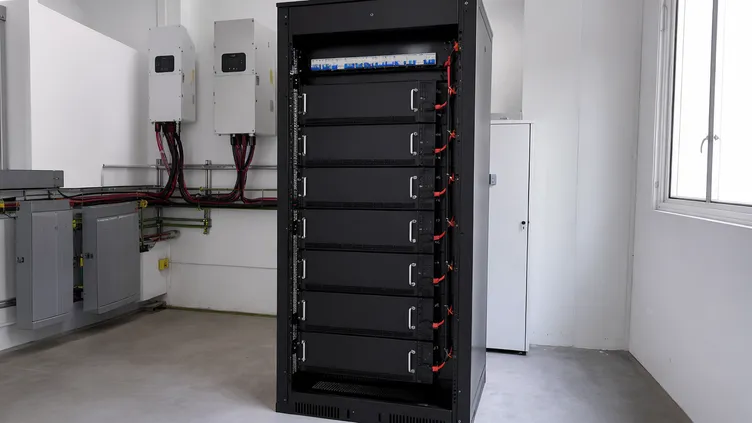
Standard 19" rack-compatible modules designed for parallel expansion. Each module is independently managed by its own BMS, communicating with the inverter or EMS via RS485 or CAN bus.
You pull a failed module and replace it without taking the entire string offline — this is the format commercial installers prefer because it reduces site downtime to minutes instead of hours.
Cabinet-Based Systems
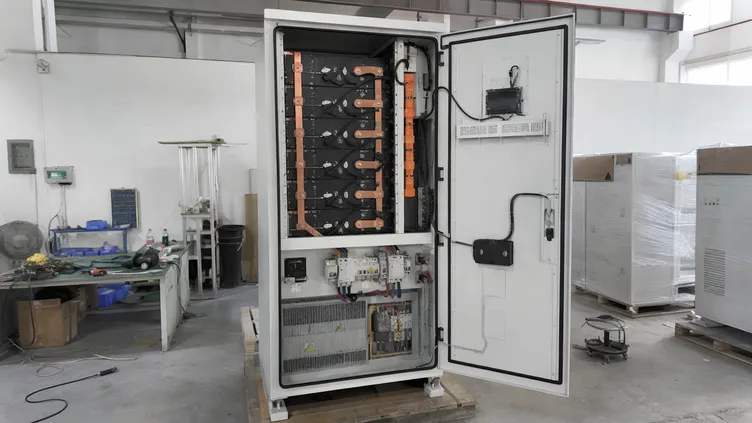
Pre-assembled cabinet enclosures with multiple modules, internal busbar connections, DC breakers, and communication wiring completed at the factory. Your installer receives a unit that needs power cable connection and communication cable to the inverter — commissioning time drops from a full day to a few hours.
We build cabinets for buyers who deploy 5–20 identical sites and want to minimize on-site labor variation.
Planning Specifications
| Parameter | Typical Range |
|---|---|
| Nominal Voltage | 48V / 51.2V (16S LiFePO4) |
| Module Capacity | 100Ah, 200Ah, 280Ah (planning examples) |
| Energy per Module | 5.12 kWh – 14.3 kWh |
| Parallel Expansion | Up to 8–16 modules per string (model-dependent) |
| Communication | RS485, CAN bus (protocol confirmed during quotation) |
| BMS Protections | OVP, UVP, OCP, SCP, OTP, UTP, cell balancing |
| Charge Rate | 0.5C standard; 1C available on select models |
| Discharge Rate | 0.5C–1C continuous |
| Cycle Life | 4,000–6,000 cycles at 80% DOD |
| Operating Temperature | -20°C to 55°C (discharge); 0°C to 45°C (charge) |
| Enclosure Rating | IP20 (indoor rack); IP55 available for outdoor cabinet |
Specifications shown are planning ranges for commercial project scoping. Exact values — dimensions, weight, connector type, parallel limits — are confirmed on your quotation sheet based on selected model and configuration.
BMS Communication and Inverter Matching Reduce Site Failures
This is where commercial solar battery storage projects succeed or fail at commissioning — and it's the section most buyers skip until they've already had a problem on site.
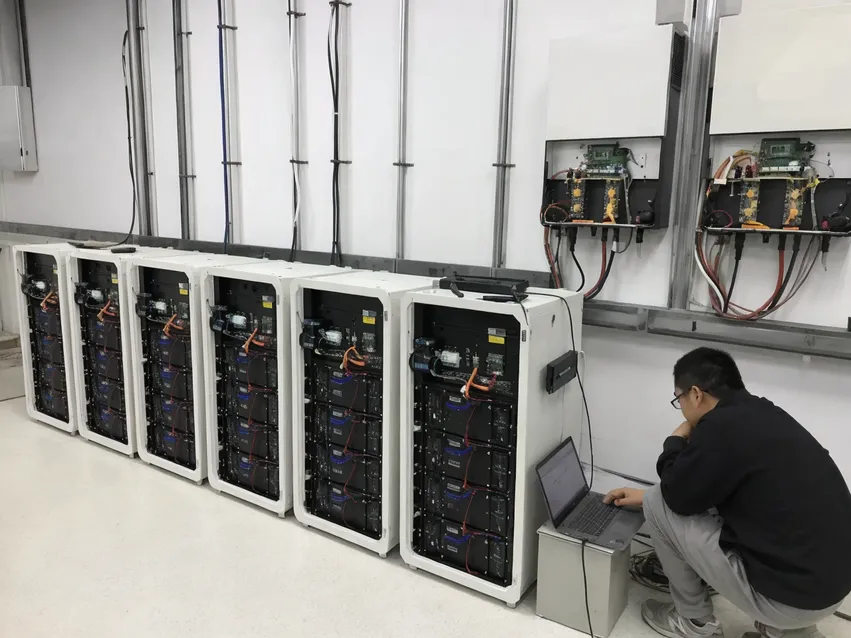
A commercial installation with 4–8 parallel modules needs every BMS talking to the inverter in the same protocol, at the same baud rate, with the same data frame structure.
If one module reports state-of-charge in a format the inverter doesn't parse correctly, the system either ignores that module (unbalanced charging, accelerated degradation) or throws a communication fault and shuts down the entire string. We've seen both failure modes from buyers who previously sourced batteries with generic third-party BMS boards.
Why This Matters Commercially
A communication fault on a 50 kWh commercial installation means a site visit, a diagnostic cycle, possibly a firmware reflash or module swap — and an unhappy end customer who questions your product recommendation.
Multiply that across 20 project sites and your after-sales cost erodes the margin you built into the original quote.
How We Handle It
Our BMS team designs and produces boards in-house. During quotation, we ask for your inverter brand and model — Deye, Growatt, Victron, Goodwe, SoFar, Sungrow, or others.
We configure the communication protocol (RS485 or CAN), data frame format, and polling parameters before production starts. Not as a firmware patch after your installer reports the problem. Not as a "compatible with most inverters" claim that falls apart on specific models.
Commercial Duty Cycle Calibration
For commercial duty cycles, we also adjust BMS protection thresholds beyond the residential defaults. Commercial systems cycle more deeply and more frequently — over-current limits, cell-balancing trigger voltages, and temperature derating curves all need calibration for the actual load profile.
A residential backup unit that cycles once during a grid outage has fundamentally different stress patterns than a commercial peak-shaving system cycling daily. We program accordingly.
If you're bundling batteries with a specific inverter brand for your project pipeline, tell us during quotation — we'll pre-validate the communication and send you a test report showing successful handshake before you commit to production volume.
Send Your Inverter Model & kWh Target for a Matched QuoteCell Matching and Batch Testing for Multi-Module Installations
A single residential battery module can tolerate moderate cell variation — the BMS compensates, the user never notices. A commercial installation with 6 modules in parallel cannot. When one module in a parallel string has weaker cells, it charges faster, hits protection limits earlier, and forces the entire string to derate. Over 500 cycles, that one module becomes the bottleneck that defines your system's usable capacity. Your end customer sees declining performance; you see a warranty claim.
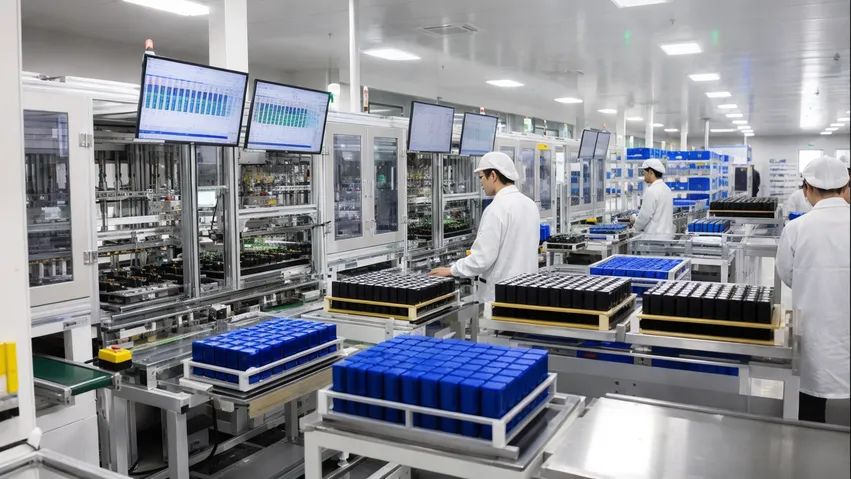
Automated Cell Sorting Before Pack Assembly
Every cell entering commercial battery production goes through individual testing — open-circuit voltage, internal resistance, and capacity measurement. Cells are grouped within 20mV voltage deviation and 5mΩ internal resistance spread. This is 100% incoming inspection on every cell, not a spot check on a sample.
We rejected approximately 3% of incoming cells last year. Those go back to the supplier, not into a "budget" product line.
Pack-Level Consistency Across Your Order
When you order 50 rack modules for a project, all 50 need to perform identically in parallel. Our sorting ensures that module-to-module capacity variation stays within 1–2% across your entire batch. This is the difference between a system that runs cleanly for 4,000+ cycles and one that generates nuisance BMS shutdowns after 18 months.
Full Lifecycle Testing on Every Production Batch
We run these on production batches, not just during initial type approval. The test data travels with your shipment — you can show it to your end customer or include it in your project documentation.
Production Batch Test Protocol
Capacity Verification
At rated discharge
Charge/Discharge Cycling
BMS balancing behavior
High-Temp Soak
55°C sustained
Low-Temp Discharge
-20°C performance
Safety Testing
Vibration, drop (sample)
What This Means for Your Warranty Planning
Consistent cell matching and batch testing let you forecast after-sales cost per unit shipped. Instead of discovering six months later that 5–8% of a batch needs field attention, you ship knowing the performance envelope is tight. For commercial solar battery storage, predictable warranty exposure is a margin protection tool.
OEM/ODM Options for Commercial Storage Programs
If you're building a branded commercial storage program — whether you're a distributor with your own product line, an inverter manufacturer bundling storage, or a project integrator standardizing on a single battery platform — here's what we can customize and what requires engineering discussion.
Capacity and Voltage Configuration
Standard 51.2V platform with 100Ah, 200Ah, or 280Ah modules. Non-standard configurations (higher series voltage for specific inverter architectures, custom Ah ratings) require engineering validation but are feasible above agreed MOQ thresholds.
Rack/Cabinet Format and Enclosure
19" rack-mount is our standard commercial format. Cabinet dimensions, internal layout, busbar routing, and DC breaker placement can be adjusted for your installation standard. New enclosure tooling is available for volume commitments — we'll quote the tooling cost and amortization separately so you can see the per-unit impact.
BMS Firmware and Communication
Protocol selection (RS485, CAN, or both), data frame customization for your EMS platform, protection parameter adjustment for your specific duty cycle, and firmware version labeling under your brand. This is where in-house BMS design pays off — we're not asking a third-party board supplier to make changes on your timeline.
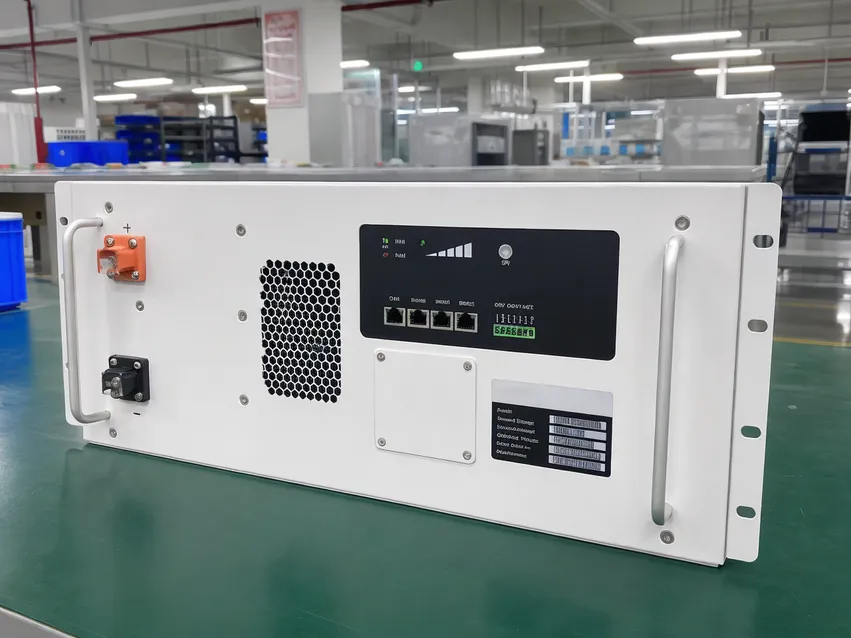
Branding and Market Presentation
Front panel logo (silk-screen or laser-etched), enclosure color (RAL or Pantone matching), custom label layouts with your part numbers and serial format, and retail-ready or project-ready packaging. Your downstream customer sees your brand, not ours.
Documentation Under Your Brand
CE, IEC 62133, and UN38.3 testing can be conducted under your company name for market registration. We coordinate with accredited test labs and provide engineering samples and technical data packages for the certification process.
MOQ Structure
Standard commercial models start at 100 units — enough to prove a configuration across 3–5 project sites before scaling. Custom BMS firmware or non-standard capacity configurations require volume discussion, but we state the threshold upfront during quotation.
No surprises after you've committed engineering time.
Export Documents, Packaging, and Landed-Cost Planning
Commercial lithium batteries are heavy, regulated, and expensive to ship incorrectly. Your landed cost depends on more than FOB price — it includes documentation preparation, packaging engineering, container utilization, and destination-market compliance. Here's how we handle each factor as a commercial solar battery supplier shipping to five continents.
Documentation Package
UN38.3 test summary (mandatory for all lithium shipments), MSDS/SDS sheets, shipping declaration with correct UN3481 classification, and packing list with gross weight and CBM per pallet. CE and IEC 62133 reports for European market access. ISO 9001:2015 manufacturing certificate.
We maintain current documentation for every standard model — OEM configurations get dedicated test reports as part of the development cycle.
Packaging for Industrial Solar Battery Storage
A 51.2V 200Ah rack module weighs 45–55 kg depending on enclosure. We use reinforced double-wall cartons with molded foam inserts, palletized on fumigation-treated wooden pallets, stretch-wrapped and banded. Each carton carries battery handling labels, UN number, and gross weight per IMDG requirements.
Cabinet systems ship on custom steel frames bolted to the pallet base.
Field lesson: We added the steel frame option in 2021 after two cabinet shipments to East Africa arrived with base damage from rough port handling — the extra $15–20 per unit eliminated the problem entirely.
Container Planning and Weight Limits
Commercial battery modules are weight-limited before they're volume-limited. A 20GP container maxes out at approximately 22–24 tonnes payload — depending on your module weight, that might be 400–500 units before you fill the floor space.
40HQ containers give you better freight cost per kWh on mixed-SKU shipments. We calculate loading plans after order specification is confirmed, because a 100Ah rack module and a 280Ah cabinet system have completely different packing densities.
20GP
22–24t payload
400–500 units
40HQ
Better $/kWh
Mixed-SKU optimal
Destination-Market Considerations
-
Europe: CE and IEC reports cleared before goods arrive at port.
-
Africa: Reinforced palletization for overland transport after discharge.
-
Middle East: UN38.3 summaries in specific customs formats.
-
South America: Additional local battery registration support.
We've shipped to all these markets — tell us your destination port and we'll confirm the documentation and packaging package.
Shipping and delivery details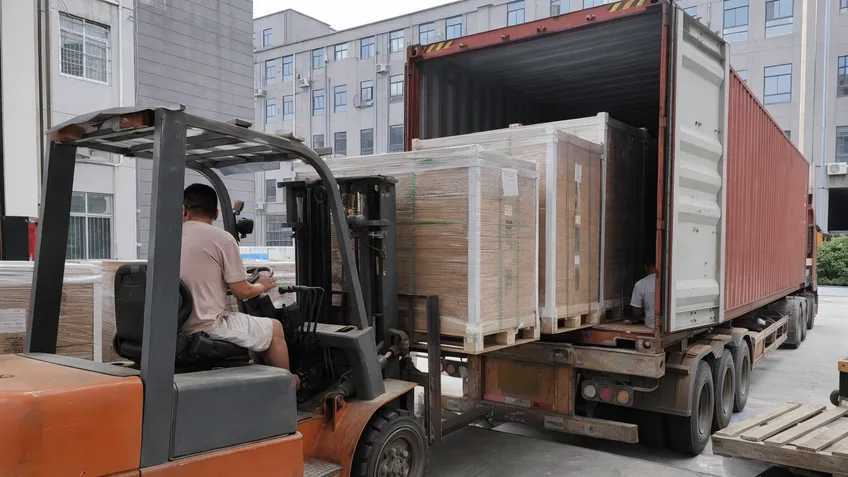
Request a Shipment Planning Quote
Provide your model mix and destination port — we'll return a complete landed-cost estimate including documentation, packaging specification, and container loading plan.
Request Shipment Planning QuoteCommercial Storage vs Other 48V Battery Routes
If you're evaluating where commercial solar battery storage fits relative to other 48V products we manufacture, this comparison helps you self-select the right direction — or confirm you're on the correct page.
| Factor | 48V LiFePO4 Solar Battery | Commercial Solar Battery Storage | Utility Scale Solar Battery Storage |
|---|---|---|---|
| Primary buyer | Distributors, residential installers | Project contractors, C&I integrators | EPC firms, microgrid developers |
| Typical project scale | 1–4 modules per site | 4–16 modules per site (20–200+ kWh) | Container or multi-cabinet (500+ kWh) |
| Format | Wall-mount, stackable tower | 19" rack-mount, cabinet | Container, large cabinet array |
| BMS complexity | Standard residential protocol | Multi-module communication, commercial duty cycle | System-level EMS integration |
| Order pattern | 200–5,000 units, catalog reorders | 50–500 units per project batch | Project-specific engineering |
| Lead time driver | Stock model availability | BMS configuration + batch matching | Engineering cycle + custom fabrication |
48V LiFePO4 Solar Battery
If your projects are residential or light-commercial single-module installations, the standard module programs for distribution are covered here.
View 48V LiFePO4 modulesUtility-Scale Solar Battery Storage
If your projects exceed 500 kWh or involve container-level engineering, the utility-scale page covers that direction.
View utility-scale systemsRack-Mounted Solar Battery
If you need rack-format details specifically, the rack-mounted page covers that enclosure direction in depth.
View rack-mounted batteriesYou're in the right place if…
This page — commercial solar battery storage — is for the middle ground: repeatable C&I projects where you need multi-module consistency, commercial BMS configuration, and a supplier who can deliver matched batches on a project timeline.
Commercial Solar Battery Storage FAQ
Direct answers to the specification, format, protocol, and import questions we receive from distributors and system integrators sourcing commercial LiFePO4 storage.
How much battery capacity is typical for a commercial solar storage project?
Most commercial projects we supply fall between 20 kWh and 200 kWh — that's 4 to 16 rack-mounted modules at 51.2V. Typical sizing by application:
Small Retail / Critical Load
20–30 kWh
Factory Peak-Shaving
50–100 kWh
Telecom (8-hr Backup)
30–50 kWh
The capacity decision depends on your end customer's daily consumption, backup duration requirement, and available installation space. Send us the load profile and backup hours — we'll recommend the module count and parallel configuration.
Rack-mounted vs cabinet: which format should buyers choose for commercial solar battery storage?
Rack-Mounted Modules
Gives you serviceability and scalability — you can add or replace individual modules without touching the rest of the string. Choose rack format when your projects vary in size (you configure module count per site) or when your installer base prefers field-serviceable components.
Cabinet Systems
Makes sense when you're deploying 10+ identical sites and want to minimize on-site labor — the factory handles internal wiring, busbar connections, and DC protection, so your installer just connects power and communication cables. Also reduces commissioning errors on sites with less experienced installation crews.
What inverter communication protocol should commercial solar batteries support?
RS485 and CAN bus cover 90%+ of commercial hybrid inverters. The critical detail is the data frame format — not just the physical protocol. Generic "RS485 compatible" claims mean nothing if the data format doesn't match your inverter's expected input.
| Inverter Brand | Protocol | Notes |
|---|---|---|
| Deye | CAN | Specific register maps |
| Growatt | CAN | Specific register maps |
| Victron | RS485 + CAN | Documented protocols, both supported |
| Goodwe | CAN | Proprietary frame structures |
| SoFar | CAN | Proprietary frame structures |
Tell us the exact inverter model during quotation — we configure and validate before production.
What documents are needed to import commercial lithium solar batteries?
Minimum for any lithium battery shipment:
- UN38.3 test summary
- MSDS/SDS sheet
- Shipping declaration with UN3481 classification
For European import: add CE declaration of conformity and IEC 62133 test report.
Some markets require additional local registration — South Korea (KC), Australia (RCM), or specific Middle Eastern standards.
We maintain current UN38.3, MSDS, CE, and IEC 62133 documentation for all standard models. OEM configurations receive dedicated test reports. View our certification overview.
How does commercial solar battery storage differ from utility-scale storage?
Scale, engineering cycle, and order structure separate the two directions:
Commercial Storage (This Page)
- 20–500 kWh in rack or cabinet format
- Standardized modules, repeatable project deployment
- 50–500 unit order batches
- Faster repeatability, distributor/contractor-friendly
Utility-Scale Storage
- 500 kWh to multi-MWh in container or large cabinet arrays
- Custom engineering per project
- Longer development cycles
- EPC-level documentation
The production backbone is the same (same cell sorting, same BMS team, same factory), but the commercial direction is designed for faster repeatability and distributor/contractor-friendly order structures. Learn about utility-scale storage.
What is EVANBattery's MOQ for standard commercial battery models?
100 units for standard rack-mounted or cabinet models. This lets you prove a configuration across 3–5 project sites before committing to larger volumes.
OEM/ODM configurations with custom BMS firmware, non-standard capacity, or new enclosure tooling have variable MOQ depending on engineering scope — we state the threshold during quotation so you can calculate landed cost before committing. Send your specification for a commercial storage quote.
Send Project Specs for a Commercial Storage Quote
You've seen the configurations, BMS approach, QC process, and export capability. The next step is specific — send us your project requirements and we'll respond with a technical recommendation, model match, MOQ confirmation, and packaging estimate.
We respond with:
- Technical configuration recommendation
- Exact specifications and datasheet
- BMS protocol confirmation
- MOQ and lead time
- Packaging and container loading plan
- Documentation list for your import process
Contact us directly:
- Email: evan@evanbattery.com
- Phone / WhatsApp: +86 13560690838
- Factory: No. 38, Tongxing 1st Road, Jiafuwei Industrial Zone, Caosan Village, Guzhen Town, Zhongshan City, Guangdong Province, China
Include in your inquiry:
- 1 Target system capacity (kWh per site)
- 2 Preferred voltage (48V / 51.2V standard)
- 3 Module capacity preference (100Ah, 200Ah, 280Ah, or let us recommend)
- 4 Inverter brand and model (for BMS protocol matching)
- 5 Enclosure format (rack-mount, cabinet, or let us recommend based on your project)
- 6 Communication protocol requirement (RS485, CAN, or both)
- 7 Branding needs (your logo/color, or standard EVANBattery)
- 8 Estimated quantity per order and annual volume
- 9 Destination port or country
We respond with a technical proposal within 48 hours.
Explore Related 48V Solar Battery Products