About EVANBattery
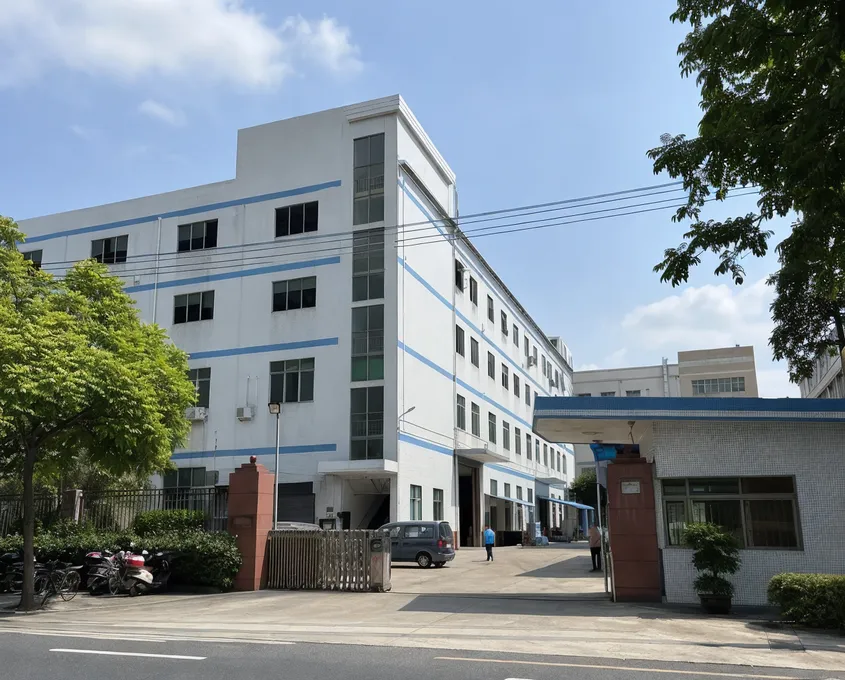
EVANBattery is the export brand of Zhongshan Aiwen Import and Export Trading Co., Ltd., a solar battery manufacturer based in Guzhen Town, Zhongshan City, Guangdong Province. We design, produce, and ship solar energy storage batteries — lithium (LiFePO4) and lead-acid (gel, AGM) — for distributors, project contractors, and OEM/ODM partners across five continents.
Since 2012, our single focus has been solar battery manufacturing. We don't make panels, inverters, or racking. We make the battery packs and BMS systems that sit at the core of residential, commercial, and off-grid solar storage installations — and we make them at a scale that supports repeat wholesale programs.
EVANBattery Company Profile for Solar Battery Buyers
EVANBattery is the export brand of Zhongshan Aiwen Import and Export Trading Co., Ltd., a solar battery manufacturer based in Guzhen Town, Zhongshan City, Guangdong Province. We design, produce, and ship solar energy storage batteries — lithium (LiFePO4) and lead-acid (gel, AGM) — for distributors, project contractors, and OEM/ODM partners across five continents.
Since 2012, our single focus has been solar battery manufacturing. We don't make panels, inverters, or racking. We make the battery packs and BMS systems that sit at the core of residential, commercial, and off-grid solar storage installations — and we make them at a scale that supports repeat wholesale programs.
LiFePO4 Lithium
Long-cycle lithium iron phosphate packs with integrated BMS
Lead-Acid (Gel, AGM)
Proven deep-cycle gel and AGM batteries for off-grid solar
BMS Systems
In-house battery management system engineering and production
5 Continents
Export partners across Europe, Asia, Africa, South America, and the Middle East
Who We Work With
Distributors
Repeat wholesale programs with consistent supply
Project Contractors
Batch orders for residential and commercial installations
OEM/ODM Partners
Custom branding, specs, and pack configurations
13+ Years Focused on Solar Energy Storage Batteries
We started in 2012 with lead-acid solar batteries for the African off-grid market — small runs, manual assembly, basic charge/discharge testing. Each expansion came from actual order requirements, not a roadmap on a whiteboard.
2012 — Lead-Acid for Off-Grid Africa
Small production runs, manual assembly, basic charge/discharge testing. Built initial export relationships with African distributors needing reliable off-grid solar storage.
Lithium Transition — Automated Cell Sorting
As lithium demand grew, we invested in automated cell sorting equipment, built a dedicated BMS engineering team, and expanded into LiFePO4 pack production for European and Southeast Asian distributors.
Today — Dual-Chemistry Production
Both lithium and lead-acid lines under one roof, covering 12V, 24V, and 48V configurations from 50Ah residential units to rack-mounted commercial storage.
What 13 Years of Process Maturity Means
- We know which cell suppliers hold tolerance across seasons
- We know which BMS protection thresholds prevent field failures in tropical climates
- We know which pack configurations load efficiently into a 20GP container
Voltage Configurations
Residential to Commercial
Lithium Iron Phosphate
Lead-Acid Deep Cycle
Production Scale for Distributor and Project Orders
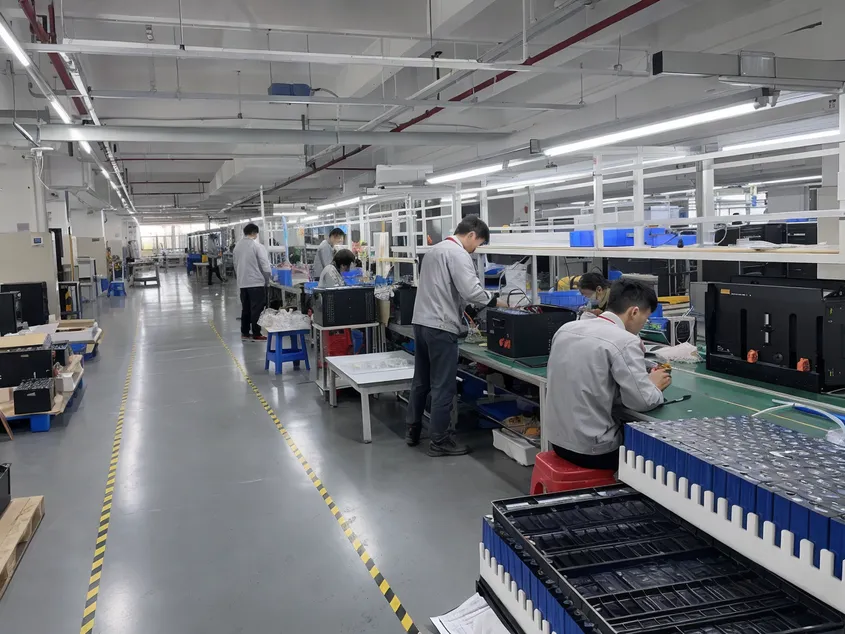
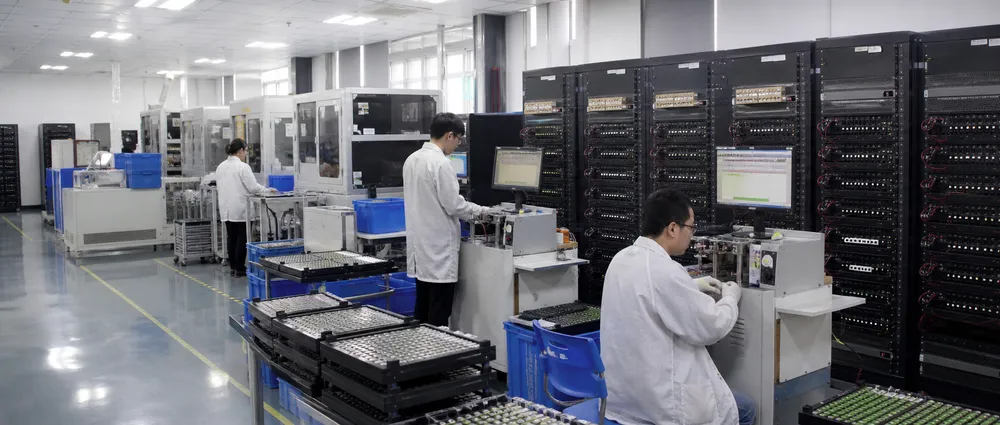
Our facility covers 9,900 square meters with 6 dedicated production lines and 150 employees. Annual capacity sits at 2,000,000 battery units — enough to run your repeat program without queuing behind other buyers.
Linear Production Workflow
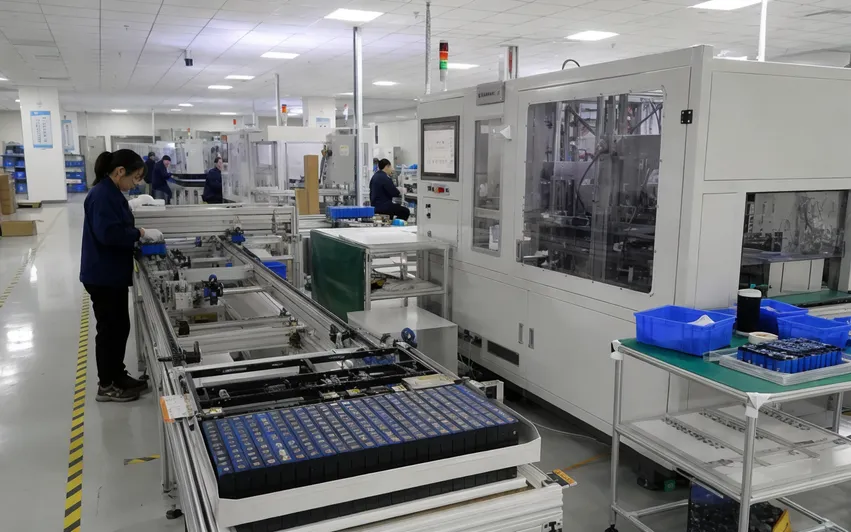
The workflow moves in a straight line: incoming cell inspection and grading, automated cell sorting and matching, pack assembly, BMS integration and programming, charge/discharge testing, aging, final inspection, and packing.
- 1 Incoming cell inspection & grading
- 2 Automated cell sorting & matching
- 3 Pack assembly
- 4 BMS integration & programming
- 5 Charge/discharge testing
- 6 Aging
- 7 Final inspection & packing
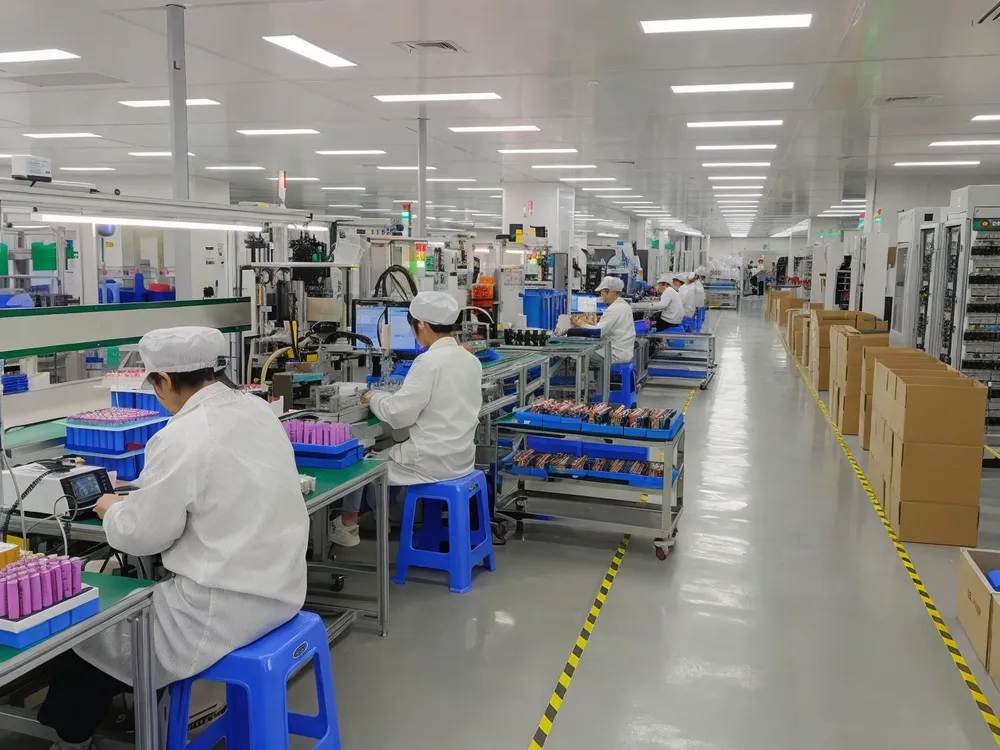
Separated Lithium & Lead-Acid Assembly Zones
We separated lithium and lead-acid assembly into distinct zones because the handling, ventilation, and QC checkpoints are fundamentally different.
Mixing them on one line is a common shortcut at smaller factories — it creates cross-contamination risk in the electrolyte handling stage.
Multi-SKU Simultaneous Production
Six lines mean we can run multiple SKUs simultaneously. If you carry both a 12V 100Ah LiFePO4 and a 48V 200Ah rack-mount in your catalog, both can be in production at the same time, so your container ships complete rather than in split deliveries.
Quality Control Before a Battery Leaves the Factory
Battery QC is not a single checkpoint — it's layered across the entire production sequence. Here's what happens before your order reaches the packing area:
Incoming Inspection
Every cell batch is tested for voltage consistency, internal resistance, and capacity before it enters the sorting system. Cells outside our acceptance window get returned to the supplier.
We don't re-grade rejects into lower-tier products — they leave the building.
Automated Cell Sorting & Matching
Cells are grouped by actual measured capacity and internal resistance, not just the supplier's label. Tight matching (within 20mV and 5mΩ across a pack) is what prevents premature capacity fade and thermal imbalance during cycling.
Why this matters: This is the step most buyers never see, but it determines whether your batteries hold consistent performance across a 500-unit batch or drift apart after six months in the field.
BMS Function & Protection Testing
Every BMS board goes through over-charge, over-discharge, over-current, short-circuit, and temperature protection verification before it's married to a cell pack.
We program protection parameters to match the specific cell chemistry and application profile — a 48V commercial rack unit gets different thresholds than a 12V portable camping battery.
Full Lifecycle Testing
We run these on every production batch, not just during type approval:
Certifications Held
Covering manufacturing management, product safety, transport classification, and material safety documentation.
Documentation and Compliance for Export Battery Orders
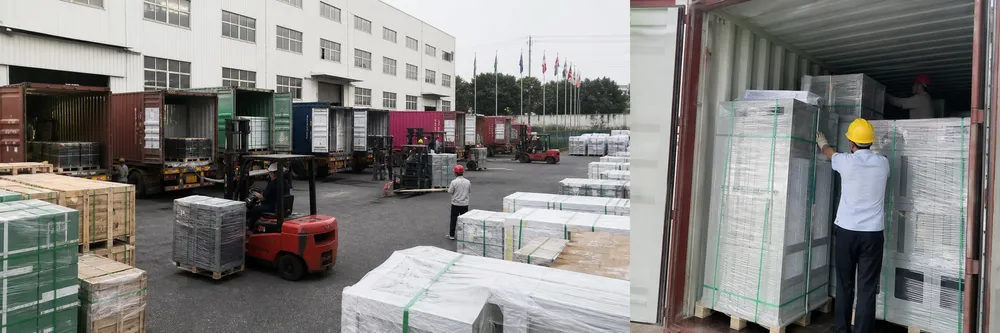
Batteries are classified dangerous goods for air and sea freight. Your import process requires UN38.3 test reports, MSDS sheets, and proper shipping declarations — missing paperwork means port delays or rejected shipments.
We maintain current UN38.3 test summaries and MSDS documentation for every standard model in our catalog. CE and IEC 62133 reports are available for your market registration files. If you're entering a market that requires additional local certification, our engineering team can support the application process with test samples and technical data packages. (We've been through this cycle enough times to know which test labs are efficient for each region.)
ISO 9001:2015 covers our manufacturing management system — it's the baseline that ensures batch-to-batch consistency, traceability, and corrective action when something drifts.
View All CertificationsUN38.3 Test Reports
Current test summaries maintained for every standard model. Required for air and sea freight classification as dangerous goods.
MSDS Sheets
Material Safety Data Sheets available for all catalog products. Essential for customs clearance and proper shipping declarations.
CE & IEC 62133
Reports available for your market registration files. Engineering team supports additional local certification applications with test samples and technical data packages.
ISO 9001:2015
Manufacturing management system certification. Ensures batch-to-batch consistency, full traceability, and corrective action protocols when parameters drift.
OEM/ODM Engineering for Voltage, Capacity, and BMS Requirements
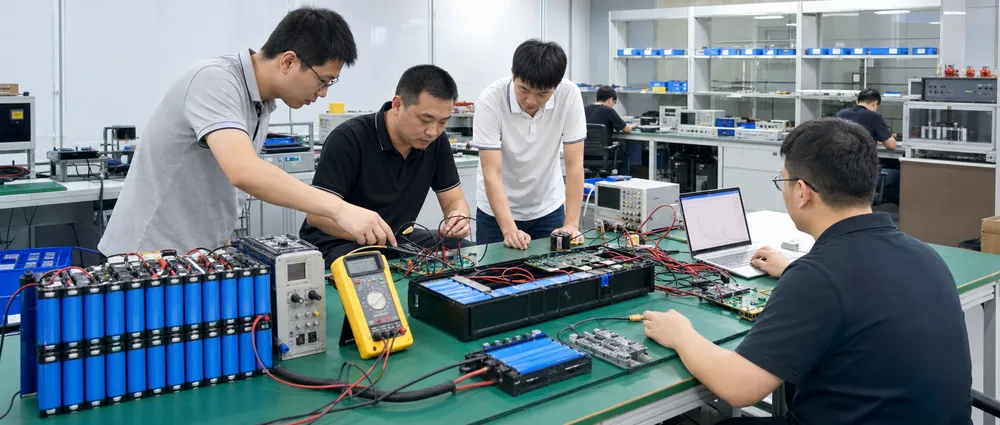
Our in-house R&D team of 18+ engineers handles custom battery development from specification through production validation. The scope covers both lithium and lead-acid technology.
Custom Voltage & Capacity Configurations
If your project needs a non-standard pack — say a 25.6V 150Ah for a specific inverter compatibility requirement, or a 51.2V 280Ah for a commercial rack system — we configure the cell arrangement, BMS parameters, and enclosure design to match.
Standard models ship from existing tooling; custom configurations require a development cycle but no tooling surcharge on orders above agreed MOQ.
Integrated BMS Design & Production
We design and manufacture BMS boards in-house rather than sourcing generic third-party modules. This means your protection parameters, communication protocols (RS485, CAN, Bluetooth), and charge/discharge curves are matched to the actual cells in your pack — not approximated from a generic template.
For buyers integrating with specific hybrid inverters or EMS platforms, we can adjust communication protocols to ensure compatibility.
Application Matching
Our engineers understand how batteries interact with MPPT controllers, hybrid inverters, and monitoring systems. When you describe your end application, we recommend the cell chemistry, capacity, and BMS configuration that fits the duty cycle.
Application Examples
In-House BMS: Matched to Your Cells, Not a Generic Template
Generic third-party BMS modules approximate protection parameters from standard profiles. Our in-house design means every board is calibrated to the specific cell chemistry and configuration in your pack.
RS485
Protocol
CAN Bus
Protocol
Bluetooth
Protocol
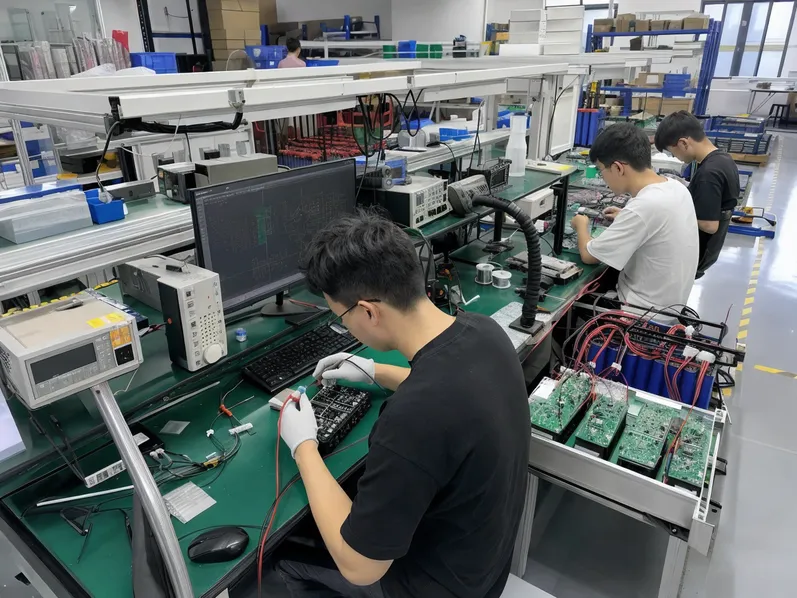
MOQ Flexibility for Market Testing and Repeat Supply
Standard models start at 100 units MOQ. This is deliberately low for a factory our size because we know how distribution works — you need to test a SKU with your customers before committing to container volumes.
For OEM/ODM configurations with custom voltage, capacity, or branding, MOQ depends on the complexity of the change. A label and color swap on an existing model is straightforward at low volume. A fully custom cell configuration with new BMS firmware needs enough volume to justify the engineering validation. We'll tell you the threshold upfront so you can plan your landed cost accurately.
Standard Models
100 units MOQ — test before scaling
Custom OEM/ODM
MOQ scales with engineering complexity
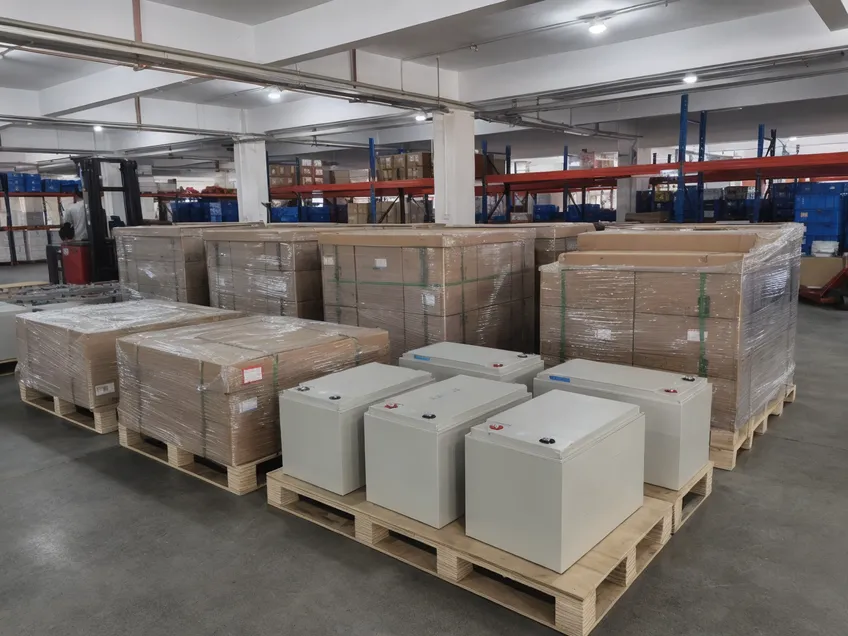
Export Experience Across Europe, Southeast Asia, Africa, South America, and the Middle East
We ship regularly to five regions, and each one has taught us something different about what buyers need.
Europe
CE & IEC Compliance Ready
CE and IEC compliance documentation ready for import clearance. Residential storage (wall-mounted LiFePO4, stackable systems) and commercial rack-mounted units are the primary demand.
Buyers here expect detailed test reports and consistent labeling across reorders.
Southeast Asia
Off-Grid & Hybrid Systems
Mix of off-grid and hybrid residential systems. 12V and 24V deep-cycle batteries (both lithium and gel) for solar home systems remain strong.
Price sensitivity is higher, so we help buyers spec the right chemistry-to-budget balance.
Africa
Off-Grid Solar Dominant
Off-grid solar is the dominant application. Gel and AGM batteries for solar home kits, 48V lithium for telecoms towers and community microgrids.
Packaging needs to survive rough inland logistics — we reinforce cartons and palletize for overland transport.
South America & Middle East
Growing Storage Adoption
Growing residential storage adoption and commercial backup power. 48V LiFePO4 systems and portable power stations are gaining traction.
UN38.3 and MSDS documentation is critical for customs clearance in both regions.
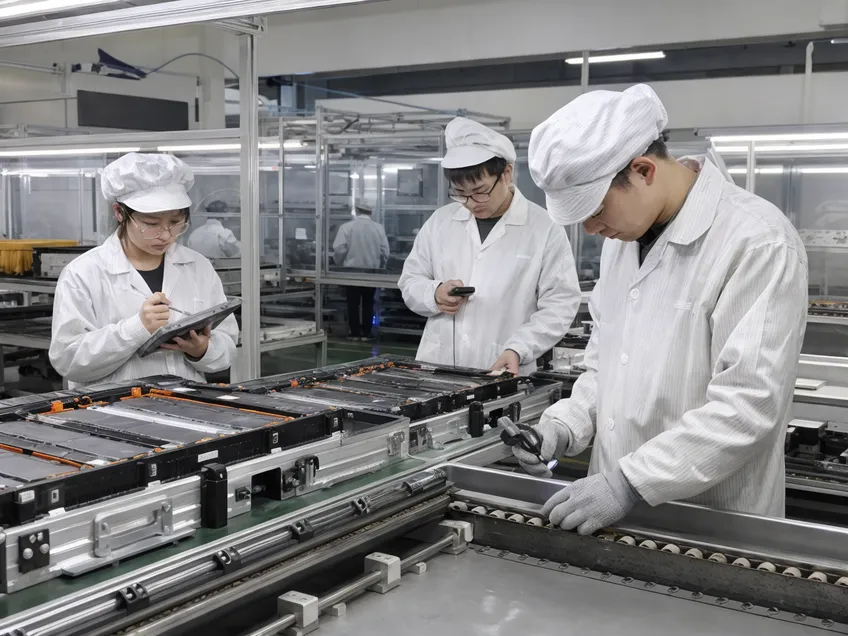
Technical and QC Teams Behind Each Battery Batch
The 18 engineers in our R&D department split across battery pack design, BMS hardware and firmware development, and application engineering. Most have 8–15 years in lithium or lead-acid battery technology — they came up through the Guangdong battery manufacturing cluster, not from unrelated industries.
Our QC team operates independently from production, reporting directly to management rather than to line supervisors. They control incoming cell acceptance, in-process sampling, and final outgoing inspection.
Zero-Tolerance Batch Hold Policy
When a batch fails any checkpoint, production stops on that SKU until root cause is identified and corrected — not reworked and pushed through.
R&D Engineers
Average Battery Industry Experience
QC Checkpoints Per Batch
Why Buyers Source Solar Batteries from EVANBattery
Concrete manufacturing advantages that reduce your sourcing risk and simplify your supply chain.
13+ Years in Solar Energy Storage
Accumulated process knowledge in both lithium and lead-acid battery manufacturing, so your product specifications are grounded in production reality, not catalog assumptions.
9,900m² Factory with 6 Production Lines
Your multi-SKU orders run simultaneously and ship complete in one container.
Automated Cell Sorting and Matching
Consistent cell grouping across every batch, so your field warranty exposure stays predictable.
Full Lifecycle Testing on Every Batch
Capacity, cycling, temperature, and safety checks happen before shipment, not after customer complaints.
In-House BMS Design and OEM/ODM Engineering
Custom voltage, capacity, and communication protocol configurations without relying on third-party module suppliers.
100-Unit MOQ with Export Compliance
Test new SKUs at low risk, with UN38.3, MSDS, CE, and IEC documentation ready for your import process.
Contact EVANBattery for Solar Battery Supply
Send us your target specifications — voltage, capacity, chemistry, estimated quantity, and destination market. We'll respond with a technical recommendation and pricing within 48 hours.
Phone
+86 13560690838Factory Address
No. 38, Tongxing 1st Road, Jiafuwei Industrial Zone, Caosan Village, Guzhen Town, Zhongshan City, Guangdong Province, China