

Solar Battery Certifications
Certified solar battery manufacturer with export documentation for Europe, Southeast Asia, Africa, South America, and the Middle East.
ISO 9001:2015, CE, IEC 62133, UN38.3, and MSDS — covering factory management, product safety, transport compliance, and material safety across our full lithium and lead-acid battery range.
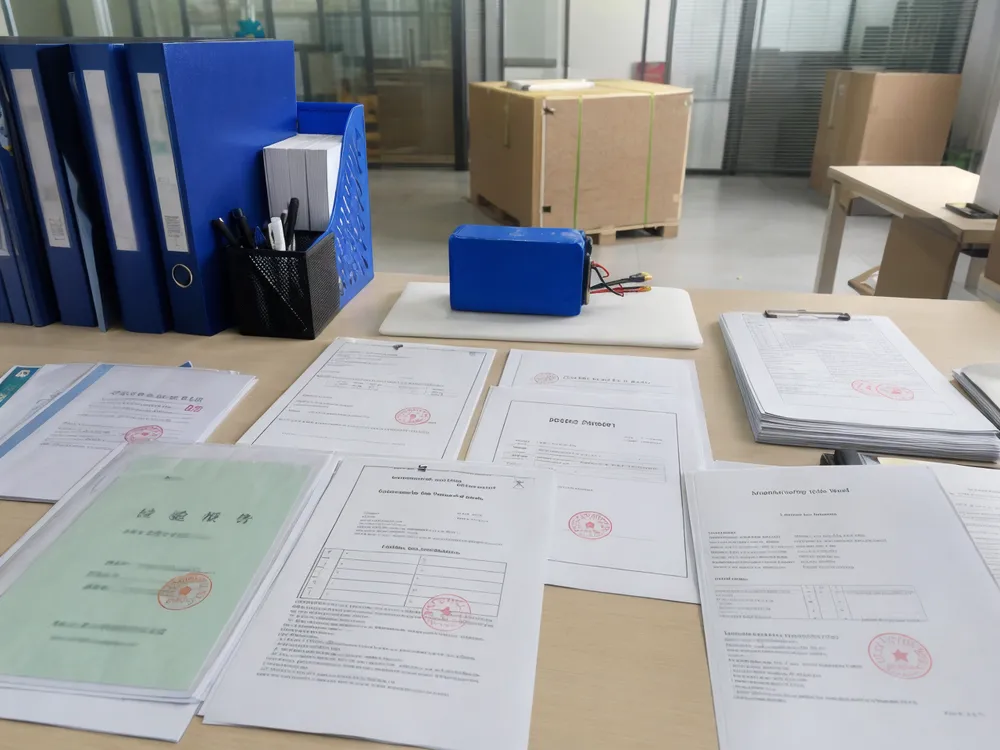
Solar Battery Certifications for Export-Ready Orders
When you're qualifying a new battery supplier, the first question is whether the paperwork will hold up at your port and in your customer's compliance review. We've been shipping solar batteries since 2012, and our certification set reflects what export buyers actually need to clear customs, satisfy distributor qualification programs, and pass project compliance audits.
EVANBattery holds ISO 9001:2015, CE, IEC 62133, UN38.3, and MSDS documentation across our lithium and lead-acid solar battery product lines. These aren't decorative logos on a website — they're the documents your freight forwarder, customs broker, and downstream customers will ask for before your first container ships.
We maintain current documentation for standard catalog models. If you're sourcing a custom configuration, we'll flag any certification gaps before you commit to a bulk order.
Confirm document availability before you commit
Send us your model list and destination market and we'll confirm document availability within 48 hours.

Certification Coverage You Can Check Before Import
Here's what we hold and what each document does for your import and sales process:
ISO 9001:2015
Factory Management SystemFull manufacturing operation
Batch-to-batch consistency, traceability, corrective action records — your reorders match your first order
CE
European Market AccessApplicable standard lithium and lead-acid models
Required for EU import clearance and distributor shelf placement
IEC 62133
Rechargeable Battery SafetyLithium battery products (LiFePO4 packs)
Safety evaluation documentation for your compliance file and customer qualification
UN38.3
Transport ClassificationAll lithium battery models
Required for air and sea freight of lithium batteries — without it, your shipment doesn't move
MSDS
Material Safety DocumentationAll battery models
Required by freight forwarders, customs, and warehouse operators handling your inventory
A Note on Scope
CE and IEC 62133 documentation applies to standard models in our catalog. If you're ordering a custom voltage, capacity, or BMS configuration through our OEM/ODM program, certification coverage should be confirmed during the quotation stage — not assumed from the standard model documentation.
For lithium solar battery models, UN38.3 and MSDS are non-negotiable for every shipment. These documents are prepared and available before your container is loaded.
For gel and AGM solar batteries, transport classification is simpler (non-hazardous), but MSDS documentation is still standard practice for professional import operations.
QC Checkpoints Behind Every Certified Battery Batch
Certifications tell you we passed an audit. The QC process tells you what happens on every production run between audits. This is where batch consistency lives or dies — and where your warranty exposure gets determined before the container leaves our dock.
Our production flow runs in sequence through these checkpoints:
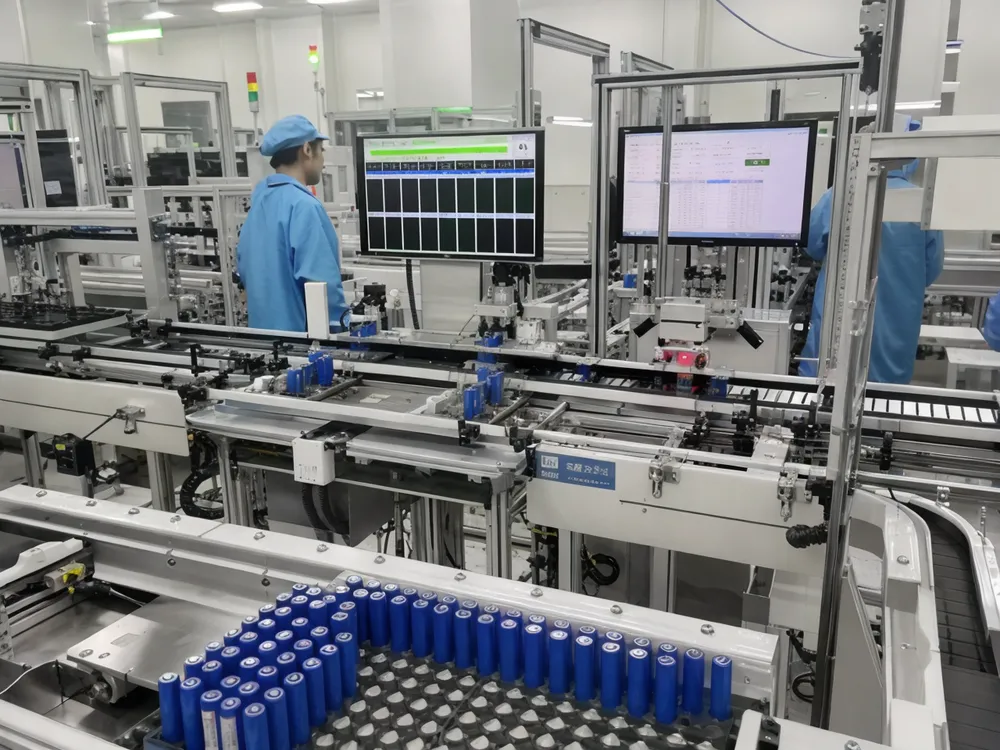
Incoming Cell Inspection
Every cell batch gets tested for voltage consistency, internal resistance, and capacity before entering the sorting system. Cells outside our acceptance window go back to the supplier. We don't downgrade rejects into lower-tier products — they leave the building.
We've had cell suppliers try to negotiate on borderline batches. The answer is always no. One weak cell in a 16S pack creates a warranty claim six months later.
Automated Cell Sorting and Matching
Cells are grouped by actual measured capacity and internal resistance — within 20mV and 5mΩ across a pack. This is the step that determines whether your 500-unit batch performs consistently in the field or drifts apart after six months of cycling.
Tight matching prevents premature capacity fade and thermal imbalance, so your field failure rate stays predictable across your entire inventory.
BMS Integration and Protection Testing
Every BMS board goes through over-charge, over-discharge, over-current, short-circuit, and temperature protection verification before it's married to a cell pack. We program protection parameters to match the specific cell chemistry and application profile — a 48V commercial rack unit gets different thresholds than a 12V portable battery.
This means your products respond correctly to real-world fault conditions, not just lab scenarios.
Full Lifecycle Testing
Capacity verification, charge/discharge cycling, high-temperature soak (55°C), low-temperature discharge (-20°C), and safety testing (vibration, drop, nail penetration on sample basis). We run these on every production batch, not just during initial type approval.
Your twentieth reorder gets the same testing rigor as your first.
Final Inspection and Export Packing
Visual inspection, label verification, terminal torque check, and packaging integrity review. Batteries are packed with proper cushioning and orientation markings for dangerous goods handling.
Your solar battery storage order arrives at port with documentation and physical condition aligned — no surprises at receiving.
CE, IEC 62133, UN38.3, MSDS — and the UL Question
Solar battery certifications aren't interchangeable. Each document serves a different function in your import chain, and knowing which ones you actually need prevents delays at customs and gaps in your compliance file.
Solar Battery CE Certification
European Market Access
CE marking on our applicable models means the product has been evaluated against relevant EU directives for the European market. For your distribution business, CE documentation is what your EU customers and retail partners will ask to see before listing your product.
We maintain CE reports for standard lithium and lead-acid models shipping to Europe — confirm model-specific coverage when you send your order list.
IEC 62133
Rechargeable Battery Safety Evaluation
IEC 62133 covers safety requirements for portable sealed secondary cells and batteries. For lithium solar batteries, this standard addresses mechanical, thermal, and electrical abuse testing.
Your compliance team or downstream customers may request IEC 62133 test documentation as part of supplier qualification — we can provide applicable reports for covered models.
UN38.3 and MSDS
Shipment-Critical Documents
Every lithium solar battery shipment requires UN38.3 test summaries and MSDS documentation. These aren't optional — your freight forwarder will reject the booking without them, and customs will hold your container if they're missing or incomplete.
We maintain current UN38.3 and MSDS files for every standard lithium model in our catalog, updated when cell chemistry or pack configuration changes.
Solar Battery UL Certification
North America Market Considerations
We'll be direct: our confirmed certification set does not currently include UL listing. UL certification for solar batteries is model-specific, market-channel-specific, and often project-specific for North American deployment.
If your target market requires UL, this needs to be discussed during the quotation stage so we can confirm whether the specific model and configuration you need has applicable documentation, or whether additional testing is required. Our engineering team can support the UL application process with test samples and technical data packages when needed.
UL requirements vary significantly by state, utility, and project type in North America — a blanket "UL certified" claim from any manufacturer should be verified against the specific listing category and model number.
Confirm your market-specific document requirements with our team for any solar battery system configuration before finalizing your order.
Documentation Workflow Before Production and Shipment
Certification documents don't help you if they arrive after your container is already at port. Here's how we handle documentation planning so your compliance file is complete before production starts.
What You Send Us
- Target model(s): voltage, capacity, chemistry (LiFePO4, gel, AGM)
- Destination market and intended sales channel
- Shipment mode (sea freight, air freight, or both)
- Any specific certification requirements from your customers or local regulations
- Order quantity and timeline
What We Check and Confirm
We review your model list against our current documentation inventory and confirm:
- Which certifications and documents are available for your selected models
- Whether your destination market requires documents beyond our standard set
- Whether any custom configuration (voltage, capacity, BMS changes) affects certification scope
- What additional documentation your freight forwarder will need for booking

What You Receive Before Production
- Certification copies for your compliance file
- Model coverage confirmation
- UN38.3 test summaries and MSDS for lithium models
- Shipping declaration templates for your freight forwarder
- Gap identification if additional local certification is needed
For custom voltage and BMS configurations, certification planning happens during the development stage — not after production is complete. This prevents the situation where you've paid for 2,000 units and then discover your market needs a document you don't have.
Send Your Model List to Start Documentation ReviewThird-Party Testing and Factory Audit Support
Larger distributors and project contractors often need more than our self-declared documentation. Your compliance team may require independent verification, third-party test reports, or a factory audit before approving us as a qualified supplier.
Here's what we can support:
Document Review Package
We can prepare a supplier qualification file including certification copies, QC process documentation, production capacity evidence, and test report samples. This gives your compliance team something concrete to evaluate before committing to a site visit.
Sample Preparation for External Testing
If your quality team wants to send our batteries to an independent lab for verification testing, we'll prepare samples with full traceability documentation — cell batch records, BMS configuration data, and production date codes.
Factory Audit Coordination
Our 9,900m² facility with 150 employees and 6 production lines is set up for buyer visits. We can coordinate audit scheduling, prepare process documentation, and assign engineering staff to walk your team through production stages.
(We host buyer visits regularly — the factory floor is always in audit-ready condition, not cleaned up for special occasions.)
Technical Data Packages
Our 18+ member engineering team can prepare technical documentation packages for specific models — including cell specifications, BMS schematics, protection parameter settings, and test data — when your project requires deeper technical review.
We don't publish audit scores or name specific customers who have audited us. What we can do is make the process straightforward for your team.
Solar Battery Certification FAQ
Answers to the certification questions B2B buyers ask before placing trial orders or committing to volume.
Which solar battery certifications does EVANBattery currently hold?
Which solar battery certifications does EVANBattery currently hold?
We hold ISO 9001:2015 (manufacturing management system), CE (European market access for applicable models), IEC 62133 (rechargeable battery safety), UN38.3 (lithium battery transport classification), and MSDS (material safety documentation). Certification copies are available on request — send your model list and we'll confirm coverage for your specific products.
What does solar battery CE certification mean for European distributors?
What does solar battery CE certification mean for European distributors?
CE documentation confirms that applicable models have been evaluated against relevant EU directives. For your business, it means your EU import clearance and distributor qualification process can proceed without delays. Your retail partners and project customers in Europe will request CE documentation as a baseline requirement before listing or specifying your product.
Do EVANBattery solar batteries have UL certification?
Do EVANBattery solar batteries have UL certification?
Our confirmed certification set does not include UL listing. UL requirements for solar batteries in North America are model-specific and often project-specific — they vary by state, utility program, and installation type. If your market requires UL, raise this during the quotation stage so we can confirm the path forward for your specific model and application. Our engineering team can support the testing and application process when needed.
Do I need UN38.3 and MSDS for every lithium solar battery shipment?
Do I need UN38.3 and MSDS for every lithium solar battery shipment?
Yes. UN38.3 test summaries and MSDS documentation are mandatory for lithium battery shipments by air and sea. Your freight forwarder will reject the booking without them, and customs authorities will hold containers with missing or incomplete documentation. We maintain current files for all standard lithium models and include them with every shipment's documentation package.
Which documents should I request before placing a trial order?
Which documents should I request before placing a trial order?
Before your first order, request:
- Certification copies for your selected models
- UN38.3 test summary (lithium models)
- MSDS
- A model coverage confirmation showing which certifications apply to which SKUs
If you're importing to a market with specific local requirements (beyond CE for EU), flag this upfront so we can identify any gaps before production. Submit your requirements through our RFQ form.
Do custom battery configurations require new certification review?
Do custom battery configurations require new certification review?
It depends on the scope of the change. A label or color change on an existing model typically stays within current certification coverage. A custom voltage configuration, different cell chemistry, or modified BMS firmware may require re-evaluation of certification scope. We flag this during the OEM/ODM quotation stage so you know the documentation status before committing to production volume.
Request Certification Documents Before You Quote Your Customer
Your downstream customer or project manager is going to ask for compliance documentation. Get it confirmed before you commit to pricing.
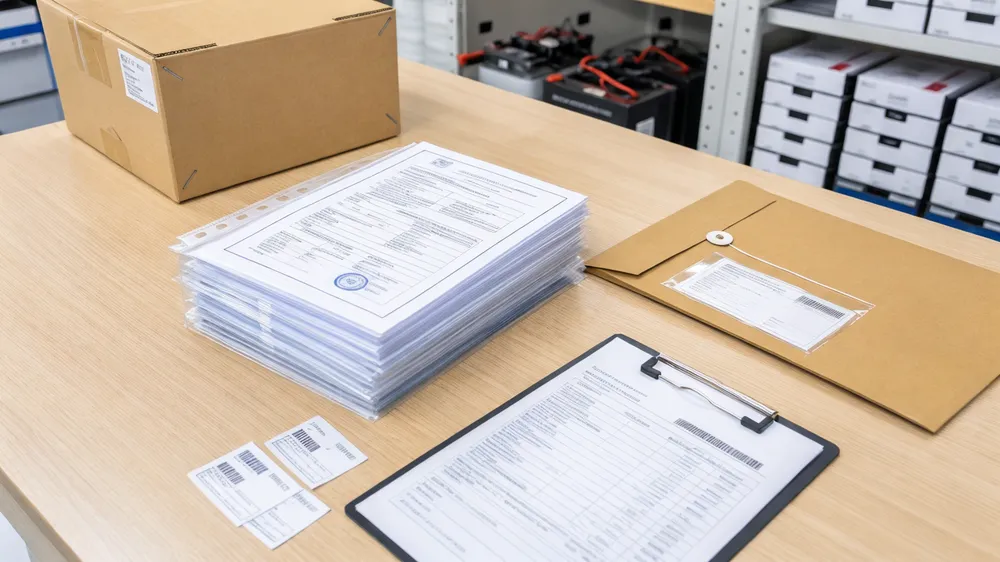
Send us the following details:
-
1
Battery model(s) you're considering
Voltage, capacity, chemistry
-
2
Your destination market and sales channel
-
3
Required certifications or standards
If specified by your customer
-
4
Estimated order quantity
-
5
Shipment mode and timeline
We'll respond with a document availability confirmation, flag any gaps for your market, and include applicable certification copies with your quotation package.
evan@evanbattery.com
Phone / WhatsApp
+86 13560690838