

Deep Cycle Gel Solar Battery Built for Nightly Discharge
Flat-plate and tubular configurations for off-grid, inverter backup, and project battery banks. When your market cycles batteries hard every night, standard gel won't hold.
We manufacture deep-cycle gel specifically for 50–80% DOD duty across 12V and 6V configurations, with batch-matched bank sets for series strings.
13+ Years
Manufacturing
9,900 m²
Factory Floor
6 Lines
Production
150
Employees
2M Units
Annual Capacity
Zhongshan
Guangdong, China
Deep Cycle Gel Solar Battery Supply for Daily-Discharge Solar Markets
EVANBattery produces deep cycle gel solar batteries for buyers supplying off-grid storage, inverter backup, telecom backup, and rural electrification channels where batteries discharge deeply and recharge daily.
We are a deep cycle gel solar battery manufacturer operating from Zhongshan City, Guangdong Province — 6 production lines, 150 employees, 2,000,000-unit annual capacity across lithium and lead-acid divisions.
This page covers what you need to evaluate and quote deep-cycle gel supply: cycle-life economics, procurement-ready specifications, flat-plate vs. tubular gel options, system-matching requirements, and OEM planning.
If you're comparing across our full gel range, view all gel solar battery options.
What This Page Covers
- Cycle-life economics before capacity selection
- Procurement-ready specifications for RFQ comparison
- Plate, gel, and formation controls that reduce early field failures
- Tubular gel options for heavy off-grid banks
- System matching: DOD, charge voltage, and series bank consistency
- Markets where deep-cycle gel earns reorders
- OEM and matched-bank planning
- Export packing and documents for heavy battery shipments
Also in Gel Solar Battery Range
Cycle-Life Economics Before Capacity Selection
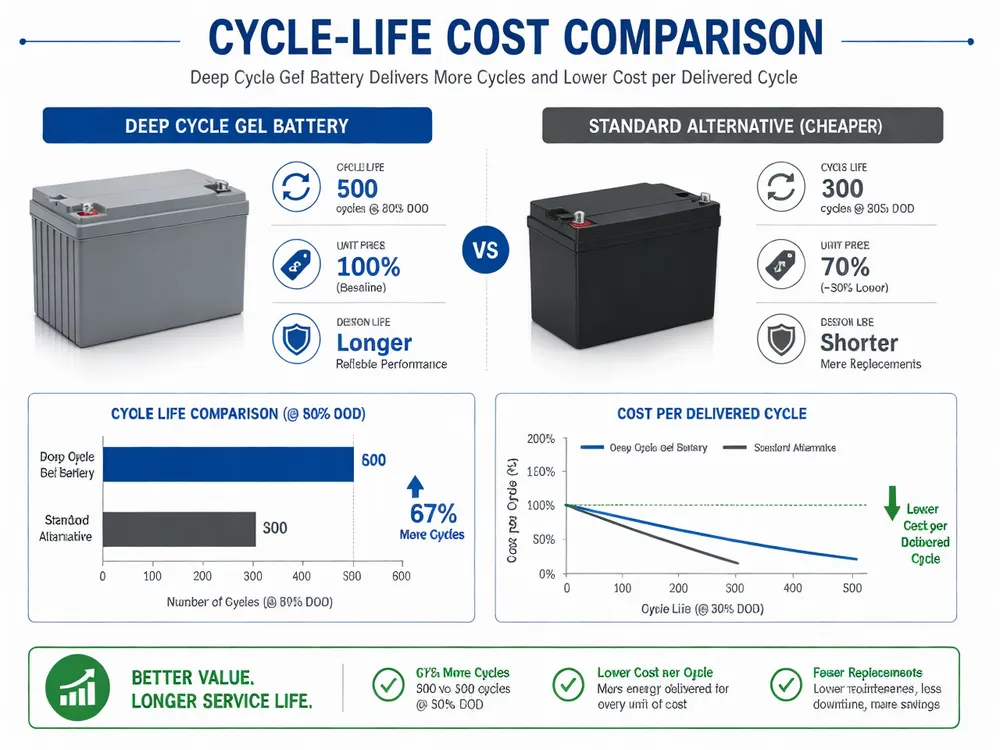
The unit price of a deep cycle gel solar battery tells you almost nothing about its commercial value. What matters is cost per delivered cycle — how much each night of usable storage actually costs your customer over the battery's service life.
A battery rated at 500 cycles at 50% DOD delivers 500 usable nights. A cheaper battery rated at 300 cycles at the same DOD delivers 300 nights. If the cheaper unit costs 30% less but delivers 40% fewer cycles, your customer replaces sooner, your warranty exposure increases, and your total cost of supply goes up.
We've watched distributors learn this the expensive way — three warranty claims on a 1,000-unit shipment erases the margin advantage of a lower unit price.
When Deep-Cycle Gel Makes Commercial Sense for Your Channel
| Use Case | Expected Cycling Duty | Buyer Risk with Standard Gel | Deep-Cycle Gel Advantage |
|---|---|---|---|
| Off-grid solar home (nightly discharge) | 50–80% DOD daily | Premature capacity loss within 12–18 months | Thicker plates sustain 500+ cycles at 50% DOD |
| Inverter backup (unstable grid) | 40–70% DOD, irregular | Plate sulfation from partial cycling | Deep-cycle paste formulation resists sulfation |
| Telecom tower backup | 30–50% DOD nightly | Batch inconsistency causes string imbalance | Matched production runs for bank reliability |
| Rural electrification projects | 60–80% DOD daily | High field failure rate triggers tender penalties | Controlled formation and aging reduce early failures |
Compared to Alternatives
Deep-cycle gel costs less per unit than lithium, delivers stronger cycle positioning than AGM, and creates predictable replacement demand for your lead-acid channel. Your customers already understand lead-acid handling, so your after-sales support cost stays low.
As a deep cycle gel battery supplier, we need four data points to recommend the right model:
- Daily load (Wh)
- Autonomy days required
- Target DOD
- Destination market
Deep Cycle Gel Solar Battery Specifications for RFQ Comparison
These are industry-typical values for our deep cycle gel solar battery range. Use them for comparison sheets and project tenders — then request model-specific datasheets for exact dimensions, weights, and cycle curves.
| Parameter | Typical Value / Range | Notes |
|---|---|---|
| Nominal Voltage | 12V, 6V (series-configurable to 24V/48V) | Confirm inverter input voltage |
| Capacity Range | 50Ah – 250Ah (12V); 200Ah – 3000Ah (2V tubular gel) | Model-dependent; confirm with datasheet |
| Construction | VRLA sealed gel electrolyte | Maintenance-free, non-spillable |
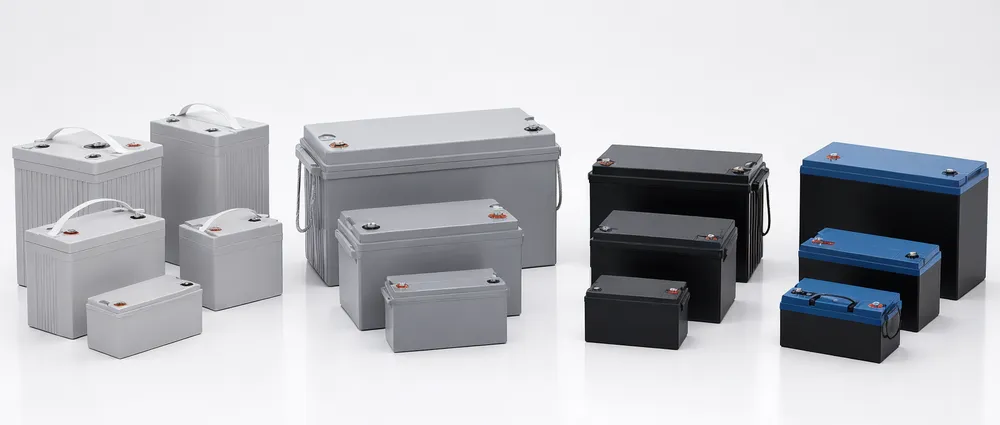
| Plate Design | Flat-plate (standard) or tubular (heavy-duty) | Tubular gel solar battery available for extended cycling |
| Cycle Life (50% DOD) | 500–700 cycles (flat-plate); 1,200–1,500 cycles (tubular) | Temperature and charge-regime dependent |
| Cycle Life (80% DOD) | 350–450 cycles (flat-plate); 800–1,000 cycles (tubular) | Deeper DOD accelerates grid corrosion |
| Recommended DOD | 50% for optimal cycle-life economics | 80% DOD acceptable for short-term project deployments |
| Charge Voltage (25°C) | 14.1–14.4V (bulk); 13.6–13.8V (float) | Gel requires lower charge voltage than AGM — critical |
| Float Voltage | 13.5–13.8V per 12V unit | Temperature-compensated: -3mV/°C/cell |
| Terminal Options | F2, F12, M6 bolt, M8 bolt, copper insert, custom | Confirm connector compatibility |
| Case Material | ABS (standard); flame-retardant ABS (UL94 V-0 optional) | Injection-molded, consistent wall thickness |
| Operating Temperature | Discharge: -20°C to +55°C; Charge: 0°C to +45°C | Derate capacity below 0°C and above 40°C |
| Self-Discharge | <3% per month at 25°C | Allows warehouse storage without maintenance charging for 6 months |
| Design Life (float, 25°C) | 10–15 years (tubular); 8–12 years (flat-plate) | Halves for every 10°C above 25°C |
Important
Exact dimensions, weights, terminal drawings, and cycle-life curves vary by model. The values above are for procurement comparison — request the specific datasheet before finalizing your tender submission.
We publish cycle-life data at both 50% and 80% DOD because different markets quote differently. African off-grid tenders typically spec at 80% DOD; Southeast Asian inverter channels use 50% DOD. Ask us which curve matches your market's warranty language.
Plate, Gel, and Formation Controls That Reduce Early Field Failures
Deep-cycle gel batteries fail early for specific, preventable reasons. As a deep cycle gel solar battery manufacturer running this product since 2012, we've traced most field returns to production-stage shortcuts. Here's what we control and why it protects your margin.
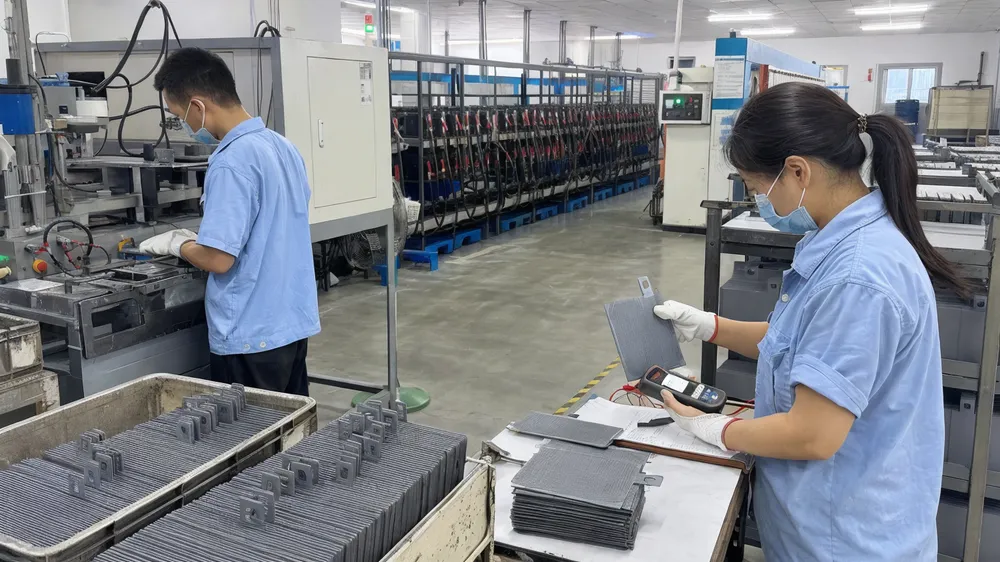
Plate Thickness and Paste Density
Deep-cycle duty demands thicker plates with higher active material density than standard replacement gel. We cast plates at controlled thickness tolerances and verify paste weight per plate before assembly. Thinner plates shed active material faster under deep cycling — the capacity drops noticeably after 150–200 cycles. Our deep-cycle plates are designed for the 500+ cycle range at 50% DOD, which means your warranty window stays comfortable.
Controlled Curing
After pasting, plates enter a temperature- and humidity-controlled curing chamber. The curing profile determines crystal structure in the active material — under-cured plates develop weak crystal bonds that break down under repeated deep discharge. We run fixed-profile curing (not ambient warehouse drying, which is the shortcut that causes most early-life failures in budget gel batteries). The difference shows up around cycle 100–150, which is exactly when your customer starts calling if the battery was poorly made.
Gel Electrolyte Mixing and Filling
The silica-to-sulfuric-acid ratio in the gel determines recombination efficiency and internal resistance stability. We mix gel with calibrated dispensing equipment and verify specific gravity at multiple points during filling. Vacuum-assisted filling is used on larger-capacity models to eliminate air pockets that create localized hot spots and uneven discharge. We switched to vacuum filling on our 200Ah+ models in 2018 after seeing inconsistent capacity readings on the first 50 cycles of conventionally filled units.
Formation and Aging
After assembly, every battery goes through a controlled formation charge that converts raw lead oxide into active lead dioxide and sponge lead. We then age batteries under monitored conditions before final capacity testing. Batteries that don't meet capacity threshold after formation get recycled — they don't ship. This step catches the 2–3% of units that would otherwise fail in the field within the first year.
Batch Capacity Verification
Before a production run ships, we pull samples for full capacity discharge testing at C10 and C20 rates. The batch ships only when sample results fall within specification. For bank-matched orders (24V/48V strings), we sort units by measured internal resistance so your series strings stay balanced.
Our production operates across 6 dedicated lines with 150 employees. The lead-acid division runs separately from lithium to prevent cross-contamination. Learn more about EVANBattery manufacturing capability.
Tubular Gel Solar Battery Options for Heavy Off-Grid Banks
When flat-plate deep-cycle gel isn't enough — when your project needs 1,000+ cycles at 50% DOD, or the batteries sit in 40°C+ environments cycling daily for 5–7 years — tubular gel is the configuration to evaluate.
How Tubular Gel Works
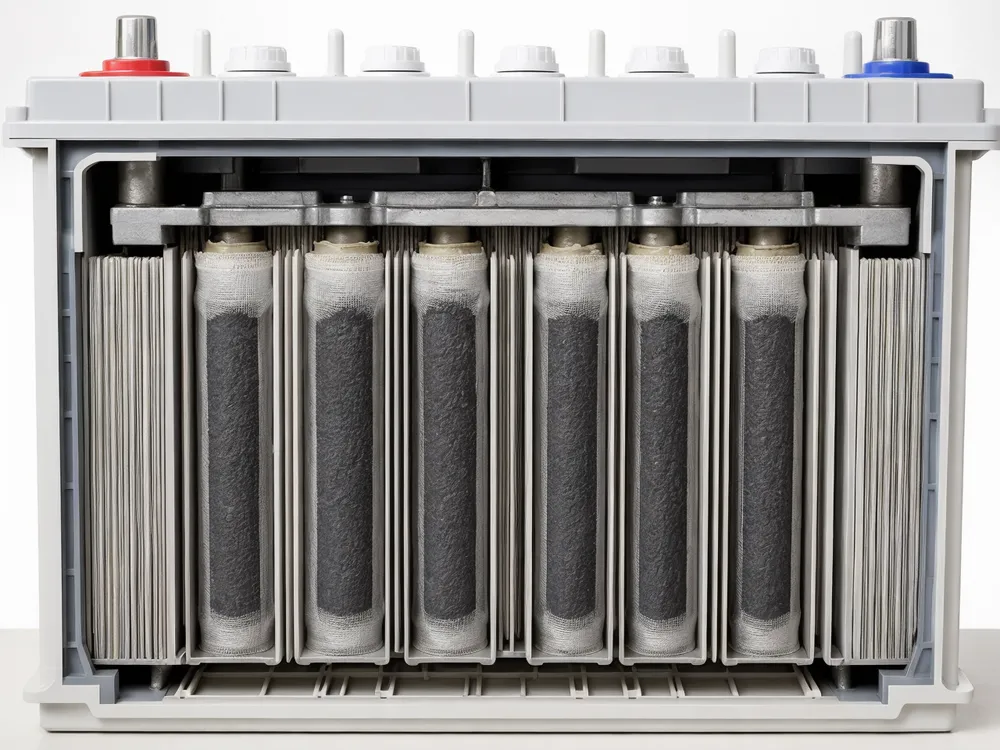
Tubular gel solar batteries use tubular positive plates instead of flat pasted plates. The active material sits inside polyester tubes (gauntlets) that physically contain the lead dioxide, preventing shedding even under aggressive cycling.
The trade-off is higher unit cost, larger physical dimensions, and higher MOQ for production runs.
Where Tubular Gel Belongs Commercially
Telecom Tower Backup
Operators specify 5–7 year service life with daily cycling. Tubular gel meets this without the BMS complexity of lithium. Tender volumes run 100–500 units per site rollout.
Rural Electrification & Microgrid Projects
Government and NGO tenders increasingly specify cycle-life guarantees. Tubular gel at 1,200+ cycles gives you a warranty-safe position that flat-plate can't match at 80% DOD.
High-Temperature Off-Grid Systems
Desert and tropical deployments where ambient temperature regularly exceeds 35°C. Tubular construction tolerates thermal stress better because the gauntlet structure physically restrains plate expansion.
Banks Sold on Service-Life Claims
If your downstream marketing promises "10-year design life" or "1,500 cycles," you need tubular gel to back that claim without eating warranty costs.
Tubular vs. Flat-Plate — Choosing for Your Channel
| Factor | Flat-Plate Deep-Cycle Gel | Tubular Gel |
|---|---|---|
| Service life | 3–5 year replacement cycles | 5–7+ years, project-tender grade |
| Cycle life (50% DOD) | 500–700 cycles | 1,200–1,500 cycles |
| Unit cost | Lower — your volume product | Higher — premium tier |
| Production speed | Faster, standard MOQ | Longer lead, higher MOQ |
| Margin profile | Volume-driven | Higher margin per unit |
| Reorder pattern | More frequent reorders | Fewer reorders, stronger tender positioning |
| Warranty economics | Moderate DOD deployments | Better on large deployments |
Available Configurations
We produce both flat-plate and tubular gel configurations. Tubular gel models are typically available in 2V cells (series-connected to 24V/48V/110V banks) and select 12V monobloc formats. Exact voltage, capacity, and MOQ for tubular configurations should be confirmed during your RFQ — tooling and plate production differ from standard flat-plate runs.
System Matching Checks: DOD, Charge Voltage, and Series Bank Consistency
Before we quote a deep cycle gel solar battery order, we need your system details. Wrong charge settings and mismatched bank configurations cause more field failures than manufacturing defects — and those failures land on your warranty, not ours. As a deep cycle gel battery supplier, we'd rather spend time matching the battery to your system upfront than process claims later.
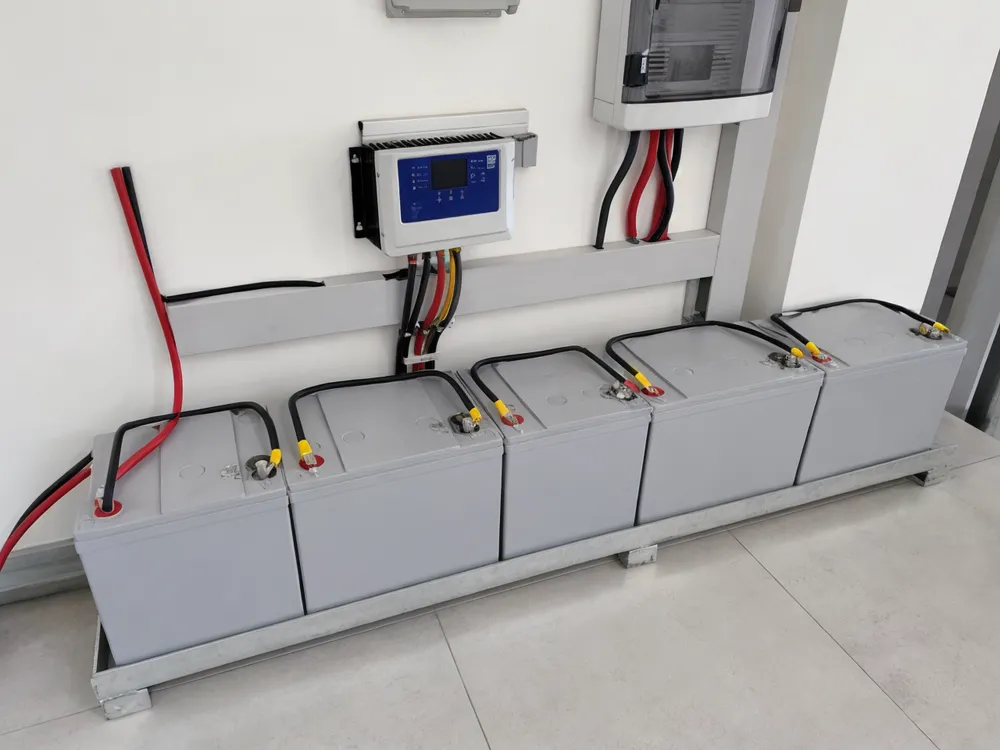
What we need from you before quoting
-
System voltage
12V, 24V, or 48V — determines series configuration
-
Inverter/controller model
Different brands use different charge algorithms. Some default to AGM settings that overcharge gel.
-
Charge voltage settings
Gel requires 14.1–14.4V bulk and 13.5–13.8V float per 12V unit. If your inverter charges at 14.8V (common AGM default), the gel electrolyte dries out within 6–12 months.
-
Average daily load (Wh)
Determines required capacity at your target DOD
-
Autonomy days
How many days of backup without solar recharge
-
Ambient temperature
Affects both capacity derating and charge voltage compensation
-
Bank layout
Series, parallel, or series-parallel — and how many units per string
Why matched internal resistance matters for 24V/48V banks
When you connect 12V gel units in series, the unit with the highest internal resistance limits the entire string's performance. During charging, it reaches voltage cutoff first — leaving other units undercharged. During discharge, it drops voltage first — triggering low-voltage disconnect while other units still have capacity.
Over 50–100 cycles, this imbalance accelerates and the weakest unit fails.
We sort deep-cycle gel units by measured internal resistance within each production batch. For bank orders, we ship pre-matched sets from the same batch run. This costs nothing extra — it's a sorting step, not a premium product — but it eliminates the most common cause of premature bank failure.
Most suppliers don't do this because it requires holding inventory until a batch is complete. We plan production around bank orders specifically to enable matching.
Charge voltage — the single most common installation error
Gel batteries require lower charge voltage than AGM or flooded lead-acid. If your customer's inverter or charge controller ships with factory-default settings for AGM (14.6–14.8V bulk), the gel battery will gas excessively, lose electrolyte, and fail within a year.
We include recommended charge parameters with every shipment and can provide inverter-specific setting guides for common brands.
| Parameter | AGM Default | Gel Required |
|---|---|---|
| Bulk charge (per 12V) | 14.6–14.8V | 14.1–14.4V |
| Float charge (per 12V) | 13.6–13.8V | 13.5–13.8V |
Markets Where Deep-Cycle Gel Earns Reorders
Deep-cycle gel solar batteries generate repeat business in markets where daily cycling is the norm, lithium's upfront cost exceeds buyer budgets, and lead-acid handling is already understood. Here's where our deep cycle gel battery supplier programs produce consistent reorder volume.
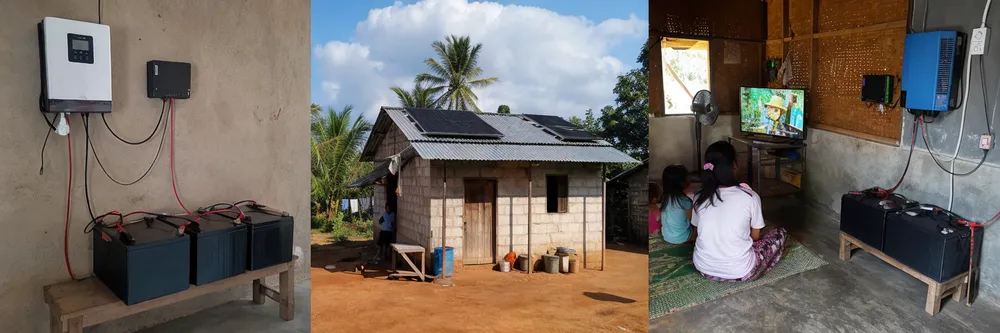
Off-Grid Solar Home Systems
Africa, Southeast Asia
The core volume channel. Solar home kits with 12V 100Ah or 12V 150Ah deep-cycle gel batteries sell into rural households that discharge 50–70% nightly. Replacement cycles run 2–4 years depending on usage patterns, which means your reorder cadence is built into the product.
We ship into this channel across Sub-Saharan Africa and rural Southeast Asia — the logistics, carton reinforcement, and documentation requirements are familiar territory for us.
Inverter Backup in Unstable-Grid Markets
West Africa, South Asia, Middle East
Where grid power cuts daily, households and small businesses run inverters with gel battery banks. The cycling is irregular but deep — 40–70% DOD depending on outage duration.
Deep-cycle gel handles this better than standard replacement gel because the plate design tolerates partial-state-of-charge cycling without rapid sulfation. Your customers in this channel buy on replacement need, so your sales cycle is short and predictable.
Telecom and Monitoring Site Backup
Global Off-Grid Sites
Base stations, weather stations, and security installations in off-grid locations use gel battery banks for overnight backup. The volumes per site are modest (4–16 units per bank), but the number of sites creates aggregate demand.
Telecom operators replace on schedule regardless of economic conditions — this is maintenance-budget purchasing, not discretionary spend.
Rural Electrification and Community Solar Projects
Tender-Driven Volume
Tender-driven, volume orders — 500 to 5,000 units per project phase. These projects specify sealed lead-acid because procurement committees understand it, logistics are simpler than lithium, and the unit cost fits government budgets.
Deep-cycle gel with documented cycle-life data positions you competitively in these tenders.
Replacement Channels for Installed Gel Banks
Built-In Reorder Cycle
Every gel battery installed today becomes a replacement sale in 3–5 years. If you supply the original installation, you own the replacement channel.
Deep-cycle gel with consistent branding and model numbering makes reordering frictionless for your downstream customers.
Market Entry Recommendation
The African off-grid market alone has been growing steadily for us since 2014. If you're entering this segment, start with 12V 100Ah and 12V 150Ah deep-cycle gel — those two SKUs cover 70% of initial demand.
OEM and Matched-Bank Planning for Deep-Cycle Gel Programs
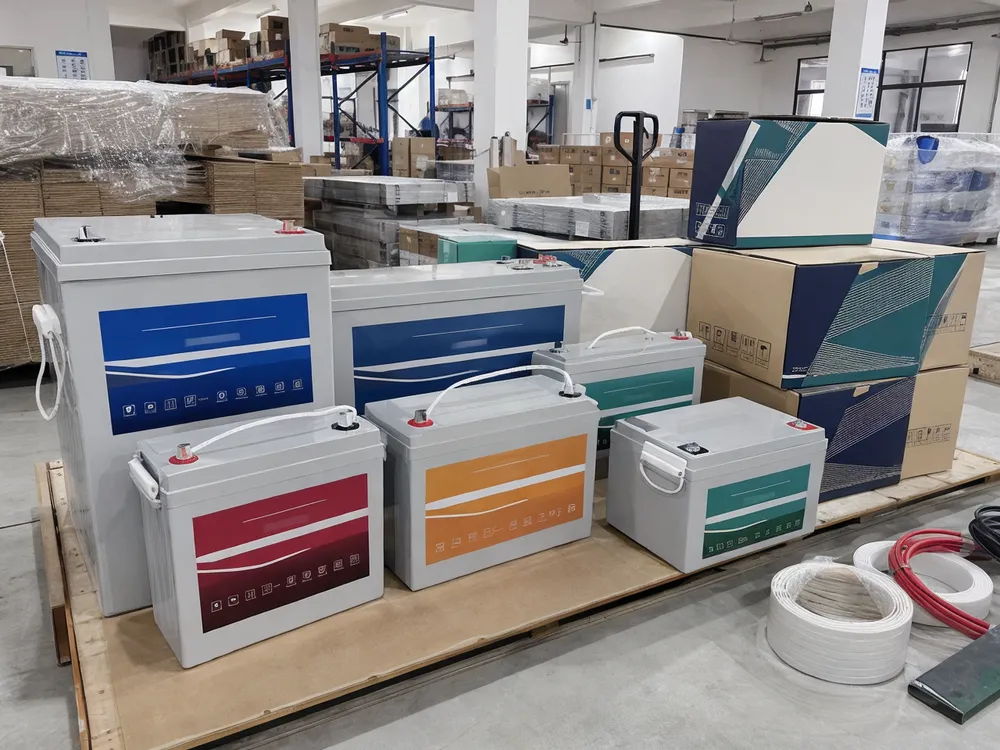
Most buyers who start with neutral-label deep-cycle gel orders move to private label within 2–3 reorders. The economics work once your volume justifies consistent branding across your distribution network.
What we customize for deep-cycle gel programs
-
Private label: your brand, logo, model number, and color scheme on battery labels and cartons
-
Carton design: branded outer packaging with your contact details and product specifications
-
Terminal type and orientation: match your market's dominant cable harness and connector standard
-
Capacity mix within a single shipment: combine 100Ah, 150Ah, and 200Ah in one container
-
Documentation package: branded test reports, warranty cards, installation guides in your language
-
Matched bank sets: pre-sorted units for 24V/48V series strings, shipped as labeled sets
-
Model naming: your SKU system printed on labels for warehouse and POS compatibility
MOQ Structure
Standard Models, Neutral Label
100 units
Private Label on Existing Models
200 units
Custom Terminal / Non-Standard Capacity
500+ units
Tooling review required
Tubular Gel Configurations
Varies
MOQ by voltage & capacity — confirm during RFQ
Limitations to confirm upfront
New case tooling (non-standard dimensions), uncommon voltage configurations, and custom tubular plate designs require validation and higher MOQ. We'll tell you what's feasible and what requires development investment before you commit.
As a deep cycle gel solar battery manufacturer with 18 engineers on the R&D team, we handle configuration work in-house. Describe your market requirement and target landed cost — we'll recommend the configuration that fits.
Export Packing and Documents for Heavy Battery Shipments
Deep-cycle gel batteries are heavy — a 12V 200Ah unit weighs roughly 55–65 kg. Your landed cost depends on packing and container planning as much as unit price. As a deep cycle gel battery supplier shipping to five continents, we plan logistics around weight, not just carton count.
Packing Engineering
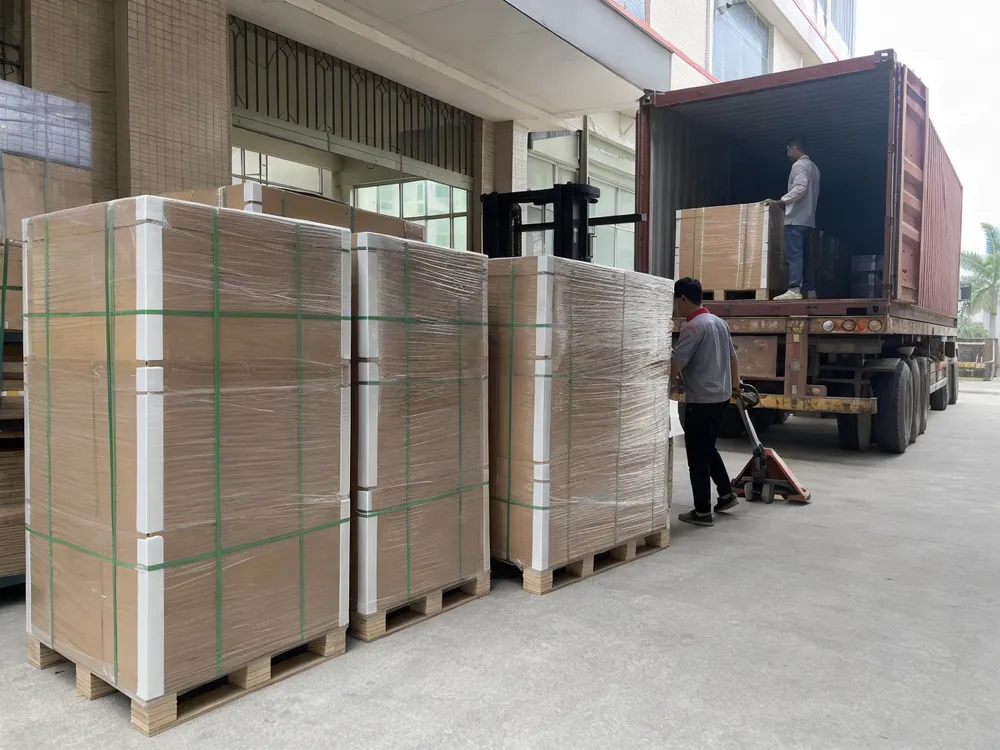
Each unit ships in a reinforced double-wall corrugated carton with molded foam inserts protecting terminals and case corners. Terminal posts get individual plastic caps to prevent short-circuit during transit. For markets with rough inland logistics (overland trucking in West Africa, island freight in Southeast Asia), we add internal cardboard bracing and heavier-gauge palletization. A few cents per unit in packing prevents the cracked-case claims that cost dollars per unit in returns.
Weight and Container Planning
A 20GP container holds approximately 20–24 metric tons depending on port weight limits. We calculate your container plan before production — how many units per pallet, how many pallets per container, and whether you're weight-limited or volume-limited. For deep-cycle gel (which is almost always weight-limited), we optimize pallet configuration to maximize units without exceeding axle weight restrictions.
Mixed-SKU Loading
If your order combines multiple capacities, we plan pallet arrangement with heavier units at the bottom. Pallets are stretch-wrapped with corner protectors and moisture-barrier film for ocean transit.
20–24
Metric tons per 20GP
55–65 kg
Per 12V 200Ah unit
Documentation We Provide
Simplified Shipping Classification
Gel batteries ship as UN2800 (non-spillable sealed lead-acid) under simplified dangerous goods provisions — no full DG declaration required for sea freight in most cases. Your customs clearance is faster than flooded lead-acid or lithium shipments.
Note: UN38.3 is for lithium batteries, not sealed lead-acid. We mention this because buyers sometimes confuse the two requirements when preparing import documentation.
Choose Deep-Cycle Gel, 12V Gel, AGM, or LiFePO4 Without Diluting Your Catalog
If you're building a lead-acid solar battery catalog, each product line should serve a distinct channel. Here's how deep-cycle gel fits alongside siblings and alternatives:
| Product | Best Channel Fit | Cycling Duty | Cycle Life (50% DOD) | Unit Cost | When to Stock |
|---|---|---|---|---|---|
| Deep Cycle Gel (this page) | Off-grid daily cycling, inverter backup, project banks | 50–80% DOD daily | 500–700 (flat); 1,200–1,500 (tubular) | Medium | Your market cycles batteries hard nightly |
| Tubular Gel Solar Battery | Telecom, microgrids, long-life tenders | 50–80% DOD daily, 5–7 year life | 1,200–1,500 | Medium-high | Tenders require documented cycle-life guarantees |
| 12V Gel Solar Battery | Solar kits, replacement, catalog SKUs | 30–50% DOD | 400–500 | Low-medium | You need standard 100Ah/150Ah/200Ah catalog SKUs |
| AGM Solar Battery | Standby backup, budget VRLA, light cycling | 20–40% DOD | 250–400 | Low | Price-sensitive channels, standby applications |
| LiFePO4 Solar Battery | Premium off-grid, commercial storage, weight-sensitive | 80–90% DOD | 3,000–6,000 | High (2–3× gel) | Your market absorbs lithium pricing and values cycle life |
Selection Logic
- If your buyers need daily deep cycling at lead-acid pricing, deep-cycle gel is your product.
- If they need catalog-standard 12V gel for solar kits and replacement, that's the 12V gel solar battery line.
- If budget and standby duty dominate, AGM solar battery fits.
- If the project budget supports 2–3× unit cost for 5–10× cycle life, point them toward LiFePO4.
Good-Better Positioning Within Lead-Acid
Carrying deep-cycle gel alongside standard 12V gel gives you a good-better positioning within lead-acid — your sales team can upsell on cycle-life economics without jumping to lithium pricing.
Good
12V Gel
Standard catalog SKUs
Better
Deep-Cycle Gel
Cycle-life upsell
Deep Cycle Gel Solar Battery FAQ for Procurement Decisions
Technical answers structured for sourcing teams evaluating gel battery options against project requirements and tender specifications.
What is the difference between standard gel and deep cycle gel solar batteries?
Standard gel batteries are designed for float/standby applications with occasional shallow cycling — think UPS backup or alarm systems. Deep cycle gel solar batteries use thicker plates with higher paste density, optimized for repeated deep discharge (50–80% DOD) and daily recharge.
The plate thickness and active material formulation determine how many deep cycles the battery delivers before capacity drops below 80%.
200–300
cycles at 50% DOD
500–700
cycles at 50% DOD
Bottom line: For any application involving daily solar cycling, standard gel will fail prematurely. Specify deep-cycle gel from the outset to avoid warranty claims and field replacements within the first 18 months.
When should buyers choose a tubular gel solar battery over flat-plate deep-cycle gel?
Choose tubular gel when:
- The application demands more than 700 cycles at 50% DOD
- Ambient temperatures regularly exceed 35°C
- Tender specifications require documented cycle-life above 1,000 cycles
Tubular positive plates physically contain active material in polyester gauntlets, preventing the shedding that limits flat-plate cycle life.
Trade-offs to factor into your sourcing decision
Higher per-unit price than flat-plate deep-cycle gel
Often 2V cells for series banks; larger physical dimensions
Higher minimum order quantities due to specialized production runs
Price-sensitive replacement channels with 3-year product cycles. More commercially practical for distributors serving residential and small commercial segments.
Project tenders with 5–7 year service-life requirements. Protects your warranty position and meets documented cycle-life thresholds demanded by institutional buyers.
What DOD should be used when quoting deep-cycle gel batteries for off-grid solar?
For system sizing and warranty positioning, we recommend quoting at 50% DOD for daily cycling applications. This gives you 500–700 cycles on flat-plate gel — roughly 2–3 years of nightly use before capacity drops to 80%.
Quoting at 80% DOD is technically possible but reduces cycle life to 350–450 cycles and increases your warranty exposure.
Some African off-grid tenders specify 80% DOD to minimize battery bank size (fewer units, lower upfront cost), but this shortens replacement cycles.
DOD vs. Warranty Alignment
50% DOD + 2-year warranty — comfortable margin, 500–700 cycles covers the term with headroom
80% DOD tender requirement — price the shorter replacement cycle into your bid; 350–450 cycles means ~12–15 months at nightly discharge
Match your DOD assumption to your warranty terms. If the tender requires 80% DOD, factor the accelerated replacement into total cost of ownership.
Can deep-cycle gel batteries be connected into 24V or 48V banks?
Yes — two 12V units in series for 24V, four for 48V. The critical requirement is internal resistance matching across all units in the string. Mismatched units cause uneven charging and accelerated failure of the weakest cell.
24V Configuration
2 × 12V units in series
48V Configuration
4 × 12V units in series
Production Matching — Included at No Cost
We sort production batches by measured internal resistance and ship pre-matched sets for bank orders at no additional cost.
For 48V banks, we also recommend same-batch supply — units produced weeks apart may have slightly different aging characteristics even at identical specs.
Tell us your bank configuration when requesting a quote and we'll plan production accordingly.
What charging settings should be confirmed before shipping gel batteries to your customers?
What charging settings should be confirmed before shipping gel batteries to your customers?
Gel batteries require lower charge voltage than AGM or flooded lead-acid. At 25°C, bulk/absorption voltage should be 14.1–14.4V and float voltage 13.5–13.8V per 12V unit. Temperature compensation of –3mV per cell per °C is critical for hot climates.
Common field failure: Gel batteries charged at AGM settings (14.6–14.8V) causes excessive gassing, electrolyte dry-out, and failure within 12 months.
Before shipping, confirm your customer's inverter or charge controller supports gel-specific charge profiles.
Documentation Support
We provide recommended settings documentation with every shipment and can supply inverter-specific guides for common brands (Victron, Must, Growatt, Axpert).
What MOQ and documents does EVANBattery support for deep-cycle gel battery orders?
What MOQ and documents does EVANBattery support for deep-cycle gel battery orders?
100
Standard Models
Neutral labeling
200
Private Label
Existing models
500+
Custom / Tubular Gel
MOQ review required
Standard shipment documentation:
IEC 62133 reports available for models that have completed testing. Additional documentation (PVOC, SONCAP, country-specific pre-shipment inspection) can be arranged based on your destination market requirements.
Get a Quote for Deep Cycle Gel Solar Battery SupplyRFQ Checklist for Deep-Cycle Gel Battery Supply
Send us the following and we'll respond with a technical recommendation, model selection, and pricing within 48 hours.
Voltage
12V, 6V, or bank configuration (24V/48V)
Capacity
Target Ah per unit
Quantity
Per SKU and total order
Expected DOD
50% or 80% — affects model recommendation
Application
Off-grid solar, inverter backup, telecom, project tender, replacement channel
Inverter/Controller Model
For charge voltage compatibility check
System Voltage
12V/24V/48V bank requirement
Branding
Neutral, private label, or co-branded
Plate Type Preference
Standard flat-plate or tubular gel solar battery
Destination Port
For freight and documentation planning
Required Documents
CE, MSDS, ISO certificate, country-specific certifications
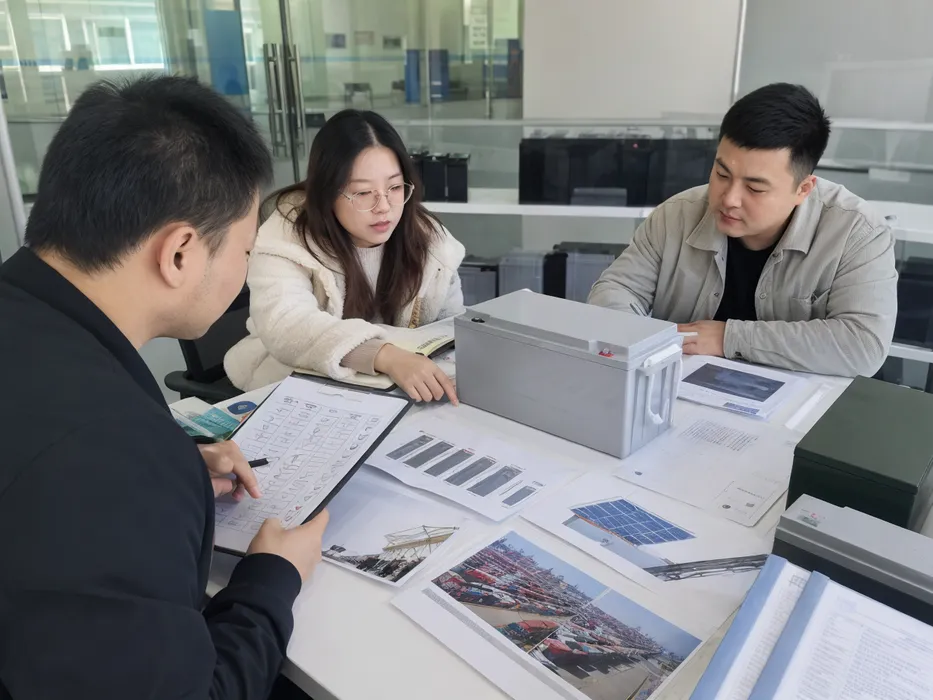
As a deep cycle gel solar battery manufacturer and deep cycle gel battery supplier serving Europe, Southeast Asia, Africa, South America, and the Middle East, we configure every quote around your specific market requirements — not a generic price list.
Explore More Gel Battery Products