

Home Solar Battery Backup Factory Supply
48V/51.2V LiFePO4 packs with in-house BMS, inverter-matched and export-ready. Repeatable backup-power SKUs for distributors, installers, and OEM partners.
Sized for 4–12 hour critical-load coverage, pre-configured for your inverter ecosystem, shipped with full compliance documentation.
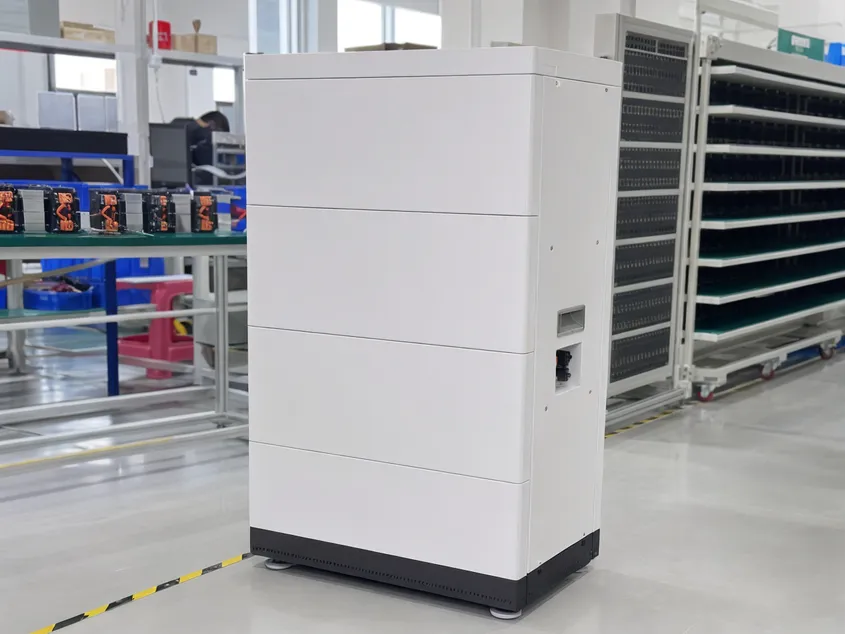
Where This Product Sits in the Residential Storage Line
A home solar battery backup is the grid-outage branch of our residential storage category. It's designed for homes that have solar panels and grid connection but need stored energy available the moment the grid drops — load-shedding markets, unstable-grid regions, and any residential segment where backup duration is the primary purchase driver.
This is not a daily-cycling off-grid battery. It's not a wall-mount unit optimized for slim profiles and self-consumption aesthetics. And it's not a hybrid system built around tariff arbitrage scheduling. It's a floor-standing or cabinet-style 48V/51.2V LiFePO4 pack engineered for one job: hold charge, respond instantly when the grid fails, and discharge steadily across your customer's critical loads until power returns.
If you're sourcing for a market where homeowners lose power regularly — South Africa, Nigeria, the Philippines, Pakistan, parts of Brazil — this is the product route that matches that demand. If your market is primarily self-consumption optimization with rare outages, the wall mounted solar battery or hybrid solar battery may be a better fit. The full residential lineup is on our home solar battery storage category page.
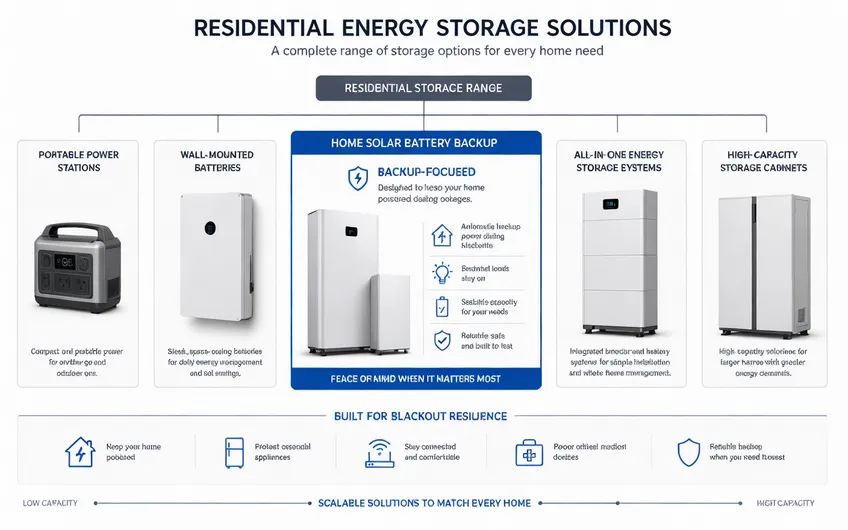
Commercial Logic
Backup-focused markets generate repeat orders because outage frequency drives urgency. Your customers don't deliberate for months — they buy after the third blackout. A house solar battery backup SKU positioned correctly in these markets moves faster than general-purpose storage products.
Other residential storage routes
Typical Specifications for Procurement Comparison
Here's what our standard home solar battery backup configurations look like. These are industry-typical values for the 48V/51.2V LiFePO4 backup class — exact specifications depend on the model and any customization you require.
Standard Backup Configuration
| Parameter | Value |
|---|---|
| Cell Chemistry | LiFePO4 (lithium iron phosphate) |
| Nominal Voltage | 51.2V (16S configuration) |
| Capacity Band | 100Ah – 200Ah per unit |
| Usable Energy | 5.12 kWh – 10.24 kWh per unit (at 80% DoD) |
| Recommended DoD | 80% for optimal cycle life |
| Cycle Life | 4,000–6,000 cycles at 80% DoD (cell-grade dependent) |
| Round-Trip Efficiency | ≥95% |
| BMS Protections | Over-charge, over-discharge, over-current, short-circuit, over-temperature, under-temperature, cell balancing |
| Communication Protocols | CAN bus, RS485, dry-contact; Bluetooth optional |
| Parallel Expansion | Up to 15 units in parallel (inverter-dependent) |
| Enclosure Type | Floor-standing cabinet, IP20/IP54 depending on model |
| Operating Temperature | -20°C to 55°C (discharge), 0°C to 45°C (charge) |
| Certifications | CE IEC 62133 UN38.3 MSDS |
| Standard MOQ | 100 units |
Specifications shown are standard values for this product class. Actual parameters depend on selected model and customization scope. Contact us for detailed datasheets.
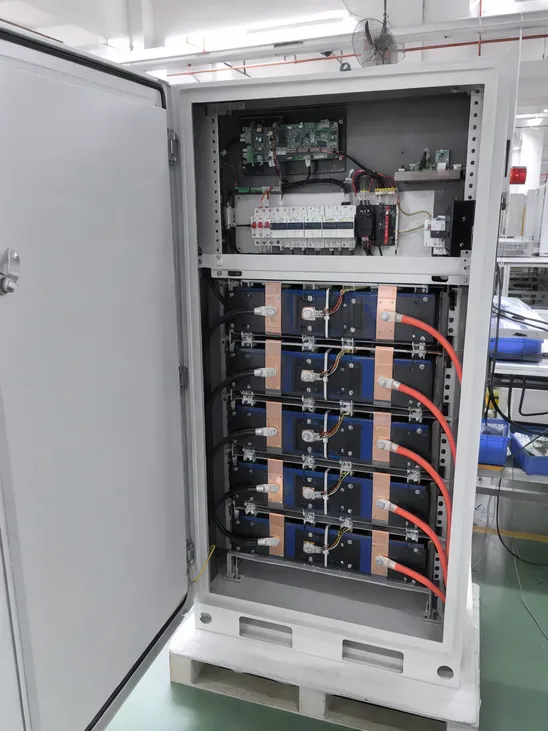
Custom Configurations
These numbers are formatted for your comparison sheet or tender file. If you need a specific capacity outside the 100–200Ah band, or a 25.6V configuration for a particular inverter ecosystem, we build from the same qualified cell stock — just tell us the target and we'll confirm feasibility.
Request Datasheet & QuoteScalable
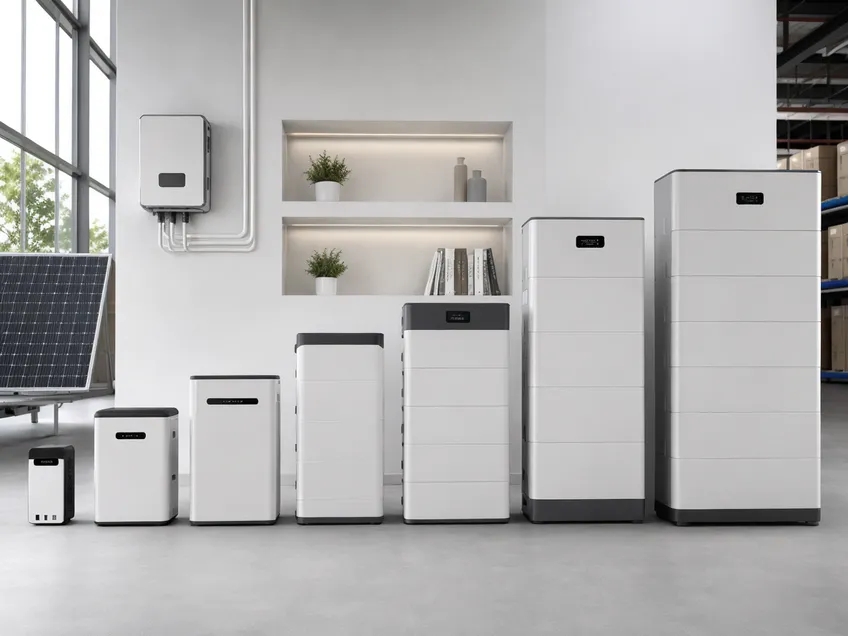
Up to 15 units in parallel — scale from 5 kWh to 150+ kWh per installation depending on inverter capacity.
7-Layer BMS
Over-charge, over-discharge, over-current, short-circuit, over-temperature, under-temperature, and active cell balancing — all in-house designed.
Backup Duration and Critical-Load Sizing for Marketable SKUs
Selling a solar battery backup isn't about offering one capacity and hoping it fits. The markets where backup demand is strongest — load-shedding regions, unstable grids, storm-prone areas — have different outage patterns, and your customers have different load expectations. Building a SKU ladder lets you capture more of the market instead of losing buyers whose needs don't match your single offering.
Here's how backup duration maps to capacity and buyer segment:
| Backup Target | Typical Critical Load | Suggested Battery Capacity | Buyer Segment |
|---|---|---|---|
| 2–4 hours (short outage) | 1.0–1.5 kW | 5 kWh (51.2V 100Ah) | Urban residential, brief grid interruptions |
| 4–8 hours (half-day) | 1.5–2.5 kW | 5–10 kWh (single unit or small parallel) | Suburban homes, scheduled load-shedding |
| 8–12 hours (overnight) | 2.0–3.0 kW | 10–20 kWh (parallel units) | Extended load-shedding markets, storm backup |
| 12+ hours (extended) | 2.5–4.0 kW | 20–40 kWh (multi-unit parallel system) | Severe grid instability, semi-off-grid |
Sizing Math
The sizing math is straightforward:
Critical Load (kW) × Backup Hours ÷ 0.8 (DoD) ÷ 0.95 (Efficiency) = Required Battery CapacityWe use 80% DoD because it's the threshold where LiFePO4 cycle life stays above 4,000 cycles — pushing to 90–100% DoD cuts cycle life significantly and increases your warranty exposure.
5 kWh Entry Unit
Captures price-sensitive first-time buyers. Gets them in the door with a proven, affordable backup solution.
10 kWh Mid-Range
Captures homeowners who've experienced long outages and want real coverage. The workhorse SKU for serious backup markets.
Parallel Expansion
Your customer starts with one unit and adds more later — and they come back to you for the second unit. 60–70% upgrade within 12 months across African and Southeast Asian distributors.
Need a configuration recommendation?
Send your target load profile and backup hours — we'll recommend the configuration that fits your market.
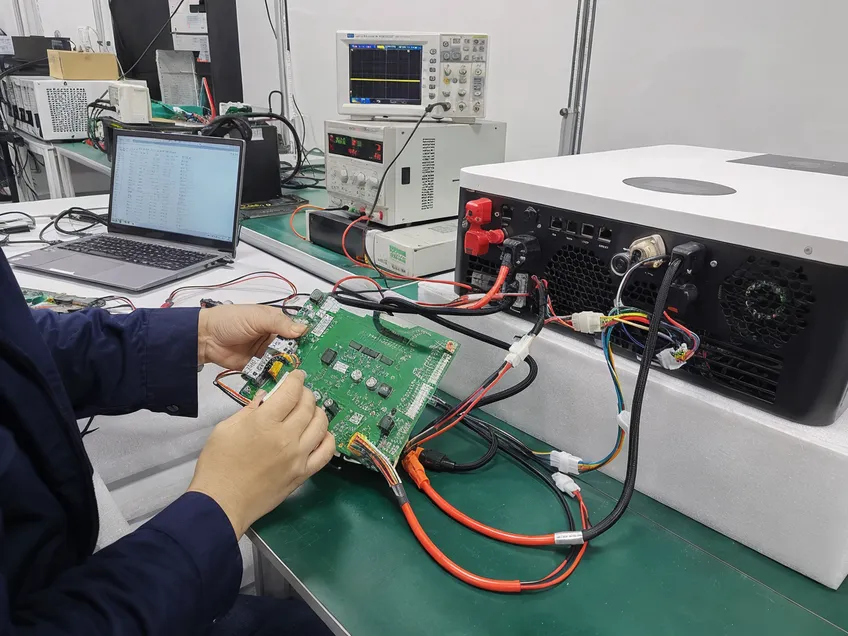
BMS and Inverter Matching That Reduces Field Support Calls
The number-one after-sales complaint in residential solar battery backup systems isn't cell failure — it's communication mismatch between the battery's BMS and the homeowner's inverter. Wrong SOC readings, charge refusal at 80%, nuisance shutdowns during discharge, or the inverter simply not recognizing the battery at all. Every one of these generates a service call that costs you money and erodes installer confidence in your product.
In-House BMS — Confirmed Capability
We design and manufacture BMS boards in-house — this is confirmed capability, not outsourced module assembly. Our 18-engineer R&D team programs communication protocols to match specific inverter brands and models. When you tell us your market runs on Deye, Growatt, Victron, Goodwe, or Sunsynk, we configure the CAN bus parameters (baud rate, data frame structure, command set) or RS485 protocol to match that inverter's requirements exactly. We test the pairing in our lab before production begins.
Deye
CAN / RS485
Growatt
CAN / RS485
Victron
CAN / RS485
Goodwe
CAN / RS485
Sunsynk
CAN / RS485
Why This Matters Commercially
Generic BMS modules from third-party suppliers use approximated protocol templates. They work "mostly" — until a firmware update on the inverter side shifts a parameter, and suddenly your installed base starts throwing errors.
In-house BMS means we can update firmware to match inverter changes without redesigning hardware or switching suppliers. Your reorder consistency stays intact across years, not just across one batch.
Dry-contact output is available for older inverter systems that don't support digital communication — it's a basic relay signal for charge/discharge enable, less elegant but still functional for budget hybrid inverters common in price-sensitive markets.
The Practical Step for You
Include the inverter brand and model in your RFQ. If you serve multiple inverter ecosystems, we can program different BMS firmware variants within the same production run — same cell pack, same enclosure, different communication configuration.
Your SKU management stays simple while your inverter coverage stays broad.
Generic BMS: Approximated protocols, breaks on inverter firmware updates, forces supplier switch
In-House BMS: Exact protocol match, firmware-updatable, multi-year reorder consistency
Confirm BMS compatibility before you order
Send your inverter model — we'll confirm protocol match and provide communication specs.
Manufacturing Controls for Backup Battery Consistency
A backup battery that performs well on unit #1 but drifts by unit #300 creates a warranty problem you won't see for six months. Consistency across production batches is what separates a reliable supply program from a sourcing headache. Here's what happens on our floor before a home solar battery backup ships:
Cell Incoming Inspection and Sorting
Every cell batch gets tested for actual voltage, internal resistance, and capacity — not the supplier's printed label. Cells are grouped within 20mV voltage and 5mΩ internal resistance tolerance. Cells outside our acceptance window go back to the supplier. We maintain dual-source relationships with qualified cell manufacturers so a supply disruption at one source doesn't force us to relax acceptance criteria on yours.
Pack Assembly and BMS Integration
Automated spot welding for cell connections (consistent weld nugget diameter, no cold joints), followed by BMS board mounting and wiring. Each BMS is programmed with protection parameters matched to the specific cell grade and backup application profile — discharge cutoff, charge cutoff, over-current threshold, temperature derating curves.
Charge/Discharge Testing and Aging
Every assembled pack goes through a full charge/discharge cycle to verify actual capacity against rated capacity. Packs then enter a 24-72 hour aging period where we monitor for voltage drop — any pack showing abnormal self-discharge gets pulled for investigation. This catches internal micro-shorts that wouldn't show up in a quick voltage check.
Temperature and Safety Verification
High-temperature soak at 55°C and low-temperature discharge at -20°C on batch samples. For backup batteries destined for tropical markets, we run extended thermal cycling to confirm BMS temperature response behaves correctly under sustained heat.
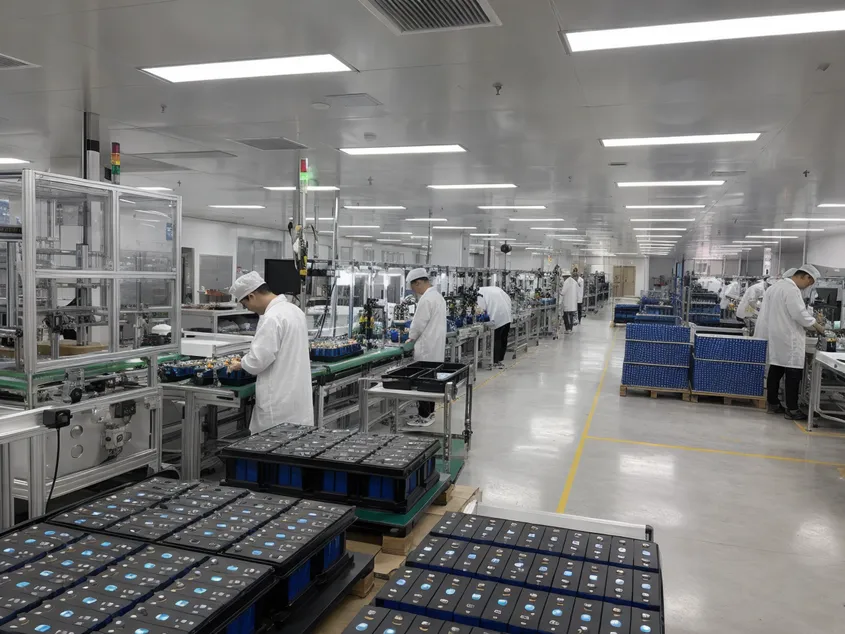
For your backup battery program, this means your 500-unit reorder runs on the same line, same cell lot allocation, same BMS firmware version as your first order — no drift, no surprises.
Commercial Markets Where Backup Batteries Move Repeatedly
A home solar battery backup isn't a one-time sale in the right markets — it's a repeatable SKU with predictable reorder cycles. Here are the segments where our existing buyers build volume:
Load-Shedding Residential Markets
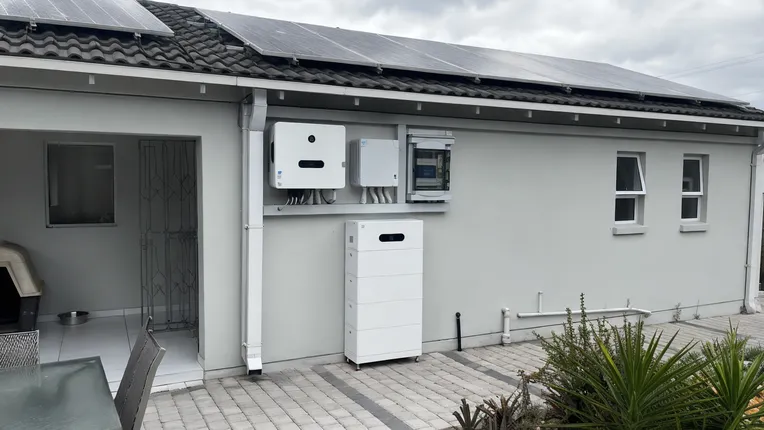
South Africa, Nigeria, Pakistan, the Philippines, parts of Brazil and India. These markets have scheduled or frequent unscheduled power cuts. Homeowners with existing solar panels are the immediate buyers — they already have generation capacity and just need storage to bridge outages.
Distributors in these markets report that demand spikes after every extended blackout event, making inventory positioning critical.
Key specs: The 5-10 kWh capacity band covers most residential critical loads, and the floor-standing cabinet format works in garages, utility rooms, and covered outdoor areas common in these regions.
Installer-Led Backup Retrofit Programs
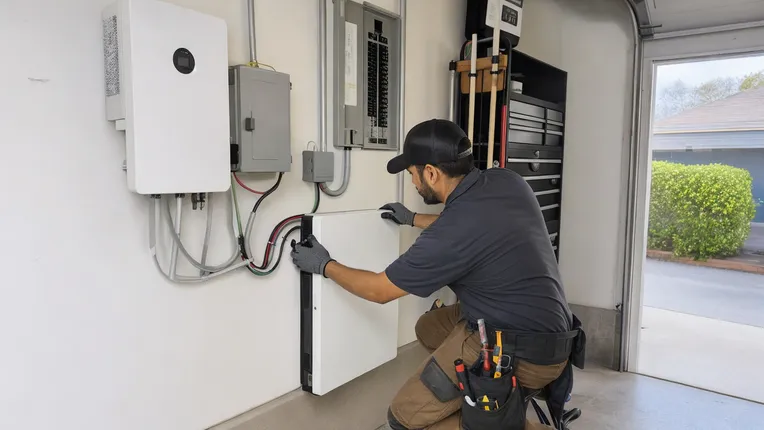
Solar installers who've built a base of grid-tied PV customers have a natural upsell path: add battery backup to existing systems. This is a high-margin service call — the installer already has the customer relationship, the roof array is in place, and the battery addition is a one-day job.
Your role as supplier: provide a backup battery with BMS pre-matched to the inverter brands those installers already work with. Consistent product, consistent commissioning procedure, fewer callbacks.
Reorder pattern: Installers reorder monthly once they build the retrofit into their standard offering.
Distributor Private-Label Backup SKUs
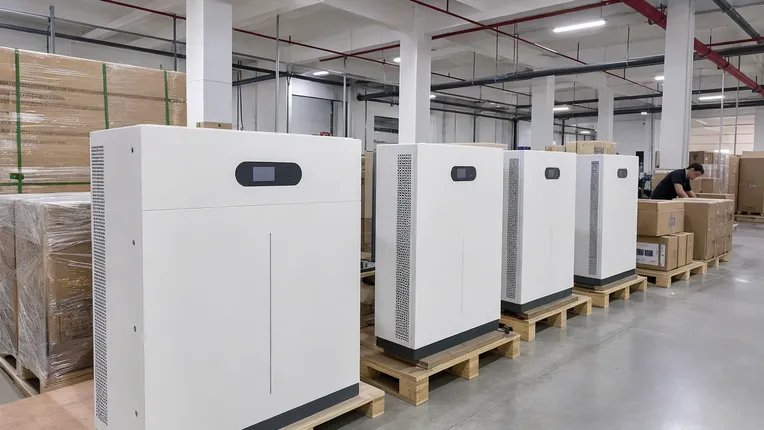
If you're building a branded energy storage line, the home solar battery backup is typically the anchor product — it's the highest-demand SKU in markets with grid instability. We supply OEM/ODM with your branding, your color scheme, your serial number format, and your documentation language.
Margin advantage: A branded backup battery at a competitive price point gives you margin protection that generic-label imports can't match. Your downstream customers associate the product with your brand, not ours.
Residential Project Tenders
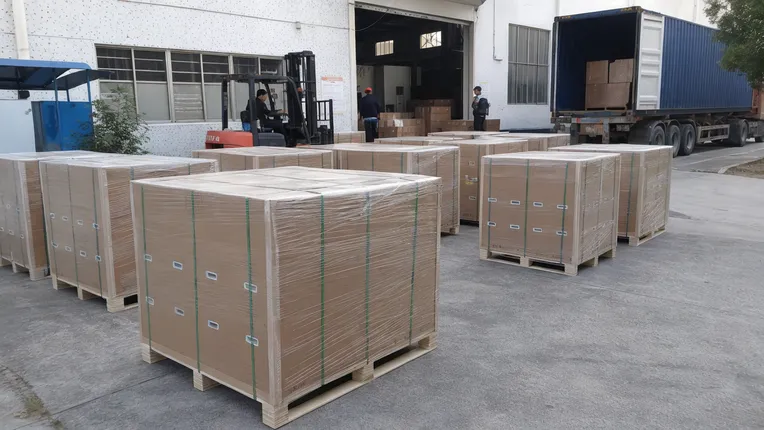
Government housing projects, estate developments, and social housing programs in emerging markets increasingly specify battery backup as part of the electrical package. These tenders require documentation (CE, IEC 62133, UN38.3), consistent supply across project phases, and competitive unit pricing at volume.
What matters most: We've supplied into multi-phase residential projects where delivery consistency across 6-12 months mattered more than first-unit price — the contractor needs the same product, same performance, same documentation package on delivery #4 as on delivery #1.
Ready to Match Your Market?
Tell us your target market and monthly volume — we'll recommend a backup SKU mix that fits your channel.
Get Your Custom SKU RecommendationOEM/ODM Options for Branded Home Backup Power Programs
Standard models get you into the market fast. Custom configurations protect your margin long-term. Here's what's adjustable on our home solar battery backup line:
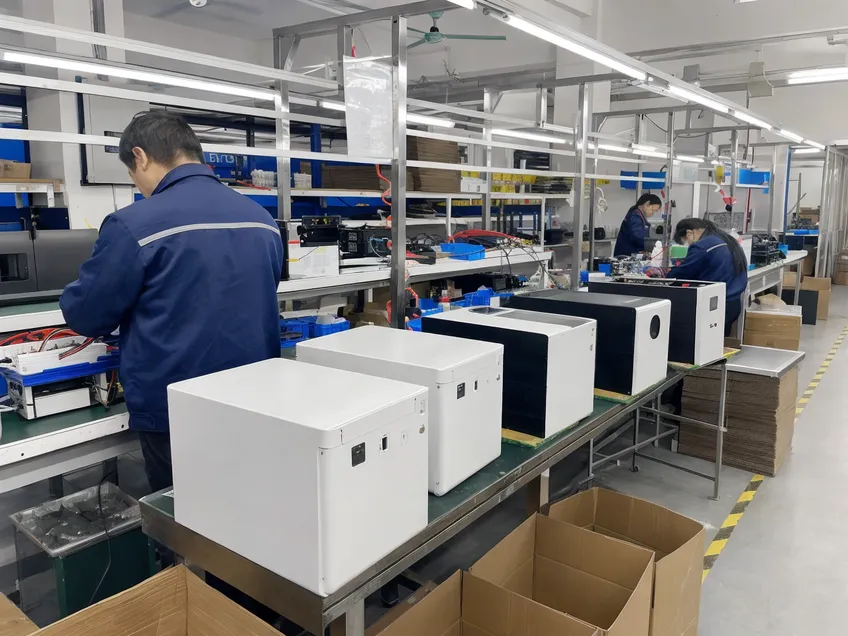
Development Cycle
Specification Lock
Voltage, capacity, BMS protocol, enclosure, branding finalized
BMS Programming
Inverter-specific firmware development and protocol matching
Prototype Build
Physical sample assembled to your exact configuration
Your Approval
Bench testing with your target inverter before volume commitment
Pilot Batch
Small production run for field validation
Production Release
Full-scale manufacturing at agreed MOQ
Prototype risk is ours, not yours. We ship prototypes for your bench testing with the target inverter before committing to volume. If the prototype doesn't pair correctly, we adjust firmware and re-test — this happens at our cost during development, not yours during deployment.
| Customization Area | Options | Impact on MOQ/Lead Time |
|---|---|---|
| Voltage/Capacity | 25.6V, 48V, 51.2V; 50Ah–280Ah; custom cell arrangements | Standard voltages: no impact. Non-standard: engineering validation required |
| BMS Protocol | CAN bus, RS485, dry-contact, Bluetooth; inverter-specific programming | Protocol change on existing hardware: minimal impact. New firmware: 2–3 week development |
| Enclosure | Floor-standing cabinet, wall-mount, rack-mount; custom dimensions | Existing tooling: no impact. New enclosure mold: higher MOQ threshold |
| Color/Finish | RAL color matching, textured or smooth powder coat | Color change: minimal impact on existing enclosure |
| Branding | Logo, label design, serial number format, documentation language | No MOQ impact on standard models |
| Connectors/Wiring | Anderson, MC4, terminal block, custom harness length | Standard connectors: no impact. Custom harness: small MOQ increase |
| Packaging | Retail-ready box, plain export carton, custom branded packaging | Custom box design: small setup cost, no MOQ change |
MOQ Starting Point
Standard models start at 100 units MOQ — low enough to test a SKU in your market before scaling. For OEM/ODM with new BMS firmware or enclosure tooling, we quote the exact MOQ threshold when you describe the scope. No ambiguity, no surprise minimums after you've invested in development.
Certification Scope Note
If your custom configuration changes the cell arrangement or enclosure significantly from a certified standard model, the existing CE/IEC 62133 certificate may not cover it. We flag this upfront and support the re-certification process if needed — better to know before production than after your shipment reaches customs.
Compliance, Packaging, and Export Readiness for Lithium Backup Batteries
Lithium batteries are classified dangerous goods for international transport. Your import process requires specific documentation — missing paperwork means port delays, and port delays mean your project timeline slips.
Documentation We Maintain for Standard Backup Models
| Document | What It Covers | Your Benefit |
|---|---|---|
| UN38.3 Test Summary | Transport classification for lithium batteries | Required by shipping lines and airlines; clears freight booking |
| MSDS | Hazardous material handling and emergency procedures | Required by customs, warehouses, and freight forwarders |
| CE Declaration of Conformity | EU market access for electrical equipment | Clears EU import and enables market registration |
| IEC 62133 Test Report | Battery safety standard compliance | Required by many importers for downstream market registration |
| ISO 9001:2015 Certificate | Manufacturing quality management system | Supports supplier qualification audits |
For markets requiring additional local certification — UL for North America, BIS for India, INMETRO for Brazil, SABS for South Africa — our engineering team supports the application process with test samples and technical data packages. We've completed these cycles for enough regions to guide you on timeline and lab selection.
Export Packaging for Battery Freight
Our standard export packaging for home solar battery backup units:
Gross weight and CBM per unit are provided in your quotation for accurate freight cost calculation.
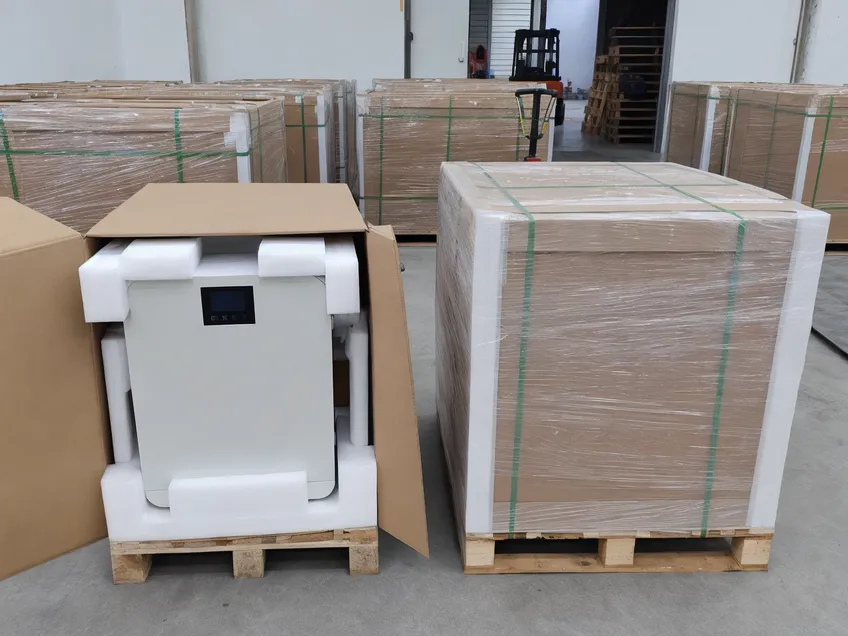
Rough Inland Logistics?
For markets with rough inland logistics — sub-Saharan Africa, rural Southeast Asia, island destinations — we add corner protectors and reinforce palletization. Battery damage claims are expensive and slow to resolve; the packaging upgrade costs a fraction of one replacement shipment.
Container Loading Plans
We don't publish fixed container-loading quantities because your model mix changes the answer. A 20GP of 5 kWh units loads very differently from a 20GP of 10 kWh cabinets. Send your model and quantity — we'll provide pallet plans and loading diagrams with your quote.
Choose the Right Residential Battery Route Before You Order
Our home solar battery storage line includes five product routes. If you're not certain the backup-focused product is the right fit for your market, here's a quick comparison:
| Product Route | Best Fit | When to Choose This Route |
|---|---|---|
| Home Solar Battery Backup This Page | Grid-tied homes needing outage coverage | Your market has frequent power cuts; backup duration is the primary selling point |
| Wall Mounted Solar Battery | Space-constrained residential installs | Your market values slim profiles, indoor aesthetics, and self-consumption optimization |
| Off Grid Solar Battery Storage | Homes without grid access | Your market needs daily deep-cycle operation as the primary power source |
| Hybrid Solar Battery | Grid-tied with active energy management | Your market uses time-of-use tariffs and needs BMS-inverter scheduling |
| Solar Panel and Battery Storage | Bundled solar-plus-storage kits | Your market wants turnkey packages, not component sourcing |
Home Solar Battery Backup
Best Fit: Grid-tied homes needing outage coverage
When to Choose: Your market has frequent power cuts; backup duration is the primary selling point
Best Fit: Space-constrained residential installs
When to Choose: Your market values slim profiles, indoor aesthetics, and self-consumption optimization
Best Fit: Homes without grid access
When to Choose: Your market needs daily deep-cycle operation as the primary power source
Best Fit: Grid-tied with active energy management
When to Choose: Your market uses time-of-use tariffs and needs BMS-inverter scheduling
Best Fit: Bundled solar-plus-storage kits
When to Choose: Your market wants turnkey packages, not component sourcing
Boundaries Aren't Absolute
A backup battery can be used in a hybrid system, and a hybrid battery provides backup. The difference is in BMS programming priority, cycle-life optimization, and how we configure the communication protocol. If you're unsure which route matches your market, send us the use case and we'll recommend the right configuration.
Frequently Asked Questions: Home Solar Battery Backup Sourcing
What capacity should a home solar battery backup have for 4–12 hours of critical-load coverage?
Calculate: critical load (kW) × backup hours ÷ 0.8 (recommended DoD for LiFePO4) ÷ 0.95 (system efficiency). A typical home running 2 kW of critical loads for 8 hours needs approximately 10.5 kWh of battery capacity — a single 51.2V 200Ah unit covers this.
For 4-hour coverage at the same load, a 51.2V 100Ah unit (5.12 kWh usable) is sufficient. Most residential backup applications in our export markets land between 5 kWh and 20 kWh.
Practical note: If you need more than 10 kWh, parallel expansion with matched units is more practical than a single oversized battery.
Is LiFePO4 or lead-acid better for a house solar battery backup SKU?
LiFePO4 wins on the metrics that matter for long-term channel profitability:
LiFePO4 Advantages
- Cycle life: 4,000–6,000 cycles
- Depth of discharge: 80% usable
- Weight: roughly 1/3 of equivalent lead-acid
- Calendar life: 10+ years
Lead-Acid (Gel) Advantages
- Lower upfront unit cost
- Simpler — no BMS communication complexity
- Cycle life: 500–800 cycles
- Calendar life: 3–5 years
For markets where your customers can afford the higher upfront cost and value long-term performance, LiFePO4 is the stronger SKU. For extremely price-sensitive markets where the battery may be replaced every 2–3 years anyway, gel still has a role.
We manufacture both — tell us your market's price sensitivity and we'll recommend the chemistry that protects your margin over the product lifecycle.
What inverter information should I send before ordering solar battery backup units?
Send the inverter brand, model number, and firmware version if available. We need this to configure BMS communication protocol — CAN bus baud rate, data frame structure, and command set vary between brands and sometimes between firmware versions of the same model.
If you serve multiple inverter brands, we can produce different BMS firmware variants within the same production batch.
Common pairings already validated:
For brands not on this list, send us the communication protocol documentation and we'll confirm compatibility within 3–5 working days.
What causes a solar battery backup system to shut down during an outage?
Four common causes:
Triggers because the load exceeds the configured discharge limit — usually means the critical-load panel wasn't properly isolated from non-essential circuits.
Installation & sizing issueTriggers because the battery was already partially discharged before the outage.
Installation & sizing issueBetween BMS and inverter causes the inverter to stop drawing power as a safety measure.
Protocol mismatch — solvable with correct BMS configurationTriggers in hot environments without adequate ventilation.
Environmental — solvable with graduated temperature response firmware that derates rather than hard-cuttingSummary: Causes 1 and 2 are installation and sizing issues. Cause 3 is protocol mismatch — solvable with correct BMS configuration. Cause 4 is environmental — solvable with our graduated temperature response firmware that derates rather than hard-cutting.
What documents are needed to import lithium home backup batteries?
Minimum for sea freight: UN38.3 test summary, MSDS, and a dangerous goods shipping declaration from your freight forwarder. For EU market access: add CE declaration of conformity and IEC 62133 test report.
For specific markets:
- UL — North America
- BIS — India
- INMETRO — Brazil
- SABS — South Africa
What we provide: UN38.3, MSDS, CE, and IEC 62133 documentation for all standard models. For OEM/ODM configurations, documentation is generated as part of the development cycle — budget 4–6 weeks for new certification if the configuration differs significantly from existing certified models.
What is EVANBattery's MOQ for standard home solar battery backup models?
100 units for standard models from our existing catalog. This covers any standard 48V/51.2V backup configuration with our default BMS firmware and enclosure.
For OEM/ODM:
100
Custom branding on standard model
200–300
Custom BMS firmware / new inverter protocol
500+
Fully custom cell config + new enclosure tooling
We quote exact thresholds when you describe the customization — no hidden minimums.
RFQ Checklist — What to Send for a Home Solar Battery Backup Quote
Include these details and we'll respond with a technical recommendation, pricing, and lead time within 48 hours.
Target Capacity
kWh per unit, or backup hours + critical load (kW) if you need sizing help
Voltage
48V/51.2V standard, or specify if you need 25.6V or other
Inverter Brand and Model
For BMS protocol matching
Installation Type
Floor-standing cabinet, wall-mount, or rack-mount
Target Market
Country or region (determines certification requirements)
Required Certifications
CE, IEC 62133, UL, BIS, or others
Estimated Quantity
Monthly or per-order volume
Branding
Standard EVANBattery label, or OEM/ODM with your brand
Destination Port or Country
For freight and packaging planning
Contact Us Directly
+86 13560690838
Explore Related Products
© 2026 EVANBattery. All rights reserved.