

Home Solar Battery Storage Manufacturer Supply
LiFePO4 and lead-acid packs built for residential backup, off-grid, and hybrid applications. Five product routes covering wall-mount, floor-standing, and rack-mount configurations from 12V 50Ah to 48V 280Ah.
In-house BMS design, automated cell sorting, and full lifecycle testing on every production batch.
Home Solar Battery Storage: What We Manufacture and Who We Supply
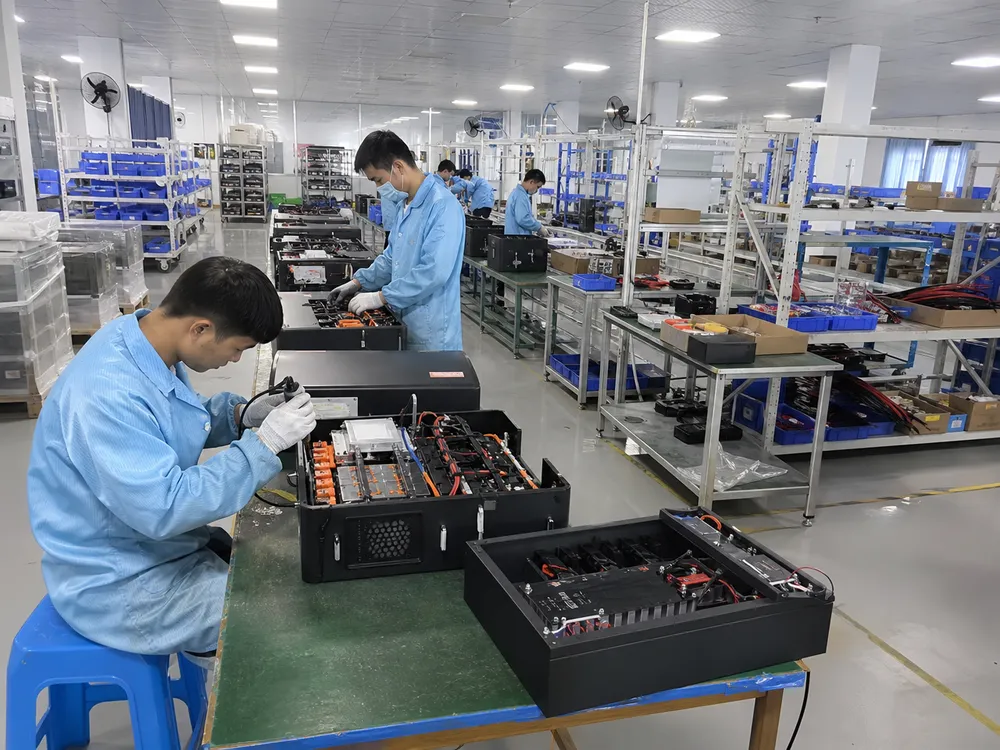
EVANBattery is the export brand of Zhongshan Aiwen Import and Export Trading Co., Ltd. — a home solar battery storage manufacturer operating from a 9,900 m² facility in Zhongshan City, Guangdong Province since 2012. We produce LiFePO4 and lead-acid (gel, AGM) battery packs and integrated BMS systems specifically for residential solar energy storage applications.
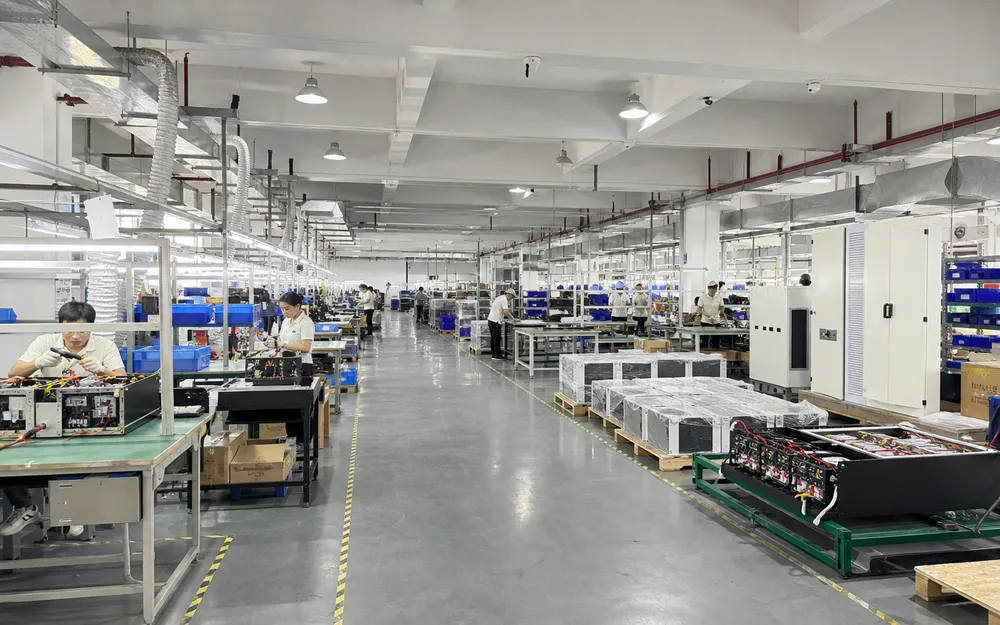
Our buyers are distributors, project contractors, and OEM/ODM partners who need a residential solar battery supplier capable of repeat wholesale programs. We run 6 dedicated production lines with 150 employees and an 18-engineer R&D team, producing 2,000,000 battery units per year.
The residential storage category you're looking at here represents our fastest-growing segment — wall-mounted units for European self-consumption programs, floor-standing backup systems for African and Southeast Asian markets, and hybrid-compatible packs for South American installers building grid-tied residential portfolios.
We don't make panels or inverters. We make the battery pack and BMS that sit between your customer's solar array and their loads — and we make them at a scale and consistency level that supports container-volume reorders without quality drift.
Five Product Routes Buyers Can Source
We organize our home solar battery system wholesale catalog by application route rather than raw specs, because your end customers buy by use case, not by cell chemistry. Here's what's available:
Home Solar Battery Backup
Grid-tied homes needing 4–12 hour outage coverage.
Wall Mounted Solar Battery
Space-constrained residential installs, self-consumption optimization.
Off Grid Solar Battery Storage
Homes without grid access, island systems, rural electrification.
Hybrid Solar Battery
Grid-tied with battery backup, time-of-use arbitrage.
Solar Panel and Battery Storage
Bundled solar-plus-storage kits for turnkey residential programs.
How These Routes Are Organized
Form-Factor & Application Routes (1–3)
The first three routes — Backup, Wall Mounted, and Off Grid — are form-factor and application driven. They determine the enclosure, mounting, and duty cycle of the battery system.
System-Integration Routes (4–5)
The last two routes — Hybrid and Solar Panel + Battery — are system-integration routes. They determine communication protocol, inverter compatibility, and kit composition.
Building a catalog that spans multiple routes?
We can run them simultaneously on separate lines. Your container ships complete rather than in split deliveries.
How to Choose the Right Home Solar Battery System for Your Market
Choosing the right residential solar battery configuration depends on four variables. Here's how we help buyers narrow it down:
Backup Duration and Load Profile
Short-Backup Markets
Europe, Urban Australia
Typically need 5–10 kWh of usable capacity — enough to cover evening loads and overnight consumption. Your customers run refrigerators, lighting, and Wi-Fi routers, not heavy machinery. A 48V 100Ah LiFePO4 wall-mount covers this cleanly.
Long-Backup & Off-Grid Markets
Rural Africa, Island Southeast Asia, Parts of South America
Need 10–30 kWh with deep-cycle tolerance. These systems discharge to 80–90% DoD daily, so cell quality and BMS protection thresholds matter more than enclosure aesthetics. We spec these with wider temperature operating ranges and reinforced terminals for harsh-environment wiring.
Inverter Compatibility
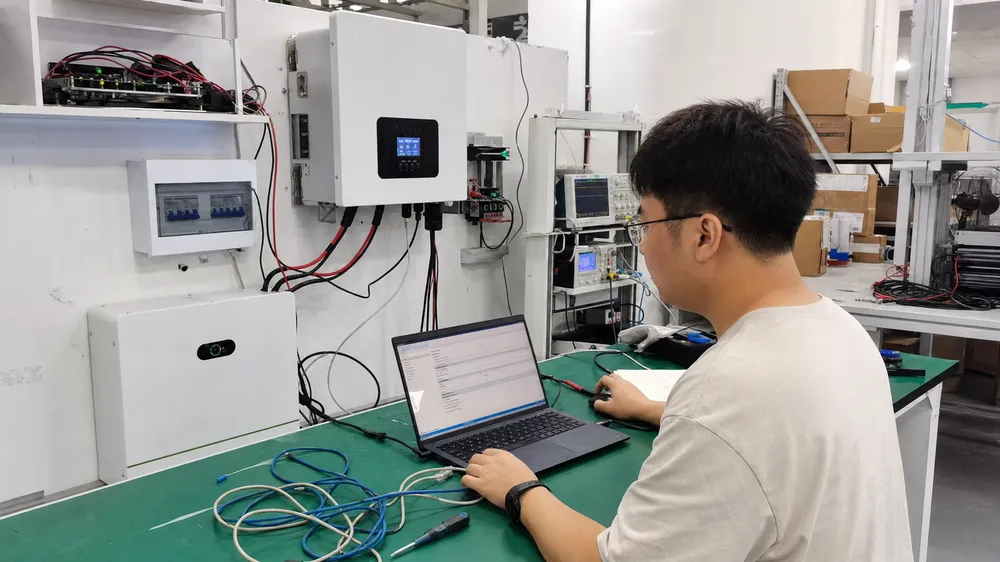
Your battery must talk to your customer's inverter. We configure BMS communication protocols — CAN bus, RS485, or dry-contact — to match specific inverter brands.
If you're supplying into a market dominated by a particular hybrid inverter (Deye, Growatt, Victron, Goodwe), tell us the model and we'll pre-program the communication parameters. This eliminates field commissioning failures and reduces your after-sales calls.
Pre-Programmed Protocol Matching
Tell us the inverter brand and model → we ship batteries with communication parameters already configured → zero field commissioning failures.
Installation Constraints
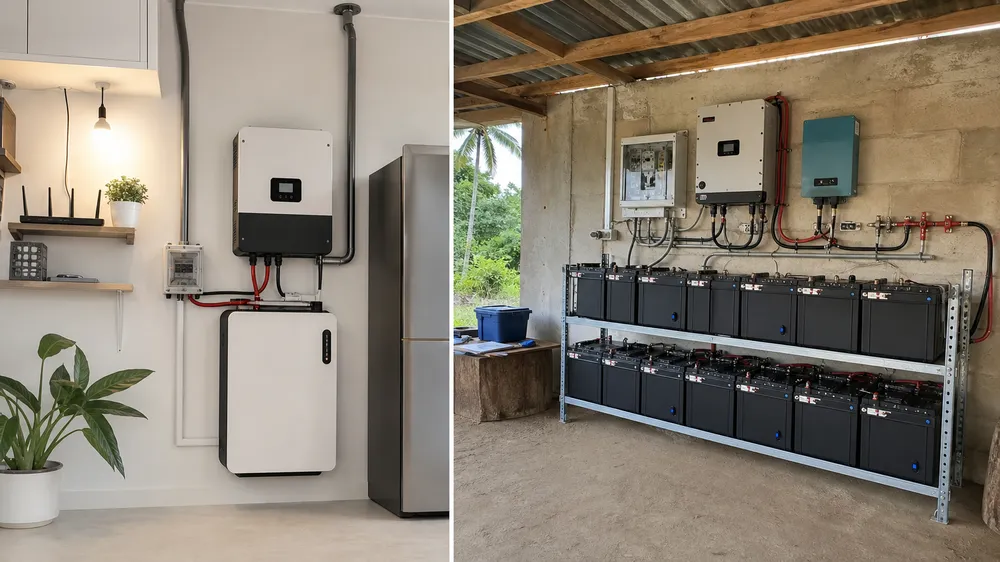
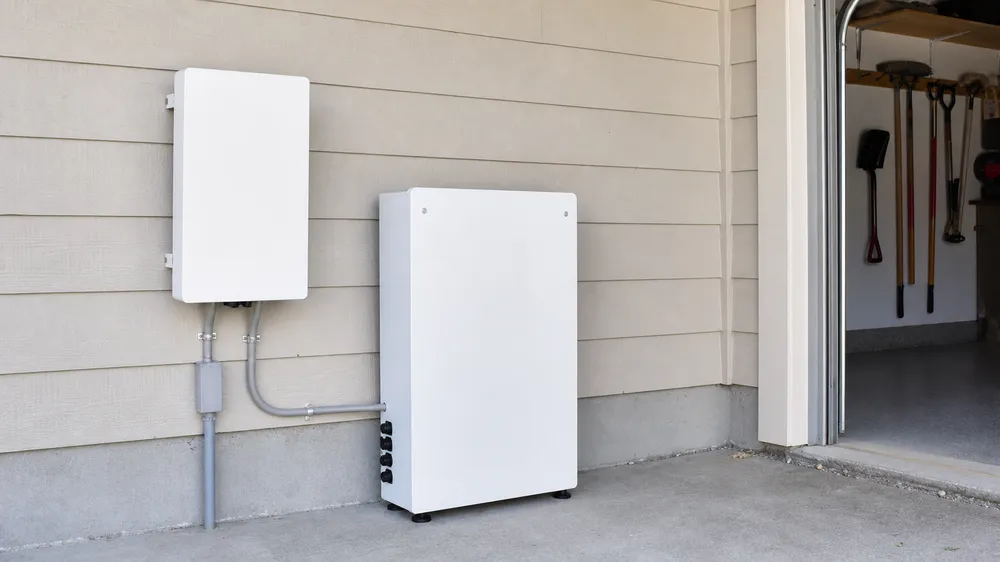
Wall-Mounted Units
Need slim profiles (under 180mm depth), integrated mounting brackets, and IP65 minimum for garage or outdoor wall installations.
Floor-Standing Units
Can be larger but need stable bases and cable entry points that work with standard residential conduit.
We design enclosures for both — the choice depends on what your installers prefer and what your market expects.
Market Segment as a Sourcing Decision
Self-Consumption Optimization
Europe, Australia
Wall-mount, 5–15 kWh, hybrid-inverter compatible, CE + IEC 62133 required
Backup Power
South Africa, Southeast Asia, Middle East
Floor-standing, 10–20 kWh, deep-cycle rated, robust packaging for inland logistics
Off-Grid Residential
Rural Africa, Pacific Islands
12V/24V/48V modular, gel or LiFePO4 depending on budget, high-temperature tolerance
Solar Kit Wholesale
Global
Battery + BMS + harness as a bundled SKU, branded packaging, documentation included
Ready to narrow down your configuration?
Send us your target market, inverter model, and volume estimate — we'll recommend the exact configuration.
Specification Ranges and BMS Controls Across the Residential Battery Line
Here's what the home solar battery storage category covers at the factory level. Exact values for each product route are on their respective pages — this table helps you confirm whether our range covers your requirements before going deeper.
| Parameter | Range Across Category |
|---|---|
| Cell Chemistry | LiFePO4 (lithium iron phosphate), Gel (VRLA), AGM |
| Nominal Voltage | 12.8V, 25.6V, 51.2V (lithium) · 12V, 24V, 48V (lead-acid) |
| Capacity Band | 50Ah – 280Ah per unit |
| Usable Energy | 0.64 kWh – 14.3 kWh per unit |
| Cycle Life (LiFePO4) | 3,000–6,000 cycles at 80% DoD (cell-grade dependent) |
| BMS Protections | Over-charge, over-discharge, over-current, short-circuit, over-temperature, under-temperature, cell balancing |
| Communication | CAN bus, RS485, Bluetooth (optional), dry-contact |
| Enclosure Rating | IP20 (indoor floor-standing) to IP65 (wall-mount, outdoor-rated) |
| Operating Temperature | -20°C to 55°C (discharge), 0°C to 45°C (charge) for LiFePO4 |
| Certifications | CE, IEC 62133, UN38.3, MSDS, ISO 9001:2015 |
What Happens Before These Specs Reach Your Warehouse
The numbers above hold because of what happens on the production floor. Our automated cell sorting system groups incoming cells within 20mV voltage and 5mΩ internal resistance — tight matching is what prevents capacity drift across a 500-unit batch after six months in the field.
Every BMS board goes through over-charge, over-discharge, over-current, short-circuit, and temperature protection verification before it's married to a cell pack. We program protection parameters to match the specific cell chemistry and application profile — a 48V hybrid unit gets different thresholds than a 12V off-grid deep-cycle battery.
Separated Production Zones
We separated lithium and lead-acid assembly into distinct factory zones because the handling, ventilation, and QC checkpoints are fundamentally different. Mixing them on one line is a common shortcut — it creates cross-contamination risk in the electrolyte handling stage.
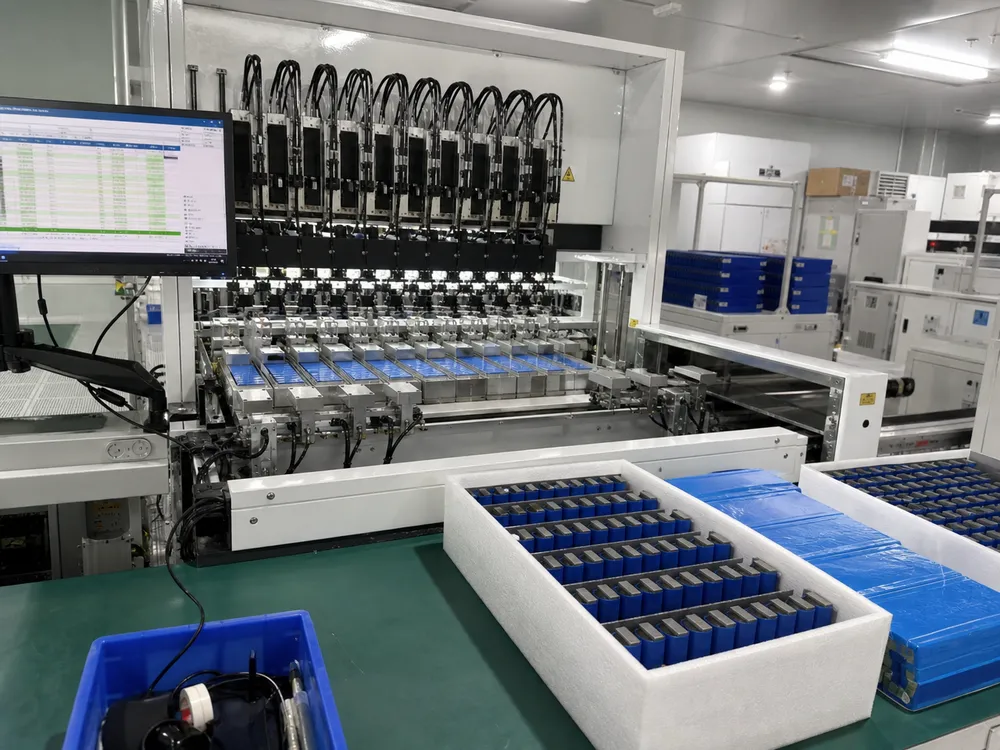
Batch-Level Lifecycle Testing
Capacity Verification
Charge/Discharge Cycling
55°C High-Temp Soak
-20°C Low-Temp Discharge
Vibration Testing
Safety (Drop, Nail)
This isn't type-approval testing we did once three years ago — it's batch-level verification that keeps your warranty exposure predictable across reorders.
What Usually Fails in Residential Battery Projects —
and How We Prevent It
We've been shipping home solar batteries since 2012. In that time, we've seen every failure mode that drives warranty claims and buyer frustration. Here's what goes wrong in this category and what we do differently.
Cell Mismatch and Early Capacity Fade
The Problem
The most common failure in residential batteries isn't dramatic — it's gradual. Cells with mismatched internal resistance or capacity degrade at different rates within the same pack. After 6–12 months, the weakest cell limits the entire pack's usable capacity. Your customer sees 70% of rated capacity and calls you.
Our Prevention
We prevent this with automated cell sorting before pack assembly. Every cell is measured for actual capacity and internal resistance — not the supplier's label value. Cells are grouped within tight tolerance bands (20mV, 5mΩ). This costs more in sorting time and creates some cell waste, but it means your 500-unit batch performs consistently at month 18, not just at month 1.
BMS-Inverter Communication Mismatch
The Problem
A battery that can't communicate properly with the inverter triggers nuisance shutdowns, incorrect state-of-charge readings, or charging failures. This is the number-one field complaint for residential hybrid systems — and it's almost always a BMS protocol configuration issue, not a hardware defect.
Our Prevention
We design and manufacture BMS boards in-house rather than sourcing generic third-party modules. When you tell us which inverter your market uses, we configure the communication protocol (CAN bus parameters, baud rate, data frame structure) to match that specific inverter's requirements. We test the pairing in our lab before production runs. Generic BMS boards from module suppliers approximate these parameters from a template — that approximation is where field failures come from.
Thermal Degradation in Hot Climates
The Problem
Residential batteries installed in garages, utility rooms, or outdoor enclosures in tropical and Middle Eastern markets face sustained temperatures above 40°C. Without proper BMS temperature management, cells degrade faster and protection circuits trigger premature shutdowns.
Our Prevention
Our BMS firmware includes graduated temperature response — it doesn't just cut off at a threshold. It reduces charge current progressively as temperature rises, maintaining operation while protecting cell longevity. For markets where ambient temperatures regularly exceed 40°C, we recommend our wider-temperature-range cell grade and adjust BMS parameters accordingly.
We learned the thermal lesson shipping to West Africa in 2014–2015 — three batches of early-generation packs with basic temperature cutoffs generated more after-sales calls than the rest of our production combined that year. The graduated response firmware came directly from that experience.
OEM/ODM Options for Wholesale and Branded Programs
If you're building a house solar battery brand or need configurations matched to specific inverter ecosystems, our in-house R&D team of 18+ engineers handles the development cycle from specification through production validation.
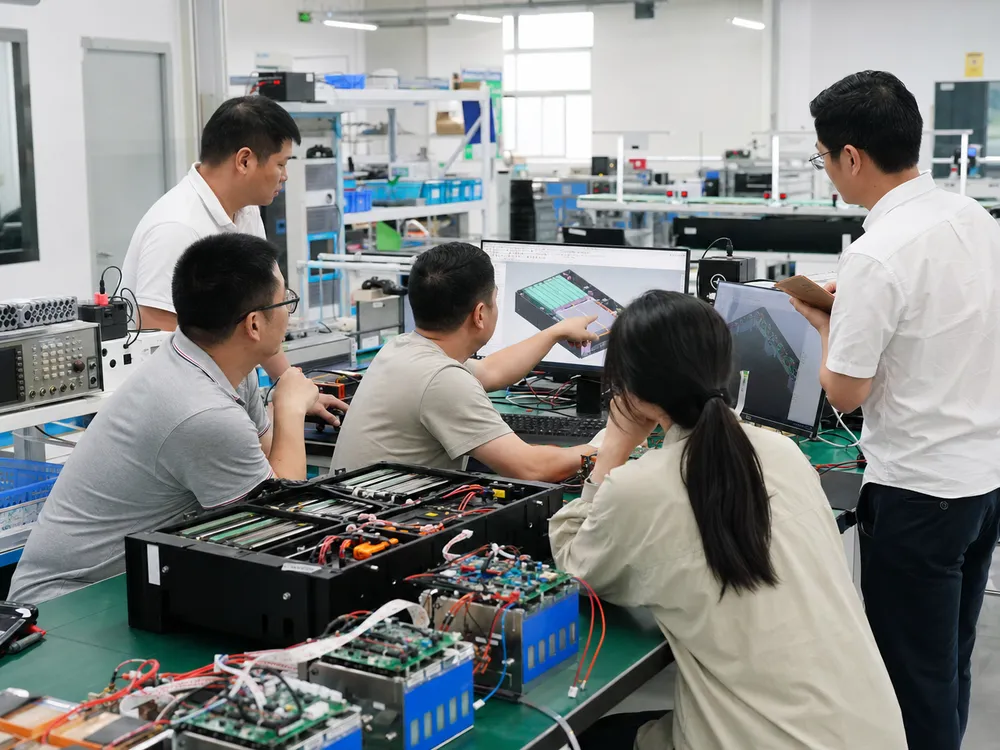
What's Customizable
Voltage and Capacity
Non-standard configurations (25.6V 150Ah, 51.2V 280Ah, or any cell arrangement your project requires) built from the same qualified cell stock.
BMS Communication Protocol
CAN bus, RS485, Bluetooth — programmed to match your target inverter brand and model.
Enclosure Design
Wall-mount, floor-standing, rack-mount, or custom dimensions for specific installation environments.
Branding and Labeling
Your brand name, logo, color scheme, regulatory labels, and serial number format on the product and packaging.
Connector and Wiring
Anderson, MC4, terminal block, or custom harness configurations.
Packaging
Retail-ready boxes, plain export cartons, or custom packaging with your marketing materials included.
MOQ and Development Process
Standard models from our existing catalog start at 100 units MOQ — deliberately low so you can test a SKU with your customers before committing to container volumes.
For OEM/ODM configurations, MOQ depends on the scope of change. A label and color swap on an existing model is straightforward at low volume. A fully custom cell configuration with new BMS firmware needs enough volume to justify engineering validation — we'll tell you the threshold upfront so you can plan your landed cost accurately.
Development Cycle
We provide samples at the prototype stage so you can verify fit and function with your target inverter before committing to volume.
Why This Matters for Your Business
Protect Your Margin
Custom configurations mean you're not selling the same generic SKU that three other importers in your market carry.
Reduce After-Sales Cost
Protocol-matched BMS eliminates the communication mismatches that generate the majority of field complaints in residential hybrid systems.
Build Brand Equity
Branded packaging lets you build brand equity instead of reselling a factory's identity.
Tell us your target market, monthly volume, and inverter model — we'll scope the OEM/ODM path and confirm MOQ.
Packaging, Compliance Documentation, and Export Planning
Batteries are classified dangerous goods for international freight. Missing paperwork means port delays or rejected shipments — and your customer's project timeline doesn't wait for document corrections.
Compliance Documents We Maintain
UN38.3 Test Summary
Transport classification for lithium batteries — required by airlines and shipping lines. Current reports available for all standard models.
MSDS (Material Safety Data Sheet)
Hazardous material handling information for customs and warehouse operators. Available per model.
CE Declaration of Conformity
EU market access for electrical equipment. Available for residential LiFePO4 range.
IEC 62133 Test Report
Battery safety standard — required by many importers for market registration. Available for LiFePO4 models.
ISO 9001:2015 Certificate
Manufacturing quality management system verification. Factory-level certificate.
Additional Local Certification Support
If your market requires additional local certification (UL for North America, BIS for India, INMETRO for Brazil), our engineering team supports the application process with test samples and technical data packages. We've been through this cycle for enough regions to know which test labs are efficient for each market.
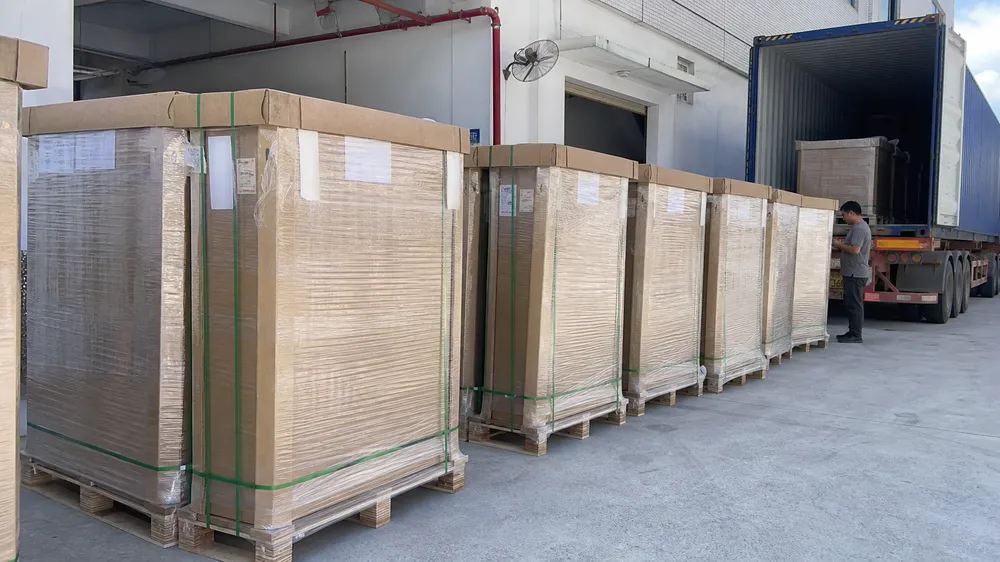
Packaging for Battery Freight
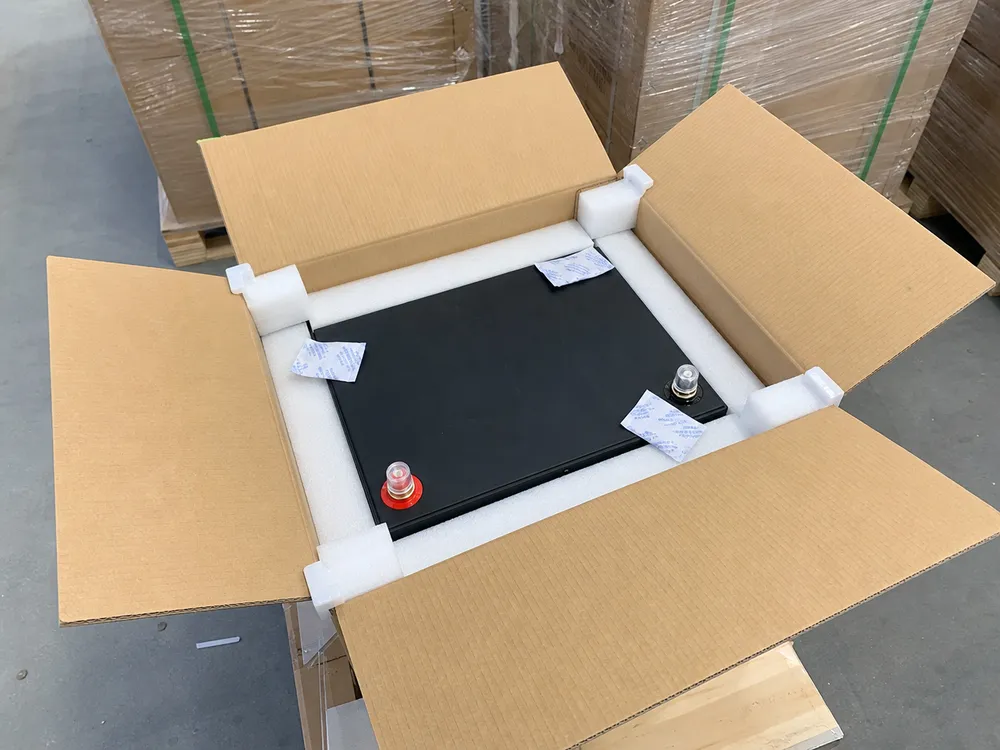
Residential batteries ship as heavy, dense cargo. Our standard export packaging uses reinforced double-wall corrugated cartons with foam-in-place cushioning, palletized and stretch-wrapped. Each unit is individually boxed with terminal protection caps and desiccant packs.
Gross weight and CBM vary by model — we provide these figures in your quotation so you can calculate container loading and freight cost accurately.
We don't publish fixed "units per container" numbers on the website because your model mix changes the answer. A container of wall-mount 5kWh units loads very differently from a container of floor-standing 15kWh systems. Send us your model and quantity — we'll provide exact pallet plans and loading diagrams.
For markets with rough inland logistics (sub-Saharan Africa, rural Southeast Asia), we reinforce palletization and add corner protectors. Breakage claims on battery shipments are expensive — the packaging investment pays for itself on the first delivery.
Standard Export Packaging Includes
- Reinforced double-wall corrugated cartons
- Foam-in-place cushioning
- Individual boxing with terminal protection caps
- Desiccant packs per unit
- Palletized and stretch-wrapped
- Corner protectors for rough-logistics markets
Frequently Asked Questions: Home Solar Battery Storage Sourcing
How do I size a residential solar battery for my customer's backup needs?
How do I size a residential solar battery for my customer's backup needs?
Calculate the critical loads your customer needs to run during an outage (refrigerator, lighting, router, phone charging — typically 1.5–3 kW continuous) and multiply by the desired backup hours. A home needing 2 kW for 8 hours requires 16 kWh of battery capacity at 100% DoD — but since we recommend 80% DoD for LiFePO4 cycle life, spec a 20 kWh system.
In practice, most residential backup applications land between 5 kWh (short-outage European markets) and 20 kWh (extended-outage African and Southeast Asian markets).
Tell us your target backup hours and typical load profile — we'll recommend the configuration.
What's the difference between backup, off-grid, and hybrid home solar battery systems?
What's the difference between backup, off-grid, and hybrid home solar battery systems?
Backup Systems
Sit idle until the grid fails, then discharge to cover critical loads. They cycle infrequently but must respond instantly.
BMS requirement: Must support fast switchover.
Off-Grid Systems
Cycle daily at deep DoD (80–90%), serving as the primary power source. Cell quality and cycle life matter most here.
Key spec: Maximum cycle life at deep discharge.
Hybrid Systems
Grid-connected but actively manage energy — storing solar during the day, discharging during peak tariff hours, and providing backup during outages.
BMS requirement: Communication with hybrid inverter for coordinated charge/discharge scheduling.
Each type needs different BMS programming, different cycle-life specifications, and different communication configurations. We manufacture all three — the choice depends on your target market's grid reliability and tariff structure.
How does BMS communication protocol affect inverter compatibility?
The BMS communicates battery state (voltage, current, temperature, state of charge, protection status) to the inverter via CAN bus or RS485. Each inverter brand uses a slightly different data frame structure, baud rate, and command set.
If the BMS protocol doesn't match the inverter's expectations, you get incorrect SOC readings, charging failures, or nuisance shutdowns.
Protocol Matching Service
We program BMS communication parameters to match specific inverter brands — send us the inverter model and we'll confirm compatibility or configure a match.
What causes premature capacity loss in home solar batteries?
Three main causes:
Cell mismatch within the pack
Cells degrade at different rates; the weakest cell limits pack capacity.
Excessive depth of discharge without proper BMS management
Accelerates lithium plating on anodes.
Sustained high-temperature operation without thermal derating
Accelerates electrolyte decomposition.
Our Prevention Approach
- Automated cell sorting within 20mV / 5mΩ tolerance
- BMS-enforced DoD limits matched to cell grade
- Graduated temperature response that reduces charge current as temperature rises rather than hard-cutting at a threshold
What import documents do I need for lithium solar batteries?
At minimum:
UN38.3
Transport classification
MSDS
Material safety data
DG Declaration
Dangerous goods shipping
For EU market access, you'll need CE declaration of conformity and IEC 62133 test reports for your market registration file. Some markets require additional local certification (UL, BIS, INMETRO).
Documentation We Provide
We provide UN38.3, MSDS, CE, and IEC 62133 documentation for all standard models.
For OEM/ODM configurations, we generate new documentation as part of the development cycle.
What is the minimum order quantity for home solar battery storage?
Standard models from our existing catalog: 100 units MOQ. This lets you test a SKU in your market without container-level commitment.
OEM/ODM configurations (custom voltage, capacity, branding, BMS protocol): MOQ depends on engineering scope — a label change is low-volume friendly, a new cell configuration needs higher volume to justify validation. We quote the exact threshold when you describe the customization scope.
RFQ Checklist — What to Include When You Contact Us
Send us these details and we'll respond with a technical recommendation and pricing within 48 hours:
Explore Home Solar Battery Storage Products
Browse our residential battery product lines by application type.
Home Solar Battery Backup
Backup power systems for residential grid-tied and off-grid installations.
Wall Mounted Solar Battery
Space-efficient wall-mount units for indoor and garage installations.
Off Grid Solar Battery Storage
High-capacity storage for fully independent off-grid solar systems.
Hybrid Solar Battery
Dual-mode batteries compatible with hybrid inverters for grid and solar input.
Solar Panel and Battery Storage
Integrated panel-plus-battery kits for turnkey residential solar projects.
© 2026 EVANBattery. All rights reserved.