

Lithium Solar Battery Manufacturer for Wholesale Storage Programs
EVANBattery manufactures lithium solar batteries for distributors, project contractors, and OEM/ODM partners. LiFePO4 packs in 12V, 24V, and 48V configurations — from 50Ah residential units to rack-mounted commercial storage — produced on 6 dedicated lines with in-house BMS engineering.
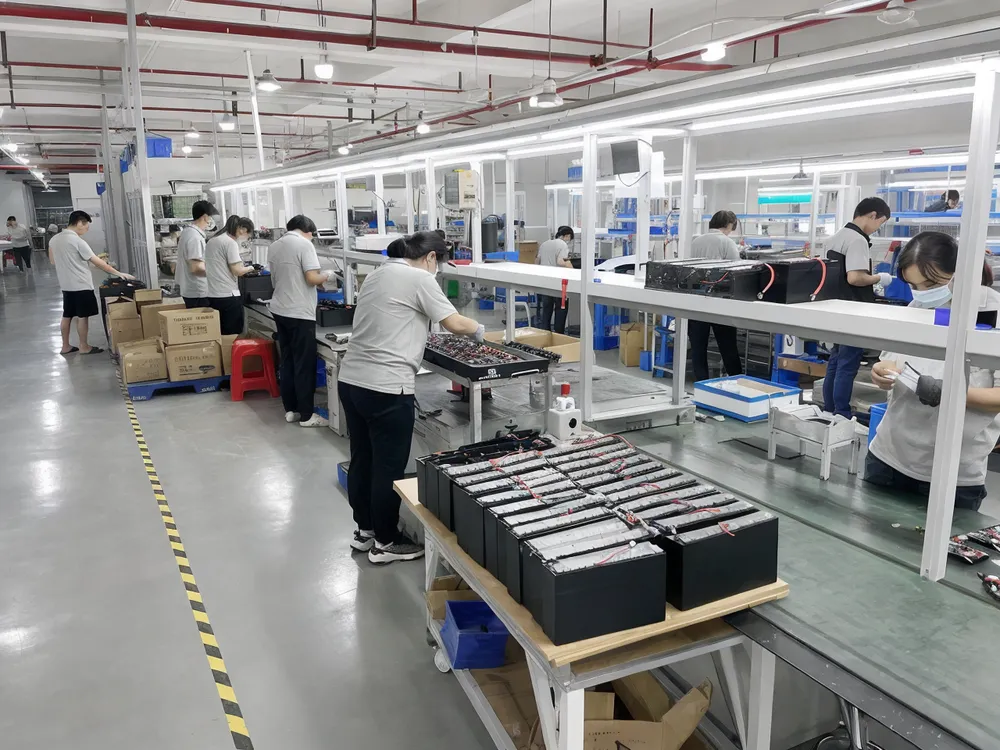
Lithium Solar Battery Manufacturing Since 2012
We've been building lithium solar batteries in Zhongshan, Guangdong since the chemistry was still a hard sell against lead-acid. The factory started with gel and AGM packs for African off-grid programs, then shifted into LiFePO4 production as distributors in Europe and Southeast Asia started requesting lithium alternatives with longer cycle life and lower total cost of ownership.
Today, lithium solar battery production accounts for the majority of our 9,900m² facility's output. Six production lines, 150 people, 2,000,000 units annual capacity — all focused on solar energy storage. We don't make panels, inverters, or racking. We make the battery pack and the BMS that sits inside it, and we make them at volumes that support repeat wholesale programs without lead-time surprises.
As a lithium solar battery manufacturer, our value to you is straightforward: we control cell grading, pack assembly, BMS firmware, and lifecycle testing under one roof, so your product quality stays consistent from the first sample order through your fifth container reorder.
Request a lithium solar battery quote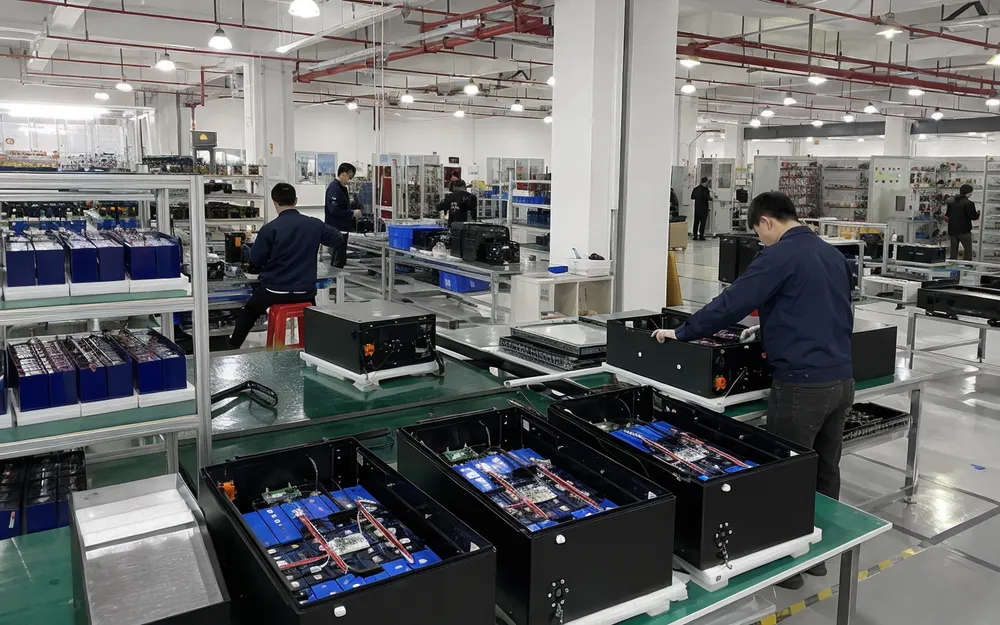
LiFePO4 and Solar Battery Energy Storage Lines You Can Build a Catalog Around
Our lithium solar battery production splits into two product families. Each one maps to a different segment of your catalog and a different buyer conversation.
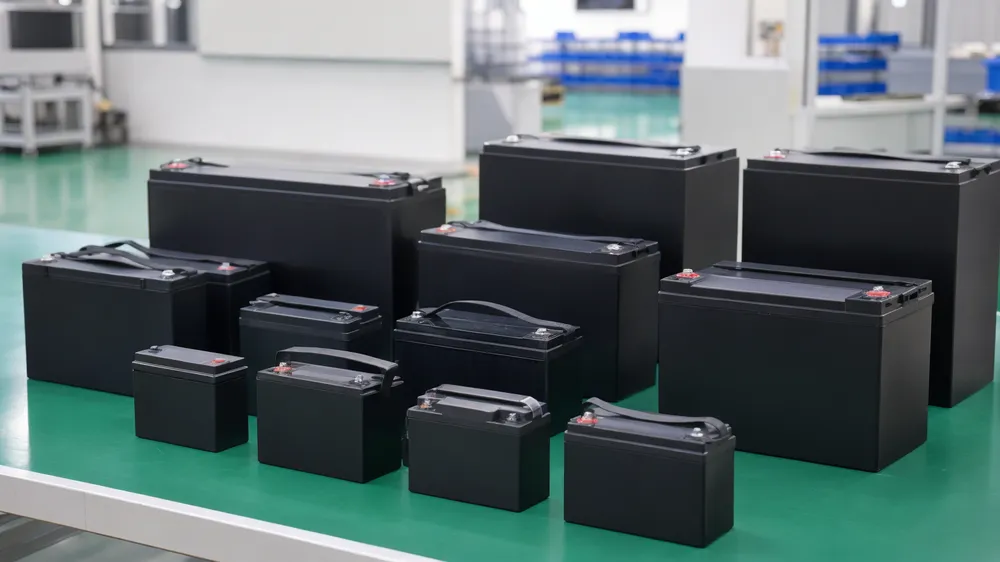
LiFePO4 Solar Battery
This is the core lithium chemistry line — prismatic LiFePO4 cells assembled into 12V, 24V, and 48V packs with matched BMS. If you're stocking standard solar storage SKUs for residential installers, off-grid system integrators, or replacement battery distributors, this is where your product comes from. Voltage and capacity options cover the range from compact 12V 50Ah units through 48V 200Ah packs.
As a LiFePO4 solar battery supplier, we grade and match every cell before assembly, so your batch-to-batch consistency holds across reorders — your customers get the same performance whether they buy from your first shipment or your tenth.
View LiFePO4 Solar Battery Details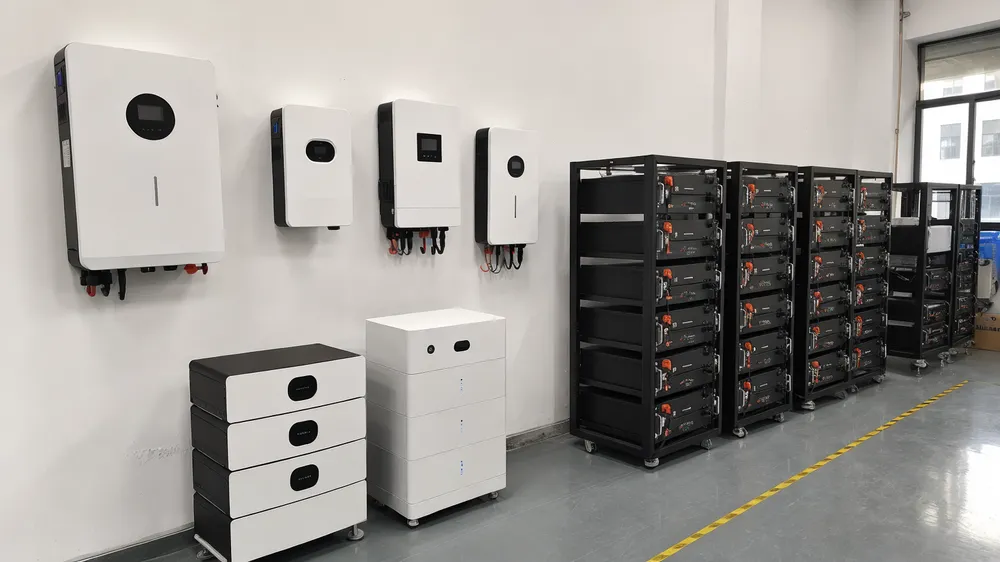
Solar Battery Energy Storage
This line covers broader energy storage configurations: wall-mounted residential systems, rack-mounted commercial units, stackable modular packs, and higher-capacity project-scale assemblies. If your business involves solar battery energy storage wholesale — selling complete storage solutions to installers, EPC contractors, or telecom operators — these are the products you'd quote from.
The distinction matters for your catalog structure: LiFePO4 Solar Battery covers the core cell-pack SKUs, while Solar Battery Energy Storage covers the system-level configurations with integrated enclosures, communication interfaces, and mounting hardware.
View Solar Battery Energy Storage DetailsLithium Solar Battery Specs Buyers Need Before RFQ
Before you send a quote request, here's the category-level specification range we cover. This tells you whether our production capability matches your requirements — exact model specs live on the individual product pages.
| Parameter | Range / Options |
|---|---|
| Chemistry | LiFePO4 (lithium iron phosphate) |
| Nominal Voltage | 12.8V, 25.6V, 48V / 51.2V |
| Capacity Range | 50Ah – 300Ah (standard models); custom configurations available |
| Cycle Life | 3,000–6,000 cycles at 80% DOD (varies by cell grade and application profile) |
| BMS Protection | Over-charge, over-discharge, over-current, short-circuit, high/low temperature |
| Communication Options | RS485, CAN bus, Bluetooth (model-dependent; custom protocol matching available) |
| Enclosure Formats | Metal case, plastic case, wall-mount bracket, 19" rack-mount, stackable module |
| Operating Temperature | Charge: 0°C to 55°C; Discharge: -20°C to 60°C |
| Testing Protocol | Capacity verification, cycle testing, 55°C high-temp soak, -20°C low-temp discharge, vibration, drop |
| Certifications | CE, IEC 62133, UN38.3, MSDS, ISO 9001:2015 |
If your project requires a voltage or capacity outside these standard ranges — say a 25.6V 150Ah for a specific inverter match — we configure custom cell arrangements. Send your inverter model and we'll confirm compatibility.
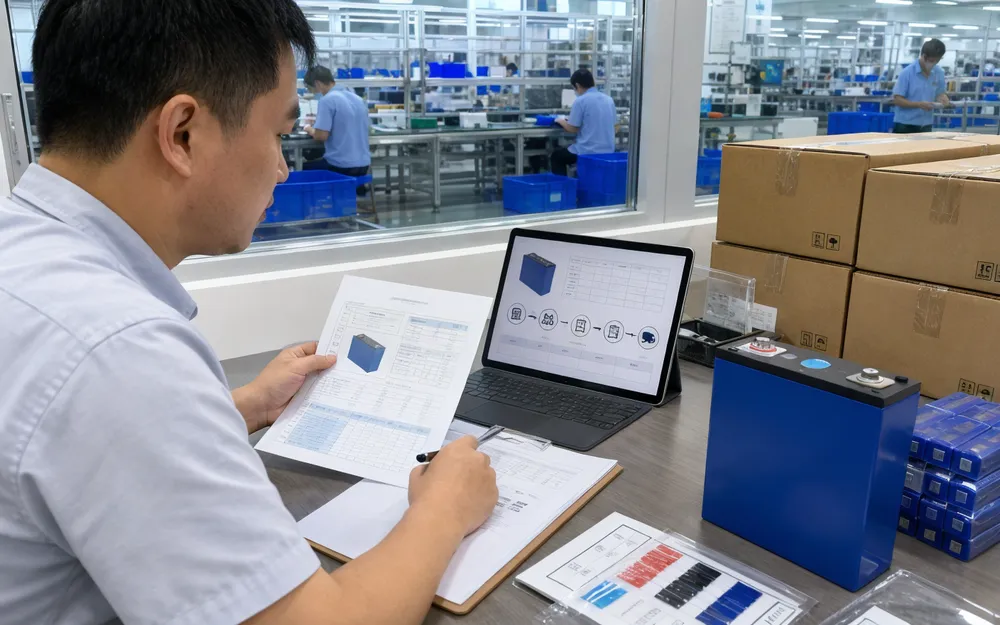
How the Conversation Starts
The LiFePO4 solar battery supplier conversation usually starts here: you tell us voltage, capacity, quantity, and destination market. We come back with a model recommendation, pricing, and lead time.
Cell Matching, BMS, and Lifecycle Testing That Reduce Field Warranty Risk
This is the section that matters most if you've been burned by inconsistent battery quality from previous suppliers. The difference between a lithium solar battery that holds rated capacity for 5 years and one that drifts after 18 months usually comes down to three manufacturing decisions.
Incoming Cell Inspection & Automated Sorting
Every cell batch gets tested for actual voltage, internal resistance, and capacity before it enters our sorting system. We group cells within:
Tight matching prevents the weakest cell from dragging down pack performance — which is the single most common cause of premature capacity fade in field-deployed lithium solar batteries.
We've rejected entire cell shipments from suppliers whose QC drifted between seasons. Cell production is sensitive to ambient humidity and electrode coating consistency, and not every supplier maintains the same standards year-round.
In-House BMS Design Matched to Chemistry & Application
We don't buy generic BMS modules and bolt them onto packs. Our 18-engineer R&D team designs and produces BMS boards in-house, programming protection parameters to match the specific cells in each pack.
Application-Specific Tuning
48V commercial rack unit (daily charge/discharge cycles) → different over-current thresholds and balancing algorithms
12V off-grid battery (sits at partial state-of-charge for weeks) → adjusted protection timing and balance triggers
Generic BMS settings are the second most common cause of field failures we see in competitor products — the protection trips too early under normal load, or too late to prevent cell damage.
Full Lifecycle Testing on Every Production Batch
We run these on every batch, not just during initial type approval. Your fifth reorder gets the same testing rigor as your first sample.
Safety testing includes vibration, drop, and nail penetration on a sample basis for every production batch.
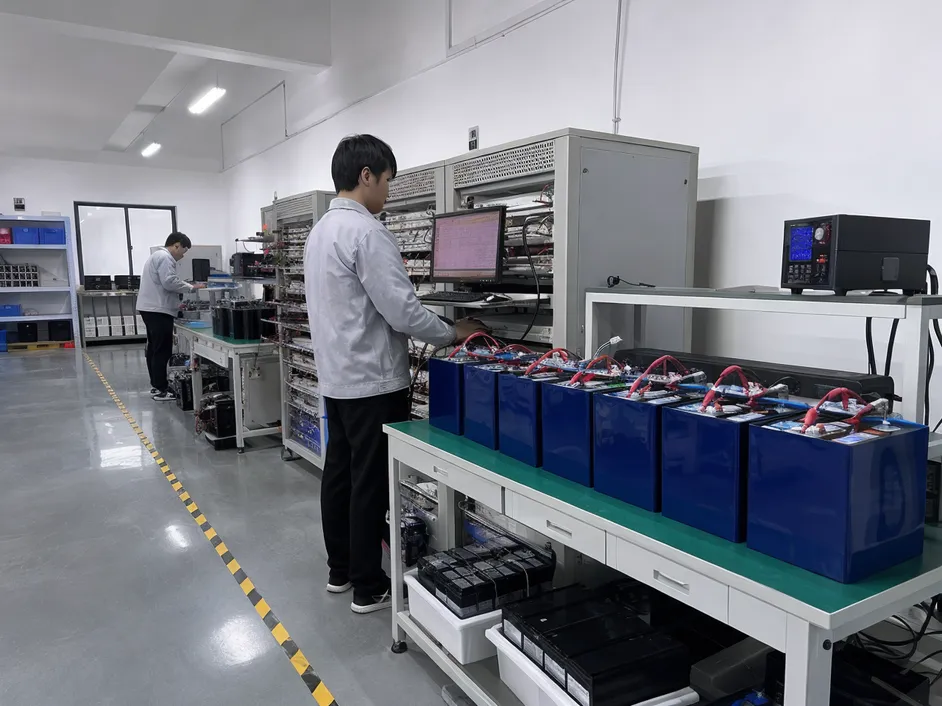
Independent QC Reporting Structure
As a lithium solar battery manufacturer, our QC team reports directly to management, not to production line supervisors. When a batch fails any checkpoint, that SKU stops until root cause is identified — not reworked and pushed through.
This structural independence is what separates consistent quality from "good enough" quality. It means our QC engineers have the authority to halt production without pressure from delivery timelines.
View EVANBattery Factory ProfileConfiguration Logic for Residential, Off-Grid, and Commercial Storage Orders
Choosing the right lithium solar battery configuration depends on which market segment you're supplying. Here's how we think about it — and how we help buyers spec their initial orders.
Residential Storage Distribution
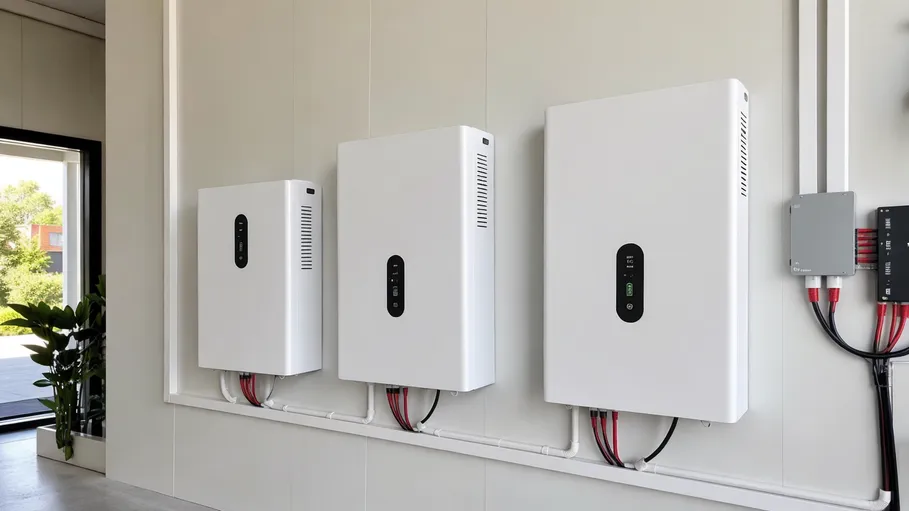
Your installer customers typically need wall-mounted or stackable 48V/51.2V LiFePO4 packs in the 100Ah–200Ah range, paired with hybrid inverters. If you're building a residential storage catalog, start with 2–3 SKUs covering 5kWh, 10kWh, and 15kWh usable capacity. These cover the majority of household backup and self-consumption use cases your downstream buyers will encounter.
We produce both wall-mount and floor-standing enclosures with RS485 or CAN communication for inverter integration. Most European and South American distributors in our network stock the 51.2V 100Ah as their entry SKU and add the 200Ah for larger homes.
Recommended starter SKUs:
Off-Grid Solar Programs
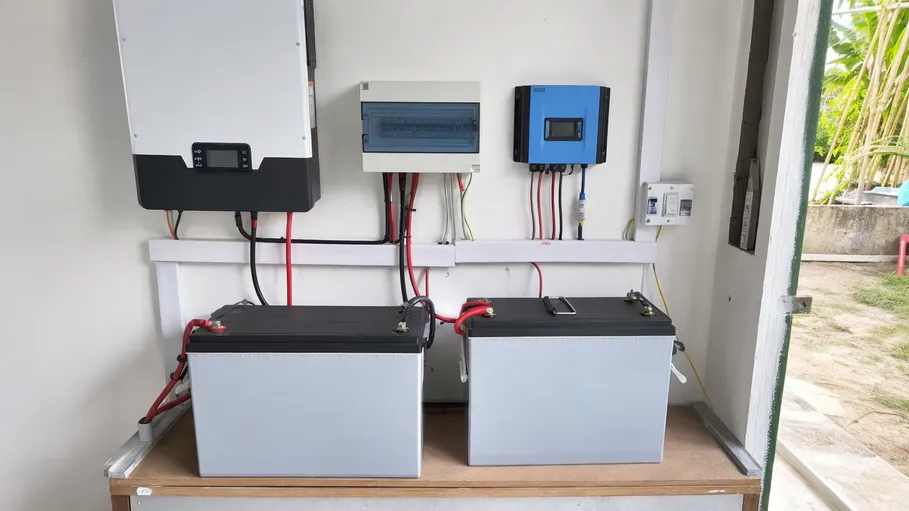
Off-grid projects span a wider voltage range: 12V and 24V for small solar home systems and lighting kits, 48V for larger community microgrids and telecom tower backup. Your configuration choice depends on the controller/inverter voltage in the system design.
For solar battery energy storage wholesale into African and Southeast Asian off-grid markets, we typically recommend starting with 12V 100Ah and 24V 100Ah LiFePO4 packs — these cover the highest-volume system architectures and keep your initial inventory manageable.
(We still ship significant gel battery volume into these markets too, for buyers whose end customers prioritize upfront cost over cycle life.)
High-volume configurations:
Commercial and Telecom Backup
Higher-capacity rack-mounted 48V/51.2V systems with CAN bus communication for integration with commercial inverters and energy management systems. These orders tend to be project-based rather than catalog-stocked, so MOQ flexibility matters — we can run project quantities alongside your standard catalog production.
OEM/ODM Private-Label Programs
If you're testing a new market, start with our standard models under your own label — 100-unit MOQ, your logo and packaging, our proven cell configuration and BMS. Once you've validated demand with your customers, we move into custom voltage, capacity, or communication protocol development for your second-generation product.
This staged approach keeps your upfront investment low while you prove the market.
OEM/ODM Voltage, Capacity, and Communication Options
We handle custom lithium solar battery development in-house — from specification through production validation. Here's what's on the table:
Voltage and Capacity Configuration
Standard models cover 12.8V, 25.6V, and 51.2V in capacities from 50Ah to 300Ah. If your project needs a non-standard arrangement — a 25.6V 150Ah for a specific inverter, a 51.2V 280Ah for a commercial rack — we configure the series/parallel cell layout, adjust BMS parameters, and validate the pack before mass production.
BMS Communication and Protection Tuning
RS485, CAN bus, or Bluetooth — matched to your inverter or EMS platform. We adjust charge/discharge curves, balancing thresholds, and protection trip points to fit the actual duty cycle.
If you're integrating with a specific hybrid inverter brand, send us the communication protocol documentation and we'll confirm compatibility before sampling.
Enclosure, Branding, and Packaging
Custom colors, silk-screen or laser-etched logos, private-label packaging with your brand identity. For wall-mount and rack-mount units, we can adjust bracket dimensions or mounting hole patterns if your installation standard requires it.
MOQ Structure
100 units for standard models with label/packaging changes. Custom voltage or capacity configurations require higher MOQ depending on engineering complexity — we'll quote the threshold upfront so you can calculate landed cost before committing.
(A label swap is straightforward at 100 units. A new cell configuration with custom BMS firmware typically needs 300–500 units to justify the validation cycle.)
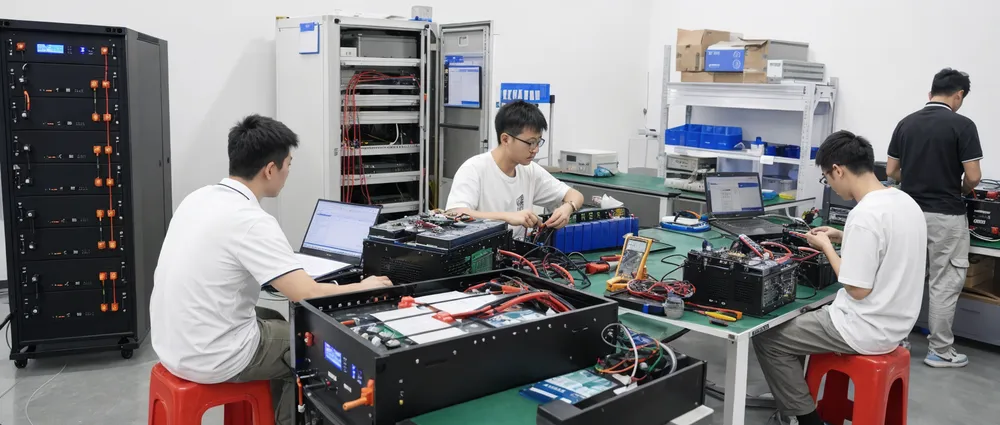
Full In-House Development Chain
As a LiFePO4 solar battery supplier with in-house BMS engineering, we control the full development chain — no third-party module dependencies that add lead time or limit your customization options.
Compliance Paperwork for Lithium Battery Export Shipments
Lithium batteries are classified dangerous goods for transport. Missing or outdated documentation means port delays, rejected shipments, or customs fines — problems that land on your desk, not ours, once the container leaves China.
We maintain current documentation for every standard model in production:
UN38.3 Test Summary
Required for air and sea freight classification. Covers altitude simulation, thermal cycling, vibration, shock, external short circuit, impact/crush, overcharge, and forced discharge.
MSDS (Material Safety Data Sheet)
Required by freight forwarders and customs authorities for hazardous material handling classification.
CE Marking & IEC 62133 Test Reports
For European market access and product safety compliance files.
ISO 9001:2015 Certificate
Covers our manufacturing management system, ensuring batch traceability and process consistency.
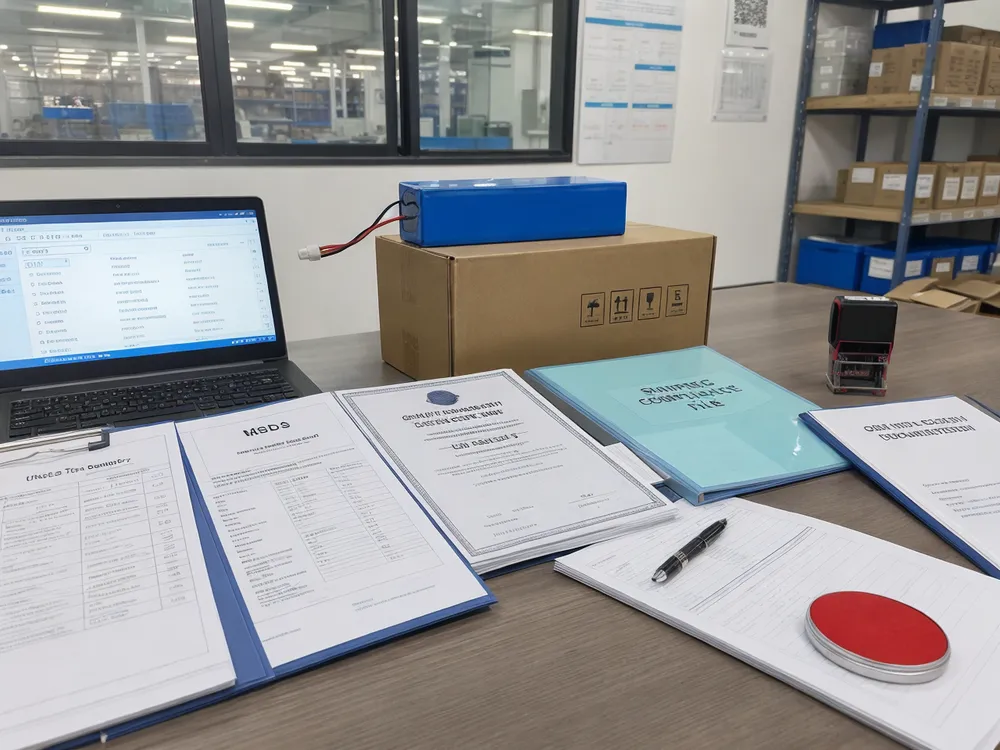
OEM/ODM Custom Documentation
For OEM/ODM models with custom configurations, we generate new UN38.3 and MSDS documentation as part of the development cycle — your custom product ships with its own compliance file, not a generic reference.
Regular Export Destinations
We export lithium solar batteries regularly to Europe, Southeast Asia, Africa, South America, and the Middle East. Each region has specific labeling, documentation, and packaging requirements for lithium battery imports.
Our logistics team prepares shipping declarations and coordinates with freight forwarders who specialize in DG (dangerous goods) cargo.
If your freight forwarder isn't experienced with lithium battery shipments, we can recommend partners in Shenzhen and Guangzhou who handle our containers routinely.
Active Export Regions
- Europe
- Southeast Asia
- Africa
- South America
- Middle East
Packaging and Shipping Details for Landed-Cost Planning
Lithium solar batteries are dense, heavy, and regulated — your landed cost calculation needs accurate weight, dimensions, and packing data, not estimates.
Packing Discipline for Lithium Battery Export
- Every unit ships in reinforced corrugated cartons with foam inserts sized to the specific model
- Terminals protected with insulating caps
- Cartons carry UN3481 lithium battery labels, handling orientation arrows, and model-specific weight markings
- Pallet shipments stretch-wrapped and banded to prevent shifting during container transit
Weight and Classification Matter More Than Unit Count
Unlike consumer electronics, battery container loading is typically limited by weight before it's limited by volume. A 20GP container of 48V 200Ah rack-mount units hits its weight limit well before the floor space fills up.
Your freight quote depends on:
- Gross weight per carton
- Pallet configuration
- Shipping mode: sea (FCL/LCL) or air (DG cargo rates)
What We Need From You for Accurate Packing Data
Tell us the model, voltage, capacity, quantity, and destination port. We'll come back with:
This gives you what you need to get accurate freight quotes and calculate your true landed cost — not a rough estimate that falls apart when the actual shipping invoice arrives.
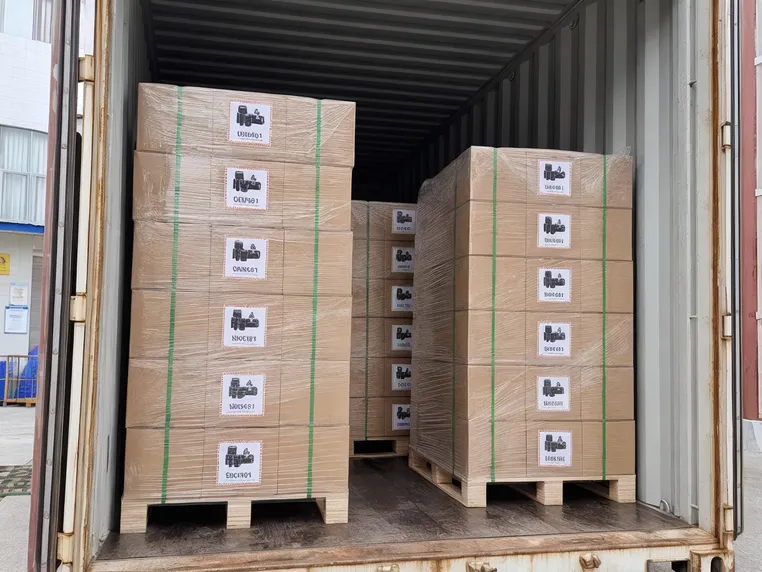
Why we don't publish generic "units per container" numbers: They vary significantly by model, voltage, and capacity. A 12V 100Ah pack and a 48V 200Ah rack unit have completely different weight-to-volume ratios. Ask us for your specific configuration.
Lithium Solar Battery FAQ for Supplier Shortlisting
Technical and commercial answers for distributors, system integrators, and procurement teams evaluating lithium solar battery suppliers.
What voltage lithium solar battery should I choose for residential storage programs?
Most residential hybrid inverters operate on 48V/51.2V DC bus voltage, so 51.2V LiFePO4 packs (16 cells in series) are the standard choice for grid-tied and hybrid residential storage. If you're supplying installers in markets where 24V systems still dominate (parts of Southeast Asia, some African solar home system programs), stock 25.6V packs alongside your 48V line.
The voltage choice is driven by the inverter ecosystem in your target market — send us the inverter brands your customers use and we'll confirm which pack voltage matches.
LiFePO4 vs lead-acid solar battery: which is better for wholesale distribution?
For your margin and warranty exposure: LiFePO4 wins on cycle life (3,000–6,000 cycles vs 500–800 for gel/AGM), weight (roughly 1/3 the weight at equivalent capacity), and field failure rate. The upfront unit cost is higher, but your warranty claim rate drops significantly and your customers get 8–10 years of service life instead of 2–3.
Lead-acid (gel, AGM) still makes sense in price-sensitive markets where upfront cost drives the purchase decision and cycle life expectations are lower. We manufacture both chemistries, so we can help you spec the right mix for your market positioning.
LiFePO4
3,000–6,000 cycles · 8–10 yr life · ~1/3 weight
Lead-Acid (Gel/AGM)
500–800 cycles · 2–3 yr life · Lower upfront cost
How does cell matching affect lithium solar battery cycle life?
Poorly matched cells — where voltage and internal resistance vary significantly within a pack — cause the weakest cell to hit protection limits first during charge and discharge. This reduces usable capacity and accelerates degradation.
We sort cells within 20mV and 5mΩ variance per pack, which keeps all cells aging at roughly the same rate. The practical result: your batteries maintain rated capacity longer, and your field warranty claims stay predictable instead of spiking at the 18-month mark when mismatched cells start diverging.
What BMS protections should a solar battery energy storage system include?
At minimum: over-charge, over-discharge, over-current, short-circuit, and high/low temperature protection.
For commercial and rack-mounted systems, add: cell-level balancing (active or passive), communication interface (RS485 or CAN for inverter/EMS integration), and configurable protection thresholds.
Generic BMS modules often ship with fixed parameters that don't match the actual cell chemistry or application duty cycle — this causes nuisance trips under normal load or, worse, fails to protect during genuine fault conditions. We program BMS parameters to match the specific cells and application profile in each pack.
What documents are needed to import lithium solar batteries?
For sea freight: UN38.3 test summary, MSDS, shipping declaration (DGD for dangerous goods), and proper outer carton labeling (UN3481, handling marks).
For customs clearance at destination: CE and IEC 62133 reports (Europe), plus any market-specific certifications your country requires.
We provide UN38.3, MSDS, CE, and IEC 62133 documentation for all standard models. For OEM/ODM products, we generate model-specific compliance files during development.
What is EVANBattery's MOQ for standard lithium solar battery models?
100 units for standard models — including private-label packaging with your brand. This lets you test a new SKU with your customers before committing to container volumes.
For custom voltage, capacity, or BMS configurations, MOQ depends on engineering complexity: a simple label change stays at 100 units, while a new cell configuration with custom firmware typically requires 300–500 units. We quote the exact threshold during the RFQ process so you can plan your investment.
Send Specs, Quantity, and Destination for a Lithium Solar Battery Quote
Ready to get pricing? Here's what we need from you to return an accurate quote:
Voltage and Capacity
12V, 24V, 48V? What Ah or kWh rating?
Quantity
Initial order size and estimated annual volume
Application
Residential, off-grid, commercial, telecom, portable?
Destination Market
Determines certification requirements and shipping route
Inverter / Communication Requirement
Specific inverter brand or protocol needed?
Branding
Standard EVANBattery label, your private label, or full OEM?
Send these details and we'll respond with a technical recommendation, unit pricing, lead time, and packing data for your landed-cost calculation.
Contact EVANBattery
Phone / WhatsApp
+86 13560690838We typically respond within 24 hours with a technical recommendation and pricing breakdown tailored to your market and volume.