

100Ah Solar Battery LiFePO4 & Gel
12V and 24V configurations with in-house BMS, automated cell sorting, and export documentation ready for your import process.
Manufactured for distributors, project contractors, and OEM partners.
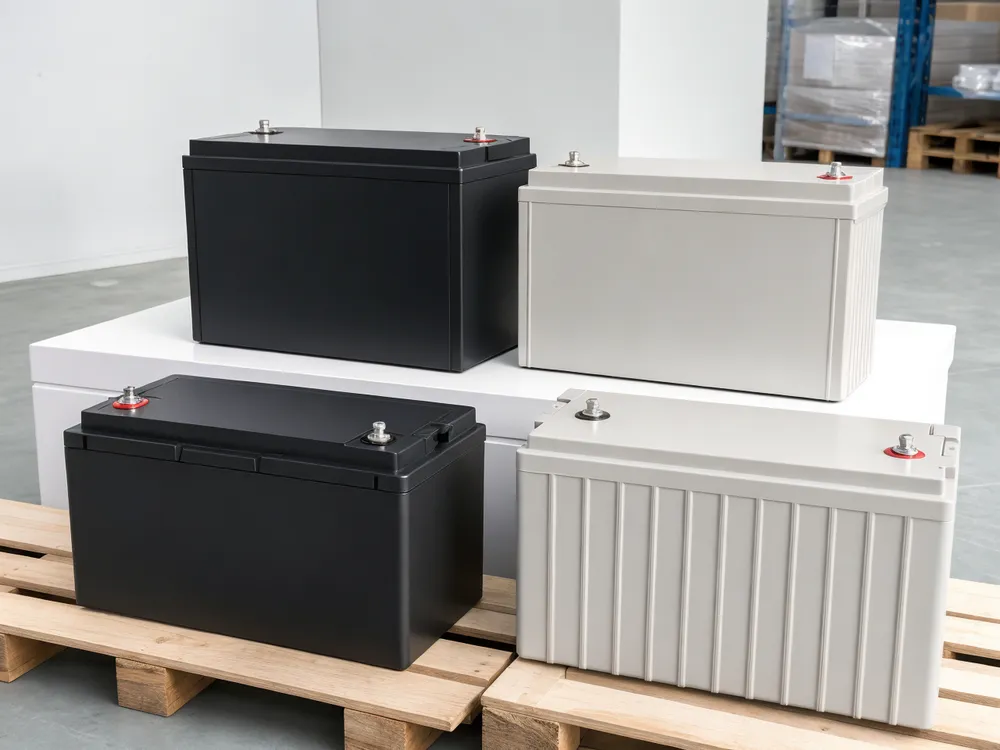
100Ah Solar Battery Built for Repeat Wholesale Programs
We manufacture 100Ah solar batteries in both LiFePO4 lithium and gel (VRLA) chemistry across 12V and 24V configurations. This is a mid-capacity sweet spot — large enough to anchor a solar home system or small backup installation, compact enough to ship in volume and stock without tying up excessive warehouse capital.
As a 100Ah solar battery manufacturer, we've built this capacity tier into our standard production schedule because it's the SKU most distributors start with when entering or expanding a solar battery catalog. The 100Ah format fits the widest range of downstream applications without requiring your customers to parallel multiple units, so your support costs stay low and reorder patterns stay predictable.
Standard models ship from 100 units MOQ. If you're testing a new market or adding a 100Ah line to an existing catalog, that threshold lets you validate sell-through before committing to container volumes.
Choose the Right 100Ah Configuration Before You Quote
The 100Ah capacity is available in four primary configurations. Each one fits a different commercial position in your product line — the choice depends on your target market, margin strategy, and inverter ecosystem.
12V 100Ah Solar Battery
Universal FormatThe most universally recognized format. Compatible with virtually every PWM/MPPT controller and small inverter on the market. If you sell solar home kits, RV/marine bundles, or entry-level off-grid packages, this is the SKU your customers already know how to specify. High resale familiarity means lower pre-sale education cost for your team.
24V 100Ah Solar Battery
Higher VoltageDoubles the system voltage, halving current draw for the same power output. Your buyers running 1-3kW inverter bundles or small commercial backup systems prefer 24V because it allows thinner cabling and reduces voltage drop over longer runs. Fewer units in the market means less price pressure than 12V — better margin protection for distributors.
100Ah Lithium Solar Battery (LiFePO4)
Premium Tier3,000–5,000 cycle life at 80% DoD, roughly one-third the weight of equivalent gel, and 90–95% usable capacity. This is your premium-tier SKU: higher unit price, higher margin, and a compelling upgrade story for end users replacing aging lead-acid.
Explore LiFePO4 Solar Battery configurations100Ah Gel Solar Battery
Budget-FriendlyProven chemistry for budget-sensitive off-grid markets where lithium pricing hasn't reached parity yet. Maintenance-free, tolerant of irregular charge patterns from small solar panels, and familiar to installers across Africa and Southeast Asia. Lower per-unit cost means faster inventory turns in price-driven channels.
See 12V Gel Solar Battery options| Configuration | Typical Market Fit | Margin Note |
|---|---|---|
| 12V 100Ah LiFePO4 | Solar kits, RV, portable energy | Premium positioning; higher ASP |
| 12V 100Ah Gel | Off-grid Africa/SEA, replacement market | Volume play; fast turns |
| 24V 100Ah LiFePO4 | Small backup systems, inverter bundles | Less competition; margin-friendly |
| 24V 100Ah Gel | Budget residential backup, telecom | Stable demand; predictable reorders |
Typical 100Ah Solar Battery Specifications for Procurement Sheets
The tables below provide industry-typical planning values for our standard 100Ah solar battery models. Use these for comparison sheets, tender submissions, and inverter compatibility checks. Exact model-specific data sheets are provided during the RFQ process.
100Ah Lithium (LiFePO4) Specifications
| Parameter | 12V 100Ah LiFePO4 | 24V 100Ah LiFePO4 |
|---|---|---|
| Nominal Voltage | 12.8V (4S) | 25.6V (8S) |
| Nominal Capacity | 100Ah | 100Ah |
| Nominal Energy | 1.28 kWh | 2.56 kWh |
| Usable Energy (80% DoD) | ~1.02 kWh | ~2.05 kWh |
| Cycle Life | 3,000–5,000 cycles @ 80% DoD | 3,000–5,000 cycles @ 80% DoD |
| Max Continuous Discharge | 100A (typical) | 100A (typical) |
| Recommended Charge Current | 20–50A | 20–50A |
| BMS Protection | Over-charge, over-discharge, over-current, short-circuit, temperature | Same |
| Communication (optional) | RS485 / Bluetooth / CAN | RS485 / Bluetooth / CAN |
| Operating Temperature | -20°C to 55°C (discharge); 0°C to 45°C (charge) | Same |
| Weight (approx.) | 11–13 kg | 22–26 kg |
| Terminal Options | M8 bolt, Anderson connector, custom | M8 bolt, Anderson connector, custom |
| Case Material | ABS / metal (application-dependent) | Metal enclosure (standard) |
100Ah Gel (VRLA) Specifications
| Parameter | 12V 100Ah Gel | 24V 100Ah Gel |
|---|---|---|
| Nominal Voltage | 12V (6-cell) | 24V (12-cell) |
| Nominal Capacity | 100Ah (C10 rate) | 100Ah (C10 rate) |
| Nominal Energy | 1.2 kWh | 2.4 kWh |
| Usable Energy (50% DoD) | ~0.6 kWh | ~1.2 kWh |
| Cycle Life | 500–800 cycles @ 50% DoD | 500–800 cycles @ 50% DoD |
| Max Discharge Current | 50A (typical) | 50A (typical) |
| Float Charge Voltage | 13.5–13.8V | 27.0–27.6V |
| Operating Temperature | -15°C to 50°C | Same |
| Weight (approx.) | 28–32 kg | 56–64 kg |
| Terminal Options | F12 / M8 bolt | M8 bolt / copper insert |
| Case Material | ABS (flame-retardant) | ABS (flame-retardant) |
Specifications shown are industry-standard values for this product type. Actual specifications may vary by model and production batch. Contact us for detailed product data sheets with exact parameters.
Weight advantage: The lithium weight advantage is dramatic at 100Ah — roughly 60% lighter than gel equivalent. For buyers shipping by air or selling into weight-sensitive applications like marine and RV, this directly affects your freight cost and downstream positioning.
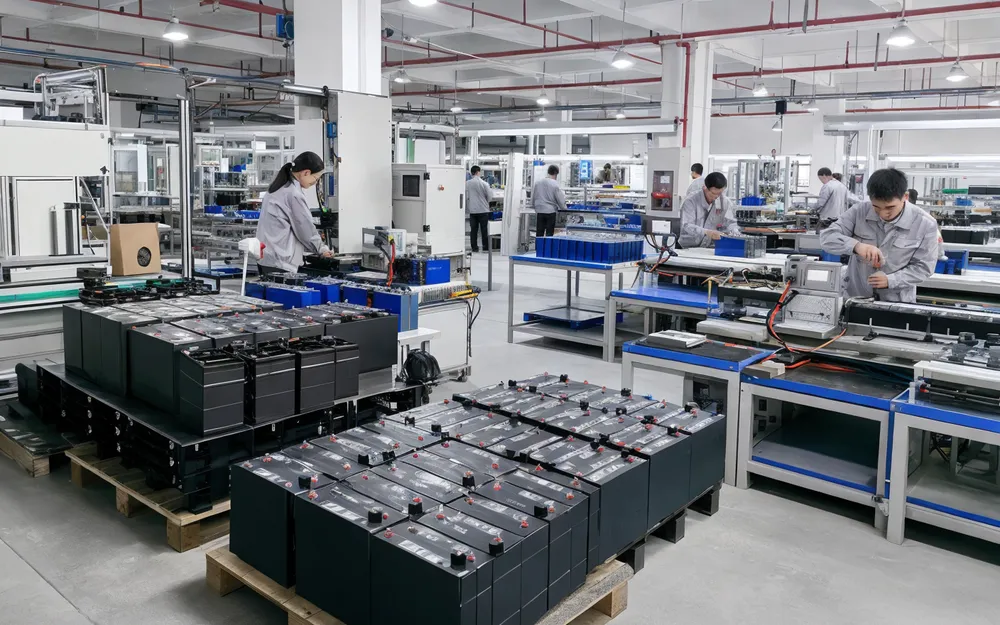
Manufacturing Controls That Protect Batch Consistency
When you order 500 units of a 100Ah lithium solar battery, you need every unit to perform within the same window — not just on day one, but 18 months into field deployment. Batch consistency is what separates a reliable supply program from a warranty headache. Here's how we control it.
Cell-Level Grading Before Assembly
Every incoming cell is tested for actual capacity, internal resistance, and open-circuit voltage. We sort cells into groups matched within 20mV voltage and 5mΩ internal resistance. Cells that fall outside our acceptance window go back to the supplier — we don't downgrade them into "B-grade" packs.
This is the step that determines whether your 500-unit batch ages uniformly or drifts apart after six months. Most field warranty claims on lithium packs trace back to poor cell matching at assembly.
In-House BMS Integration
We design and manufacture our own BMS boards rather than buying generic modules. For a 100Ah pack, the BMS protection thresholds — over-charge cutoff, over-discharge cutoff, balancing trigger voltage, temperature limits — are programmed to match the specific cell chemistry and application profile.
A 12V 100Ah battery going into a solar home system gets different parameters than the same capacity going into a telecom backup rack, because the duty cycles and ambient conditions differ.
Full-Batch Lifecycle Testing
Every production batch undergoes capacity verification, charge/discharge cycling, high-temperature soak at 55°C, and low-temperature discharge at -20°C. We run these on production batches, not just during initial type approval. The test data travels with your shipment documentation.
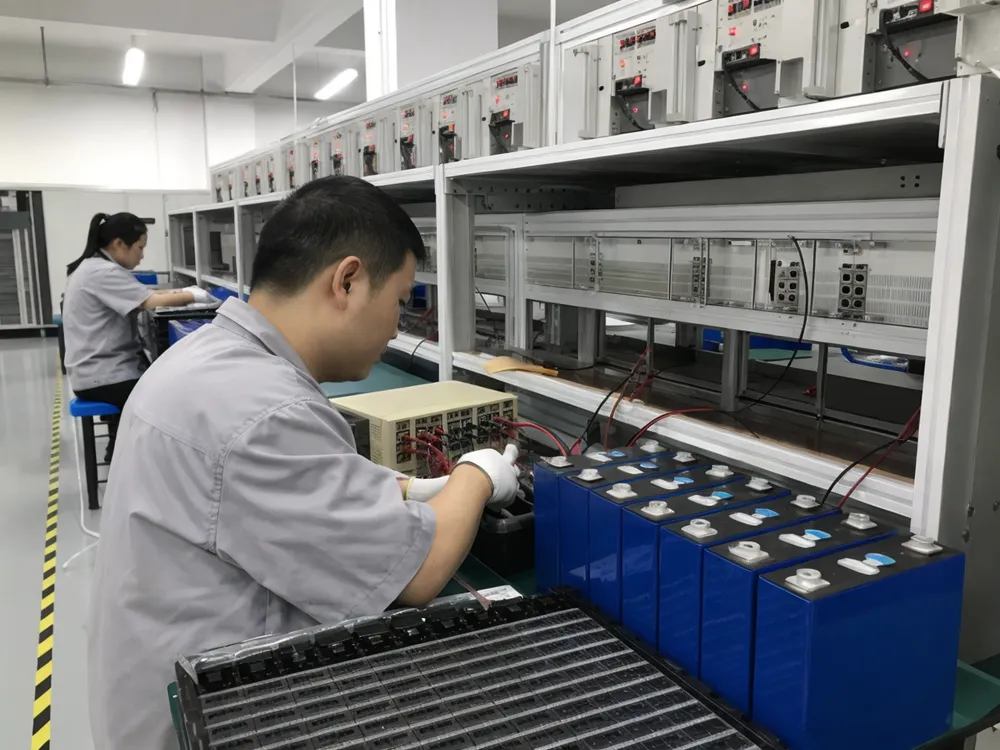
Production Facility at a Glance
Your 100Ah repeat orders run on a dedicated schedule without competing for line time against unrelated products.
Learn more about EVANBattery manufacturingMarket Segments Where 100Ah Batteries Move in Volume
The 100Ah capacity sits at a commercial crossroads — large enough to be useful as a standalone unit, small enough to be affordable as a starter SKU. Here's where we see consistent repeat demand from our distribution and project partners.
Off-Grid Solar Kit Distributors
The 12V 100Ah solar battery is the default battery in entry-to-mid-range solar home kits across Africa, Southeast Asia, and South America. Kit assemblers pair it with 200-400W panels and a PWM/MPPT controller.
If you distribute solar kits, this is a catalog staple with predictable quarterly reorders. Gel for budget tiers, LiFePO4 for premium positioning — many distributors carry both under the same brand.
Rural Electrification and NGO Solar Projects
Government tenders and NGO-funded rural electrification programs specify battery capacity in their procurement documents. 100Ah gel batteries remain the default specification in many African and South Asian tenders because the installed base of charge controllers is calibrated for lead-acid voltage profiles.
These are bulk orders — 1,000-5,000 units per tender cycle — with documentation requirements (UN38.3, MSDS, IEC 62133) as a hard gate.
Small Residential Backup Installers
Contractors installing 1-3kW backup systems for residential customers use 24V 100Ah lithium packs as the storage core. Two units in parallel give 5.12 kWh — enough for essential loads through an overnight outage.
If you supply installers, the 24V 100Ah format lets them standardize on one SKU across multiple system sizes by varying the parallel count.
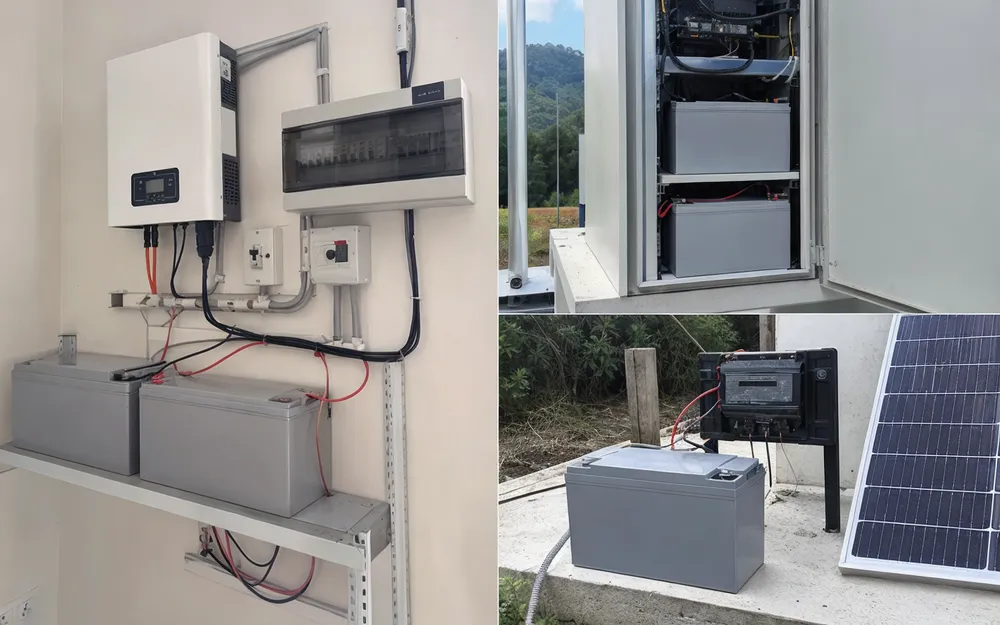
Telecom, CCTV, and Remote Monitoring Backup
Telecom tower operators and security integrators need standardized battery replacements on a scheduled cycle. The 12V 100Ah format (both lithium and gel) fits existing rack infrastructure and replacement protocols.
This segment values supply consistency over price — once you're qualified as a supplier, reorders are automatic. (We've seen telecom accounts reorder the same SKU quarterly for three years running without a single spec change.)
Portable Energy and Dealer Catalogs
100Ah is a familiar capacity for portable power station manufacturers and outdoor equipment dealers building branded product lines.
The LiFePO4 version in a compact ABS case with integrated BMS and Bluetooth monitoring becomes a retail-ready product with your branding. Higher perceived value, higher margin, and a growing consumer segment.
OEM/ODM Options for Voltage, Chemistry, BMS, and Branding
As a 100Ah solar battery manufacturer with in-house R&D and BMS capability, we support customization across the full product stack. Here's what you can specify:
Chemistry Selection
LiFePO4 (prismatic cells, standard) or gel VRLA. Within lithium, we can configure Grade A cells from our qualified supplier list based on your cycle life and budget targets.
Voltage Configuration
12.8V (4S), 25.6V (8S), or non-standard arrangements for specific inverter compatibility. We've built 24V packs with 5S and 6S configurations for buyers matching legacy system voltages — it requires BMS firmware adjustment but no new tooling.
BMS Parameters and Communication
Protection thresholds (over-charge, over-discharge, over-current, temperature), balancing strategy, and communication protocol (RS485, CAN bus, Bluetooth, or dry contact). If you're integrating with a specific hybrid inverter brand, send us the communication protocol spec and we'll match it.
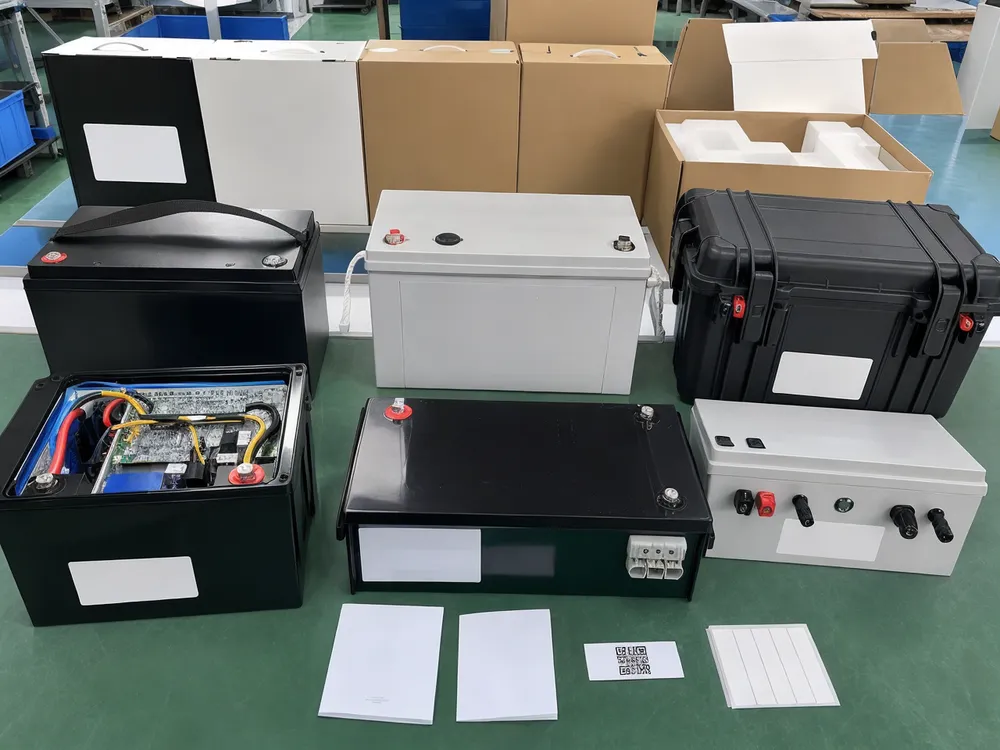
Enclosure and Terminals
ABS plastic, sheet metal, or IP65-rated cases depending on application. Terminal options include M8 bolt, Anderson connector, MC4 (for direct panel connection), or custom connector to match your system design.
Branding and Packaging
Private-label printing on the case, custom color, branded carton and manual, and QR-code linking to your own product registration page. Label changes are straightforward at standard MOQ; full case color changes require 300+ units to justify the powder coat or injection mold color swap.
MOQ Logic
| Customization Level | Minimum Order | Notes |
|---|---|---|
| Standard catalog models | 100 units | No customization, ship from stock or next production run |
| Label/color OEM on existing models | 200–300 units | Your branding on proven platform |
| Full ODM (custom cell config + BMS firmware) | 500+ units | Depends on engineering scope; exact threshold quoted after spec review |
Export Documentation, Packaging, and Container Planning
Batteries are classified dangerous goods for international transport. Missing or incorrect paperwork means port delays, rejected shipments, and unexpected storage fees. We handle this proactively because we've shipped to over 40 countries since 2012 and know what each corridor requires.
Standard Documentation Package
These ship with every order and are available in advance for your import pre-clearance process:
- UN38.3 test summary (Section 38.3 transport test report)
- MSDS/SDS sheets
- CE declaration of conformity
- IEC 62133 test report
- ISO 9001:2015 certificate
DG Shipping Declarations
We prepare the complete dangerous goods documentation so your freight forwarder receives everything in one set — no back-and-forth requests that delay booking:
- Shipper's declaration for dangerous goods
- Proper shipping name classification
- Packing instruction references (PI 965/966/967 for lithium, or non-restricted for gel)
Packaging for Transit Survival
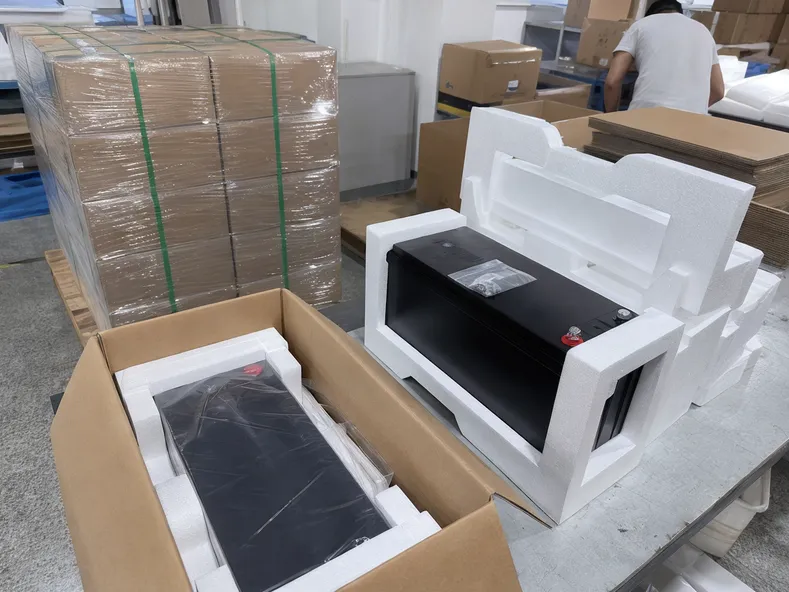
100Ah lithium batteries ship in reinforced cartons with foam inserts, individually boxed, then palletized with corner protectors and stretch wrap.
Gel batteries are heavier and more fragile at the terminal posts — we use molded foam cradles and double-wall cartons.
For African and South American inland routes where handling is rougher, we add an extra layer of edge protection.
Lesson learned (2016): Three pallets of gel batteries arrived with cracked cases because the standard carton couldn't handle the overland segment from port to warehouse. We've since upgraded packaging for all routes with extended inland transport.
Container Loading
Exact quantities per 20GP/40HQ depend on the specific model dimensions and weight. We provide a loading plan with your order confirmation showing carton arrangement, weight distribution, and total CBM.
800–1,200
units per 20GP
12V 100Ah lithium (typical)
Loading Plan
included with order confirmation
40+ Countries
shipped since 2012
Export markets served:
100Ah vs 200Ah vs 10kW — Choosing the Right Capacity for Your Program
The 100Ah solar battery is one of three capacity tiers we manufacture under the Solar Battery by Capacity category. Here's how they compare from a sourcing perspective:
| Factor | 100Ah | 200Ah | 10kW (system-level) |
|---|---|---|---|
| Typical use | Starter SKU, solar kits, modular systems | Longer backup, larger off-grid, fewer parallel units | Residential/commercial whole-home storage |
| Trial inventory risk | Lower — smaller per-unit cost | Moderate — higher per-unit commitment | Higher — system-level pricing |
| Downstream flexibility | Pairs with small inverters, portable systems | Pairs with 3-5kW inverters, larger panels | Integrated system sale |
| Reorder pattern | Frequent, smaller batches | Less frequent, larger batches | Project-based, irregular |
| Freight efficiency | More units per container | Fewer units, higher weight per unit | Palletized systems |
If 100Ah Is Too Small
The 200Ah Solar Battery provides longer backup duration per unit and reduces parallel wiring complexity for 3-5kW systems.
Need System-Level Capacity
The 10kW Solar Battery page covers rack-mounted and stacked configurations for residential and commercial storage projects where buyers quote in kWh rather than Ah.
Need a Capacity Mix
Many of our distributors carry 100Ah and 200Ah in the same catalog to cover both entry-level and mid-range segments. We can produce both on parallel lines and ship in one container.
FAQ for 100Ah Solar Battery Buyers
Technical and commercial answers for distributors, system integrators, and procurement teams evaluating 100Ah solar battery supply.
Should I source a 12V or 24V 100Ah solar battery for solar kits?
For entry-level solar home kits (100-400W panel, basic lighting and phone charging), 12V 100Ah is the standard — it matches the widest range of affordable PWM controllers and small inverters. Move to 24V 100Ah when your kit includes a 1-2kW inverter or when cable runs exceed 3 meters, because the lower current at 24V reduces voltage drop and allows thinner, cheaper cabling. If you're building a kit catalog, carrying both voltages lets you cover budget and mid-range tiers without changing the battery capacity SKU.
Is a 100Ah lithium solar battery better than a 100Ah gel solar battery for resale?
It depends on your market's price sensitivity and replacement cycle expectations. Lithium (LiFePO4) delivers 3,000-5,000 cycles at 80% DoD versus 500-800 cycles at 50% DoD for gel — roughly 6-10x the usable cycle life. Your per-cycle cost argument is strong for markets where buyers calculate total cost of ownership.
But in price-driven markets (rural Africa, budget off-grid), gel's lower upfront cost still wins the purchase decision.
Many distributors carry both: gel for volume and lithium for margin.
How much usable energy does a 100Ah solar battery actually provide?
LiFePO4 @ 80% DoD
~1.02 kWh
usable per cycle
Gel @ 50% DoD
~0.6 kWh
usable per cycle
The difference matters when you're sizing systems for your customers — lithium delivers 70% more usable energy from the same nominal capacity, which means fewer units per installation and lower total system cost for the end user.
What BMS protections should a 100Ah lithium solar battery include?
At minimum:
- Over-charge protection — typically 14.6V cutoff for 12.8V packs
- Over-discharge protection — typically 10.0V cutoff
- Over-current protection — matched to max inverter surge
- Short-circuit protection
- High/low temperature cutoff
For distribution and resale, also look for cell balancing (passive or active) to maintain pack uniformity over hundreds of cycles, and communication capability (RS485 or Bluetooth) if your downstream customers use monitoring apps.
We configure all BMS parameters to match the specific cell chemistry and target application during production.
What documents are needed to import 100Ah solar batteries?
The baseline for most markets:
- UN38.3 test summary — mandatory for lithium battery transport
- MSDS/SDS — material safety data
- Shipper's declaration for dangerous goods
For European import: add CE declaration of conformity and IEC 62133 test report. Some markets require additional local certification — we provide test samples and technical data packages to support your local application process.
Gel batteries are classified as non-spillable and face fewer transport restrictions, but still require MSDS documentation.
What is the MOQ for EVANBattery 100Ah solar battery orders?
Standard catalog models (existing voltage, chemistry, and case design): 100 units
OEM with label and color customization on existing models: 200-300 units
Full ODM with custom cell configuration, BMS firmware, or enclosure design: 500+ units depending on engineering scope
Sample orders (1-5 units) are available for product evaluation before committing to production quantities.
Send a 100Ah Solar Battery RFQ with the Right Details
The fastest path to an accurate quote: include the following in your inquiry so our engineering team can respond with a technical recommendation and pricing in one pass.
Voltage
12V, 24V, or custom
Chemistry
LiFePO4 or gel
Target Market
Solar kits, backup, telecom, portable, other
Quantity
Initial order + estimated annual volume
Branding
Standard, private label, or full OEM
Inverter/Charger
Brand and model if integration matters
Destination
Port or country for freight planning
Certifications
CE, IEC, UL, or market-specific
We respond with a technical recommendation, FOB pricing, lead time, and documentation list within 48 hours.
Contact EVANBattery Directly
Phone / WhatsApp
+86 13560690838Explore More Capacities