

Solar Battery Bank Direct From Factory
Configure your battery bank program by voltage, chemistry, and capacity. We produce both lithium and lead-acid under one roof, so your mixed catalog ships complete.
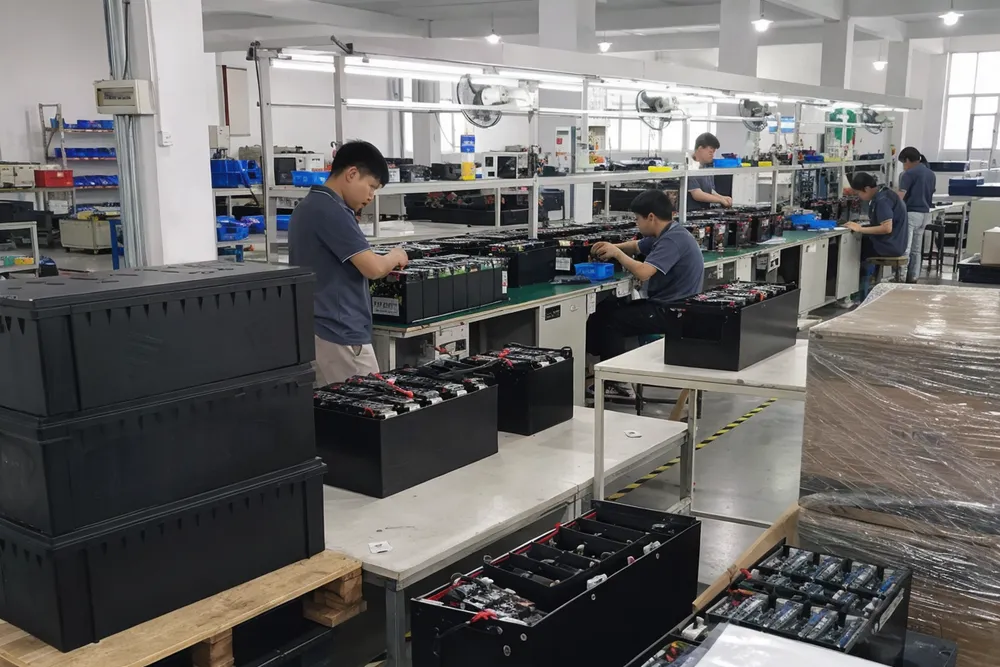
Solar Battery Bank Supply for 12V, 24V, and 48V Programs
We manufacture solar battery bank configurations in 12V, 24V, and 48V platforms — LiFePO4, gel, and AGM — for distributors, off-grid system suppliers, project contractors, and OEM/ODM partners who need consistent batch supply rather than one-off purchases.
A solar battery bank is the core energy storage component in any off-grid or hybrid solar installation. Your buyers need reliable packs that match their inverter ecosystem, survive the duty cycle, and arrive with documentation that clears customs. We've been building these since 2012 across our 9,900 m² facility in Zhongshan, Guangdong — 6 dedicated lines, 150 people, 2,000,000 units annual capacity. Standard models start at 100 units MOQ, so you can test a SKU before committing to container volumes.
Whether you carry a 12V solar battery bank for African solar home kits, a 24V solar battery bank for mid-size off-grid systems, or a 48V solar battery bank for telecom and commercial backup, the supply route is the same: you specify voltage, chemistry, capacity, and BMS requirements — we produce, test, document, and ship.
Get a quote for your solar battery bank program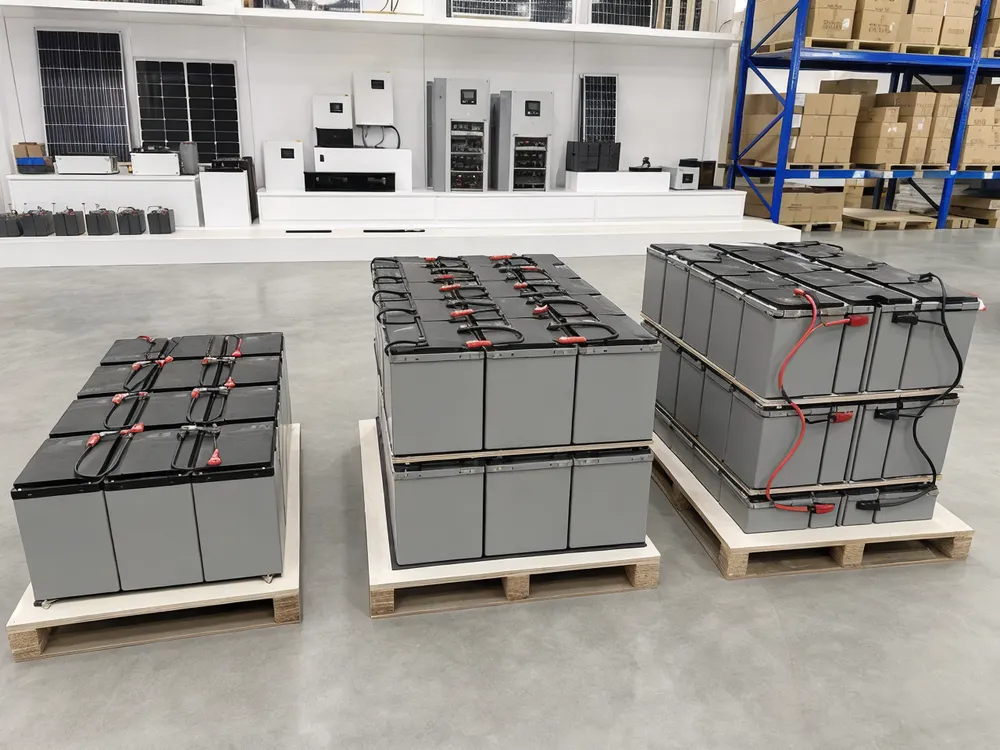
Voltage Platform First: 12V, 24V, and 48V Battery Bank SKUs
Voltage choice is the first filter in your procurement decision. It determines inverter compatibility, cable sizing, system efficiency, and which market segments you can serve.
| Parameter | 12V Solar Battery Bank | 24V Solar Battery Bank | 48V Solar Battery Bank |
|---|---|---|---|
| Typical capacity range | 50Ah – 200Ah | 50Ah – 200Ah | 50Ah – 300Ah (51.2V LiFePO4) |
| Chemistry options | LiFePO4, gel, AGM | LiFePO4, gel, AGM | LiFePO4 (primary), gel |
| Primary market fit | Solar home systems, small off-grid, portable | Mid-size off-grid, rural electrification, agricultural pumping | Telecom, commercial backup, residential hybrid, microgrid |
| Inverter ecosystem | PWM controllers, basic MPPT, small hybrid inverters | Mid-range MPPT, 24V hybrid inverters | High-voltage hybrid inverters (Deye, Growatt, Victron), commercial systems |
| Cable current at 3kW load | ~250A (heavy cabling, higher losses) | ~125A (moderate cabling) | ~62A (thinner cables, lower losses) |
| Typical order pattern | High volume, price-sensitive markets | Mixed volume, project-driven | Growing demand, higher unit value |
12V Platform
The 12V solar battery bank remains our highest-volume export to Africa and parts of Southeast Asia — the installed base of PWM and basic MPPT controllers in those markets hasn't transitioned to higher voltages yet, and your customers need drop-in replacements that match existing wiring.
We still ship more 12V lead-acid banks to West Africa than any other single SKU category.
24V Platform
The 24V solar battery bank serves a middle ground: enough voltage to reduce cable losses on systems up to 3–5kW without requiring the higher-cost 48V inverter infrastructure.
Rural electrification programs and NGO-funded projects often standardize on 24V because it balances system cost against performance.
48V Platform
The 48V solar battery bank is where the growth is. European and Australian residential hybrid inverters run 48V/51.2V inputs as standard. Telecom tower operators and microgrid contractors specify 48V for efficiency and standardization.
If you're building a catalog for developed markets or commercial projects, this is your primary platform.
Need a Voltage Platform Recommendation?
Tell us your inverter model, target capacity in Ah or kWh, and destination market — we'll recommend the voltage platform and chemistry that fits your program.
LiFePO4, Gel, or AGM: Chemistry Mix for Market Fit and Margin
Chemistry choice is a commercial decision, not just a technical one. Each option positions differently in your downstream market.
LiFePO4
Lithium Iron Phosphate
Best for:
Markets where customers cycle daily — residential self-consumption, commercial peak-shaving, telecom backup with frequent grid outages.
Gel
Sealed Lead-Acid
Best for:
Price-sensitive off-grid markets where customers already know how to handle lead-acid and local technicians can service systems without specialized training.
AGM
Absorbed Glass Mat
Best for:
Applications with intermittent high-current loads — security systems, communication equipment, and unpredictable load profiles.
The Smart Play: A Mixed Catalog
For distributors, the smart play is often a mixed catalog. Carry LiFePO4 for markets transitioning to lithium (Europe, Australia, urban Southeast Asia) and gel or AGM for markets where lead-acid still dominates (rural Africa, parts of South America, replacement demand everywhere).
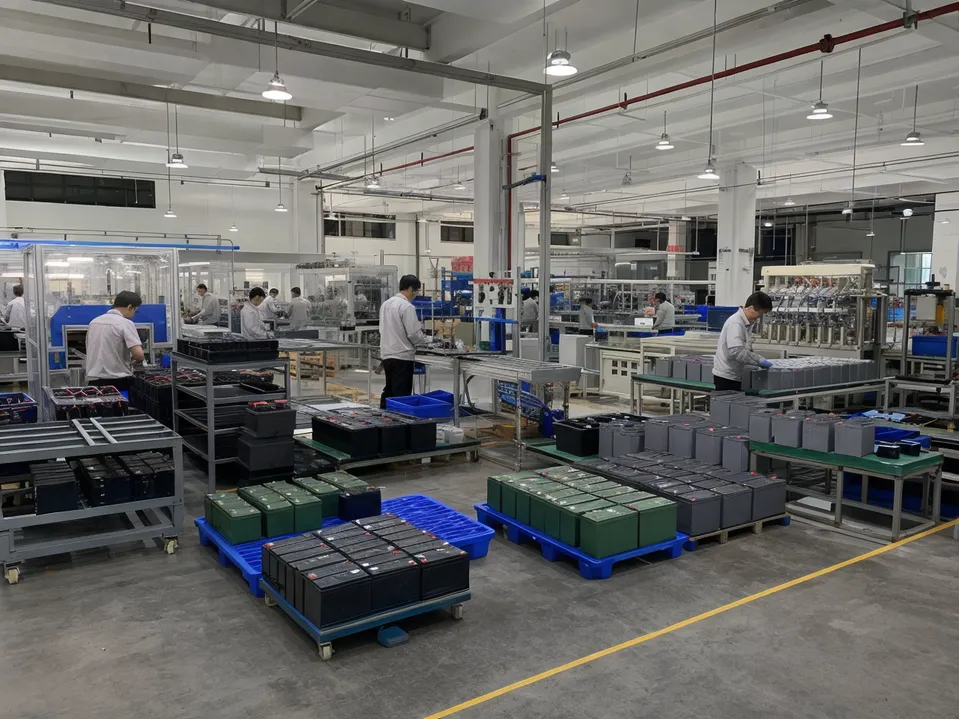
We produce all three chemistries on separate lines under one roof, so your mixed-chemistry order ships in one container without coordinating multiple suppliers.
(We've watched this transition happen in real time over 13 years. Markets don't switch overnight — they layer. Your gel customers don't disappear when you add lithium to your catalog. They just become a different margin tier.)
Procurement Specification Table for Solar Battery Bank Shortlisting
Use this table to confirm our solar battery bank specifications cover your requirements before sending an RFQ. Values shown are typical across our standard model range — exact specifications depend on model, chemistry, BMS configuration, and order requirements.
| Parameter | LiFePO4 Battery Bank | Gel Battery Bank | AGM Battery Bank |
|---|---|---|---|
| Nominal voltage | 12.8V / 25.6V / 51.2V | 12V / 24V | 12V / 24V |
| Capacity range | 50Ah – 300Ah | 50Ah – 250Ah | 50Ah – 200Ah |
| Usable energy (typical) | 80–90% DOD | 50% DOD recommended | 50% DOD recommended |
| Cycle life | 3,000–6,000 cycles @ 80% DOD | 500–1,200 cycles @ 50% DOD | 400–800 cycles @ 50% DOD |
| Charge temperature | 0°C to 55°C | -10°C to 50°C | -10°C to 50°C |
| Discharge temperature | -20°C to 60°C | -20°C to 55°C | -20°C to 55°C |
| BMS protection | Over-charge, over-discharge, over-current, short-circuit, high/low temp | N/A (charge controller managed) | N/A (charge controller managed) |
| Communication | RS485, CAN, Bluetooth (model-dependent) | N/A | N/A |
| Terminal options | M8 bolt, Anderson connector, custom | M8 bolt, F12 terminal, custom | M8 bolt, F12 terminal, custom |
| Enclosure material | Steel / ABS / aluminum (model-dependent) | ABS case (standard) | ABS case (standard) |
| Certifications | CE, IEC 62133, UN38.3, MSDS | CE, IEC (model-dependent) | CE, IEC (model-dependent) |
| Self-discharge | <3% per month | <5% per month | <5% per month |
*Specifications shown are industry-standard values for this product type. Actual specifications vary by model and configuration. Contact us for detailed product datasheets.*
Need Exact Values?
This table gives you enough to build a comparison sheet or confirm basic fit against your project requirements. For exact values — specific model datasheets with dimensional drawings, weight, and terminal layout — send us your target configuration and we'll return the documentation within 48 hours.
Bank Configuration, Cell Matching, and BMS Settings That Reduce Warranty Claims
A solar battery bank is only as reliable as the weakest cell in the string. When you're buying 500 or 5,000 units, batch consistency determines your warranty exposure over the next 3–5 years.
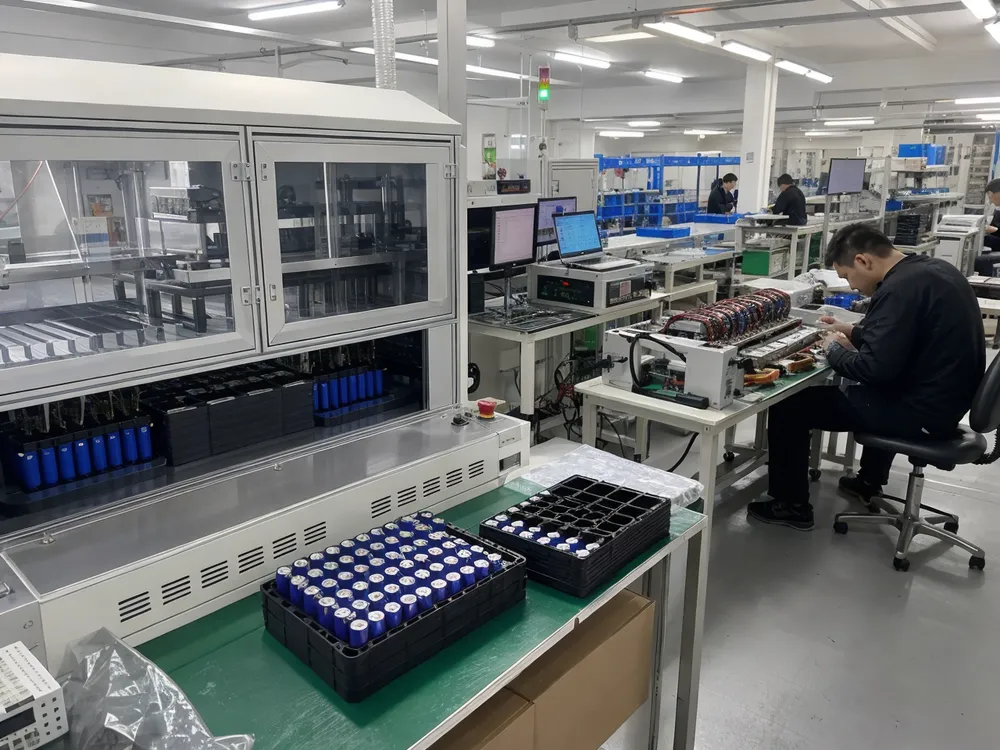
Automated Cell Sorting and Matching
Every cell entering our production line gets tested for actual capacity, internal resistance, and voltage. We group cells within 20mV voltage deviation and 5mΩ resistance spread per pack. This isn't a marketing number — it's the threshold that prevents thermal imbalance during cycling.
When cells in a bank drift apart in capacity, the weakest cell gets over-stressed on every cycle, degrades faster, and eventually triggers BMS protection or outright failure. Tight matching at production is cheaper than field replacements.
We rejected about 4% of incoming cells last quarter on resistance spread alone — those go back to the supplier, not into a lower-tier product.
In-House BMS Design and Programming
We design and manufacture BMS boards internally. Protection parameters — over-charge voltage, over-discharge cutoff, current limits, temperature thresholds — are programmed to match the specific cell chemistry, pack configuration, and application duty cycle.
A 48V solar battery bank running daily cycling in a telecom cabinet gets different thresholds than a 12V backup bank that sits at float for weeks between discharge events.
Generic BMS modules with one-size-fits-all parameters are the second most common cause of premature field failures we see across the industry.
Series/Parallel Configuration Planning
When your system requires multiple packs in series or parallel, cell matching becomes even more critical. We produce matched sets — packs grouped by actual measured capacity so that when you wire four 12V units in series for a 48V bank, the capacity spread across the string stays within 2%.
This reduces balancing current, extends cycle life, and prevents the scenario where one pack in the string hits low-voltage cutoff while the others still have 15% capacity remaining.
Full Lifecycle Testing on Every Production Batch
We run these on every batch, not just during type approval. When a batch fails any checkpoint, production stops on that SKU until root cause is identified.
Our 18-engineer R&D team handles BMS firmware, cell matching algorithms, and application-specific protection profiles. Learn more about our manufacturing and QC capability
Send SpecificationsMarket Segments Where Battery Bank Orders Repeat
Every solar battery bank order we ship serves a downstream market. Here's where we see repeat programs — the segments where your battery bank inventory turns over predictably.
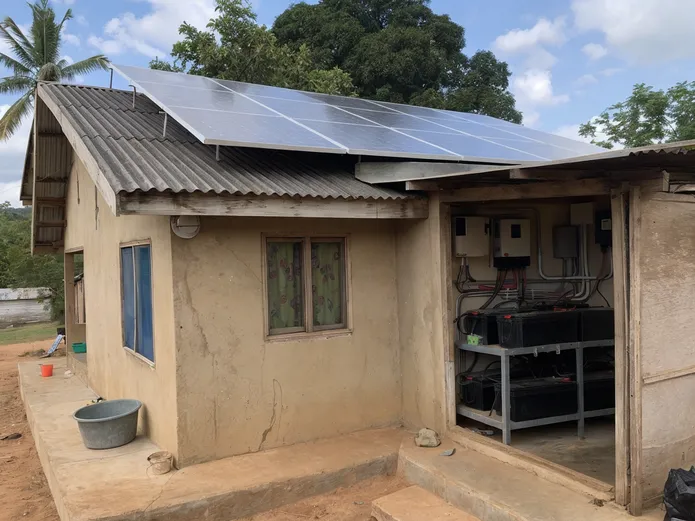
Off-Grid Solar Home System Distributors
The largest single segment for battery bank supply. Distributors serving Africa, Southeast Asia, and South America carry 12V and 24V solar battery banks — gel, AGM, or LiFePO4 depending on price point and market maturity.
Order patterns are seasonal (pre-rainy-season stocking) and replacement-driven (lead-acid banks cycle out every 2–3 years in daily-use systems). If you supply solar home system kits, the battery is the component with the highest reorder frequency.
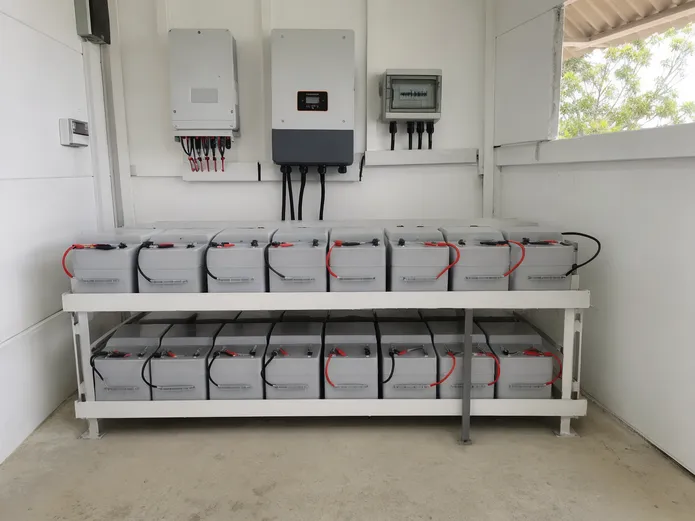
Rural Electrification and NGO Programs
Government and NGO-funded electrification projects specify standardized battery bank SKUs across hundreds or thousands of installations. These programs value batch consistency, documentation completeness, and the ability to reorder the exact same product 18 months later for expansion phases.
A 24V solar battery bank with verified test reports and traceable serial numbers fits this procurement model.
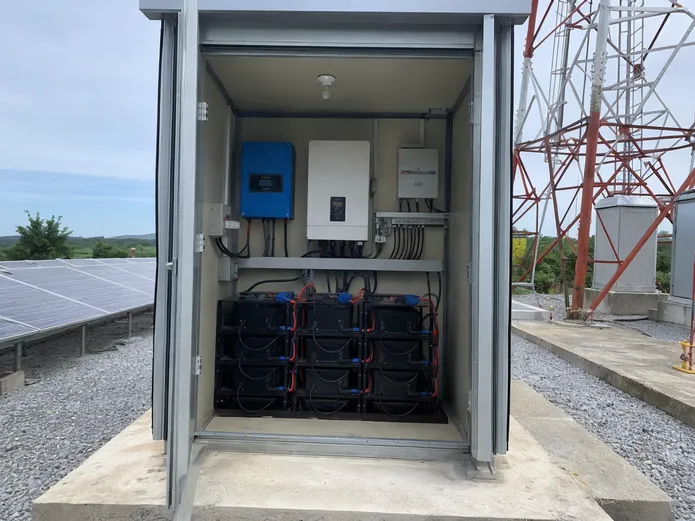
Telecom Tower and Microgrid Contractors
Telecom operators need 48V solar battery bank systems that run unattended at remote tower sites — high cycle life, wide temperature tolerance, BMS protection against deep discharge during extended grid outages, and communication capability for remote monitoring.
Orders are project-driven but repeat across tower rollout programs. Reliability at unattended sites is the primary value driver — a single truck roll to replace a failed battery at a remote tower costs more than the battery itself.
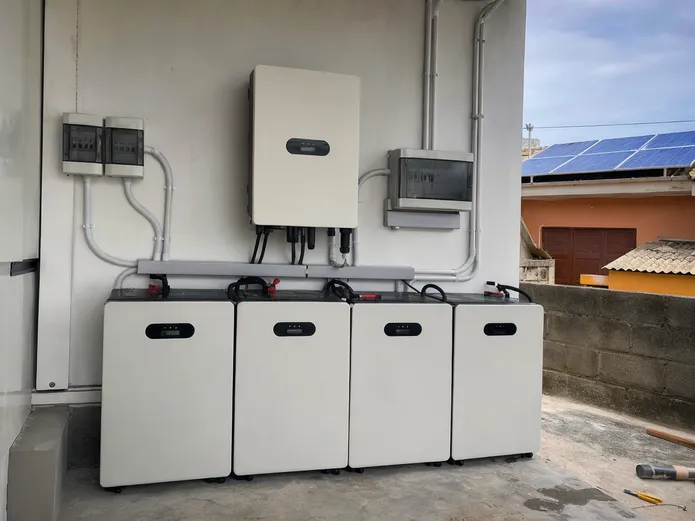
Solar Battery Backup Bank for Weak-Grid Markets
Markets with unreliable grid supply (parts of South Asia, Africa, the Middle East) create demand for solar battery backup bank systems — batteries that charge from solar during the day and provide backup power during grid outages.
This is a growing segment that bridges off-grid and grid-tied markets. Distributors positioning battery banks as backup solutions can access both the solar installer channel and the traditional UPS/generator replacement market.
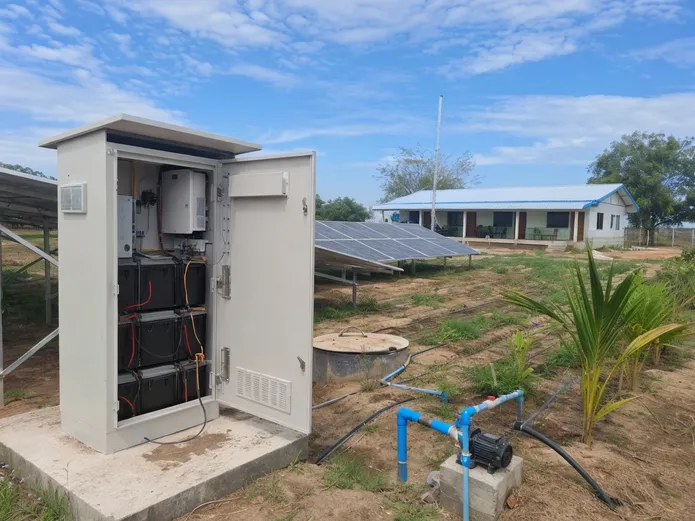
Agricultural and Remote Commercial Loads
Solar-powered irrigation pumps, livestock water systems, remote communication repeaters, and off-grid commercial facilities (lodges, clinics, schools) all need battery banks sized for specific load profiles.
These are typically 24V or 48V systems with higher capacity requirements and ruggedized packaging for harsh environments.
OEM/ODM Scope for Battery Bank Programs
If you need a solar battery bank with your brand, your specifications, or your inverter compatibility requirements, here's what we can configure:
Standard Customization
Low MOQ impact- Label, logo, and color scheme on existing enclosure designs
- Carton marks, serial number format, and packaging inserts
- Terminal type selection (M8 bolt, Anderson, MC4, custom connector)
- BMS communication protocol selection (RS485, CAN, Bluetooth)
- Protection parameter adjustment within validated ranges
Engineering Customization
MOQ depends on complexity- Non-standard voltage configurations (25.6V, 38.4V, or other arrangements for specific inverter compatibility)
- Custom capacity beyond standard model range
- New enclosure tooling (dimensions, mounting points, IP rating changes)
- BMS firmware modification for specific inverter protocol matching
- Market-specific certification support (additional testing and documentation)
MOQ Logic
Standard models start at 100 units. A branding change on existing tooling runs at similar volume. A fully custom cell configuration with new BMS firmware and modified enclosure needs enough volume to justify engineering validation — we'll quote the threshold upfront so you can calculate landed cost accurately.
SKU Differentiation Creates Reorder Lock-In
The commercial value of OEM/ODM is SKU differentiation. When you carry a 12v solar battery bank or 24v solar battery bank with your own brand, firmware, and connector standard, your downstream customers reorder from you specifically — not from whoever has the cheapest generic pack this month.
Custom configurations create reorder lock-in that protects your margin over multiple purchasing cycles.
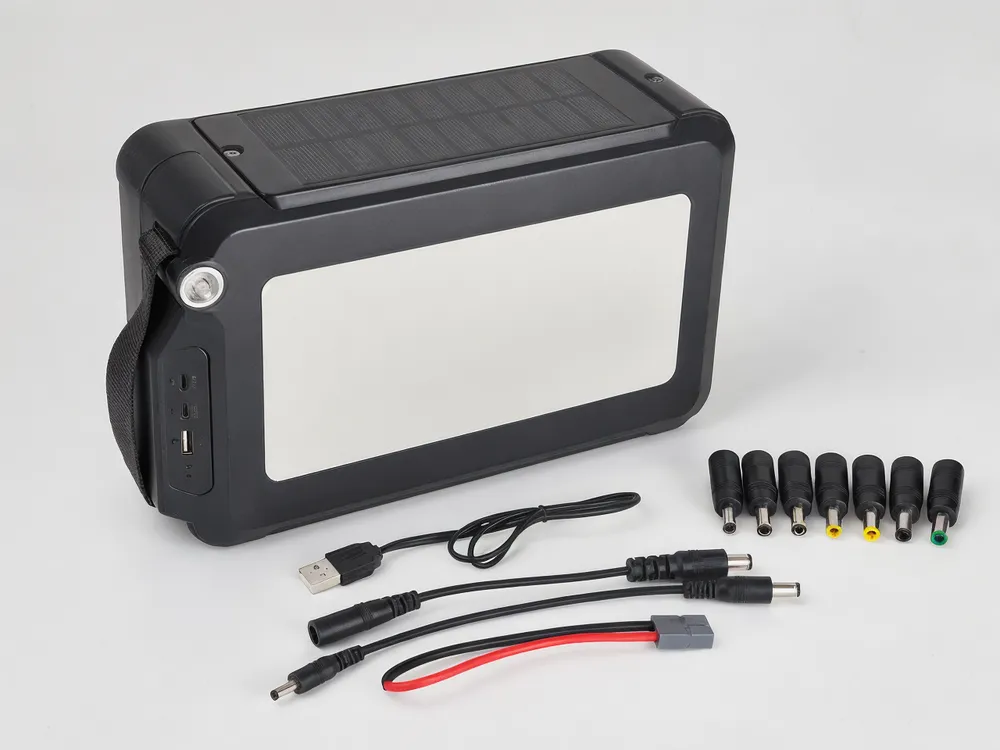
From experience: The most successful OEM programs start with a standard model for the first 2–3 orders, then customize incrementally based on field feedback. Trying to specify everything custom on the first order usually means longer development, higher MOQ, and changes after the first container anyway.
Export Documents and Packaging That Protect Landed Cost
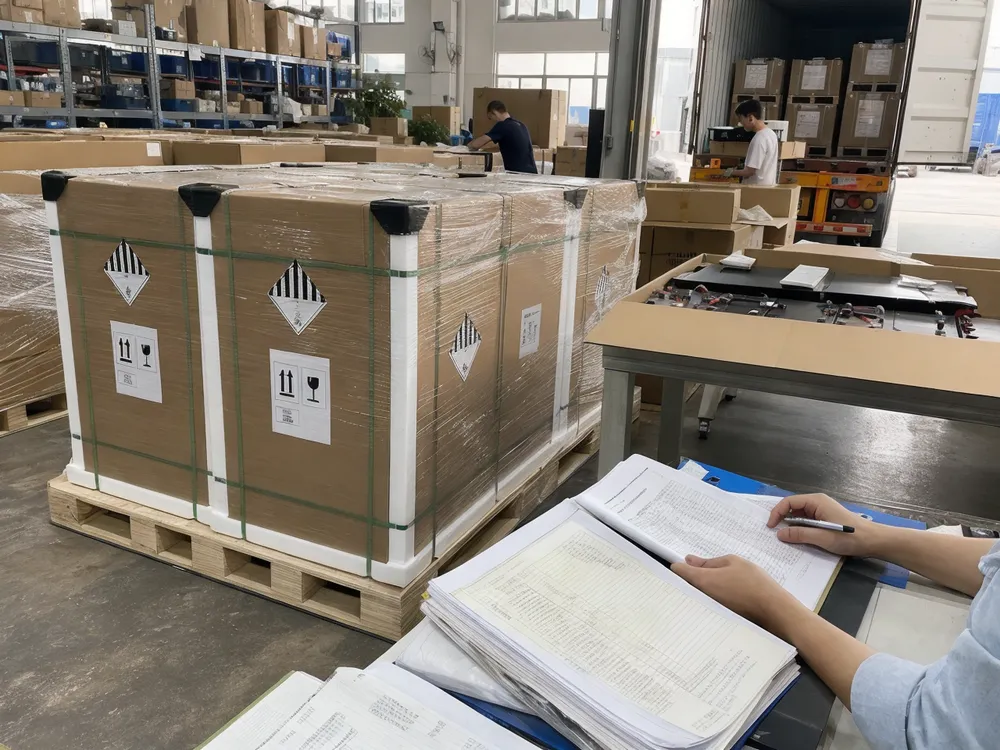
Batteries are classified dangerous goods for international freight. Missing paperwork means port delays, re-inspection fees, or rejected shipments — all of which eat directly into your margin.
Documentation We Maintain for Every Standard Solar Battery Bank Model
Current, updated per model revision
Formatted for sea freight DG classification
Market-Specific Certifications
For market-specific certifications beyond our standard set, our engineering team supports the application process with test samples and technical data packages. We've been through this cycle for European, Southeast Asian, African, and Middle Eastern markets — we know which test labs are efficient for each region.
Packaging for 48V Solar Battery Bank and Other Configurations
DG labels and handling marks per IMDG requirements for lithium. Double-wall corrugated cartons for both chemistries.
Foam-fitted inner packaging for cell and terminal protection. Terminal caps prevent short-circuit during transit.
Palletized for forklift handling at destination. Loading plans calculated per order based on SKU mix and carton dimensions.
Note: Terminal caps prevent short-circuit during transit — a basic step that some factories skip and that causes rejected shipments.
Loading and Freight Planning
Exact container loading quantities depend on battery format, capacity, carton dimensions, and palletization method. Rather than publishing generic numbers that won't match your actual order mix, we calculate loading plans per order.
Send us your target SKU mix and destination port — we'll provide realistic freight volume estimates alongside your quote.
Destination matters: African routes need packaging that survives 500km of unpaved road after the port. European buyers want labeling consistency across reorders. We adjust packaging specs by destination, not just by product.
Choose Battery Bank, Backup, Rack, or Container Storage
Not sure whether a solar battery bank is the right format for your program? Here's how our four storage product families compare:
| Decision Factor | Solar Battery Bank (this page) |
Solar Battery Backup | Rack Mounted Solar Battery | Container Solar Battery Storage |
|---|---|---|---|---|
| Voltage options | 12V, 24V, 48V | 48V/51.2V (primary) | 48V/51.2V | Custom (project-specific) |
| Chemistry options | LiFePO4, gel, AGM | LiFePO4 | LiFePO4 | LiFePO4 |
| Best for | Flexible SKU programs, mixed chemistry catalogs, off-grid markets | Packaged residential/light-commercial backup | Standardized commercial installations, server-room format | Large C&I projects, 100kWh+ |
| Installation format | Floor-standing, shelf-mounted, custom | Wall-mounted, floor-standing, stackable | 19-inch rack enclosure | Pre-wired container enclosure |
| Typical buyer | Off-grid distributors, multi-market wholesalers | Residential installer suppliers | Commercial project contractors | EPC contractors, utility-adjacent |
Solar Battery Bank
- Voltage:
- 12V, 24V, 48V
- Chemistry:
- LiFePO4, gel, AGM
- Best for:
- Flexible SKU programs, mixed chemistry catalogs, off-grid markets
- Format:
- Floor-standing, shelf-mounted, custom
- Buyer:
- Off-grid distributors, multi-market wholesalers
Current page
Solar Battery Backup
- Voltage:
- 48V/51.2V (primary)
- Chemistry:
- LiFePO4
- Best for:
- Packaged residential/light-commercial backup
- Format:
- Wall-mounted, floor-standing, stackable
- Buyer:
- Residential installer suppliers
Rack Mounted Solar Battery
- Voltage:
- 48V/51.2V
- Chemistry:
- LiFePO4
- Best for:
- Standardized commercial installations, server-room format
- Format:
- 19-inch rack enclosure
- Buyer:
- Commercial project contractors
Container Solar Battery Storage
- Voltage:
- Custom (project-specific)
- Chemistry:
- LiFePO4
- Best for:
- Large C&I projects, 100kWh+
- Format:
- Pre-wired container enclosure
- Buyer:
- EPC contractors, utility-adjacent
Choose solar battery bank
If you need voltage and chemistry flexibility across multiple market segments — especially if you serve off-grid markets where 12V and 24V gel or AGM are still the standard.
Choose solar battery backup
If your market is residential or light-commercial backup with packaged, installer-ready LiFePO4 systems.
Solar Battery Backup for packaged backup programsChoose rack mounted
If your projects require standardized 48V/51.2V modules in server-cabinet format with CAN/RS485 communication.
Rack Mounted Solar Battery for 19-inch commercial systemsChoose container storage
If your project exceeds 100kWh in a single enclosure and needs integrated thermal management and fire suppression.
Container Solar Battery Storage for large engineered projectsSolar Battery Bank FAQ for Sourcing and System Matching
Answers to the technical and procurement questions our distributor and project-buyer customers ask most frequently.
Should a solar battery bank use 12V, 24V, or 48V?
Match voltage to your inverter ecosystem. 12V works with PWM controllers and small MPPT units common in African and Southeast Asian solar home systems. 24V fits mid-range MPPT controllers and reduces cable losses on systems up to 3–5kW. 48V is standard for European/Australian residential hybrid inverters and all commercial systems — lower current means thinner cables, lower losses, and higher system efficiency.
If you're building inventory for multiple markets, carry 12V for replacement demand and 48V for growth markets.
Is LiFePO4 better than gel or AGM for a solar battery bank?
Depends on the application and your customer's budget. LiFePO4 delivers 4–6x the cycle life at deeper discharge — better total cost of ownership for daily-cycling systems. Gel and AGM cost less upfront, need no BMS, and work well for pure backup or low-cycle applications.
For your catalog strategy: LiFePO4 carries higher margin per unit; gel/AGM carries higher volume in price-sensitive markets. Most distributors profit from stocking both.
How should buyers size a solar battery bank in Ah or kWh?
Start with daily energy consumption (kWh) divided by usable depth of discharge. For a LiFePO4 bank at 80% DOD: a 5kWh daily load needs approximately 6.25kWh of rated capacity (5 ÷ 0.8). For gel at 50% DOD: the same load needs 10kWh rated.
Then factor in autonomy days — how many days of backup your customer expects without solar input. Most off-grid residential systems size for 1–3 days of autonomy. Telecom sites typically require 8–72 hours depending on operator specifications.
What causes early failure in series or parallel battery banks?
Three root causes: cell mismatch within packs (capacity drift creates thermal imbalance), mismatched packs in a string (one pack hits cutoff while others have remaining capacity), and BMS thresholds that don't match the actual duty cycle.
Prevention starts at production — tight cell sorting, matched pack sets for series strings, and application-specific BMS programming. We address all three in our standard production process.
Can a 48V solar battery bank replace a lead-acid bank in existing systems?
Yes, with caveats. The charge profile is different — LiFePO4 requires a compatible charge controller or inverter with a lithium charge algorithm. Voltage ranges differ slightly (51.2V nominal for LiFePO4 vs 48V nominal for lead-acid).
If your customer's inverter supports lithium settings, it's typically a direct physical replacement. If not, the charge controller needs updating. We can configure BMS communication to match specific inverter brands, which simplifies the transition for your installer customers.
What documents are needed to import lithium or lead-acid solar battery banks?
Minimum for most markets: UN38.3 transport test summary (mandatory for lithium air and sea freight), MSDS, and proper DG shipping declarations. CE is required for European market access. IEC 62133 is increasingly required by European importers and some Southeast Asian markets. We maintain all of these for standard models.
For market-specific certifications (CEC for Australia, NRCS for South Africa, SASO for Middle East), our engineering team supports the application process.
What is EVANBattery's MOQ for standard and OEM battery bank orders?
Standard catalog models: 100 units minimum. OEM/ODM configurations: depends on engineering complexity. A branding change on existing tooling runs at similar volume to standard. A custom cell configuration with new BMS firmware needs higher volume to justify validation — we quote the threshold upfront.
Most new buyers start with a standard model trial order, then move to OEM customization after confirming market fit.
RFQ Checklist for a Quote That Matches Your Project
Send us the following details and we'll return a configuration recommendation, unit pricing at your volume, certification documentation availability, and packaging/loading guidance.
Voltage Platform
12V, 24V, 48V/51.2V
Target Capacity
Ah or kWh per unit
Chemistry Preference
LiFePO4, gel, AGM — or describe your application and we'll recommend
Inverter / Charge Controller Model
So we can confirm BMS communication compatibility
BMS Communication Needs
RS485, CAN, Bluetooth, or none
Estimated Order Quantity
Initial order and expected reorder frequency
Branding / OEM Requirements
Label, color, packaging, serial format
Certification Requirements
CE, IEC 62133, or market-specific needs
Destination Port
For freight and packaging planning
We typically respond within 48 hours with a technical recommendation and pricing. Sample orders ship for evaluation before you commit to production volume.
Email: evan@evanbattery.com
Phone / WhatsApp: +86 13560690838
Explore Related Solar Battery Storage
Compare configurations across the EVANBattery solar storage range.