

3 Phase Solar Battery System for Commercial Projects
LiFePO4 battery packs and BMS systems engineered for three-phase solar storage projects — manufactured, configured, and export-documented by EVANBattery.
We build the battery side of your commercial three-phase installation: cell packs, rack or cabinet format, BMS with CAN/RS485 communication, and the compliance paperwork your import process requires.
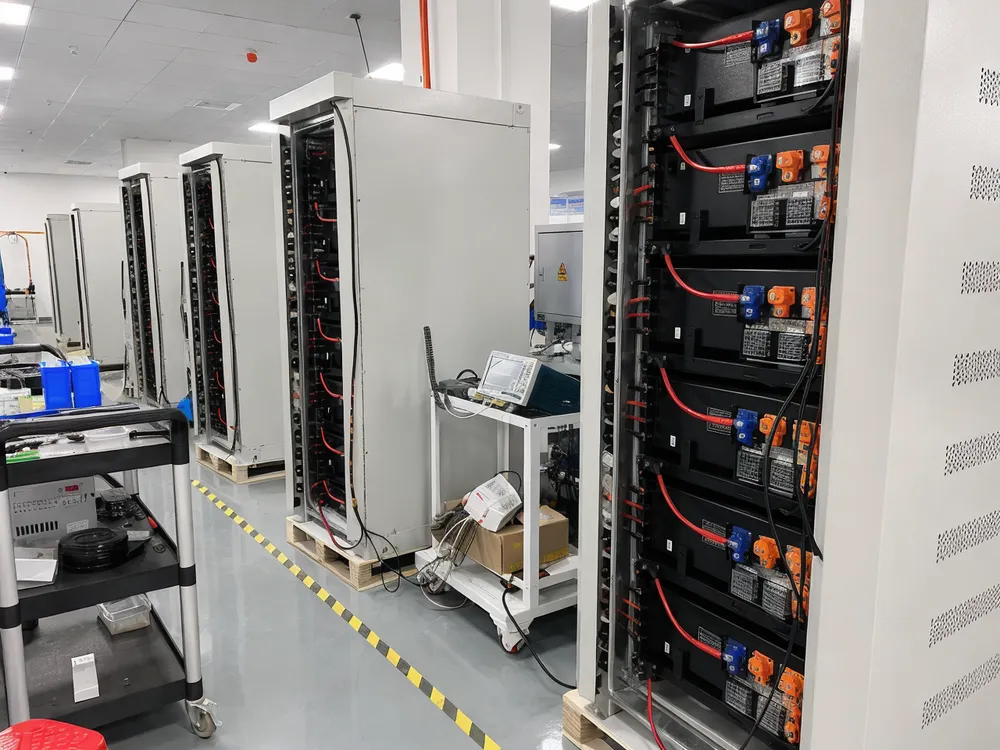
What EVANBattery Manufactures for Your Three-Phase Project
EVANBattery manufactures the battery pack and BMS portion of a 3 phase solar battery system. We don't make inverters, panels, or racking — we make the LiFePO4 cell packs, design and program the BMS boards, configure communication protocols for your chosen inverter or PCS, and ship with full export documentation.
Our scope is the energy storage core that sits behind your three-phase hybrid inverter or power conversion system.
Our Scope — What Ships to You
- LiFePO4 cell packs (rack or cabinet format)
- In-house designed and programmed BMS boards
- CAN/RS485 communication configured for your inverter or PCS
- Full export documentation and compliance paperwork
Global Supply Track Record
Since 2012, we've supplied commercial-grade battery packs to distributors and project contractors across Europe, Southeast Asia, Africa, South America, and the Middle East.
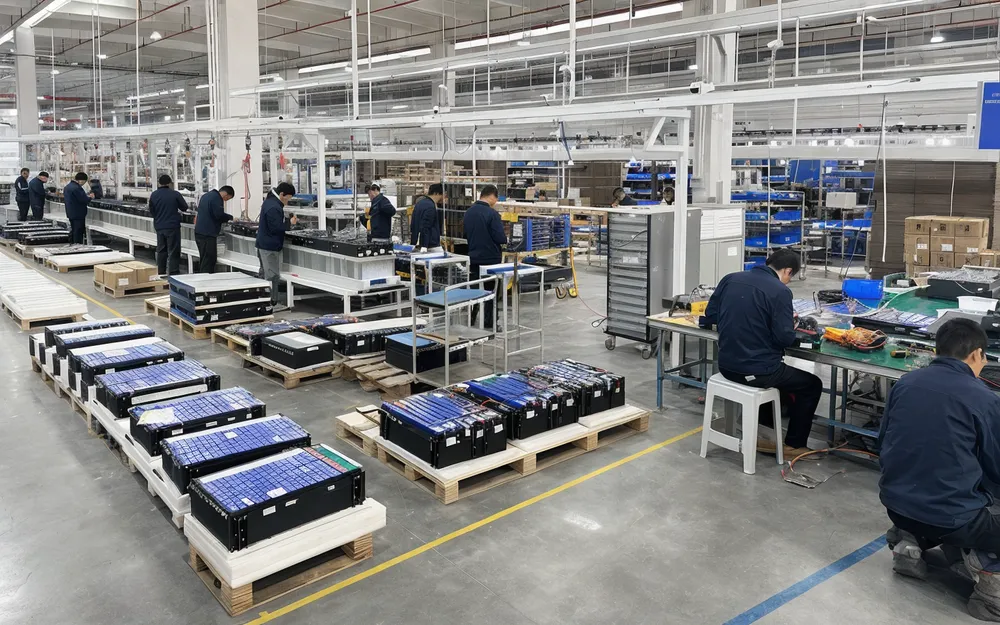
Your project order runs alongside our standard production without delays — 2,000,000 units annual capacity across 6 dedicated production lines.
Where This Three-Phase Battery System Fits in the Solar Battery Range
A 3 phase solar battery system page exists because your project specification calls for it — your inverter outputs three-phase AC, your site load is commercial-scale, and your battery bank needs to match that architecture in voltage, capacity, and BMS communication.
The battery itself doesn't "know" whether it's feeding a single-phase or three-phase inverter. What changes is the scale: three-phase projects typically demand higher kWh capacity, 48V or higher voltage platforms, rack or cabinet format, and BMS communication that talks to commercial-grade PCS equipment. The battery, BMS, inverter, and EMS must work as a coordinated system — and the battery side is what we manufacture and configure.
This page is for you if your commercial 3 phase solar battery project needs a manufacturer who can supply the battery bank, configure BMS communication for your specific inverter, and deliver with documentation that clears customs and satisfies project approval files.
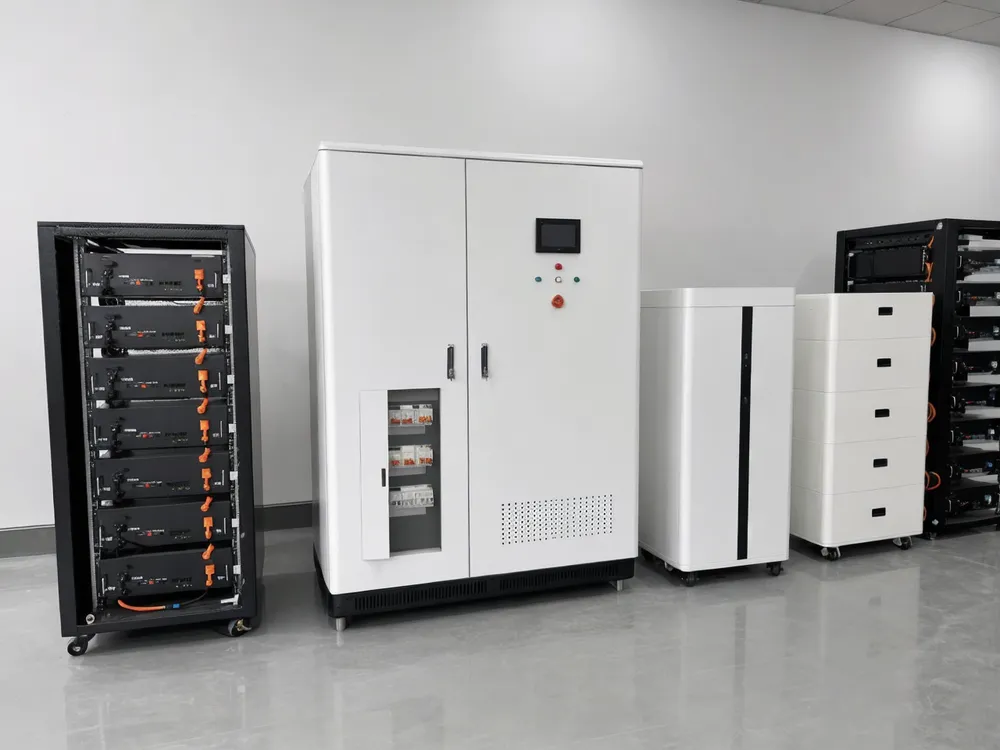
Related Solar Battery System Pages by Architecture
Off Grid Solar Battery System
Standalone off-grid at 12V/24V/48V without grid connection.
Hybrid Solar Battery System
Grid-tied hybrid where three-phase compatibility isn't the defining requirement.
Stackable Solar Battery System
Modular expansion and residential/light-commercial scalability as the primary buying reason.
Solar Battery System for RV
Mobile low-voltage energy storage for recreational vehicles.
DC Coupled Solar Battery System
PV-side DC coupling architecture for direct solar-to-battery charging.
Specification Data Buyers Need Before a Three-Phase Quote
The table below covers the specification fields we configure for commercial three-phase solar storage projects. Final values depend on your inverter model, target kWh, and selected battery configuration — these are the typical ranges and options available.
| Specification Field | Typical Range / Options |
|---|---|
| Battery Chemistry | LiFePO4 (lithium iron phosphate) |
| Nominal Voltage | 48V / 51.2V standard; high-voltage configurations (96V–384V series string) available for specific PCS |
| Usable Capacity | 100Ah–280Ah per module; total system kWh scaled by parallel modules |
| Module Format | 19-inch rack-mount module or standalone cabinet module |
| System Format | Server rack (6U–12U per module), floor-standing cabinet, or wall-mount (smaller systems) |
| BMS Type | In-house designed; master-slave architecture for multi-module systems |
| Communication Protocol | CAN bus, RS485; protocol customizable to match inverter/PCS requirements |
| Max Charge/Discharge Rate | 0.5C–1C standard; higher rates available on request with thermal validation |
| Parallel Scalability | Up to 16 modules in parallel (typical); exact limit depends on BMS configuration and inverter capacity |
| Protection Functions | Over-charge, over-discharge, over-current, short-circuit, over-temperature, under-temperature, cell balancing |
| Cycle Life | ≥6,000 cycles at 80% DOD to 80% retained capacity (25°C reference) |
| Operating Temperature | Charge: 0°C to 55°C; Discharge: -20°C to 60°C |
| Enclosure / IP Rating | IP20 (indoor rack); IP55 available for outdoor cabinet configurations |
| Warranty Documentation | Available; terms depend on application profile and order agreement |
| Compliance Documentation | CE, IEC 62133, UN38.3 test summary, MSDS |
The 51.2V nominal is our most common platform for three-phase commercial projects — it matches the majority of 48V-class hybrid inverters and PCS units on the market. If your inverter requires a high-voltage battery string, we configure series modules with inter-module BMS communication.
These fields give you what you need for your comparison sheet and project sizing. When you're ready to move from comparison to quotation, send us your inverter/PCS model, target system kWh, backup duration requirement, and destination market.
Request a Detailed Specification Sheet for Your ProjectBMS and Inverter Communication for Three-Phase Solar Projects
The BMS is where a three-phase solar storage project succeeds or fails at commissioning. We've seen enough field problems — from our own early projects and from buyers who came to us after sourcing generic packs elsewhere — to know that BMS-to-inverter communication is the single highest-risk technical interface in a commercial battery installation.
We design and manufacture BMS boards in-house. Our 18+ engineers handle hardware layout, firmware development, and protocol configuration. This means when you tell us your inverter brand and model, we don't hand you a generic BMS and hope it works — we program the communication protocol, set the charge/discharge parameters, and validate the handshake before production begins.
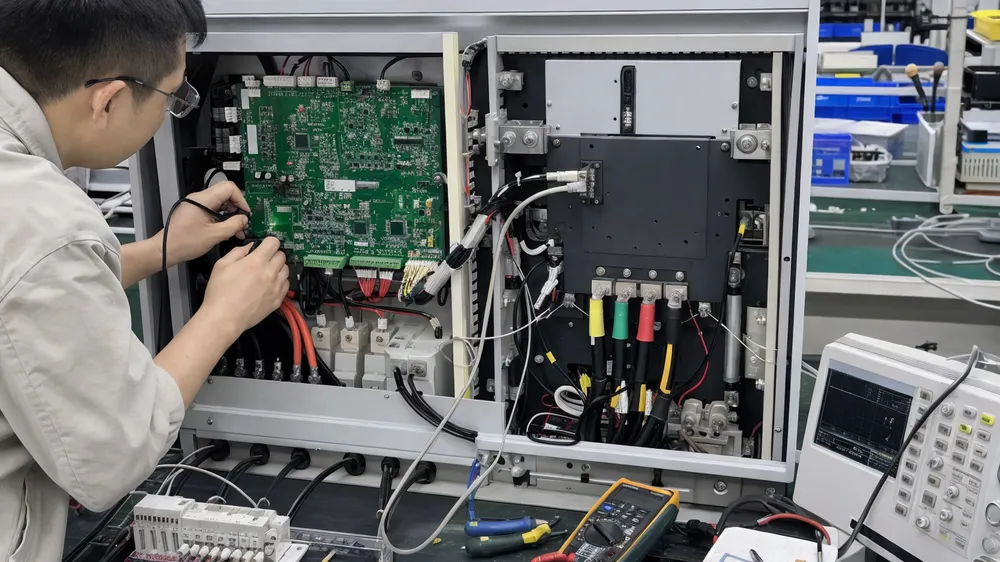
What we configure for your project:
CAN Bus or RS485 Communication
Matched to your inverter's or PCS's protocol specification. We maintain protocol libraries for common commercial inverter platforms and can develop new protocol matches when you provide the inverter's communication documentation.
Charge/Discharge Current Limits
Programmed to stay within both the cell's safe operating envelope and the inverter's DC input specifications. Mismatched limits are the most common cause of nuisance shutdowns on new installations.
Protection Thresholds
Over-voltage, under-voltage, over-current, short-circuit, and temperature — calibrated to the actual cell grade in your pack, not generic defaults. Generic BMS modules often ship with protection values set for a different cell capacity or chemistry. The result is either premature cutoff that wastes usable capacity, or insufficient protection that shortens cycle life.
Multi-Module Master-Slave Coordination
For systems with parallel battery modules. The master BMS aggregates state-of-charge data and communicates a unified status to the inverter, so your EMS sees one coherent battery bank rather than conflicting signals from individual modules.
Pre-Production Validation Process
Before production, we run a BMS board-level test sequence: communication verification, protection trigger validation, and simulated fault response. After pack assembly, the complete unit goes through a system-level charge/discharge cycle with protocol logging. You receive a test report confirming communication status and protection function verification.
The commercial value is straightforward: fewer commissioning callbacks, fewer after-sales disputes about battery behavior, and clearer responsibility boundaries between your battery supplier and your inverter supplier.
Commercial Segments Where Three-Phase Storage Creates Repeat Orders
Three-phase solar storage isn't one market — it's several distinct segments, each with its own order pattern, margin structure, and documentation requirements. Here's where our buyers deploy these systems and why the segments generate repeat business.
Factory and Workshop Rooftop Solar + Storage
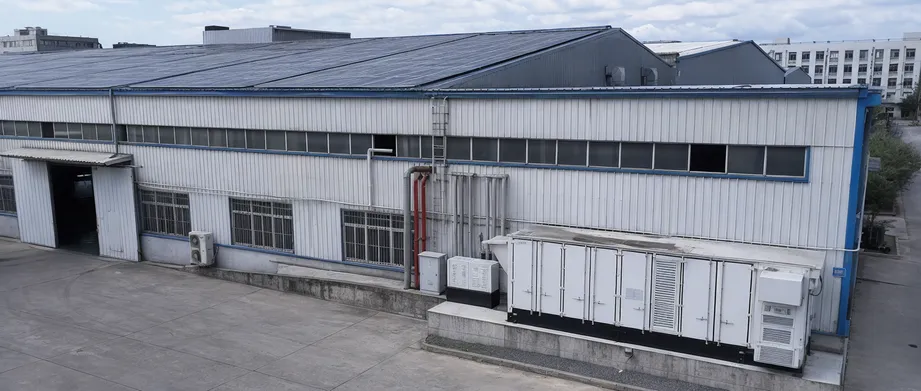
Manufacturing facilities with three-phase production loads (CNC machines, compressors, welding equipment) are the largest single segment for commercial solar battery systems. The battery bank handles peak-shaving during production hours and provides backup for critical processes during grid outages.
Typical system sizes range from 50 kWh to 500 kWh depending on the facility's load profile.
Repeat order driver: These projects reorder as the factory expands or as neighboring facilities in the same industrial park adopt the same solution — one successful installation often generates 3–5 referral projects within the same zone.
Hotels and Multi-Story Commercial Buildings
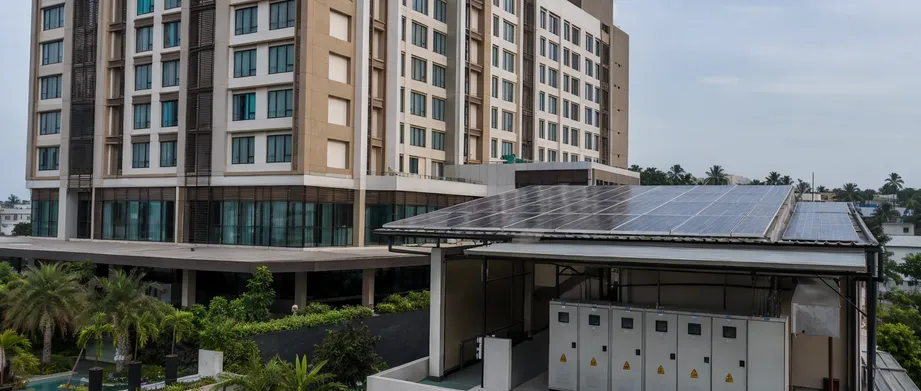
Shared-area loads — elevators, corridor lighting, HVAC common systems, fire safety — run on three-phase supply. Battery storage covers backup for these loads during grid interruptions and enables time-of-use arbitrage where tariff structures make it profitable.
Repeat order driver: Hotel chains and property management companies standardize on a proven battery configuration and roll it across their portfolio. Your first successful installation becomes the specification template for the next ten.
Supermarkets and Cold-Chain Facilities
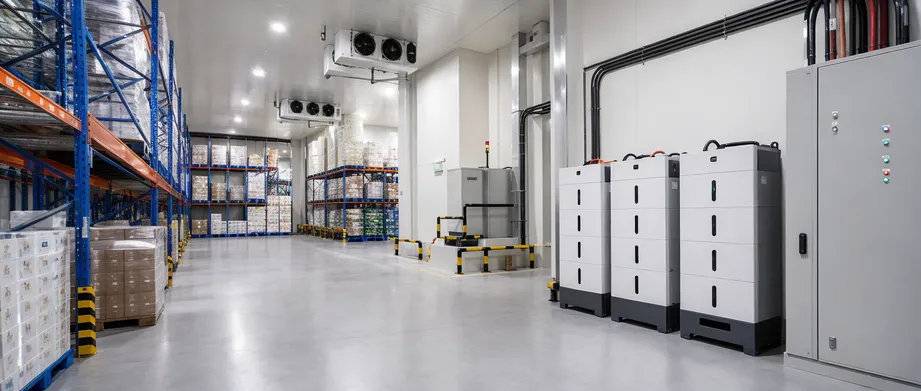
Refrigeration continuity is non-negotiable. A 4-hour grid outage without backup means spoiled inventory worth more than the battery system itself. Cold-chain operators have high willingness to pay for reliable storage, and they maintain the systems properly because the cost of failure is immediate and visible.
Supplier advantage: Lower warranty risk and higher margin tolerance from the end customer.
Telecom Towers, Microgrids, and Island Power
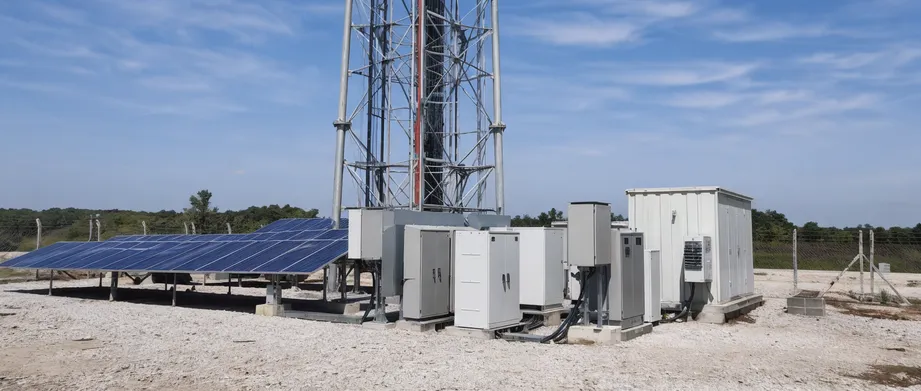
Telecom operators and microgrid developers procure batteries through structured tender processes with detailed technical specifications, compliance documentation requirements, and multi-year supply agreements. The documentation overhead is higher, but so is the order predictability.
Repeat order driver: Once your battery passes the operator's qualification process, you're on an approved vendor list for 2–3 years of repeat supply. We've supported multiple buyers through telecom qualification cycles — the test report package and BMS documentation we provide is structured for this process.
Agricultural Pumping and Processing Sites
Three-phase motors for irrigation pumps, grain dryers, and processing equipment in areas with unstable grid supply. These sites need battery backup sized for motor starting current — which means the BMS must handle high transient discharge without triggering protection cutoff.
We configure the BMS current limits and response timing specifically for motor-load profiles. The segment is growing in Africa and South America where rural electrification programs are expanding solar-plus-storage to agricultural zones.
Technical note: Motor starting current can be 5–7× running current. Generic BMS protection will trip on inrush. Our firmware includes configurable transient allowance windows to handle motor start profiles without compromising cell protection during sustained overload.
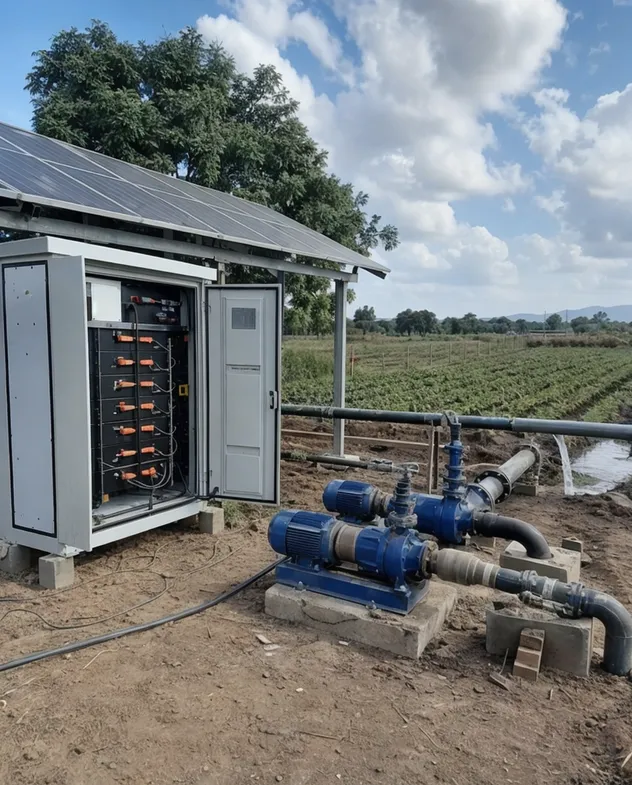
Each segment above represents a market you can build a distribution position in. The battery configuration varies by segment — different kWh, different BMS settings, different enclosure requirements — but the manufacturing platform is the same.
Tell Us Which Segment You're TargetingCustom kWh, Voltage, Cabinet, Protocol, and Branding Options
Three-phase projects rarely fit a single catalog model. Your inverter has specific DC voltage requirements, your site has a specific kWh target, and your market may need specific branding, language, or documentation. We handle all of this as a three phase solar battery supplier with in-house engineering.
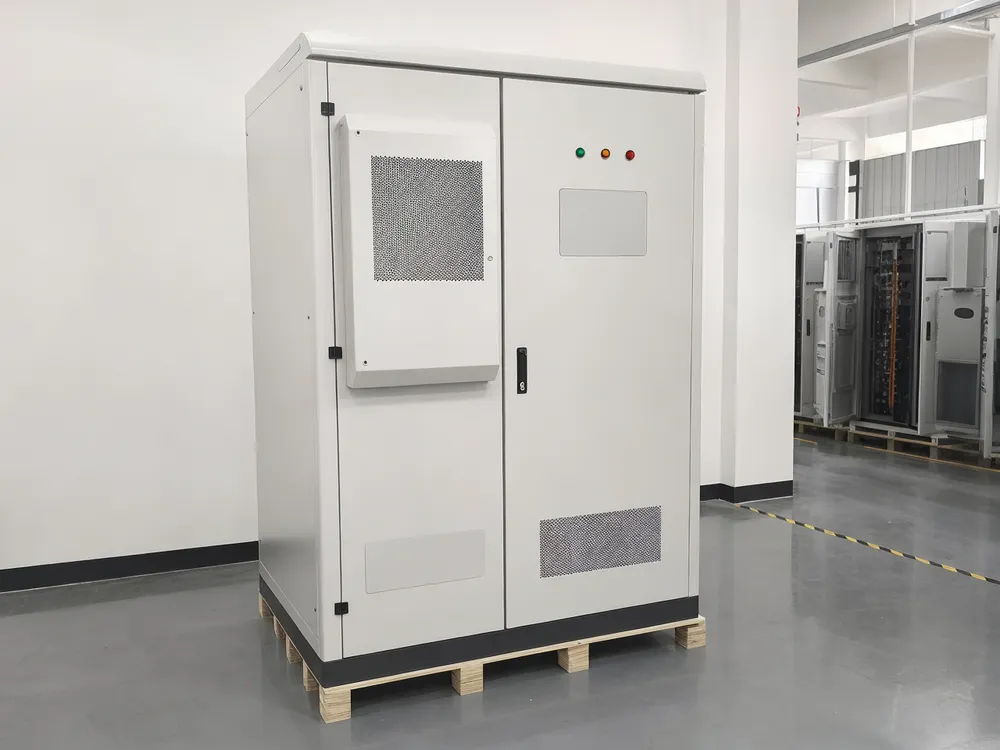
What you can customize
| Customization Field | Options / Range |
|---|---|
| System Capacity | Configured to your target kWh — from 10 kWh single-rack to 500+ kWh multi-cabinet |
| Voltage Platform | 48V/51.2V standard; high-voltage string (96V–384V) for compatible PCS |
| Physical Format | 19-inch rack module, floor-standing cabinet, or custom enclosure dimensions |
| BMS Communication | CAN, RS485, or custom protocol to match your inverter/PCS |
| Branding | Your logo, color scheme, model number, and product naming on enclosure and labels |
| Label Language | English, Spanish, French, Portuguese, Arabic, or your specified language |
| Manual / Documentation | Branded installation manual, datasheet, and warranty card in your language |
| Packaging Marks | Your carton marks, pallet labels, and shipping documentation |
| Certification Scope | CE, IEC 62133, UN38.3 standard; additional market certifications supported on request |
MOQ and Process
Standard models (existing voltage, capacity, and enclosure) start at 100 units. OEM/ODM projects with custom BMS firmware, non-standard voltage, or new enclosure tooling have MOQ that depends on engineering complexity — we'll give you the number upfront after reviewing your specification.
For custom BMS communication or non-standard inverter protocol matching, we build and validate a prototype unit first. You confirm performance with your inverter before we commit to production tooling. This adds a development step but eliminates the risk of a 500-unit order that doesn't communicate properly with your equipment.
What We Don't Supply
Solar panels, inverters, racking, or EPC services. We manufacture battery packs and BMS systems.
If your project needs a complete system, we work alongside your inverter supplier and EPC contractor — each party owns their scope clearly.
Battery QC and Export Documents That Reduce Project Risk
When you source a commercial 3 phase solar battery from a 3 phase solar battery system manufacturer, two things determine whether your project stays on schedule: consistent battery quality across the batch, and documentation that clears customs and satisfies project approval requirements.
Production Quality Control
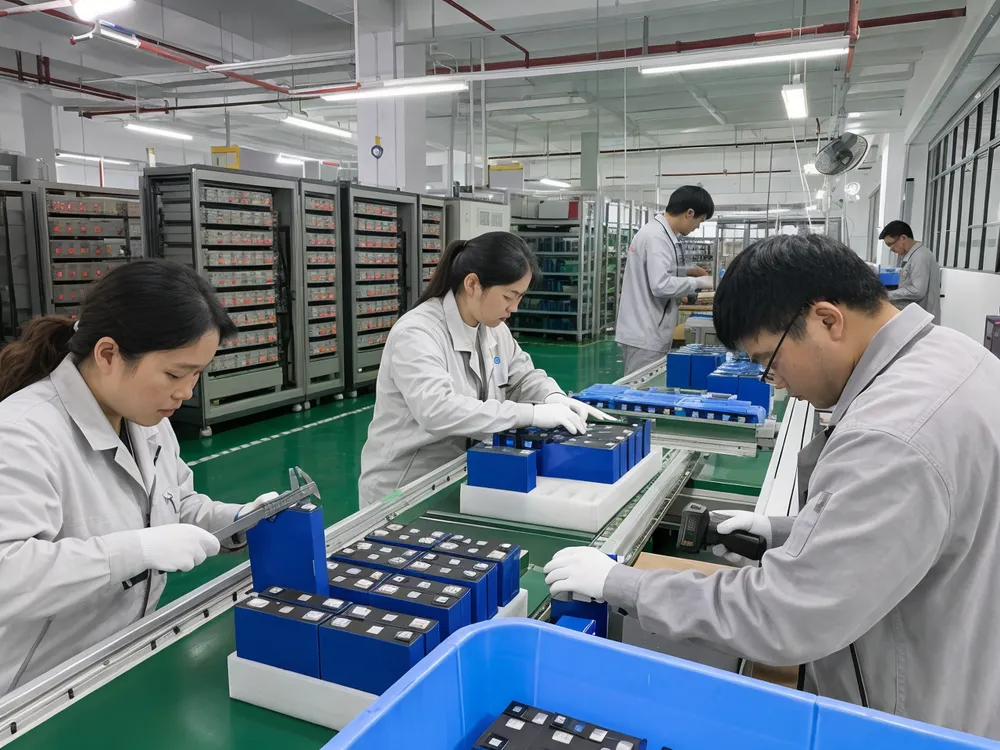
Our QC process runs across the full production sequence — not as a single end-of-line checkpoint:
Incoming Cell Inspection
Voltage, internal resistance, and capacity tested on every incoming cell batch. Cells outside acceptance window are returned to supplier — we don't downgrade rejects into lower-tier products.
Automated Cell Sorting and Matching
Cells grouped by measured capacity and internal resistance (within 20mV and 5mΩ across a pack). This is what keeps your 200-unit batch performing consistently after 12 months in the field, not just on day one.
Pack Assembly and BMS Integration
Cell-to-busbar connections, BMS wiring, and thermal interface materials installed under controlled process. BMS programmed with your project-specific parameters.
Protection Function Verification
Every BMS board tested for over-charge, over-discharge, over-current, short-circuit, and temperature protection response before it ships.
Capacity and Cycling Test
Full charge/discharge cycle with capacity measurement. Batch samples undergo extended cycling and temperature testing (55°C soak, -20°C discharge).
Aging and Final Inspection
Packs rest under monitoring for self-discharge detection. Final visual, electrical, and documentation check before packing.
9,900 m²
Factory Area
150
Employees
6
Production Lines
2,000,000
Annual Unit Capacity
Certifications and Export Documentation
| Document | Purpose for Your Business |
|---|---|
| ISO 9001:2015 | Manufacturing system consistency — your reorders match your first order |
| CE | European market access and project approval files |
| IEC 62133 | Battery safety standard — required by many project specifications |
| UN38.3 Test Summary | Dangerous goods transport classification — required for sea and air freight |
| MSDS | Material safety data — required by freight forwarders and customs |
These documents ship with your order. If your destination market requires additional certification (UL, TÜV, BIS, SASO), our engineering team supports the application process with test samples and technical data packages.
We've been through enough certification cycles to know which test labs are efficient for each region — ask us before you commit to a lab.
Choosing the Right Solar Battery System Page Before You Quote
If you're not certain this page matches your project, use the table below to find the right fit. Every page covers a different procurement scenario — and we'd rather you land on the correct one than waste time on a mismatched quote.
| If Your Project Needs… | Consider This Page | Why |
|---|---|---|
| Remote or standalone off-grid supply (no grid connection) | Off Grid Solar Battery System | Designed for 12V/24V/48V standalone systems without grid-tie requirements |
| Grid-tied hybrid storage where three-phase isn't the defining issue | Hybrid Solar Battery System | Covers single-phase and three-phase hybrid configurations with grid interaction focus |
| Modular expansion and residential/light-commercial scalability | Stackable Solar Battery System | Modularity and incremental capacity growth as the primary buying reason |
| Mobile low-voltage energy storage for vehicles | Solar Battery System for RV | 12V/24V mobile configurations with vibration resistance and compact form factor |
| PV-side DC architecture and charge controller integration | DC Coupled Solar Battery System | Battery charges directly from PV via DC charge controller, not AC-coupled |
| Commercial three-phase inverter/PCS compatibility, 48V+ voltage, rack/cabinet format | You're on the right page | Three-phase project-scale battery supply with BMS protocol matching |
If you need to compare across the full range, view all solar battery system options.
The key distinction: this page is for buyers whose three phase solar battery supplier needs to deliver battery packs configured for commercial PCS communication, high-kWh capacity, and project-grade documentation. If your project is residential-scale or single-phase, one of the sibling pages above will serve you better.
RFQ Checklist for a Commercial 3 Phase Solar Battery
To quote accurately, we need the following from you. The more complete your initial request, the faster we return a technical recommendation and pricing.
Required Information
- Target system capacity (total kWh)
- Nominal voltage platform (48V/51.2V, or high-voltage string requirement)
- Inverter or PCS brand and model number
- Communication protocol requirement (CAN, RS485, or specific protocol name)
- Backup duration and peak load/current requirement
- Installation environment (indoor/outdoor, ambient temperature range)
- Destination country and port
- Certification requirements for your market
- Estimated order quantity (first order + annual projection)
- Branding requirements (OEM label, custom color, documentation language)
- Target timeline (sample delivery, production order)
Optional but Helpful
- Site load profile or single-line diagram
- Existing battery specification you're replacing or benchmarking against
- Photos of installation space or rack dimensions
Send your RFQ to
Ready to Get a Technical Recommendation?
We respond with a configuration matched to your project data — no generic catalog PDF.
Technical FAQ for Three-Phase Solar Battery Procurement
Answers to the engineering and specification questions buyers ask most often when sourcing batteries for commercial three-phase solar projects.
Does a 3 phase solar battery system need a special battery, or only a three-phase inverter?
Does a 3 phase solar battery system need a special battery, or only a three-phase inverter?
The battery itself is chemistry-agnostic to AC phase count — it stores and releases DC energy regardless of whether the inverter converts to single-phase or three-phase AC. What changes in a three-phase project is scale and communication: you typically need higher kWh capacity, a voltage platform that matches commercial inverters (48V/51.2V or high-voltage string), and BMS communication that integrates with the PCS or hybrid inverter's monitoring system.
Key takeaway: The battery hardware is the same LiFePO4 cell technology; the configuration, BMS programming, and system architecture are what make it "three-phase ready."
What battery voltage is normally used for commercial 3 phase solar battery projects?
What battery voltage is normally used for commercial 3 phase solar battery projects?
48V (actual 51.2V nominal for LiFePO4) is the most common platform for commercial three-phase systems using standard hybrid inverters. High-voltage battery systems (96V–384V, achieved by connecting modules in series) are used with specific PCS equipment designed for higher DC bus voltage.
The choice depends entirely on your inverter's DC input specification — send us the inverter model and we'll confirm the correct voltage configuration.
Standard Platform
48V / 51.2V Nominal
Most common for hybrid inverters
High-Voltage Platform
96V – 384V (Series String)
For PCS with higher DC bus voltage
How do I size battery capacity for a three-phase commercial load?
How do I size battery capacity for a three-phase commercial load?
Start with your site's energy requirement: daily kWh consumption during the backup period you need to cover, multiplied by a depth-of-discharge factor (typically 80% for LiFePO4) and a safety margin (10–20% depending on load variability).
For peak-shaving applications, size to the kWh differential between your peak demand and your solar generation during peak tariff hours.
Sizing support: We can help with sizing once you provide a load profile or at minimum your peak kW demand and desired backup hours. Request a sizing consultation with your project parameters.
Can one battery bank support unbalanced three-phase loads?
The battery bank supplies DC power to the inverter — load balancing across the three phases is handled by the inverter or PCS, not by the battery. A single DC battery bank feeds the inverter's DC bus, and the inverter manages phase-to-phase power distribution.
If your site has significantly unbalanced loads, confirm with your inverter supplier that the inverter model supports unbalanced output. From the battery side, we size the total kWh and peak discharge current to cover the aggregate three-phase demand.
How do I confirm BMS communication compatibility with my inverter or PCS?
Send us the inverter brand, model number, and communication protocol documentation. We check our existing protocol library for a match. If we've already configured for that inverter model, we confirm compatibility immediately.
If it's a new model, we request the inverter's communication specification document, develop the protocol match, and validate on a prototype unit before production. This confirmation step happens before you commit to a production order — no guessing.
What documents are needed to import lithium solar batteries?
At minimum: UN38.3 test summary (required for dangerous goods transport classification), MSDS (material safety data sheet for freight forwarders and customs), and a commercial invoice with correct HS code and battery specifications.
For European import, CE declaration of conformity and IEC 62133 test report support market access. For project-based procurement, you may also need the battery datasheet, BMS specification, and installation manual for project approval files.
We provide all standard documentation with your shipment and support additional certification applications for specific markets.
What is the MOQ for standard and OEM/ODM three-phase battery projects?
Standard models (existing voltage, capacity, enclosure): 100 units.
OEM/ODM projects with custom BMS firmware, non-standard voltage configuration, or new enclosure design: MOQ depends on engineering complexity and is confirmed after we review your specification. Most custom three-phase commercial projects land between 50–200 units for a first order, scaling to container volumes on reorder.
We'll give you the exact MOQ and unit cost structure after reviewing your requirements — no hidden thresholds.