

DC Coupled Solar Battery System
Battery packs and BMS engineered for direct PV-side storage integration. We manufacture the LiFePO4 battery modules and matched BMS that sit between your hybrid inverter and PV array, configured to your voltage window and communication protocol.
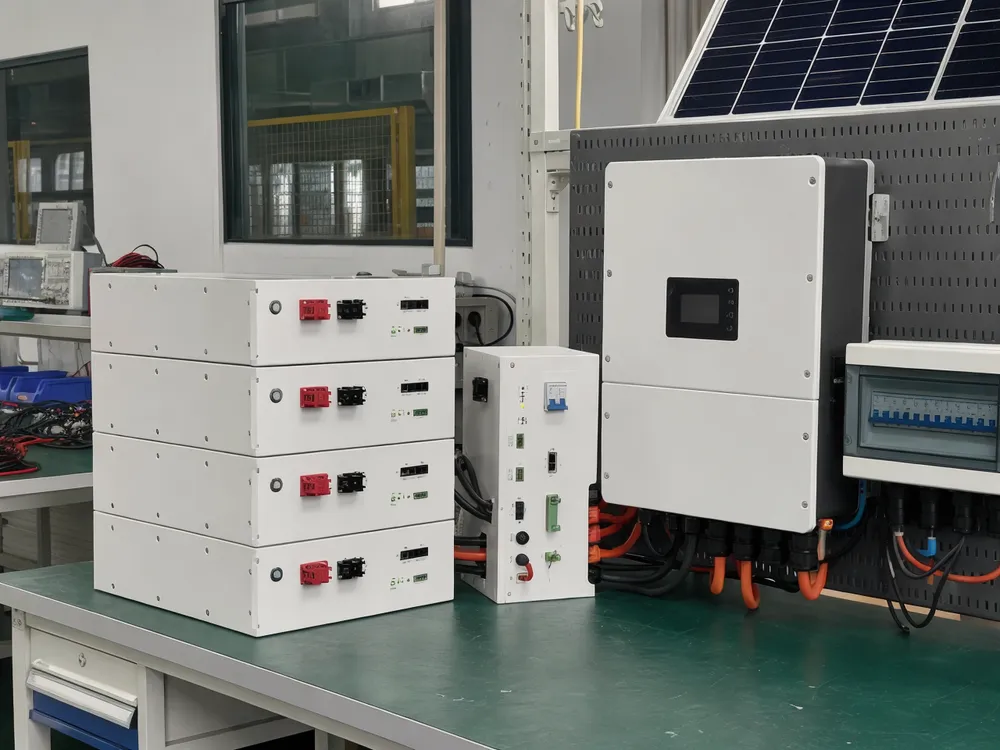
DC Coupled Solar Battery System for New Solar-Storage Programs
EVANBattery manufactures DC coupled solar battery systems — LiFePO4 battery packs and integrated BMS designed to charge directly from PV generation through a hybrid inverter or MPPT charge controller on the DC bus. We supply the battery side of the system. We don't make panels, inverters, or racking — we make the storage component that your chosen inverter architecture controls.
This page exists to help you confirm three things before sending an RFQ: whether DC-coupled topology fits your project, what specifications and BMS configurations are available, and what inputs we need from you to quote accurately. If you're a distributor building a solar-storage bundle, a contractor specifying battery capacity for a project tender, or an OEM partner standardizing a storage SKU across markets, the information below covers what you need.
We've been manufacturing solar batteries since 2012 — 6 production lines, 9,900 m² of factory floor, 2,000,000 units annual capacity. As a dc coupled solar battery system manufacturer, our scope is the battery pack and BMS; your scope is the inverter selection and system design. That division keeps both sides focused on what they do well.
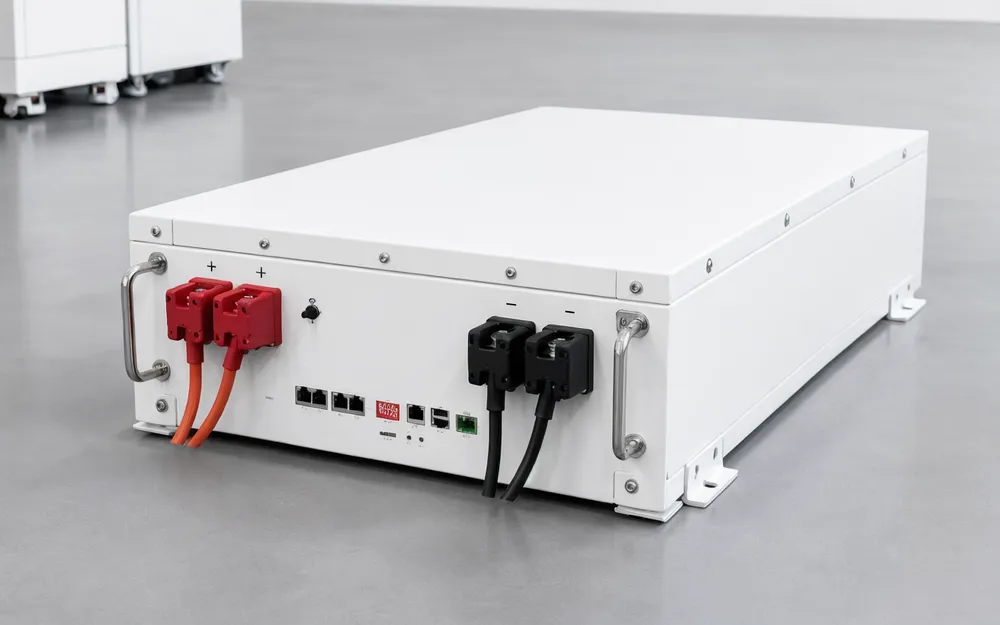
Clear Scope Division
Our Scope
- Battery pack manufacturing
- BMS integration & configuration
- Voltage window matching
- Communication protocol setup
Your Scope
- Inverter selection
- System design & sizing
- PV array & racking
- Installation & commissioning
Distributors
Building solar-storage bundles with standardized battery SKUs across your product catalog.
Contractors
Specifying battery capacity for project tenders with confirmed inverter models and voltage requirements.
OEM Partners
Standardizing a storage SKU across markets with custom branding and protocol configuration.
When DC Coupling Improves Your Landed System Cost
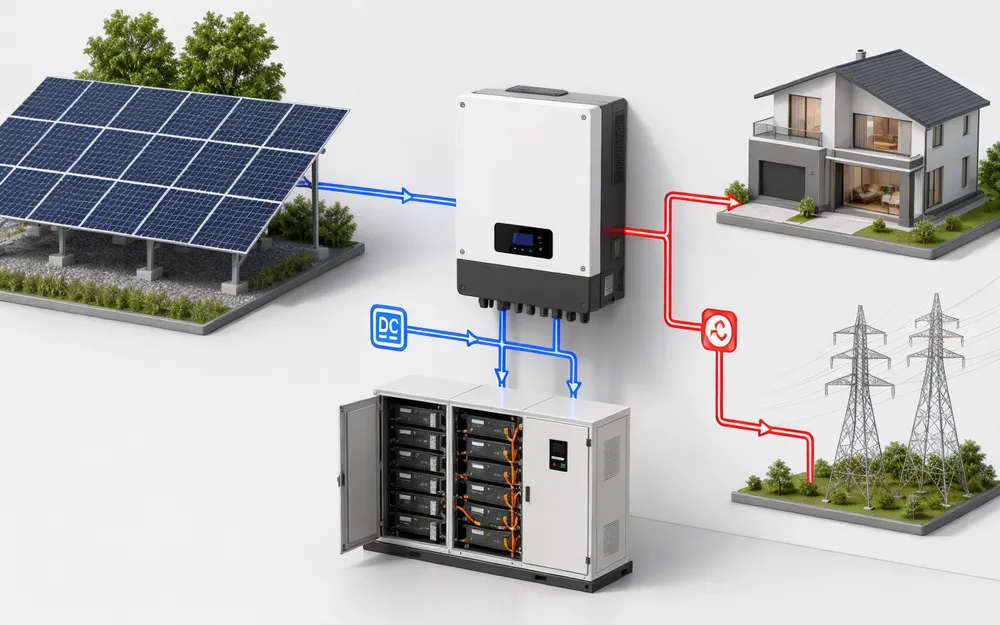
DC coupling makes commercial sense when you're specifying battery and inverter together for a new installation — not retrofitting storage onto an existing AC system. The battery charges directly from PV through the inverter's DC bus, which means one fewer conversion stage between panel output and stored energy.
BOM Advantages for Your Project
For your project BOM, DC coupling translates to fewer components, a cleaner wiring topology, and one less point of failure during commissioning.
- Fewer components in the system BOM
- Cleaner wiring topology with one fewer conversion stage
- One less point of failure during commissioning
- Fewer callbacks and warranty disputes
- Easier repeat sales with proven configuration
Where DC Coupling Fits Best
New Residential Solar-Storage Packages
Where you control the inverter-battery pairing from the start.
Off-Grid Projects
Where PV is the primary charge source and system simplicity is critical.
Commercial Self-Consumption Systems
Where daytime solar generation feeds directly into storage for peak shaving.
When DC Coupling Is Not the Right Fit
DC coupling is less ideal when your buyer's end customer already has an existing grid-tied inverter and wants to add storage without replacing equipment. That's an AC-coupled retrofit scenario, and forcing DC coupling there adds cost and complexity.
We'll tell you upfront if your project description points toward AC coupling instead. We'd rather lose a quote than have you deploy the wrong topology and deal with field problems six months later.
Parameters to Confirm Before Quoting
The final fit depends on your inverter's specifications. As a dc coupled solar storage integrator, you'll need to confirm these parameters before we can lock specifications:
- 1 Inverter battery voltage window
- 2 MPPT / charge controller architecture
- 3 BMS communication capability (CAN, RS485, etc.)
Battery and BMS Specifications for Your Procurement Sheet
The table below covers available configurations for our DC coupled solar battery system. These are the parameters you'll need for comparison sheets, project tenders, and inverter compatibility checks.
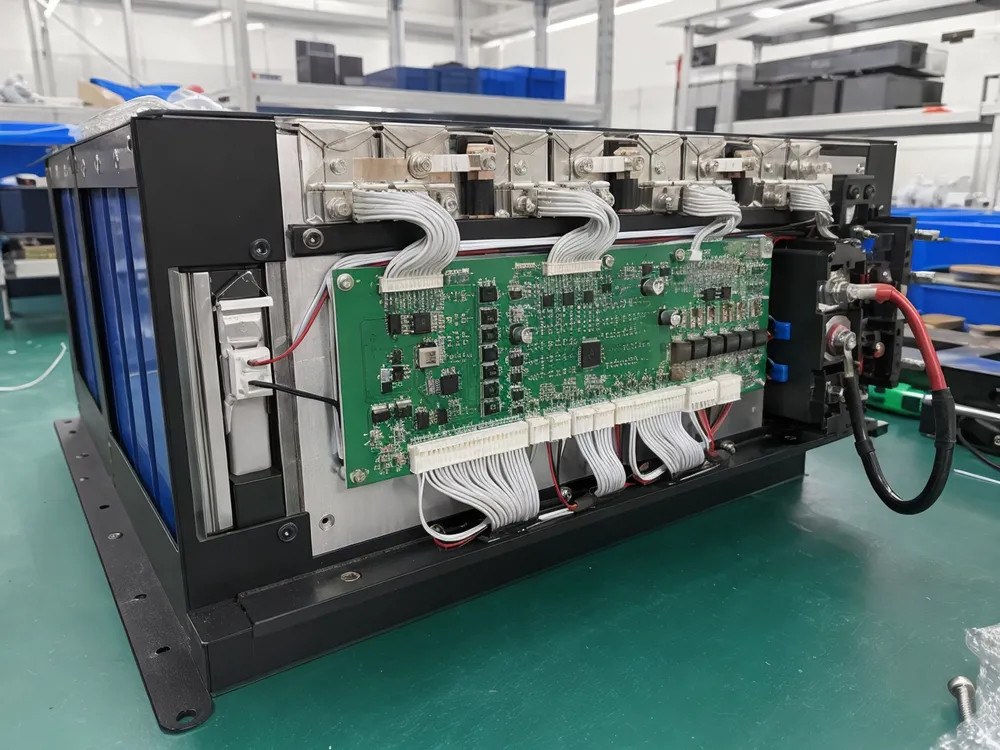
Available Configurations
| Parameter | Available Configurations |
|---|---|
| Cell Chemistry | LiFePO4 (lithium iron phosphate) |
| Nominal Voltage | 12.8V, 25.6V, 48V (51.2V) |
| Capacity Range | 50Ah – 300Ah per module (higher kWh via parallel configuration) |
| Module Format | Wall-mounted cabinet, floor-standing cabinet, 19" rack-mount (3U/4U) |
| BMS Protection | Over-charge, over-discharge, over-current, short-circuit, high/low temperature |
| Communication Interface | RS485, CAN bus (protocol adjustable per inverter brand) |
| SOC Reporting | Real-time state-of-charge via communication interface |
| Max Charge Current | Typically 0.5C – 1C (configuration-dependent) |
| Max Discharge Current | Typically 1C continuous, 1.5C peak (30s) |
| Cycle Life | ≥6,000 cycles at 80% DOD to 80% retained capacity (25°C) |
| Operating Temperature | Charge: 0°C to 55°C · Discharge: -20°C to 60°C |
| Enclosure Protection | IP20 (indoor) / IP65 available for outdoor cabinet configurations |
| Parallel Capability | Up to 16 units in parallel (inverter-dependent) |
| Certifications | ISO 9001:2015, CE, IEC 62133, UN38.3, MSDS |
Specifications shown are available configurations and typical ranges. Final datasheet values are confirmed after RFQ based on your inverter model, voltage window, and project requirements.
Voltage Class
Determines inverter compatibility and system architecture
Capacity + Parallel Count
Determines your project's total kWh storage capacity
Communication Interface
Determines whether the BMS talks to your inverter's monitoring system
Cycle Life at DOD
Determines your warranty exposure calculation
As a dc coupled solar battery supplier, we provide the technical data package you need to complete your comparison sheet and project documentation.
Inverter Compatibility Checks Before Batch Production
This is where DC-coupled projects succeed or fail commercially. A battery pack that doesn't communicate properly with the inverter creates commissioning delays, field callbacks, and warranty disputes that eat your margin. We treat inverter compatibility as an engineering validation step, not an assumption.
What We Need From You Before Quoting
Provide these details with your RFQ to enable accurate protocol matching and avoid production delays:
- Inverter brand and model number
- Nominal battery voltage and operating voltage window (min/max)
- Maximum charge current and maximum discharge current
- Communication protocol (CAN or RS485) and protocol version if known
- Number of battery units in parallel
- Target system kWh
- Application type (residential, commercial, off-grid, telecom)
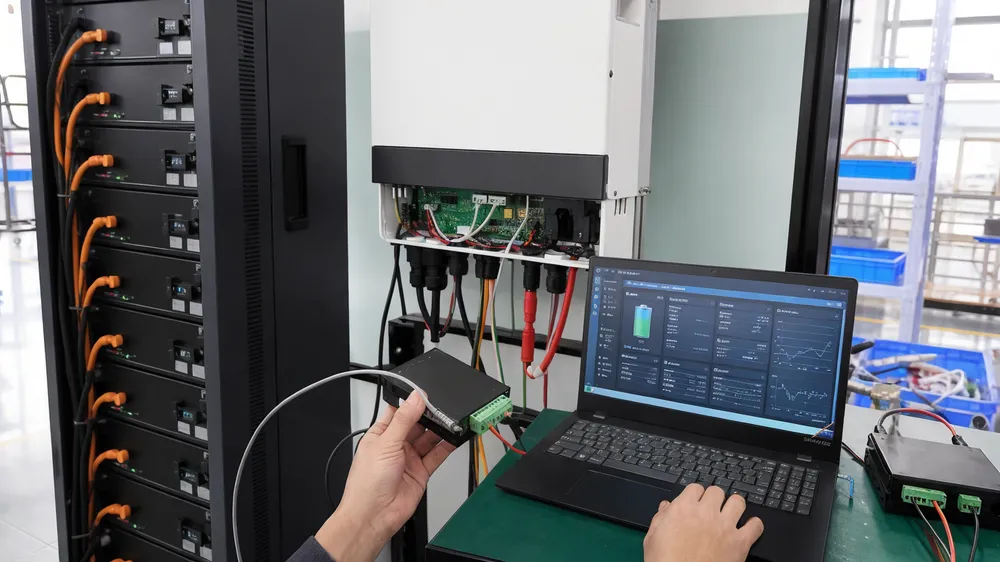
How BMS Communication Affects Your Field Performance
Our BMS communicates SOC, voltage, current, temperature, and fault status to the inverter in real time. When the protocol matches correctly, the inverter manages charge/discharge limits dynamically — it won't push current into a full pack or pull from a depleted one.
This is what prevents the two most common field failures in DC-coupled systems:
Cell over-stress from uncontrolled charging
Unexpected shutdowns from BMS protection trips the inverter didn't anticipate
Validated Inverter Platforms
We can adjust BMS communication parameters and protocol mapping for inverter brands where we've completed validation. We've tested against most major hybrid inverter platforms used in the European and Southeast Asian markets:
New Inverter Models
For inverter models we haven't previously validated, we require a sample unit or protocol documentation to confirm compatibility before batch production. This adds time to the first order, but it prevents a container of batteries that won't commission properly.
Proprietary Protocols
Not every protocol request is feasible. Some proprietary inverter communication systems are closed or require licensing. We'll tell you within 48 hours of receiving your inverter details whether we can support the protocol or whether you need to consider an alternative inverter pairing.
Market Segments That Can Carry a DC-Coupled Storage SKU
DC-coupled battery systems sell into specific project types. Each segment below represents a repeatable order pattern — not a one-off deployment.
New Residential Solar-Storage Packages
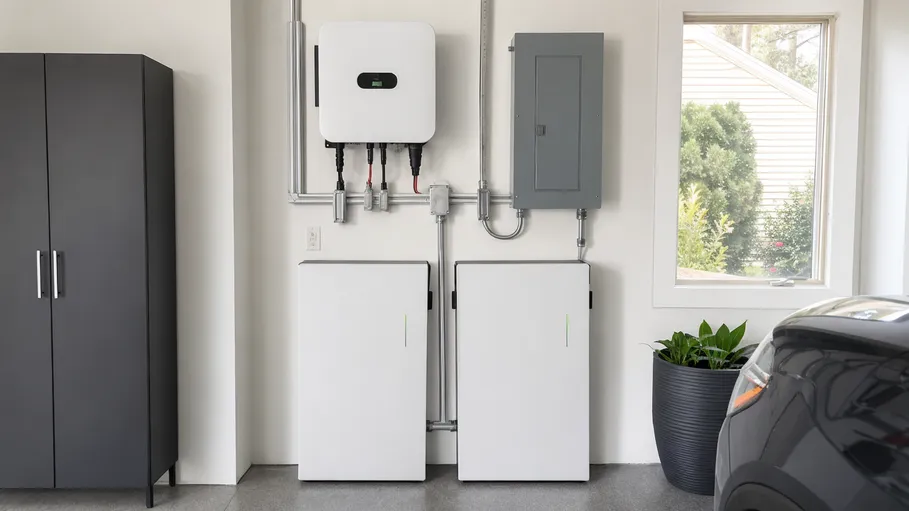
Distributors bundling battery SKUs with compatible hybrid inverter programs. Your end customer gets a single-brand or co-branded solar-storage kit; you control the BOM and margin.
Typical order pattern: 200–500 units per SKU per quarter once the inverter-battery pairing is validated.
The DC-coupled architecture simplifies your technical support because there's one charging path and one communication protocol to troubleshoot.
Rural and Island Off-Grid Projects
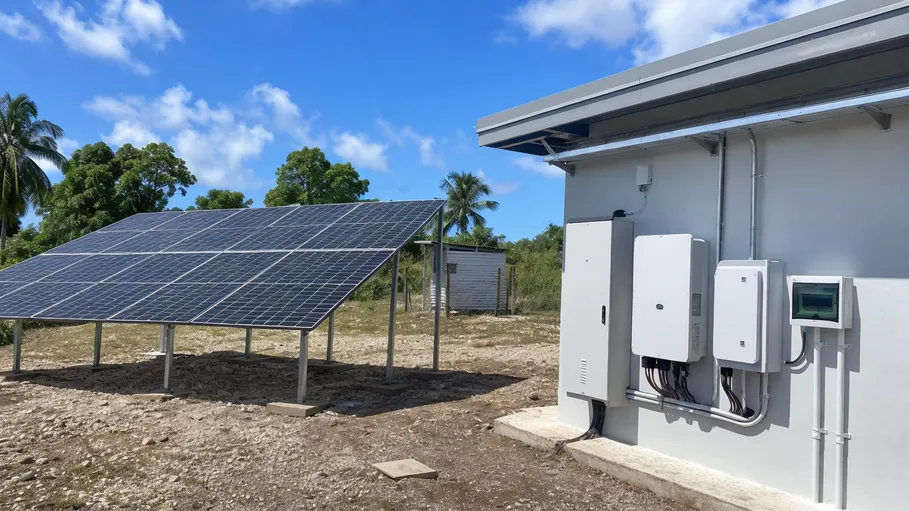
Project buyers deploying solar generation as the primary power source where grid backup is weak or absent. DC coupling is the natural fit because PV is the only charge source — there's no grid AC to couple with.
Typical volumes: 50–300 units per project phase, with repeat orders as the program expands to new sites. Orders tied to funding cycles (NGO, government rural electrification, telecom infrastructure).
Telecom and Microgrid Storage
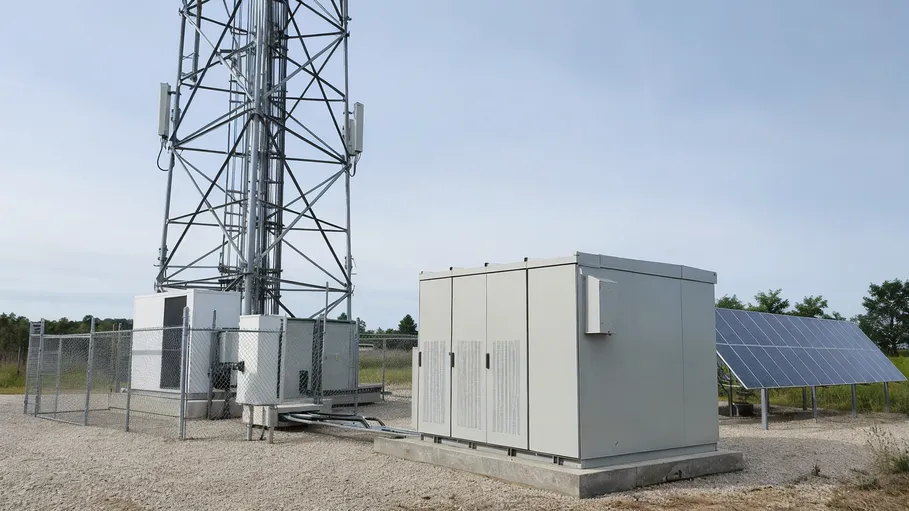
Telecom tower operators and microgrid developers need stable, repeatable battery supply with consistent BMS behavior across sites. DC-coupled charging from dedicated PV arrays is standard for remote telecom installations.
Commercial advantage: Once the BMS-inverter pairing is validated for one site, you can replicate across hundreds of towers without re-engineering.
Replacement supply is predictable — towers cycle batteries on 5–7 year schedules.
Small Commercial Solar Self-Consumption
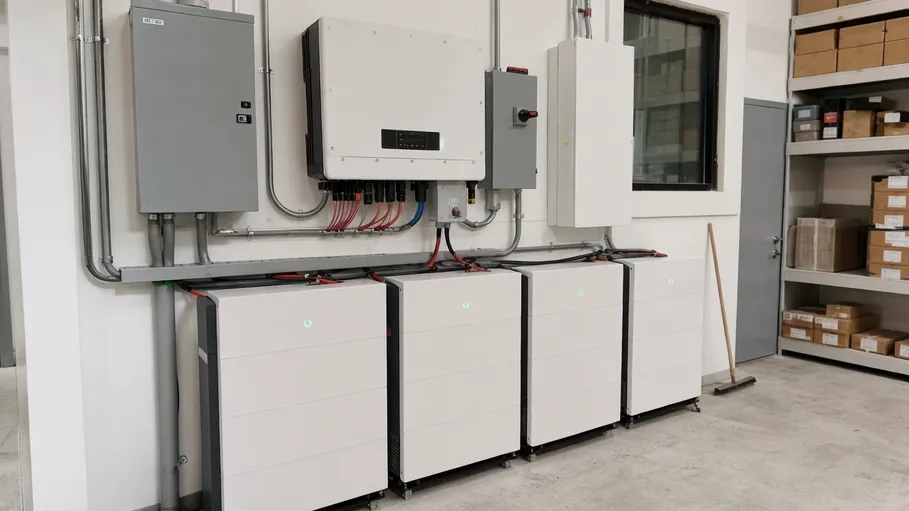
Installers quoting battery capacity around daytime PV generation and evening load demand for shops, warehouses, and small offices. DC coupling keeps the system design simple: PV charges battery through the hybrid inverter during the day, battery discharges to load in the evening.
Typical project size: 10–50 kWh per site. Your margin comes from the installation service plus the battery markup — a clean system topology means faster installation and fewer return visits.
OEM Channel Programs
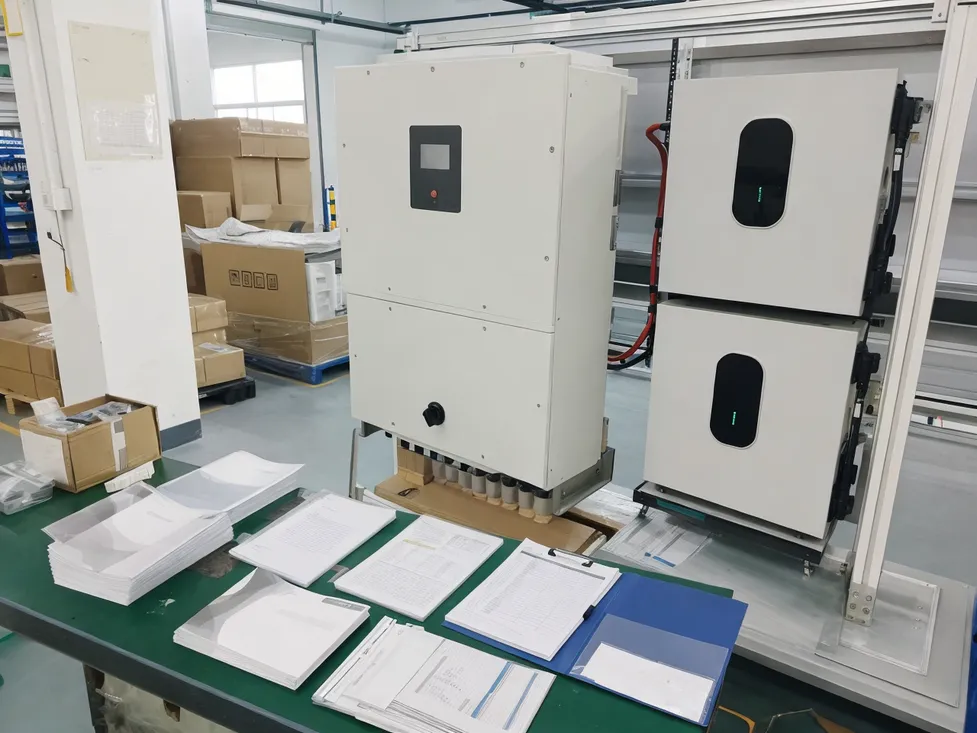
Repeat buyers who brand the battery system under their own label and standardize documentation across multiple markets. DC-coupled configurations work well for OEM programs because the inverter-battery pairing is fixed — once validated, every unit ships with identical BMS settings, labels, and technical documentation.
This eliminates per-order engineering and keeps your landed cost predictable across reorders.
Cell Matching and BMS Testing That Reduce Field Warranty Risk
Your warranty exposure on a battery product comes down to two things: cell consistency within each pack, and BMS protection accuracy under real operating conditions. We control both in-house.
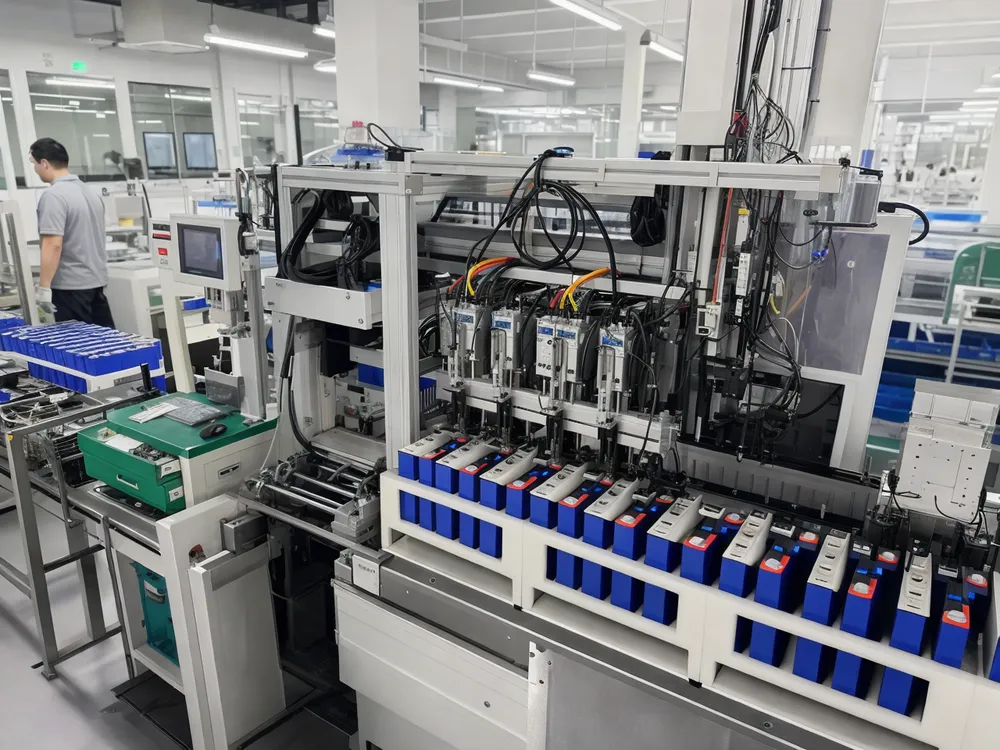
Automated Cell Sorting
Every LiFePO4 cell entering our DC-coupled battery production goes through automated sorting by three parameters:
Open-Circuit Voltage
Internal Resistance
Measured Capacity
Matching tolerance: Within 20mV voltage deviation and 5mΩ resistance spread across a pack. This is 100% incoming inspection on every cell — not a spot check.
Tight cell matching prevents the capacity drift and thermal imbalance that cause early field failures. A 500-unit batch with consistent cell matching means your warranty claim rate stays predictable — you can calculate your reserve accurately instead of guessing.
We switched from manual sorting to automated equipment in 2018 after seeing inconsistent matching on high-volume runs. The reject rate at incoming inspection went up, but field returns dropped significantly.
In-House BMS Design and Verification
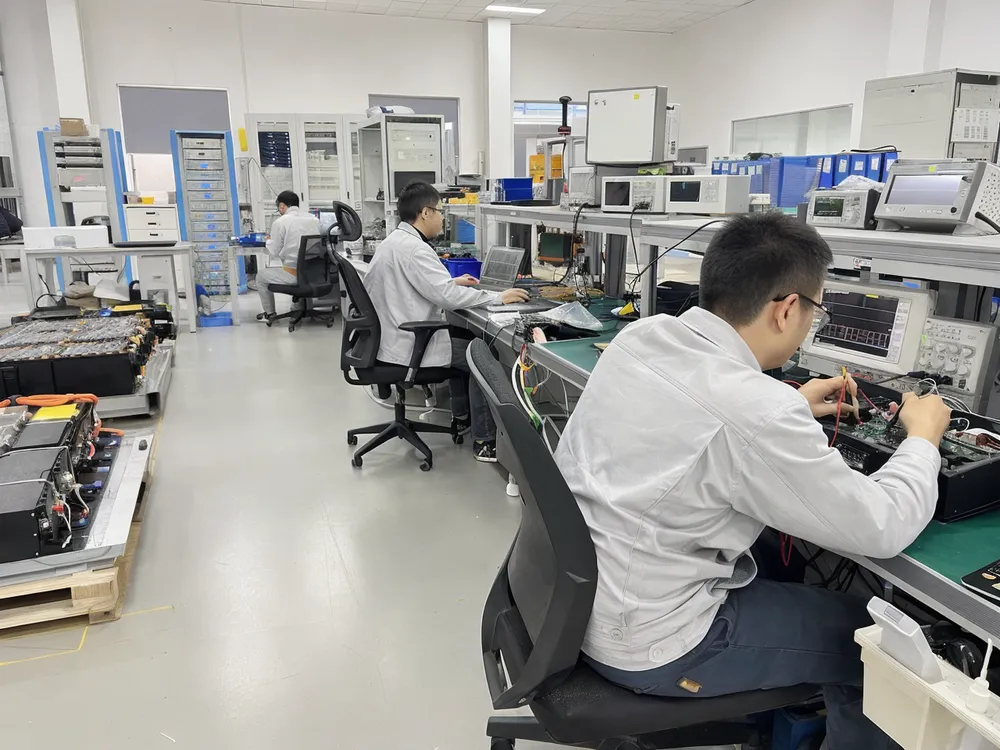
We design and manufacture BMS boards internally — 18+ engineers across hardware, firmware, and application engineering. Each BMS is programmed with protection parameters matched to the specific cell chemistry, capacity, and application profile of the pack it's installed in.
A 48V 200Ah rack-mount unit for commercial cycling gets different charge termination voltage, balance trigger threshold, and temperature cutoff settings than a 12.8V 100Ah wall-mount for residential backup.
BMS Board Verification Tests
- Over-charge protection trigger test
- Over-discharge protection trigger test
- Over-current protection at rated threshold
- Short-circuit response time verification
- High/low temperature cutoff validation
Production-Batch Lifecycle Testing
We don't rely solely on type-approval test reports from two years ago. Every production batch undergoes rigorous verification:
100% of units tested
Sample basis per batch
55°C sustained exposure
-20°C discharge test
Vibration and drop testing on sample units
6 lines, 9,900 m², 150 employees
9,900 m² of factory space, 6 production lines, 150 employees — the scale exists to run these checks without creating bottlenecks in your delivery schedule.
EVANBattery solar battery manufacturing capabilityOEM/ODM Configuration Limits Before You Quote a Project
Knowing what can and cannot be customized saves you time when scoping a project. Here's the practical boundary.
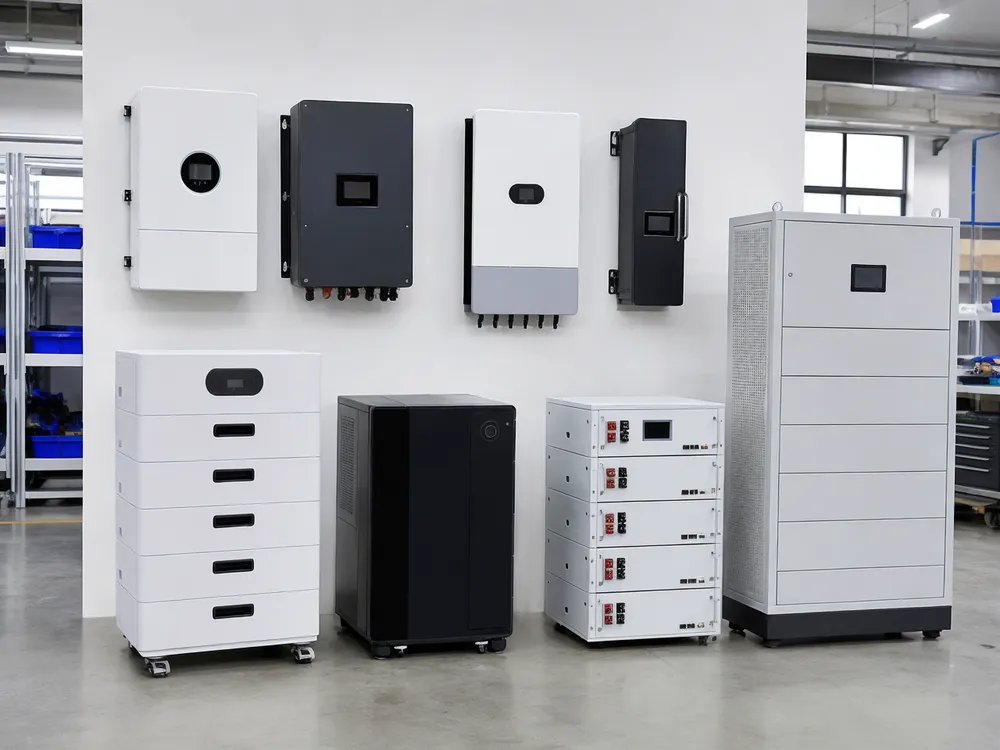
What You Can Configure
| Configuration Item | Options / Range |
|---|---|
| Nominal Voltage | 12.8V, 25.6V, 48V (51.2V), or custom series arrangement |
| Capacity | 50Ah – 300Ah per module; higher via parallel |
| Enclosure Form | Wall-mounted, floor-standing cabinet, 19" rack-mount, custom housing |
| BMS Communication | RS485, CAN bus; protocol mapping adjustable per inverter |
| Parallel Configuration | Up to 16 units (inverter-dependent validation required) |
| Branding | Custom logo, label design, color, packaging artwork |
| Connector Layout | Anderson, MC4-style DC, terminal block, or custom connector position |
| Packing | Standard export carton, custom inner packaging, pallet configuration |
What Requires Engineering Validation
-
Custom BMS-to-inverter communication for brands we haven't previously tested.
-
New cell configurations outside our standard voltage/capacity matrix.
-
Non-standard protection thresholds that deviate from IEC 62133 safety margins.
These are feasible but require sample validation before batch commitment — typically one development cycle with prototype confirmation.
MOQ & Lead Time
Standard Models
100 units
MOQ
OEM/ODM Branding
200 units
Typical MOQ on existing models
Fully Custom
Quoted per scope
New voltage, BMS firmware, enclosure
Clean Scope Division
EVANBattery does not manufacture panels or inverters. We configure the battery system around your selected inverter architecture. You bring the inverter specification; we deliver the battery pack that matches it. The division is clean, and it keeps both sides accountable for their scope.
What to Prepare Before Requesting a Quote
Target inverter brand and model
Required battery voltage and capacity (or target kWh)
Communication protocol requirement
Destination market and certification needs
Estimated annual volume
Branding requirements (if OEM)
Compliance Files and Battery Export Packing for Fewer Port Delays
Batteries are dangerous goods for international shipping. Missing or incorrect documentation means customs holds, freight surcharges, or rejected containers. We maintain export compliance documentation as part of standard order fulfillment — not as an afterthought.
Certifications and Documentation Available
| Document / Certification | Coverage |
|---|---|
| ISO 9001:2015 | Manufacturing quality management system |
| CE | European market product safety |
| IEC 62133 | Secondary lithium cell and battery safety |
| UN38.3 | Transport safety testing for lithium batteries |
| MSDS | Material safety data sheet for shipping classification |
UN38.3 test summaries and MSDS sheets are maintained for every standard model. These are the documents your freight forwarder and customs broker need to clear lithium battery shipments without delays. CE and IEC 62133 reports support your market registration files in Europe and other CE-accepting markets.
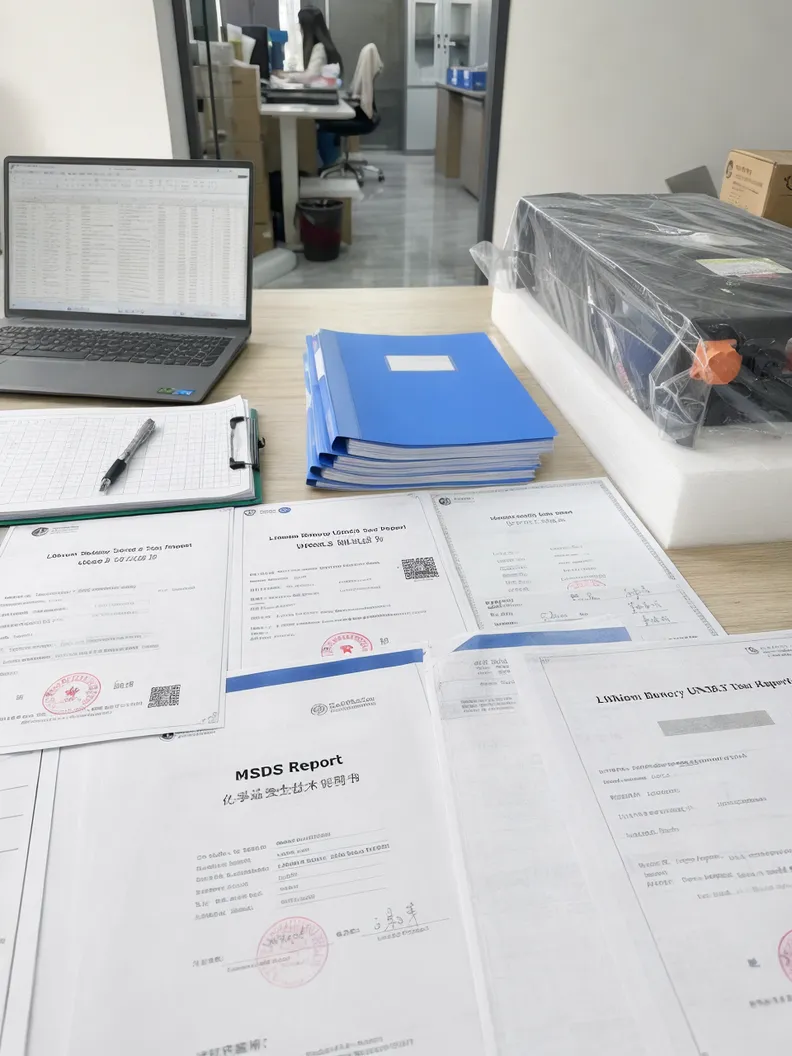
Market-Specific Certification
If your destination market requires additional certification (UL for North America, BIS for India, SASO for Saudi Arabia), our engineering team can support the application process with test samples and technical data packages.
We don't claim certifications we haven't completed — but we've been through the process enough times to know which test labs are efficient for each region and what documentation they'll request.
Export Packing
Lithium battery shipments require proper DG (dangerous goods) labeling, UN-specification packaging for certain configurations, and shipping declarations. We handle:
- Inner carton protection with foam positioning
- Outer carton reinforcement for stacking
- DG labels and markings per IATA/IMDG requirements
- Pallet configuration optimized for 20GP/40HQ container loading
- Packing lists with battery specifications for customs clearance
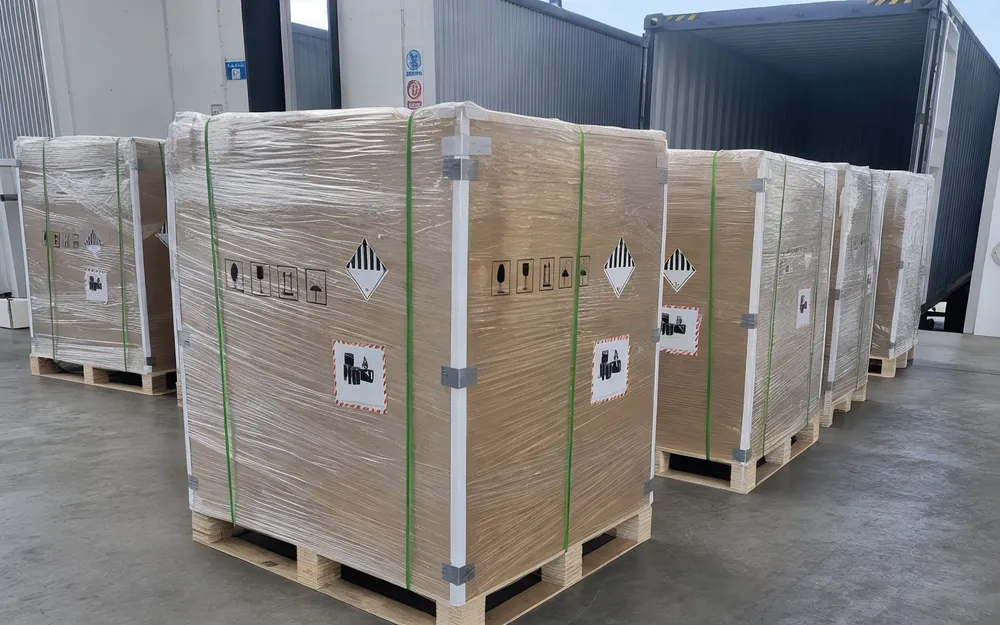
Container planning matters more than most buyers realize on the first order. A 48V 200Ah rack-mount unit has different weight distribution than a 12.8V 100Ah wall-mount — we plan pallet layouts to maximize container utilization without exceeding axle weight limits.
When to Choose This System Instead of Other EVANBattery Solar Battery Systems
DC-coupled is one topology among several we manufacture. The right choice depends on your project architecture, not on which page you landed on. Here's how to navigate:
| System Type | Best Fit | Key Differentiator | Link |
|---|---|---|---|
| DC Coupled (this page) | New solar + storage where you specify inverter and battery together | Battery charges directly from PV via DC bus; fewer conversion stages | — |
| Off-Grid | Remote sites with no grid connection | Designed for standalone operation; deep-cycle optimized | Off grid solar battery system → |
| Hybrid | Grid-connected systems with backup capability | Supports grid charging + PV charging + backup switchover | Hybrid solar battery system → |
| Stackable | Projects requiring modular capacity expansion | Physical stacking design; add capacity without rewiring | Stackable solar battery system → |
| RV / Mobile | Vehicle-mounted and portable applications | Vibration-rated enclosure; 12V/24V focus; compact form | RV solar battery system → |
| 3-Phase Commercial | Large commercial loads with three-phase AC output | Higher power rating; designed for commercial inverter platforms | 3 phase solar battery system → |
Best fit: New solar + storage where you specify inverter and battery together
Differentiator: Battery charges directly from PV via DC bus; fewer conversion stages
Off-Grid
Best fit: Remote sites with no grid connection
Differentiator: Designed for standalone operation; deep-cycle optimized
View off-grid system →Hybrid
Best fit: Grid-connected systems with backup capability
Differentiator: Supports grid charging + PV charging + backup switchover
View hybrid system →Stackable
Best fit: Projects requiring modular capacity expansion
Differentiator: Physical stacking design; add capacity without rewiring
View stackable system →RV / Mobile
Best fit: Vehicle-mounted and portable applications
Differentiator: Vibration-rated enclosure; 12V/24V focus; compact form
View RV system →3-Phase Commercial
Best fit: Large commercial loads with three-phase AC output
Differentiator: Higher power rating; designed for commercial inverter platforms
View 3-phase system →Categories Can Overlap
A project can be both DC-coupled and off-grid, or both DC-coupled and hybrid — these categories describe different aspects of the system. DC coupling describes the charging path (PV → DC bus → battery). Off-grid describes the grid relationship (none). Hybrid describes the grid interaction mode (charge from grid + PV, provide backup).
If your project overlaps categories, tell us the full picture in your RFQ and we'll recommend the right configuration.
RFQ Checklist for Faster DC-Coupled System Pricing
Send us the following and we'll return a technical recommendation with pricing. No generic catalog — your quote is based on your actual project parameters.
Required Inputs
- 1 Inverter brand and model number
- 2 Required battery nominal voltage
- 3 Target system capacity (kWh or Ah)
- 4 Max charge/discharge current requirement
- 5 Communication protocol (CAN / RS485 / other)
- 6 Application type (residential, commercial, off-grid, telecom)
- 7 Destination market
- 8 Required certifications
- 9 Estimated order quantity (first order + annual projection)
- 10 Branding / OEM requirements (if applicable)
What You'll Receive Back
- Technical specification confirmation
- BMS compatibility assessment
- Unit pricing at your stated volume
- Lead time estimate
- Export documentation list for your market
Contact
We respond with a technical review within 48 hours. If your inverter model requires new protocol validation, we'll tell you the timeline and sample requirements upfront.
Technical review within 48 hours. If your inverter model requires new protocol validation, we'll tell you the timeline and sample requirements upfront.
FAQ: DC-Coupled Solar Battery System Procurement
Answers to the questions our engineering and sales teams receive most often from system integrators, distributors, and project developers evaluating DC-coupled storage.
What information is needed to quote a DC coupled solar battery system?
At minimum: inverter brand/model, required battery voltage, target kWh, communication protocol, destination market, and quantity. The more complete your specification, the faster we can confirm compatibility and return pricing. If you're still selecting an inverter, tell us your project parameters and we'll recommend compatible configurations based on what we've validated.
Is a DC coupled battery system better than AC coupled for new solar projects?
For new installations where you're specifying both inverter and battery from scratch, DC coupling typically gives you fewer components, one less conversion stage, and simpler commissioning. The battery charges directly from PV through the inverter's DC bus — no separate battery inverter needed. AC coupling makes more sense for retrofits where an existing grid-tied inverter is already installed and you're adding storage without replacing equipment. The choice is architectural, not quality-based.
Can EVANBattery match the battery BMS with my inverter brand?
Yes, for inverter brands where we've completed protocol validation — including Deye, Growatt, Goodwe, Victron, SMA, Solis, and others.
For brands or models we haven't previously tested, we need either a sample inverter unit or the manufacturer's communication protocol documentation. Validation typically requires one development cycle before batch production.
Some proprietary protocols may not be supportable — we'll confirm feasibility within 48 hours of receiving your inverter details.
What voltage and capacity options are practical for DC-coupled solar storage?
Standard configurations: 12.8V, 25.6V, and 48V (51.2V) nominal voltage with capacity from 50Ah to 300Ah per module. Total system kWh scales through parallel connection — up to 16 units depending on inverter capability.
The practical choice depends on your inverter's battery voltage window. Most residential hybrid inverters work with 48V (51.2V) battery banks; some off-grid controllers use 24V or 12V. Tell us your inverter model and we'll confirm which voltage class fits.
What certifications and shipping documents are available for export orders?
Current certifications: ISO 9001:2015, CE, IEC 62133, UN38.3, MSDS. Every standard model ships with UN38.3 test summary and MSDS for freight clearance. CE and IEC 62133 reports are available for your market registration files.
If your market requires additional certification (UL, BIS, SASO, or others), our engineering team supports the application process with test samples and technical data.
What MOQ applies for standard and OEM/ODM DC-coupled battery systems?
Standard models: 100 units. OEM with branding on existing models: typically 200 units. Fully custom configurations (new voltage, new BMS firmware, custom enclosure): MOQ quoted after engineering scope review.
We keep the standard MOQ low deliberately — you need to validate the inverter-battery pairing with your customers before committing to container volumes.
Explore More Solar Battery Systems
Other configurations available from EVANBattery for different project architectures.