

Stackable Solar Battery System for Expandable Storage Programs
Modular LiFePO4 battery platform — one base module, multiple kWh packages, parallel expansion without hardware changes.
Sell a 5 kWh starter system today and fulfill the 15 kWh expansion order next quarter using the same SKU. Your installers learn one product; your warehouse stocks one platform.
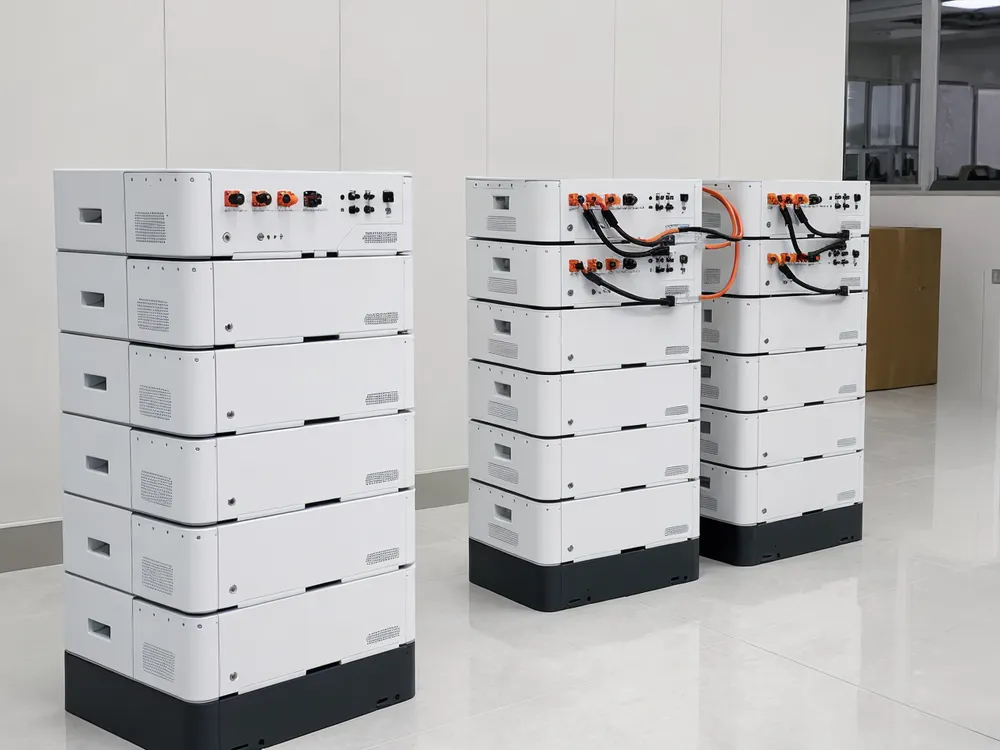
A stackable solar battery system is a floor-standing modular battery platform where identical LiFePO4 modules connect in parallel to increase total storage capacity. You buy one module design. Your customers start at one module and add more as their energy needs grow — without replacing the base unit, without rewiring, and without changing the inverter communication setup.
We've manufactured solar batteries since 2012, and the stackable format has become our fastest-growing product category over the past three years. The reason is commercial, not technical: distributors and installers who carry stackable systems report fewer SKUs in their warehouse, higher initial close rates (because the entry price is lower), and built-in expansion revenue on the same customer account.
As a stackable solar battery system manufacturer, we build the modules, the inter-module cabling, and the BMS firmware that manages parallel operation — all under one roof in our Zhongshan facility.
Request a stackable solar battery system quoteOne Module Design
Identical modules connect in parallel. One SKU covers 5 kWh to 20+ kWh configurations.
Fewer Warehouse SKUs
Stock one platform instead of multiple fixed-capacity units. Reduce dead inventory risk.
Built-in Expansion Revenue
Lower entry price closes the first sale. Expansion modules generate repeat orders on the same account.
In-house BMS Firmware
Parallel balancing managed by our own BMS. No third-party firmware dependencies for expansion logic.
One Module Platform, Multiple kWh Packages for Your Sales Channel
The core commercial logic of a modular solar battery system is SKU consolidation. Instead of stocking separate 5 kWh, 10 kWh, and 15 kWh products with different enclosures, different BMS boards, and different installation procedures, you stock one module — typically 5.12 kWh (51.2V 100Ah) — and sell it in multiples.
Your installer trains once on the mechanical stacking, the parallel cable connection, and the BMS addressing sequence. No new product knowledge required for the upsell.
For stackable solar battery storage programs, the inventory math works in your favor. You carry one SKU in volume, quote four capacity tiers, and fulfill expansion orders from the same stock. When a homeowner calls their installer six months later wanting more capacity, your distributor ships additional modules — not a replacement system. That expansion order has near-zero pre-sales cost and full margin.
Distributor Expansion Pattern
We see this pattern consistently with our European distributors: 30–40% of initial buyers add at least one module within 18 months.
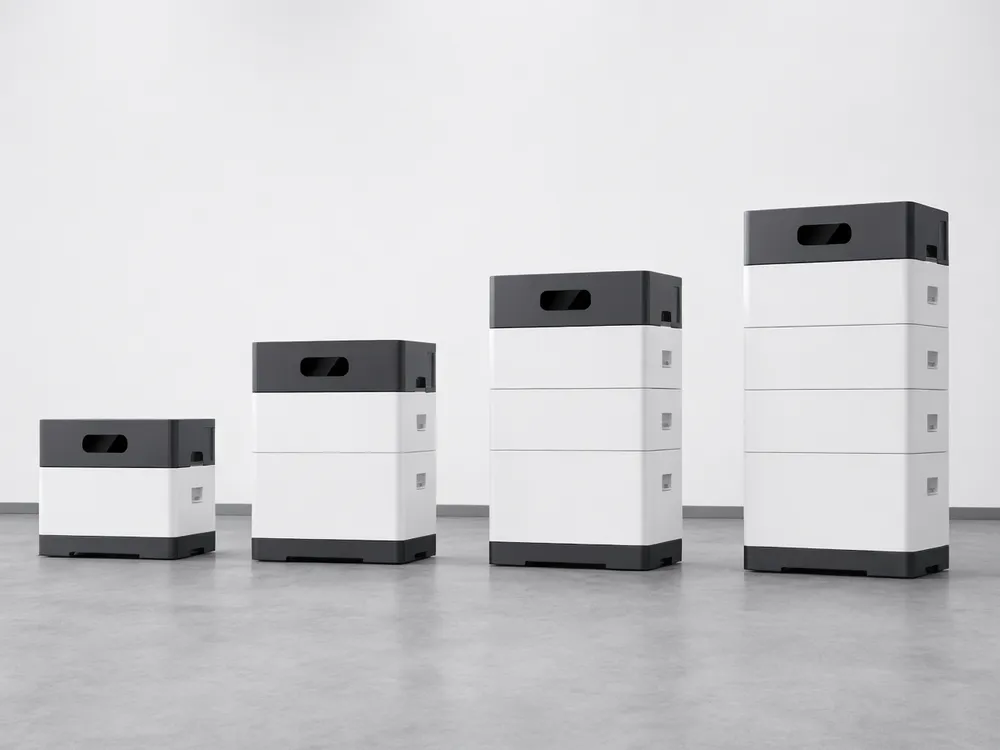
Your Price List Becomes a Capacity Ladder
5 kWh
Entry-level residential, apartment backup
10 kWh
Standard residential self-consumption
15 kWh
Larger home or small office
20 kWh
High-consumption household or light commercial
Ready to configure your kWh packages?
Send us your target kWh packages — we'll configure the module spec.
RFQ Specification Table for Stackable Battery Comparison Sheets
Use this table to screen whether our stackable solar battery system fits your technical requirements. These are standard model parameters — exact specifications are confirmed during quotation based on your selected configuration.
| Parameter | Standard Model Range |
|---|---|
| Chemistry | LiFePO4 (lithium iron phosphate) |
| Nominal voltage per module | 51.2V (16S configuration) |
| Typical module capacity | 100Ah (5.12 kWh per module) |
| Usable energy (90% DOD) | ~4.6 kWh per module |
| Max parallel modules | Typically 4–8 modules (model-dependent, confirmed at RFQ) |
| Max system capacity | 20–40 kWh per parallel group |
| BMS protections | Over-charge, over-discharge, over-current, short-circuit, high/low temperature |
| Communication protocol | RS485, CAN bus (inverter-matched) |
| Cycle life | 6,000+ cycles at 80% DOD (Grade A cells) |
| Round-trip efficiency | ≥95% |
| Operating temperature | -20°C to 55°C (discharge), 0°C to 45°C (charge) |
| Enclosure material | Powder-coated steel or aluminum (model-dependent) |
| Installation format | Floor-standing, stackable with alignment pins and locking hardware |
| IP rating | IP20 (indoor) / IP65 available for semi-outdoor enclosures |
| Weight per module | Typically 45–55 kg (capacity-dependent) |
| Certifications | ISO 9001:2015, CE, IEC 62133, UN38.3, MSDS |
| Specifications shown represent our standard modular solar battery system platform. Actual values vary by model and are confirmed with a detailed datasheet during quotation. Custom voltage (25.6V, 48V) and capacity (50Ah, 150Ah, 200Ah) configurations are available for OEM programs. | |
Formatted for Procurement
The table above is formatted for your procurement comparison sheet. If you need a PDF datasheet for a specific configuration, request it during your RFQ — we'll send the full technical document with dimensional drawings and BMS parameter details.
Need a detailed datasheet?
Request a configuration-specific datasheet with dimensional drawings and full BMS parameters.
Cell Matching and Parallel BMS Control That Reduce Expansion Callbacks
When modules connect in parallel, any mismatch between them creates circulating currents, uneven aging, and eventually field failures. This is the single biggest technical risk in stackable solar battery storage — and it's a risk that lands on your warranty budget, not ours, unless the production process controls it upfront.
As a stackable solar battery system manufacturer, we address this at four levels:
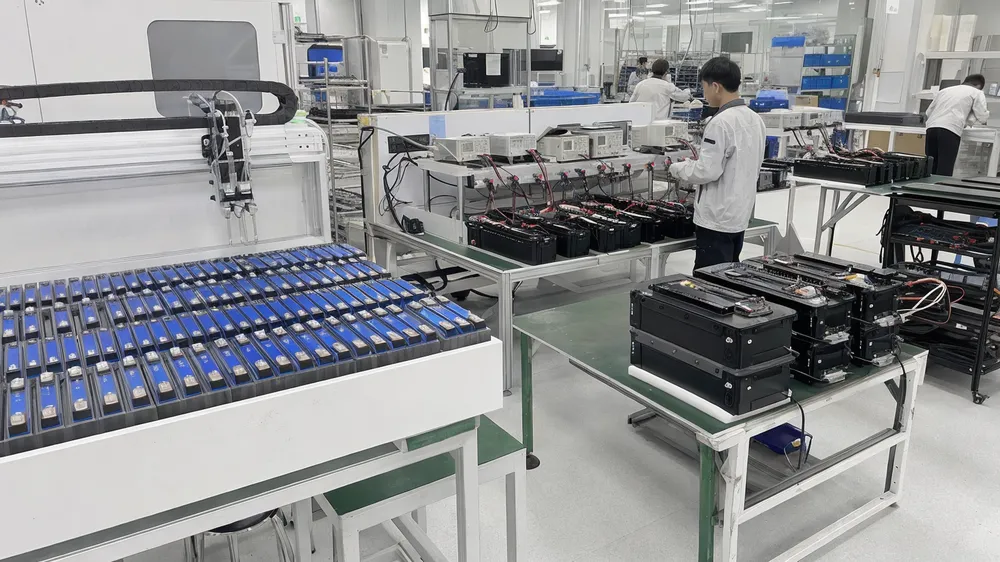
Automated Cell Sorting Before Pack Assembly
Every cell entering our stackable module line goes through automated capacity and internal resistance measurement. We bin cells within ±15mV voltage and ±3mΩ resistance spread. A 16-cell series string gets 16 cells from the same bin. When your customer adds a second module 12 months later, the new module's cells are sorted to the same standard — so module-to-module capacity variance stays within the range the parallel BMS can balance without stress.
We keep tighter sorting tolerances on stackable modules than on standalone packs specifically because parallel operation amplifies any mismatch.
In-House BMS With Parallel Current Sharing Logic
We design and program our BMS boards internally. For stackable systems, the BMS firmware includes active current sharing management — each module reports its SOC and the master BMS distributes charge/discharge current proportionally. Without this, the module with slightly higher voltage absorbs disproportionate current during charging, overheats, and degrades faster.
Generic third-party BMS modules don't implement module-aware current sharing because they're designed for single-pack applications.
Inter-Module Communication and Addressing
Each module in a parallel stack has a unique address on the communication bus. The master BMS aggregates individual module data and presents a unified battery state to the inverter. This means your installer doesn't need to configure each module separately — the addressing is set during production, and the system auto-discovers modules on commissioning.
Batch Lifecycle Testing for Parallel Consistency
Before shipment, we cycle-test modules from the same production batch in parallel configuration — not just individually. This catches any module that behaves differently under parallel load sharing before it reaches your warehouse.
The Result for Your Business
Fewer field callbacks from module mismatch, predictable warranty exposure across expansion orders, and installers who trust the product enough to recommend expansions confidently.
Market Segments Where Stackable Solar Battery Storage Creates Repeat Revenue
Every product format maps to a commercial channel. Here's where stackable systems generate the strongest order patterns for our distribution and installer partners — framed as segments you can evaluate for your own business.
Residential Installer Programs
The "start small, expand later" closeInstallers selling into price-sensitive residential markets use stackable systems to lower the entry barrier. A 5 kWh system closes easier than a 15 kWh system. Once the homeowner experiences the value, the expansion sale follows.
Your margin on the expansion module is higher than the initial sale because there's no new site survey, no new inverter, and minimal installation labor.
Installers who adopt this selling model report 25-40% expansion rates within the first two years.
Modular Storage Resellers
2-3 package tiers from one platformIf you distribute through retail, e-commerce, or dealer networks, stackable systems let you list multiple capacity options without holding multiple product lines.
Your 5 kWh, 10 kWh, and 15 kWh listings are all the same module in different quantities. Simplifies your product photography, your spec sheets, your support documentation, and your returns handling.
Light Commercial Backup
Clinics, shops, telecom rooms, small officesThese buyers need reliable backup but can't justify oversizing on day one. A modular approach lets them match capacity to actual measured load, then expand if the business grows or if they add more critical equipment.
Orders are typically 2-4 modules per site, with expansion orders triggered by operational experience rather than upfront engineering estimates.
Premium Off-Grid Residential
Villas, rural estates, island homesHigh-value off-grid projects where the homeowner invests progressively. Initial installation covers essential loads; expansion modules add capacity for comfort loads (pool pumps, HVAC, EV charging).
These projects carry premium pricing and strong referral potential for your installer network.
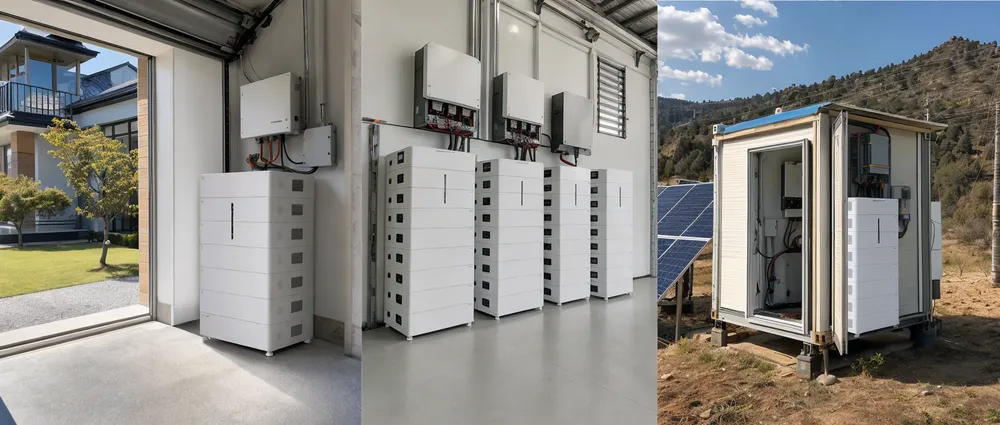
As an expandable solar battery supplier, we support all four segments from the same production platform. Your container can mix quantities across capacity tiers without requiring separate production runs.
Site Planning and Inverter Compatibility Before the First Installation
A stackable solar battery system fails commercially when the first installation goes wrong. Field callbacks from ventilation issues, communication errors, or incorrect stacking destroy installer confidence — and installers who lose confidence stop ordering. Here's what your technical team and your installers need to plan before the first unit goes on site.
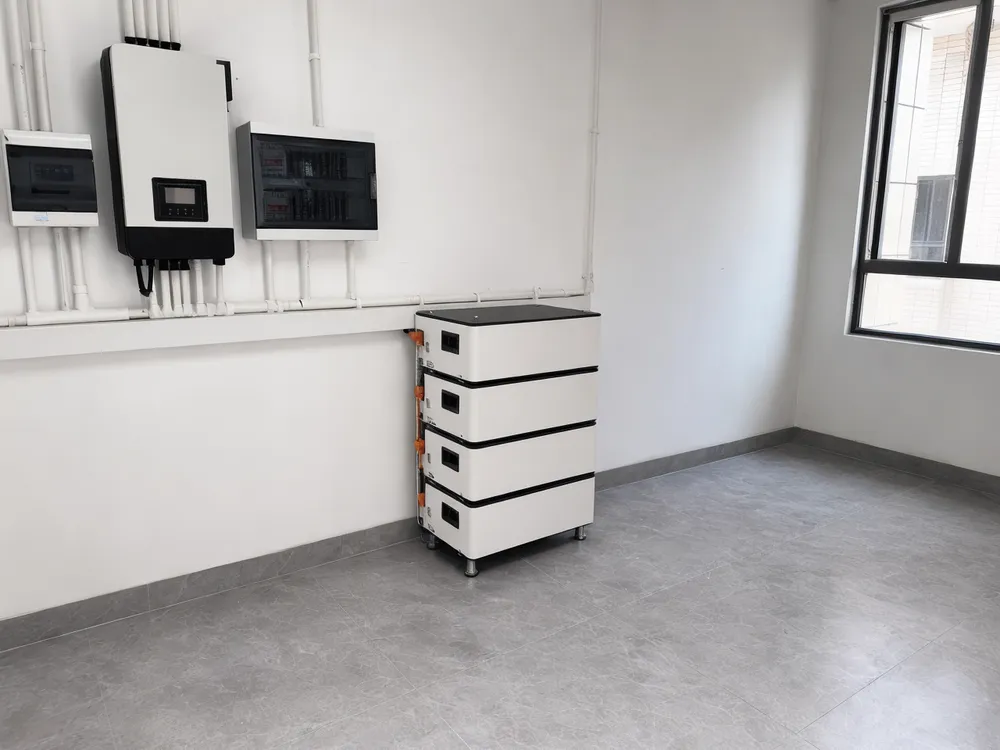
Floor Space and Stacking
Each module occupies a standard footprint (typically 400–600mm × 200–350mm depending on model). Modules stack vertically with alignment pins and mechanical locking.
Maximum stack height is model-dependent — typically 3–4 modules per stack before a second column is required.
Plan floor space for the full expansion capacity, not just the initial installation, so the homeowner doesn't need to relocate the system later.
Ventilation Clearance
LiFePO4 modules generate modest heat during cycling, but parallel operation concentrates thermal load. We specify minimum clearances:
Enclosed cupboards or zero-clearance installations void the warranty and create thermal throttling that reduces usable capacity.
Inverter Communication — The Critical Compatibility Check
Protocol match must be confirmed before production
The modular solar battery system communicates with the inverter via RS485 or CAN bus. Protocol compatibility must be confirmed before production. We maintain firmware profiles for major hybrid inverter brands:
If your target inverter isn't in our library, our BMS engineering team can develop the protocol match during the quotation stage. This takes engineering time but no hardware changes — it's a firmware configuration.
Commissioning Sequence
- 1 Modules installed bottom-up
- 2 Parallel cables connected
- 3 Communication bus daisy-chained
- 4 System powered on in sequence
- 5 Master BMS auto-discovers connected modules and reports total capacity to the inverter
First-time commissioning: typically 30–45 minutes for a trained installer. We provide commissioning guides and can support your technical team remotely during the first installations.
What to Send Us During RFQ
Provide these details and we'll confirm protocol match and provide an installation planning document specific to your configuration:
- Target inverter brand and model
- Planned maximum system capacity
- Installation environment (indoor / semi-outdoor)
- Single-phase or three-phase compatibility
OEM/ODM Options and Practical Limits for a Stackable Battery Program
We produce stackable systems under your brand with the following customization scope. The table below shows what's adjustable and what requires engineering validation at higher MOQ.
| Customization Dimension | Standard (100-unit MOQ) | Custom (MOQ varies) |
|---|---|---|
| Module capacity | 100Ah (5.12 kWh) | 50Ah, 150Ah, 200Ah — requires cell reconfiguration |
| Voltage platform | 51.2V (16S) | 25.6V (8S), 48V (15S) — BMS firmware change |
| BMS communication protocol | RS485, CAN (from existing library) | New inverter protocol — firmware development required |
| Enclosure color | Standard black or white | Custom RAL color — 200-unit minimum for powder line changeover |
| Logo and branding | Silk-screen or adhesive label on front panel | Embossed or laser-etched — tooling fee applies |
| Labels and compliance marks | CE, standard safety labels | Market-specific labels (your regulatory marks) |
| User manual and documentation | EVANBattery standard manual | Fully branded manual in your language — we typeset and print |
| Outer carton and pallet marking | Standard neutral carton | Branded carton with your artwork — 500-unit minimum |
| Connector and cable set | Standard parallel cable kit | Custom cable length or connector type — engineering review |
Practical Limits to Set Expectations
Maximum parallel modules per system is determined by BMS current handling capacity and communication bus architecture — we validate this during engineering review, not after your installer discovers the limit on site.
Non-standard capacity or voltage configurations require a 4–6 week development and validation cycle before mass production.
New BMS firmware for unlisted inverter brands requires protocol documentation from the inverter manufacturer or a sample unit for our engineers to test against.
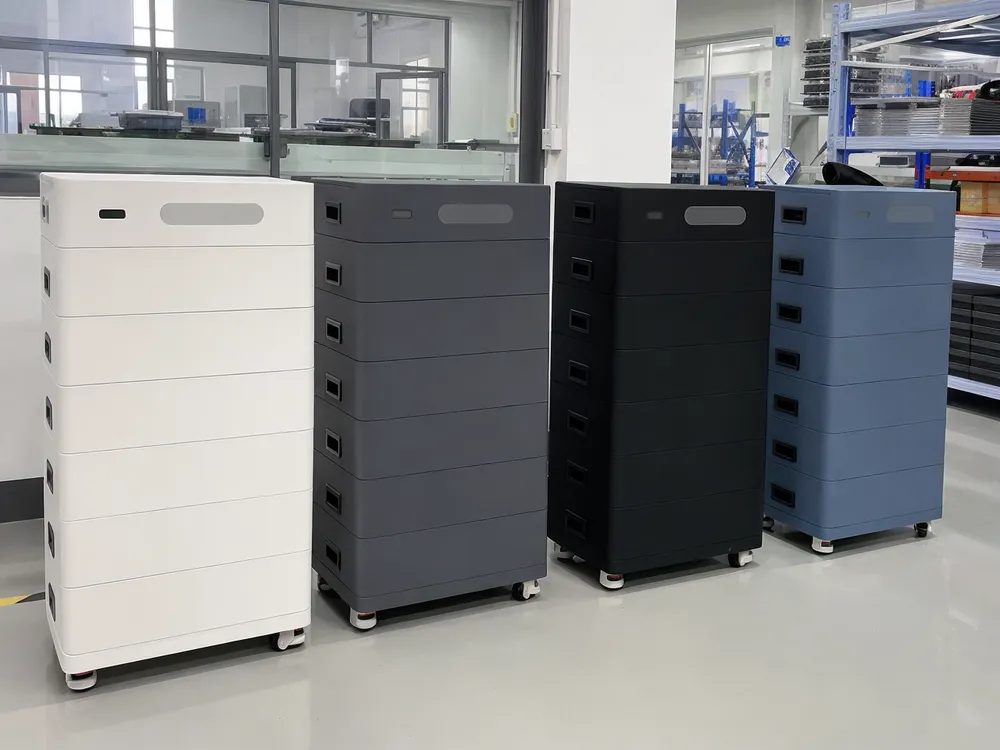
As an expandable solar battery supplier with OEM/ODM solar battery support, we handle the engineering so your team focuses on sales and distribution.
MOQ for fully custom configurations is quoted case-by-case — we'll give you the number upfront so you can calculate landed cost before committing.
Export Documents, Packing, and Loading Plan for Battery Modules
Lithium battery modules are Class 9 dangerous goods for international shipping. Missing documentation or incorrect packing means port holds, carrier rejection, or customs fines — costs that eat your margin on an otherwise good order.
Documentation we provide with every stackable solar battery system shipment
-
UN38.3 test summary — transport safety testing, required by all carriers
-
MSDS / SDS — material safety data, required for customs declaration
-
Class 9 DG shipping declaration — carrier booking document
-
CE certificate and IEC 62133 test report — market access for European importers
-
ISO 9001:2015 certificate — manufacturing system; some importers require this for vendor qualification
All documents are maintained current for standard models. Custom OEM configurations receive their own UN38.3 testing after type approval — we don't ship custom products under another model's test report. View our certification details.
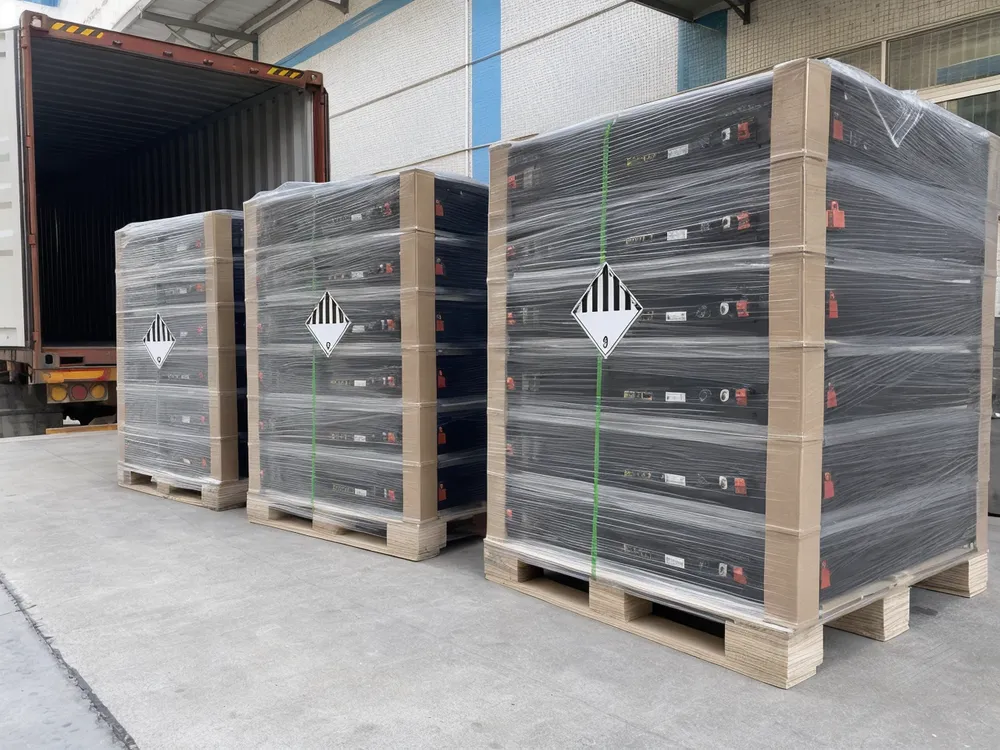
Packing Specification
Each module ships in a reinforced double-wall corrugated carton with high-density foam inserts custom-cut to the module dimensions. Parallel cable kits and documentation are packed inside the module carton. Cartons are palletized on ISPM-15 compliant wood pallets with stretch wrap and corner protectors. Class 9 lithium battery labels are applied to each carton and each pallet per IMDG/IATA requirements.
Loading Plan
Exact container quantities depend on your module selection, order mix, and destination port weight restrictions. A typical 20GP container holds 200–280 standard modules depending on configuration and pallet arrangement — but we don't publish a fixed number because it changes with every order mix.
We provide a confirmed loading plan with pallet layout drawings during the quotation stage once your model and quantity are finalized. (We've had buyers get burned by suppliers quoting optimistic container numbers that ignore pallet overhang or port weight limits — we'd rather give you an accurate number at quotation than a marketing number now.)
Request a Packing Specification and Loading Plan EstimateChoose Stackable or Another Solar Battery System Architecture
Stackable isn't the right format for every application. Here's how it compares to sibling system types under our solar battery system range — use this to confirm you're on the right product page or navigate to a better fit.
| System Type | Best For | Expansion Method | Typical Buyer |
|---|---|---|---|
| Stackable (this page) | Residential expansion programs, SKU consolidation, installer channel | Parallel modules — same hardware, add capacity | Distributors and installers selling expandable residential storage |
| Off-grid solar battery system | Standalone 12V/24V systems, no grid connection | Parallel batteries or larger single unit | Off-grid project contractors, solar home system distributors |
| Hybrid solar battery system | Grid-tied residential with hybrid inverter | Depends on inverter architecture | Residential installer channels in grid-connected markets |
| Solar battery system for RV | Mobile/recreational, vibration-rated | Limited — typically single unit per application | RV and marine distributors |
| 3 phase solar battery system | Commercial three-phase inverter environments | Rack-mounted parallel modules | Commercial project contractors and EPCs |
| DC coupled solar battery system | DC architecture, high-voltage MPPT | System-design dependent | System integrators and technical designers |
When stackable is the right choice
You're selling into residential markets where expansion revenue matters, you want to consolidate warehouse SKUs around one platform, and your installers need a product they can learn once and deploy across multiple capacity tiers.
When another architecture fits better
- If your market is purely off-grid with no expansion expectation, an off-grid system is simpler and lower cost.
- If your projects are commercial three-phase, rack-mounted modules with higher per-unit capacity are more space-efficient.
- If you're supplying RV/marine channels, you need vibration rating and compact form factors that stackable floor-standing units don't provide — see solar battery system for RV.
Stackable Solar Battery System FAQ for Procurement Decisions
How many modules can be connected in parallel in a stackable system?
Standard configurations support 4-8 modules in parallel, depending on the BMS current handling capacity and communication bus architecture. The practical limit is set by the maximum charge/discharge current the parallel BMS can manage safely — not by physical stacking constraints.
We confirm the exact maximum for your selected model during quotation. If your project requires more than 8 modules, we can engineer a multi-group configuration with separate BMS clusters reporting to a single inverter.
The parallel limit is a BMS current constraint, not a physical stacking constraint. Multi-group configurations are available for projects exceeding 8 modules.
Can old and new modules be mixed when expanding a stackable solar battery system later?
Yes, with conditions. Modules from the same production platform (same cell chemistry, same nominal capacity, same BMS firmware version) can be added later. The parallel BMS manages SOC differences between aged and new modules through current sharing.
However, if the original modules have degraded significantly (below 80% remaining capacity), adding fresh modules creates a persistent imbalance that stresses the BMS balancing system.
Recommended Window
Expansion within 3 years of initial installation for optimal parallel performance.
Typical Practice
Most expansion orders happen within 12-18 months — well within the safe window.
What inverter information do you need before production?
Brand, model number, and firmware version of the target inverter. Our BMS engineering team validates communication protocol compatibility — RS485 or CAN bus data format, baud rate, register mapping, and SOC reporting method.
Inverter in firmware library
Confirmation takes 1-2 days.
New brand or model
We need protocol documentation from the inverter manufacturer or a sample inverter unit for bench testing.
Confirming this before production prevents field commissioning failures.
Request a compatibility checkStackable vs. wall-mounted battery: which format is better for distribution?
It depends on your market's housing stock and installer preferences.
Stackable Systems Win When:
- Expansion capability is a selling point
- Floor space is available (garages, utility rooms, basements)
Wall-Mounted Wins When:
- Floor space is limited (apartments)
- Expansion isn't expected
Many distributors carry both — stackable for the expansion-oriented residential segment, wall-mounted for the fixed-capacity apartment segment. The production platform is different, so they're separate SKUs in your catalog.
What MOQ applies to standard and OEM stackable systems?
| Configuration Type | MOQ |
|---|---|
| Standard models (existing configuration, EVANBattery branding) | 100 units |
| OEM with brand label and color change on existing platform | 100-200 units |
| Custom capacity, voltage, or BMS firmware | 300-500+ units |
| Fully custom enclosure tooling | Quoted case-by-case |
We provide exact MOQ at the RFQ stage based on your specific requirements — no hidden minimums that appear after you've invested time in the quotation process.
Send your specifications for a quoteWhat documents are needed to import lithium stackable battery modules?
At minimum:
- UN38.3 test summary
- MSDS/SDS
- Class 9 dangerous goods shipping declaration for carrier booking
For European market access: CE declaration of conformity and IEC 62133 test report. Some markets require additional local certification — we support the application process with test samples and technical data.
All standard model documentation is maintained current and ships with your order. Custom OEM models receive dedicated UN38.3 testing after type approval.
View our certification libraryRFQ Checklist for a Stackable Solar Battery Quote
Send us the following and we'll respond with a technical recommendation, unit pricing at your volume tier, and a production timeline.
Target kWh Package(s)
Which capacity tiers do you plan to offer? (e.g., 5/10/15/20 kWh)
Module Quantity
Initial order volume and estimated annual forecast
Inverter Brand/Model
For BMS communication configuration
Voltage Platform
51.2V standard or alternative
Communication Protocol
RS485, CAN, or "match my inverter"
Branding
EVANBattery standard or OEM with your brand
Enclosure Color
Standard black/white or custom RAL
Destination Country
For certification and shipping documentation planning
Installation Environment
Indoor, garage, semi-outdoor
We respond within 48 hours with a configuration recommendation, confirmed specifications, and pricing.
No generic catalog — you get a quote built around your actual program.