Autonomy days are a cost variable, not a runtime promise
Off grid solar battery storage autonomy comes down to one question: how many days can your battery bank support the daily load when solar input drops below useful levels? The answer changes your container volume, your landed cost, and your inventory risk.
Most residential off-grid projects land around 2-3 days of autonomy. High-sun markets with accessible service routes can work with 1 day. Remote installations or rainy-season regions sometimes justify 4-5 days. But every extra autonomy day adds kWh to the battery bank, cartons to the pallet, and capital to your warehouse.
Here's the distinction that trips up a lot of quotes: autonomy is stored energy, not peak power. Peak load determines your inverter rating and BMS discharge capability. Off grid battery autonomy days determine how much energy sits in reserve. Confuse the two and you'll either oversize the bank or undersize the inverter — both expensive mistakes when you're quoting a 500-unit project.
The formula that turns autonomy into nominal battery capacity
Solar battery days of autonomy calculation is straightforward once you separate the variables. The core relationship:
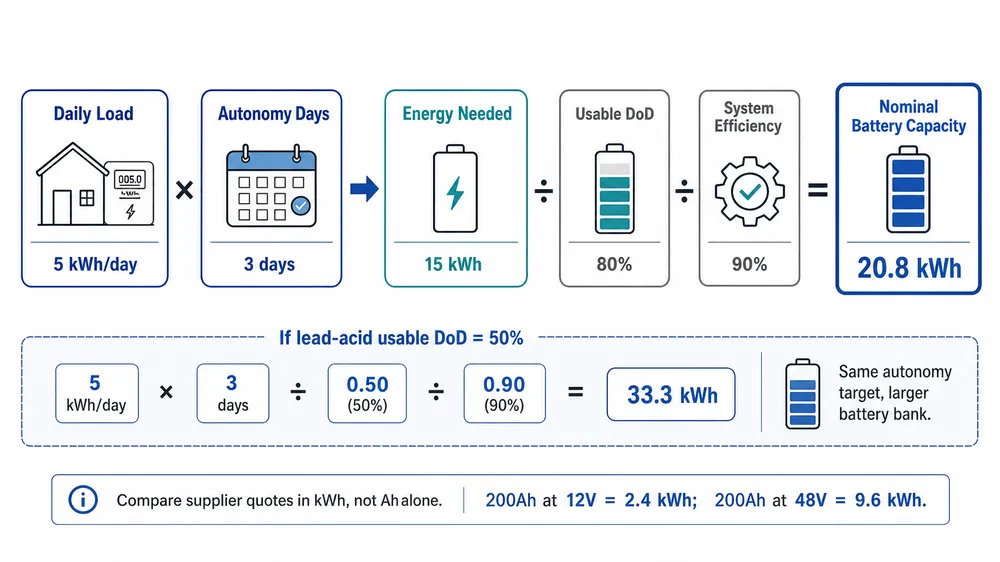
Required nominal battery capacity (kWh) = Daily load (kWh) × Autonomy days ÷ Usable DoD ÷ System efficiency
Each input carries a procurement implication:
| Variable | What it means | Procurement note |
|---|---|---|
| Daily load (kWh) | Total energy consumed per day by the installation | Get this from the project spec, not from peak wattage × 24 hours |
| Autonomy days | Days the bank must cover without meaningful solar recharge | Drives total kWh and carton count directly |
| Usable DoD | Percentage of nominal capacity you can actually discharge | Varies by chemistry — this is where LiFePO4 and lead-acid diverge sharply |
| System efficiency | Inverter, wiring, and BMS losses (typically 0.85-0.92) | Lower efficiency means more nominal kWh to hit the same usable target |
A worked example (illustrative numbers only): a residential off-grid system consuming 5 kWh/day, targeting 3 autonomy days, using LiFePO4 at 80% usable DoD, with 90% system efficiency:
5 × 3 ÷ 0.80 ÷ 0.90 = 20.8 kWh nominal battery capacity
That same system with lead-acid at 50% usable DoD: 5 × 3 ÷ 0.50 ÷ 0.90 = 33.3 kWh. The autonomy target is identical. The container volume is not.
One thing I see regularly in supplier quotes: capacity stated only in Ah without specifying voltage. A "200Ah battery" could be 2.4 kWh at 12V or 9.6 kWh at 48V. Convert everything to kWh before comparing offers — it saves confusion downstream and prevents your sales team from quoting the wrong configuration.

LiFePO4 and lead-acid change the real autonomy behind the same label
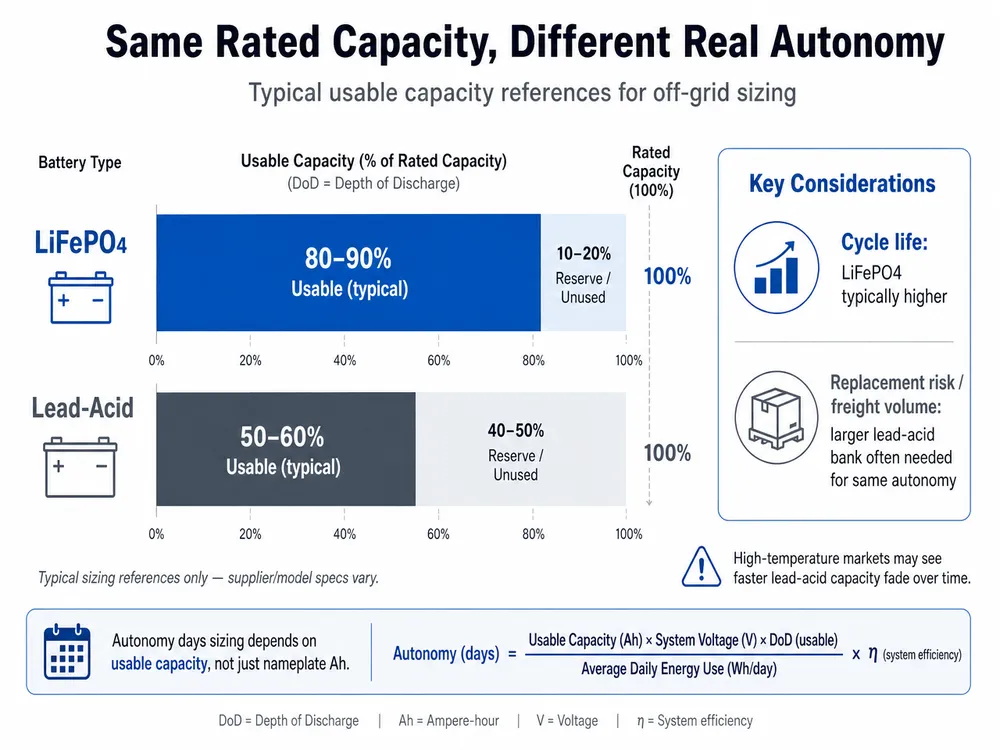
Nominal capacity on a datasheet is not the capacity you should promise your downstream customer. Off grid battery autonomy days depend on how much of that nominal capacity is actually usable over the battery's service life.
LiFePO4 cells are typically sized with deeper usable discharge — common sizing references use 80% DoD or higher for daily cycling. Lead-acid (gel or AGM) is usually sized more conservatively, often around 50% DoD for reasonable cycle life. These are industry-typical sizing references, not universal guarantees — actual performance depends on the specific cells, BMS settings, and operating temperature.
The commercial translation is direct: for the same autonomy target, LiFePO4 often requires fewer nominal kWh, fewer cartons per pallet, and lower replacement frequency over a 5-year project lifecycle. Lead-acid still fits price-sensitive channels where upfront cost per kWh matters more than total cost of ownership — particularly in markets where the end customer expects a lower entry price and accepts shorter replacement cycles.
We produce both lithium and lead-acid lines, so this isn't a chemistry sales pitch. It's a sizing reality. When you're calculating autonomy days for a LiFePO4 off grid battery bank versus a lead-acid bank, the formula is the same — but the DoD input changes your total order volume by 30-60%. That difference shows up in your freight invoice and your warehouse footprint.
(Worth noting: lead-acid capacity also degrades faster in high-temperature environments. If your market is tropical, factor in capacity fade when projecting year-3 autonomy performance — not just day-1 specs.)
For specific voltage and capacity configurations across both chemistries, see our Off Grid Solar Battery Storage product range.
Regional weather risk decides whether 1 day or 4 days makes commercial sense
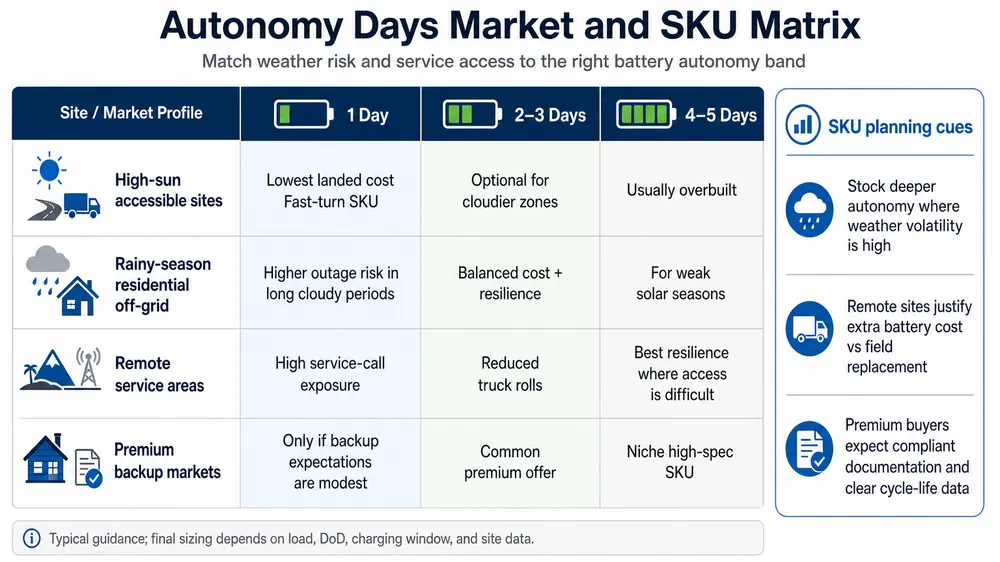
Off grid battery autonomy days aren't a universal number — they're a market-specific variable. The same distributor might stock 1-day economy SKUs for one region and 3-day standard SKUs for another. Climate, service access, and end-customer expectations all shift the calculation.
High-sun, service-accessible markets (parts of the Middle East, North Africa, inland Australia): Solar irradiance is consistent, service technicians can reach sites within a day, and extended cloudy periods are rare. 1-day autonomy works for many residential installations here. Your landed cost stays low, container utilization stays high, and replacement logistics are manageable.
Rainy-season markets (Southeast Asia, West Africa, parts of South America): Consecutive low-irradiance days are normal for 2-4 months per year. Off grid solar battery storage autonomy days for residential projects in these regions typically need 2-3 days minimum. Under-specifying here generates warranty claims and damages your brand with installers.
Remote, service-limited sites (rural sub-Saharan Africa, island installations, mountain communities): When a service call costs more than the battery itself, you size for resilience. 3-5 days of autonomy reduces truck rolls and protects your distributor's reputation. The extra battery cost is cheaper than the logistics of a field replacement.
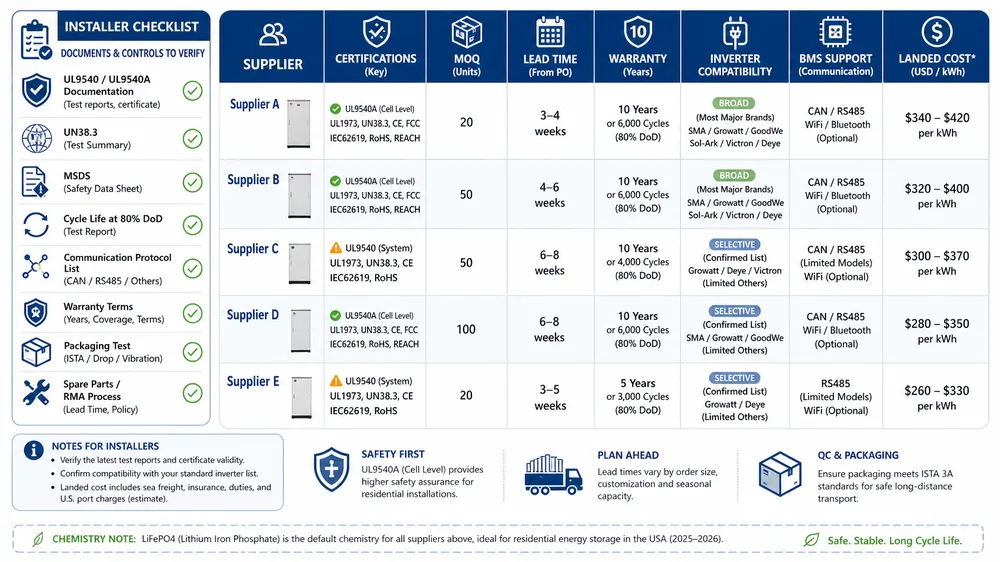
Premium backup markets (European off-grid cabins, high-end residential): Documentation, consistent labeling, and certified test reports often matter as much as raw autonomy days. Buyers here expect IEC 62133 compliance, clear cycle-life data at stated DoD, and system integration documentation. The autonomy target might be modest (2 days), but the quality evidence bar is higher.
The point for your SKU planning: don't stock a single autonomy tier and try to sell it everywhere. Match the tier to the market's weather risk and service economics.
Rated autonomy depends on cell matching and BMS discipline
A battery bank's autonomy rating is only as reliable as the weakest cell in the pack. If one cell in a series string has 5% less capacity than its neighbors, the BMS will trigger low-voltage cutoff based on that cell — and your customer loses usable autonomy they paid for.
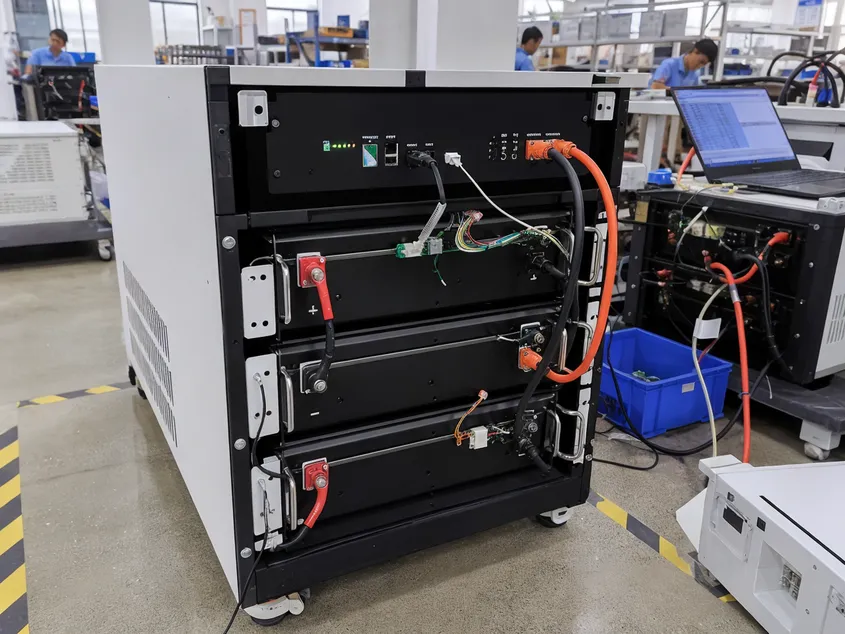
This is why off grid solar battery sizing autonomy starts at the cell level, not the system level. Our production sequence addresses this directly: incoming cell inspection, automated sorting by measured capacity and internal resistance, pack assembly with cells matched within 20mV and 5 milliohm tolerance, BMS integration, charge/discharge testing, aging, and final inspection before packing.
The matching tolerance matters more than most spec sheets suggest. A pack with loosely matched cells might test fine on day one but diverge over 500 cycles as weaker cells degrade faster. Tight initial matching — the kind that requires automated sorting equipment, not manual selection — keeps the pack balanced longer, which means your rated autonomy holds closer to its original value through year 3 and year 4.
BMS programming connects directly to field reliability in off-grid applications. We set protection thresholds for over-discharge, over-charge, over-temperature, and cell imbalance based on the target market's operating conditions. A battery destined for a tropical West African installation gets different temperature protection parameters than one shipping to a European mountain cabin. (This is one of those details that separates a configured product from a generic one — and it shows up in your warranty claim rate.)
Full lifecycle testing — capacity verification, cycle life validation, high/low temperature performance, and safety testing — confirms that the rated autonomy on the datasheet reflects real-world discharge behavior, not just a calculation from cell datasheets.
Convert autonomy targets into wholesale voltage and capacity SKUs
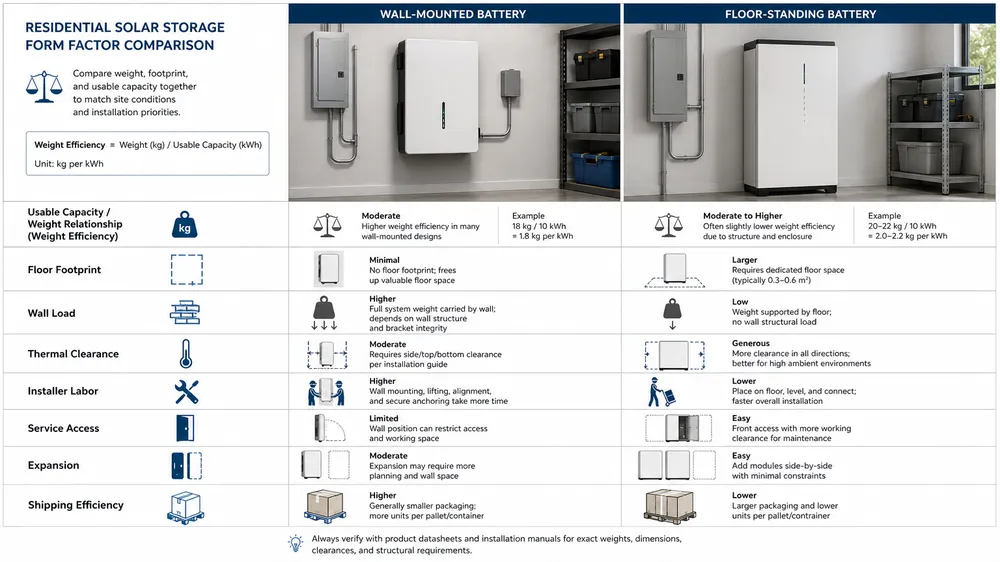
Once you know your target autonomy days and daily load range, the next step is mapping that to orderable configurations. Off grid solar battery sizing autonomy translates into specific voltage platforms and capacity tiers.
12V systems suit smaller loads — lighting, phone charging, basic appliances. Common for entry-level off-grid kits in price-sensitive markets. A 12V 100Ah LiFePO4 pack delivers roughly 1.2 kWh usable at 80% DoD — enough for about 1 day of autonomy on a 1 kWh daily load.
24V systems handle mid-range residential loads. Lower current for the same power means smaller cable cross-sections and less voltage drop over distance. Useful for installations where the battery bank sits away from the main load center.
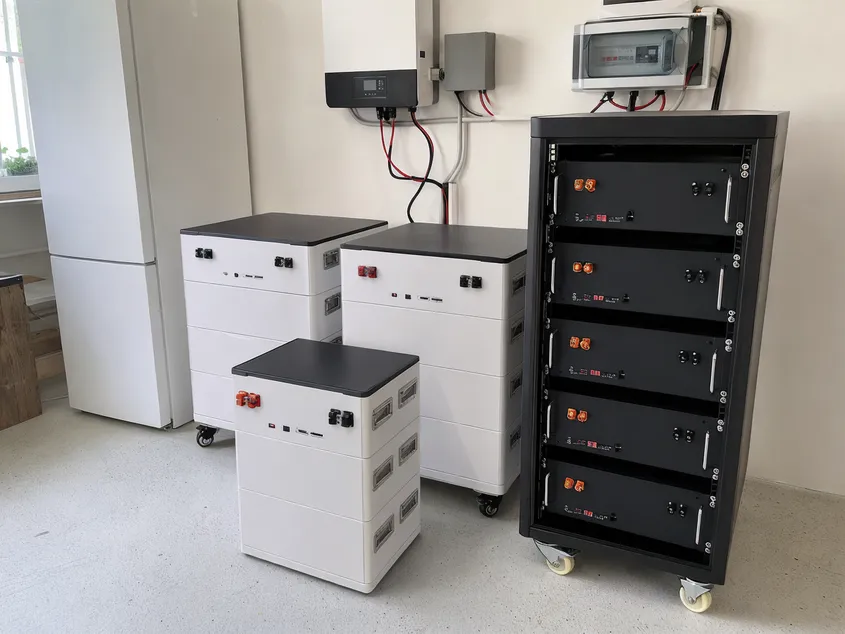
48V systems are the standard for larger residential and small commercial off-grid projects. Higher voltage means lower current at the same power level, which reduces BMS stress, improves round-trip efficiency, and allows longer cable runs. A 48V 200Ah (51.2V nominal) LiFePO4 bank provides roughly 8.2 kWh usable — covering 2-3 days of autonomy for a typical 3 kWh/day household.
For distributors testing a new market, an autonomy ladder approach works well:
- Economy tier (1-day autonomy): 12V or 24V packs, lower capacity, lowest landed cost per unit. Tests market acceptance before committing to container volumes.
- Standard tier (2-3 days): 48V packs in the 100-200Ah range. Covers the majority of residential off-grid demand in most regions.
- Extended tier (4-5 days): Higher-capacity 48V configurations or parallel bank setups. Targets remote sites and premium installations.
Standard models start at 100-unit MOQ — practical for testing an autonomy-tier SKU in a new market without overcommitting warehouse space. Custom voltage and capacity configurations (say, 25.6V 150Ah for a specific project spec) are available on OEM/ODM terms with adjusted minimums.
For broader residential storage catalog planning, see Home Solar Battery Storage. For deeper calculation methodology on bank sizing, see off-grid solar battery storage sizing.
The sourcing mistakes that make autonomy quotes unreliable
I've reviewed enough distributor quotes to know where solar battery days of autonomy calculation goes wrong. These are the errors that lead to oversized orders, undersized installations, or warranty exposure:
Using peak load as daily energy. A 3 kW peak load does not mean 3 kWh per hour × 24 hours. Daily energy consumption is the integral of actual usage over time — usually far less than peak × hours. Get the load profile from the project engineer, not from the inverter nameplate.
Ignoring voltage when comparing Ah. Two suppliers both quote "200Ah." One is 12V (2.4 kWh), the other is 48V (9.6 kWh). If your comparison spreadsheet lists only Ah, you'll misjudge capacity by 4x.
Applying lead-acid DoD assumptions to lithium (or the reverse). Sizing a LiFePO4 bank at 50% DoD wastes capacity and money. Sizing a lead-acid bank at 80% DoD destroys cycle life. Match the DoD assumption to the chemistry and confirm it with the supplier's cycle-life data at that DoD.
Copying DIY homeowner formulas into wholesale catalogs. Consumer guides often add generous safety margins because the end user can't easily service the system. Those margins compound when you're ordering 500 units — suddenly you're carrying 30% more inventory than the market needs.
Adding autonomy days without checking container impact. Going from 2 days to 3 days adds 50% more battery kWh. On a 20GP container of 48V 100Ah packs, that might mean a second container — doubling your freight cost for a single project.
Before placing an order, confirm these inputs with your supplier: load profile (kWh/day, not just peak watts), inverter voltage compatibility, peak discharge current requirement, acceptable DoD with supporting cycle-life data, operating temperature range for the destination market, and shipping documentation (UN38.3, MSDS for lithium). If the market requires CE or IEC 62133, confirm certification scope covers the specific model you're ordering.
If you have a project load profile and target autonomy ready for sizing, you can request a quote with those inputs for a specific configuration recommendation.
FAQ: autonomy quotes and project sizing
How many days of autonomy should an off-grid solar battery system have?
There's no single correct number. 2-3 days covers most residential off-grid projects in moderate climates. 1 day works for high-sun regions with reliable service access. 4-5 days suits remote installations where a service visit costs more than the battery. The right number balances weather risk, service logistics, and your landed cost per unit.
How do you calculate solar battery days of autonomy?
Required nominal capacity (kWh) = daily load (kWh) × autonomy days ÷ usable DoD ÷ system efficiency. The critical step most people skip: converting the result to kWh (not just Ah) so you can compare across voltage platforms and suppliers on equal terms.
Is LiFePO4 sized with fewer nominal kWh than lead-acid for the same autonomy?
Yes, because LiFePO4 typically allows deeper usable discharge. At common sizing references (80% DoD for LiFePO4 vs 50% for lead-acid), you need roughly 38% less nominal kWh with lithium for the same usable energy. That translates directly to fewer cartons, less freight, and less warehouse space.
Does adding more solar panels reduce the battery autonomy requirement?
More panel capacity shortens recharge time on partial-sun days, which can justify a lower autonomy target in some designs. But panels don't help during consecutive zero-sun days — that's pure battery territory. In rainy-season markets, oversizing panels helps but doesn't eliminate the need for adequate battery reserve.
What autonomy days should distributors stock for Africa or Southeast Asia?
For sub-Saharan Africa, 2-3 days is a practical baseline for most residential off-grid — service access is limited and rainy seasons are real. Southeast Asia varies: urban fringe installations might work with 1-2 days, while rural island sites need 3+ days. Stock your standard tier at 2-3 days and offer extended configurations on project-specific orders rather than carrying high-autonomy inventory speculatively.
When does a 48V off-grid battery bank make more sense than 12V or 24V?
Once daily load exceeds roughly 2-3 kWh, 48V becomes the practical choice. Lower current at the same power means smaller cables, less voltage drop, reduced BMS thermal stress, and better round-trip efficiency. For project contractors quoting systems above 5 kWh usable capacity, 48V is essentially standard — and it simplifies your SKU planning because one platform covers the majority of mid-to-large residential demand.